
Review · MUSEUMS
Kyoto Railway Museum Admission Ticket
Kyoto has a way of making old things feel usable again. Kyoto Railway Museum turns Japan’s rail history into hands-on fun, with 53 real trains you can actually step into and interactive simulators that show you how it works. My favorite parts were the nostalgia of riding a working steam locomotive and the thrill of watching the roundhouse turntable do its thing. One thing to consider is that the museum is big, so if you want a quick stop, you will still need to pace your time carefully.
For $9 per person for a full day of real trains, it’s strong value, especially if you like learning by doing instead of just reading signs. I also liked the “cool and calm” feel reported by other visitors, because it makes it easier to enjoy the details without rushing. This is the kind of outing that works just as well for rail fans and for families who need something that feels different from temple hopping.
If you are sensitive to crowds, aim for a less hectic entry plan and watch the museum rules for queues. The museum is closed every Wednesday, so build your Kyoto schedule around that, not the other way around.
In This Review
- Key things you should know before you go
- Why this museum feels different from a typical display
- 1-day ticket value: what your $9 really buys
- Your route through the museum: start smart, not rushed
- 53 real trains, including steam and Shinkansen
- The working steam locomotive ride and roundhouse turntable
- Hands-on simulators: learning with your hands, not just your eyes
- Inside-the-train details that make the history feel real
- Dioramas and the Sky Terrace: a view from above and around
- Pacing tips: how long you should actually spend
- Accessibility and who this museum suits best
- Where it is, and how to use your ticket
- Should you book Kyoto Railway Museum admission?
- FAQ
- What is included with the Kyoto Railway Museum admission ticket?
- Where is Kyoto Railway Museum located?
- How long is the experience?
- How much does the ticket cost?
- When is the museum closed?
- Is it wheelchair accessible?
- Are children or infants discounted?
- Can I get a refund if my plans change?
Key things you should know before you go
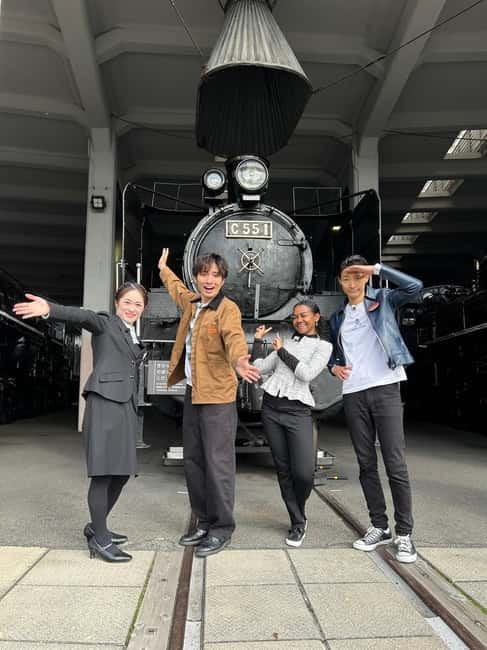
- 53 real trains on display, from vintage steam through Shinkansen
- Ride a working steam locomotive, plus watch the roundhouse turntable rotation
- Step inside iconic train cars and look for the details you usually only see through windows
- Hands-on simulators that help you understand how train operation feels
- Dioramas and exhibition scenes that connect rail tech to real-world journeys
- Sky Terrace views that give you a different perspective from track level
Why this museum feels different from a typical display

Kyoto Railway Museum does not treat its collection like quiet antiques. The exhibits are designed to feel active, with lots of chances to touch, test, and move from one train to the next. That matters because rail travel is mechanical. When you can see the pieces up close, and then try something yourself, the story sticks.
I also like that it covers the full arc of Japanese rail, including the modern headline act of Shinkansen alongside older steam-era equipment. It makes the evolution feel logical, not random. You end up understanding how the industry changes while still keeping a recognizable “railway mind” at the center.
The best part is the combination: you get both scale and intimacy. The collection is broad, but you also get moments where you are close enough to notice how a train is built and how a system is meant to function.
More Museum Tours in Kyoto
- Kyoto: Tea Museum Tickets and Matcha Grinding Experience
★ 4.9 · 739 reviews - Skip the lines Basic Ticket at SAMURAI NINJA MUSEUM KYOTO
★ 4.5 · 632 reviews - Kyoto : Geiko Maiko Dance of Kyoto & Visits of Gion Museum
★ 4.6 · 415 reviews
1-day ticket value: what your $9 really buys
At about $9 per person for 1 day, the pricing makes sense if you plan to spend real time in the galleries. You are not paying for a short experience. You are paying for a whole museum day where you can bounce between trains, interactive stations, and special experiences like the steam locomotive ride and the roundhouse.
If you are visiting Kyoto on a budget, this is one of those activities that costs less than a lot of “big name” attractions, but still gives you enough variety to prevent boredom. And if your group includes kids, the interactive elements and room-to-room train viewing can hold attention better than a purely static museum.
A quick heads-up for your planning: opening hours can vary, and the museum is closed on Wednesdays. Also, since your ticket is valid for 1 day, check availability to match your preferred entry timing.
Your route through the museum: start smart, not rushed
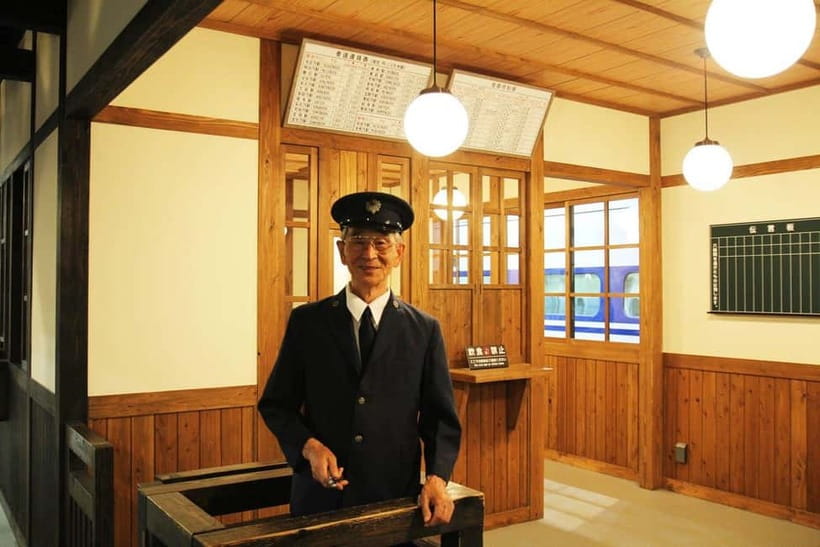
The museum experience is basically a loop: trains, interactive exhibits, then back out to the bigger “wow” moments near the working areas. Since the collection covers 53 real trains, you will want to choose a flow rather than trying to see everything equally.
Here’s how I would structure it for a smoother visit:
- Begin with the interactive exhibits and hands-on zones early, while you have energy
- Move into the train halls, focusing first on the styles you came for most
- Save the steam locomotive and roundhouse turntable moments for when you can linger
This approach helps you avoid the common problem of trying to do the big scenic bits too early, then getting tired before the simulators and details. It also lets you adjust if you run into busier queue moments.
53 real trains, including steam and Shinkansen
The heart of the day is the collection. You are looking at 53 real trains, spanning eras from steam locomotives to the famous Shinkansen. That breadth is not just impressive on paper. It gives you a chance to compare engineering choices side by side.
I love that you can go beyond viewing. Stepping inside iconic trains turns the museum from “look at the hardware” into “feel the layout.” You start noticing differences in space, design priorities, and how passenger comfort is shaped by the technology of the time.
For rail geeks, the variety is the point. For non-enthusiasts, the variety is still the hook because it keeps the visual story moving. A row of historic trains gives you one kind of awe. Then a modern train cabin gives you a different kind, because you can compare how expectations changed as speed and systems improved.
A few more Kyoto days to weigh up
- Kyoto Sword Experience – includes Museum Ticket/Ninja Experience
★ 4.5 · 149 reviews - Kyoto: Samurai Ninja Museum guided tour
★ 4.8 · 145 reviews - Itajime Shibori Scarf Class at Kyoto Shibori Museum
★ 4.9 · 24 reviews - Shibori Furoshiki Course at Kyoto Shibori Museum
★ 5.0 · 21 reviews
The working steam locomotive ride and roundhouse turntable
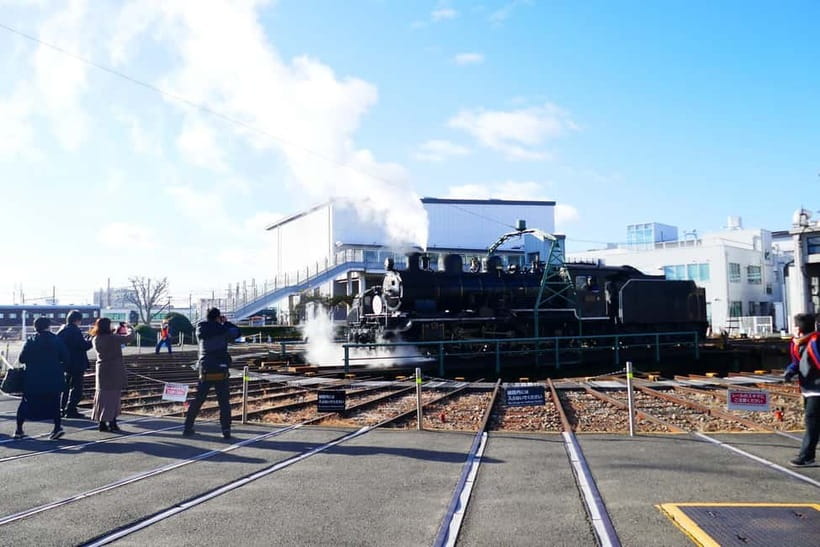
This is the moment that makes Kyoto Railway Museum feel alive. You get to ride a working steam locomotive, which is not just a photo opportunity. It turns the museum from “history lesson” into a physical memory.
Right alongside it is the roundhouse experience, where you can watch the turntable rotation. That rotation is more than a showy mechanism. It demonstrates how rail yards solve a real problem: how do you direct a locomotive to the right track or stall when your equipment needs to move but your tracks and spaces are fixed?
Watching the turntable also helps you see the museum’s themes in action. Rail is all about systems cooperating. The steam ride gives you the human and mechanical side. The turntable gives you the planning side.
One consideration for your day: this kind of feature tends to be more popular than the quiet galleries. Even if you arrive with plenty of time, expect some periods where you slow down a bit to work through lines or timing windows. Build in buffer, so you do not feel rushed.
Hands-on simulators: learning with your hands, not just your eyes
A big reason people rate this museum highly is that it is interactive without being gimmicky. You can try realistic train-driving simulators, which give you a sense of what operating a train involves.
You do not need to understand Japanese rail terminology to get something out of it. The value is in the cause and effect. When you make a change, you can see how a system responds. That makes the museum’s tech story feel practical rather than abstract.
This is also a good family tactic. Kids may not care about every historical detail, but they often love the challenge of pushing buttons, watching feedback, and feeling like they are driving. Adults often enjoy it too, because it slows you down and forces you to pay attention to controls.
If you are short on time, prioritize simulators over reading every placard. The museum is built so your effort pays off through action.
Inside-the-train details that make the history feel real
There is a special kind of thrill in stepping into a train car you would normally only see at a distance. When you can get inside, you see how engineers handled real-world constraints like door placement, interior layout, and access to key areas.
I also appreciate how the museum uses these train bodies to connect eras. When you stand in an older-style car and then shift to a modern one, you can feel how passenger needs changed and how design responded. It becomes less about dates and more about problem-solving.
To get more out of this section, do not rush. Spend 2 to 3 minutes inside a train, scan what stands out, then move on. That way you avoid the “I saw a lot but remember nothing” effect.
Dioramas and the Sky Terrace: a view from above and around
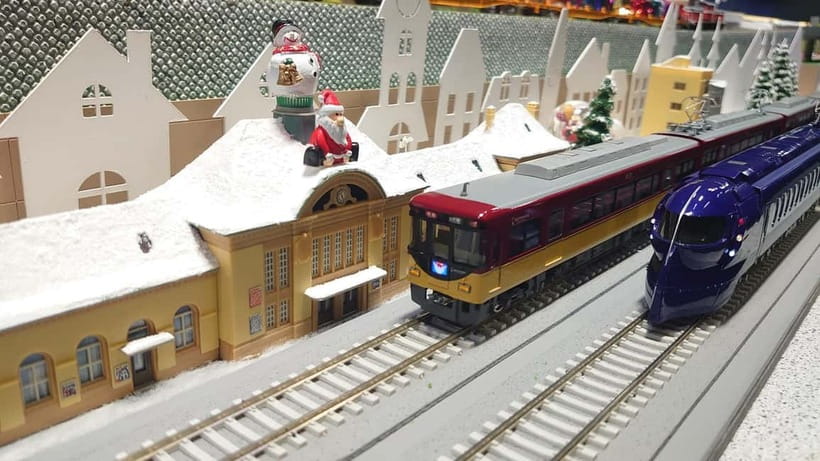
The museum does not only focus on full-size trains. It also uses dioramas and model scenes to explain how rail travel works in context. These exhibition pieces help you understand how stations, track layouts, and everyday movement fit together.
Then there is the Sky Terrace, where you can step away from track-level viewing and get a wider perspective. The terrace is a smart stop because it gives your eyes a break. After a long stretch of train interiors and close-up details, a broader view resets your attention and helps you notice how all the parts relate.
If you want the terrace to feel worth your time, plan to visit after you have seen enough trains that you can compare what you see from above to what you learned inside the cars.
Pacing tips: how long you should actually spend
Your ticket is valid for 1 day, but “1 day” does not mean “see everything equally.” With 53 real trains plus interactive activities, your day will feel full if you do not choose priorities.
Here is a pacing style that works for most people:
- Spend your first half focused on trains and interactive zones
- Reserve your second half for the highest-demand experiences like the steam ride and turntable moment, plus the simulator time if you did not already get to it
This also helps with energy management. Simulators can take your focus. Steam and turntable moments are exciting but may involve waiting. Dioramas and terrace time feel best when you slow down.
If your group includes kids, you can treat it like a sequence of short “quests”: find one train style, try one simulator task, then do one big feature. That keeps everyone engaged without turning the day into a long grind.
Accessibility and who this museum suits best
The museum is wheelchair accessible, which is a strong point for planning a visit that includes everyone in your group. If you are traveling with mobility needs, the museum’s layout and interactive zones make it a practical destination because you still get hands-on learning without relying only on stairs or long outdoor walks.
This experience is especially good if:
- You like technical things explained through real equipment
- You want a family-friendly activity that is fun without being superficial
- You enjoy seeing both old and new trains in one place
Based on the general feedback from recent visitors, it also helps to know the museum tends to feel quiet and cool inside, which makes it easier to enjoy details. That can be a relief if you are visiting Kyoto during warmer seasons.
Where it is, and how to use your ticket
You redeem directly at Kyoto Railway Museum using the provided admission ticket. The coordinates are 34.9870986, 135.7422732, so you can plug that into your maps app and get there cleanly.
If you leave and want to come back the same day, keep your admission ticket available. You must present it to staff when you re-enter the museum.
One more practical tip for busy periods: when there are many people in the queue, follow the instruction to wait in line at the entrance for Early Bird Advance Ticket. That helps you avoid getting stuck in the slowest line when crowds pick up.
Should you book Kyoto Railway Museum admission?
Book this if you want a Kyoto day that feels hands-on and genuinely different from the usual sightseeing circuit. The big value is the mix: 53 real trains, step-inside viewing, interactive simulators, plus two standout special moments like the steam locomotive ride and the roundhouse turntable rotation. For the price, you get a full day of varied experiences that work for both adults and kids.
Skip it only if your group’s interest in trains is low and you mainly want a short stop. The museum works best when you can actually spend time moving through exhibits and trying the interactive parts.
If you are deciding between this and another Kyoto activity, I would treat Kyoto Railway Museum as a top pick for a day with weather you cannot control, because much of the experience is indoors and designed for repeat attention to details.
FAQ
What is included with the Kyoto Railway Museum admission ticket?
The ticket includes standard admission to the museum.
Where is Kyoto Railway Museum located?
It is in Kyoto, Japan. The coordinates are 34.9870986, 135.7422732.
How long is the experience?
The admission is valid for 1 day.
How much does the ticket cost?
The price is $9 per person.
When is the museum closed?
The museum is closed every Wednesday.
Is it wheelchair accessible?
Yes, the museum is wheelchair accessible.
Are children or infants discounted?
Infants under 3 years old are free of charge. Children between 3 and 7 years old can purchase tickets on-site for 200 yen.
Can I get a refund if my plans change?
No. This activity is non-refundable.
More Train Experiences in Kyoto
- From Osaka: Sagano Train Ride and Kyoto Guided Day Tour
★ 4.3 · 180 reviews - Kyoto: Arashiyama Tour with optional Sagano Romantic Train
★ 4.7 · 18 reviews - Kyoto Hozugawa River Boat Sagano Romantic Train Tour
★ 3.9 · 8 reviews - Mt Fuji and Hakone 1-Day Bus Tour Return by Bullet Train
★ 5.0 · 26,383 reviews
Newly listed around Kyoto
- Taste of Nishiki Market Walking Food Tour with Local guide★ 5.0 · 17 reviews
- Kyoto: Sushi Making Class with Sushi Chef★ 4.8 · 64 reviews
- Simple Plan with Maiko★ 4.4 · 10 reviews
- Shibori Furoshiki Course at Kyoto Shibori Museum★ 5.0 · 21 reviews
- Kyoto: City Secrets eBike Tour★ 4.9 · 196 reviews
- Sacred Pathways: Discover the Philosopher’s Path of Kyoto★ 4.9 · 20 reviews
- Private Tour to Monkey Park and Arashiyama Highlights★ 5.0 · 22 reviews
- Private Nara Tour from Osaka – Meet at Your Hotel★ 5.0 · 22 reviews
Museums, compared.

teamLab Planets TOKYO Digital Art Museum Entry Ticket
Read our review →
Samurai Ninja Museum Guided tour and Experience
Read our review →
Tea Museum Tickets and Matcha Grinding Experience
Read our review →
Skip the lines Basic Ticket at SAMURAI NINJA MUSEUM KYOTO
Read our review →
Skip the lines Basic Ticket at SAMURAI NINJA MUSEUM TOKYO
Read our review →
Tokyo Studio Ghibli Museum and Ghibli Film Appreciation Tour
Read our review →
Geiko Maiko Dance of Kyoto & Visits of Gion Museum
Read our review →Browse the lists this tour appears in