
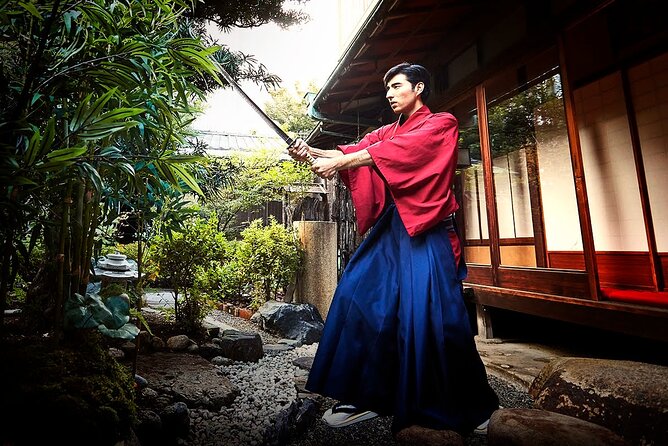
Review · SAMURAI SWORD & NINJA TRAINING
Kyoto Sword Experience – includes Museum Ticket/Ninja Experience
Kyoto’s samurai training is oddly compelling. You get to wear a samurai hakama and learn basic iaido in a real dojo-style setting, all using a blunt replica that follows Japanese safety rules. One thing to watch: on very busy days the pacing can feel a bit assembly-line, so being on time matters.
I also like that your visit includes the Samurai Ninja Museum admission and a guided history tour, not just the sword practice. Add in the photo time in armor and the chance to throw a ninja star, and it becomes more than a quick gimmick. You should know the group size and flow can vary by session, so aim for the smallest-feeling time slot you can manage.
In This Review
- Quick hits before you go
- Entering the Samurai Ninja Museum in Kyoto
- Putting on the hakama, and why it matters
- Iaido techniques with a blunt replica sword
- The “sword fight” and the single chance feel
- Museum ticket and the guided history tour
- Ninja star throwing, plus the armor photo stop
- Price and logistics: is $83.91 a good value?
- Group size and pacing: how to protect your experience
- Who this is best for (and who should pass)
- Should you book the Kyoto Sword Experience?
- FAQ
- What’s included in the Kyoto Sword Experience?
- What kind of sword do you use?
- Where does the experience start?
- How long does it take?
- Are there any age restrictions?
- How many people are in a group?
- Is there a mobile ticket?
- Is the ninja star throwing part guaranteed?
- Is there a cancellation policy?
- Is the elevator always available?
Quick hits before you go
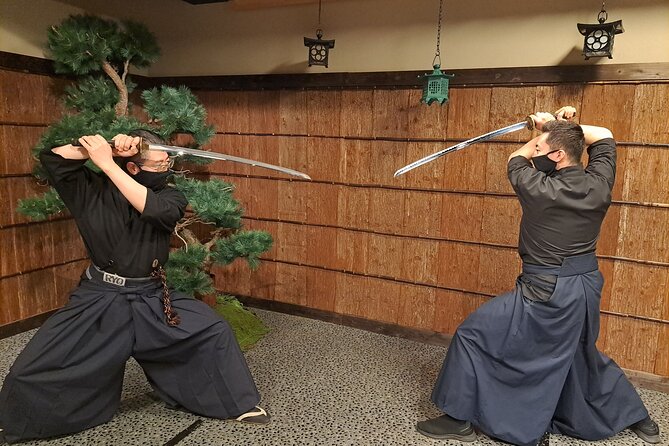
- Hakama first: you dress in a traditional samurai-style hakama before any training starts
- Iaido basics with a safe replica: you learn stance and controlled movements without sharp blades
- Museum ticket included: you get the Samurai and Ninja Museum visit plus a guided tour
- Ninja star throwing: it’s part of the standard flow, though you should plan on timing with the rest of the session
- Armor and photo moments: you’ll have a few chances to dress up and take pictures
- Small-group feel is the goal: caps are mentioned, but busy periods can make the experience feel less personal
Entering the Samurai Ninja Museum in Kyoto
Your experience starts at the Samurai Ninja Museum Kyoto, at 109 Horinouechō in Nakagyo Ward. It’s near public transportation, which is great because Kyoto is full of walking anyway, and you do not want this to become a transit stress test. You’ll be given a mobile ticket, so your phone becomes part of your kit.
Once you arrive, the vibe is old-school and hands-on. Instead of a quiet museum where you politely shuffle forward, you’re stepping into a training environment where staff help you get dressed and set up for the class. That switch in atmosphere is part of the fun, especially if you’ve already spent the morning seeing temples that require a slower pace.
More Museum Tours in Kyoto
- Kyoto: Tea Museum Tickets and Matcha Grinding Experience
★ 4.9 · 739 reviews - Skip the lines Basic Ticket at SAMURAI NINJA MUSEUM KYOTO
★ 4.5 · 632 reviews - Kyoto : Geiko Maiko Dance of Kyoto & Visits of Gion Museum
★ 4.6 · 415 reviews
Putting on the hakama, and why it matters
Dressing like a samurai is not just for show. The hakama helps you understand posture and movement, and it gives the whole session a sharper sense of ceremony. Most sessions begin with you getting suited up before you ever touch the training sword.
Practically, that means you should plan a little buffer time for fitting and getting organized. Some sessions run in a tight sequence, so if you’re late, it can snowball into rushing later. When the schedule is running smoothly, this part sets you up for the rest of the class to feel intentional, not chaotic.
Iaido techniques with a blunt replica sword
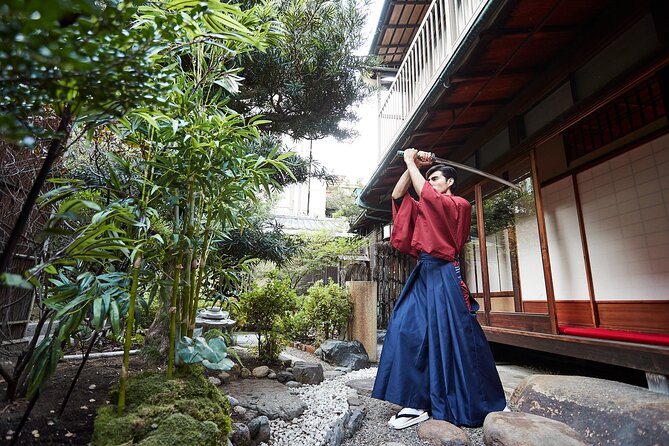
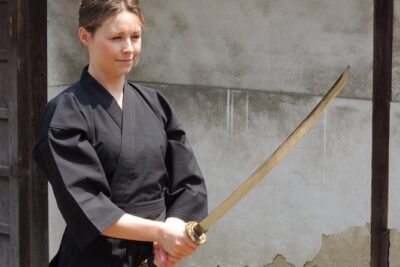
The core training focuses on iaido basics. You’ll learn foundational techniques in a way that’s designed for beginners, with guidance from an instructor. The important detail here is safety and legal compliance: this experience uses a blunt, safe replica sword, not a real blade.
That law-based focus is actually a good thing for most visitors. If you want to try samurai-style movement and stances without the stress of handling something sharp, this is the right lane. Instructors also tend to be very focused on how you hold the weapon and how you move, not on flashy, high-risk stunts.
One heads-up from how the experience has been described over time: online photos have shown cutting setups that may not match what you’ll do today. The current class is centered on safe, law-compliant replica training, with any target work presented as controlled and non-sharp. If you’re expecting a Hollywood movie moment with a traditional sharp cutting katana, calibrate expectations before you go.
The “sword fight” and the single chance feel
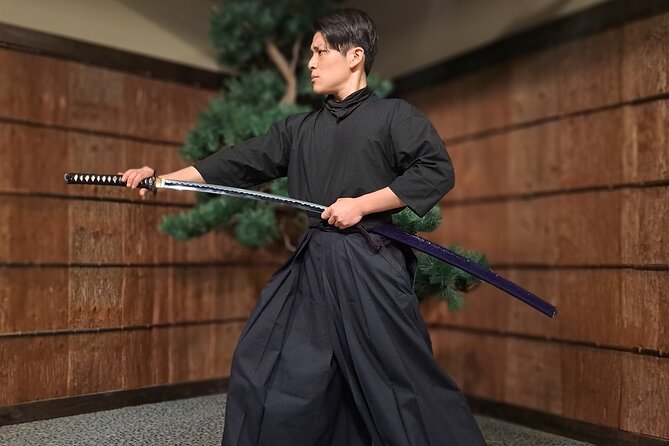
After stance and basics, you’ll transition into a simple, controlled sword-fight-style practice. This is where you get that adrenaline spike, because it turns the lesson from lecture to action. It’s still structured, so you’re not out there free-swinging, but it feels more like sparring drills than a static demo.
Then comes the target segment, often described as a slicing or mat-cut style moment. You get a chance to try, usually with limited attempts depending on how many people are in your session. That’s why the experience can feel very satisfying if your group is small and your timing is smooth, and less satisfying if you’re stuck waiting behind a long line.
From the way the sessions are described, the “training time” can be quick, while the overall clock runs longer because it includes dressing time, photos, and the museum tour. If you’re paying for this mainly to swing the sword for a long time, you might feel tempted to think the class is short. If you’re paying for a full samurai day, it makes more sense: you’re getting a training-style routine plus cultural context.
More Samurai & Ninja Sessions in Kyoto
- Kyoto Samurai Experience
★ 5.0 · 1,294 reviews - Kyoto: Kendo and Samurai Experience with Uniform and Gear
★ 4.9 · 815 reviews - Kyoto: Samurai Sword Class by Experts in Traditional Arts
★ 4.9 · 657 reviews - Ninja 1-hour Hands-on Lesson by Japanese master in Kyoto -Entry
★ 5.0 · 489 reviews
Museum ticket and the guided history tour
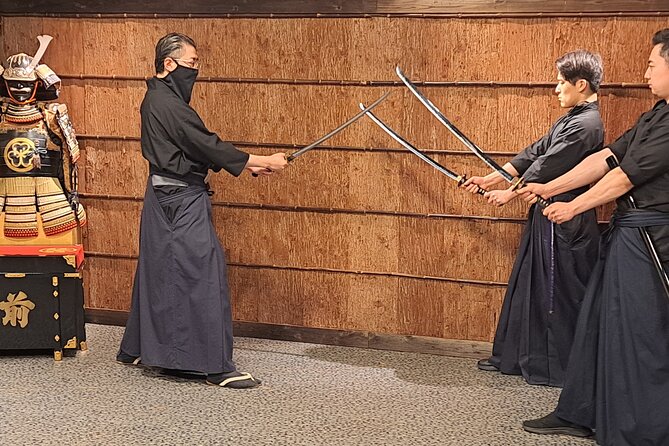
The experience includes the museum ticket, so you’re not just leaving right after the sword practice. You head to the Samurai and Ninja Museum area for a guided history tour, which is meant to connect the training to the bigger story.
This museum component tends to be the part that turns the activity from entertainment into something you can remember. You see artifacts and learn how samurai and ninja culture influenced daily life, roles, and training ideas. It also helps you understand why the training is built around discipline, timing, and posture, not just fighting.
A couple of instructor names show up in feedback in a positive way, like Ken and Nobu for the museum portion and a guide named Riku, plus others who run the training. Even if you do not get the same people, that pattern suggests the staff are used to keeping groups engaged and explaining things in a way that works for beginners.
Ninja star throwing, plus the armor photo stop
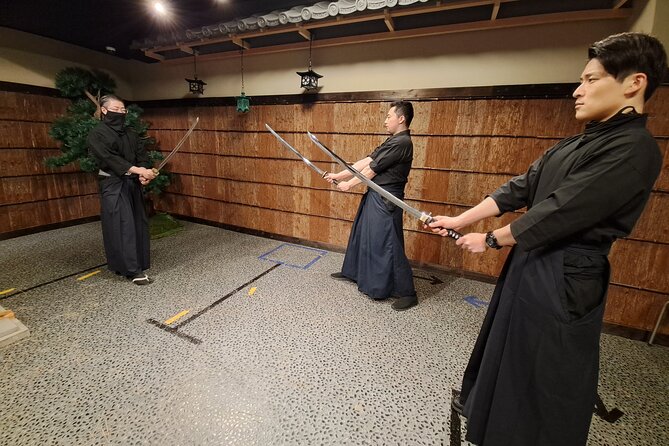
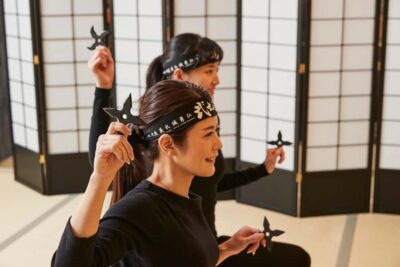
At some point, you’ll throw a ninja star. It’s listed as part of the standard flow, and it’s usually scheduled after the main training and museum segment. This is one of those moments that feels like a payoff, because you finally do something that looks clearly “ninja,” not just samurai stance practice.
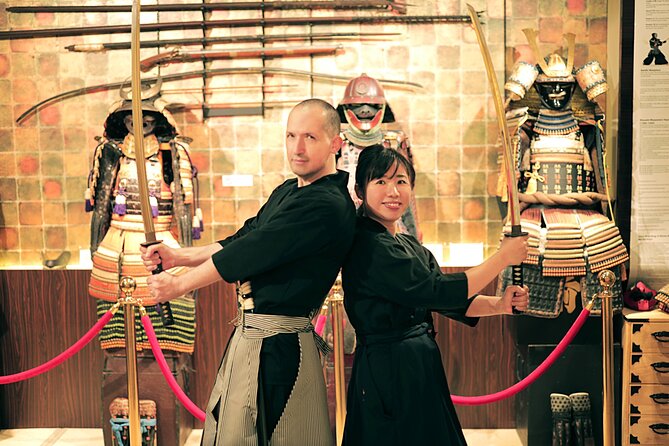
Then you’ll have time for dress-up and photo opportunities in samurai gear and armor. A lot of people come for the learning and the sword time, but the photos are the part you’ll share later. It’s also a nice reset after training intensity, because you can take your time with the shots.
If you’re traveling with kids, this portion can be especially motivating, since the sword training itself has age limits. Just remember: kids under 7 are not allowed in the samurai dojo venue, so younger children may only be able to watch from outside the training area.
Price and logistics: is $83.91 a good value?
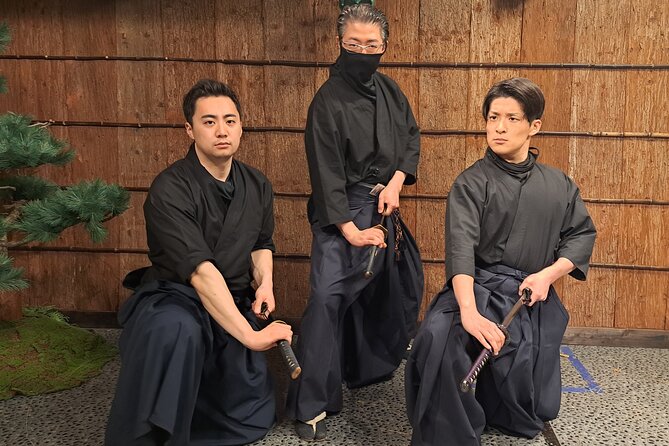
At $83.91 per person, this is not a budget craft class. The value depends on what you want out of your day in Kyoto.
Here’s what you are paying for, in practical terms:
- Guided iaido-style instruction using a safe blunt replica
- Dress-up in traditional samurai hakama
- A controlled practice segment with a mat-target style moment
- Museum admission plus a guided tour
- Ninja star throwing
- Photo time in costume and armor
If you were to price those things separately, it’s more likely to feel like a fair package. If you only care about sword swinging for a long time, the structure might feel expensive for the amount of active time you get. The best way to judge value is to think of it as a sampler of “samurai life,” not a full-day dojo membership.
Logistically, aim to arrive a few minutes early. Some sessions appear to shift from strict timing when the venue is busy, and being late can push you into a compressed run. There’s also an elevator out-of-service period noted for Jan 24, 2026 to Feb 19, 2026, so if stairs are an issue for you, plan around that future window.
Group size and pacing: how to protect your experience
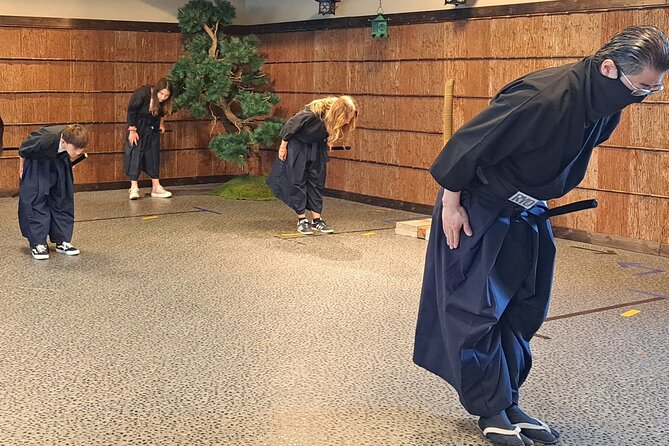
The experience is capped in the provided info at a maximum of 22 travelers, but there’s also another note stating a smaller maximum in some situations. Since group size affects how long you wait between steps, it’s worth being alert.
On the busiest Kyoto days, even a well-run activity can feel like it moves people through quickly. Some feedback describes long lines, waiting while others practice, and gear constraints during peak season. I’d take that as advice to choose your time slot carefully, ideally not the busiest hour you can find.
Also, this is one of those activities where you should not expect “slow and contemplative.” It’s a structured, guided, time-boxed experience. If you’re okay with that, you’ll likely appreciate it more, because you get a lot packed into about two hours.
Who this is best for (and who should pass)
This is a strong fit if you want a hands-on Kyoto experience with a clear theme. You’ll like it if you enjoy structured activities, want beginner-friendly sword stances, and also want a museum context to make the whole thing stick.
I’d especially recommend it for:
- First-time visitors to Kyoto who want something more active than temples
- People who like taking photos but also want a real lesson, not just costume time
- Families with older kids, since kids under 7 cannot enter the dojo venue
It may be a weaker fit if:
- Your main goal is lots of repeated sword practice
- You’re sensitive to crowds and want a very quiet experience
- You arrive late and dislike schedule compression
Should you book the Kyoto Sword Experience?
Book it if you want a safe, beginner-friendly samurai and iaido-style experience, plus a real museum component and ninja star throwing. At $83.91, it makes sense as a bundled cultural activity, not a one-skill workshop.
Skip or reconsider if you’re coming with expectations of long, slow, repeat-heavy sword training, or if you strongly prefer very small groups and a relaxed pace. If you do book, pick a time slot that feels less peak, arrive early, and lean into the full “training plus museum plus costumes” rhythm. That’s where the value shows up.
FAQ
What’s included in the Kyoto Sword Experience?
The experience includes a flexible, safe samurai-style sword practice session with a blunt replica, traditional dress-up, a visit to the Samurai and Ninja Museum with admission tickets included, a guided museum tour, and the chance to throw a ninja star.
What kind of sword do you use?
You use a blunt, safe replica sword. This activity does not involve real swords or sharp blades.
Where does the experience start?
It starts at SAMURAI NINJA MUSEUM Kyoto, 109 Horinouechō, Nakagyo Ward, Kyoto 604-8117, Japan, and it ends back at the meeting point.
How long does it take?
The duration is listed as about 2 hours.
Are there any age restrictions?
Children under 7 are not allowed to enter the samurai dojo venue. Children must be accompanied by an adult.
How many people are in a group?
The provided details list different maximums, including a maximum of 22 travelers in general, and another note stating a maximum of 4 travelers in some information. It’s a good idea to confirm your specific time slot.
Is there a mobile ticket?
Yes, a mobile ticket is included.
Is the ninja star throwing part guaranteed?
Ninja star throwing is described as part of the experience. Timing can depend on how the session flows, so it’s wise to confirm on arrival that your slot includes it.
Is there a cancellation policy?
Free cancellation is available up to 24 hours in advance for a full refund, and changes within 24 hours are not accepted.
Is the elevator always available?
An elevator out-of-service period is listed for January 24, 2026 to February 19, 2026.
More Museums in Kyoto
- Kyoto: Samurai Ninja Museum guided tour
★ 4.8 · 145 reviews - Itajime Shibori Scarf Class at Kyoto Shibori Museum
★ 4.9 · 24 reviews - Kyoto Railway Museum Admission Ticket
★ 4.3 · 23 reviews - Shibori Furoshiki Course at Kyoto Shibori Museum
★ 5.0 · 21 reviews
Newly listed around Kyoto
- Taste of Nishiki Market Walking Food Tour with Local guide★ 5.0 · 17 reviews
- Kyoto: Sushi Making Class with Sushi Chef★ 4.8 · 64 reviews
- Simple Plan with Maiko★ 4.4 · 10 reviews
- Shibori Furoshiki Course at Kyoto Shibori Museum★ 5.0 · 21 reviews
- Kyoto: City Secrets eBike Tour★ 4.9 · 196 reviews
- Sacred Pathways: Discover the Philosopher’s Path of Kyoto★ 4.9 · 20 reviews
- Private Tour to Monkey Park and Arashiyama Highlights★ 5.0 · 22 reviews
- Private Nara Tour from Osaka – Meet at Your Hotel★ 5.0 · 22 reviews
Samurai Sword & Ninja Training, compared.

Samurai Ninja Museum Guided tour and Experience
Read our review →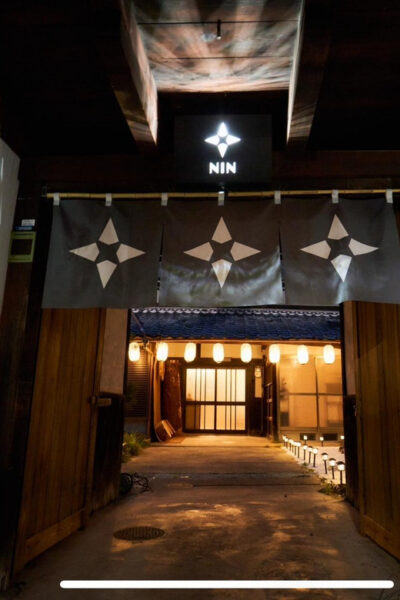
Kendo and Samurai Experience with Uniform and Gear
Read our review →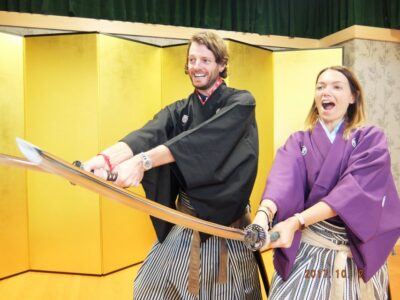
Samurai Sword Class by Experts in Traditional Arts
Read our review →
Skip the lines Basic Ticket at SAMURAI NINJA MUSEUM KYOTO
Read our review →
Samurai Sword & Archery Class from Samurai Descendant
Read our review →
Browse the lists this tour appears in