
Review · HISTORIC CASTLE VISITS
Nijo Castle and Imperial Palace Visit with Guide
Kyoto has a way of making old power feel real. This tour pairs Nijo Castle with the Imperial Palace for a fast, guided walkthrough of how rule worked in Japan from the shogunate era to the emperor. I especially love that the guide turns architecture and design into stories you can understand, and I love the pace, one hour per site without dragging. One thing to consider: you’ll do some walking, so comfortable shoes matter.
What makes this a smart use of time is the handoff between the two stops. You meet at Nijō Castle, then you ride public transportation with your guide to the Imperial Palace, and the guide keeps you moving while explaining the meaning behind what you’re seeing. It’s also built for smaller groups, with a cap that keeps the experience personal.
In This Review
- Key highlights worth your attention
- Why Nijo Castle and the Imperial Palace work so well together
- Meeting at Nijō Castle: where to start and how the tour flows
- Stop 1 at Nijo Castle: reading power in the walls
- Stop 2 at Kyoto Imperial Palace: the story shifts from shogun to emperor
- The guide is the real product: Mia, Mie, and Choko in the spotlight
- Price and value: is $79.18 a fair deal for two sites?
- Logistics that matter: walking, pace, and your end point
- Who should book this Nijo Castle and Imperial Palace tour
- Should you book this tour?
- FAQ
- How long is the tour?
- Where do I meet the guide for Nijo Castle?
- How many stops are included?
- Is public transportation included between Nijo Castle and the Imperial Palace?
- Are entrance fees included?
- What group size should I expect?
- Is cancellation free?
Key highlights worth your attention
- Small group size with a maximum of 11 travelers, and the castle portion described as less than 8 guests
- English-speaking guide who explains context, not just facts, with strong praise for guides named Mia, Mie, and Choko
- Tokugawa Shogunate focus with clear explanations of how the system worked and what buildings signaled
- One-hour guided pacing at each site so you get depth without feeling trapped in a museum timeline
- Entrance fees and public transport included, so you do less planning on the ground
Why Nijo Castle and the Imperial Palace work so well together
If you only visit one site, Kyoto history can feel like separate postcard scenes. This tour connects them into one storyline: the shogun era, the political theater around power, and then the later shift toward the emperor’s role. That connection is the whole point of combining Nijo Castle and Kyoto Imperial Palace in one outing.
Nijo Castle is tied to the Tokugawa shogunate period, and the guided walkthrough helps you see how rule was staged. In reviews, guides are credited with making the “workings of the shogun” understandable, not vague. Then, at the Imperial Palace, you continue that theme in a different political key, including the transfer of power to Emperor Meiji discussed in feedback. Even if your historical background is light, you’ll leave with a clearer map of who held authority and why the spaces mattered.
This is also a good fit for people who want more than sightseeing. You’re getting an interpretation of the buildings, the grounds, and the symbolism, with your guide acting like a translator for the culture. I like that the tours are structured, not open-ended. It’s two focused guided blocks, about 2 hours 30 minutes total, and that’s often the difference between a “nice day” and a meaningful one.
More Castle Visits in Kyoto
- Kyoto: Nijo-jo Castle and Ninomaru Palace Guided Tour
★ 4.7 · 1,020 reviews - Kyoto: Imperial Palace & Nijo Castle Guided Walking Tour
★ 4.7 · 453 reviews - Kyoto Imperial Palace & Nijo Castle Guided Walking Tour – 3 Hours
★ 4.5 · 106 reviews
Meeting at Nijō Castle: where to start and how the tour flows
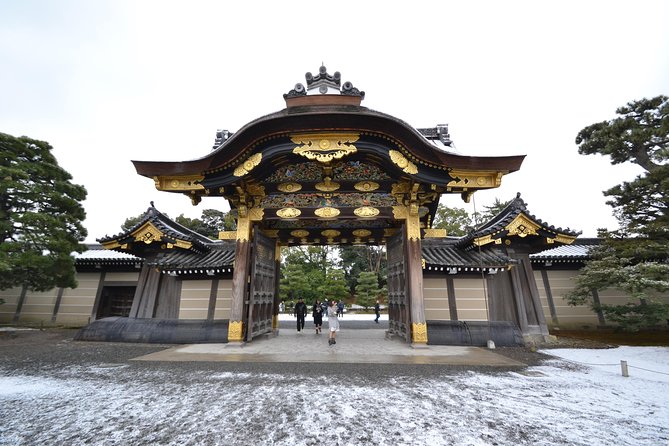
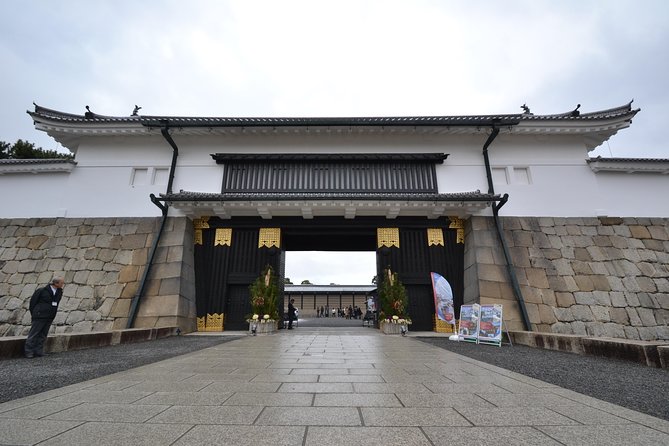
The day starts at Nijō Castle, at 541 Nijōjōchō, Nakagyo Ward, Kyoto. Your meeting point is simply in front of the huge white main gate. That’s a big help in Kyoto, because “find the right entrance” can be the hardest part of day tours.
From there, the tour runs in two steps:
- Nijo Castle guided visit (about 1 hour) with your ticket included.
- Public transport transfer to Kyoto Imperial Palace with your guide, then another 1 hour guided visit with the entry fee included.
The transfer is one of the underrated benefits. You don’t have to figure out routes, ticket machines, or timing while also trying to stay with the group. And since the experience description specifically includes public transportation costs, you can focus on the sites instead of the logistics.
One practical note from experience-style feedback: the tour ends at the Imperial Palace area, and the end point is not where you start. That matters for your post-tour plan, like lunch reservations or where you want to catch your next bus or train.
Stop 1 at Nijo Castle: reading power in the walls
Nijo Castle is where you begin the “how Japan ruled” story. Your guide leads you through the castle for about an hour, and the entrance ticket is included. What I like about this stop is that it’s not treated like a pile of old buildings. The best guides in the feedback are praised for turning what you see into something you understand, especially the roles and routines tied to shogun control during the Edo period.
In the reviews, guides like Mia (and also spelled Mie in some writeups) are described as making the shogun era feel alive. People also mention learning about meetings of the shogun and the location within the castle, which is exactly the kind of “why this room matters” context that you miss if you walk around alone. The result is that you don’t just look at rooms and corridors, you start to connect them to how authority was displayed.
You should also expect symbolism to be part of the explanation. Reviews highlight that guides point out nuances and symbolic details you might otherwise overlook. That’s a major value driver for a paid tour. The cost isn’t only for access. It’s for a guide who can help you interpret what the site was built to communicate.
A small timing drawback: one hour at the castle is enough for a guided hit, but it’s not enough to wander freely for a long time. If you love architecture and want to linger in every corner, you may wish you had more time. Still, for most first-time visitors, the guided structure is the right tradeoff.
Practical tip: wear comfortable shoes. Reviews specifically flag lots of walking, and Kyoto stone and smooth paths add up. Bring water if you’ll need it, since food and drinks aren’t included.
Stop 2 at Kyoto Imperial Palace: the story shifts from shogun to emperor
After the castle, you transfer by public transportation with your guide, then you get another guided hour at Kyoto Imperial Palace. The entry fee is included here too. If Nijo Castle makes you think about shogun-era rule, the palace helps you understand the emperor-centered side of Japanese governance.
Feedback mentions the transfer of power to Emperor Meiji, which is an important historical bridge. Even without deep background, a good guide can connect what you’re looking at to the big picture: Japan moving from one political system to another, and how the physical spaces relate to that shift.
This stop is also described as stunning in reviews. People highlight that you see both building interiors and the palace grounds with guidance. That’s useful because palace grounds can be beautiful but confusing if you don’t know what to look for. With a guide, you’re more likely to grasp what aspects are meant to reflect status, tradition, and authority.
Here’s one consideration to keep your expectations realistic. One review notes that Imperial Palace access was affected by an event, and the guide still offered a recommended experience. The tour description itself does not promise specific access changes, so the best approach is to be flexible if something like a temporary closure happens. If the palace is operating normally, great. If not, your guide should be able to tell you what you can still see.
At the end of this stop, your tour concludes in front of the Imperial Palace. Plan your next step accordingly, especially if you’re heading to another reservation.
A different sort of day in Japan:
- PERFECT KYOTO 1-Day Bus Tour
★ 5.0 · 13,518 reviews - Kyoto: Fushimi Inari, Kinkakuji, Bamboo Grove 1 Day Bus Tour
★ 4.8 · 4,316 reviews - Kyoto: Tea Ceremony in a Traditional Tea House in Kiyomizu
★ 4.9 · 3,519 reviews - Kyoto Geisha Walking Tour: Gion District & Hidden Gems
★ 4.7 · 3,273 reviews
The guide is the real product: Mia, Mie, and Choko in the spotlight
For tours like this, the guide makes or breaks the day. And the feedback here is very consistent: guides are praised for humor, strong English, and context that turns history into something you can actually use.
Names that come up often include Mia (also spelled Mie), plus Choko in at least one set of reviews. People describe Mia as warm, funny, and deeply informed, with a specific style that balances respect for important cultural treasures with a light, approachable tone. Another repeated compliment is that the guide shares the right amount of historical context without overloading you, then answers questions clearly.
I also like the mention of visual aides. When a guide uses visuals to explain symbolism or context, it helps you remember what mattered later. Instead of “I saw a palace,” you get “I know what that space signaled and why.”
Another practical strength: the guides are described as responsive to personal questions. If you ask about a political figure, a date range, or what a feature is meant to represent, you’re likely to get a direct answer. That’s a big advantage of a small-group private format. You’re not hoping the guide notices your question between other conversations.
If you get assigned Mia, Mie, or Choko, you’re in good company based on the feedback. But even when guide details vary, the consistent theme is what you should look for: clear English, thoughtful pacing, and context you can understand right away.
Price and value: is $79.18 a fair deal for two sites?
At $79.18 per person for roughly 2 hours 30 minutes, the sticker price looks straightforward. The real question is value. Here’s where this tour wins.
First, it includes entrance fees for both stops. Second, it includes public transportation costs during the tour. That matters in Kyoto, where “small” decisions like buying the right ticket and getting on the right train can eat up time. Third, you’re paying for a professional English-speaking guide who provides context and explanation.
So the cost isn’t only paying for access. It’s paying for interpretation, routing help, and a focused time block that covers two major sights. If you’re comparing against doing it solo, you’d need to account for entrance fees on your own plus the time and effort spent figuring out transfers. With the guide, your time is protected.
In the reviews, people repeatedly call it worth the money, especially when compared to bigger tours. A private-feeling small group often means you can ask questions and adjust pacing. That can be a big deal if you care about understanding the story, not just collecting photos.
Is it pricey compared to buying tickets yourself? Sure, because you’re also buying guidance. But for first-time visitors who want Kyoto history explained clearly in English, it’s a solid value.
Logistics that matter: walking, pace, and your end point
This tour is efficient, but you should treat it like a real outing, not a casual stroll.
- Walking adds up. Reviews mention comfortable shoes because there’s plenty to see and movement between areas. Plan for normal museum and palace walking.
- Two one-hour guided blocks means you’ll cover highlights without going full slow travel. If you want to linger and read every sign, plan to spend extra time on your own later.
- The tour ends at the Imperial Palace area, not back at the start. Your meeting point is at Nijō Castle, and your end point is in front of Imperial Palace. Decide how you’ll handle your next transport step.
A small scheduling note: you can choose a morning or afternoon tour time slot. That helps you line this up with your energy level and other plans.
Another practical item: you’re near public transportation, so you’re unlikely to be stuck far from transit if you decide to extend your day. And since the tour includes public transport during the tour, you get a guided route between the two major sites.
Who should book this Nijo Castle and Imperial Palace tour
This is a strong fit if you want a guided “Kyoto power story” in a compact time frame.
You should book if:
- You care about the Tokugawa shogunate era and want help connecting buildings to meaning.
- You prefer a small group over large crowds.
- You want an English-speaking guide who can explain the why behind symbolism and historic roles.
- You’d rather spend your time asking questions than planning transfers between sites.
You might skip it, or pair it with extra solo time, if:
- You hate guided pacing and want full freedom to wander.
- You’re very sensitive to walking distances and would prefer fewer stops.
- You’re looking for hands-on activities. This is a history and site interpretation tour, not a workshop.
If you’re a first-time visitor to Kyoto, this is the kind of tour that helps you “get your bearings” fast, because it connects two key political eras in a way that feels coherent.
Should you book this tour?
If you’re trying to choose between a self-guided visit and paying for a guide, I’d lean toward booking this one if your priority is understanding. The biggest reason is the guide. The feedback is full of praise for guides like Mia/Mie and Choko for making Edo period and shogun-era context feel clear, engaging, and usable.
Also, the inclusions matter: entrance fees and public transportation are built into the price, so you get two big sights handled in one tight block. That’s useful when you want to cover a lot without spending half your day on logistics.
My decision rule is simple: if you want history explained in English with a human guide who can answer questions and point out what to notice, book it. If you only want photos and don’t care about context, you could do it on your own. For most people who want more meaning from Kyoto, this is an easy yes.
FAQ
How long is the tour?
The tour duration is about 2 hours 30 minutes.
Where do I meet the guide for Nijo Castle?
Meet the guide in front of the huge white main gate of Nijō Castle at 541 Nijōjōchō, Nakagyo Ward, Kyoto.
How many stops are included?
There are two stops: Nijo Castle first, then Kyoto Imperial Palace.
Is public transportation included between Nijo Castle and the Imperial Palace?
Yes. Public transportation during the tour is included.
Are entrance fees included?
Yes. Entrance fees for both Nijo Castle and Kyoto Imperial Palace are included.
What group size should I expect?
The tour has a maximum of 11 travelers. The Nijo Castle portion is described as a small group of less than 8 guests.
Is cancellation free?
Yes, you can cancel for a full refund up to 24 hours in advance of the experience start time.
Newly listed around Kyoto
- Zen Meditation for Life in Kyoto★ 5.0 · 10 reviews
- Kyoto: Zen Meditation at a Private Temple with a Monk★ 5.0 · 25 reviews
- Kyoto Private Customizable Day Tour with Guide and Vehicle★ 5.0 · 52 reviews
- Private Wagyu Beef Tour with a Local Guide★ 5.0 · 6 reviews
- Kyoto: Gion Geisha District & Sake-in-Hand Walking Tour★ 5.0 · 37 reviews
- Your Private Vacation Photography Session In Kyoto★ 5.0 · 110 reviews
- Private Guided Traditional Buddhist Cooking in Japan★ 5.0 · 16 reviews
- Private Pewter Sake Cup Experience with a Kyoto Artisan★ 5.0 · 31 reviews
Historic Castle Visits, compared.
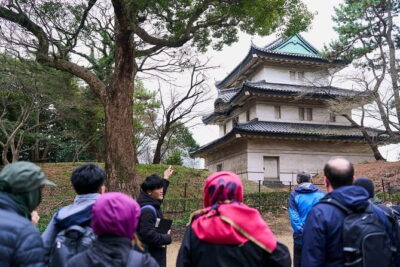
Tokyo Castle & Imperial PalaceーShogun Walking Tour
Read our review →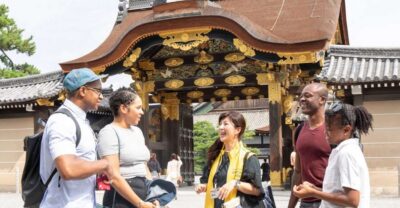
Nijo-jo Castle and Ninomaru Palace Guided Tour
Read our review →
Ultimate Osaka Walking Tour: Castle, Dotonbori & Hidden Gems
Read our review →Tokyo Castle & Imperial PalaceーShogun Walking Tour
Read our review →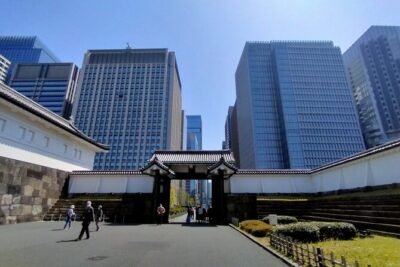
Imperial Palace East Garden and Edo Castle Walking Tour in Tokyo
Read our review →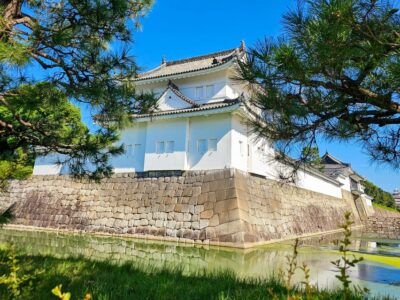
Imperial Palace & Nijo Castle Guided Walking Tour
Read our review →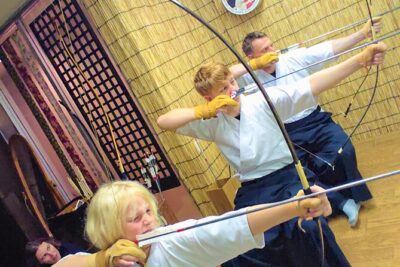
Japanesel Archery Experience HIROSHIMA CASTLE SHARAKU
Read our review →Browse the lists this tour appears in