
Review · HISTORICAL TOURS
Private Japanese Sample Food Making and Asakusa History Tour
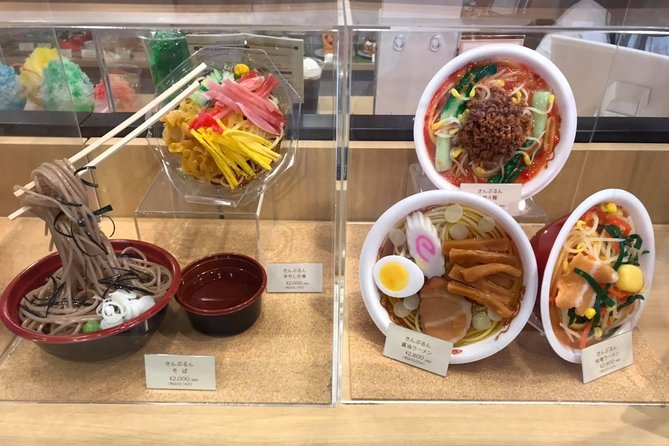
Tokyo pulls a cute trick with fake food. This Asakusa tour mixes a hands-on Japanese sampuru workshop with a walk through Kappabashi Street and a visit to Sensoji Temple. Two things I really like: you create your own model to take home, and you get the story behind why these displays matter in everyday Japan.
One thing to consider: the workshop involves putting your hands into wax, so plan for light mess, and skip nail polish if you have it.
If you want the craft to feel simple, the guides are a big part of the experience. You may meet English speakers such as Mami or Hitomi, both noted for friendly, clear explanations that make the process less intimidating and more fun.
In This Review
- Key Points at a Glance
- Sample Food Workshop and Asakusa Walk: What This Tour Really Delivers
- Your Workshop Start Point: Making Tempura Sampuru Up Close
- Why Kappabashi Street Feels Like a Superpower for Food Lovers
- Sensoji Temple and Nakamise Dori: The Classic Ending, With Context
- Timing and Group Size: Why 3 Hours Works Here
- Price and Value: Is $172.66 Worth It?
- Who Should Book This Tour (and Who Might Skip It)
- Practical Tips So You Enjoy It More
- Should You Book This Sample Food and Asakusa History Tour?
- FAQ
- What does the tour include?
- How long is the tour?
- Where is the meeting point?
- What time does the tour start?
- What days is the tour available?
- Is the tour suitable for children?
- Is it accessible for wheelchairs and strollers?
- What should I do about nail polish?
- Are meals included?
- Is the tour refundable if I cancel?
- What if I arrive late?
Key Points at a Glance
- Make a sampuru to take home after learning how the craft works up close
- Small group feel with a cap of 15, plus photo stops as you move through Asakusa
- Sensoji Temple with admission included, timed for a smooth visit and photos
- Kappabashi Street walk through shops known for kitchen tools and sample food models
- Wax-on-hands workshop designed for ages 7 and up, with guidance for families
Sample Food Workshop and Asakusa Walk: What This Tour Really Delivers
This is the kind of Tokyo activity that hits two different travel moods at once. In one half, you’re working with your hands, learning why Japanese “fake food” looks so real. In the other half, you’re walking through Asakusa with a plan, seeing the big sights and the side streets where this culture shows up in shops and everyday life.
You start with a workshop focused on Japanese sample food models, specifically tempura-style sampuru foods. Then you head out to Kappabashi Street (often called Kitchen Town), a street that practically worships anything kitchen-related. Finally, you finish at Sensoji Temple and its connecting shopping street, a classic Asakusa combo that helps you understand why this area is still a magnet for visitors and locals.
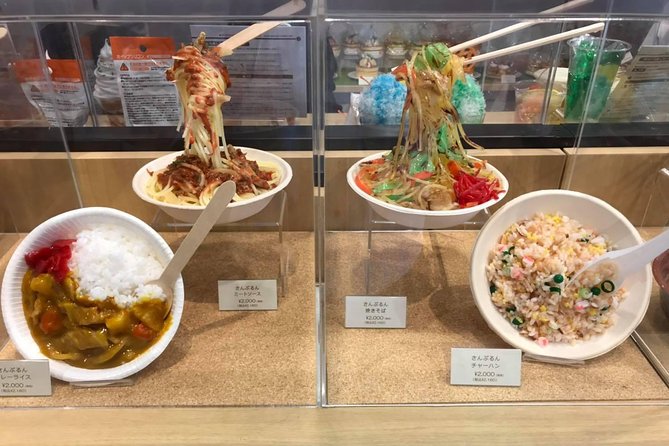
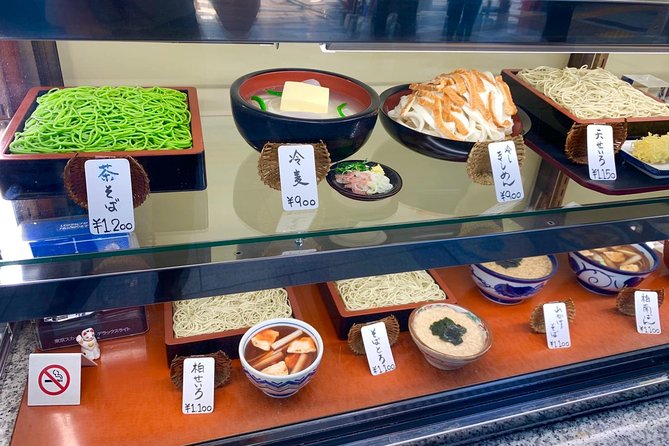
The value here is not just the craft. You’re also getting the meaning behind it, including how the displays became so common in front of restaurants that you can often use them like a visual menu from the street.
More Food Tours in Tokyo
- Tokyo: Shinjuku Food Tour (13 Dishes at 4 Local Eateries)
★ 5.0 · 6,603 reviews - Tokyo Tsukiji Fish Market Food and Culture Walking Tour
★ 5.0 · 3,184 reviews - Tokyo: Shinjuku Food Tour (15 Dishes and 4 Eateries)
★ 4.9 · 2,033 reviews
Your Workshop Start Point: Making Tempura Sampuru Up Close
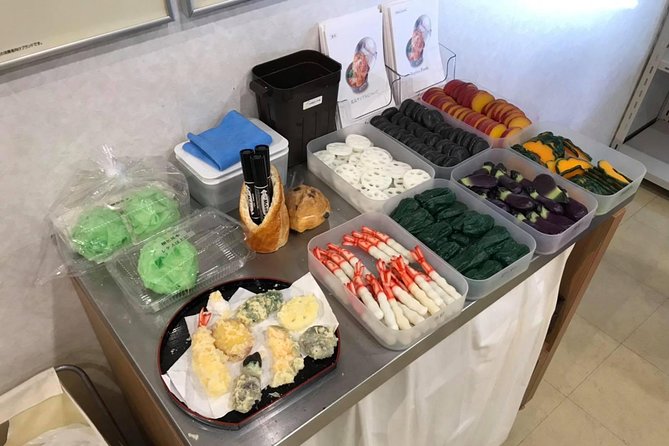
The meeting point is at APA Hotel Asakusa Tawaramachi Station Mae, and the tour starts at 10:00 AM. Plan to arrive around 9:45 AM so you’re ready to check in and get briefed without rushing.
Before you touch anything, your English-speaking guide sets the stage. You’ll see different types of sampuru models and hear how the craft began and why it became important in Japan. That matters because it turns the activity from just arts and crafts into something you can actually interpret later while you’re walking around Tokyo looking at storefronts.
Then comes the hands-on part. You make your own sampuru model, and you take it home. The wax used in these workshops is part of the authenticity, and it also explains why the process is delicate and why instructors emphasize careful technique. One practical tip from the tour guidance: avoid nail art or nail polish on your hands, because the wax may remove some during the process.
What surprised me about this type of activity is how approachable it can be. You’re not just copying a random object. You’re learning how artisans think about texture, shape, and shine so the final model reads like food at a distance.
Why Kappabashi Street Feels Like a Superpower for Food Lovers
After the workshop, you move into Kappabashi Street, a.k.a. Kitchen Town. This is where the tour’s pacing clicks, because you go from learning sample food theory and technique straight into seeing the tools, displays, and culture in real storefront environments.
Kappabashi is known for shops packed with culinary tools and sample food models. Even if you only have a little time, the street gives you that Tokyo “how do they do everything so precisely” feeling. And because your guide has already explained the craft, you’ll start noticing details fast, like how models are posed, plated, and arranged to look inviting from a shop window.
Expect plenty of photo opportunities. The tour builds in time to capture the sights, so you’re not stuck rushing or lagging behind while everyone tries to find the best angles.
Also, if you enjoy browsing markets but don’t want a full afternoon of wandering, this is a smart slice. The walk is structured, but it still gives you freedom to look around the shops and ask questions.
Sensoji Temple and Nakamise Dori: The Classic Ending, With Context
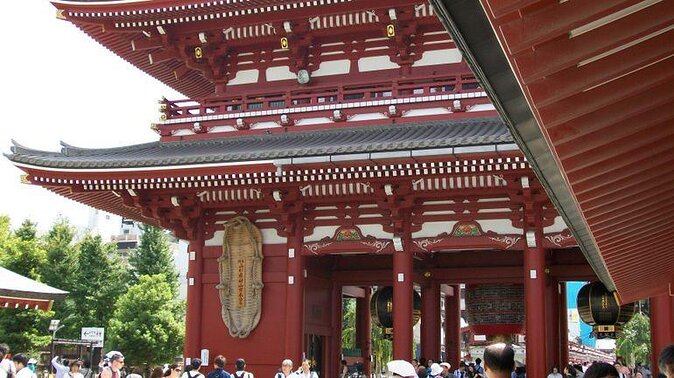
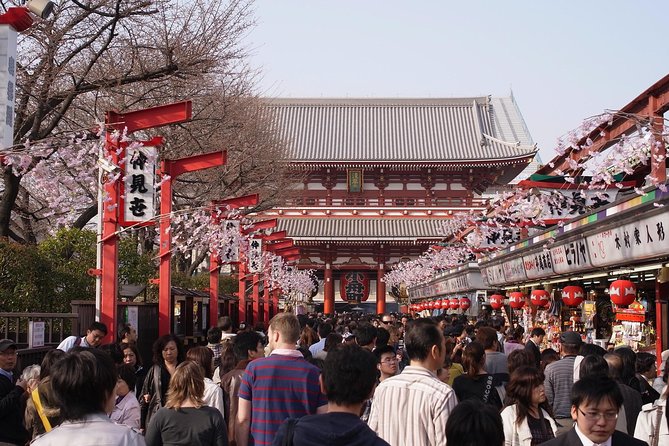
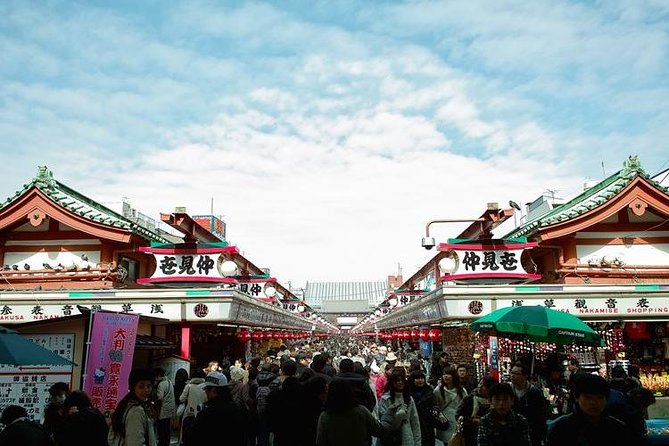
The final major stop is Sensoji Temple (also called Asakusa Kannon Temple). This is Tokyo’s most popular and one of its oldest temple areas, and the tour schedules it for about 30 minutes with admission included.
Sensoji works especially well at the end of the tour. By then, you’ve already learned about sampuru as a visual language for restaurants, and you’ve walked through Kappabashi where that language is reflected in physical products. So when you step toward the temple grounds, you’re prepared to see Asakusa as more than a photo spot. It feels like a neighborhood where tradition and commerce have kept overlapping for decades.
From the main gate area, the route also includes the shopping street that connects to the main hall, often where people snack, browse souvenirs, and get their bearings. You’ll walk through that corridor with your guide, and it’s set up for photos and a calmer experience than trying to do it on your own without a plan.
One practical note: you are on foot through busy areas, so comfortable shoes matter. This is a short tour, about 3 hours total, but the walking is real.
More History Tours in Tokyo
- Tokyo: Imperial Palace Japanese History Walking Tour
★ 4.9 · 987 reviews - Yanaka Walking Tour: Historic and Traditional District of Tokyo
★ 5.0 · 530 reviews - Tokyo: Shinjuku Historical Walking Tour & Secret Backstreets
★ 5.0 · 530 reviews - Mt. Fuji Heritage Tour: Traditional Villages, Lakes & Shrine
★ 4.5 · 509 reviews
Timing and Group Size: Why 3 Hours Works Here
The tour runs about 3 hours and is offered on Tuesdays, Thursdays, and Sundays from 10:00 AM to 12 PM (with exceptions for some holidays). That schedule is useful because it gives you a mid-morning option in Asakusa, leaving the rest of the day open.
You’ll be in a small group, capped at 15. That keeps things from feeling like a factory line. It also helps during the workshop, where the instructor needs to guide hands-on steps and troubleshoot small issues before wax hardens.
The tour is also described as private activity with only your group participating. Practically, that usually means your experience is more controlled than a big public bus tour. You still get the benefits of a real guide, plus the comfort of not being swallowed by a crowd.
Price and Value: Is $172.66 Worth It?
At $172.66 per person, this is not a budget activity. But it can be a strong value compared to many Tokyo workshops because you’re paying for more than sitting and watching.
You get:
- An English-speaking guide
- A hands-on sampuru workshop with instructions before you start
- A take-home model you make yourself
- A guided walk through Kappabashi Street
- Sensoji Temple time with admission included
- Photo opportunities and craft background so you understand what you’re seeing
If you’ve ever bought a sample food display item in a shop, you know they’re priced like something crafted, because they are. Taking home your own piece turns the cost into something tangible, not just photos. And the guided context helps too. Without the explanation part, you might see fake food. With it, you start seeing a system, a craft culture, and a visual menu language.
Who Should Book This Tour (and Who Might Skip It)
This tour fits best if you like hands-on activities, small group travel, and sightseeing with a purpose. It’s listed as suitable for ages 7 and up, and it’s noted as wheelchair and stroller accessible, which makes it a good family option in Tokyo.
I’d especially recommend it for:
- Families who want one structured activity that doesn’t require hours
- Food lovers who enjoy the visual side of Japanese dining culture
- Anyone curious about why fake food is treated with serious artistry
You might want to skip or reconsider if:
- You hate getting your hands a little messy, since wax is part of the process
- You need a fully flexible, unstructured itinerary, because this tour is planned around specific stops and timing
Practical Tips So You Enjoy It More
A few small choices will make the experience smoother.
- Wear clothes you can tolerate if a tiny bit of wax happens. The tour recommends skipping nail polish or nail art.
- Bring your camera, but also keep some time for looking without framing every shot. The Kappabashi window views are great, yet your workshop is the main memory-maker.
- Expect light walking and crowded areas near temple and shopping streets, so comfortable shoes matter.
- If you have questions, ask early. The guide’s explanations before the workshop help your hands perform better during the making stage.
Weather note is simple: the tour operates in all weather conditions except extreme situations like typhoons, and the route may adjust slightly as needed.
Should You Book This Sample Food and Asakusa History Tour?
I think you should book it if you want an Asakusa morning that mixes craft and sightseeing in about three hours. The best part is that it’s not only a walk through famous streets. You’re learning why sample food displays are everywhere, then you see the craft culture right where it shows up in shops and storefronts.
If you’re on the fence, check your comfort with a wax-on-hands workshop and your interest in Sensoji plus Kappabashi. If that sounds like your kind of Tokyo day, this is a very satisfying plan.
FAQ
What does the tour include?
It includes an English-speaking guide, a hands-on Japanese sample food making workshop, a take-home sample sampuru made in class, a walking tour of Kappabashi Street, a visit to Sensoji Temple, and photo opportunities. Sensoji Temple admission is included.
How long is the tour?
The tour lasts about 3 hours.
Where is the meeting point?
The tour meets at APA Hotel Asakusa Tawaramachi Station Mae, 1-chōme-2-3 Nishiasakusa, Taito City, Tokyo 111-0035, Japan.
What time does the tour start?
Start time is 10:00 AM, with meeting time listed as 9:45 AM.
What days is the tour available?
It runs Tuesdays, Thursdays, and Sundays from 10:00 AM to 12 PM (except some holidays).
Is the tour suitable for children?
Yes. It is suitable for ages 7 and up. Children age 7 to 14 must be accompanied by a guardian age 20 or older.
Is it accessible for wheelchairs and strollers?
Yes. Wheelchairs and strollers are accessible for participants.
What should I do about nail polish?
Guests are asked not to have nail art or polish on their hands because wax may remove some during the sample food making process.
Are meals included?
No. Meals, food, and drinks are not included.
Is the tour refundable if I cancel?
The policy provided says the experience is non-refundable and cannot be changed for any reason.
What if I arrive late?
The guide will wait up to 30 minutes after the scheduled start time. If you do not arrive within that time, the tour is considered cancelled.
More Historical Tours in Tokyo
- From Tokyo: Nikko World Heritage Site Private Full-Day Trip
★ 4.9 · 243 reviews - Tokyo: The Best of Izakaya in Shinjuku Food & Cultural Tour
★ 4.9 · 221 reviews - Asakusa: 1400-year history exploration
★ 5.0 · 155 reviews - Tokyo: Nikko World Heritage Private Day Trip Hotel Pick-up
★ 4.8 · 145 reviews
More Food & Drink in Tokyo
- Tokyo: Tsukiji Fish Market Food and Walking tour
★ 5.0 · 1,724 reviews - Shinjuku Izakaya Food Tour
★ 5.0 · 1,041 reviews - Eat and Drink Like a Local: Tokyo Ueno Food Tour-Taverns&Ramen
★ 5.0 · 957 reviews - Tokyo: Shibuya Food Tour (13 dishes and 4 Eateries)
★ 5.0 · 770 reviews
Newly listed around Tokyo
- Private Tokyo Food Tour – A Journey Through Time Through Food★ 5.0 · 36 reviews
- Private Tokyo Tour with Licensed Guide & Vehicle (Max 15 persons)★ 5.0 · 107 reviews
- Private Tokyo Custom Full-Day Tour by Chartered Vehicle★ 5.0 · 16 reviews
- Private Tokyo Custom Half-Day Tour by Chartered Vehicle★ 4.5 · 13 reviews
- Private Outstanding Nikko Tour with English Speaking Driver★ 4.0 · 11 reviews
- Private Sightseeing to Mt Fuji and Hakone with English Driver★ 5.0 · 51 reviews
- Private Snow Monkeys park Day Trip From Tokyo or Nagano★ 4.5 · 26 reviews
- 4 Day Tour – Mount. Fuji, Tokyo, Hakone, Kamakura and Yokohama★ 5.0 · 19 reviews
Historical Tours, compared.
World Heritage Shirakawa-go and Experience Tours from Kanazawa
Read our review →
World Heritage Kyoto & Nara Uji Authentic Matcha Experience
Read our review →
World Heritage Shirakawa-go Morning Guided Tour
Read our review →
Hiroshima Historical Walking Tour – Why A-Bomb was Dropped
Read our review →
Hiroshima Peace (Heiwa) Walking Tour at World Heritage Sites
Read our review →
Yanaka Walking Tour: Historic and Traditional District of Tokyo
Read our review →
Shinjuku Historical Walking Tour & Secret Backstreets
Read our review →Browse the lists this tour appears in