
Review · SAMURAI SWORD & NINJA TRAINING
Samurai Food Walk in Kakunodate
Kakunodate tastes like history. This guided Samurai Food Walk strings together sake tastings, long-running sweets, a brewery visit, and stops along the samurai streets in about 2.5 hours. I like the “food first” pacing, but with context so you understand what you are eating and why Kakunodate is known for it.
Two highlights that make this tour worth your time are the included three-drink sake comparison at 地酒のふじた and the small group size (up to 8), which keeps the experience friendly and question-friendly. One consideration: it is a tasting-focused route with short stops, so if you want long, slow hangs in just one shop, you might feel a bit rushed.
In This Review
- Key things that make this Samurai Food Walk work
- Kakunodate, the “Little Kyoto” of Akita you can sample on foot
- Route and timing, from Inaka Travel Akita to the cherry bark craft museum
- Stop 1 in town: local sake shop, green grocery, and Japanese sweets basics
- Samurai Residence Street, Michinoku’s Little Kyoto in about 2 km
- 地酒のふじた sake tasting: three different types and a built-in comparison
- Ando Jozo Brewery Honten: where Kakunodate’s outer town story shows up
- The sweet trail: Goto Fukushindo (140 years) and classic mochi favorites
- Iwahashi Samurai House: mid-level samurai and the Ashina connection (1603 to 1653)
- Bukeyashiki no chaya: kiritanpo and Akita comfort food by Samurai Street
- Kaba-zaiku and the cherry bark craft museum: why the ending feels meaningful
- What you actually get for the $100.99 price, and why the math can make sense
- Who should book this Samurai Food Walk in Kakunodate
- Should you book this tour, or wander Samurai Street on your own?
- FAQ
- FAQ
- How long is the Samurai Food Walk in Kakunodate?
- What does it cost per person?
- How many people are in the group?
- Is the ticket mobile?
- Where does the tour start?
- Where does the tour end?
- What food and drinks are included?
- Are there entrances included?
- Is there rainy-day gear available?
- Is private transportation included?
Key things that make this Samurai Food Walk work
- Three sake tastes are built into the route, not tacked on at the end
- Real storefront visits, including a sweets shop with a 140-year track record
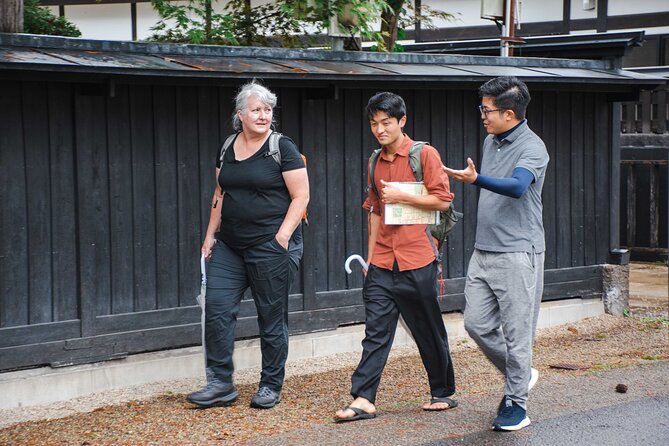
- Samurai Street in a compact area, mixing easy walking with old-town context
- Brewery and local food stops, including a teahouse where you can try kiritanpo
- Rain-ready support, with umbrella and boot rentals
- Access to samurai-house history, including the Iwahashi family and their Ashina clan role
Kakunodate, the “Little Kyoto” of Akita you can sample on foot
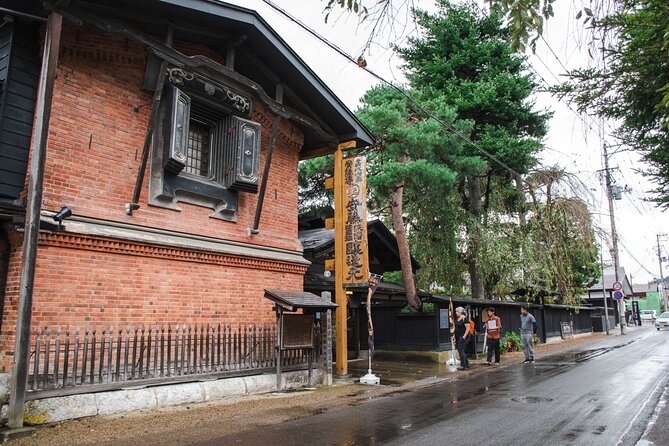
Kakunodate is one of those towns where the old fabric is still visible, and the best way to see it is to connect food with the street layout. This tour uses that logic. You move through the town’s samurai neighborhoods and merchant lanes while eating and drinking your way across the culture.
I also like that the tour does not treat food as random snacks. You are guided to places where Kakunodate’s identity shows up in a practical way: sake culture, soy-related products and brewing, traditional sweets, and that classic samurai-town feel along Samurai Street.
And yes, it is fun. Think of it as a “walk, taste, learn” circuit that keeps your energy up and your questions moving.
More Food walks in Japan:
- Tokyo: Shinjuku Food Tour (13 Dishes at 4 Local Eateries)
★ 5.0 · 6,603 reviews - Osaka: Shinsekai Food Tour with 13-15 Dishes at 5 Eateries
★ 4.8 · 2,204 reviews - Osaka Food Tour: 13 Dishes at 5 Local Eateries
★ 5.0 · 2,149 reviews
Route and timing, from Inaka Travel Akita to the cherry bark craft museum
The tour starts at Inaka Travel Akita (94-7 Nakasugasawa, Kakunodate area). From there, you will be out for about 2 hours 30 minutes and finish at the Kakunodate Cherry Bark Woodcraft Museum (10-1 Kakunodatemachi Omotemachishimochō, Semboku).
What matters for your planning is how the timing is split. Most stops are around 15 to 30 minutes, which makes the itinerary feel active and efficient. The upside is you cover a lot. The downside is you cannot linger for a long browse unless your guide builds in extra time.
This is also a mobile ticket experience, and the tour runs with a maximum of 8 travelers. That small size helps because you are not standing around waiting for the group to regroup every time you enter a shop.
Stop 1 in town: local sake shop, green grocery, and Japanese sweets basics
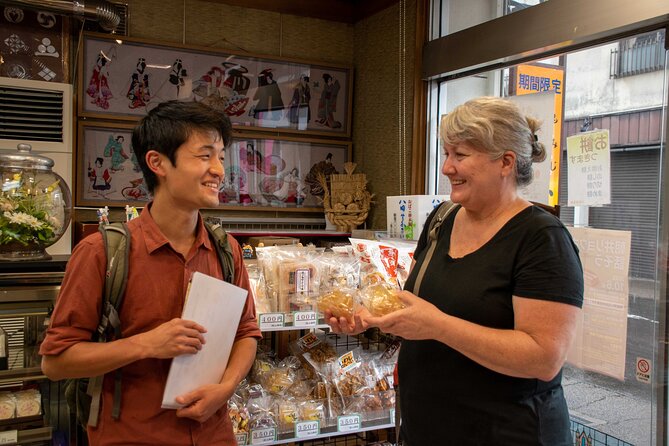
Your first stop is anchored in Kakunodate itself. Expect a mix of a local sake shop, a green grocery, and a Japanese sweet shop, plus a local snack. The purpose here is simple: get oriented to what people actually buy and eat in town.
I like this opener because it sets your palate before you hit the heavier tastings later. A green grocery stop also clues you into seasonal thinking, since Japanese town markets tend to reflect what is fresh and local rather than just what is trendy.
This is the kind of start that works well even if you are not a big planner. You are guided, you get the first bites, and you start learning the local vocabulary along the way.
Samurai Residence Street, Michinoku’s Little Kyoto in about 2 km
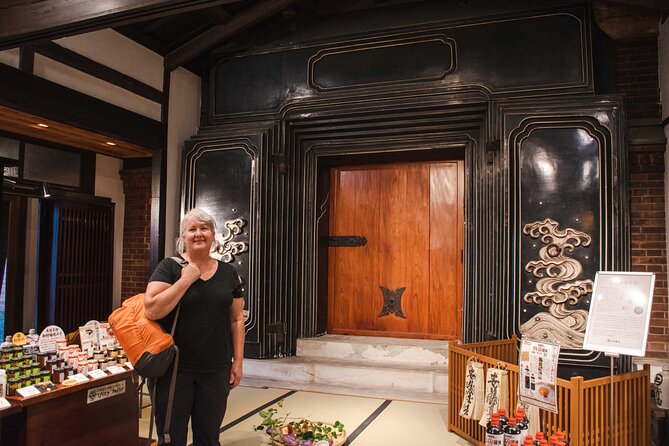
Next you head to Kakunodate Samurai Residence Street. Kakunodate was a castle town that flourished in the Edo period, and the samurai neighborhoods are still arranged in a way that feels walkable and compact. The tour frames it as Michinoku’s Little Kyoto, which is useful shorthand for the vibe you get: old lanes, preserved residences, and streets that make sense when you view them on foot.
The stop is about 30 minutes, with admission included. During this time, your guide’s job is to help you read what you see. Look at how the area’s layout supports the story of a castle town, and notice that Samurai Street is not just one photo spot. It is a network of buildings and street lines that developed over time.
If you have never visited before, this segment helps you stop feeling lost. You will likely end up recognizing the general geography later when you walk it on your own.
More Samurai and Ninja sessions in Japan:
- Tokyo: Samurai Restaurant Show Ticket with 2 Drinks
★ 4.5 · 1,307 reviews - Kyoto Samurai Experience
★ 5.0 · 1,294 reviews - Tokyo: Samurai Ninja Museum Guided tour and Experience
★ 4.6 · 1,010 reviews - Kyoto: Kendo and Samurai Experience with Uniform and Gear
★ 4.9 · 815 reviews
地酒のふじた sake tasting: three different types and a built-in comparison
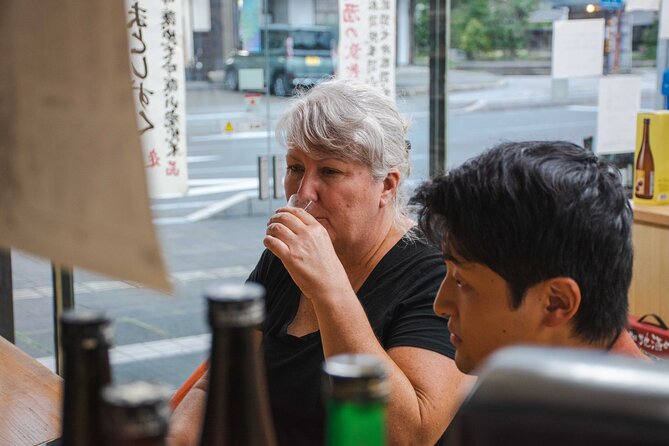
The tour’s most directly “Akita” moment is at 地酒のふじた. Here, you get a sake tasting of 3 different types. Admission is included, and this is where the tasting portion becomes more than a token sip.
Even if you are not a hardcore sake person, a guided comparison is valuable. It gives you structure. You taste, you listen, and you learn how different styles can feel distinct even when they come from the same regional drinking culture.
Important practical note: alcohol is included on this tour, and it is part of the experience. So plan for a slower day afterward, and keep hydration in mind.
Ando Jozo Brewery Honten: where Kakunodate’s outer town story shows up
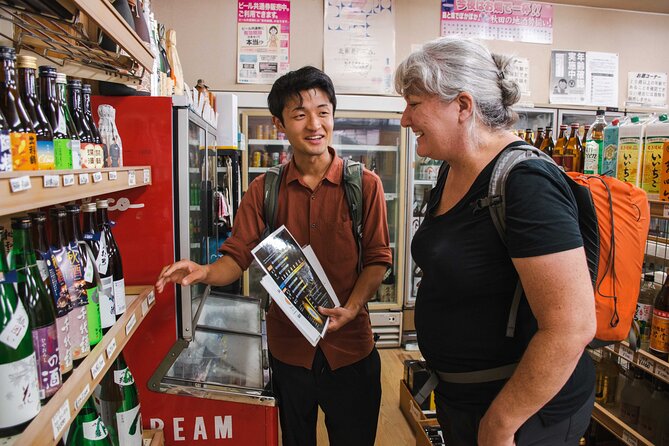
Then you visit Ando Jozo Brewery Honten. The tour explains Kakunodate’s split between an inner town with samurai residences and an outer town with rows of merchant houses. Ando Brewery sits in that outer-town setting, which matters because it reminds you that the economy of a samurai town relied on commerce, production, and trade.
This stop is about 20 minutes with admission included. You are there to connect the dots between the sake culture you taste and the production side that created it. If you like factory-style sightseeing where the details are practical rather than theatrical, this is a good fit.
One hint for making this stop satisfying: pay attention to whatever your guide points out about how the brewery operates and how it has evolved. The information in this tour focuses on the brewery’s long-running place in Kakunodate, including context about its operation since the end of World War II.
The sweet trail: Goto Fukushindo (140 years) and classic mochi favorites
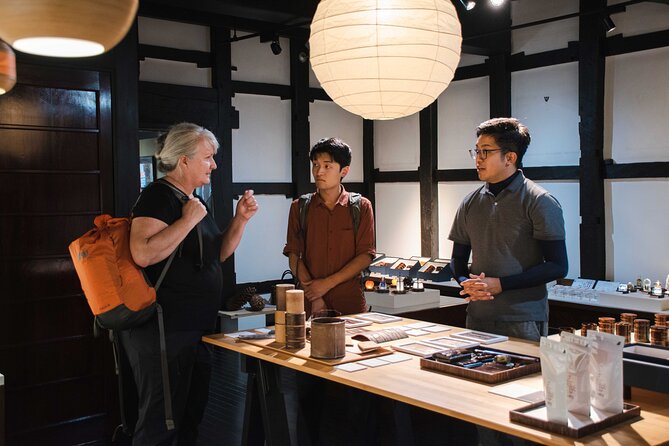
Next up is Goto Fukushindo, described as a traditional sweet shop that has been running for more than 140 years. This is one of the most straightforward “worth it” moments in the itinerary, because you get both the taste and the tradition.
The stop is around 15 minutes, admission included, and you can try items such as manju, dorayaki, and mochi. What makes this work is that these are familiar enough to recognize, but not all of them taste the same everywhere in Japan. In a town like Kakunodate, sweets often connect to local preferences and everyday snacking culture.
If you have a sweet tooth, this is where you will feel the payoff. If you do not, it is still worth going because the variety helps you understand the broader food culture.
Iwahashi Samurai House: mid-level samurai and the Ashina connection (1603 to 1653)
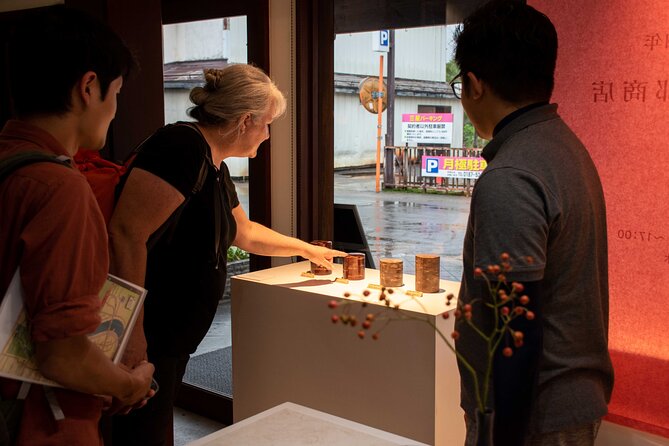
For the samurai-residence portion, the tour includes Iwahashi Samurai House. This is the home of a mid-level samurai family, with the Iwahashi family described as chief retainers of the Ashina clan, the rulers of Kakunodate from 1603 until 1653.
The stop is about 15 minutes with admission included. Even in a short time, a guided visit helps because you are not just looking at rooms. You are learning where this family fits into the wider power structure of the town.
If you care about nuance, this stop is useful because it frames the samurai class as layered, not one uniform group. Mid-level samurai still had responsibilities and influence, and that changes how you read the house.
Bukeyashiki no chaya: kiritanpo and Akita comfort food by Samurai Street
Across the street from Aoyagi Samurai Manor, the tour pauses at Bukeyashiki no chaya, the Samurai Street Teahouse. This is a “sit for a bite” moment in the middle of the walking.
You can try Akita local dishes and sweets, and the tour specifically calls out kiritanpo. Kiritanpo is an Akita classic that is usually only made at home, so trying it here gives you a taste of a dish that is tied to local cooking rather than just tourist menus.
This stop lasts about 20 minutes, with admission included. It is also a nice reset point. After the streets and shopfronts, you get a break where the food takes focus and your guide can tie the food stops together.
Kaba-zaiku and the cherry bark craft museum: why the ending feels meaningful
The experience ends at the Kakunodate Cherry Bark Woodcraft Museum, a good final act because you start thinking about craft as part of the town’s samurai-era culture too.
The tour explains kaba-zaiku, a craft made from the bark of mountain cherry trees. During the Edo period, it developed as a handcraft for lower-ranked samurai, the kind who, like samurai, made items such as inro and eyeglass cases.
This is a strong ending for a food tour. It broadens the theme from “what people ate” to “how people lived and made things.” And because it is at Samurai Street, it also keeps the atmosphere consistent until the last minute.
What you actually get for the $100.99 price, and why the math can make sense
At $100.99 per person, this is not a budget snack walk. But it includes enough components that it can represent good value if you like guided tastings.
Here is what is included:
- Alcoholic beverages, including a three-drink comparison at a local liquor store
- Snacks, including dumplings from a Japanese sweets shop that has been in business for 100 years, plus a local street food stall item
- Umbrellas and boots for rainy days are available for rent
- Entrance fees, including the samurai house
- Insurance
On top of that, the tour covers a lot of ground in a compact area, and the group stays small (max 8). The included admissions matter because they would cost you on top if you were planning the route yourself.
One thing to consider before you book: if you do not want alcohol at all, this might not be your ideal format since alcohol is part of what is included.
Who should book this Samurai Food Walk in Kakunodate
This tour is a great fit if you:
- Want a guided mix of food and samurai sights without figuring out the route
- Like structured tastings, especially the three-type sake comparison
- Prefer small groups, where you can ask questions
- Enjoy traditional sweets, such as mochi and dorayaki styles
- Are visiting Kakunodate for the first time and want your bearings fast
It is also a solid choice in rainy weather, because the tour provides umbrella and boot rentals. That kind of practical help changes the whole experience if the forecast is iffy.
Should you book this tour, or wander Samurai Street on your own?
If you have limited time in Kakunodate, I recommend booking. The route gives you a tight circuit that pairs food with interpretation, and the small group format makes it feel efficient rather than chaotic.
If you like total freedom, and you plan to spend hours browsing shops one by one, you might prefer to DIY. But you would likely still end up paying for tastings and entrances, and you would miss the guided context that helps you notice what is easy to overlook.
My rule of thumb: book this if you want structure, tastings, and a smooth samurai-street walkthrough. DIY if you want long unplanned detours and you already know the town well.
FAQ
FAQ
How long is the Samurai Food Walk in Kakunodate?
The tour runs for about 2 hours 30 minutes.
What does it cost per person?
The price is $100.99 per person.
How many people are in the group?
This tour has a maximum of 8 travelers.
Is the ticket mobile?
Yes, you receive a mobile ticket.
Where does the tour start?
It starts at Inaka Travel Akita (94-7 Nakasugasawa, Kakunodate area).
Where does the tour end?
It ends at the Kakunodate Cherry Bark Woodcraft Museum (10-1 Kakunodatemachi Omotemachishimochō, Semboku, Akita).
What food and drinks are included?
Alcoholic beverages are included, including a three-drink sake comparison. Snacks are included, such as dumplings from a long-running Japanese sweets shop and a local street food stall.
Are there entrances included?
Yes. Entrance fees are included, including the Samurai House.
Is there rainy-day gear available?
Umbrellas and boots for rainy days are available for rent.
Is private transportation included?
No, private transportation is not included.
More Food & Drink in Japan
- Tokyo: Shinjuku Food Tour (15 Dishes and 4 Eateries)
★ 4.9 · 2,033 reviews - Kyoto Night Foodie Tour in Gion (9+ dishes + 6 Sake tastings)
★ 5.0 · 1,762 reviews - Hungry Osaka Street Food Tour:15 Tastings & 3 Drinks with a Local
★ 5.0 · 1,727 reviews - Tokyo: Tsukiji Fish Market Food and Walking tour
★ 5.0 · 1,724 reviews
More Walking Tours in Japan
- Kyoto Geisha Walking Tour: Gion District & Hidden Gems
★ 4.7 · 3,273 reviews - Tokyo Tsukiji Fish Market Food and Culture Walking Tour
★ 5.0 · 3,184 reviews - Kyoto: Gion Geisha District Walking Tour – Stories of Geisha
★ 4.7 · 2,187 reviews - Night Walk in Gion: Kyoto’s Geisha District
★ 4.5 · 2,003 reviews
Newly listed around Japan
- Sake & Seasonal Delights Sake Pairing Lunch at the Brewery★ 5.0 · 8 reviews
- Aizu 4hr Private Tour with Government-Licensed Guide★ 5.0 · 12 reviews
- Nagoya Super Market Tour & Home Cooking Class with a Local, Akiko★ 5.0 · 10 reviews
- Tokyo:Tea ceremony experience at Komaba Warakuan★ 4.8 · 9 reviews
- Tokyo/Yokohama: Car meet Daikoku Parking Area★ 4.0 · 7 reviews
- Tokyo: Toshimaya Sake Brewery Tour with Sake Tasting★ 5.0 · 6 reviews
- Tokyo/Yokohama: Mt. Fuji and Hakone Private Day Tour★ 5.0 · 64 reviews
- From Tokyo: Mt Fuji Private Day Tour In Luxury Land Cruiser★ 4.9 · 94 reviews
Samurai Sword & Ninja Training, compared.


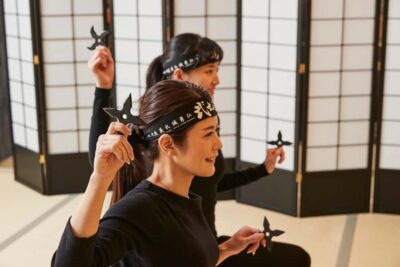
Samurai Ninja Museum Guided tour and Experience
Read our review →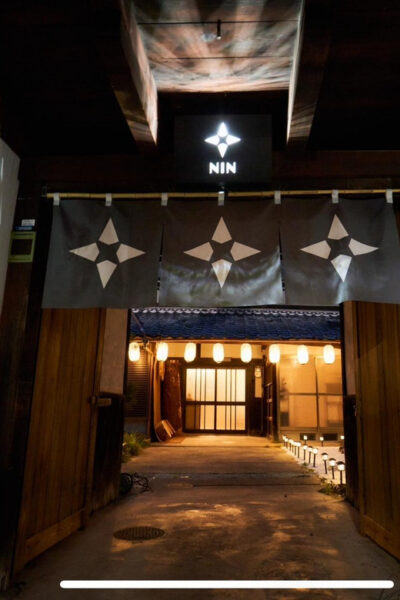
Kendo and Samurai Experience with Uniform and Gear
Read our review →
Samurai Sword Class by Experts in Traditional Arts
Read our review →
Skip the lines Basic Ticket at SAMURAI NINJA MUSEUM KYOTO
Read our review →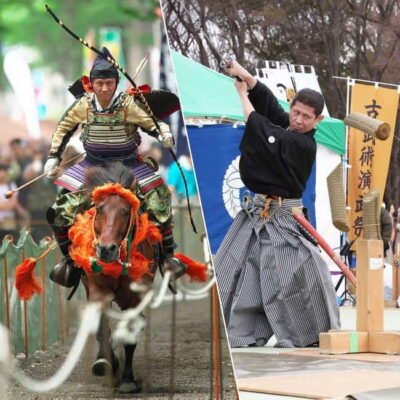
Samurai Sword & Archery Class from Samurai Descendant
Read our review →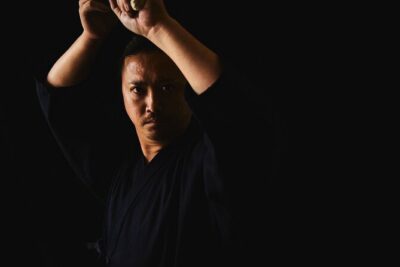
Browse the lists this tour appears in