
Review · SAMURAI SWORD & NINJA TRAINING
Samurai Ninja Museum Asakusa: Samurai Sword Lesson & Tour
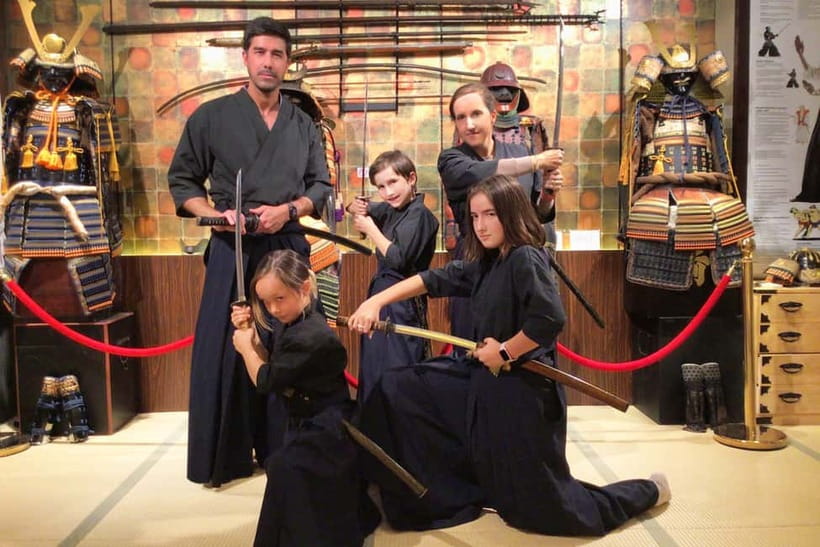
Wear armor, then learn katana basics. In Asakusa, this two-hour Samurai Ninja Museum experience mixes a real sword workshop, a guided samurai and ninja tour, and photo backdrops so you leave with both skills and pictures. I like the small-group feel (up to 16) and the way the instruction stays practical, with instructors such as Sensei Ryo often highlighted for patient teaching. You’ll also get a themed photo setup that makes it easy to turn a quick stop into a real Tokyo memory.
The only catch is time. At a tight 2-hour pace, sword practice is focused, not extended, so if you want lots of repetition, you may wish you had more time on the mat. A few schedules can also feel a bit quick inside the museum spaces, especially when groups include younger kids.
In This Review
- Key Takeaways Before You Go
- Samurai Ninja Museum Asakusa in 2 Hours: The Big Idea
- Where You Start, What You Wear, and Why It Matters
- Step Into Role Play: Sword Workshop Before the Museum
- The Katana Lesson: What You Really Learn (And What You Don’t)
- Museum Tour in Costume: Samurai and Ninja Context You Can Keep
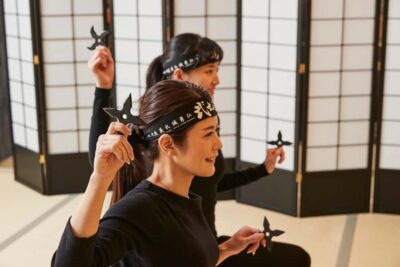
- Ninja Weapons Trial and Shuriken Fun
- Photo Backdrops: How to Turn Gear Into Real Memories
- Small Group Size: The Hidden Value in the Schedule
- Price Value at Around $63 Per Person
- Who Should Book This in Tokyo (And Who Might Skip)
- Should You Book Samurai Ninja Museum Asakusa?
- FAQ
- How long is the Samurai Ninja Museum Asakusa sword lesson and tour?
- What’s included in the price?
- Is the tour guided in English?
- Is there a child age limit for the samurai venue?
- How large are the groups?
- Where do we meet?
- Can I cancel and get a refund?
- Can I book without paying everything immediately?
- Is it wheelchair accessible?
Key Takeaways Before You Go
- Up to 16 people keeps the sword training from feeling like a theater show.
- Katana instruction starts from basics, which helps even first-timers get moving correctly.
- Museum tour + wearing armor adds context instead of making this only a stunt class.
- Ninja weapons trial (shuriken) gives a fun, competitive angle to the visit.
- Photo backdrops are built in, so you do not need to hunt for a good spot.
- Family-friendly training format keeps it energetic without requiring prior martial arts experience.
Samurai Ninja Museum Asakusa in 2 Hours: The Big Idea
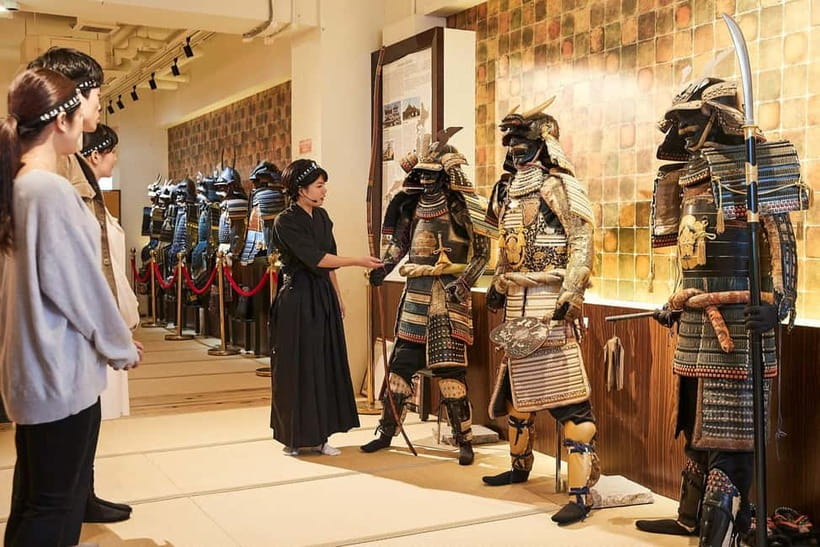
This is one of those Tokyo activities that feels like a complete mini-story. You start as a regular visitor, then you’re dressed like a samurai, shown how to handle a katana properly, and guided through museum displays about samurai and ninja culture.
The value for me is that you do not just watch. You handle equipment, you practice a short routine, and you get a guided explanation that helps the whole thing make sense.
Also, the timing matters. Two hours is long enough to get comfortable in the gear and learn a basic sequence, but short enough that it works even on a busy day in central Tokyo.
More Museum Tours in Tokyo
- Tokyo: teamLab Planets TOKYO Digital Art Museum Entry Ticket
★ 4.6 · 9,779 reviews - Tokyo: Samurai Ninja Museum Guided tour and Experience
★ 4.6 · 1,010 reviews - Skip the lines Basic Ticket at SAMURAI NINJA MUSEUM TOKYO
★ 5.0 · 470 reviews
Where You Start, What You Wear, and Why It Matters
Your meeting point can vary depending on the option you book, so check your confirmation details when it arrives. Once you’re there, the experience quickly moves into costume and staging, because the instructors need a little setup time to keep the schedule smooth.
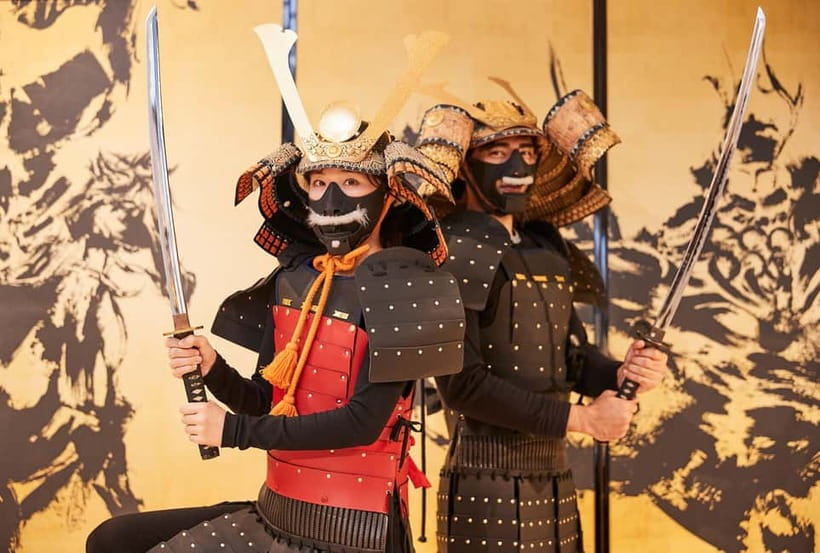
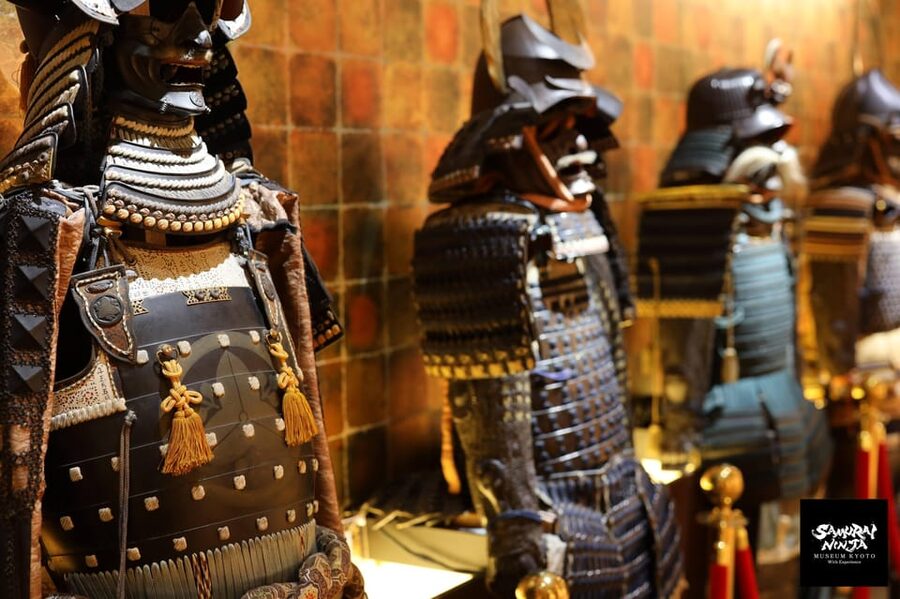
You’ll suit up in hakama and use a samurai helmet and armor during the session. Getting into the clothing is not just for photos. The hakama and helmet change how you hold yourself, and the instructors use that to teach posture and respectful handling of the sword.
Practical tip: go in with a plan for hair and makeup. You do not need to overthink it, but helmets can mess with hair more than you expect, so a simple tie or clip helps.
One more important note: children under 6 can not enter the samurai venue. If you’re traveling with younger kids, confirm age rules before you book.
Step Into Role Play: Sword Workshop Before the Museum
The sword part is the headline, and it is structured to work for beginners. The instructors teach foundational handling and a choreographed routine, then you practice as a group in a way that feels safe and supervised.
A big reason this works is pacing. You get instruction, then you get to try it. That keeps first-timers from freezing up, and it also gives experienced visitors something tangible to focus on instead of just watching.
From feedback patterns, Sensei Ryo is a name that shows up often as a katana instructor, with people praising his professionalism and how he explains basics for total novices. Depending on your group, you might also hear other instructors referenced with similar styles, but the overall approach is consistent: clear basics, then a routine you can actually perform.
The Katana Lesson: What You Really Learn (And What You Don’t)
Let’s be straight about expectations. This is not an advanced kendo course, and you are not trying to master footwork for years. In a two-hour window, you learn how to handle the sword correctly and practice a short sequence.
You can expect:
- How to hold and move with the katana safely
- A basic routine that your group rehearses together
- A family-friendly supervised sword-play segment using foam or rubber swords, depending on the format on your date
Why this is worth it anyway: you leave with muscle memory for a few key positions and an understanding of how samurai training is framed as discipline, not chaos. It’s a “starter kit” experience that helps you appreciate the museum afterward.
The most common drawback I’d plan around is practice time. Several people wished they could repeat more, which makes sense. If you’re hoping for lots of drill repetitions, you should choose this as a first taste of the art, not the only training you’ll do in Japan.
More Samurai & Ninja Sessions in Tokyo
- Tokyo: Samurai Restaurant Show Ticket with 2 Drinks
★ 4.5 · 1,307 reviews - Tokyo: Samurai Sword & Archery Class from Samurai Descendant
★ 5.0 · 603 reviews - Ninja+Kabuki Tokyo
★ 4.5 · 512 reviews - Best Samurai Experience in Tokyo
★ 5.0 · 458 reviews
Museum Tour in Costume: Samurai and Ninja Context You Can Keep
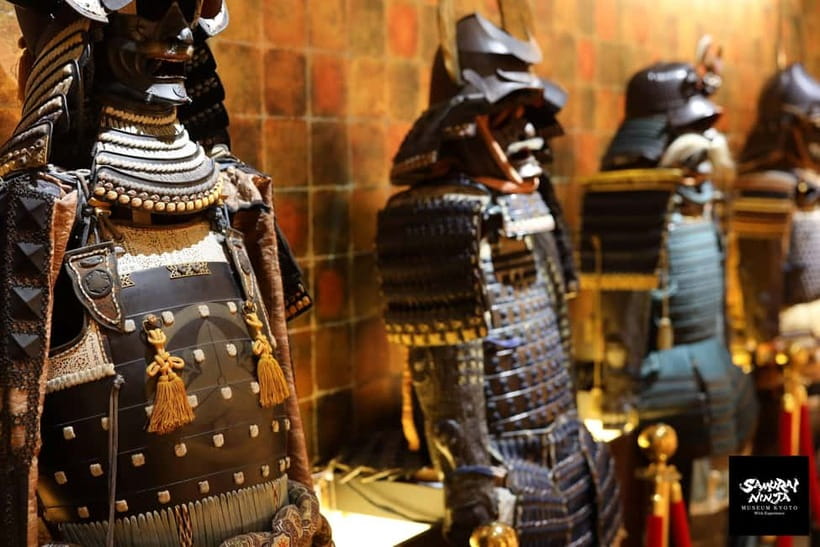
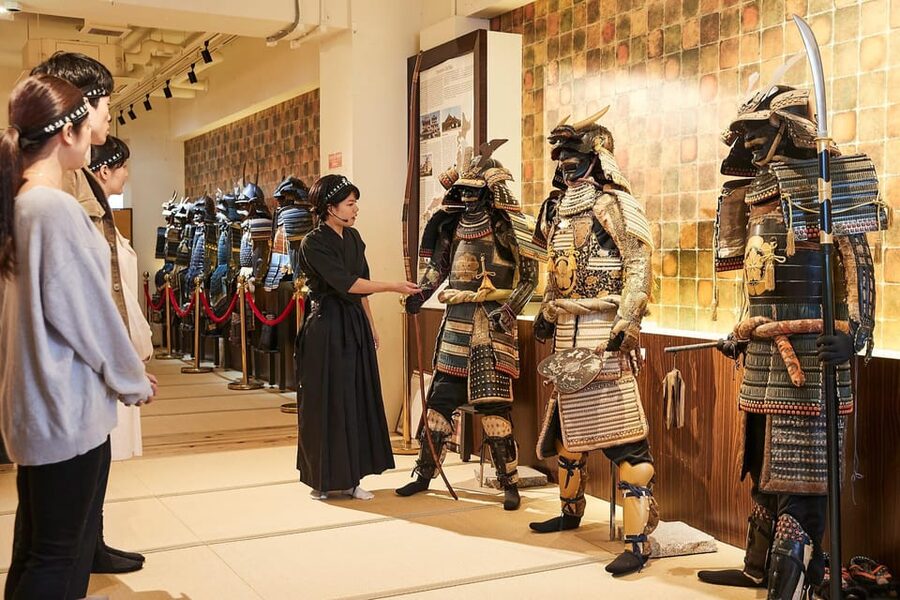
After the workshop, the experience shifts into a museum-style tour, and you often continue in samurai gear, including helmet use. That detail changes the vibe. You are not just reading labels, you’re in the role while someone explains how samurai and ninja culture evolved.
The tour covers the story of samurai across the centuries, from origins through the end of the samurai era, and it also touches how these warriors are viewed and practiced today. On top of that, you get ninja-focused context, with displays that connect back to the weapons trial later.
Guide names show up often in feedback. People frequently mention Ren and Nao as museum guides, with praise for energetic delivery and clear explanations that keep younger participants engaged.
And yes, there can be a feeling of speed inside the museum. One person felt the museum portion ran a bit rushed. I’d plan for a “highlights tour” pace, not a slow, museum-crawl pace.
Ninja Weapons Trial and Shuriken Fun
After the history portion, you get the fun action part: ninja weapons trial. Most sessions focus on throwing shuriken at targets, and it tends to be a highlight because it mixes skill, competition, and laughs.
This works well for mixed groups. Adults get a chance to learn a technique, while kids get a clear game with visible results. It also breaks up the structured sword training so the entire two hours feels varied instead of one long lesson.
If you want to photograph this, do not wait until the final minute. The best shots usually come when people are actually lining up their throws, not when everyone is packing up.
Photo Backdrops: How to Turn Gear Into Real Memories
You also get themed photo opportunities with samurai-themed backgrounds. That’s not a random add-on. It’s timed so you can get pictures while you still have the armor and helmet on, which is when the look is most dramatic.
My practical advice: decide in advance what you want your photo to show. If you want a classic samurai portrait, pick one or two spots and stick to them. If you want group photos, line up early, because costume changes and instructor timing can move you along quickly.
Also, if you’re traveling as a family, the photo section is a great equalizer. Everyone can participate without needing prior sword skills.
Small Group Size: The Hidden Value in the Schedule
With a maximum of 16 travelers, you get a training environment that feels less rushed than you’d expect for something this hands-on. That group cap matters because katana instruction needs attention to safety and form.
In practice, this means:
- You are more likely to get corrections
- The routine is easier for beginners to follow
- The instructor can keep everyone moving at the right pace
Some sessions include kids alongside adults. The good news is that the format is built for families. The potential tradeoff is that a few movements might get simplified if there are younger participants in the group.
If you’re planning your day in Tokyo, this also makes it easier to fit in. Two hours is a manageable block, and you can pair it with nearby Asakusa sightseeing.
Price Value at Around $63 Per Person
At about $63 per person, you are paying for more than entry to a museum. You’re paying for costume use, English live guidance, sword training, and a structured photo and ninja trial segment.
Here’s how I think about value:
- Cost per activity is efficient because multiple parts are included in one timed session.
- You’re not just paying for instruction. You’re paying for the gear, the guided context, and the practice time.
- The small-group size helps justify the price versus larger, more generic experiences.
If you’re an adult who wants hands-on culture, this can be good value because you get both education and a physical activity. If you’re traveling with kids, it’s often easier to justify the cost because they actually do things, not just watch.
Who Should Book This in Tokyo (And Who Might Skip)
This tour is best if you:
- Want a hands-on activity in Tokyo that feels different from shopping and standard museum visits
- Like interactive lessons where you practice rather than observe
- Are traveling as a family, since the format is commonly praised for keeping kids engaged
- Want a memorable photo moment without needing to plan a separate studio shoot
You might consider skipping if:
- You already train regularly and want deeper, longer drills
- You prefer museum time to be unhurried and slow
- Your group includes people who dislike costume-heavy activities
If you’re on a first Tokyo trip, this also works well as a single “signature experience” that gives your day a clear theme.
Should You Book Samurai Ninja Museum Asakusa?
I think you should book this if you want a fun, structured way to learn the basics of samurai sword handling while also getting a guide-led explanation of samurai and ninja culture. The biggest strength is the combo: costume plus katana training plus museum tour plus shuriken throwing, all in one compact two-hour block.
Book it soon if you’re traveling with kids, because the session is built for family participation and people repeatedly highlight that it stays engaging. If you’re going as adults and want maximum practice time, you should treat it as a first lesson, not a full training program.
Finally, keep your expectations aligned with the format. You will leave with a routine you can recognize, a few techniques you can explain, and photos that look like you stepped into the story for real.
FAQ
How long is the Samurai Ninja Museum Asakusa sword lesson and tour?
It runs for 2 hours.
What’s included in the price?
The included items are a samurai sword lesson, use of hakama, samurai helmet, samurai armor, themed photo opportunities, and a ninja weapons trial, plus an English live tour guide.
Is the tour guided in English?
Yes, the guide is live and English-speaking.
Is there a child age limit for the samurai venue?
Children under 6 cannot enter the samurai venue.
How large are the groups?
There is a maximum of 16 travelers.
Where do we meet?
The meeting point may vary depending on the option booked.
Can I cancel and get a refund?
Yes, you can cancel up to 24 hours in advance for a full refund.
Can I book without paying everything immediately?
Yes, it offers a reserve now & pay later option, so you can book and pay nothing today.
Is it wheelchair accessible?
Yes, the activity is wheelchair accessible.
More Museums in Tokyo
- Tokyo Studio Ghibli Museum and Ghibli Film Appreciation Tour
★ 4.5 · 421 reviews - Tokyo Sword Experience – includes Museum Ticket/Ninja Experience
★ 5.0 · 314 reviews - Tokyo: Art Aquarium Museum GINZA Entry Ticket
★ 4.5 · 278 reviews - Samurai Ninja Museum Asakusa: Kid-Friendly Ninja Training
★ 4.7 · 67 reviews
Newly listed around Tokyo
- Tokyo private transfer for Yokohama Port★ 4.5 · 63 reviews
- Luxury Kimono Photoshoot at Ginza Tokyo★ 5.0 · 7 reviews
- Tokyo Allstar Food Tour★ 4.5 · 206 reviews
- Tokyo Art Aquarium Museum E-Ticket with optional Tokyo Metro Pass★ 5.0 · 17 reviews
- Tokyo: Best Ginza Food Tour at 3 Local Eateries★ 5.0 · 83 reviews
- Private One Day Nikko Tour with Bilingual driver★ 3.5 · 11 reviews
- PRIVATE tour in 180SX to Daikoku+++++★ 5.0 · 6 reviews
- Kabuki Talk★ 5.0 · 10 reviews
Samurai Sword & Ninja Training, compared.
Samurai Ninja Museum Guided tour and Experience
Read our review →
Kendo and Samurai Experience with Uniform and Gear
Read our review →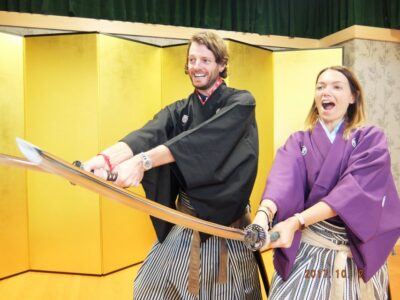
Samurai Sword Class by Experts in Traditional Arts
Read our review →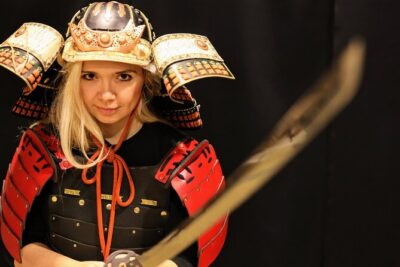
Skip the lines Basic Ticket at SAMURAI NINJA MUSEUM KYOTO
Read our review →
Samurai Sword & Archery Class from Samurai Descendant
Read our review →
Browse the lists this tour appears in