
Review · HISTORICAL TOURS
Tokyo Asakusa sightseeing and history walking tour
One neighborhood, two religions, and real street-level flavor.
This Tokyo Asakusa sightseeing and history walking tour is interesting because you get both the well-known icons and the less-obvious lanes locals use, all while a guide explains the why, not just the what. I like the focus on Asakusa’s food and festival roots, including stories tied to the Sanja Festival and what you’re really looking at at Sensō-ji and Asakusa Shrine. A possible drawback: it’s a fast 90 minutes with photo stops and breaks, so if you want long, classroom-style lectures, you may feel slightly time-pressed.
What also helps is the human touch. The guide is local (and shows up with a calm, patient vibe), and the tour is offered in English, German, and Japanese, which makes it easier to match your comfort level. Just double-check your language choice when you book, since one past German experience reported more limited German than expected.
In This Review
- Key things I’d circle before you go
- Why Asakusa on foot beats trying to rush it alone
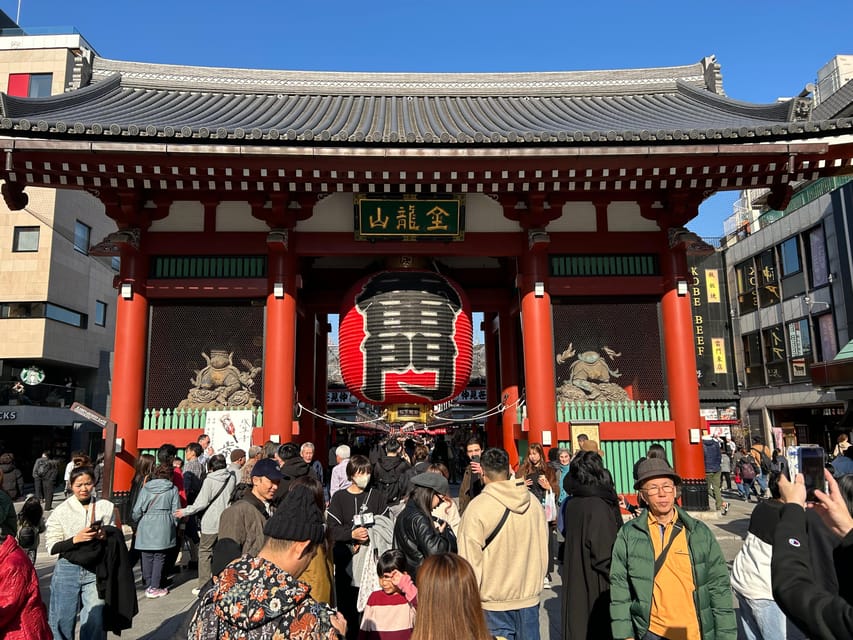
- Meeting at Kaminarimon: the fastest start in Asakusa
- Nakamise Street: shop smart, snack early, and don’t miss the rhythm
- Sensō-ji Temple: Buddhism in real-life action, not just architecture
- Asakusa Shrine: the Shinto side, plus Sanja Festival origin stories
- Asakusa Kingyo and the Whaling Ship: smaller stops that teach you how the neighborhood thinks
- Food guidance that actually helps you eat well in Asakusa
- Photography tips, photo pacing, and the value of a guide who pays attention
- Price and what makes $19 feel fair for 90 minutes
- Who this Asakusa walk is best for
- Should you book this Tokyo Asakusa sightseeing and history walk?
- FAQ
- How long is the Tokyo Asakusa sightseeing and history walking tour?
- Where do I meet the guide?
- What are the main sights covered?
- What’s included in the price?
- Is transportation included?
- What languages are available for the live guide?
- What should I bring?
- Is this tour private or shared?
- Can children join?
- What cancellation options do I have?
Key things I’d circle before you go
- Kaminarimon meet-up makes orientation easy, especially if this is your first time in Asakusa.
- Sensō-ji and Asakusa Shrine explained side by side, so Buddhism and Shinto stop feeling confusing.
- Back streets and “real” snack targets help you skip the tourist-only loops.
- Photo stops are intentional, and the guide is known for taking good pictures and showing you the best angles.
- Food guidance without pressure, with restaurant ideas for soba, sukiyaki, yakiniku, tempura, eel, sushi, and more.
- Sanja Festival origin stories connect the temples, the neighborhood, and Tokyo’s history.
Why Asakusa on foot beats trying to rush it alone
Asakusa can feel like two places at once. You’ve got the postcard views around Sensō-ji, and then you’ve got the working-street Asakusa people actually move through. This tour works because it doesn’t treat those as separate worlds. You walk from the big entry points into the heart of the district, and the guide keeps tying the sights back to daily life, rituals, and local food.
For me, the best part is that you’re not left to guess. When you’re standing at Sensō-ji, it’s easy to see a temple. It’s harder to understand the logic behind what happens there, why people bow and clap, and what beliefs are at play. The same goes for Asakusa Shrine. With both stops included, you quickly learn the difference in spirit, not just the building names.
One more practical win: in 90 minutes, you get structure. You’re not wandering with a map and hoping you bump into the right stories. You’re moving, stopping, snapping photos, and getting context as you go.
More History Tours in Tokyo
- Tokyo: Imperial Palace Japanese History Walking Tour
★ 4.9 · 987 reviews - Yanaka Walking Tour: Historic and Traditional District of Tokyo
★ 5.0 · 530 reviews - Tokyo: Shinjuku Historical Walking Tour & Secret Backstreets
★ 5.0 · 530 reviews
Meeting at Kaminarimon: the fastest start in Asakusa
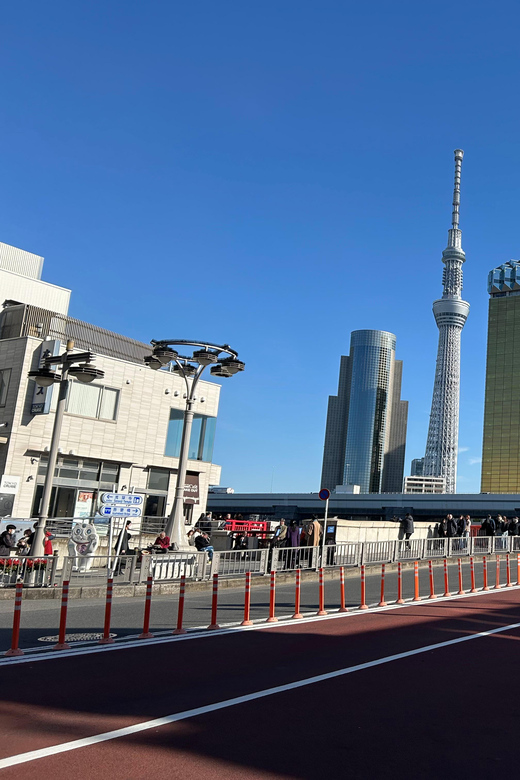
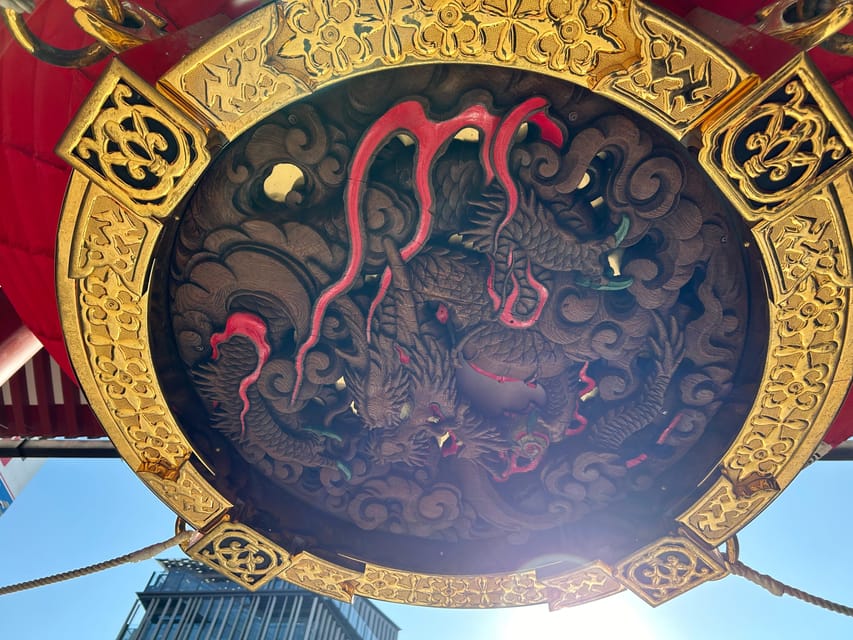
You meet at 雷門 (Kaminarimon Gate), on the left side, with a GetYourGuide sign. The coordinates are listed as 35.7111163, 139.7963656, which is handy if you use a map app instead of street directions.
Why this matters: Kaminarimon is the obvious landmark, but the exact side can still be annoying when you’re traveling in a crowd. Starting at a clear point helps you avoid the usual first-10-minutes panic. The tour also uses this as your baseline for photos and orientation before you step into the shopping street flow.
Wear comfortable shoes. You’ll walk a fair amount for a 90-minute tour, and Asakusa sidewalks can get crowded near the main lanes. Add water, and you’re set.
Nakamise Street: shop smart, snack early, and don’t miss the rhythm
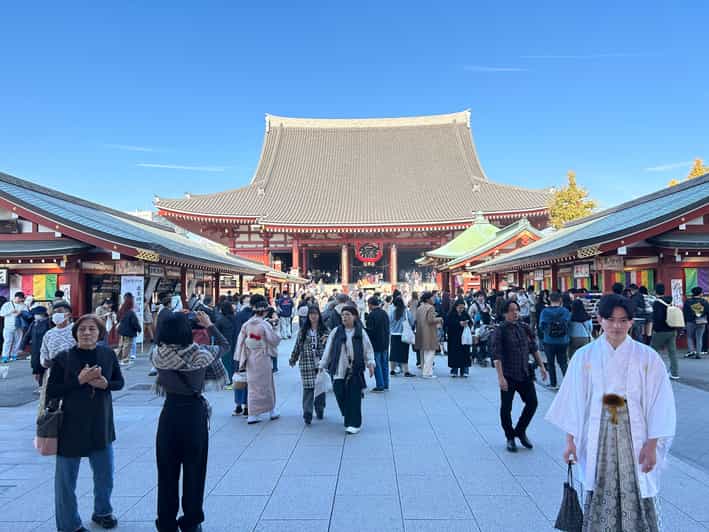
Next up is Nakamise Shopping Street, the classic approach road toward Sensō-ji. You’ll have time for a photo stop and then a guided walkthrough with shopping time. Think of this as your chance to get your bearings and your first Asakusa snacks without losing momentum.
Here’s what I’d do with this segment:
- Keep your eyes on what looks freshly made and easy to share.
- If you want souvenirs, browse now while you still have energy, because later you may want to focus on temple time.
The tour’s value here is that you’re guided toward spots people actually use, not just what’s loudest or most centrally located. One of the standout themes from the experience notes is that the guide knows back-street shortcuts and practical places to find crunchy, crispy treats and traditional items that don’t feel like mall shopping.
Sensō-ji Temple: Buddhism in real-life action, not just architecture
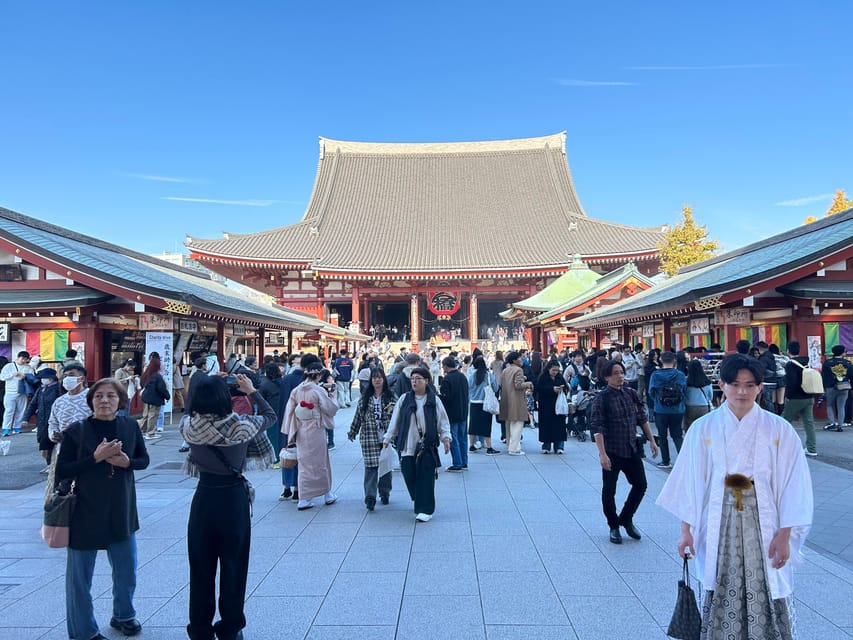
You’ll reach Senso-ji (Sensō-ji Temple) and get a break plus guided time, photo stops, and free time. The total temple block is long enough to do both: learn, then linger.
What’s especially useful is the way the guide explains ritual behavior. For example, you’ll be taught how people bow and clap at the temple. That sounds small, but it changes your visit. Instead of just watching, you know what your body is supposed to do, when you’re supposed to do it, and why.
You’ll also get help with interpretation. Sensō-ji is a major Buddhist site, and the tour explicitly contrasts it with Asakusa Shrine, which is Shinto. That comparison is one of the biggest reasons this tour feels different from a standard temple walk.
Practical note: Sensō-ji can get busy. Use your guided time to learn the rules quickly, then use your free time to find your own photo angles. If you’re with kids, this is a good segment to keep short, because temple crowds and warm weather can tire people out.
More Walking Tours in Tokyo
- Tokyo Tsukiji Fish Market Food and Culture Walking Tour
★ 5.0 · 3,184 reviews - Tokyo: Shinjuku Local Bar and Izakaya Guided Walking Tour
★ 4.9 · 1,794 reviews - Tokyo: Tsukiji Fish Market Food and Walking tour
★ 5.0 · 1,724 reviews - Tokyo: Asakusa Walking Tour with Sensoji Temple Visit
★ 4.8 · 1,583 reviews
Asakusa Shrine: the Shinto side, plus Sanja Festival origin stories
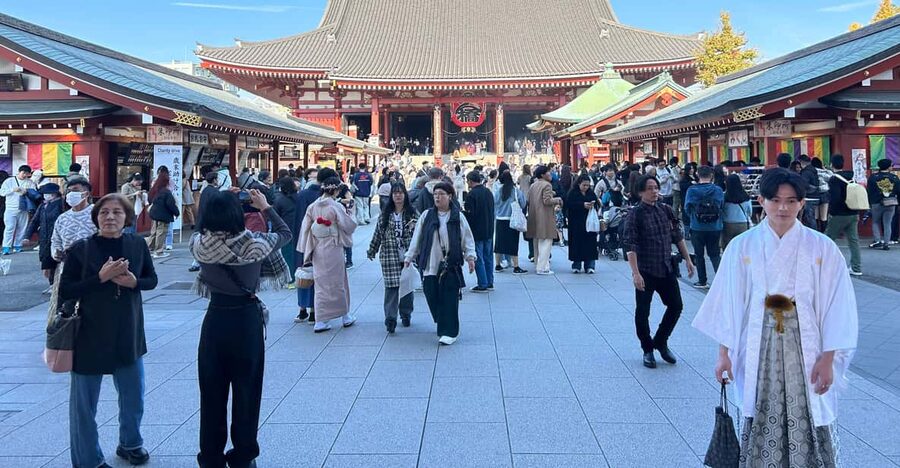
After Sensō-ji, you go to Asakusa Shrine with more guided time and another generous free window. This is where the tour leans into the temple-and-town relationship.
A major storyline you’ll hear is the connection between the shrine and the Sanja Festival, one of Japan’s three major festivals. You’ll also learn origins that tie to fishermen and the story around the Kannon statue, which helps make the neighborhood feel like it has a memory. When you understand the “why,” the shrine details stop being random decorations.
The tour also directly addresses the differences between:
- Buddhism at Sensō-ji
- Shinto at Asakusa Shrine
That matters because Asakusa is one of the places where visitors often assume everything is the same kind of religion. It isn’t. This tour helps you keep the categories straight while still enjoying the sights.
Asakusa Kingyo and the Whaling Ship: smaller stops that teach you how the neighborhood thinks
Next comes Asakusa Kingyo, followed by Hogei-sen (Whaling Ship). These are shorter segments, but they’re not filler. They act like “pause points” where the guide gives you a cultural lens.
What to expect: photo stops, short guided explanations, and then a little free time at Hogei-sen. This is where you can step back, look around, and notice how Asakusa balances history with the street-level present. You’re not only seeing temples and shopping corridors. You’re also seeing how the district remembers work, trade, and local identity.
From an experience-value perspective, these stops help break up the intensity of main-sight crowds. They also give you extra chances to take pictures without feeling like you’re sprinting between the big landmarks.
Food guidance that actually helps you eat well in Asakusa
Food is a core part of this experience. The tour includes guidance on traditional meals connected to the area, with examples like soba, sukiyaki, yakiniku, sushi, tempura, and eel. It also includes a gourmet restaurant guide.
This is the kind of “local help” I trust. You’re not being told you must buy something. You’re getting food literacy: what’s common, what makes sense for this neighborhood, and where to look so you spend your money on places that feel appropriate for the setting.
And because the guide is known for knowing the best snack targets and for offering practical shopping and eating recommendations, you can use the tour as your first-day planning tool. If you’re arriving in Asakusa and want to know where to eat without guessing, this is a smart way to get oriented.
If you have dietary limits, you’ll want to ask directly during the restaurant talk, since the tour data here is about guidance and recommendations rather than guaranteed tastings.
Photography tips, photo pacing, and the value of a guide who pays attention
One of the most consistent positive notes is about the guide’s photography. People describe taking a lot of good photos, being patient, and helping with angles and timing. Even if you’re not the type who cares about photos, that pacing can make the tour easier. You spend less time trying to figure out where to stand and more time learning what you’re looking at.
The tour also uses regular photo stops at each major location. That matters because Asakusa is visually dense. A guide helps you choose what’s worth your camera attention and keeps you moving when you might otherwise linger in the wrong spot.
Also, the tone tends to be personal and low-stress. Multiple experiences highlight that the guide makes the group feel comfortable, including when there’s a tired child in the mix. For families, that adaptability is a real plus.
Price and what makes $19 feel fair for 90 minutes
At $19 per person for 90 minutes, the value comes from more than “a walk and a map.” You’re paying for:
- a guide who connects sights to religion, festivals, and Tokyo development
- help interpreting what you see at Sensō-ji and Asakusa Shrine
- practical restaurant and snack direction
- extra context that isn’t obvious from plaques alone
- photo support during stops
If you were to hire a private guide for history and food recommendations on your own, the cost would likely be much higher. Even with the short duration, this format still does the job: it compresses orientation, context, and eating suggestions into one efficient morning or afternoon window.
The main reason it might feel less valuable is if your language expectations are strict. One past experience mentioned limited German communication compared to what was expected, so make sure you book the correct language and confirm it when possible. Another concern was that some participants felt the tour relied too much on information shown on signs and was less story-driven than hoped. If you prefer long-form narration over photo-and-pointing, keep that in mind.
Who this Asakusa walk is best for
This tour is a strong fit if you:
- are seeing Asakusa for the first time and want fast orientation
- care about understanding Shinto vs Buddhism without getting lost in terms
- want Sanja Festival context tied to what you’ll actually see
- like eating your way through a neighborhood, not just sightseeing
- prefer a guided pace that includes photo moments and short breaks
It may be less ideal if you:
- already know the religious differences and festival origins and want deeper, self-guided time on your own
- need very strict, flawless German (or another language), since one past experience reported limited German
- expect a slow, lecture-style tour with minimal photo stops
Should you book this Tokyo Asakusa sightseeing and history walk?
I’d book it if you want a first hit of Asakusa that combines the classics with smart local guidance. For $19 and 90 minutes, the mix of temple context, festival origin stories, and food pointers is a good deal, especially when you’re trying to plan your day.
I’d hesitate only if you know you need a specific language delivered with high precision, or if you dislike tours that include lots of photo stops and shorter narrative moments. If that’s you, compare your preferences with how you like to travel: some people love structure and prompts, and this one is built that way.
FAQ
How long is the Tokyo Asakusa sightseeing and history walking tour?
It runs for 90 minutes.
Where do I meet the guide?
Meet at 雷門 (Kaminarimon Gate), on the left side with a GetYourGuide sign.
What are the main sights covered?
The walk includes Kaminarimon, Nakamise Shopping Street, Senso-ji (Sensō-ji), Asakusa Shrine, Asakusa Kingyo, and Hogei-sen (Whaling Ship).
What’s included in the price?
The tour includes a guide, a walking tour, free photos, “royal tourist spots,” souvenir shop information, and a gourmet restaurant guide.
Is transportation included?
No. Transportation expenses are self-pay.
What languages are available for the live guide?
The live guide is available in English, German, and Japanese.
What should I bring?
Bring comfortable shoes, water, and weather-appropriate clothing.
Is this tour private or shared?
It’s listed as a private group.
Can children join?
Children under 3 can join free of charge. Children aged 3 to 12 get a 50 percent discount.
What cancellation options do I have?
Free cancellation is available up to 24 hours in advance for a full refund.
More Historical Tours in Tokyo
- Mt. Fuji Heritage Tour: Traditional Villages, Lakes & Shrine
★ 4.5 · 509 reviews - From Tokyo: Nikko World Heritage Site Private Full-Day Trip
★ 4.9 · 243 reviews - Tokyo: The Best of Izakaya in Shinjuku Food & Cultural Tour
★ 4.9 · 221 reviews - Asakusa: A Big-picture History Walk to Know Japan
★ 4.6 · 77 reviews
Newly listed around Tokyo
- Tokyo: Asakusa Temple & Shrine Walking Tour with Local Guide★ 5.0 · 105 reviews
- Tokyo: Asakusa Walking Tour with Japanese Comedian★ 4.6 · 18 reviews
- Tokyo: Asakusa Sightseeing Tour by Rickshaw★ 4.9 · 195 reviews
- Tokyo: Old Town Asakusa Guided Tour -Senso-ji Temple Visit★ 5.0 · 12 reviews
- Tokyo: Asakusa Sensoji Night Walk with a Local Brandy★ 4.7 · 7 reviews
- Tokyo Asakusa & Senso-Ji Walking tour With A Guide★ 4.5 · 40 reviews
- Tokyo: Asakusa Kimono Dressing and Matcha Experience★ 4.9 · 173 reviews
- Tokyo: Asakusa Kimono Rental Experience★ 5.0 · 30 reviews
Historical Tours, compared.
World Heritage Shirakawa-go and Experience Tours from Kanazawa
Read our review →
World Heritage Kyoto & Nara Uji Authentic Matcha Experience
Read our review →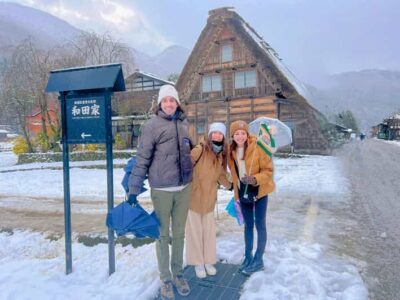
World Heritage Shirakawa-go Morning Guided Tour
Read our review →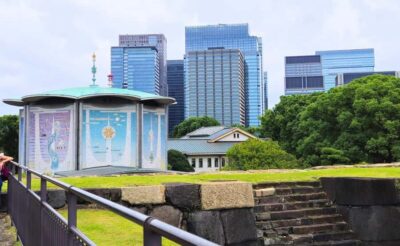
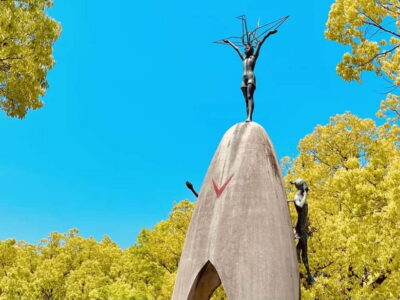
Hiroshima Historical Walking Tour – Why A-Bomb was Dropped
Read our review →
Hiroshima Peace (Heiwa) Walking Tour at World Heritage Sites
Read our review →
Yanaka Walking Tour: Historic and Traditional District of Tokyo
Read our review →
Shinjuku Historical Walking Tour & Secret Backstreets
Read our review →Browse the lists this tour appears in