
Review · WORKSHOPS
Tokyo: Making a Lantern Workshop in Asakusa with a Craftsman
Tokyo lanterns have a way of sticking with you. This hands-on lantern workshop in Asakusa lets you learn from a chochin master artisan in a 100+ year-old traditional atelier, then create your own lantern from bamboo and washi paper, with guides like Rinka or Noriko helping translate and connect the dots. The main catch is the mess factor, since the workshop may involve ink or paint, so you should wear clothes you do not mind getting stained.
What I like most is how personal it feels for a 2-hour class, not like a rushed craft demo. You are supported by an English-speaking guide or interpreter, and the studio itself is packed with lanterns that make it feel like you stepped into a working workshop rather than a one-time show-and-tell. One more consideration: the meeting point changes during official 2026 Grand Sumo Tournament dates, so you will want to double-check where to go.
In This Review
- Key things you will notice right away
- A Two-Hour Chochin You Can Actually Take Home
- The Sumida Atelier: 100+ Years of Lantern Craft in Real Life
- What You Make: Chochin Basics, Washi Paper, and Bamboo
- Inside the Workshop: How Your 2 Hours Usually Feel
- Meet-Up Details Near Skytree, Plus the Grand Sumo Tournament Switch
- English Support and the Kindness Factor You Actually Feel
- Price and Value: Why $96 Can Be Worth It
- Who This Workshop Suits Best (and Who Should Skip It)
- Should You Book This Tokyo Lantern Workshop?
- FAQ
- How long is the Tokyo chochin lantern workshop?
- How much does the lantern-making experience cost?
- What do I make during the workshop?
- Is prior crafting experience required?
- What is included in the price?
- What is not included?
- Where do I meet for the workshop?
- What should I bring with me?
- Is the workshop suitable for children?
- Is it wheelchair accessible?
Key things you will notice right away
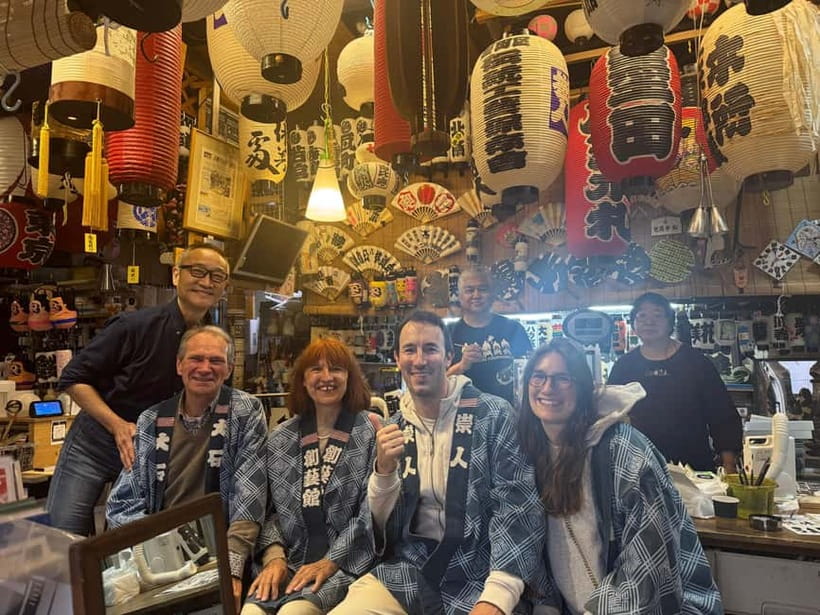
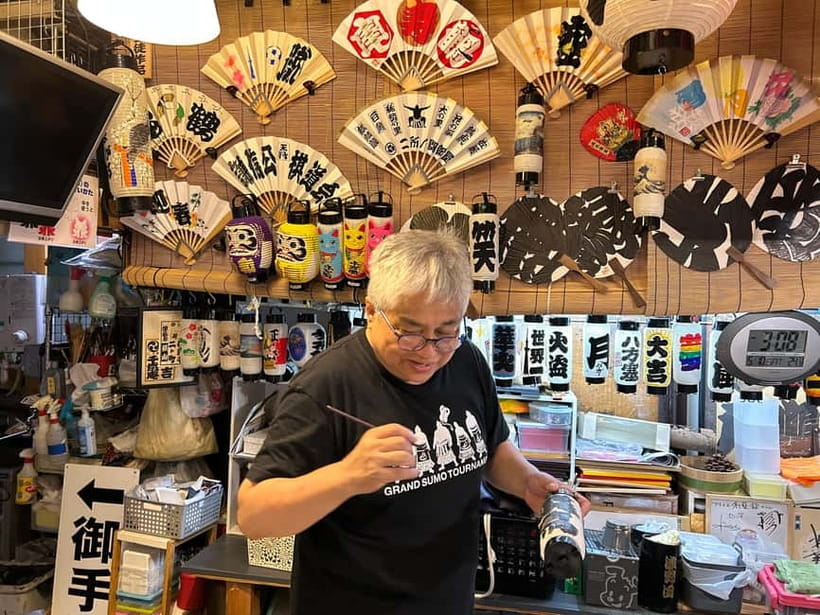
- A 100+ year traditional lantern atelier in Sumida, Tokyo, focused on real craft work
- Washi paper and bamboo are part of the actual process, not just decoration for the photo
- A lantern master artisan experience, with an English-speaking guide or interpreter to bridge language
- You take home your finished chochin, ready as a meaningful souvenir
- Photos are welcome, and the studio environment is eye-catching from the moment you arrive
A Two-Hour Chochin You Can Actually Take Home
If you want a Tokyo souvenir that feels earned, this is the kind of activity that works. You spend about 2 hours making a Japanese chochin lantern, and the best part is that you leave with a completed lantern you can display at home. That shifts the experience from entertainment to something more lasting, because you are not just watching craft skills, you are participating in the steps that create the object.
This is also a smart break in an itinerary. Tokyo can be a lot of walking, crowds, and decision fatigue. A focused craft session gives you a reason to slow down, concentrate on one task, and learn something specific instead of collecting random facts.
The other thing I appreciate is the cultural framing. The workshop does not treat lanterns like generic decor. You learn about the origins and meaning of chochin lanterns, so the finished product makes more sense, even if you are not a craft expert.
The tone tends to be welcoming and practical too. Solo travelers often find it easy to relax, because the team explains what to do and helps with communication when needed. That matters in a studio setting where you might be standing close to the workbench, not across a big room from a stage.
A few more Tokyo days to weigh up
- Mt Fuji and Hakone 1-Day Bus Tour Return by Bullet Train
★ 5.0 · 26,383 reviews - 1-Day Tokyo Bus Tour
★ 5.0 · 14,250 reviews - Tokyo: TOKYO SKYTREE® Admission ticket
★ 4.5 · 11,192 reviews
The Sumida Atelier: 100+ Years of Lantern Craft in Real Life
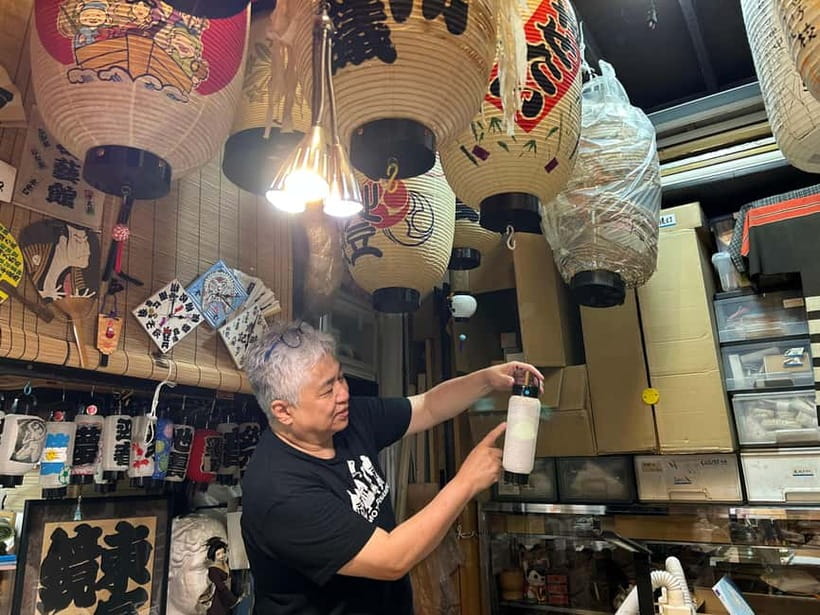
The workshop takes place in a traditional lantern-making setting in Sumida City, with a 100+ year-old atelier background. That long continuity is not just a marketing detail. It changes how the space feels. The workshop atmosphere is warm and focused, and you are working around materials and tools that are used for craft, not staged for tourism.
Because it is a craft home, the studio experience is visual in a way that typical classes are not. Lanterns of different shapes and colors hang around the space, so you are not picturing what you are making, you are seeing it everywhere while you work. Photos are welcome throughout, which is great for documenting your own build, not just the location.
You are also learning from actual makers. The experience is guided by a chochin master artisan, and several reviews mention the kindness and patience of the lead artisan team. Even when there is language difference, the workshop supports you with translation, and you get explanations that connect the meaning of the work to the steps you are doing.
One more practical benefit of this kind of atelier: packing and care. Multiple reviews note that the lanterns are packaged carefully for safe travel home. That is not guaranteed for every craft activity, so it is worth caring about, especially if you are flying.
What You Make: Chochin Basics, Washi Paper, and Bamboo
Your finished product is a Japanese chochin lantern made with authentic materials. The workshop includes bamboo and washi paper, plus the tools and supplies you need like glue and brushes. You do not need prior experience. That matters because the process includes steps where precision helps, but you are not being evaluated like in a school art class.
Washi paper is the heart of the lantern. It is strong enough to form the panels, but it is also flexible and traditional to work with. When you see the paper treated as a material with craft behavior, you start understanding why lantern-making has stayed relevant for centuries. The bamboo framing and structure also help explain why chochin lanterns look the way they do, and why the craft is more than just printing a pattern on paper.
You will also learn the history and beauty behind the craft. Even if you only catch a portion of the story because of time, it tends to stick, because you are tying it to a step you are performing. You are making a lantern while you learn what lanterns mean in Japanese culture, so it becomes practical knowledge, not trivia.
Some sessions include extra decoration steps. At least one review mentions calligraphy taking time as part of the lantern decoration. If you end up with a calligraphy element during your time slot, you should know the pacing is designed so the full 2 hours stays useful, not wasted.
Inside the Workshop: How Your 2 Hours Usually Feel
Your time starts in a lively craft space where you are greeted and guided in a traditional workflow. There is an English-speaking guide or interpreter, and the team helps you understand what you should do next. That support is not just for translation. It also reduces the stress of learning a process in a foreign language.
The first part typically focuses on context. You learn about chochin lantern origins and meaning, then you move into hands-on building steps. The craft process uses washi paper with traditional tools, and you get guided instruction from the master or assistant.
As you work, you will likely see how the atelier keeps things methodical. Crafts like this are repeatable, which is part of why the tradition survives. The team shows you the steps, corrects technique when needed, and helps you avoid common mistakes that cause paper tears or misalignment.
The studio is a visual place too. Lanterns hang all over, so you can compare the style you are building to what the workshop already makes. This helps you feel confident even if you are not sure how the lantern will look before it is finished.
Near the end, you review your completed lantern. Photos are encouraged along the way, and you get what you made to take home. That final handoff is the real payoff, because you are not leaving empty-handed or with a generic craft kit you could have done anywhere.
One practical tip: because ink or paint may be involved, plan for stained cuffs or sleeves. Wear something you would not mind in a messy scenario, and you will feel much more comfortable.
A different sort of day in Japan:
- Tokyo: teamLab Planets TOKYO Digital Art Museum Entry Ticket
★ 4.6 · 9,779 reviews - Mt Fuji & Hakone Cruise, Drum Show Bullet Train 1 Day from Tokyo
★ 4.0 · 7,413 reviews - Tokyo: Sumo Show Experience with Chicken Hot Pot and a Photo
★ 4.8 · 6,678 reviews - Tokyo: Shinjuku Food Tour (13 Dishes at 4 Local Eateries)
★ 5.0 · 6,603 reviews
Meet-Up Details Near Skytree, Plus the Grand Sumo Tournament Switch
Location is part of the experience, and this workshop is based in Sumida, near Tokyo Skytree and Oshiage Station. That makes it easy to pair with Asakusa area sightseeing, because you are not stuck crossing the city to find the class.
Just make a note of the one big twist. The meeting point changes during official Grand Sumo Tournament periods in 2026. The reason is simple: the workshop is held at a different venue during tournament weeks, and you need to go to the correct address for your date.
Here is the practical version you need:
- Regular workshop location (most dates): 2-10-8 Yokokawa, Sumida City, Tokyo (meeting point in Yokokawa)
- Special venue during official sumo tournament dates: 1-3-201 Yokoami, Sumida City, Tokyo, Ryogoku Kokugikan area, 1st floor
For 2026, the tournament periods listed are:
- January 11-25
- May 10-24
- September 13-27
If you only skim one thing before you go, skim that date list and match it to your booking. It is the main logistical variable that can cause a wrong turn if you assume the meeting point never changes.
English Support and the Kindness Factor You Actually Feel
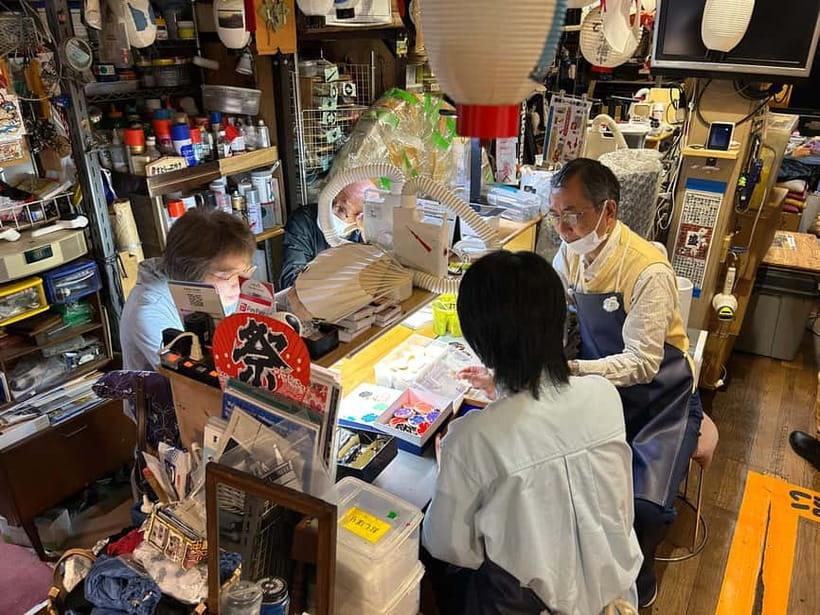
A craft workshop lives or dies by the human side. This one tends to get strong comments about hospitality and patience, and you can see why. You are doing a skill-based activity, so the guide has to explain steps clearly. When language support is solid, you stop worrying and start learning.
In reviews, guides like Rinka and Noriko are mentioned as particularly kind and helpful. There is also mention of a translator, David Park, who supported communication with the masters. That kind of bridge matters because lantern-making is not only hands-on work. It is also a conversation about meaning and technique.
This is also a good setting for asking practical Tokyo questions. One review mentions chatting and getting recommendations during the session. So if you are the type who likes to get local advice, this can be one of the more useful hours of your trip, not just a craft class.
Also, do not underestimate how much comfort helps. Some solo visitors note they did not feel awkward, because the workshop team guided the experience step-by-step. If you are traveling alone in Tokyo, that is a real advantage. You are not performing or guessing what to do.
Price and Value: Why $96 Can Be Worth It
At $96 per person for a 2-hour workshop, the price is not the cheapest activity in Tokyo. But it also is not a generic souvenir-making event. You are paying for materials, real guidance, and a take-home item you made with authentic craft components.
Here is what you get for that money:
- A guided lantern-making workshop
- All materials (including bamboo and washi paper, plus supplies like glue and brushes)
- An English-speaking guide or interpreter
- Your completed lantern to take home
That combination changes the value math. If the class were just instruction with no materials, it would be less compelling. If it were materials-only with no support, you might end up with something fragile or misaligned. Instead, the included guidance helps you produce a lantern that looks like it belongs in the real craft tradition.
You also have the option to buy a professionally made lantern on-site. That can matter if you want a higher-end souvenir or a second piece for gifts. Even if you do not buy anything extra, the fact that the workshop sells the makers’ work can be a sign you are supporting a real craft business.
Finally, consider the cost of a comparable crafted souvenir in Tokyo. Many lanterns are sold as finished goods. This workshop gives you a chance to make one yourself, with safe packing for travel home noted in reviews. The value is in the memory and the object.
Who This Workshop Suits Best (and Who Should Skip It)
This is a family-friendly activity for ages 6 and up, and it can work well for couples, friends, and solo travelers. If you like making things and want a souvenir with a story, you will probably enjoy it.
It also fits well for people who want a slower activity after walking through Tokyo all day. A lantern workshop gives you a break from decision-making and lets you focus on something tangible.
If you are traveling with kids, keep the age rule in mind. The experience is not suitable for children under 6. If you have younger kids, you may want to plan an alternative activity.
If you hate getting messy, you should plan for that. Ink or paint may be involved, so you need clothing you can risk. Also, since meals and drinks are not included, plan your snack or dinner timing around the 2-hour class.
Also check your travel plans for the Grand Sumo Tournament periods. Even if you think you know the meeting point, use the correct address for your date.
Should You Book This Tokyo Lantern Workshop?
If you want a meaningful Tokyo experience that ends with something you can display at home, I think this is a strong booking choice. The reasons are practical: authentic materials like bamboo and washi paper, instruction from a real chochin master artisan team, and your finished lantern included in the price. Plus, the workshop is close to the Skytree area, which makes it easy to slot into a day.
I would especially recommend it if you:
- want a hands-on craft rather than another museum visit
- like the idea of learning the meaning behind what you are making
- need a souvenir that is both personal and carefully packed
- are traveling with family, friends, or solo and want structure
You might hesitate if:
- you are very sensitive to stains, since ink or paint may be part of the process
- you are going during official sumo dates and could forget the meeting point change
Bottom line: if you can handle a little mess and you check the meeting address for your exact date, this Tokyo chochin workshop is the kind of class that gives you a story you will still remember months later.
FAQ
How long is the Tokyo chochin lantern workshop?
The workshop runs for 2 hours.
How much does the lantern-making experience cost?
It costs $96 per person.
What do I make during the workshop?
You make your own Japanese chochin lantern using materials like bamboo and washi paper.
Is prior crafting experience required?
No. The workshop says no prior experience is needed.
What is included in the price?
The price includes the guided workshop, all materials (bamboo, washi paper, glue, brushes), an English-speaking guide or interpreter, and your completed lantern to take home.
What is not included?
Transportation to and from the venue, and meals or drinks, are not included.
Where do I meet for the workshop?
It depends on your booking date. Outside official Grand Sumo Tournament periods, the meeting point is in Yokokawa, Sumida City. During official tournament periods, it moves to the Ryogoku Kokugikan area at Yokoami, Sumida City, on the 1st floor.
What should I bring with me?
You should bring a passport or ID card.
Is the workshop suitable for children?
It is suitable for ages 6 and up. It is not suitable for children under 6.
Is it wheelchair accessible?
Yes, the workshop is listed as wheelchair accessible.
Newly listed around Tokyo
- Tokyo private transfer for Yokohama Port★ 4.5 · 63 reviews
- Luxury Kimono Photoshoot at Ginza Tokyo★ 5.0 · 7 reviews
- Tokyo Allstar Food Tour★ 4.5 · 206 reviews
- Tokyo Art Aquarium Museum E-Ticket with optional Tokyo Metro Pass★ 5.0 · 17 reviews
- Tokyo: Best Ginza Food Tour at 3 Local Eateries★ 5.0 · 83 reviews
- Private One Day Nikko Tour with Bilingual driver★ 3.5 · 11 reviews
- Kabuki Talk★ 5.0 · 10 reviews
- Japanese Whisky Tasting Experience at Local Bar in Tokyo★ 5.0 · 59 reviews
Workshops, compared.
Sushi Making Tokyo Roll and Authentic Japanese Sushi Class
Read our review →
Roll and Authentic Sushi Making Class in Asakusa
Read our review →
Ramen Cooking Class at Ramen Factory in Kyoto
Read our review →
Sushi Making Class in a Happi Coat near a Famous Spot
Read our review →

Tokyo Sushi Making Class in Tsukiji with Professional Chef
Read our review →
Ramen & Gyoza Cooking Class in Tokyo with Local Supermarket Visit
Read our review →Browse the lists this tour appears in