Review · SUMO STABLE VISITS
Tokyo Walking Tour : Sumo, Sushi, Tea, Temples and Tokyo Tower
Sumo training in the morning, Tokyo Tower at the end. This is a Tokyo walking tour that mixes hands on culture with real city food, from Arashio Beya practice to tea in Hamarikyu and a visit to Tokyo Tower. It is built for public transit and plenty of outdoor walking.
I especially like the way this day gives you both iconic highlights and quiet moments in between. Hamarikyu Gardens includes a guided introduction and a proper tea house break, and Zojoji Temple adds a hands-on sutra copying experience that slows the pace down.
One thing to consider: the sumo portion is not guaranteed. The Sumo Beya schedule can change, and training may be closed during certain weeks in January, May, and September for Grand Sumo Tournaments.
In This Review
- Key highlights worth your morning energy
- Where the day starts: getting from Hamacho to the highlights
- Arashio Beya sumo training: the cool part, and the catch
- Tsukiji Outer Market: food time without turning it into a shopping marathon
- Hamarikyu Gardens and tea house: a break from the city pace
- Zojoji Temple: sutra copying for a focused, quiet kind of fun
- Tokyo Tower observation deck: classic views with a retro feel
- Price and value: why $166.85 can make sense
- Pacing, walking, and who will enjoy this most
- Should you book Tokyo Sumo, Sushi, Tea, Temples, and Tokyo Tower?
- FAQ
- How long is the Tokyo Walking Tour?
- What does the tour cost?
- What time does the tour start, and where does it meet?
- Where does the tour end?
- Does the tour use a private vehicle?
- How much walking is involved?
- Is the Sumo training guaranteed?
- What is included in the ticket price?
- What is not included?
- What is the cancellation policy?
Key highlights worth your morning energy
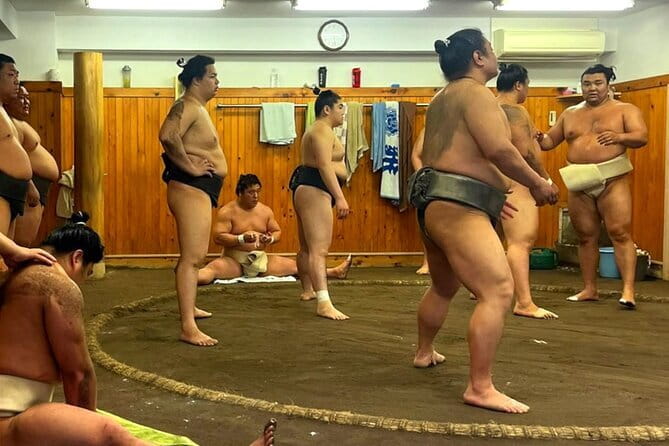
- Arashio Beya real training viewing, with clear rules that you must not disturb the wrestlers
- Tsukiji Outer Market guided food stroll, plus free time for pictures and shopping at your pace
- Hamarikyu tea house experience, after a garden history introduction and time to wander
- Zojoji Temple sutra copying, a guided cultural activity that adds a peaceful reset
- Tokyo Tower observation deck time, with sights of the city and that retro tower feeling
Where the day starts: getting from Hamacho to the highlights
The tour starts at Hamacho Station, and it ends at Akabanebashi Station near Tokyo Tower. It runs about 8 hours 15 minutes, and that time is real, with several hours of walking outdoors. Because this is not a private-vehicle tour, you should expect to move by public transport and do some street walking between stops.
The group size is capped at 15 travelers, which matters more than you think on a walking tour. Smaller groups usually mean the guide can keep things organized, and you spend less time waiting for people to catch up. You also get a local English speaking guide, which makes the cultural parts easier to follow, not just watch.
Logistics are also part of the value here. The tour includes the train fee from Ningyocho Station to Tsukiji Station, and tickets for the paid cultural stops. What is not included is transport before and after the tour, so you still need to plan how you get to Hamacho in the morning and where you go when you finish at Akabanebashi.
If you are the type who likes a plan, but still wants freedom at key moments, this tour fits. It includes guided segments, then gives you free time to explore, take photos, and shop, especially in Tsukiji and at Hamarikyu Gardens.
More Shrine & Temple Visits in Tokyo
- Tokyo: Meiji Shrine, Asakusa, Skytree Bus Tour and Cruise
★ 4.7 · 1,986 reviews - Tokyo: Asakusa Walking Tour with Sensoji Temple Visit
★ 4.8 · 1,583 reviews - Nikko: Kegon Falls, Lake Chuzenji & Toshogu Temple
★ 4.6 · 1,577 reviews
Arashio Beya sumo training: the cool part, and the catch
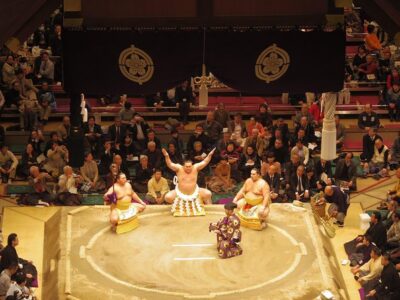
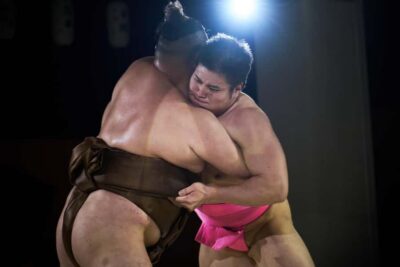
Your first big wow moment is Arashio Beya, a traditional sumo training room. You get the chance to watch sumo practice, and the experience is described as real training, not a staged performance. That is great for atmosphere, but it also means the rules are strict: sumo cannot be disturbed.
This is exactly why I like this stop. You are not just sightseeing around sumo, you are seeing how the day-to-day rhythm of training looks and feels in a real setting. You will want to keep your movements quiet, follow your guide’s timing, and resist the urge to treat it like a museum exhibit.
Now for the consideration that can affect your expectations. The Sumo Beya schedule is subject to change, and sometimes training might not be happening, meaning you may not be able to see sumo. Also, training is closed during certain weeks in January, May, and September because Grand Sumo Tournaments take place. If your travel dates fall in those windows, you should be prepared for a different outcome.
Tsukiji Outer Market: food time without turning it into a shopping marathon
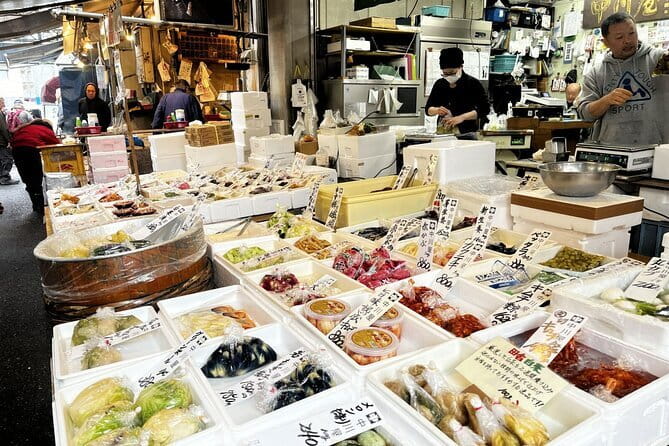
After sumo, you head to Tsukiji Outer Market for a guided tour. This is one of the best parts for first-time visitors because it mixes street energy with structure. You get guidance on where to look and what to try, and then there is free time to explore at your own speed.
One practical note: this tour is built around food experiences, but food and drink are not included. So you can absolutely sample and snack, but you should bring extra spending money for what you want to eat. The good news is that the market is set up for browsing and small bites, so you can keep it flexible.
I also like that the market portion supports two different travel styles. If you want direction, you get a guided walk and sampling. If you want to wander and take photos, there is space to do that too, including time for pictures and shopping.
Because this is Tokyo, quality is high and choices are plentiful, so having a guide can help you avoid the common problem of standing in front of ten stalls with no idea where to begin. You will come away with a better sense of what people actually eat and buy here.
Hamarikyu Gardens and tea house: a break from the city pace

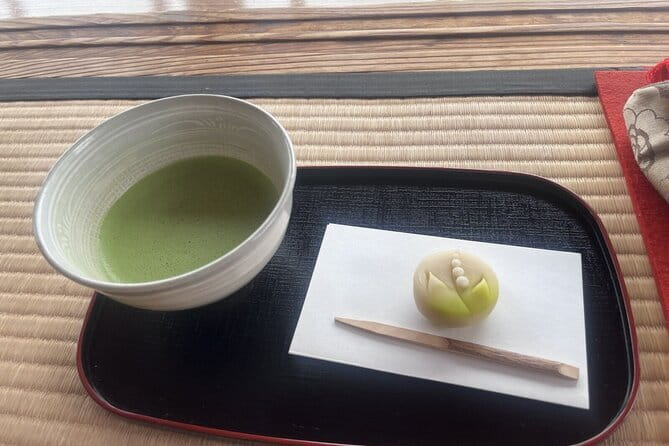
Next comes a calmer shift, Hamarikyu Gardens. You get a guided introduction to the garden and its history, then time to enjoy the space before meeting back up for tea. Admission is included, and so is the tea house experience with traditional tea and a sweet.
This stop matters because it gives your feet and your mind a breather. After the morning rush of sumo viewing and Tsukiji crowds, the garden setting resets your senses. You are not forced into a constant walking pace, and the guided portion helps you understand what you are seeing, not just pass through it.
The tea house moment is a big quality-of-day multiplier. It is easy for tours to treat tea as a quick drink. Here, it is specifically described as a tea and sweet experience in the garden’s tea house, so plan to slow down, enjoy the setting, and actually take in the atmosphere.
A small practical tip: wear comfortable shoes. Gardens often have uneven or packed surfaces, and you will want to move easily while still enjoying the views.
More Sushi Workshops in Tokyo
- Sushi Making Tokyo Roll and Authentic Japanese Sushi Class
★ 5.0 · 3,971 reviews - Tokyo: Roll and Authentic Sushi Making Class in Asakusa
★ 4.9 · 1,957 reviews - Tokyo: Sushi Making Class in a Happi Coat near a Famous Spot
★ 4.9 · 1,377 reviews - Sushi Making Tokyo! Popular Maki Sushi & Japanese Sushi(+Recipe!)
★ 5.0 · 1,314 reviews
Zojoji Temple: sutra copying for a focused, quiet kind of fun
Then the tour turns toward spiritual and historical Tokyo at Zojoji Temple. You get a guided tour of the temple and its history, plus a sutra copying experience at the temple.
If you have ever watched people do calligraphy or religious copying, you already know it has a calming effect. This activity adds that same kind of focus, and it is different from just listening to a lecture. Even if you are not a religious person, the practical side is that this is a moment that slows everything down. Your brain shifts from sightseeing mode to doing mode.
This is also where having an English speaking guide helps. You can follow what you are seeing and what the activity means, which makes the experience feel intentional instead of random.
Like the rest of the day, you will still be moving on a schedule, but the Zojoji segment is the kind of stop that makes the day feel balanced, not just busy. It gives you a mental pause between food and city landmarks.
Tokyo Tower observation deck: classic views with a retro feel
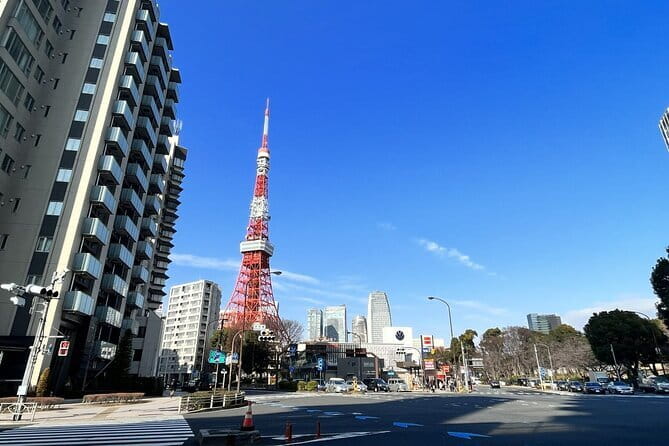
To close the day, you visit Tokyo Tower. This part includes a ticket, and you get time to take in the sights of Tokyo. The experience is described as having a retro feel to the tower’s architecture, which is one of the reasons the tower works so well for visitors. It feels like Tokyo’s skyline does not just look futuristic, it also has design personality.
Your guide likely sets you up for what to look for from the observation deck, but at this point you will also enjoy simply having the time to look around. It is a nice contrast to earlier stops where the focus was on cultural participation and walking through neighborhoods. Here, your job is mostly to watch, photograph, and absorb the scale of the city.
Plan to dress for weather. This is outdoors walking earlier, and the tower area can still feel cool or warm depending on the day.
Price and value: why $166.85 can make sense
At $166.85 per person, this tour is not the cheapest way to see Tokyo. But when you break down what is included, it starts to look like a value-focused day.
You are paying for:
- A local English speaking guide for the day
- Entry fees for Hamarikyu Gardens
- The tea house tea and sweet experience
- The Zojoji Temple sutra copying fee
- The Tokyo Tower ticket
- The included train fee from Ningyocho to Tsukiji
What is not included is food and drink, plus transportation before and after the tour. That is normal for many half-day or full-day tours, but it does mean you should budget for meals on your own during free time.
If you hate paying multiple separate admissions and lining up, this format is convenient. The guide also saves time by keeping you moving between spots that would be harder to stitch together on your own without losing the day to transit and ticket confusion.
The biggest value for me is how the tour blends categories. You get sumo training viewing, market food time, a garden tea break, a temple activity, then Tokyo Tower. That range is hard to match with one self-planned route without spending a lot of time coordinating.
Pacing, walking, and who will enjoy this most

This tour is best for travelers who like a structured day with breathing room at certain stops. It is not designed as a slow stroll where you take endless detours. It includes several hours of walking outdoors, so comfortable shoes are a must.
You should also enjoy the style of experiences here:
- Watching real training at a sumo beya, with rules you must follow
- Sampling market foods, even though you pay for what you eat
- Doing a short hands-on cultural activity at a major temple
- Spending real time on a top Tokyo landmark observation deck
Based on the feedback, one of the most praised aspects is the guide storytelling and historical framing. A guide name that shows up in the reviews is Jade, and the common thread is that the guide connects personal anecdotes with Japanese history in a way that makes the day feel more human and less like a checklist.
If you are the type who wants a guaranteed sumo-training moment, then read the sumo schedule note carefully. The fact that training can be changed or closed during certain Grand Sumo Tournament weeks is a genuine consideration.
If your goal is to cover Tokyo highlights fast, without turning it into museum-only sightseeing, this tour fits well.
Should you book Tokyo Sumo, Sushi, Tea, Temples, and Tokyo Tower?
I would book it if you want a single day that combines sumo training viewing, Tsukiji market food time, a real tea house moment, a hands-on temple activity, and a final viewpoint at Tokyo Tower. The included admissions and guided moments make it feel organized, and the small group size helps keep it moving.
I would hesitate if your travel dates land during the sumo closed weeks, or if you need a strict guarantee of seeing sumo training in the beya room. In that case, consider whether you would still enjoy the rest of the day, because the cultural and scenic stops are strong enough to carry the experience even if the sumo schedule shifts.
If you are ready for a full, walk-heavy day with a good guide and built-in tickets, this is a solid choice for first-time Tokyo visitors.
FAQ
How long is the Tokyo Walking Tour?
The tour lasts about 8 hours 15 minutes.
What does the tour cost?
The price is $166.85 per person.
What time does the tour start, and where does it meet?
It starts at 8:15 am at Hamacho Station.
Where does the tour end?
The tour ends at Akabanebashi Station, and your guide can help you with questions about getting to your next destination.
Does the tour use a private vehicle?
No. The tour uses public transport and does not use a private vehicle.
How much walking is involved?
You should expect several hours of walking outdoors.
Is the Sumo training guaranteed?
No. The Sumo Beya schedule is subject to change, and sometimes you may not be able to see sumo training. Training is closed during certain weeks in January, May, and September.
What is included in the ticket price?
Included items are the train fee from Ningyocho Station to Tsukiji Station, admission fees for Hamarikyu Gardens, the Hamarikyu Gardens tea house experience, the Zojoji Temple sutra copying experience fee, the Tokyo Tower ticket, and a local English speaking guide.
What is not included?
Trains and transport before and after the tour are not included, and food and drink are not included.
What is the cancellation policy?
You can cancel for a full refund if you cancel at least 24 hours before the experience’s start time.
Popular Sumo Stable Visits in Tokyo
- Tokyo: Sumo Show Experience with Chicken Hot Pot and a Photo
★ 4.8 · 6,678 reviews - Tokyo: Sumo Show and Dining Experience
★ 4.8 · 2,742 reviews - the SUMO show
★ 5.0 · 1,960 reviews - Tokyo Sumo Entertainment Show with Chicken Hot Pot and Photo
★ 5.0 · 1,205 reviews
More Walking Tours in Tokyo
- Tokyo Tsukiji Fish Market Food and Culture Walking Tour
★ 5.0 · 3,184 reviews - Tokyo: Shinjuku Local Bar and Izakaya Guided Walking Tour
★ 4.9 · 1,794 reviews - Tokyo: Tsukiji Fish Market Food and Walking tour
★ 5.0 · 1,724 reviews - Tokyo: Tsukiji Fish Market Guided Walking Tour
★ 4.9 · 1,397 reviews
Newly listed around Tokyo
- Tokyo Like a Local: Private & Personalised Experience (2-3 hours)★ 4.5 · 81 reviews
- Tokyo Layover 5 Hours Private Tour★ 5.0 · 40 reviews
- Traditional Japanese Comedy, Juggling & Magic Live Show in Tokyo★ 5.0 · 37 reviews
- Tokyo Private Walking Tour with a Local★ 4.0 · 7 reviews
- Tokyo Keen Japanese Knife and Sashimi Workshop★ 5.0 · 46 reviews
- Tokyo: SEGA Joypolis E-Tickets with Optional Tokyo Metro Pass★ 4.0 · 14 reviews
- Samurai Experience – Learn Bushido through Kendo, in Tokyo★ 5.0 · 88 reviews
- Tokyo private transfer to Haneda Airport (HND)★ 4.5 · 110 reviews
Sumo Stable Visits, compared.
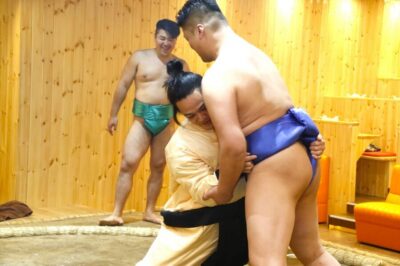
Sumo Show Experience with Chicken Hot Pot and a Photo
Read our review →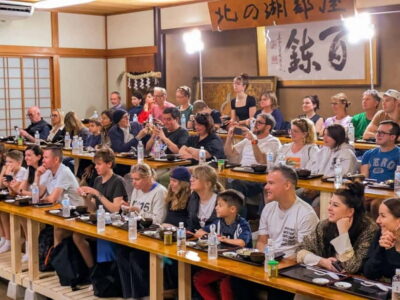
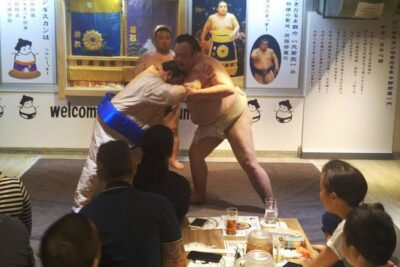
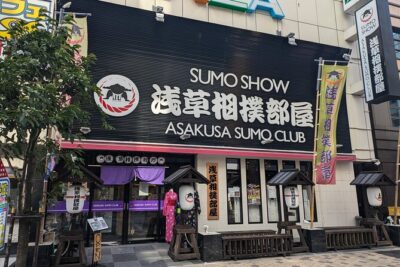
Tokyo Sumo Entertainment Show with Chicken Hot Pot and Photo
Read our review →
Tokyo Grand Sumo Tournament Viewing Tour with Tickets
Read our review →