
Review · WORKSHOPS
Tsumami Zaiku (Kanzashi) making Workshop in Abeno Osaka
Kanzashi making turns patience into something pretty. I love that this workshop is kept small, with a maximum of 6 people, and I love the included matcha and Japanese sweets break. One thing to plan for: the traditional house has a steep staircase, so mobility limitations may make this harder than it sounds on paper.
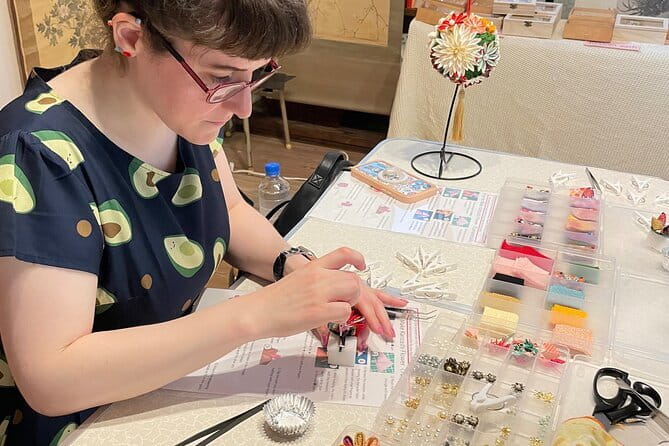
This is the kind of class that feels like real craft time, not a rushed show-and-tell. You work in a 100-year-old traditional Japanese house with a mixed eastern-style interior, and the instructor guides you step by step while all the materials are ready for you.
You’ll choose between two finished styles: an easier traditional kanzashi and a more detailed sakura (cherry blossom) kanzashi. The sakura option takes longer to make, but the teacher is there the whole way, so you are not stuck guessing.
In This Review
- Key highlights to notice before you go
- Abeno Osaka’s 100-year-old house makes the craft feel real
- Getting to Nishitanabe Station and walking into the workshop vibe
- Traditional versus sakura kanzashi: picking your style
- How the workshop runs, from history to finished petals
- A quick start: what tsumami-zaiku is and where it comes from
- Choose your option, then build from patterned pieces
- Step-by-step instruction while you create
- Glue needs time, so you get a break at the right moment
- Matcha and Japanese sweets during glue drying
- Your take-home kanzashi, boxed and ready to go
- Price and value: why $35.83 can make sense here
- Who this workshop fits best in Osaka
- FAQ
- FAQ
- How long is the Tsumami Zaiku (Kanzashi) workshop in Abeno?
- What does the workshop cost?
- Where do I meet for the workshop?
- Is pickup available?
- What styles can I choose from?
- Are materials included, or do I need to bring supplies?
- Is there a break during the workshop?
- Can I take my kanzashi home?
- Is this workshop suitable for children?
- What if the weather is bad?
- Should you book the Abeno tsumami zaiku workshop?
Key highlights to notice before you go
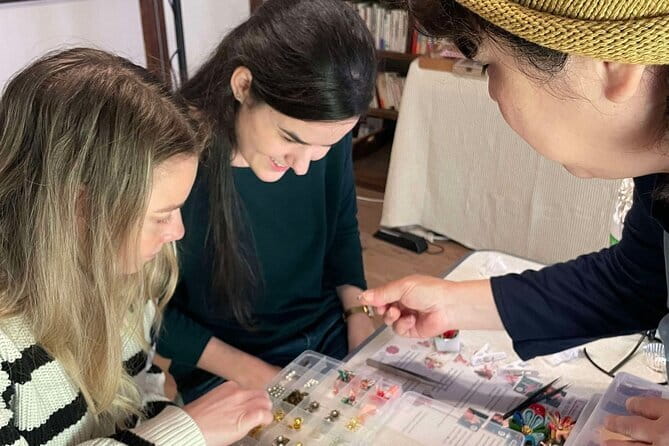
- Small group size (up to 6) means more attention as you build your kanzashi
- Two skill options let you pick traditional or sakura based on your patience level
- Premade, precut materials remove the hardest prep work, while you still do the craft
- Matcha and Japanese sweets break happens while glue dries, so you get a natural pause
- Take-home packaging is included, so your finished kanzashi can travel with you
Abeno Osaka’s 100-year-old house makes the craft feel real
Osaka has plenty of workshops, but this one starts with the setting. You meet at Nishitanabe Station, then head to a traditional house in the Abeno area that is about 100 years old. The interior mixes traditional and eastern-style elements, which makes the whole experience feel like you stepped into a quiet corner of everyday Japanese life rather than a classroom.
You also get a very practical advantage: the organizers provide what you need to keep things moving. Instead of spending time measuring or cutting, you focus on assembling the kanzashi. That is a big deal for a class that lasts about 1 hour 30 minutes.
There is also a built-in social pace. With up to 6 people, the instructor can correct your technique and answer questions without turning the workshop into a crowd-control exercise.
One small planning note: because the house has a steep staircase, think ahead about whether you can manage stairs comfortably. If you are unsure, I would bring a little extra time and consider asking about the best route on arrival.
A few more Osaka days to weigh up
- Osaka Go Karting Tour with Funny Costume
★ 5.0 · 2,658 reviews - Osaka Castle: Museum and Tower Entry Ticket
★ 4.5 · 2,380 reviews - Osaka: Shinsekai Food Tour with 13-15 Dishes at 5 Eateries
★ 4.8 · 2,204 reviews
Getting to Nishitanabe Station and walking into the workshop vibe

Your start point is Nishitanabe Station (1-chōme-1-25 Nishitanabechō, Abeno Ward, Osaka). The location is near public transportation, which matters because the class is short. You do not want a long transit scramble to cut into your time.
The tour also lists pickup offered and a mobile ticket. That combination usually means the organizers want you to arrive without stress, then settle in quickly. In practice, you should still plan to get there a little early, so you can handle any stairs and get comfortable before the instruction begins.
Inside, you’ll feel the tempo of a craft lesson: listen to a bit of background, choose your style, then start working. The workshop is set up to keep you from staring at supplies and thinking, what do I do now?
Traditional versus sakura kanzashi: picking your style
Right away, you choose between two options.
- Traditional kanzashi
This is the easier route. If you want a satisfying result without a lot of extra complexity, this is usually the best bet. The pace stays smooth, and you still get the full experience of learning how tsumami zaiku works.
- Sakura (cherry blossom) kanzashi
This one is more difficult and takes more time to make. If you enjoy detail work and you do not mind slowing down to get it right, the sakura style is more rewarding. You are not left alone with the tricky parts either, because the instructor guides you through the steps.
I like having that choice because it gives you control. If you are traveling with limited patience for fine detail, pick traditional. If you want a longer stretch of careful crafting and you like the look of blossoms, go sakura.
Also, you’ll learn that not every piece is made from scratch. The materials are provided, but only the kanzashi petals are what you work on directly.
How the workshop runs, from history to finished petals
The workshop has a clear flow, and it is designed to keep beginners from feeling lost.
A different sort of day in Japan:
- Osaka Food Tour: 13 Dishes at 5 Local Eateries
★ 5.0 · 2,149 reviews - Hungry Osaka Street Food Tour:15 Tastings & 3 Drinks with a Local
★ 5.0 · 1,727 reviews - Osaka: teamLab Botanical Garden Entry Ticket
★ 4.5 · 1,710 reviews - Osaka: Tea Ceremony Experience
★ 4.9 · 1,426 reviews
A quick start: what tsumami-zaiku is and where it comes from
Before you make anything, the instructor talks about the brief history of Tsumami-zaiku. This is not an academic lecture. It is more like a context-setting moment so the tools and patterns make sense as craft tradition, not just a decorative project.
Choose your option, then build from patterned pieces
Once you select either traditional or sakura, you move into design. You will look at a variety of patterned cloths and accessories to create your kanzashi.
Here is the useful part for you: since most components are already precut and premade, you do not waste your limited time figuring out setup. You choose the look, then concentrate on assembly.
Step-by-step instruction while you create
The teacher then shows you how to make the kanzashi piece by piece. The petals are the part that is not already finished, so your hands do the real work.
You should expect guidance at the level you need. If your technique is off, you can ask questions. If you worry about messing up, you do not have to. This is set up as a guided craft class, not a test.
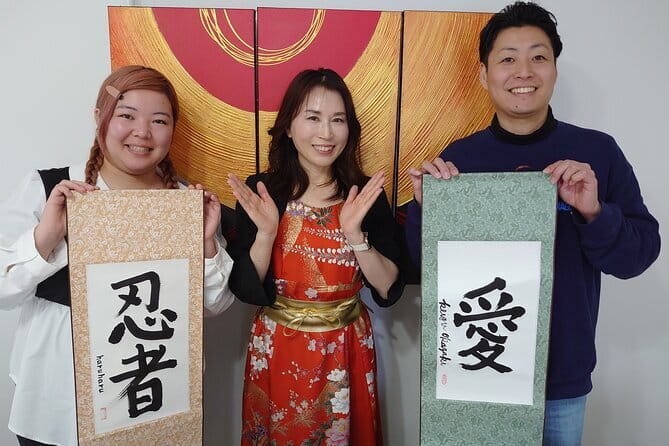
A nice detail from the workshop vibe: the instructors are friendly and professional, and they talk with you as you go. Names that come up include Misa-sensei, along with Jun and Ami, and that matters because you get a warm, personal feel instead of strict silence.
Glue needs time, so you get a break at the right moment
At some point, you’ll use glue to put the pieces together. Glue takes time to dry, and rather than awkwardly waiting, you get a built-in break. This is one of the smartest parts of the plan. Your craft pauses naturally, then the session restarts when the glue is ready.
Matcha and Japanese sweets during glue drying
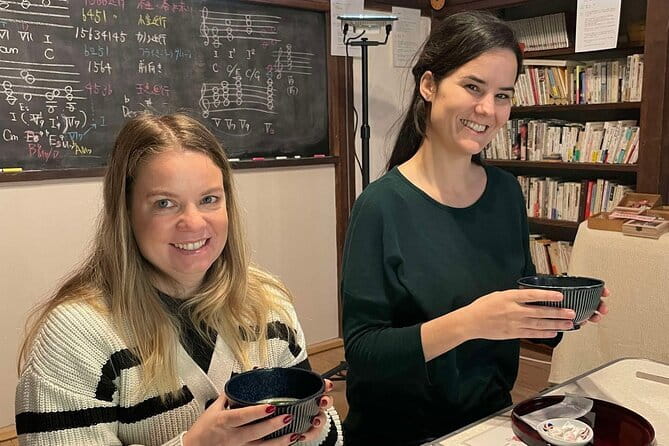
During the glue drying time, you get a break time with matcha and Japanese sweets. This is not just a snack stop. It is a practical reset so your fingers and eyes can rest.
Matcha is also a classic pairing for this kind of craft session. It keeps the mood calm and focused, and it fits the traditional setting you’re working in.
After the snack, you also get time to look at handmade items made by the instructor, which are available for purchase. This is where you can spot quality details and see what the finished versions look like when someone has mastered the technique. Even if you do not buy anything, it helps you understand what your own piece is aiming toward.
Your take-home kanzashi, boxed and ready to go
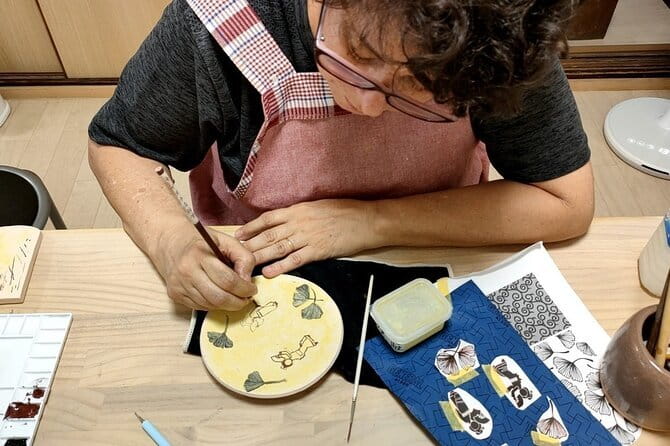
When the workshop ends, you get your finished kanzashi wrapped up and ready to take home. It also comes with a box, which is a big convenience for travelers.
This matters more than you might think. Craft projects can be fragile during transit. Having the piece packaged so you can carry it without improvising packaging at the last minute is a real quality-of-life win.
If you want an easy souvenir that is actually handmade, this is a strong option. It is small enough to bring home without drama, but personal enough that you can feel the effort behind it.
Price and value: why $35.83 can make sense here
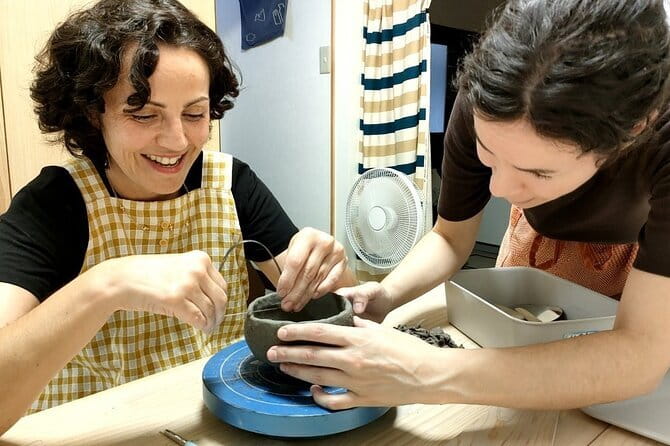
The price is listed at $35.83 per person, and the session runs about 1 hour 30 minutes. That might sound modest compared to some craft classes, but the value is in what is included.
You get:
- Matcha and Japanese sweets
- The cloths, pin sets, accessories, and the box
- Instruction throughout the step-by-step build
- Materials that are precut and premade, except for the petals you work on
You are basically paying for an instructor-led experience plus the consumables and tools. In a short timeframe, that is what keeps the workshop beginner-friendly.
Group size also affects value. With a max of 6, it is easier to get help when you need it, which improves your odds of leaving with something you feel proud of.
Finally, average booking is around 50 days in advance. That tells me demand is steady enough that planning ahead is smart if you want a specific day or time.
Who this workshop fits best in Osaka

Most people can participate, and that is a good sign for a hands-on craft. You’ll also want to consider age: only children from age 8 and above are allowed.
If you bring kids, the responsibility is on you. The workshop does not sound like a structured daycare setting. The best fit is a child who can sit through a guided lesson and handle the careful crafting steps with adult supervision.
This workshop also notes it is not recommended for people with infectious diseases like flu or COVID, which is a straightforward and reasonable guideline.
The main potential mismatch is mobility. The steep staircase in the house is the key issue. If stairs are hard for you, it could add stress or make participation inconvenient. If you are comfortable with stairs, plan for slow, careful movement and give yourself a little extra time at arrival.
FAQ
FAQ
How long is the Tsumami Zaiku (Kanzashi) workshop in Abeno?
It’s about 1 hour 30 minutes.
What does the workshop cost?
The price is $35.83 per person.
Where do I meet for the workshop?
You meet at Nishitanabe Station, 1-chōme-1-25 Nishitanabechō, Abeno Ward, Osaka, 545-0011, Japan.
Is pickup available?
Pickup is offered.
What styles can I choose from?
You can choose between a traditional kanzashi option and a sakura (cherry blossom) kanzashi option.
Are materials included, or do I need to bring supplies?
Materials are included. The workshop provides cloths, pin sets, accessories, and a box. The petals are the part you make, since other components are precut and premade.
Is there a break during the workshop?
Yes. There is a break time for matcha and Japanese sweets while the glue dries.
Can I take my kanzashi home?
Yes. After the workshop, you’ll receive your finished kanzashi, wrapped and ready to take home in a box.
Is this workshop suitable for children?
Children age 8 and above can participate. If you bring children, you’re responsible for taking care of them during the workshop.
What if the weather is bad?
The experience requires good weather. If it’s canceled due to poor weather, you’ll be offered a different date or a full refund.
Should you book the Abeno tsumami zaiku workshop?
If you want a hands-on souvenir with an instructor guiding you, I think this is an excellent pick. The included matcha break, the chance to choose traditional or sakura, and the fact that most parts are premade makes it beginner-friendly without feeling watered down.
I’d skip it or at least think hard before booking if stairs are a problem for you, since the house has a steep staircase. And if you are coming with a group of people who want a high-energy “tourist circuit,” this is more of a calm craft session than a sightseeing sprint.
If you want something authentic you can wear or gift, and you like detailed work that you can complete in 90 minutes, book it.
Newly listed around Osaka
- Kyoto and Nara Day Trip from Osaka★ 4.0 · 175 reviews
- 【Private】Sushi Making Osaka! Omakase Cooking Class in Japan!★ 5.0 · 9 reviews
- Kyoto & Nara & Uji: Full Day Sightseeing Tour from Osaka or Kyoto★ 4.5 · 39 reviews
- Kyoto Full Day Sightseeing Tour from Osaka or Kyoto★ 4.0 · 29 reviews
- Umeda Sky Building KUCHU-TEIEN OBSERVATORY★ 5.0 · 8 reviews
- Amanohashidate & Ine Funaya Kyoto coast day trip from Osaka/Kyoto★ 4.5 · 17 reviews
- Kyoto One Day Sightseeing Tour from Osaka or Kyoto★ 4.5 · 8 reviews
- Kitchen of Nation Food Tour★ 5.0 · 7 reviews
Workshops, compared.
Sushi Making Tokyo Roll and Authentic Japanese Sushi Class
Read our review →

Roll and Authentic Sushi Making Class in Asakusa
Read our review →
Ramen Cooking Class at Ramen Factory in Kyoto
Read our review →
Sushi Making Class in a Happi Coat near a Famous Spot
Read our review →

Tokyo Sushi Making Class in Tsukiji with Professional Chef
Read our review →
Ramen & Gyoza Cooking Class in Tokyo with Local Supermarket Visit
Read our review →Browse the lists this tour appears in