
Review · KAMAKURA TOURS
Kamakura Rickshaw Tour
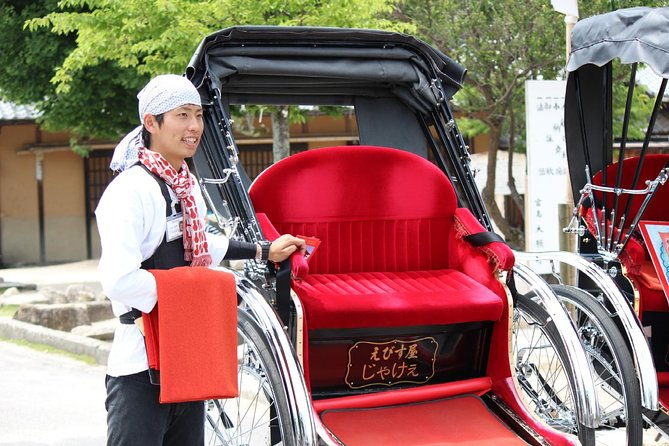
Kamakura looks better at a slow glide. A rickshaw lets you cover real ground without getting tossed around like a bike ride, and the pace feels perfect, faster than walking but slower than cycling. You also get the human touch, omotenashi style hospitality from your driver/guide.
What I really like is how the guide helps you see the city in a way that feels personal, not like you’re ticking off a list from a screen. You’ll also stop at two standout religious sites: Tsurugaoka Hachimangu for views over the former samurai town, and Zeniarai Benten, where people believe washing your money brings your fortune multiplying.
One thing to plan for is fit. Each rickshaw is only 29.1 inches wide, and it’s set up for a maximum of 2 adults. If your group is bigger or you’re size-conscious, you may want to book a rickshaw for each person to keep things comfortable.
In This Review
- Key highlights at a glance
- Why a Kamakura Rickshaw Tour Feels More Than Transportation
- Meeting Ebisuya Kamakura Rickshaw and Starting Smooth
- Choosing the Right Duration: From 30 Minutes to 2 Hours
- Tsurugaoka Hachimangu Shrine: Views, Setting, and a Real Sense of Place
- Zeniarai Benten Shrine: The Money-Washing Tradition (and Why It’s Fun)
- The Buddhist Temple Stop, and Why the Middle Matters
- Route Comfort, Camera Time, and the Bamboo Forest Possibility
- Price and Value: What You’re Actually Paying For at About $43
- Group Size, Rickshaw Fit, and When You Should Book One Per Person
- Finish Location Options, and How That Can Affect Your Day
- When a Kamakura Rickshaw Tour Is a Great Fit
- Should You Book This Kamakura Rickshaw Tour?
- FAQ
- How long is the Kamakura rickshaw tour?
- What places will we visit?
- Is admission included for the shrines?
- What is included in the price?
- Where do we meet for the tour?
- Is the tour private?
- Can we change where the tour ends?
- How many people can ride in one rickshaw?
- Are there any restrictions for pregnancy?
- What is the cancellation policy?
Key highlights at a glance
- Comfortable speed for sightseeing, faster than walking but slower than cycling
- Tsurugaoka Hachimangu stop, about 20 minutes, with admission not included
- Zeniarai Benten Shrine stop, about 20 minutes, admission free
- Private group ride, your group only, with a local driver/guide
- Route flexibility, the exact stops depend on your chosen duration option
Why a Kamakura Rickshaw Tour Feels More Than Transportation
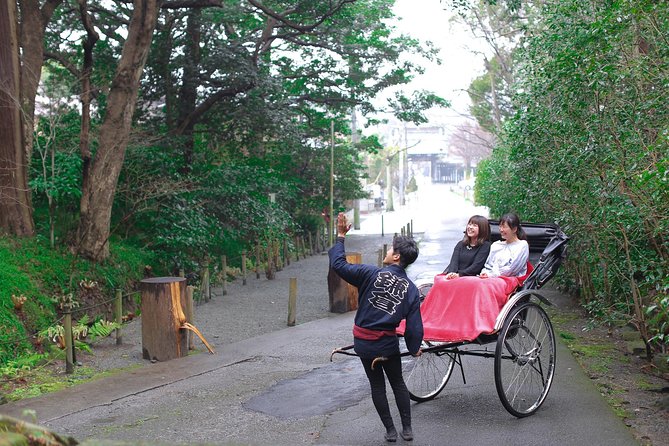
Kamakura is one of those places where the streets and sightlines matter. A rickshaw turns that into part of the experience, because you glide through the city at a pace you can actually process. It’s not a sprint, it’s not a shuffle. The speed is designed for comfort, so you can look around, take photos, and listen to your guide without the usual fatigue you get from long walks.
I also like that this tour is guided. You’re not just sitting there. The staff is there with city knowledge, and the whole point is to show you interesting things you might not find in guidebooks or on websites. That matters because Kamakura is the kind of place where little context can make a shrine stop feel like a story instead of a backdrop.
The ride also tends to bring out seasonal beauty in a way that’s hard to replicate at normal walking speed. Even if you’re only out for a short time, the rickshaw helps you slow down enough to notice what you would otherwise pass by.
A few more Kamakura days to weigh up
- Tokyo: Kamakura & Enoshima Day Trip including Temple Tickets
★ 4.5 · 1,375 reviews - From Tokyo: Kamakura & Enoshima 1-Day Bus Tour
★ 4.5 · 189 reviews - Kamakura Historical Walking Tour with the Great Buddha
★ 5.0 · 129 reviews
Meeting Ebisuya Kamakura Rickshaw and Starting Smooth
You’ll meet at Ebisuya Kamakura Rickshaw, in Yukinoshita (1-chōme-12, 雪ノ下) at the front area of the shop, Front Avenue 雪ノ下 1F. The meeting point is near public transportation, which is handy if you’re building this into a larger day and don’t want to depend on taxis.
Your start time works a little differently than a lot of tours. The selected time isn’t automatically guaranteed. Instead, you get confirmation by email within 24 hours of booking. That means you should watch your inbox after booking, so you’re not surprised on the day.
Another small but useful detail: you get a mobile ticket. That cuts down on hunting through paper confirmations when you’re trying to meet in a busy area.
If you have language preferences, ask at the departure point. The tour may be operated by a multi-lingual driver depending on availability, so it’s smart to flag what you need early.
Choosing the Right Duration: From 30 Minutes to 2 Hours
The tour length is flexible, anywhere from about 30 minutes to about 2 hours, depending on the option you select. That flexibility is the main lever for getting the day you want. Short option? Great for a single major stop plus some relaxed cruising. Longer option? You’ll have time to add an extra temple stop and more of the route.
Here’s the key idea: rickshaw time is limited, so the best value comes when you decide how much you want to see in one go. If you’re already planning a full day of temples and shopping nearby, a shorter ride can give you a break without swallowing your schedule. If you want Kamakura to feel more like a guided walk-through, the longer option makes it easier to enjoy the ride, not just rush between stops.
Also keep in mind that route and stops can vary by option. Some of the stops mentioned include Tsurugaoka Hachimangu Shrine, Zeniarai Benten Shrine, and a buddhist temple. The exact mix is tied to your duration choice.
Tsurugaoka Hachimangu Shrine: Views, Setting, and a Real Sense of Place
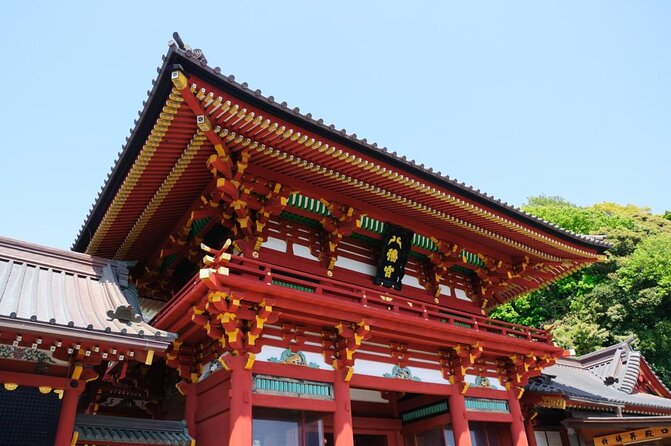
One of the main stops is Tsurugaoka Hachimangu Shrine. You’ll spend about 20 minutes here, and admission is not included.
What makes this stop click is the setting. The shrine is described as overlooking the former samurai town. That means you’re not just looking at a religious site, you’re getting a view that helps you picture how the area once functioned. When a guide can connect what you’re seeing to that historical setting, the time goes faster in a good way.
At the same time, the 20-minute slot is long enough to get oriented and actually take in what’s around you, but short enough that you won’t feel stuck in one place. This is ideal for travellers who want meaningful time without turning the day into a long queue cycle.
Practical tip: since admission isn’t included, budget for that on-site and plan to arrive ready to pay quickly so you don’t slow your group down.
A different sort of day in Japan:
- Kamakura Private Tour: Temples, Nature, and the Great Buddha
★ 5.0 · 121 reviews - Kamakura Walking Tour – The City of Shogun
★ 5.0 · 100 reviews - Kamakura 4hr Private Trip with Government-Licensed Guide
★ 5.0 · 58 reviews - When Emperors Reigned and Shoguns Ruled
★ 5.0 · 43 reviews
Zeniarai Benten Shrine: The Money-Washing Tradition (and Why It’s Fun)
Next up is Zeniarai Benten Shrine, also about 20 minutes, and admission is free.
This stop is specific and memorable because it’s tied to a playful tradition. It’s described as a shrine inside a mountain, and it’s home to the god of wealth. The practice is that washing your money here is said to multiply your fortune.
Even if you’re not the type to chase rituals, this kind of tradition makes a shrine visit more than looking at buildings. It gives you a reason to pay attention to the way people move through the space and what the site represents to them. It’s also a great contrast to larger, more straightforward temple visits, because the story is clearly about personal luck and everyday hopes.
Since admission is free, this is where you get a small built-in value win. You can focus your energy on experiencing it, not managing tickets.
The Buddhist Temple Stop, and Why the Middle Matters
In addition to those two named shrines, the tour includes a buddhist temple stop. The details of which exact temple can depend on your selected duration option, but the structure is consistent: you’ll have another short visit that adds variety beyond Shinto shrine stops.
This part matters because it changes the rhythm of your sightseeing. Two shrine stops can feel similar if you’re only looking at architecture and grounds. Adding a buddhist temple stop gives you a different perspective on the traditions in Kamakura, and it also helps you break up the day so you’re not mentally stuck in one style of sacred space.
One caution: since this temple stop isn’t described with the same level of detail as the two named locations, treat it as part of the tour’s surprise factor. Your guide will help make sense of it once you’re there.
Route Comfort, Camera Time, and the Bamboo Forest Possibility
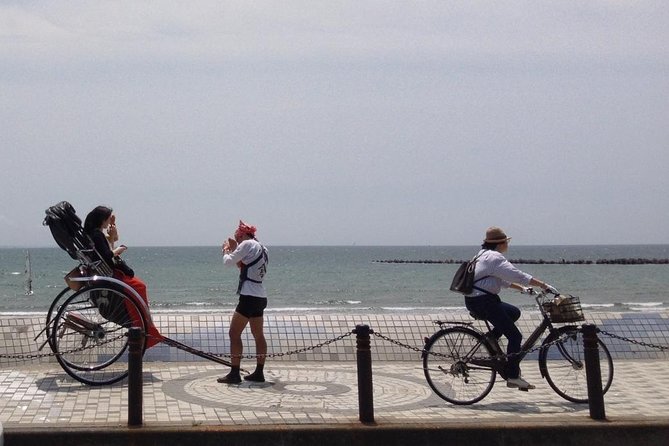
The ride itself is the secret ingredient. A rickshaw moves fast enough to keep momentum, but slow enough that you can look up, glance around, and keep conversations going. That’s where the experience becomes more relaxing than typical sightseeing.
Speed matters here. On foot, you might find yourself rushing just to stay on schedule. Cycling can be tiring and weather-dependent. The rickshaw sits right in the middle, which is why people often enjoy it even if they usually skip guided tours.
You might also find that your route includes a bamboo forest stretch. I can’t guarantee every option goes that way, but it’s exactly the sort of scenic surprise a guide can build into the route. If you care about photo moments, this is one reason to be excited about the ride portion, not just the formal stops.
The best way to use this time is to stay present. If you spend the ride glued to your phone, you’ll miss the views your guide is pointing out.
Price and Value: What You’re Actually Paying For at About $43
The listed price is $43.04 per person. It includes a local driver/guide and the rickshaw ride.
That might sound straightforward, but the value is in what those two pieces buy you together. You’re not only getting transport. You’re paying for someone who can help you understand where you are and what you’re seeing, plus the time to do it at a comfortable pace. In a place like Kamakura, a guide can turn short shrine visits into a connected experience.
Also, admissions aren’t all the same. Tsurugaoka Hachimangu has admission not included, while Zeniarai Benten is free. So your out-of-pocket spending can be lower than you might expect because one major stop is already covered for admission purposes.
Two other value signals to keep in mind:
- Group discounts are available, which can reduce cost if you’re traveling with friends or family.
- This tour is often booked about 54 days in advance on average. If you’re traveling during a busy time, booking earlier gives you better odds of the option you want.
Group Size, Rickshaw Fit, and When You Should Book One Per Person
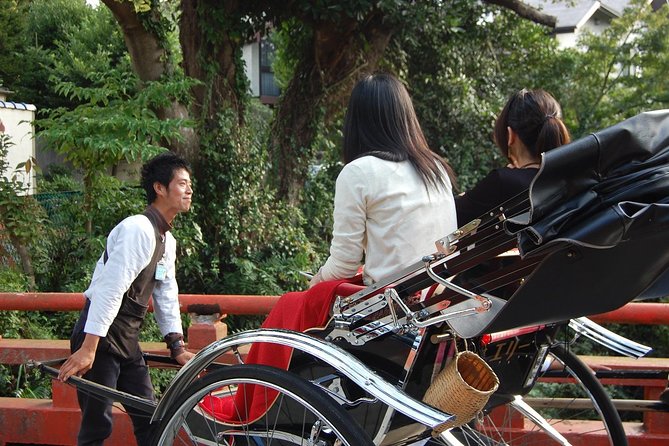
This is important. Each rickshaw can fit up to 2 adults, and it’s 29.1 inches wide. Even though it can technically fit two adults, comfort can be another story, especially for larger passengers. The tour recommends booking a rickshaw for each passenger if you want a more comfortable ride.
If your group needs more than one rickshaw to participate at the same time, you may have to purchase an additional rickshaw. Availability for English-speaking guides for multiple rickshaws is not guaranteed if you don’t book in advance.
So here’s what I’d do if I were planning your group:
- If you’re two adults and both feel comfortable in tight spaces, one rickshaw may be enough.
- If you’re concerned about fit or you want maximum comfort, book extra rickshaws early.
- If you’re traveling with kids, note that children age 5 and under can ride up to two per rickshaw, but they must sit on an adult’s lap.
This is one of the few places where spending a bit more up front can prevent an uncomfortable ride later.
Finish Location Options, and How That Can Affect Your Day
Your ending point can vary depending on the tour option selected. What’s more, you can customize the finishing location by discussing it directly with your guide.
Just know there may be an additional drop-off fee if you want the ride to end somewhere other than their rickshaw stand. If your next stop depends on timing, it’s smart to decide your preferred finish point early, or at least have a plan for how you’ll get to your next activity.
When a Kamakura Rickshaw Tour Is a Great Fit
This tour works best when you want a guided, comfortable way to see top sites without spending the whole day walking. You’ll enjoy it if you like:
- short, focused sightseeing that still includes meaningful context
- a break from stairs and long distances
- religious landmarks tied to specific traditions and stories
- a private group setup where your guide can tailor the pace
It may not be the right match if you’re trying to maximize every minute with lots of walking. Since the ride is central to the experience, you’ll be most satisfied when you treat the rickshaw as part of the sightseeing, not just a taxi replacement.
Also, expecting mothers in their first 16 weeks of pregnancy are not permitted to ride. If that applies, you’ll need an alternative plan.
Should You Book This Kamakura Rickshaw Tour?
I’d book it if you want Kamakura to feel easy and personal. The combo of a local guide, short shrine visits with clear time blocks, and a comfortable rickshaw pace is a strong value when you only have limited hours.
I’d think twice or plan carefully if comfort and group fit are your top concerns. The rickshaw width and the 2-adult maximum mean you should size up your group early and book additional rickshaws if needed. If you do that, the tour becomes a smooth, memorable way to see Tsurugaoka Hachimangu and Zeniarai Benten without exhausting your legs.
If you want a day that blends tradition, stories, and that slow glide feeling, this is a very reasonable bet.
FAQ
How long is the Kamakura rickshaw tour?
It runs from about 30 minutes to about 2 hours, depending on the tour option you select.
What places will we visit?
The tour includes stops that depend on your selected option. Stops listed include Tsurugaoka Hachimangu Shrine, Zeniarai Benten Shrine, and a buddhist temple.
Is admission included for the shrines?
Admission is not included for Tsurugaoka Hachimangu Shrine. Admission is free for Zeniarai Benten Shrine. Other stops may vary by option, but the information provided only specifies these two.
What is included in the price?
You get a local driver or guide and the rickshaw ride.
Where do we meet for the tour?
You meet at Ebisuya Kamakura Rickshaw at 〒248-0005 Kanagawa, Kamakura, Yukinoshita, 1-chōme−12, 雪ノ下1丁目12−3 フロント アベニュー 雪ノ下 1F.
Is the tour private?
Yes. It is described as a private tour or activity, with only your group participating.
Can we change where the tour ends?
The finishing point can vary by option, and it can also be customized by discussing with your guide. Finishing elsewhere may involve an additional drop-off fee payable on the day of the tour.
How many people can ride in one rickshaw?
A maximum of 2 adults can ride per rickshaw. Up to 2 children age 5 and under can ride with 2 adults, but children must sit on an adult’s lap.
Are there any restrictions for pregnancy?
Expecting mothers in their first 16 weeks of pregnancy are not permitted to ride.
What is the cancellation policy?
You can cancel for free up to 24 hours in advance of the experience start time for a full refund. Changes made less than 24 hours before the start time are not accepted.
Newly listed around Kamakura
- When Emperors Reigned and Shoguns Ruled★ 5.0 · 43 reviews
- Introducing all the Famous Spots in Kamakura and Enoshima!★ 5.0 · 7 reviews
- First time in Kamakura? Enjoy a Tour of All Must-sees!★ 5.0 · 15 reviews
- Kamakura Heritage Bike or Walk Tour with ex-Rickshaw guide★ 5.0 · 11 reviews
- Kamakura 4hr Private Trip with Government-Licensed Guide★ 5.0 · 58 reviews
- Your Own HANKO Name Seal Activity in Kamakura.★ 5.0 · 24 reviews
- Exciting Kamakura – One Day Tour from Tokyo★ 5.0 · 40 reviews
- Kamakura Walking Tour – The City of Shogun★ 5.0 · 100 reviews
Kamakura Tours, compared.
Kamakura & Enoshima Day Trip including Temple Tickets
Read our review →
Kamakura Historical Walking Tour with the Great Buddha
Read our review →
Kamakura Private Tour: Temples, Nature, and the Great Buddha
Read our review →
Kamakura 4hr Private Trip with Government-Licensed Guide
Read our review →
Kamakura Full Day Tour with a Local Expert Guide
Read our review →
Browse the lists this tour appears in