
Review · KAMAKURA TOURS
Your Own HANKO Name Seal Activity in Kamakura.
Turn a name into a stamp you can use.
This private Kamakura workshop teaches the cultural side of hanko before you get hands-on designing your own seal. Two things I especially like: the owner explains history and styles in plain terms, and you finish with an engraved keepsake you can use later back home. One possible drawback to consider is timing, since the workshop itself runs in the morning and you’ll pick up your finished seal in the afternoon.
You’ll start at Kamakurahanko, pick your katakana style and font, and choose material and color options. You also choose a pick-up time during the afternoon of the same day. The process includes a practical mix of tools and handwork, and the result is something you’ll actually want to keep.
In This Review
- Key Points Worth Booking
- Why Kamakura Hanko is a smart, personal souvenir
- Price and time: what $131.65 buys you
- Getting oriented at Kamakurahanko in Onarimachi
- The lesson first: history and styles of hanko
- Designing your name in Japanese for a seal
- Choosing katakana and a seal font
- Making decisions with help
- Materials, color, and paid upgrades
- How the engraving gets made: machine roughing, hand finishing
- Your pick-up time and taking it home the same day
- Case, ink, and using your hanko like a local
- How this workshop plays with your Kamakura day
- Is it worth it for you? Who should book
- Book it or skip it: my recommendation
- FAQ
- How long is the Hanko name seal activity in Kamakura?
- What is included in the price?
- Can I pick up my seal later the same day?
- Is the workshop available all day?
- Do I need to buy a case or ink separately?
- Can I request shipping instead of pick-up?
- What kind of ticket do I receive?
- What is the cancellation policy?
Key Points Worth Booking
- Private, small-time feel with lots of one-on-one attention
- Real cultural context on how hanko connect to identity in Japan
- Katakana-focused design with help choosing a seal style and font
- Hand-finished quality after a rough carving step using a machine
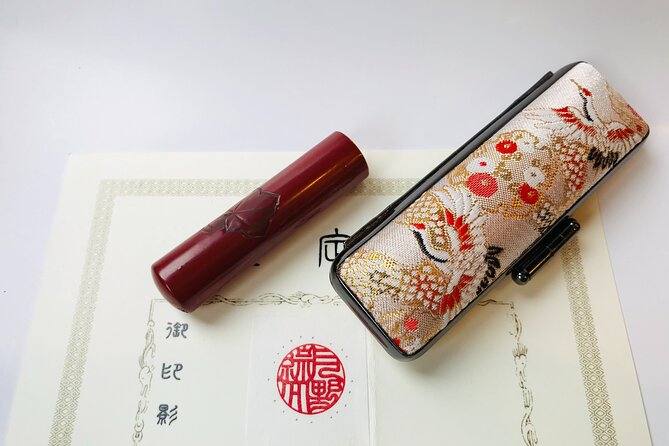
- Take-home souvenir with your engraved name seal, plus an included pouch
Why Kamakura Hanko is a smart, personal souvenir
A name seal is one of the few Japan souvenirs that has a use, not just decoration. In Japan, a hanko is treated as a representative of identity, so creating one yourself adds meaning that typical trinkets just do not have.
Kamakura is also a nice setting for this kind of workshop. You’re in a place where people value tradition and craftsmanship, so the workshop feels grounded instead of touristy. And because it’s private, you can ask questions as you go.
A few more Kamakura days to weigh up
- Tokyo: Kamakura & Enoshima Day Trip including Temple Tickets
★ 4.5 · 1,375 reviews - From Tokyo: Kamakura & Enoshima 1-Day Bus Tour
★ 4.5 · 189 reviews - Kamakura Historical Walking Tour with the Great Buddha
★ 5.0 · 129 reviews
Price and time: what $131.65 buys you
At $131.65 per person, this sits in the mid-range for craft workshops. You’re paying for something specific: your own engraved name seal made to order, plus an instruction piece on how hanko work and how Japanese names get written for seals.
The session is about 45 minutes. That’s just long enough to cover the cultural intro, get your design choices confirmed, and start the crafting process. After that, the finished seal is ready later for pick-up in the afternoon (you choose a time window).
Getting oriented at Kamakurahanko in Onarimachi
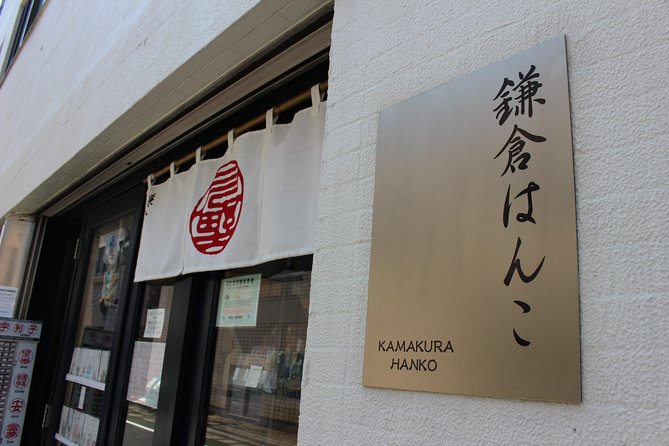
You’ll meet at the Kamakura seal shop in Onarimachi, at 5-6 Onarimachi, Kamakura, Kanagawa 248-0012. It’s easy to reach by public transportation, and the shop is close enough that it fits well into a light day plan.
The workshop requires preparation, so arrive punctually. That matters because the main value here is the instruction and the back-and-forth while you choose how your name should look.
Also note the format: this is a private activity for your group. That’s part of why the experience tends to feel intimate and relaxed.
The lesson first: history and styles of hanko
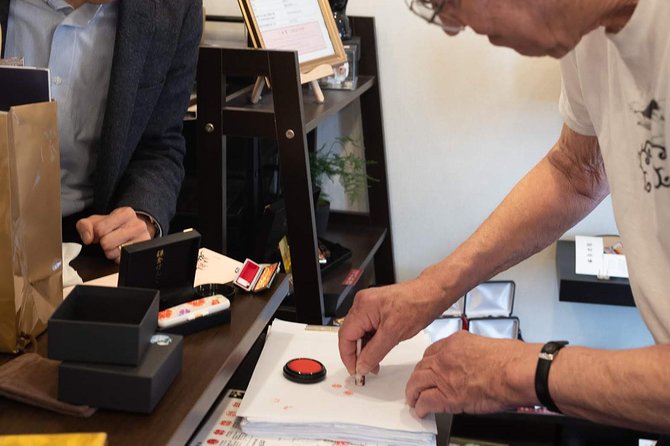
Before you touch design, you learn why hanko matter. The workshop frames hanko as identity tools in Japanese life, not just decorative stamps. That context helps you understand why people take the carving, the style, and even the seal box seriously.
You also learn about different hanko styles and how they’re used. The goal is simple: you’re not just copying a symbol, you’re understanding what the seal is meant to communicate.
One detail I really like is how the owner uses clear explanations and answers questions thoughtfully. In the reviews, guests highlight how the proprietor, Tsukino, is attentive and careful about communication, including English support for non-Japanese speakers.
A different sort of day in Japan:
- Kamakura Private Tour: Temples, Nature, and the Great Buddha
★ 5.0 · 121 reviews - Kamakura Walking Tour – The City of Shogun
★ 5.0 · 100 reviews - Kamakura 4hr Private Trip with Government-Licensed Guide
★ 5.0 · 58 reviews - From Tokyo: Kamakura Full Day Tour with a Local Expert Guide
★ 4.6 · 43 reviews
Designing your name in Japanese for a seal
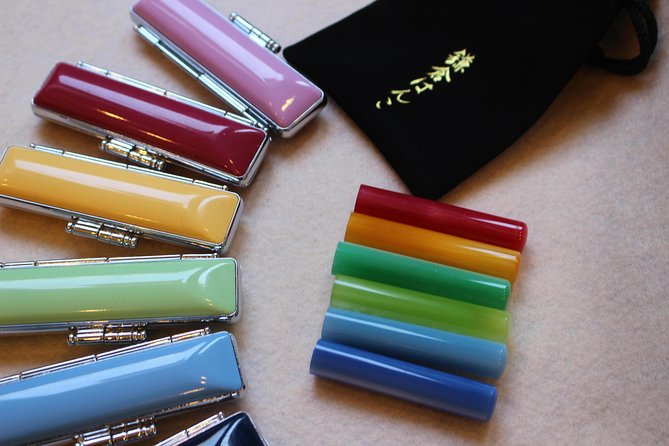
This is the core of the workshop, and it’s more structured than you might expect.
Choosing katakana and a seal font
You’ll pick the type of seal as katakana, and you’ll choose a font style. The workshop even recommends a katakana font suitable for official seals. If you worry you’ll pick something that does not look like a real seal, you’re not left alone, since you get guidance on writing your name in Japanese characters that suit the seal format.
In plain terms, you’re converting your name into a seal-ready script. It helps to think of this as graphic design, but with traditional rules.
Making decisions with help
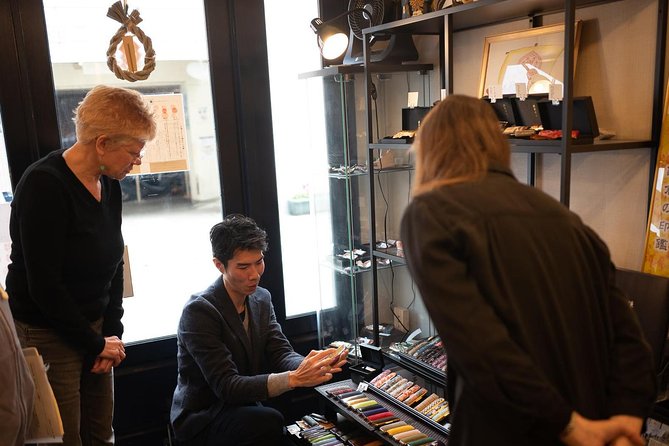
You’ll have a chance to discuss the look of your seal with the owner. Reviews frequently mention that the shop does not push extras, and Tsukino focuses on your choices and what each option means.
For many people, the best part here is realizing how many ways a name can look when it becomes a stamp, not just a word.
Materials, color, and paid upgrades
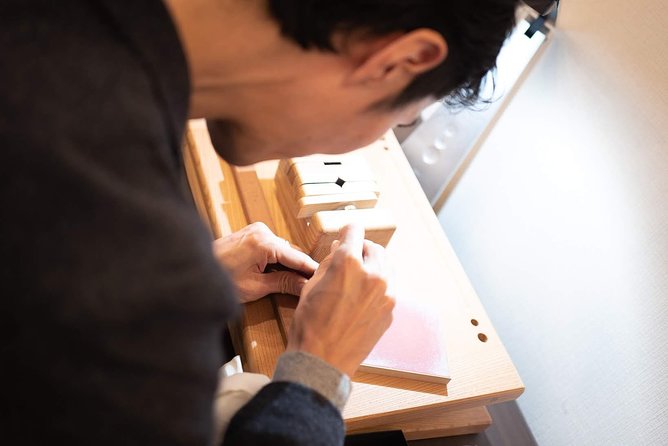
The included seal is a HANKO Seal (Japanese boxwood), and you pay the basic engravings fee for katakana in the standard setup. You also get an original pouch for your new seal.
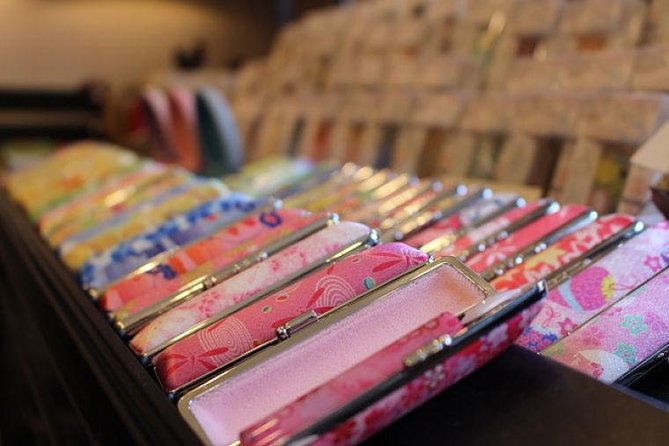
During design, you’ll be guided through material and color options. The description notes that engraving can be on acrylic, with horn and wood available for an additional fee. There are also upgrades possible beyond the base seal, including case upgrades and character or typeface upgrades.
Here’s the practical way to think about it:
- If you want the most value with minimal decision-making, start with the included option and pouch.
- If you care about a specific look, consider the upgrade materials and the case, since that choice affects how your seal feels and presents as an object.
Also important for real use: the red ink is not included. You might want to plan for ink if you’re hoping to stamp documents or paper right away after you get home.
How the engraving gets made: machine roughing, hand finishing
The workshop is not just a design desk session. They also handle the carving process in a way that mixes efficiency with craft.
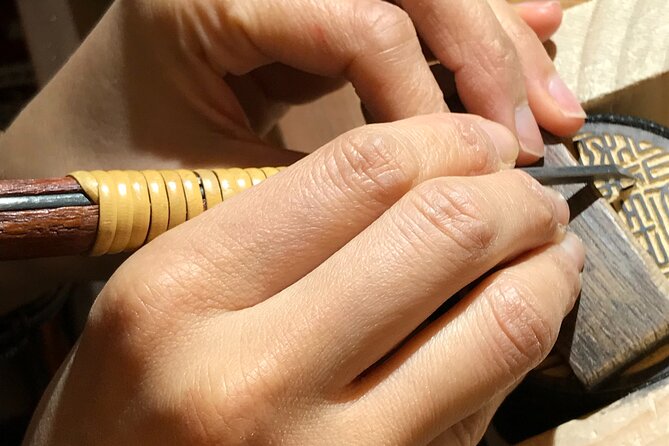
The described process works like this: a rough carving step uses an engraving machine, and then skilled craftsmen do the final touches by hand. That matters because the machine step gets the overall form right quickly, while the hand finishing helps produce cleaner lines and a more refined stamp face.
It also explains why the session ends quickly. You’re not waiting through carving yourself. You’re confirming your design choices and letting the shop create the finished seal.
Your pick-up time and taking it home the same day
The workshop runs in the morning only, but you get to choose your pick-up time later in the day, during the afternoon. That structure makes sense if you want a half-day activity without committing to a full day in a workshop room.
In at least one case, a guest returned around 2pm for the finished seals. That gives you a real reference point, even though your exact pick-up slot is determined during the workshop.
You’ll also need to bring time flexibility for the return. If your schedule is packed, this can be a mild headache, since your seal is finished after the morning design work.
Case, ink, and using your hanko like a local
You have a seal now, but you’ll likely want to think about how you’ll store and use it.
- A hanko case is sold separately. If you want that classic look and practical protection, budget for it.
- Red ink is not included. If you want to make test stamps, you’ll need to source ink separately.
The included pouch is a nice start, and it helps your new seal travel safely. But if you’re the type who wants the full set, plan for a case and ink.
One of the reasons I like this workshop as a souvenir is that it turns into an ongoing token. The whole point is that you can use the seal, not just display it.
How this workshop plays with your Kamakura day
Since the activity is roughly 45 minutes, you can combine it with other Kamakura sights without feeling trapped. The key is to treat the morning slot as your anchor and leave the afternoon for pick-up.
This is especially easy if you’re already in the area, because the meeting point is near public transportation. You’re also not dealing with a multi-stop day plan. It’s a single workshop location, and that keeps logistics simple.
Is it worth it for you? Who should book
I think this workshop is a great fit if:
- You want a souvenir that is personal and functional, not just photo-friendly
- You like crafts where you choose your own design and then watch the result get made
- You’re interested in how Japanese traditions show up in everyday tools
It may not be ideal if you:
- Hate any schedule constraints, because the workshop is morning only and pick-up is afternoon
- Want an instantly finished item in one hour, because the engraving and finishing happen after your design session
Book it or skip it: my recommendation
If you want one high-impact, personal Japan memory, this is a strong choice. The best part is the combo of cultural context plus a finished engraved seal you can keep. You also get clear guidance while selecting your katakana style and font, and the described finishing process explains why the result looks crisp.
I’d book this if you have time for an afternoon pick-up and you’re open to spending a bit extra on options like a case or ink if you want the full experience. If you treat it as a real craft appointment, not just a quick stop, it’s likely to feel like the most meaningful thing you do in Kamakura.
FAQ
How long is the Hanko name seal activity in Kamakura?
The experience lasts about 45 minutes.
What is included in the price?
The price includes a HANKO Seal (Japanese boxwood), an engraving fee for katakana, and an original pouch for your hanko.
Can I pick up my seal later the same day?
Yes. After the workshop, you can choose a pick-up time any afternoon of the day of the experience.
Is the workshop available all day?
No. The activity is only available in the morning.
Do I need to buy a case or ink separately?
A hanko case is sold separately, and red ink is not included.
Can I request shipping instead of pick-up?
Yes. Shipping is available only if you request it instead of picking it up.
What kind of ticket do I receive?
You receive a mobile ticket.
What is the cancellation policy?
You can cancel free of charge up to 24 hours in advance for a full refund. If you cancel less than 24 hours before the start time, the amount paid is not refunded.
Newly listed around Kamakura
- Introducing all the Famous Spots in Kamakura and Enoshima!★ 5.0 · 7 reviews
- First time in Kamakura? Enjoy a Tour of All Must-sees!★ 5.0 · 15 reviews
- Kamakura 4hr Private Trip with Government-Licensed Guide★ 5.0 · 58 reviews
- Kamakura Heritage Bike or Walk Tour with ex-Rickshaw guide★ 5.0 · 11 reviews
- Exciting Kamakura – One Day Tour from Tokyo★ 5.0 · 40 reviews
- Kamakura Walking Tour – The City of Shogun★ 5.0 · 100 reviews
- Kamakura Scenic Bike Tour★ 5.0 · 10 reviews
- Kamakura Bamboo Forest and Great Buddha Private Tour★ 5.0 · 12 reviews
Kamakura Tours, compared.
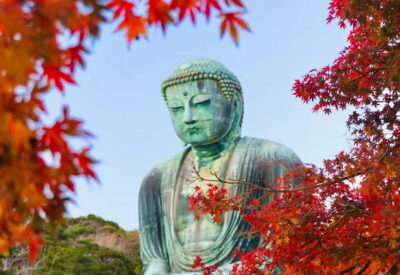
Kamakura & Enoshima Day Trip including Temple Tickets
Read our review →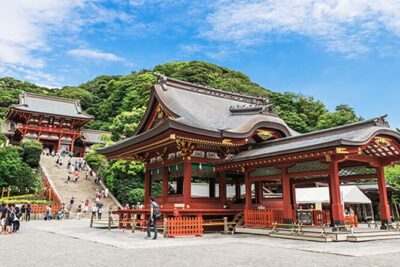
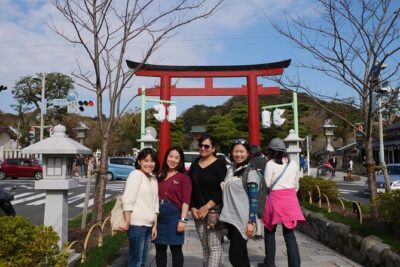
Kamakura Historical Walking Tour with the Great Buddha
Read our review →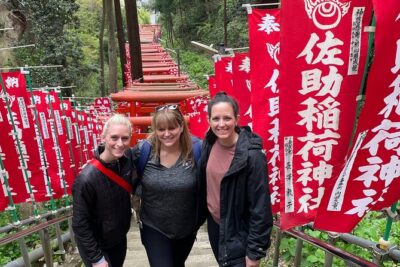
Kamakura Private Tour: Temples, Nature, and the Great Buddha
Read our review →
Kamakura 4hr Private Trip with Government-Licensed Guide
Read our review →
Kamakura Full Day Tour with a Local Expert Guide
Read our review →
Browse the lists this tour appears in