
Review · WALKING TOURS
Kamakura Walking Tour – The City of Shogun
Kamakura history walks like a movie. In about 3.5 hours, you get a tight, well-paced route through Tsurugaoka Hachimangu, Komachi Street, the Great Buddha, and Hasedera, and I love how the guide puts everyday context behind the big-name sites. The main thing to watch is cost creep, since temple and transport add up to about 1,200 yen on top of the $35 price.
This tour also uses a mobile ticket, which is a small detail but makes the day smoother. You start at the Kamakura City Tourist Information Center (10:00 am) and finish at Hase Station, so it is easy to keep going on your own afterward.
Because it is a max 10-person group, you should expect questions, clearer explanations, and a pace that feels more like a guided day than a stamp-collecting sprint.
In This Review
- Key highlights you will actually feel on the ground
- Kamakura, the Shogun City Behind the Beach Postcard
- 3.5 Hours, Four Stops, and a Small-Group Pace
- Tsurugaoka Hachimangu Shrine, where Kamakura’s power story starts
- Komachi Street break time, snacks and street energy without the chaos
- Kotoku-in Great Buddha, the ticket cost and the wow factor
- Hasedera Temple, gardens and a tall wooden Kannon statue
- Your guide is the real value: clear stories and better next steps
- Price and logistics, and why $35 can be fair
- What to expect between stops, and how to keep the day comfortable
- Where the route ends, Hase Station and your afternoon plan
- Should you book this Kamakura Walking Tour?
- FAQ
- How long is the Kamakura Walking Tour?
- What is included in the $35 price?
- What extra fees should I expect?
- Where do we meet and where does the tour end?
- How many people are in the group?
- Do I get a mobile ticket?
- What happens if the tour is canceled due to poor weather?
Key highlights you will actually feel on the ground
- Max 10 travelers for calmer pacing and easier question time
- Four anchor stops that cover Shinto shrine, classic street life, and major Buddhist sites
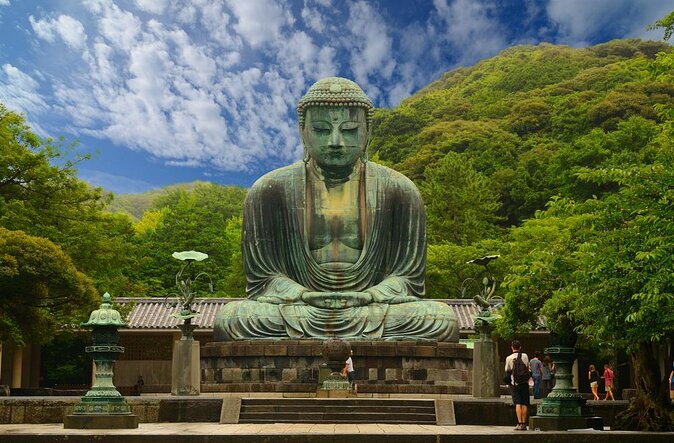
- Great Buddha scale, with realistic budgeting since admission is not included
- Komachi Street break time for browsing and grabbing snacks
- End at Hase Station, handy for planning your afternoon
Kamakura, the Shogun City Behind the Beach Postcard
Kamakura is one of those places where you can go from busy coastal scenes into serious, centuries-old worship grounds in a single walk. The tour leans into that shift, linking the city’s warrior-era roots to religious traditions you can still see today.
The big promise is not just checking boxes. You are getting the story threads that connect Shinto and Buddhism in daily Kamakura life. That matters because many first-timers arrive with names on a map but without context for what they mean, or why they were built in the first place.
You also get a route that is hard to replicate on your own in the same time window. With four meaningful stops clustered together, you can focus on seeing things properly, not wrestling with directions and timing.
A few more Kamakura days to weigh up
- Kamakura Historical Walking Tour with the Great Buddha
★ 5.0 · 129 reviews - Kamakura: A Journey Through Medieval Japan (Walking Tour)
★ 4.9 · 26 reviews - Buddha, Bamboo & Zen – Bespoke Kamakura Private Walking Tours
★ 5.0 · 25 reviews
3.5 Hours, Four Stops, and a Small-Group Pace
This is a walking tour around 3 hours 30 minutes with a maximum of 10 travelers. That small size is a real quality-of-life upgrade in Kamakura, where crowds can spike around the most famous spots.
The day starts at the Kamakura City Tourist Information Center in Komachi, address 1-chōme-1-1 Komachi, Kamakura. Start time is 10:00 am. You end at Hase Station (2 Chome-14 Hase), which is convenient because it gives you an easy departure point for the rest of your afternoon.
Between stops, you should expect extra walking and guided explanation time, so even though individual site blocks are short, the tour still feels substantial. If you like a plan but also want room to breathe, this pacing is a good match.
Practical note: the tour needs good weather. If it looks rainy, wear something you can walk in comfortably and keep a light rain layer handy.
Tsurugaoka Hachimangu Shrine, where Kamakura’s power story starts
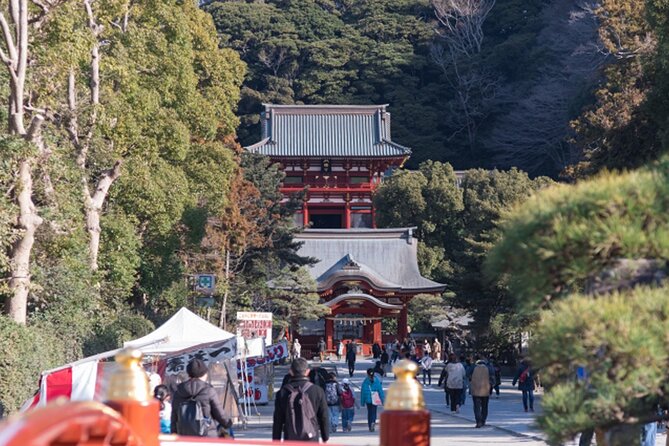
Tsurugaoka Hachimangu is one of Kamakura’s foundational landmarks, and the tour starts there for a reason. This historic Shinto shrine traces back to the 12th century, founded by Minamoto no Yoritomo, and dedicated to Hachiman, a major Shinto god connected with the warrior world.
You get about 30 minutes here, and admission is free. Even with a limited time block, the value is how the guide frames what you are looking at. Instead of a quick photo stop, you get the sense of why this place became central, and how that history shaped Kamakura’s identity.
What I think you will like most is that the shrine visit sets a tone for the rest of the day. It is easier to understand the later Buddhist sites when you have this Shinto foundation first.
Komachi Street break time, snacks and street energy without the chaos
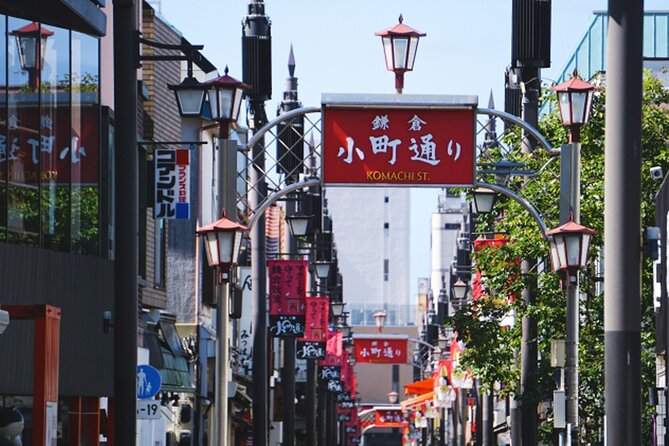
After the shrine, the tour shifts to Komachi Street, a famous pedestrian area in central Kamakura. It is named after poet Ono no Komachi, and it is exactly the kind of place where the city feels real, not staged.
You get about 20 minutes here. That is a smart timing window: long enough to look around, but short enough that the tour does not lose momentum.
This stop is also where your guide’s local instincts tend to matter. The tour is designed around not just “sights,” but eating. So you will have a chance to grab something casual, browse shops, and get a feel for what people actually do in Komachi Street day-to-day.
If you want to buy small souvenirs or simple snacks, this is the moment to do it. Waiting until later often means you will have less time to enjoy your finds.
A different sort of day in Japan:
- Tokyo: Kamakura & Enoshima Day Trip including Temple Tickets
★ 4.5 · 1,375 reviews - From Tokyo: Kamakura & Enoshima 1-Day Bus Tour
★ 4.5 · 189 reviews - Kamakura Private Tour: Temples, Nature, and the Great Buddha
★ 5.0 · 121 reviews - Kamakura 4hr Private Trip with Government-Licensed Guide
★ 5.0 · 58 reviews
Kotoku-in Great Buddha, the ticket cost and the wow factor
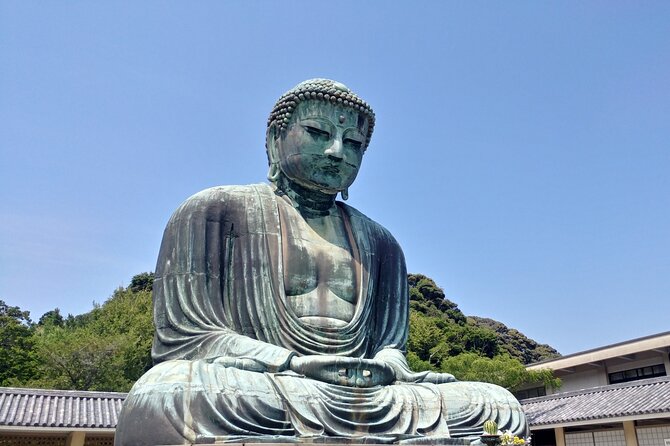
Next is Kotoku-in, home to the Kamakura Great Buddha (Kamakura Daibutsu). This is the stop most people recognize, and for good reason. The statue is a massive bronze figure, about 13.35 meters (44 feet) tall, with origins dating back to the 13th century.
Your time block is about 30 minutes, and admission is not included. In practical terms, you should budget for that as part of the tour’s stated extra cost of 1,200 yen total for transport and admission fees.
Here is how I’d plan for this stop: if you care about scale, arrive with your expectations tuned for size and stillness. The Great Buddha is famous, but the point is not just a quick glance. Use the time to take in proportions and the overall presence of the space.
If you are traveling with kids, this is often the easiest “big payoff” moment in the whole walk. One family-friendly aspect shows up in the feedback, because kids tend to like the instant wow of the statue compared with more text-heavy explanations.
Hasedera Temple, gardens and a tall wooden Kannon statue
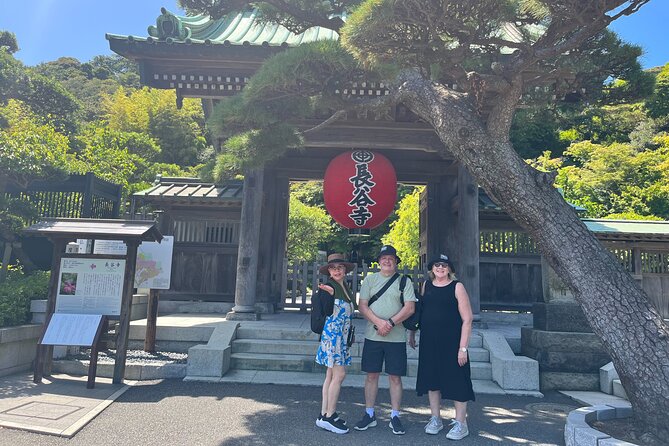
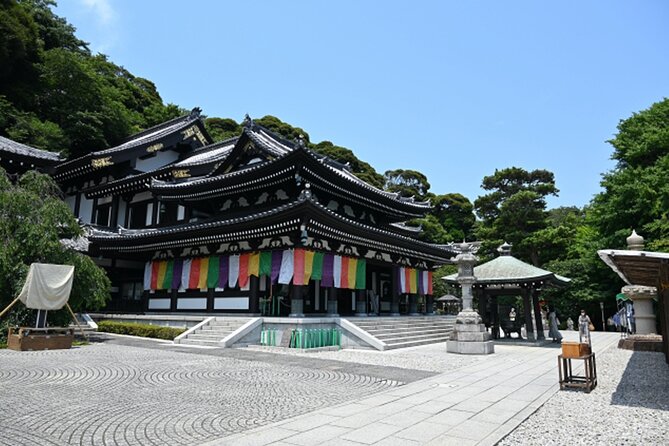
The last major stop is Hasedera Temple (also known as Hase Kannon Temple). If Tsurugaoka sets the Shinto stage, Hasedera gives you the quieter side of Kamakura.
This stop is about 40 minutes, and admission is not included. The temple is known for a serene atmosphere, beautiful gardens, and a towering wooden Kannon statue. Even if you only spend part of the time on the statue itself, the gardens and general mood make the day feel complete.
This is the stop where you will likely slow down without forcing it. The tour pacing tends to land well here because you have already learned how to read Kamakura’s religious landscape, and now you can just enjoy.
A small drawback: Hasedera is not a “run through it” kind of place. If you are the type who hates waiting or standing for a moment, you might find the temple’s calm rhythm challenging. But if you want the day to end with meaning, that calm is exactly the point.
Your guide is the real value: clear stories and better next steps
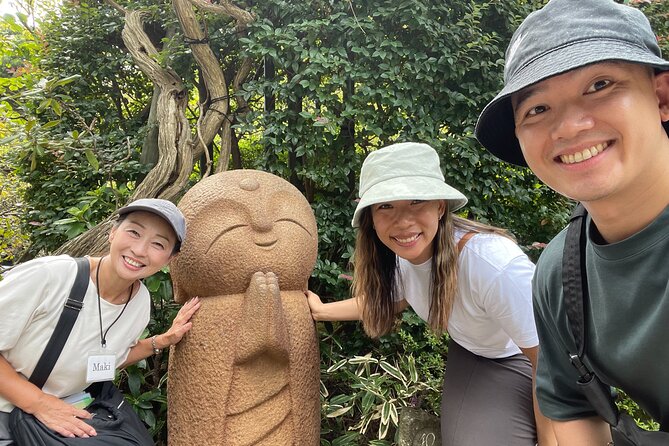
The tour’s biggest strength shows up repeatedly in the way guides teach. Different guides have led this route, including names like Miyu, Midori, and Maki, and the consistent theme is that they make Kamakura make sense fast.
What that means in real life is practical:
- You get clear explanations rather than a list of dates.
- You learn how traditions connect to modern daily life.
- You get pacing that helps you enjoy the sites instead of merely passing them.
Another payoff from the guide experience: many people leave with ideas for the rest of the afternoon. Since the tour ends at Hase Station, the day naturally continues, and your guide can help you avoid the common mistake of wasting your last hours on the wrong turns.
In short, you are buying time with someone who knows how to translate Kamakura for first-timers and still respects the places themselves.
Price and logistics, and why $35 can be fair
Let’s do the honest math. The tour costs $35 per person, and the included part is the tour guide fee. On top of that, you should expect around 1,200 yen for transportation and admission fees.
When a tour like this feels like a good deal, it is usually because:
- You get a guided route through major sites without spending your own time figuring it out
- The group is small enough that you actually get help, not just crowd noise
- Admission and transport add up anyway, so paying the guide to optimize the day is worth it
Here, you are covering Tsurugaoka (free entry), plus paid sites like the Great Buddha and Hasedera (not included). So the extra yen is not surprise spending. It is part of the plan.
If you were doing Kamakura independently and wanted the same order, the same explanation level, and the same pacing, you would likely spend more time sourcing info, plus you might still miss the “why this matters” part that makes temple visits feel alive.
What to expect between stops, and how to keep the day comfortable
This is a walking tour. That sounds obvious, but it changes how you should prepare.
You will walk between shrine, street, statue, and temple, with guided stops timed to keep you moving without constant rushing. Since the tour is about 3.5 hours, you are not out all day, but you also should not assume it will feel effortless.
My suggestion:
- Wear comfortable shoes you can walk in for a few continuous hours
- Bring water, since Kamakura can feel warm even when you are not expecting it
- Think of Komachi Street as your chance to recharge and eat something casual
Also, keep in mind that the tour includes natural and coastal views as part of the experience. You do not need special gear for that, but you should be ready for moments where the views pull you off your schedule a little. That is the fun part.
Where the route ends, Hase Station and your afternoon plan
Ending at Hase Station is a smart finish. It gives you options. If you want to keep exploring, you can pick the direction that matches your mood without having to backtrack to the start.
Because the tour covers the big signature sights, you can use your remaining time for lighter browsing, photo time, or a slower pace at one place you want to revisit. And since some guides are known for sharing ideas for after the tour, you can treat the guided portion like your setup for an easy, flexible afternoon.
If you prefer a very self-directed day, this ending point still helps, because you are not stuck doing a complicated return.
Should you book this Kamakura Walking Tour?
If you are a first-time visitor who wants the key Kamakura highlights in one half-day, this is a strong option. The small group size, the focused route, and the guide storytelling make it easier to understand why Kamakura matters, not just where to stand for photos.
Book it if:
- You want major sites with context rather than a self-guided scavenger hunt
- You appreciate a plan that ends with options for the rest of your day
- You would rather pay for a guide than spend time mapping your own route
Skip it or consider something else if:
- You want to linger for long periods at one temple or shrine
- You hate walking and tight time blocks
- You prefer fully self-paced travel with no structured stops
Overall, this feels like good-value groundwork for a Kamakura day, especially if you want the shogun-era roots and Buddhist landmark scale tied together into one coherent experience.
FAQ
How long is the Kamakura Walking Tour?
It runs for about 3 hours 30 minutes.
What is included in the $35 price?
The tour guide fee is included.
What extra fees should I expect?
Transportation and admission fees are not included, with a total of 1,200 yen.
Where do we meet and where does the tour end?
You meet at Kamakura City Tourist Information Center (1-chōme-1-1 Komachi, Kamakura) and end at Hase Station (2 Chome-14 Hase, Kamakura).
How many people are in the group?
The group is limited to a maximum of 10 travelers.
Do I get a mobile ticket?
Yes, the tour uses a mobile ticket.
What happens if the tour is canceled due to poor weather?
If it is canceled due to poor weather, you will be offered a different date or a full refund.
Newly listed around Kamakura
- Introducing all the Famous Spots in Kamakura and Enoshima!★ 5.0 · 7 reviews
- First time in Kamakura? Enjoy a Tour of All Must-sees!★ 5.0 · 15 reviews
- Kamakura 4hr Private Trip with Government-Licensed Guide★ 5.0 · 58 reviews
- Your Own HANKO Name Seal Activity in Kamakura.★ 5.0 · 24 reviews
- Kamakura Heritage Bike or Walk Tour with ex-Rickshaw guide★ 5.0 · 11 reviews
- Exciting Kamakura – One Day Tour from Tokyo★ 5.0 · 40 reviews
- Kamakura Scenic Bike Tour★ 5.0 · 10 reviews
- Kamakura Bamboo Forest and Great Buddha Private Tour★ 5.0 · 12 reviews
Walking Tours, compared.
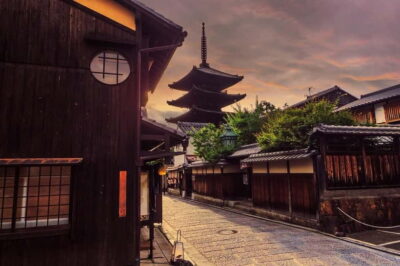
Kyoto Geisha Walking Tour: Gion District & Hidden Gems
Read our review →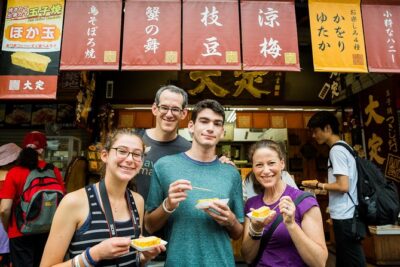
Tokyo Tsukiji Fish Market Food and Culture Walking Tour
Read our review →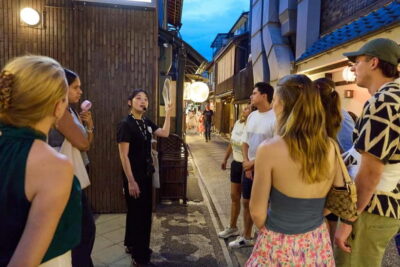
Gion Geisha District Walking Tour – Stories of Geisha
Read our review →
Shinjuku Local Bar and Izakaya Guided Walking Tour
Read our review →
Asakusa Walking Tour with Sensoji Temple Visit
Read our review →
Kyoto Gion Geisha District Walking Tour – The Stories of Geisha
Read our review →Browse the lists this tour appears in