
Review · SHRINE & TEMPLE VISITS
Kamakura Private Tour: Temples, Nature, and the Great Buddha
A quiet Zen temple, a mountain pass walk, and then the Great Buddha, all in one half-day. That mix is what makes this Kamakura private tour such a smart change from Tokyo’s pace.
I especially like that temple admission is included for Jochiji, Hasedera, and Kotoku-in, so you pay once and spend your time on the sights. I also like the fact that you are not just doing a checklist, you’re getting a real guided walk through spiritual sites, hiking paths, and legends tied to Kamakura’s shogunate era.
The one thing to plan around is the physical side. You will walk at least 5 km, including a mountain pass, and guides can slow down or reroute, but you should still come with comfortable, grippy shoes and a moderate fitness level.
In This Review
- Key things to know before you go
- Kamakura on Foot, Without the Tokyo Stress
- Start at Kita-Kamakura, Then Shift Into Temple-Through-Forest Mode
- Jochiji Temple: Zen Quiet and a Shogunate Story
- Hiking Trails and the Daibutsu Course Feeling
- Zeniarai Benten Ugafuku Shrine: The Torii-Framed Hole Stop
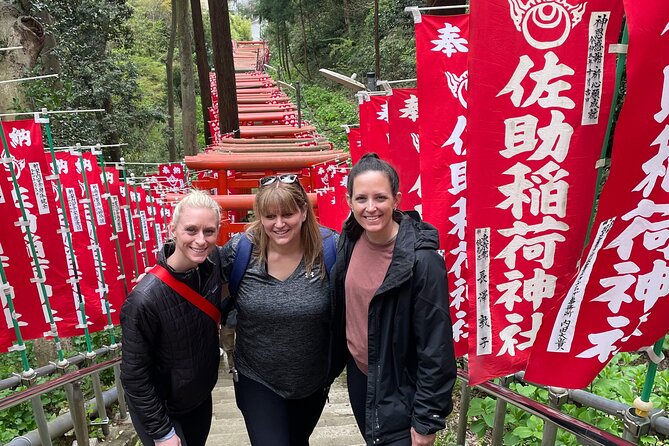
- Sasuke Inari Shrine: A Fox Dream and a Battle Legend
- Kotoku-in Great Buddha: Your Big, Iconic Payoff
- Hasedera Temple: Mount Kamakura Views and a Coastal Finish Lead-In
- Yuigahama Beach: Where the Route Ends and the Day Gets Easier
- How Much Is $98.44 Worth for a Private 5-Hour Tour?
- The Walking Pace: Plan for Hills, Not a Flat Stroll
- Your Guide Makes or Breaks the Day
- When Weather Changes Plans, You Still Get a Tour
- Should You Book This Kamakura Private Tour?
- FAQ
- What’s the tour duration?
- Which temple entrance fees are included?
- How much walking is involved?
- Where does the tour start and end?
- Is hotel pickup included?
- What if the weather is bad?
Key things to know before you go
- Entrance fees included for Jochiji, Hasedera, and Kotoku-in, so fewer tickets to sort out
- Private walking format means your guide can adjust pace and stops for your group
- Mountain pass time is real (at least 5 km total walking), plus some uphill sections
- You’ll see both famous and quieter sites, like Jochiji and Sasuke Inari alongside Kotoku-in
- Sea views are built into the route, especially from Hasedera and toward Yuigahama Beach
- Guides often add care, including etiquette tips and help with getting back to the station
Kamakura on Foot, Without the Tokyo Stress
If you have ever tried to do Kamakura on your own, you already know the challenge. Trains are easy enough, but once you start mixing temples with mountain paths and timing, the day can feel like logistics plus walking.
This tour trades that stress for a simple rhythm: meet at Kita-Kamakura Station, start walking in the hills, visit the major spiritual anchors, then finish around Hase Station with sea views. It is the kind of plan where you can focus on the experience, not the map app.
And the best part is that Kamakura feels like two places at once. One is coastal and sunlit. The other is forested, quiet, and steep. Your route takes advantage of both in a single loop.
More Shrine and Temple visits in Kamakura:
- Tokyo: Kamakura & Enoshima Day Trip including Temple Tickets
★ 4.5 · 1,375 reviews - Kamakura: Great Buddha, Hase Temple, & Komachi Street Tour
★ 5.0 · 11 reviews - Kyoto: Fushimi Inari, Kinkakuji, Bamboo Grove 1 Day Bus Tour
★ 4.8 · 4,316 reviews
Start at Kita-Kamakura, Then Shift Into Temple-Through-Forest Mode
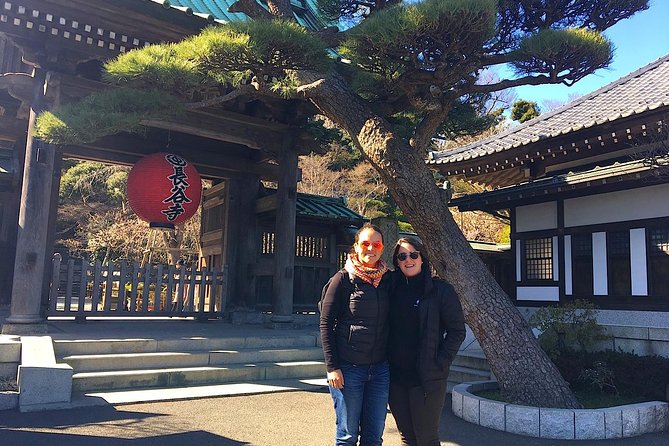
The tour begins at Kita-Kamakura Station, and you end at Hase Station. That matters because it means you are not repeatedly backtracking. You are walking a line through the city’s religious sites and the hills above them.
You’re also not dealing with crowds in the same way you might if you only target the most famous stop. One theme that shows up again and again in how people describe the experience is that the route includes spots that feel calmer and more local, then still lands you at the big-name landmarks.
Along the way, your guide explains what you’re seeing and why it matters. That turns photos into understanding, especially when you hit temples that were tied to Kamakura’s early political world, not just generic tourism.
Jochiji Temple: Zen Quiet and a Shogunate Story
Jochiji Temple is your first temple stop, and it is a good opener. The setting is forested and calm, so you start the day with atmosphere, not crowds.
This temple was built in 1281 by Hojo Tokoyori, a leader of the Kamakura shogunate, to honor his son, who had died young. When you know that backstory, the place feels less like a pretty stop and more like a memorial shaped by power, grief, and Buddhism.
At Jochiji, you can expect time to stroll and take it in. You’re not rushing through here. The goal is to let the space reset your pace for the hillside walking to come.
A practical note: since you’re starting your day on foot, this is a great moment to check your shoe fit and take a slow first climb if your legs need time to wake up.
Hiking Trails and the Daibutsu Course Feeling
After Jochiji, the tour shifts into nature mode with the Kamakura hiking trails. One segment is around a pass, and it’s set up to give you that older Japan feel, where paths go through greenery instead of sidewalks.
This is where the tour earns its name. You are not just walking from stop to stop in town. You’re getting hillside walking, including sections that can feel strenuous depending on your pace and the weather.
If you’re traveling in hot weather, plan on breaks. People described needing extra rest during very hot conditions, and that’s exactly what I would plan for. If it’s a cooler day, you’ll likely feel better about the climb.
A few more Kamakura days to weigh up
- From Tokyo: Kamakura & Enoshima 1-Day Bus Tour
★ 4.5 · 189 reviews - Kamakura Historical Walking Tour with the Great Buddha
★ 5.0 · 129 reviews - From Tokyo: Kamakura Full Day Tour with a Local Expert Guide
★ 4.6 · 43 reviews - From Tokyo: Kamakura Private Customize Tour by Luxury Van
★ 4.6 · 38 reviews
Zeniarai Benten Ugafuku Shrine: The Torii-Framed Hole Stop
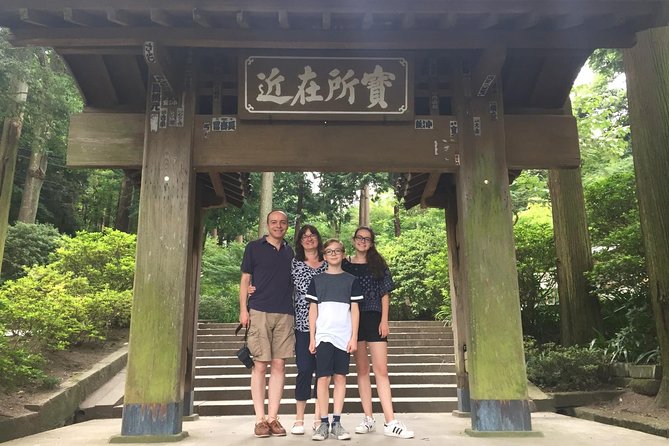
One of the most memorable moments is at Zeniarai Benten Ugafuku Shrine. The route here follows the Daibutsu Hiking Course through the mountains.
The signature thing you’re looking for is a mysterious hole in the hillside, framed by a torii gate. You walk through it and then reach the shrine area.
Even if you do not know the religious meaning in advance, it has a strong visual impact. You’ll feel like you are doing something specific, not just passing by a shrine sign.
This stop also reinforces what makes the tour work: you get structure (set stops), but the route keeps the day moving through nature and small, specific experiences instead of only big-ticket monuments.
Sasuke Inari Shrine: A Fox Dream and a Battle Legend
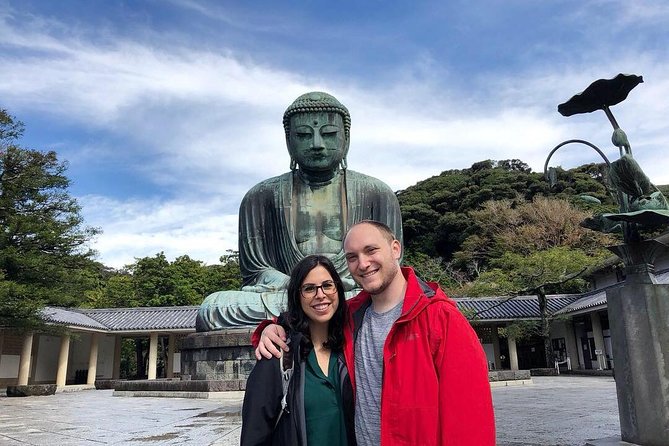
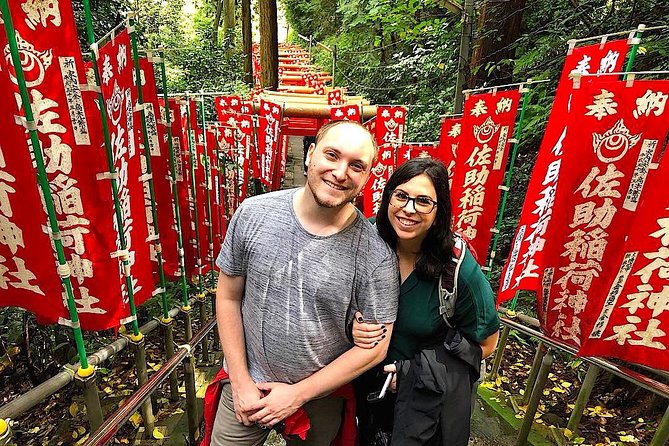
Next comes Sasuke Inari Shrine. It’s tied to a legend where Minamoto Yoritomo, Kamakura’s first shogun, was visited in a dream by a white fox known as Inari.
The fox advised him on how to win a battle against his enemies. That kind of story is part of what makes Kamakura feel different from Kyoto or Nara. It connects religion to politics, dreams, and the real stakes of early samurai power.
In practical terms, plan for a short stop here, about enough time to notice the shrine setting and let your guide connect it to the city’s larger history. It’s not a long stay, but it adds meaning to the walk you’ve already started.
Kotoku-in Great Buddha: Your Big, Iconic Payoff
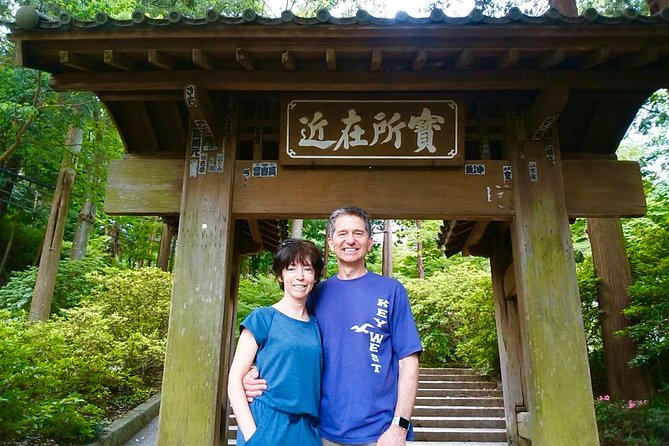
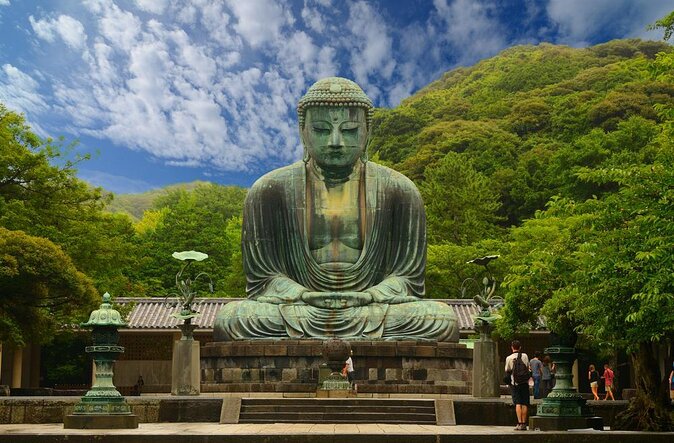
Then you reach the moment most people came for: Kotoku-in and the Great Buddha of Kamakura.
This statue is enormous. It stands at 13.35 m tall and is about 121 tonnes. The bronze statue as you see it today dates from 1252. It’s also noted as one of the biggest Buddha statues in Japan.
When you stand in front of something this size, it changes how you experience the day. Before this, you’re moving along paths and through smaller shrine settings. Here, the scale gets undeniable, and the whole day clicks into place.
Time here is about 20 minutes on the plan. That’s enough to get a close look, take in the details from different angles, and then transition to the final temple climb toward Hasedera.
Hasedera Temple: Mount Kamakura Views and a Coastal Finish Lead-In

Next is Hasedera Temple, located about halfway up Mount Kamakura. This stop is designed to give you the best “Kamakura postcard” views without turning the day into pure sightseeing.
The reason you come to Hasedera is the south-facing ocean views. You’ll be able to see over the water and toward Yuigahama Beach. During June and July, you can also see hydrangeas around the grounds, which adds a seasonal pop.
Hasedera is a temple, but it’s also a viewpoint. So even if you don’t consider yourself a “temple person,” this is one stop that still delivers because your senses get both spirituality and scenery.
The tour gives you about 30 minutes here. That is usually the right length to look around, enjoy the view, and avoid the rush that makes temple visits feel like speed-walking chores.
Yuigahama Beach: Where the Route Ends and the Day Gets Easier
Finally, you finish at Yuigahama Beach for about 15 minutes. The beach faces south, so from this point you’ll have the sun over the ocean.
This is a nice way to cool down after hillside walking. You are not asking your legs to do more work. You’re shifting from “climb and concentrate” into “sit and watch.”
During summer, there is an open-air market called Umi-no-ie. Even if you’re not there in summer, the beach setting makes the tour feel complete, like the day has a bookend instead of stopping abruptly after the Great Buddha.
How Much Is $98.44 Worth for a Private 5-Hour Tour?
Let’s talk value in a real way. $98.44 per person for about 5 hours is not “cheap,” but it is not just for walking next to someone. You’re paying for three main things:
- An English-speaking guide who explains what you’re seeing
- Admission fees included for three sites: Jochiji, Kotoku-in, and Hasedera
- A guided route that includes nature segments and takes you to places that are harder to string together on your own
If you were to self-plan, you would still spend time figuring out trains, routes, and entrances. You would also likely skip some of the in-between sections that make the day feel like a journey instead of a set of bus stops.
Two extra budgeting notes based on the details you should know:
- Food and drink are not included, so plan a lunch break budget.
- Hotel pickup and drop-off is not included, but it is available for an added 8,000 yen per person. Also, private taxi or car is not included.
On top of that, if weather changes the plan, you might use public transport for rerouting. One guide-led experience described needing to cover small bus or train fares depending on what was walkable that day. Build in a little flexibility for that.
For me, the value case is simple: if you want a guided, ticketed, hillside Kamakura day without the stress, the price makes sense.
The Walking Pace: Plan for Hills, Not a Flat Stroll
This is a walking tour with a mountain pass. You should plan on at least 5 km of walking during the experience.
The tour information asks for moderate physical fitness, and the customer feedback echoes that you are in uphill territory. One description called it more of a mountainous hike than a flat walk, and another mentioned that on hot days it helped to take more breaks.
Here’s how to prepare like a pro:
- Wear comfortable shoes that are easy to walk in
- Bring a layer, even if you start warm, because hills and coastal breezes can change how you feel
- If you have a knee issue, think early about pace, not at the last steep segment
The good news is that because it’s a private tour, your guide can usually slow down or adjust. Some guides are reported to have skipped certain mountain shrines when conditions were slippery in rain, which tells me they will prioritize safety over sticking to a rigid script.
Your Guide Makes or Breaks the Day
A big reason this tour scores so high is how guides show up. Names like Teiko, Yu, Yumi, Noriko, Naho, and Yoko show up repeatedly, and the common threads are warmth, clear explanations, and thoughtful adjustments.
What you gain from that kind of guiding is not just history facts. It’s etiquette guidance. It’s being told what to look for. It’s being helped if the route changes due to weather. And it’s help with getting back to the station so your day ends cleanly instead of turning into a scramble.
One useful detail: people described guides taking photos and sending them after the tour. It’s a small thing, but it can save you the stress of trying to capture every stop yourself.
When Weather Changes Plans, You Still Get a Tour
This experience requires good weather. If conditions are poor enough to cancel, you’ll be offered another date or a full refund.
But rain does not always mean the day is a loss. There are reports of rainy days where the guide handled the route, using bus or train segments and still hitting the key spiritual stops.
So the practical strategy is this: pack for weather, accept that the pace may shift, and trust that your guide has options. The route is designed with hillside nature in mind, and that means rerouting is sometimes part of keeping the experience smooth.
Should You Book This Kamakura Private Tour?
Book it if you want:
- Guided temple depth at Jochiji, Kotoku-in, and Hasedera without sorting tickets
- A hills-and-sea day, not just a single “top sights” tour
- A private format where your guide can match the pace to your group
Skip or reconsider if:
- You know you will struggle with hills and at least 5 km walking
- You want a low-effort sightseeing day with no mountain pass element
- You are only interested in one famous landmark and nothing else
If you fall in the sweet spot, this is the kind of half-day that makes Kamakura feel personal. You get the big symbol of the Great Buddha, but you also get the quieter temple forest moments and the sea-view payoff that ties the whole route together.
FAQ
What’s the tour duration?
The tour is about 5 hours.
Which temple entrance fees are included?
Entrance fees are included for Jochiji Temple, Kotoku-in (Great Buddha of Kamakura), and Hasedera Temple.
How much walking is involved?
You will walk at least 5 km, including a mountain pass, so comfortable shoes and moderate fitness are recommended.
Where does the tour start and end?
It starts at Kita-Kamakura Station and ends at Hase Station.
Is hotel pickup included?
Hotel pickup and drop-off are not included, but you can add it for an extra 8,000 yen per person.
What if the weather is bad?
This experience needs good weather. If it is canceled due to poor weather, you will be offered a different date or a full refund.
Newly listed around Kamakura
- Tokyo Yokohama Night View Tour With Kamakura And Enoshima★ 3.5 · 14 reviews
- Kanagawa: Kimono Rental in Kamakura Provided by RikaWafuku★ 4.8 · 8 reviews
- Kamakura: Great Buddha, Hase Temple, & Komachi Street Tour★ 5.0 · 11 reviews
- Oiso: Adventure Hike to See Mt. Fuji & Historic Coastal Walk★ 5.0 · 10 reviews
- Kamakura: Private History and Heritage Tour by Rickshaw★ 4.9 · 7 reviews
- Kamakura: Walking Tour through the City of Samurai★ 4.9 · 12 reviews
- Kamakura Private Custom Tour with Local Guide★ 5.0 · 7 reviews
- Kamakura: Half day Walking tour & Japanese sweets★ 5.0 · 11 reviews
Shrine & Temple Visits, compared.
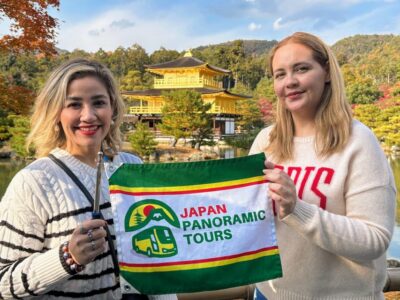
Fushimi Inari, Kinkakuji, Bamboo Grove 1 Day Bus Tour
Read our review →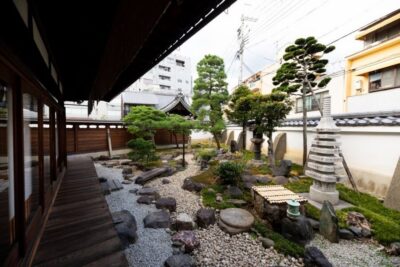

Meiji Shrine, Asakusa, Skytree Bus Tour and Cruise
Read our review →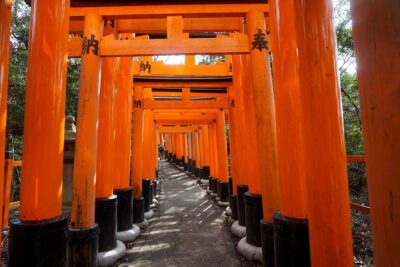
Fushimi Inari Hidden Hiking Tour (Private Option Available)
Read our review →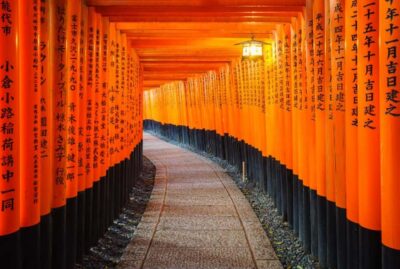
Osaka/Kyoto:Kinkakuji,Arashiyama,FushimiInariShrine,NaraPark
Read our review →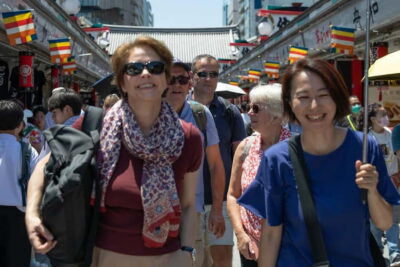
Asakusa Walking Tour with Sensoji Temple Visit
Read our review →
Nikko: Kegon Falls, Lake Chuzenji & Toshogu Temple
Read our review →
Kamakura & Enoshima Day Trip including Temple Tickets
Read our review →Browse the lists this tour appears in