
Review · 1-DAY TOURS
Kyoto 1 Day Tour from Kyoto
Six Kyoto icons in one day. This full-day tour strings together major sights and UNESCO World Heritage sites in a single route, from Nijō Castle to Kinkaku-ji, with a licensed English guide and a climate-controlled bus that keeps your day moving. It is a smart way to get your bearings fast when Kyoto is new to you.
I especially like that the tour handles the hard parts for you, admission fees and transportation between stops, so you are not constantly checking ticket lines or transit routes. I also like the final run to Kiyomizu-dera, because you get both the temple and the classic approach with shopping lanes before the terrace viewpoints.
One consideration: the timing is tight and the walking can be brisk, especially around Fushimi Inari and between areas. If you prefer a slow, linger-everywhere pace, this may feel like too much in one day.
In This Review
- Key Things I’d Plan Around
- How This One-Day Kyoto Plan Runs From Morning to Evening
- Nijō Castle: Gold-Leaf Splendor Inside a Surprising Shell
- Kinkaku-ji Temple: The Golden Pavilion and Its Pond Reflections
- Kyoto Imperial Palace: Opulent Rooms and Ceremonies That Still Matter
- Fushimi Inari Taisha: Red Torii Gates and a Walk You Should Not Skip
- Sanjusangendo Hall: 1,001 Life-Size Statues in One Long Room
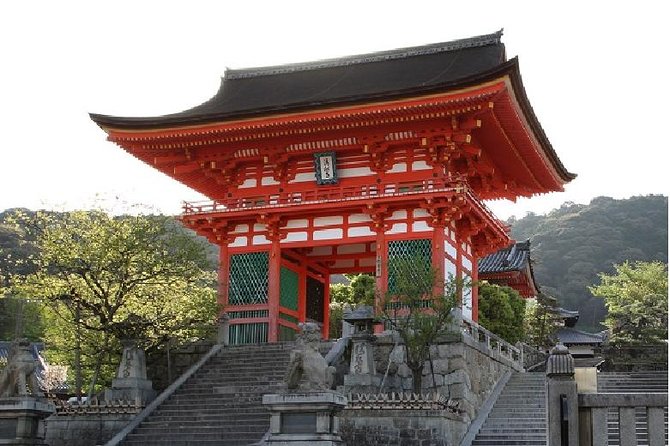
- Kiyomizu-dera and the Pottery Lane: Terrace Views and a Classic Approach
- Guide Energy Can Make or Break the Day
- Lunch Choices: Western Set Menu or Vegetarian Indian Thali
- Transportation Comfort and the Reality of a Packed Schedule
- Price and Value: What You Get for About $168
- Who This Tour Fits Best, and Who Might Want a Different Plan
- Should You Book This Kyoto 1 Day Tour?
- FAQ
- How long is the Kyoto 1 Day Tour and what time does it start?
- Where do I meet the tour?
- What are the included costs on this tour?
- Is lunch available, and what types are offered?
- Can I request vegetarian, halal, or gluten-free meals?
- What happens if Kyoto Imperial Palace is closed on my travel day?
- What if Nijō Castle is closed?
- Do I need to walk to Fushimi Inari Taisha?
Key Things I’d Plan Around
- UNESCO hit list in one circuit covering Nijō Castle, Kinkaku-ji, and other major temples and shrines
- English guidance that adds context so you understand what you are seeing, not just what it looks like
- Admission fees and transportation included, which is big value for a one-day plan
- Two lunch formats available, Western-style set menu or a vegetarian Indian thali option
- Back-up destinations when key sites are closed, so your day still stays full
- A route with some walking, including about 15 minutes one-way from parking to Fushimi Inari
How This One-Day Kyoto Plan Runs From Morning to Evening
This tour starts at 8:20am and runs about 9 hours 40 minutes, ending at Kyoto Station around 5:30pm. If you are staying in the Kyoto Station area, that is helpful because the meeting point and finish line are both easy to anchor your day.
You meet at the JTB SUNRISE TOURS DESK KYOTO, located at AVANTI (B1F), in Kyoto’s Minami Ward. The tour uses a mobile ticket, so you can keep everything on your phone. The group stays fairly small, with a maximum of 40 travelers, and seats are not assigned, so you will likely sit where there is room.
The daily rhythm is classic coach-tour style: ride, arrive, guided walk or entry, then on to the next stop. The schedule matters here because the tour is built to cover six major sites plus time for a temple lane stroll at the end. You will get a lot done, but it is not a day for leisurely pacing.
A few more Kyoto days to weigh up
- PERFECT KYOTO 1-Day Bus Tour
★ 5.0 · 13,518 reviews - Kyoto: Fushimi Inari, Kinkakuji, Bamboo Grove 1 Day Bus Tour
★ 4.8 · 4,316 reviews - Kyoto: Tea Ceremony in a Traditional Tea House in Kiyomizu
★ 4.9 · 3,519 reviews
Nijō Castle: Gold-Leaf Splendor Inside a Surprising Shell
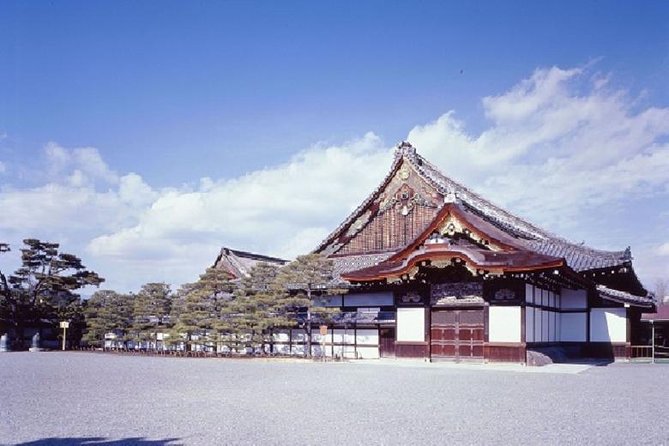
Nijō Castle is your first big UNESCO moment. Completed in 1626, it was built as lodging for the Tokugawa Shogun, and also as a kind of safeguard for the imperial presence in Kyoto. From the outside, it can look almost formal and restrained. Then you go inside and the decorations do the talking, with glittering gold leaf and intricate interior details.
Your stop here is about 50 minutes, with admission included. This is one of those places where the guide’s commentary matters because the castle is not just about architecture, it is tied to power, ceremony, and status. If you have ever wondered what Japan’s old political theater looked like, this is a strong place to start.
Practical note: Nijō Castle is closed on Tuesdays in January, July, August, and December. If your tour falls on one of those days, you will visit Ryoan-ji Temple instead. The tour is designed to keep you moving, so check your date if you are hoping specifically for Nijō Castle.
Kinkaku-ji Temple: The Golden Pavilion and Its Pond Reflections
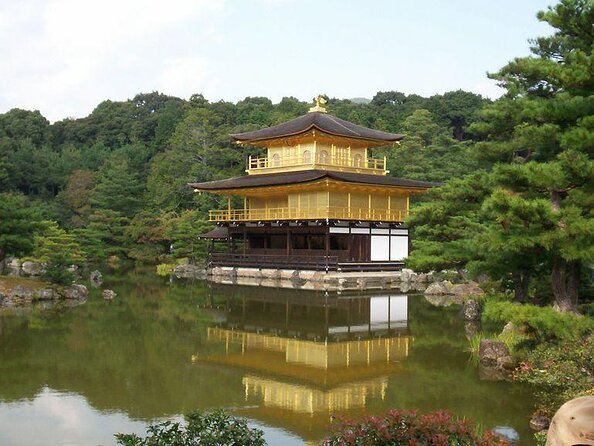
Next up is Kinkaku-ji, the famous Golden Pavilion. This wooden structure is covered in thin layers of pure gold, and it sits alongside a pond that shapes how the whole scene feels. Even if you have seen photos before, the real thing lands differently because you are standing in the exact geometry that made the image iconic.
You get about 45 minutes, admission included. The time is usually enough to enter, see the pavilion from key angles, and walk through the Japanese garden areas around it. This stop is also one of the most popular, so expect crowds and the feeling of moving with the flow.
If you are the kind of traveler who likes to read what you are looking at, this is where an English guide can add a lot. The guide explains the setting and what the temple represents, so you are not just chasing the perfect picture.
Kyoto Imperial Palace: Opulent Rooms and Ceremonies That Still Matter
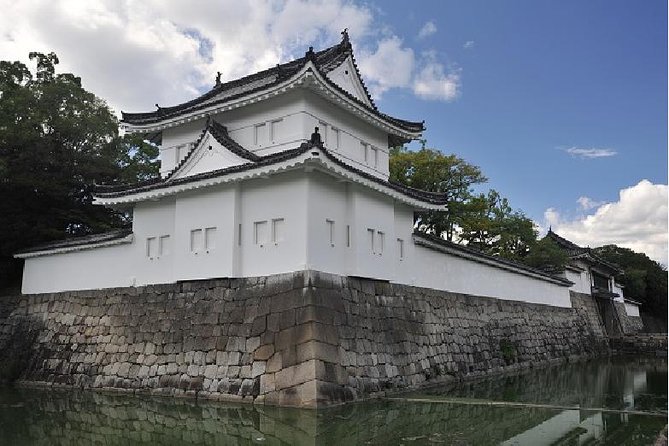
Kyoto Imperial Palace is a different mood from the temples. This was used as the Emperor’s residence until about 150 years ago. The highlight here is the sense of how the palace rooms functioned for status and ceremony, from opulent chamber spaces to the kind of orderly Japanese style that feels calm on the inside even when you are in a crowd.
Your visit is around 40 minutes, and admission is free on this tour.
Here is the important catch: the palace is closed to visitors on Mondays (and on the following day if Monday is a holiday), plus on days when there is an Imperial Household Agency event. If your day hits one of those closures, the tour does not leave you with a gap. Instead, you visit Kitano Tenmangu Shrine. If that closed-day happens to fall on the 25th, the alternative is Nishi Hongan-ji Temple.
That backup plan is great for keeping the day full. It also means you should not assume you will always see the palace if your calendar lines up with a closure.
A different sort of day in Japan:
- Kyoto Geisha Walking Tour: Gion District & Hidden Gems
★ 4.7 · 3,273 reviews - Kyoto: Tea Ceremony Ju-An at Jotokuji Temple
★ 4.9 · 3,207 reviews - Kyoto: 45-Minute Tea Ceremony Lesson Experience
★ 4.3 · 2,378 reviews - Kyoto: Gion Geisha District Walking Tour – Stories of Geisha
★ 4.7 · 2,187 reviews
Fushimi Inari Taisha: Red Torii Gates and a Walk You Should Not Skip
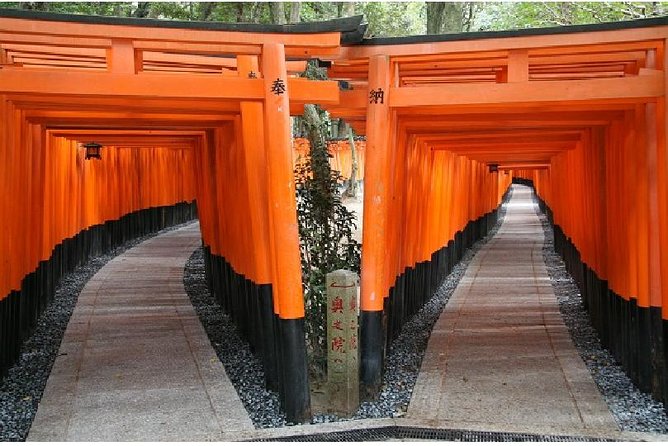
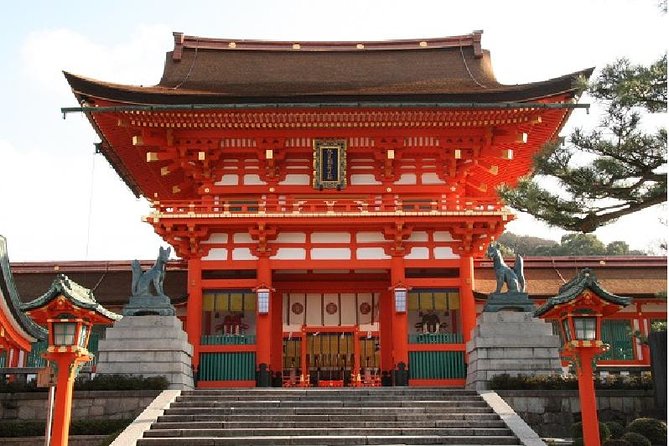
Fushimi Inari Taisha is where Kyoto turns visually dramatic. The main attraction is the chain of bright red Senbon Torii gates. This shrine is the head shrine for about 40,000 inari-jinja shrines across Japan, so the theme of protection and devotion runs far beyond this one site.
You have about 30 minutes at Fushimi Inari, and admission is free.
One practical detail you should plan around: you walk from the parking lot to the shrine area, about 15 minutes one-way. That is not long, but it adds up once you are already walking between stops. Wear shoes you can move in, because the torii path and the crowd flow make it easy to feel hurried.
Also, use your time smart here. If you want photos, pick your spots early, then adjust. This is one of those places where the route can pull you deeper if you are not careful, so a guide-led plan helps.
Sanjusangendo Hall: 1,001 Life-Size Statues in One Long Room
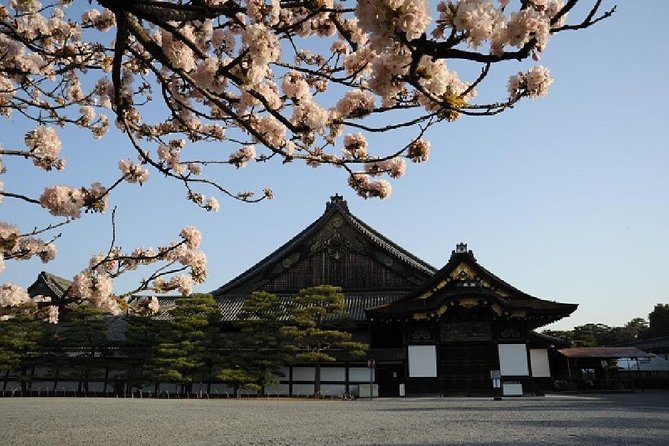
If you like Buddhist art, Sanjusangendo is memorable. The hall is known for housing 1,001 life-size statues of Buddhist Kannon deities, and the collection dates back to the 13th century. The building itself is also notable as the world’s longest wooden structure.
Your stop is about 30 minutes, admission included.
This is the kind of place where photos can feel too flat because the power is in seeing how the statues extend along the hall and how the space organizes attention. A guide can help you focus on what matters, like how the number and placement connect to the site’s religious role.
It is a great mid-day change of pace too. After the open-air torii gates, you shift into a structured indoor experience.
Kiyomizu-dera and the Pottery Lane: Terrace Views and a Classic Approach
You wrap the tour with Kiyomizu-dera, and the timing here is one of the nicest parts of the day. You get about 1 hour 10 minutes, admission included, which is enough to take in the temple area and the approach.
The experience is not only the main complex. You also get a stroll down a charming lane lined with pottery shops before reaching the temple. This is one of those “Kyoto in a postcard” moments, but the best part is that you get it before you go up to the viewpoint.
Kiyomizu-dera is also famous for the panoramic city views from its lofty terrace. That terrace is where the crowds often thin enough for you to actually look around and absorb the fact that Kyoto stretches in layers, not just in one tight view.
Guide Energy Can Make or Break the Day
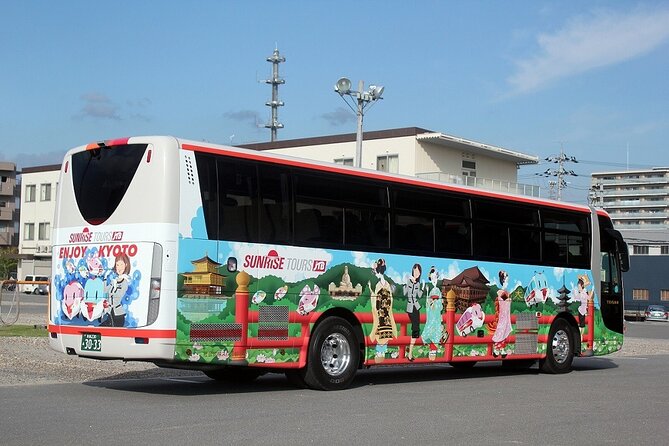
The tour lives and dies by the guide. The good ones turn a bus schedule into a story, and they keep you aligned so you get value out of each short stop.
I liked that this tour includes a National Government Licensed English Guide Interpreter fee, and in practice, many guides bring humor and real clarity. Names that came up in the experience include K.C., who was described as friendly, humorous, and helpful with English, and Miyuki, praised for being knowledgeable and attentive on long, hot days. Other standouts in the same role included Yoshitaka Harada, Yuki, and Michi, with frequent praise for engaging commentary and keeping the group comfortable.
Now the balanced part: a few people reported issues with pace and audibility, like the guide walking too fast for some members or being hard to hear if you were not close enough. If you are sensitive to brisk walking or you know you struggle to hear in noisy situations, position yourself earlier in the group and pay attention when the guide starts explaining each site.
Also note that site order and exact arrival timing can shift due to road conditions and congestion. That is normal in Kyoto.
Lunch Choices: Western Set Menu or Vegetarian Indian Thali
Lunch is optional, but it is built into the tour if you choose it during booking. If you select the With Lunch option, you get a Western-style set menu. Vegetarian requests are possible, but only if you inform the reservation in advance. Halal, gluten-free, and other meal requests are not available for the Western option.
There is also a With Indian Thali Lunch option. This is a vegetarian-suitable thali set that includes three kinds of curry (bean curry, vegetable curry, spinach and potato curry), vegetable pakora, plain yogurt, naan or roti, rice, salad, and a non-alcoholic drink. Requests for halal or gluten-free are also not available for this format.
One important logistics detail: people with Western lunch and people with Indian thali are served in separate dining areas, and you cannot swap the lunch type on the day. If you do not select lunch, you get free time to eat on your own in the Kyoto Station area.
If you have dietary needs, I would choose carefully and plan to double-check what you selected. If you just want flexibility, the no-lunch option can work well because Kyoto Station has plenty of easy, familiar options.
Transportation Comfort and the Reality of a Packed Schedule
The tour provides an air-conditioned and heated tour bus, which matters because Kyoto weather can swing and the day includes several short stops rather than one long stay anywhere.
The tour also includes all transportation costs between stops, which is not glamorous, but it is a big deal for value when you are trying to cover a lot. You are not spending your mental energy on trains, station changes, and ticket machines.
What you should expect is the trade-off: the day is structured for coverage, so there is less time to wander off-script. Several guides do their best to explain and point things out, but you still have to work within the time window at each major site.
Price and Value: What You Get for About $168
At $168.43 per person, this is not a budget bargain, but it can be strong value depending on how you travel. The price includes admission fees and transportation, plus the English guide service, and optionally lunch.
If you are only in Kyoto for a short window, that bundled approach can save time and stress. You pay once and you get guided access to major monuments without building a complicated route across multiple neighborhoods.
If you are a slower traveler or someone who hates group pacing, you may feel the cost is too high for the amount of time you spend at each site. In that case, it might be better to build your own day and choose fewer stops. But if you want a first pass at Kyoto highlights, this tour is built for that exact job.
Who This Tour Fits Best, and Who Might Want a Different Plan
This tour is a strong match if:
- You want a highlights circuit and a fast understanding of Kyoto’s major landmarks
- You like having an English guide explain context at each UNESCO site
- You only have one day and you want to maximize it without planning transit between stops
- You prefer guided efficiency over self-guided route decisions
You might want to skip or consider a different style if:
- You need long quiet time at temples and shrines
- You have trouble with brisk walking and crowded paths
- You are hoping for a very flexible, custom itinerary based on the day’s mood
The schedule is fixed, and closures can swap in alternatives. That is good for coverage, but it is still a set plan.
Should You Book This Kyoto 1 Day Tour?
I would book it if you want the cleanest one-day path to Kyoto’s biggest icons, especially with an English guide who keeps the stops meaningful. The included admissions and transportation help a lot, and the lunch option can reduce decision fatigue mid-day.
I would think twice if you are the type who hates being rushed. This tour is designed for momentum, and that means shorter visits, plus some walking you can feel at Fushimi Inari and around the Kyoto-hillside temple approach.
If you are flexible, this is a solid way to see Kyoto’s headline sites without spending your whole day on logistics.
FAQ
How long is the Kyoto 1 Day Tour and what time does it start?
It starts at 8:20am and runs for about 9 hours 40 minutes. The tour ends around 5:30pm at Kyoto Station.
Where do I meet the tour?
Meet at the JTB SUNRISE TOURS DESK KYOTO at AVANTI (B1F), Kyoto, near Kyoto Station.
What are the included costs on this tour?
Admission fees and transportation costs are included. The tour also includes an air-conditioned and heated coach and an English guide interpreter fee.
Is lunch available, and what types are offered?
Lunch is available if you select an option at booking. You can choose a Western-style set menu, or an Indian thali set menu (vegetarian). If you select no lunch, you get free time to eat on your own near Kyoto Station.
Can I request vegetarian, halal, or gluten-free meals?
For the Western-style lunch, vegetarian requests can be noted at reservation. Halal, gluten-free, and other meal requests are not available for lunch options. The Indian thali lunch is suitable for vegetarians, and halal and gluten-free requests are not available.
What happens if Kyoto Imperial Palace is closed on my travel day?
If Kyoto Imperial Palace is closed (such as Mondays, or due to an Imperial Household Agency event), the tour visits Kitano Tenmangu Shrine instead. If the closed day falls on the 25th, the tour visits Nishi Hongan-ji Temple.
What if Nijō Castle is closed?
Nijō Castle is closed on Tuesdays in January, July, August, and December. If it is closed, the tour visits Ryoan-ji Temple instead.
Do I need to walk to Fushimi Inari Taisha?
Yes. The tour includes a walk from the parking lot to Fushimi Inari Taisha Shrine of about 15 minutes one-way.
Newly listed around Kyoto
- Taste of Nishiki Market Walking Food Tour with Local guide★ 5.0 · 17 reviews
- Kyoto: Sushi Making Class with Sushi Chef★ 4.8 · 64 reviews
- Simple Plan with Maiko★ 4.4 · 10 reviews
- Shibori Furoshiki Course at Kyoto Shibori Museum★ 5.0 · 21 reviews
- Kyoto: City Secrets eBike Tour★ 4.9 · 196 reviews
- Sacred Pathways: Discover the Philosopher’s Path of Kyoto★ 4.9 · 20 reviews
- Private Tour to Monkey Park and Arashiyama Highlights★ 5.0 · 22 reviews
- Private Nara Tour from Osaka – Meet at Your Hotel★ 5.0 · 22 reviews
1-Day Tours, compared.
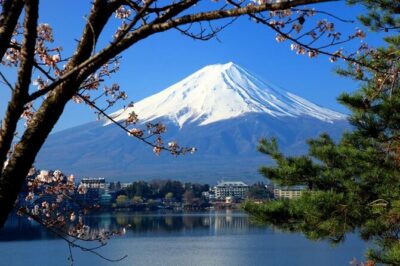
Mt Fuji and Hakone 1-Day Bus Tour Return by Bullet Train
Read our review →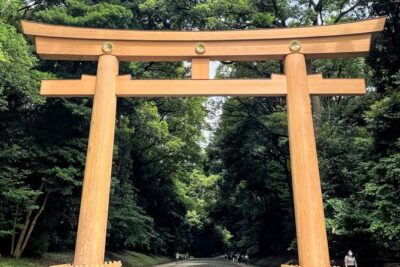
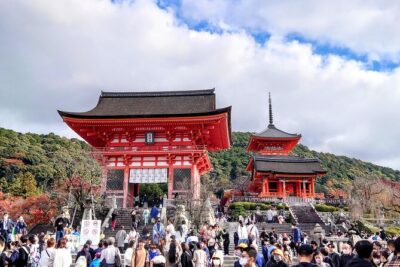
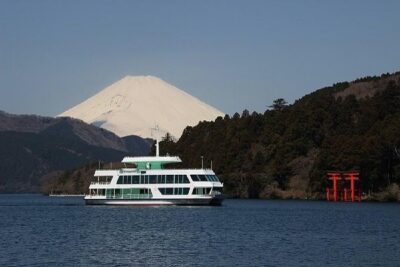
Mt Fuji & Hakone Cruise, Drum Show Bullet Train 1 Day from Tokyo
Read our review →
Peaceful Hiroshima & Miyajima UNESCO 1 Day Bus Tour
Read our review →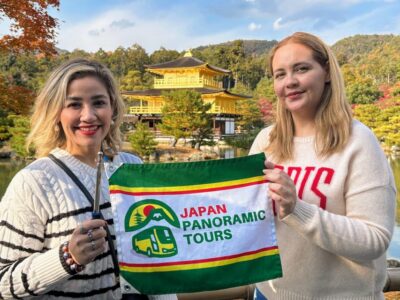
Fushimi Inari, Kinkakuji, Bamboo Grove 1 Day Bus Tour
Read our review →

Browse the lists this tour appears in