
Review · BAMBOO GROVE WALKS
Kyoto Arashiyama & Sagano Bamboo Private Tour with Government-Licensed Guide
If bamboo and temples are on your Kyoto hit list, this is a strong match. You get a private walking plan in Arashiyama and Sagano, with a government-licensed English guide who handles the flow, gives context, and stays available for questions as you go.
I especially like the way this tour blends the famous stuff, like Togetsukyo Bridge and the bamboo walk, with quieter hillside temples where you can slow down and actually look. Another big win is that you can shape the day by picking about 3 to 4 sites, so you are not stuck seeing things you do not care about. One drawback to consider is that entrance fees and a chunk of time you will spend on foot are on you, and some of the temple areas are steep or slippery in bad weather.
In This Review
- Key highlights worth planning around
- Why this Arashiyama and Sagano private tour is built for real sightseeing
- Price and value: is $157.82 per person fair for a private half day?
- The ground rules that shape your day: what is included, what is on you
- Arashiyama essentials: Togetsukyo Bridge and Bamboo Forest Street
- Togetsukyo Bridge: famous, photo friendly, and best with timing
- Bamboo Forest Street: better when the air moves
- Tenryu-ji and Okochi Sanso: Zen gardens plus actor-villa charm
- Tenryu-ji: one of Arashiyama’s Zen anchors
- Okochi Sanso Garden: behind-the-bamboo quiet
- Imperial villa calm: Shugakuin and Katsura garden rules you should know
- Shugakuin Imperial Villa: Upper, Middle, and Lower garden zones
- Katsura Imperial Villa: viewing on a guided trail, with strict photo spots
- Sagano temple circuit: moss, gates, and hillside views
- Jojakkoji, Nisonin, and Gioji: three ways to get the hillside effect
- Daikakuji Temple: former imperial space turned temple
- Daikaku-ji, part two, because that pond matters
- Nenbutsu-ji routes: Adashino and Otagi stone statue experiences
- Adashino Nenbutsu-ji: hundreds of stone statues plus a bamboo path back
- Otagi Nenbutsu-ji: 1200 rakan with different faces
- Mountain add-ons: Kurama and Kibune for a quieter, greener mood
- Kurama-dera and Kurama Onsen: temple and hot spring town energy
- Yoshimine-dera: a hillside view temple
- Kibune River and Kifune Shrine: water and omikuji in a valley
- How long you actually spend at each place, and how to avoid a sore-day regret
- What kind of people should pick this private tour?
- Should you book Kyoto Arashiyama and Sagano with a government-licensed guide?
- FAQ
- How long is the Kyoto Arashiyama and Sagano private tour?
- Is this tour private or shared?
- What is included in the price?
- Are entrance fees included for temples and villas?
- Do you offer pickup or drop-off?
- Do I need my own lunch during the tour?
- Is this tour dependent on weather?
- Can I cancel for a full refund?
Key highlights worth planning around
- Government-licensed local guide in English you can ask questions to while you walk
- Flexible 3 to 4 site choice from a menu of Arashiyama, Sagano, and mountain-area stops
- Togetsukyo Bridge timing plus a quick walk to riverside cherry trees when conditions are right
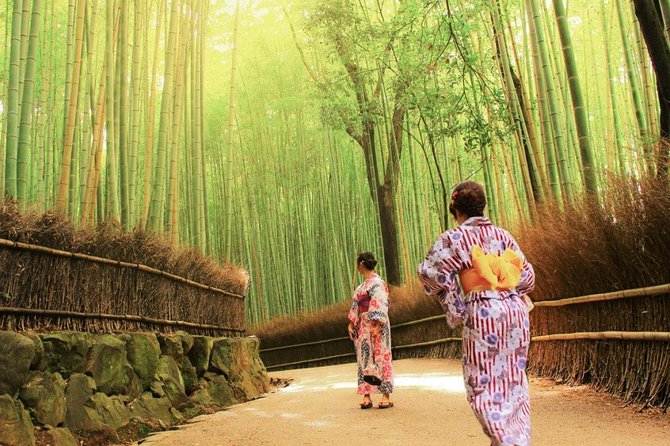
- Bamboo Forest Street at walking speed when the air moves and the stalks sway
- Imperial villa garden structure with photo and viewing rules for Katsura and Shugakuin areas
- Hillside temple variety in Sagano including moss gardens and the Nenbutsu-ji stone statue routes
Why this Arashiyama and Sagano private tour is built for real sightseeing
Arashiyama and Sagano can feel like two different Kyoto experiences. One minute you are near river traffic and souvenir streets. The next minute you are in the hush of temple paths, where stone steps and moss gardens make you walk slower without even trying. This tour puts those two modes side by side, so you get the full range without playing map Tetris.
The big reason it works is the guide. This is not a self-guided stroll where you only know what you notice. With a licensed English guide, you can ask what matters in the moment, like where to stand for the best angles at Tenryu-ji, or how a certain temple connects to the imperial court. Guides like Ken, Tomo, Satoko, and Kazuo show up again and again in the feedback you are likely to see, and the common thread is practical pacing, plus clear explanations.
The other reason I like it is the way the tour can be customized. Your guide prepares a walking tour of 3 to 4 sites. That changes the whole vibe. You are not rushing through 10 places just to prove you did them all. You pick your priorities, then let the guide stitch them into a smooth half day.
The one caution: entrance fees and some key site policies are not included, and the route can be tiring in heat. Many Arashiyama days are hot and humid, and you are walking. If you want an easy stroll all day, you will need to steer the plan toward flatter picks and build in rest breaks.
More Private Guides in Kyoto
- Kyoto Early Morning Tour with English-Speaking Guide
★ 5.0 · 1,427 reviews - Kyoto 6hr Private Tour with Government-Licensed Guide
★ 5.0 · 1,369 reviews - Kyoto: Early Morning Tour with English-Speaking Guide
★ 4.9 · 1,128 reviews
Price and value: is $157.82 per person fair for a private half day?
At $157.82 per person for about 6 hours, this sits in the middle of the pricing range for a Kyoto private guide. The value comes less from ticking boxes and more from what you avoid:
- wasted time figuring out the order of sites
- time lost at crowded chokepoints
- guessing what to prioritize when every brochure is yelling bamboo at you
Because it is private, the guide can adapt to your pace. In the feedback from Kazuo, for example, you can see how the day can be handled carefully when someone needs to move slower due to prior injuries. That kind of flexibility is hard to replicate when you are DIY.
Also, a private guide can reduce stress. When Tomo is credited for avoiding crowds at the right moments, that is not magic. It is timing, positioning, and knowing which streets to use so you do not spend your entire day sandwiched into photo lines.
One practical point: entrance tickets are not included for many stops. Togetsukyo Bridge itself is listed as free, but several temples and villas require paid admission or set viewing rules. If you come with a realistic ticket budget, the price feels much more reasonable.
The ground rules that shape your day: what is included, what is on you
This is a private tour with only your group. You meet up in Kyoto, and pickup or drop-off is handled on foot. A mobile ticket is part of the experience, and group discounts apply, but it is still only your group that participates.
What is included:
- a licensed local English speaking guide
- a customizable walking tour of 3 to 4 sites from the available list
- guide meet up in Kyoto
- pickup and drop-off on foot
What is not included:
- lunch
- entrance fees
- transportation fees for you and the guide
- a private vehicle
So what does this mean for you? You should treat the tour as guidance and navigation plus interpretation. You are still responsible for your meals and for any tickets at the sites you choose. If you are the type who likes to wander for snacks and pick your own lunch, that is totally workable. If you want someone to arrange meals and handle every ticket automatically, you will want to plan that responsibility yourself.
Arashiyama essentials: Togetsukyo Bridge and Bamboo Forest Street
Most people come to Arashiyama for one reason: bamboo. But bamboo is not a single scene, it is a whole walking rhythm.
Your day often starts in Arashiyama, a long-popular district dating back to the Heian period, when nobles enjoyed the area’s natural setting. Today, that romance shows up most clearly near Togetsukyo Bridge and along the bamboo paths.
A different sort of day in Japan:
- PERFECT KYOTO 1-Day Bus Tour
★ 5.0 · 13,518 reviews - Kyoto: Fushimi Inari, Kinkakuji, Bamboo Grove 1 Day Bus Tour
★ 4.8 · 4,316 reviews - Kyoto: Tea Ceremony in a Traditional Tea House in Kiyomizu
★ 4.9 · 3,519 reviews - Kyoto Geisha Walking Tour: Gion District & Hidden Gems
★ 4.7 · 3,273 reviews
Togetsukyo Bridge: famous, photo friendly, and best with timing
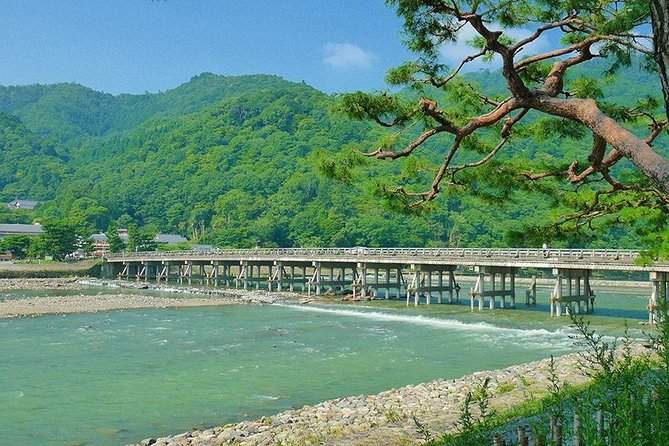
Togetsukyo Bridge, nicknamed Moon Crossing Bridge, is the central landmark. It was built during the Heian period and reconstructed in the 1930s. Right beside it, you have a riverside park with cherry trees, which means the bridge can feel very seasonal.
Even if the bridge is not what you picture from photos, you still want it in your day because it acts like a navigation anchor. It is easier to understand Arashiyama when you have one big landmark to orient around.
Admission at the bridge area is listed as free, so it is a low-cost way to get one of the most recognizable Kyoto views.
Bamboo Forest Street: better when the air moves
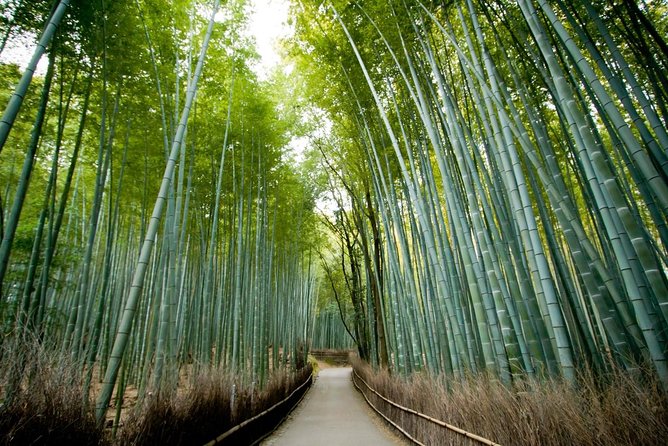
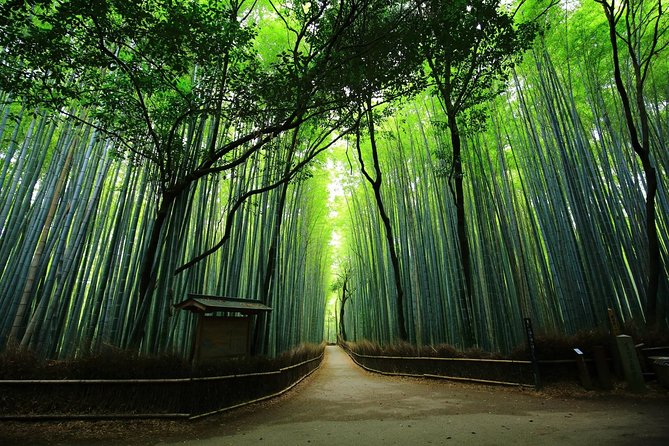
The bamboo groves walkways are where the experience turns from busy to calm. You are walking through paths cut through the stalks, and the way they sway is part of the magic. The bamboo is also linked to local crafts for centuries, with products made from bamboo such as baskets, cups, boxes, and mats.
Here is the practical takeaway: you will get more from the bamboo walk if you slow down and change your angles. Stand, then move. Look low, then look up. And ask your guide where the walking lines spread out, because crowd density can change your enjoyment fast.
Tenryu-ji and Okochi Sanso: Zen gardens plus actor-villa charm
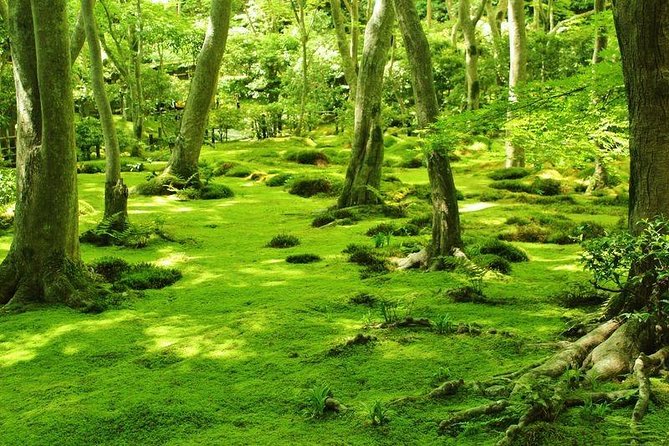
After the bamboo, you have a fork in mood: major temple grandeur or a quieter tucked-away garden feel.
Tenryu-ji: one of Arashiyama’s Zen anchors
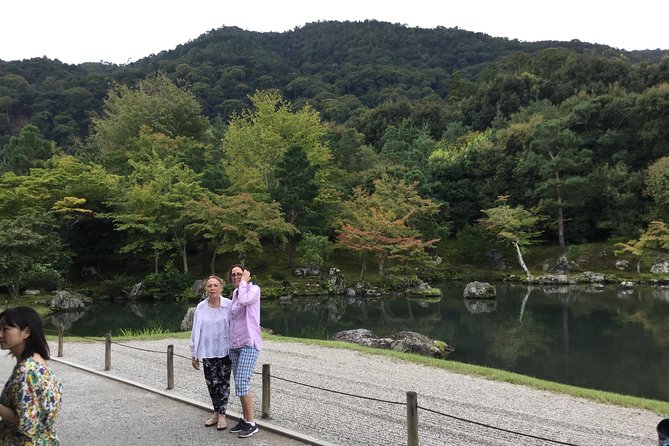
Tenryu-ji Temple is among Kyoto’s five great Zen temples, and it is one of the most impressive in Arashiyama. It is a UNESCO World Heritage site, founded in 1339. You get temple buildings plus walking paths through the gardens.
If you are trying to understand Japanese garden thinking, this is a solid choice. Tenryu-ji is not just a place to look at one photo spot. It supports a slower loop, where the garden reveals itself in segments.
Entrance fees are listed as not included, so budget for that.
Okochi Sanso Garden: behind-the-bamboo quiet
Okochi Sanso Garden is the former villa of actor Okochi Denjiro, hidden in the back of Arashiyama’s bamboo groves. You get multiple gardens and buildings including tea houses and gates, but viewing is mostly from the outside. That outside viewing limit can actually help. It pushes you toward the garden paths and composition, not just snapshots.
If your group wants a break from big temple crowds, this is a strong candidate. It is also an easy add if you like the idea of Kyoto not only as ancient religion, but also as older entertainment culture turned into preserved space.
Imperial villa calm: Shugakuin and Katsura garden rules you should know
Imperial villas are where Arashiyama and Sagano stop feeling like a modern tourist loop and start feeling like Kyoto’s design brain.
Shugakuin Imperial Villa: Upper, Middle, and Lower garden zones
Shugakuin Imperial Villa was built in the 17th century by Emperor Gomizuno. Today it is managed by the Imperial Household Agency. It includes Upper, Middle, and Lower villa areas, each with traditional imperial-style gardens and buildings.
Why it matters for you: imperial villas are about controlled views. You are not just walking into scenery. You are walking through intentional garden composition. That is easier to appreciate with an explanation in hand, especially when parts of the villa are easy to miss.
Entrance tickets are listed as not included.
Katsura Imperial Villa: viewing on a guided trail, with strict photo spots
Katsura Imperial Villa is one of the finest examples of Japanese architecture and garden design. The villa and garden in their present form were completed in 1645 for the Katsura Family. And here is the key detail: visiting requires joining a tour.
The tour follows a circular walking trail around the central pond. Palace buildings can be viewed only from the outside, and photography is allowed only from designated spots. English tours are available.
So if you want Katsura, plan your expectations. This is not a wandering-and-snapping kind of stop. It is a guided garden circuit where you watch where you are allowed to look.
Entrance fees are listed as not included, so you should budget for the villa itself and stick to your guide’s flow so you do not miss the best segments.
Sagano temple circuit: moss, gates, and hillside views
Sagano is where Kyoto’s temple variety starts to feel personal. You might begin with one temple style, then walk uphill and realize every stop is a different mood.
Here are several Sagano options that fit well into a half day if you choose carefully.
Jojakkoji, Nisonin, and Gioji: three ways to get the hillside effect
- Jojakko-ji Temple is founded in 1596. It has small buildings and gates, with maple trees and moss near the stairs and paths. From some spots, you get views over Kyoto.
- Nisonin is also a hillside temple, founded in the mid 9th century, Tendai sect. The approach is shaded by overhanging trees, which makes the grounds feel quiet fast. There are views from upper areas.
- Gioji Temple is even more hidden by forest. It is known for a moss garden punctuated with tall maple trees, plus thatched roof details and a small round window looking into the garden.
If you like atmosphere more than monuments, this trio is a smart selection. And because these are distributed on hillsides, a guide matters. You can save time by knowing which paths connect and where the easiest viewing points are.
All of these are listed with entrance fees not included.
Daikakuji Temple: former imperial space turned temple
Daikaku-ji is a large temple in northern Sagano. It traces back to the early 800s as Emperor Saga’s detached palace. After his death, the palace was converted into a temple and became one of the high-ranked Shingon Buddhism temples. Historically, it hosted peace talks that helped reunite the Northern and Southern Imperial Courts after 50 years of civil war.
There is also a large pond and a pagoda. This one is a good choice if you want something bigger and historically heavier, without turning it into a museum stop.
Entrance fees are listed as not included.
Daikaku-ji, part two, because that pond matters
The tour list repeats Daikaku-ji details, emphasizing the Shingon sect and the imperial family tradition of serving as head priest. For you, the practical outcome is this: if you pick Daikaku-ji, expect a site where the pond and major grounds are not a background. They are part of what you experience.
Nenbutsu-ji routes: Adashino and Otagi stone statue experiences
If you want something that feels uniquely Kyoto, without being only bamboo, consider the Nenbutsu-ji temple clusters.
Adashino Nenbutsu-ji: hundreds of stone statues plus a bamboo path back
Adashino Nenbutsu-ji is at the end of the Saga-Toriimoto preserved street. It dates to the early 9th century, when Kobo Daishi placed stone statues for the souls of the dead. Today the temple grounds are covered by hundreds of those stone statues. In the back, you can walk through a short bamboo forest path.
This is one of those stops that changes your mental picture of Kyoto. It is not a single dramatic view. It is a texture you walk through.
Otagi Nenbutsu-ji: 1200 rakan with different faces
Otagi Nenbutsu-ji is about a 10 minute walk north. It is famous for about 1200 stone statues of rakan, each with a different facial expression. These statues span part of a forested mountain slope, and the popular effect is that you start noticing faces and differences. Even in a crowd, you can lose yourself in it.
Entrance fees are listed as not included for both.
If you are choosing only 3 to 4 sites, these two can take one slot each, depending on your group’s tolerance for walking and how much you want to lean into the statue theme.
Mountain add-ons: Kurama and Kibune for a quieter, greener mood
If you want to get out of the main Arashiyama-Sagano tourist flow, the tour list includes mountain areas within about an hour of central Kyoto.
Kurama-dera and Kurama Onsen: temple and hot spring town energy
Kurama-dera is in Kurama, a rural mountain town less than one hour from the city center. It is best known for Kurama-dera and Kurama Onsen, a hot spring that is one of the easiest accessible from Kyoto.
Kurama Onsen is in a ryokan at the upper end of Kurama. It is reached by a 10 minute walk from the train station along the town’s only road or via a nature trail following the river. Daytrippers can pay for bath access, with pricing listed for all baths or outdoor bath only.
If your group likes slower valleys and a different Kyoto rhythm, Kurama can be a great counterweight to the bamboo crowd.
Yoshimine-dera: a hillside view temple
Yoshiminedera is a Tendai temple in Kyoto’s western mountains. It sits along a mountainside, and it looks out onto Kyoto. The grounds are spacious with many buildings spread up the mountain side.
This is a good choice if you want the view element and a calmer temple experience.
Kibune River and Kifune Shrine: water and omikuji in a valley
Kibune is a small town in a forested valley north of Kyoto that developed around Kifune Shrine. The shrine is dedicated to the god of water and rain. There is also a legend about a goddess traveling by boat into the mountains.
One charming detail you can build into your time: you can obtain a type of fortune, omikuji, written on paper slips, then reveal the message when dipped into water. Okunomiya, the inner sanctum, is about one kilometer further up the valley and includes the boat stone said to be where the goddess yellow boat is buried.
If you choose Kibune, you are choosing nature mood plus ritual details, not just architecture.
How long you actually spend at each place, and how to avoid a sore-day regret
The tour format is walking focused. Most listed site segments are around 20 minutes, with a couple of longer segments like Katsura’s guided circuit being 30 minutes. Shugakuin and other villas are also shorter listed windows.
So your day plan becomes a simple math problem:
- choose fewer sites if you want to linger
- choose more spread-out sites if your group likes lots of variety
- build in breaks for heat, especially in summer
If you love temples but hate steep stairs, steer your choices away from the steepest hillside clusters. If you love design and gardens, you can spend more attention at Tenryu-ji and the imperial villas.
And if the crowds are heavy, talk early with your guide about what you want to avoid. In feedback tied to Tomo, one of the best praised skills was knowing how to dodge crowds most of the time. That is what you should ask for directly.
What kind of people should pick this private tour?
This tour is a strong fit if:
- you want a guided day in a part of Kyoto that can be confusing without context
- you like a mix of famous sights and quieter temple corners
- you want to ask questions as you walk, not only at the start
- you prefer a smaller, paced itinerary over sprinting through a list
It may not be ideal if:
- you want a fully arranged lunch and paid admissions covered automatically
- your group wants a mostly flat walk with minimal stairs
- you hate rain plan changes, since some days may be adjusted due to weather dependence
Should you book Kyoto Arashiyama and Sagano with a government-licensed guide?
If your goal is a half day that feels guided, not choreographed, I would book it. The value is in the combination of private pacing plus a guide who can explain what you are seeing, then help you choose where your 3 to 4 sites should land.
I would especially book if you are doing Kyoto for the first time and you want to avoid the classic mistake of seeing only the bamboo photos. With the options here, you can mix bamboo with imperial garden structure, Zen temple wandering, and stone statue routes, without turning the whole day into an endurance contest.
FAQ
How long is the Kyoto Arashiyama and Sagano private tour?
It runs for about 6 hours.
Is this tour private or shared?
It is a private tour, and only your group will participate.
What is included in the price?
A licensed local English speaking guide is included, along with a customizable walking tour of 3 to 4 sites. Meet up in Kyoto is included, and pickup or drop-off is on foot. A mobile ticket is also part of the experience.
Are entrance fees included for temples and villas?
No. Entrance tickets and guide entry fees are only covered for sights listed under what to expect, and entrance fees for yourself are not included.
Do you offer pickup or drop-off?
Pickup and drop-off for this tour are on foot. There is also pickup offered.
Do I need my own lunch during the tour?
Yes. Lunch is not included, so you will need to arrange lunch for yourself.
Is this tour dependent on weather?
Yes. The experience requires good weather. If it is canceled due to poor weather, you will be offered a different date or a full refund.
Can I cancel for a full refund?
Yes. You can cancel up to 24 hours in advance for a full refund. If you cancel less than 24 hours before the experience starts, the amount you paid will not be refunded.
More Bamboo Grove Walks Around Kyoto
- Osaka/Kyoto:Kinkakuji,Arashiyama,FushimiInariShrine,NaraPark
★ 4.1 · 1,596 reviews - Kyoto/Osaka: Nara, Fushimi Inari Taisha, Arashiyama Bus Tour
★ 4.7 · 1,275 reviews - Kyoto Arashiyama Walking Tour: Bamboo, Monkeys, Gardens & Secrets
★ 5.0 · 1,216 reviews - Arashiyama Bamboo, Temple, Monkeys, or Secret Sake Brewery
★ 4.8 · 886 reviews
Newly listed around Kyoto
- Zen Meditation for Life in Kyoto★ 5.0 · 10 reviews
- Kyoto: Zen Meditation at a Private Temple with a Monk★ 5.0 · 25 reviews
- Kyoto Private Customizable Day Tour with Guide and Vehicle★ 5.0 · 52 reviews
- Private Wagyu Beef Tour with a Local Guide★ 5.0 · 6 reviews
- Kyoto: Gion Geisha District & Sake-in-Hand Walking Tour★ 5.0 · 37 reviews
- Your Private Vacation Photography Session In Kyoto★ 5.0 · 110 reviews
- Private Guided Traditional Buddhist Cooking in Japan★ 5.0 · 16 reviews
- Private Pewter Sake Cup Experience with a Kyoto Artisan★ 5.0 · 31 reviews
Bamboo Grove Walks, compared.
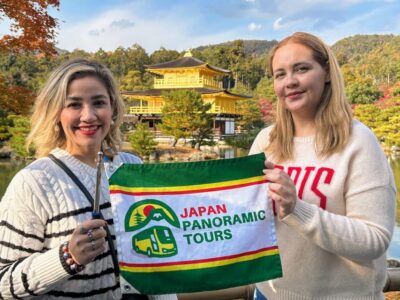
Fushimi Inari, Kinkakuji, Bamboo Grove 1 Day Bus Tour
Read our review →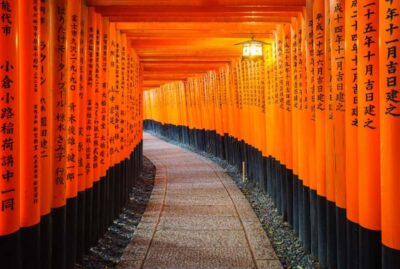
Osaka/Kyoto:Kinkakuji,Arashiyama,FushimiInariShrine,NaraPark
Read our review →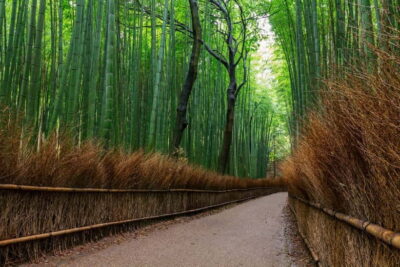
Kyoto/Osaka: Nara, Fushimi Inari Taisha, Arashiyama Bus Tour
Read our review →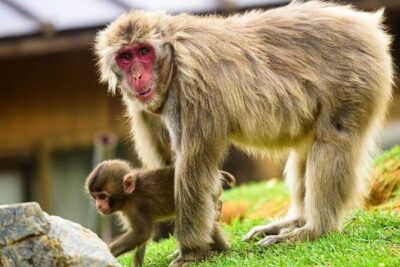
Kyoto Arashiyama Walking Tour: Bamboo, Monkeys, Gardens & Secrets
Read our review →
Arashiyama Bamboo, Temple, Monkeys, or Secret Sake Brewery
Read our review →
Osaka/Kyoto: Arashiyama, Nara & Fushimi Inari Shrine w/Lunch
Read our review →
Nijo, Kinkaku-ji, Arashiyama, Kiyomizu & Fushimi Inari
Read our review →
Kyoto Ghost Tour: Dark Tales, Urban Legends, Bamboo Forest Night
Read our review →Browse the lists this tour appears in