
Review · SHRINE & TEMPLE VISITS
Kyoto Fushimi Inari Night Walking Tour
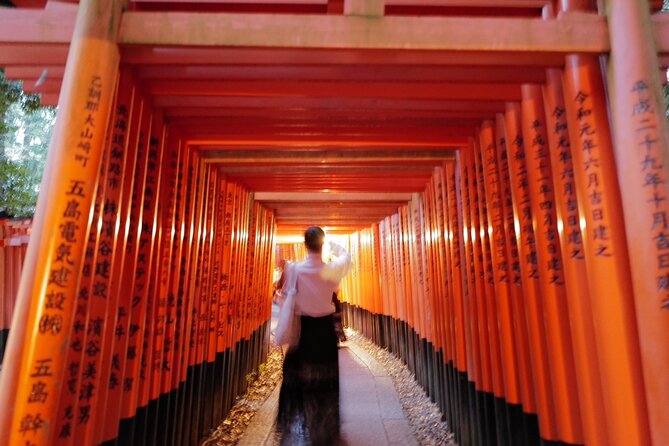
Fushimi Inari at night feels like a different place. This quick Fushimi Inari night walking tour takes you through Kyoto’s famous torii gates in the evening, with a guide who explains what you’re seeing and how to read the shrine. I like that it is only about an hour, so it fits neatly before or after dinner, and I also like the free admission ticket included for the shrine grounds.
One thing to consider: because the tour is short, you get a focused slice of the shrine, not a long, all-the-way hike. If you want hours of trail time, you may need extra solo exploring after the tour wraps.
You’ll meet at JR Inari Station, connect with your group right by a Daily Yamazaki, then head into the shrine area for a relaxed evening walk. The small group size, up to 15 people, matters here. It means your guide can actually answer questions instead of rushing everyone through.
In This Review
- Key Highlights You’ll Actually Notice
- Why Fushimi Inari Looks Better After 5:00 pm
- The Meet Point: JR Inari Station Plus a Daily Yamazaki
- The 1-Hour Walk With an English-Speaking Guide
- Fushimi Inari-taisha: Torii Gates, Meaning, and What to Watch For
- Photo Tips That Make the Torii Gates Look Like Torii Gates
- Timing, Comfort, and How to Keep It Enjoyable
- Price and Value: Paying for a Guide, Not Just a Stroll
- Who This Tour Suits Best (And Who Might Want More)
- Should You Book the Kyoto Fushimi Inari Night Walking Tour?
Key Highlights You’ll Actually Notice
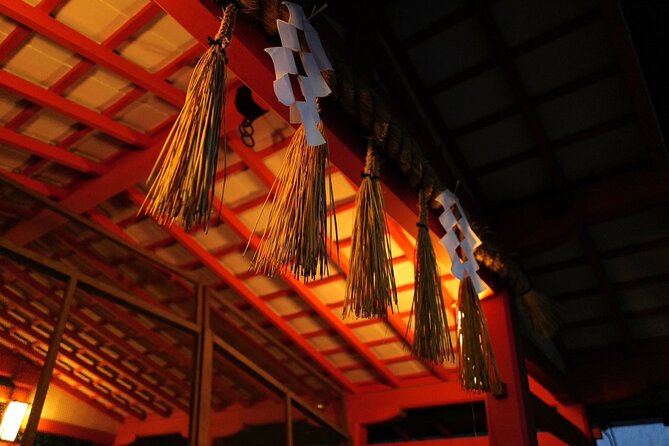
- Evening timing beats the worst crowds and heat, so the torii gates feel calmer and more photogenic
- Small groups (max 15) help your guide keep questions from turning into a lecture
- English-speaking guide for about 1 hour, plus practical pointers beyond just the gate count
- Free shrine admission included, so you are paying mostly for the guide time and walking experience
- Photo-friendly guidance, with tips that help you shoot better from sensible angles
- Mobile ticket keeps everything simple once you’re in Kyoto
Why Fushimi Inari Looks Better After 5:00 pm
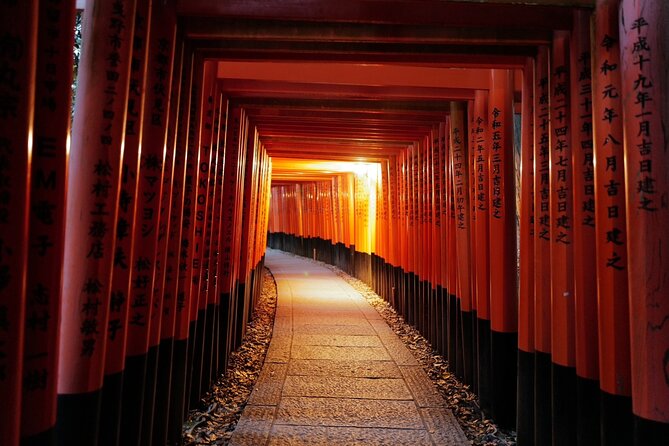
Kyoto’s Fushimi Inari Shrine is already one of the city’s most recognizable sights, thanks to the long tunnel of torii gates. In the evening, that famous look shifts. You tend to get softer light, more comfortable temperatures, and a crowd pattern that feels easier to manage than midday.
This tour starts at 5:00 pm, which is a smart sweet spot. It is late enough to cool down, but early enough that you are not trying to navigate in full darkness. The result is a walk that feels leisurely rather than rushed, while still giving you the “night shrine” atmosphere people travel for.
And because you are not starting at noon, you can actually slow down. That matters at Fushimi Inari, where the temptation is to sprint from gate to gate. With a guide steering the rhythm, you are more likely to notice the details: how the shrine spaces connect, how the path flows, and why certain sections feel more meaningful than just being another row of torii.
More Evening Tours in Kyoto
- Night Walk in Gion: Kyoto’s Geisha District
★ 4.5 · 2,003 reviews - Kyoto Night Foodie Tour in Gion (9+ dishes + 6 Sake tastings)
★ 5.0 · 1,762 reviews - Kyoto: Gion Magical Night Walking Tour with Geisha Insights
★ 4.9 · 1,286 reviews
The Meet Point: JR Inari Station Plus a Daily Yamazaki
Logistics can make or break short tours, and this one keeps it straightforward. You meet at the exit of JR Inari Station. After you exit, turn left. You should see a Daily Yamazaki convenience store, and the group meets in front of it.
If you like having something concrete to locate, this is good news. A recognizable store front reduces stress, especially when you’re already tired from travel or navigating the station system. Also, since the tour notes it is near public transportation, you are not stuck trying to solve a complicated “find me at a faraway bus stop” puzzle.
One practical tip: arrive a few minutes early, just to settle your bearings. Even if you are a confident navigator, Kyoto station areas can be busy right at start time.
The 1-Hour Walk With an English-Speaking Guide
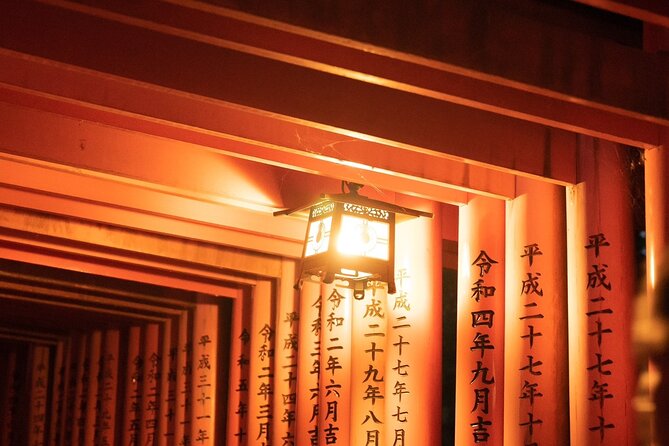
This tour is designed as a quick, high-value introduction. The time on the ground is about 1 hour, and it is described as an in-depth walking tour of the shrine during that window. That may sound brief, but it is exactly why the experience works for many people.
When time is limited, having an English-speaking guide is more than a language perk. It turns the shrine from a postcard into something you can understand and talk about. You also avoid the awkward moment where you wander past meaningful details, not realizing you just missed the point.
The guide also helps with pacing. From what has been shared by multiple guides, the most praised moments are not just the explanations. It is the way they keep the walk engaging and responsive, including photo suggestions and time for questions.
You might get a guide like Kanami, who was praised for strong knowledge, clear answers, and pointing out photo opportunities. Or you could be with Mai, also described as amazing. Other guides named include Satsuki Morikawa, Moto, and Haruki, each noted for making the experience feel thoughtful and easy to follow. The common thread is simple: you are not stuck following signs. You have a person translating what the shrine means and where to look next.
Fushimi Inari-taisha: Torii Gates, Meaning, and What to Watch For
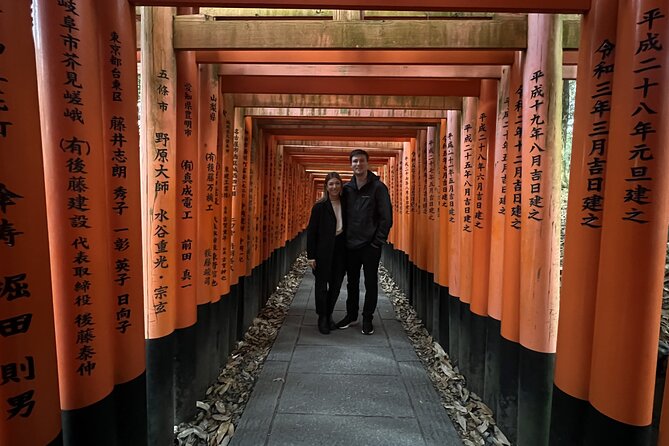
Fushimi Inari Shrine is famous for its torii gates, often described as 10,000 torii. But gate count alone does not explain why people keep coming back. The tour focuses on helping you connect the gates to the shrine’s role and history.
During the walking portion, you’ll learn about the shrine’s background and how to think about the spiritual traditions tied to it. One key topic is the differences between Shintoism and Buddhism as they appear in the shrine context.
That is a useful approach, because Kyoto is full of religious blending and layered traditions. Without guidance, it can feel like you are walking through a museum of symbols. With a guide, you start to see relationships: what the torii gates represent, how the shrine spaces are organized, and why the area feels both open and ritual-focused at the same time.
You also get a more grounded way to interpret the atmosphere. Fushimi Inari is not just a famous photo stop. It is a shrine with a living presence, and the tour helps you keep that in mind while still enjoying the spectacle of the gates.
Admission is free for the shrine portion, so your ticket is effectively paying for the guide time and route guidance rather than an entry fee. That tends to make the experience feel fair, especially since it is a short tour.
More Shrine & Temple Visits in Kyoto
- Kyoto: Fushimi Inari, Kinkakuji, Bamboo Grove 1 Day Bus Tour
★ 4.8 · 4,316 reviews - Kyoto: Tea Ceremony Ju-An at Jotokuji Temple
★ 4.9 · 3,207 reviews - Fushimi Inari Hidden Hiking Tour (Private Option Available)
★ 5.0 · 1,750 reviews - Osaka/Kyoto:Kinkakuji,Arashiyama,FushimiInariShrine,NaraPark
★ 4.1 · 1,596 reviews
Photo Tips That Make the Torii Gates Look Like Torii Gates
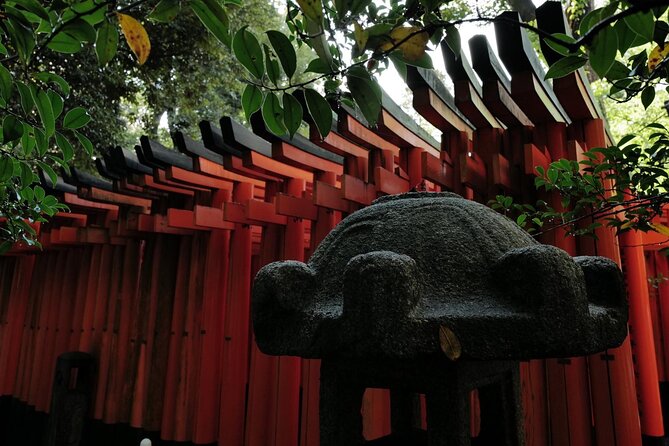
Fushimi Inari is naturally photogenic, but photos still depend on timing and angles. This tour includes guidance that helps you capture better shots, and some guides were specifically praised for photo ops and suggestions.
Here is how I’d use that advice if you are bringing a camera or phone. First, pay attention to where the path pulls your eye. Torii gates create strong leading lines, so the best photos usually come from stepping into position where multiple gates recede together. Second, watch your background clutter. Evening helps, but you still want to frame out random distractions like elbows, signs, or people standing too close to the lens.
Also, be prepared to move at a walking pace. Since the tour is about an hour, you will not have time to stop everywhere. The guide’s job is to help you stop at spots that are worth it.
If you care about photos, this is one of the tour’s strongest reasons to book. The gate wall can look repetitive when you rush. Guided stops help you turn the same structure into a set of different images.
Timing, Comfort, and How to Keep It Enjoyable
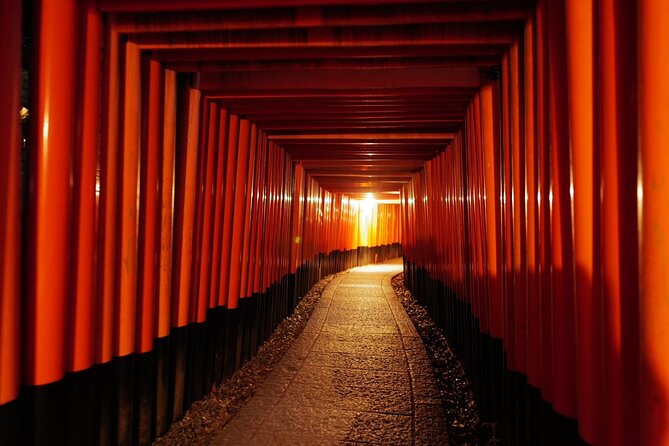
The tour’s evening start time is the comfort piece most people notice first. Avoiding the midday heat is not a small thing in Kyoto, especially if you are doing other activities the same day. An evening walk also gives you more flexibility with meals, since you can fit it before dinner plans or afterward if you want a relaxed night activity.
Comfort also comes from the group size. With a maximum of 15 travelers, it is easier for your guide to keep track of everyone. It can also be less overwhelming than bigger group tours, especially in a place where the path can narrow.
Wear shoes you can trust on shrine pathways. Even if you are not hiking to a summit, you are walking. It is also the kind of place where you might pause frequently for photos, and you do not want to regret your footwear after 30 minutes.
One more practical note: you should plan around food and drinks. The tour does not include any meals or drinks. If you arrive hungry, grab something nearby before the start. That way you can focus on the walk instead of thinking about where to eat.
Price and Value: Paying for a Guide, Not Just a Stroll
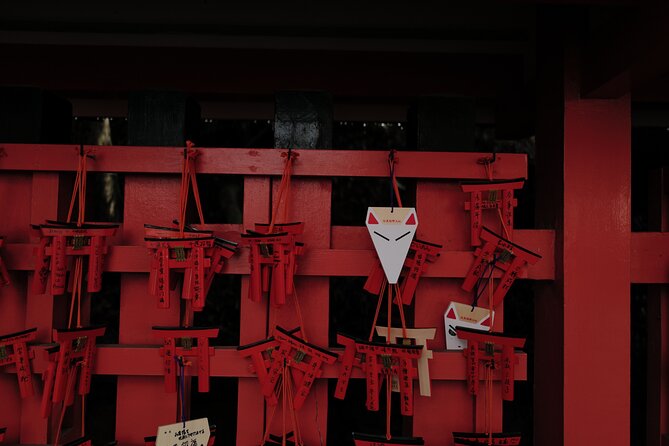
At $35.93 per person, this tour sits in the “quick but not disposable” category. The key question is what you get for that money.
Here is the value breakdown as you experience it:
- About 1 hour of guided time, which is long enough to learn and ask questions
- An English-speaking tour guide, which can transform your understanding fast
- Free admission for the shrine element, so you are not paying extra entry fees
- A focused evening route designed around a better time of day
If you were to do it on your own, you could still see the torii gates. But the difference is context and flow. Without guidance, you may spend energy trying to figure out what is important instead of enjoying the place. With a guide, you gain a shortcut to understanding the shrine’s symbolism and religious layers, including Shinto and Buddhism context.
It is also a good price for a small group setup. When tours cost more, it is usually for longer time, transportation, or premium extras. This one keeps the core experience tight and does not add fluff.
Finally, you might notice it is often booked around 46 days in advance. That doesn’t guarantee anything about quality, but it does suggest demand. In a city like Kyoto, popular evening windows can disappear quickly, so I’d treat your spot as something to lock in rather than something to gamble on.
Who This Tour Suits Best (And Who Might Want More)
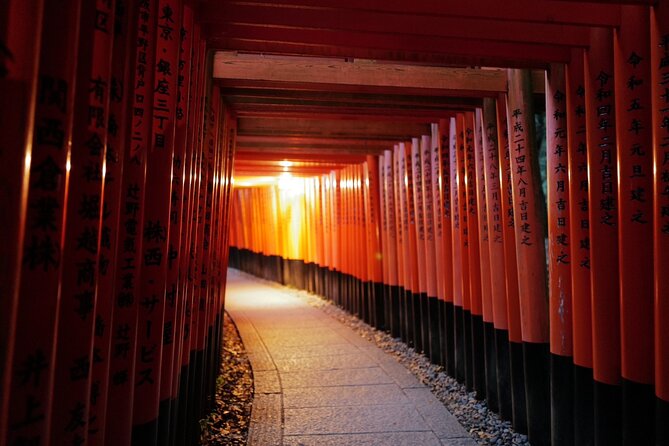
This Kyoto night walk is a strong fit if you want:
- a short activity that fits before or after dinner
- an introduction to Fushimi Inari Shrine with real explanation
- a guide who helps with questions, pacing, and photo spots
- a more comfortable, evening approach than midday walking
It is also ideal if you like tours that feel human-sized. The maximum of 15 people keeps it interactive. Multiple named guides were praised for making the experience personal, including support for a 13-year-old grandson with plenty of enjoyment.
You might consider adding extra independent time if you want more than a slice. Since the tour is about an hour, you will not finish every possible nook and side path with the guided context. But that is not a flaw. It is a planning tool. Use the tour to set your baseline understanding, then explore at your own pace afterward.
If your travel style is strictly self-guided with zero structure, you could skip the tour. But if you want Fushimi Inari to click faster, this format is hard to beat for the time.
Should You Book the Kyoto Fushimi Inari Night Walking Tour?
Book it if you want an evening experience that is comfortable, focused, and guided. I especially think it’s worth it for the combination of English guidance, shrine interpretation, and photo stop help, all within a manageable 1-hour window.
Skip it or plan differently if you are trying to squeeze in an all-day hiking plan inside Fushimi Inari. The tour is built to give you a meaningful start, not to replace hours of wandering.
My simple decision rule: if you want torii gates plus context, and you like having a guide answer questions as you walk, this is a great use of your Kyoto time.
More Evening Experiences in Kyoto
- Kyoto Gion Night Walk & Geisha District Guided Tour
★ 5.0 · 786 reviews - Kyoto Ghost Tour: Dark Tales, Urban Legends, Bamboo Forest Night
★ 5.0 · 625 reviews - Kyoto Bar Hopping Night Tour
★ 5.0 · 613 reviews - Kyoto Night All-Inclusive Eats and Streets, Gion and Beyond
★ 4.7 · 601 reviews
More Walking Tours in Kyoto
- Kyoto Geisha Walking Tour: Gion District & Hidden Gems
★ 4.7 · 3,273 reviews - Kyoto: Gion Geisha District Walking Tour – Stories of Geisha
★ 4.7 · 2,187 reviews - Kyoto Gion Geisha District Walking Tour – The Stories of Geisha
★ 5.0 · 1,441 reviews - Nishiki Market Brunch Walking Tour (7 Tastings + Brunch)
★ 5.0 · 1,355 reviews
Newly listed around Kyoto
- Zen Meditation for Life in Kyoto★ 5.0 · 10 reviews
- Kyoto: Zen Meditation at a Private Temple with a Monk★ 5.0 · 25 reviews
- Kyoto Private Customizable Day Tour with Guide and Vehicle★ 5.0 · 52 reviews
- Private Wagyu Beef Tour with a Local Guide★ 5.0 · 6 reviews
- Kyoto: Gion Geisha District & Sake-in-Hand Walking Tour★ 5.0 · 37 reviews
- Your Private Vacation Photography Session In Kyoto★ 5.0 · 110 reviews
- Private Guided Traditional Buddhist Cooking in Japan★ 5.0 · 16 reviews
- Private Pewter Sake Cup Experience with a Kyoto Artisan★ 5.0 · 31 reviews
Shrine & Temple Visits, compared.

Fushimi Inari, Kinkakuji, Bamboo Grove 1 Day Bus Tour
Read our review →

Meiji Shrine, Asakusa, Skytree Bus Tour and Cruise
Read our review →
Fushimi Inari Hidden Hiking Tour (Private Option Available)
Read our review →
Osaka/Kyoto:Kinkakuji,Arashiyama,FushimiInariShrine,NaraPark
Read our review →
Asakusa Walking Tour with Sensoji Temple Visit
Read our review →
Nikko: Kegon Falls, Lake Chuzenji & Toshogu Temple
Read our review →
Kamakura & Enoshima Day Trip including Temple Tickets
Read our review →Browse the lists this tour appears in