Review · GEISHA DISTRICT WALKS
Kyoto: Gion Evening Walk with Hidden Gems, Geisha & Sake
Late-night Kyoto hits different. This Gion Evening Walk guides you through the geisha district after the day-trippers leave, with lantern light, photo help, and a cup of local sake as you go. I like the pace, it stays relaxed enough to actually notice details, and I also like the human touch, you can ask questions and keep the conversation going. One thing to consider, it is still a walking tour, so bring comfortable shoes and be ready for steady time on your feet.
The route is built around Kyoto icons you usually see in daytime crowds, then it shows them when the mood cools down. You’ll stop at Hanamikoji Street, Yasaka Pagoda at Hōkan-ji, and end at Yasaka Shrine, plus a lesser-known shrine stop in between. My takeaway is that it feels like sightseeing with a local friend, not a cram session, but you do need to arrive on time so the group can move at the planned pace.
In This Review
- Key things I’d plan around
- Why Gion after dark is worth your time
- Small group pacing plus photo help
- Start at Shijo Kiyamachi, then walk into Gion
- Hanamikoji Street and the etiquette of looking
- Yasui Kompira-gū Shrine, power stone traditions
- Hōkan-ji and Yasaka Pagoda at night
- Ninenzaka slopes and traditional street mood
- Finish at Yasaka Shrine, where the night lands
- Price, walking comfort, and who this fits
- Should you book this Gion evening walk?
- FAQ
- How long is the Kyoto Gion evening walk?
- Is this tour a small group?
- What’s included in the tour?
- Where do I meet, and where does the tour end?
- What should I bring, and is smoking allowed?
- Can I cancel, and is pay later available?
Key things I’d plan around
- Lantern-lit Gion streets after the crowds, when photos look calmer and streets feel more livable
- Small group cap (max 10), which makes questions feel normal and not rushed
- Photo assistance at key stops, so you spend more time looking and less time guessing camera angles
- Sake included during the walk, a fun Kyoto touch if you’re okay with a short drink break
- Practical shrine and temple stops, not just streets, including Yasui Kompira-gū’s power stone idea
Why Gion after dark is worth your time
Gion is one of those Kyoto areas where day visits can feel like you’re constantly dodging crowds. This tour shifts the angle. You’re walking when the lanterns are up, when storefront lights glow on wooden facades, and when the whole district feels quieter and more personal. In that setting, the little details matter more, the kind you’d miss if you were just scanning for the next photo.
What I like most is that the experience is built around atmosphere, not just famous names. You’ll still hit major landmarks, including the Yasaka Pagoda (Hōkan-ji Temple) and Yasaka Shrine, but the timing makes a big difference. If you care about photography, that calmer light and less crowd density are exactly what you want.
One practical note. This is not a sit-down show. You’re out walking the whole time, so it’s best for people who enjoy moving through neighborhoods and taking their time, rather than those who want minimal walking.
More Drinking Tours in Kyoto
- Kyoto Night Foodie Tour in Gion (9+ dishes + 6 Sake tastings)
★ 5.0 · 1,762 reviews - 3-Hour Kyoto Insider Sake Brewery Tour with Tastings & Pairings
★ 5.0 · 917 reviews - Arashiyama Bamboo, Temple, Monkeys, or Secret Sake Brewery
★ 4.8 · 886 reviews
Small group pacing plus photo help
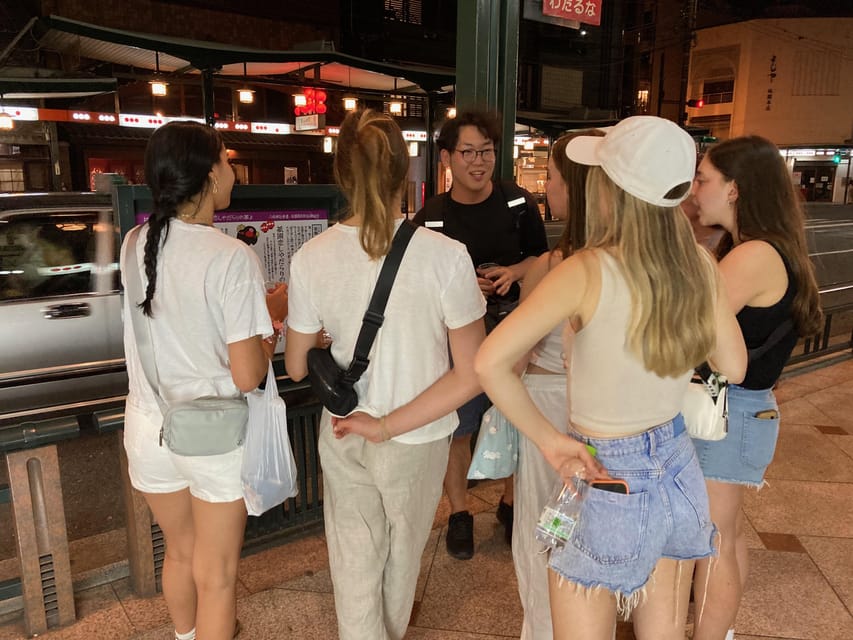
This is a small-group English tour with a maximum of 10 people. That size matters in Kyoto. With fewer people, you can actually talk with your guide and get real answers, not just a fast overview. The tone is designed to be conversational, and guides are encouraged to respond to your questions on everything from local culture to history.
Another big plus is the photo assistance. At each main stop, the guide helps you position yourself and suggests where to stand so you can get your shot without turning the landmark into a chaotic bottleneck. That’s a small thing, but it changes the entire vibe. You spend more time enjoying the moment and less time doing the camera math.
You also get photo stops that fit a 90-minute window. That means you’re not stuck in one place forever. You’re constantly shifting to the next viewpoint, which is ideal if you want variety in a single evening.
Finally, keep in mind the etiquette part. You’ll be moving through residential and sacred areas, so it’s smart to keep voices low. The tour setting works best when everyone treats it like a real neighborhood walk, not a loud group outing.
Start at Shijo Kiyamachi, then walk into Gion
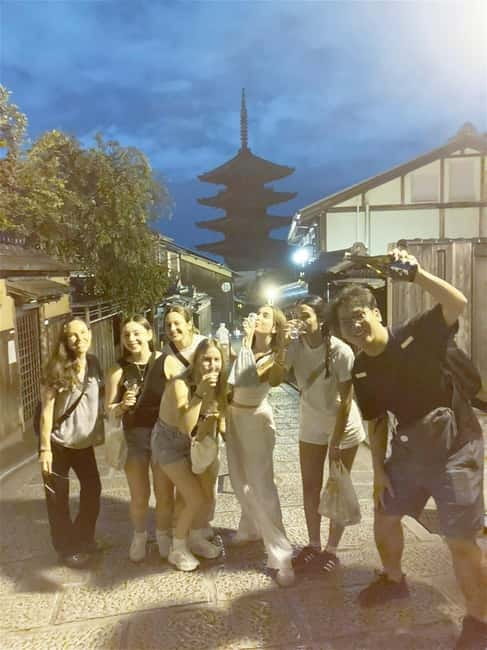
The meeting point is Shijo Kiyamachi, and your guide will be holding a sign that says Otatrip Guide. You’ll find them between McDonald’s and the Japanese restaurant Kikunoi Roan, a short distance south along Kiyamachi Street. Aim to arrive a bit early so you can confirm you’re in the right spot.
Why that matters: the tour starts promptly, and the pacing depends on the group moving together. If you show up late, the schedule can tighten fast. Once you’re with the group, you’ll get a clear run-through of what’s ahead and then the walk begins in earnest.
This start also helps because Shijo Kiyamachi is easy to orient to if you’re already exploring downtown Kyoto. It’s a practical way to begin without complicated transfers. From there, you head toward Gion and the arts district feel takes over quickly.
If you’re the kind of traveler who likes knowing where you’ll end up before you start, note that the tour finishes at Yasaka Shrine. That makes it easier to plan your post-tour dinner, since you’re ending at a major spot with lots of nearby options.
Hanamikoji Street and the etiquette of looking
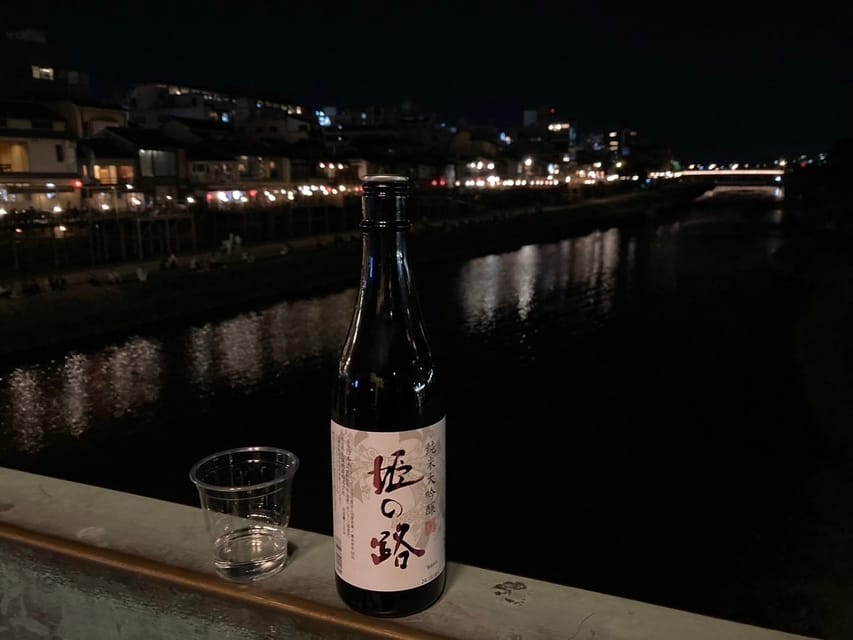
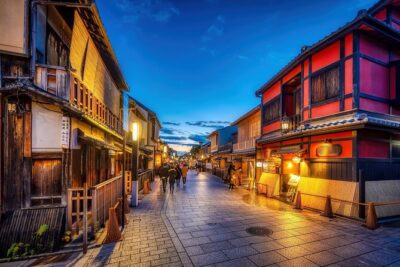
Your first real taste of the geisha district is Hanamikoji Street, Kyoto’s most recognizable geisha street. Expect traditional tea houses along the lane and that classic Gion look, especially once the lighting shifts in the evening. Your stop here is about 15 minutes, including a photo moment plus time to walk and take in the atmosphere.
This is where the tour’s quieter timing really pays off. Daytime visits can feel like an obstacle course. At night, you can actually slow down. You can look at the street layout, notice how the buildings line up, and feel the rhythm of the neighborhood rather than just chase the next landmark angle.
The guide also tells the stories behind what you’re seeing. You’ll learn about Geiko and Maiko culture in plain English, including how local history shaped the district. That context is what turns a photo stop into something that sticks in your head later.
A small etiquette reminder that’s worth taking seriously here. You’re passing through an active cultural area, so it’s best to stay respectful, keep your distance, and avoid blocking pathways while you take pictures. The tour format helps, since you’re moving as a group with the guide.
More Evening Tours in Kyoto
- Night Walk in Gion: Kyoto’s Geisha District
★ 4.5 · 2,003 reviews - Kyoto: Gion Magical Night Walking Tour with Geisha Insights
★ 4.9 · 1,286 reviews - Kyoto Gion Night Walk & Geisha District Guided Tour
★ 5.0 · 786 reviews - Kyoto Ghost Tour: Dark Tales, Urban Legends, Bamboo Forest Night
★ 5.0 · 625 reviews
Yasui Kompira-gū Shrine, power stone traditions
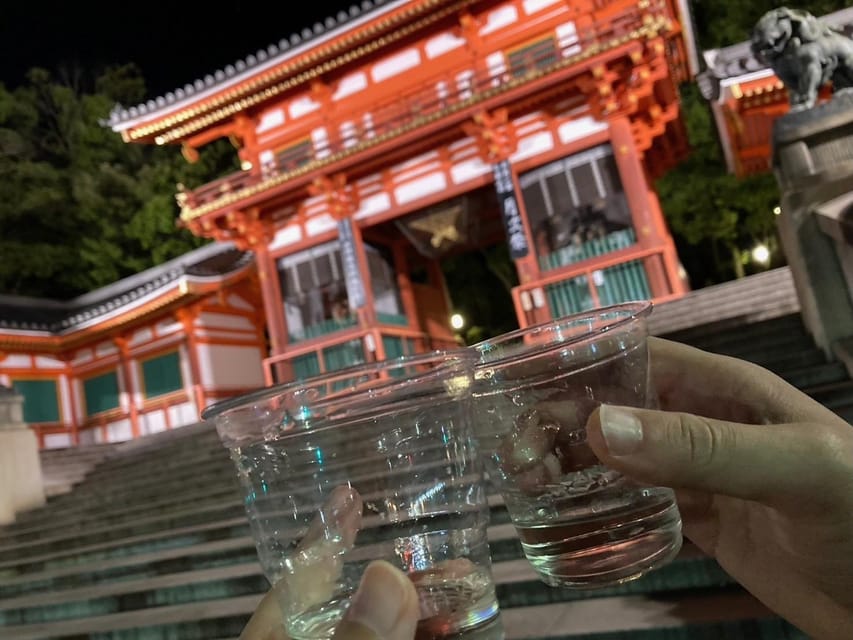
Next up is Yasui Kompira-gū Shrine, a stop built for people who want more than postcard Kyoto. The tour includes a photo stop and guided time here for about 10 minutes. The standout detail is the shrine’s power stone, which locals associate with cutting bad ties and building good ones.
What I like about including this stop is that it adds a different kind of Kyoto flavor. Gion is arts district glamour, yes. But Kyoto is also everyday spirituality, small rituals, and local meaning. Even in a short stop, you get to see that Shinto shrine culture isn’t just about big temple entrances. It’s also about specific practices and beliefs that show up in local life.
The guide’s job here is to translate the symbolism into something understandable without turning it into a lecture. You’ll hear the story behind the place and get a feel for why people visit, what they hope for, and how the power stone idea fits into the broader shrine tradition.
If you’re photographing, this is usually one of those stops where it helps to have someone tell you where to stand. The tour includes photo help, so you’re less likely to spend your time wandering for the best angle.
Hōkan-ji and Yasaka Pagoda at night
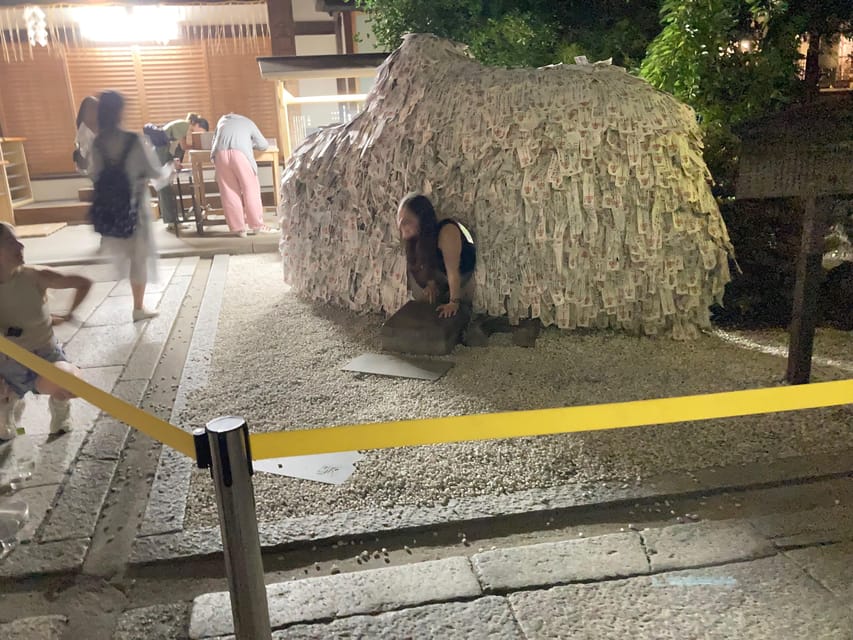
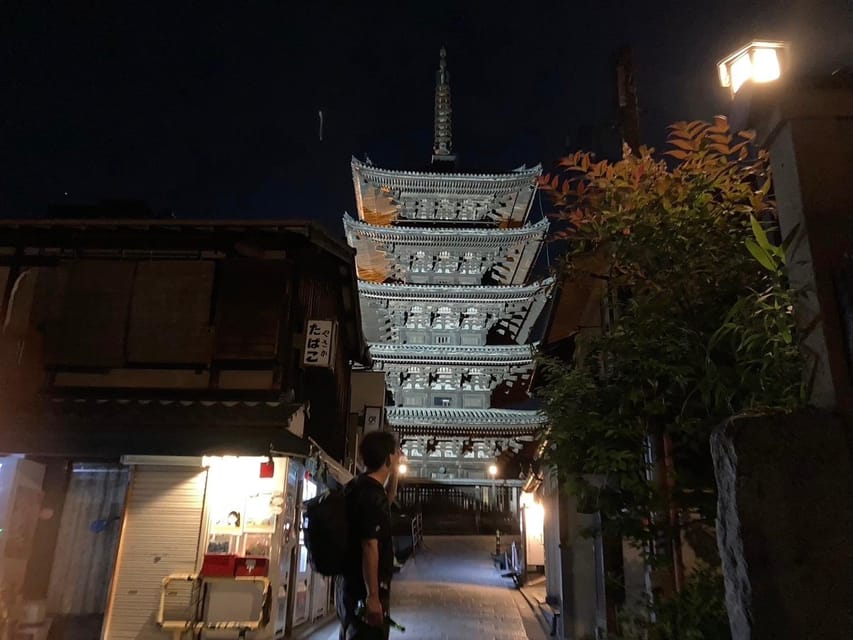
Then comes the iconic payoff: Hōkan-ji Temple and the Yasaka Pagoda, also called Hōkan-ji’s five-story pagoda. This stop is about 10 minutes, with a photo stop plus time to take it in. The big draw is the night lighting. The pagoda looks different after dark, and the calmer crowd situation makes it easier to frame your photo without constantly shifting positions.
This is one of those Kyoto sights that can feel over-photographed in daytime. At night, the lighting softens the edges. You get reflections and a more cinematic mood. Even if you’re not obsessed with photography, it’s one of those moments where you pause because it looks like Kyoto at its most atmospheric.
The guide ties the pagoda to the temple story, so it’s not just a picture. You’ll learn how the temple connects to local Buddhist history and why the pagoda is such a well-known landmark in Kyoto.
Also, don’t underestimate how much a short, focused stop can improve your experience. Ten minutes here gives you enough time to shoot, breathe, and understand what you’re seeing, without dragging you away from the rest of the walk. Then you’re off again to Ninenzaka.
Ninenzaka slopes and traditional street mood

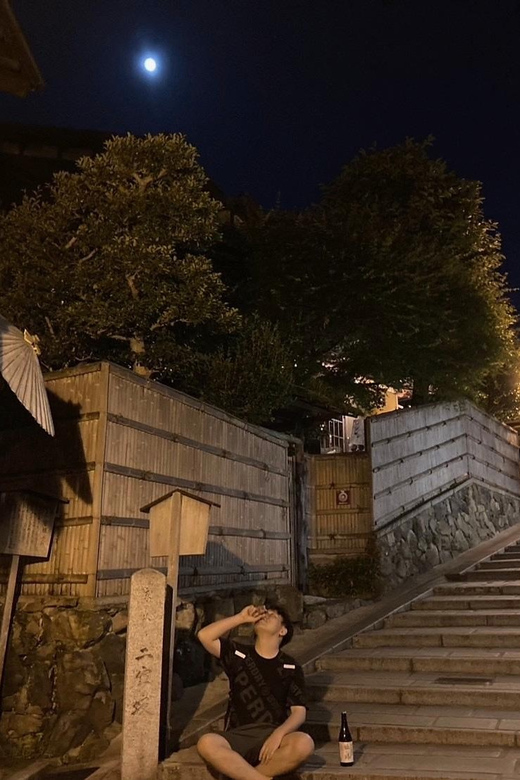
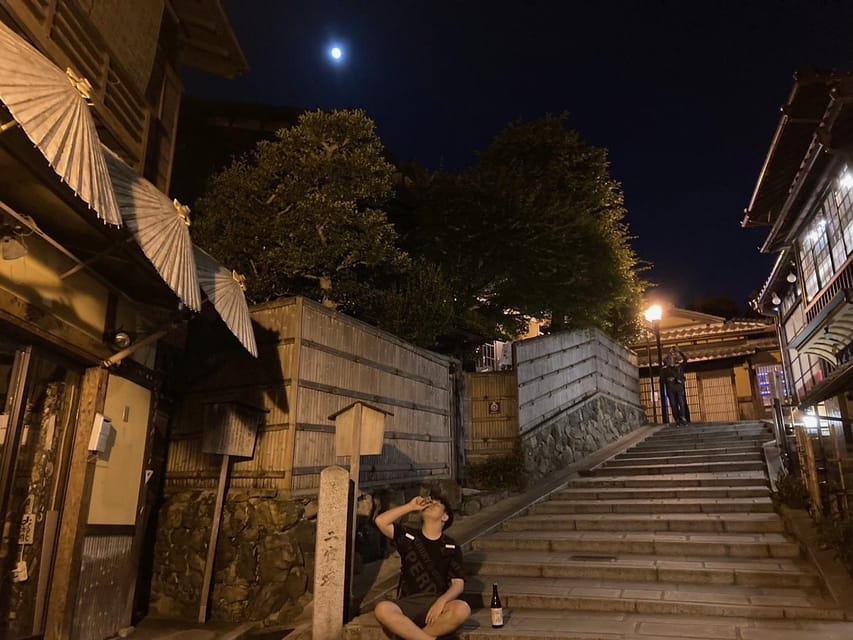
After Hōkan-ji, you’ll walk to Ninenzaka, a charming cobblestone slope with traditional wooden townhouses. Your stop is about 10 minutes, including time to take photos and explore the street vibe.
Ninenzaka is one of the places where night changes everything. The cobblestones and layered street geometry create a natural sense of depth. When the street quiets down, the slope feels more like a lived-in time capsule than a busy photo set.
This is also a good stretch for slow walking. Even though the tour has a schedule, the pace stays relaxed. You’re allowed time to look upward at the architecture and then back down at the street. That up-and-down scanning is what makes places like Ninenzaka feel immersive, even when you’re only there for a short time.
The guide’s cultural storytelling continues here too, which helps you connect the street look to the broader Kyoto identity. You’re seeing old-style streets, but with explanations that make the details mean something.
Comfort matters most on cobblestones and slopes. You’ll want shoes that feel stable and not slippery.
Finish at Yasaka Shrine, where the night lands
The tour ends at Yasaka Shrine, a spiritual landmark that has watched over Gion for over 1,300 years. Ending here works well for two reasons. First, it’s a major landmark, so it’s easy to orient yourself after the walk. Second, it gives the evening a clear emotional landing point, shifting from arts district streets to a shrine space with long continuity.
By the time you reach Yasaka Shrine, you’ve already built a mental map of Gion’s character. You saw the geisha district atmosphere first, then added a shrine tradition, then a Buddhist landmark, then old-town streets. That sequence makes the ending feel earned, not random.
This is also one of those moments where the guide’s explanations help. When you understand what you’re looking at and why the place matters, the photos become more than proof of travel. They become a record of a story you actually followed.
Plan to linger briefly if the shrine area gives you a chance. Since the tour is 90 minutes total, you don’t want to miss the last part by rushing, but a calm pause at the end is the right way to absorb the evening.
Price, walking comfort, and who this fits
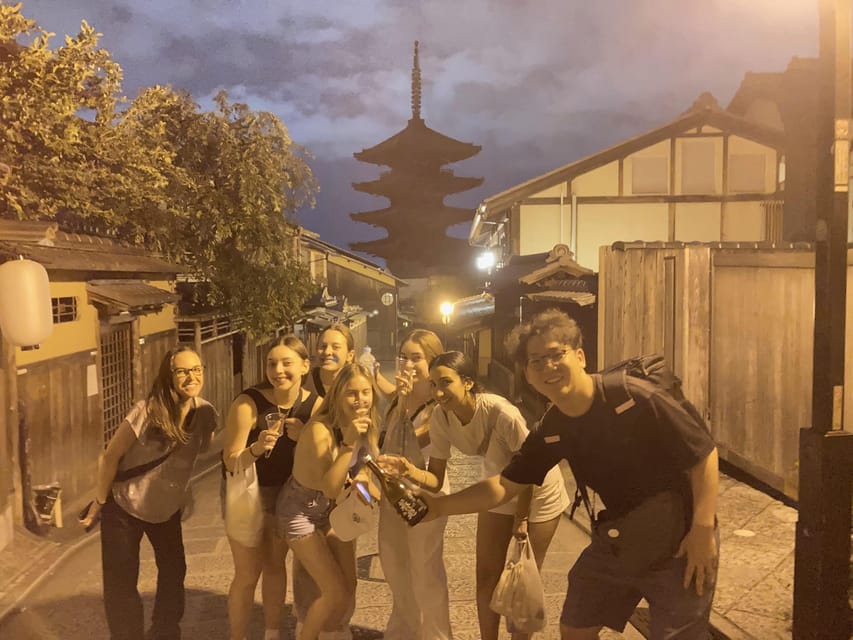
The tour costs $32 per person for a 90-minute walking experience with an English guide, photo assistance at key stops, and a cup of local sake included. On paper, that sounds straightforward. In practice, the value comes from bundling three things that are hard to line up yourself: a well-timed night route, structured landmark stops with photo help, and cultural explanations in plain English.
The sake is also a nice touch. It’s included, and it fits the strolling format. The important thing is to treat it like a small break, not a party. If you’re using alcohol for atmosphere, you’ll enjoy it. If you’re trying to keep the night light, stick to a reasonable pace.
Comfort is the other big factor. This is a walking tour, and it may not be a fit if you have back problems. Even for healthy walkers, the evening involves steady movement plus cobblestones and slopes.
This is a great fit if you want:
- A guided night route through Gion that avoids the worst daytime crowds
- Cultural context on Geiko and Maiko traditions without a stiff lecture vibe
- A pace that leaves room for questions and good photos
It’s less ideal if you want a drive-and-drop tour, or if long walking time would be tough.
Should you book this Gion evening walk?
I’d book it if you’re planning at least one evening in Kyoto and you want to see Gion when it feels quieter and more human. The schedule is tight enough to fit into your trip, but the guide-led stops are varied, so it doesn’t feel like a single-street photo loop. The fact that the group is capped at 10 is a genuine advantage, and the photo assistance plus sake included make it feel like you’re paying for more than directions.
I’d skip it if you have mobility or back issues that make cobblestones and continuous walking uncomfortable. Also, if you hate walking after dark, this will feel like work instead of a relaxed stroll.
If you want an honest Kyoto evening, where lantern light does the heavy lifting and explanations fill in the meaning, this is a strong call.
FAQ
How long is the Kyoto Gion evening walk?
The tour lasts about 90 minutes, and you should expect 70 to 90 minutes of walking with a guide.
Is this tour a small group?
Yes. It is a small group tour limited to a maximum of 10 participants, and the tour is guided in English.
What’s included in the tour?
The tour includes photo assistance and a cup of local sake included during the walk, along with guided stops at the listed landmarks.
Where do I meet, and where does the tour end?
You meet at Shijo Kiyamachi. The guide will be holding a sign that says Otatrip Guide between McDonald’s and Kikunoi Roan. The tour finishes at 八坂神社 (Yasaka Shrine).
What should I bring, and is smoking allowed?
Wear comfortable shoes for walking. Smoking is not allowed during the tour.
Can I cancel, and is pay later available?
Yes. You can cancel up to 24 hours in advance for a full refund, and there is reserve now & pay later, so you can book and pay nothing today.
More Sake Tastings in Kyoto
- Kyoto: Insider Sake Experience with 7 Tastings and Snacks
★ 5.0 · 266 reviews - Kyoto: Fushimi Sake Brewery Tour – 18 Tastings in 2.5 Hours
★ 4.7 · 36 reviews - Kyoto: Beyond the Insider Sake Tasting Experience
★ 5.0 · 30 reviews - Japanese Sake Breweries Tour in Kyoto Fushimi
★ 4.3 · 13 reviews
More Food Tours in Kyoto
- Kyoto: Insider Sake Brewery Tour with Sake and Food Pairing
★ 5.0 · 704 reviews - Kyoto Sake Brewery & Tasting Walking Tour
★ 5.0 · 623 reviews - Kyoto Nishiki Market Food and Culture Walking Tour
★ 5.0 · 412 reviews - 1.5-Hour Kyoto Insider Sake Experience with 7 Tastings & Pairings
★ 5.0 · 297 reviews
Newly listed around Kyoto
- Kyoto: Private Customizable Day Trip by Car★ 5.0 · 38 reviews
- Kyoto Private Car Tour with Japanese Navigator (+Nara) T5★ 4.7 · 19 reviews
- Kyoto: Photo Shoot with a Private Vacation Photographer★ 5.0 · 8 reviews
- Kyoto: Nishiki Market and Depachika Food Tour with a Local★ 4.7 · 76 reviews
- Kyoto: Hands-on Takoyaki and Okonomiyaki Cooking (1 Hour)★ 4.7 · 25 reviews
- Kyoto: Non-Verbal Theatre Show Tickets at GEAR★ 4.9 · 154 reviews
- Kyoto: Personalized Guided Private Tour★ 4.8 · 19 reviews
- Kyoto: Personalize, private tour (3h, 5h, 8h) [W/Car Option]★ 4.9 · 24 reviews
Geisha District Walks, compared.
Kyoto Geisha Walking Tour: Gion District & Hidden Gems
Read our review →
Gion Geisha District Walking Tour – Stories of Geisha
Read our review →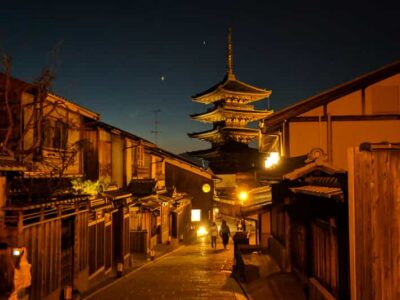
Best of Kyoto: Gion, Geisha, Pagodas & Cobblestones
Read our review →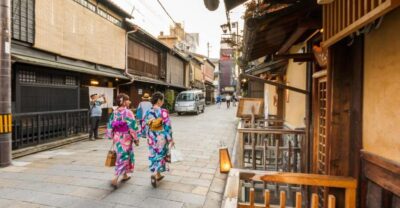
Kyoto Night Foodie Tour in Gion (9+ dishes + 6 Sake tastings)
Read our review →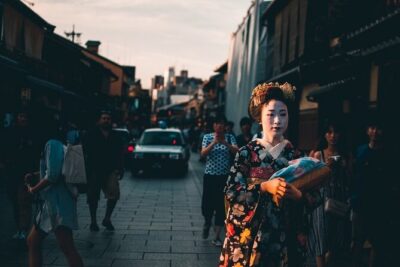
Kyoto Gion Geisha District Walking Tour – The Stories of Geisha
Read our review →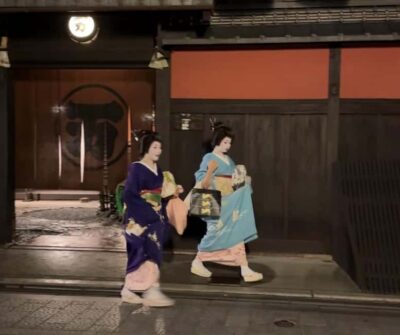
Gion Magical Night Walking Tour with Geisha Insights
Read our review →