
Review · SHRINE & TEMPLE VISITS
Naha: Guided E-Bike Tour of the 12 Zodiac Temples
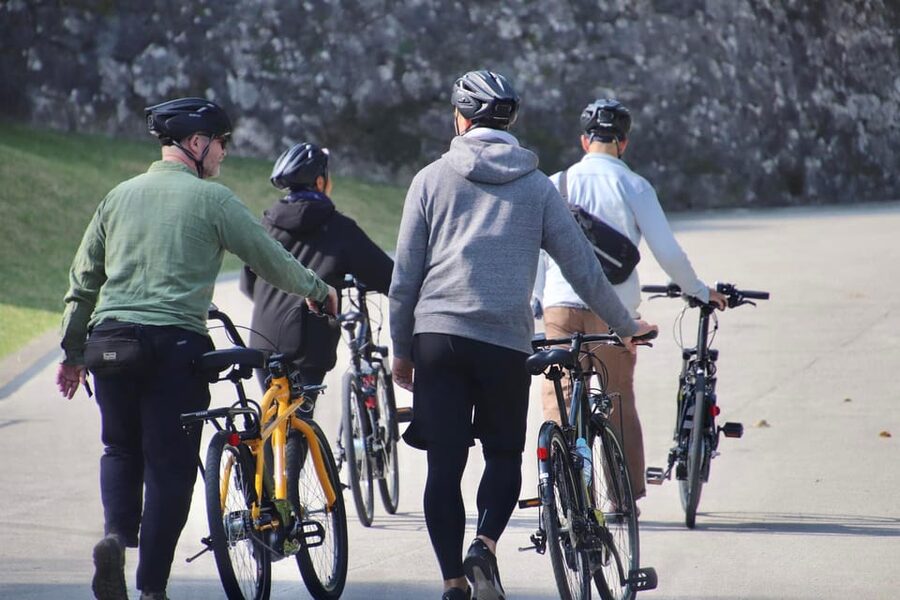
Shuri on an e-bike is a shortcut to understanding Okinawa. You glide through backstreets and temple grounds, then connect the dots between spiritual sites and the Ryukyu-era story of Naha. I love how the small-group format keeps things personal, and I also like the helmet intercom so you do not have to yell while rolling. One thing to consider: this is real cycling time, so you need to be comfortable riding a bike, not just sightseeing.
On my favorite part of the route, I liked how the guide brings each stop to life with clear explanations, including big names like Shuri Kannon and Shureimon. Names that come up again and again in the guide team include Maki and Maria, and their approach shows in the way they pace the group and keep you oriented. Another strong point is the value: for $95 per person over about 3 hours, you get an e-bike, a guided route, and a run of major temple moments without spending half the day figuring out streets and shortcuts.
The only drawback is practical, not cultural. Weather can change plans if precipitation probability gets high, and you still need to wear proper cycling shoes, bring water, and skip flip-flops. If you are unsure about bike handling on uneven paths or hills, this tour may feel like more work than fun.
In This Review
- Key highlights worth marking on your mental map
- Why Shuri’s 12 zodiac temples work so well on an e-bike
- Meeting, fitting your e-bike, and staying in sync with the helmet intercom
- Stop-by-stop: Shuri Kannon Temple’s carvings, colors, and viewpoint
- Ankoku-ji: a quick temple stop with the big gajumaru tree
- Shureimon Gate: the Okinawa symbol photo with your bike
- Daruma Temple: red dolls, torii gate, and prayer for health
- Seikoji Temple: Jizo statues and the calm contrast
- Saki Kasahigawa: the miracle spring where water carries meaning
- Sogenji Temple: former royal mausoleum and park air
- How the 12 zodiac theme stays coherent across all these stops
- Price and value: $95 for an e-bike temple route you can actually finish
- What the guide quality feels like in real life
- Tips to get the most out of the ride, not just the photos
- Who this Naha e-bike tour suits best
- Should you book this Shuri e-bike tour of the 12 zodiac temples?
Key highlights worth marking on your mental map
- 12 zodiac temples in a tight 3-hour route, with story context instead of random photo stops
- Shuri Kannon Temple and its carved decorations, plus views that feel like a reward
- Shureimon Gate photo moment with your bike, one of Okinawa’s most recognizable symbols
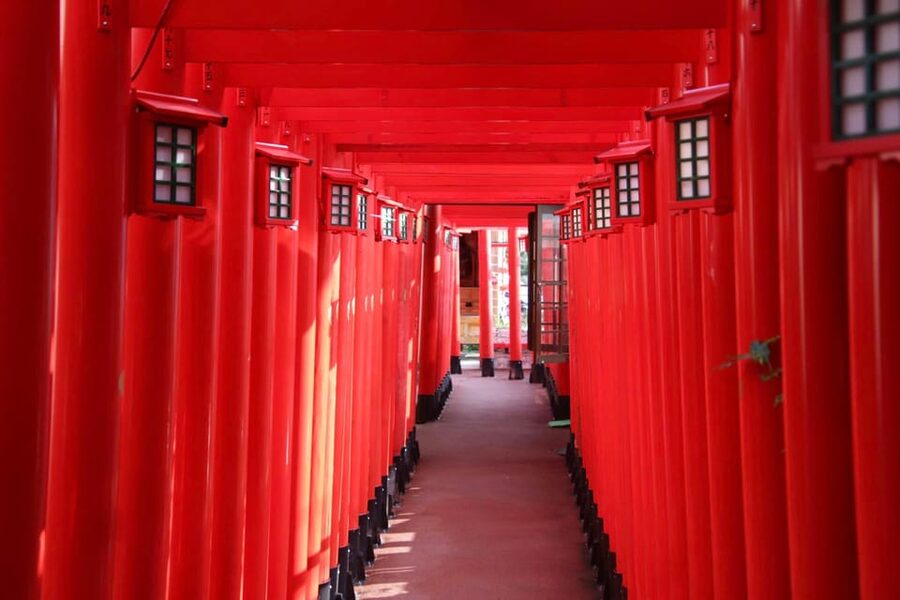
- Daruma Temple stops for health and pregnancy prayers, with red dolls and a torii gate
- Saki Kasahigawa miracle spring where you can feel the significance of the water
- Small group up to 5 riders, guided by English, Chinese, or Japanese
Why Shuri’s 12 zodiac temples work so well on an e-bike
Okinawa’s Shuri area can feel like a maze when you are walking. Gates, temple compounds, side streets, and quiet lanes show up in pieces, and you can easily miss the connections. On an e-bike guided tour, the pace stays human. You cover more ground than walking, but you still get time to look closely at carvings, statues, and shrine details.
The big advantage is that the route is built around the idea of a theme. You are not just ticking off religious sites. You are moving through a sequence of places that share spiritual and cultural threads, and your guide explains what matters at each one. That means your photos come with context, and your brain feels less scattered when you leave.
The e-bike helps a lot on this stretch of Shuri, too. The hills around temple areas can be slow-going on foot, but on a pedal-assist bike you can keep a steady pace, arrive less sweaty, and still have energy to enjoy the views and the calmer temple corners.
More Shrine and Temple visits in Naha:
- Zodiac Shrines and Naha Backstreets Cycling Tour
★ 5.0 · 29 reviews - Kyoto: Fushimi Inari, Kinkakuji, Bamboo Grove 1 Day Bus Tour
★ 4.8 · 4,316 reviews - Kyoto: Tea Ceremony Ju-An at Jotokuji Temple
★ 4.9 · 3,207 reviews
Meeting, fitting your e-bike, and staying in sync with the helmet intercom
You meet at the shop at ダイショウビル, a 5-minute walk from Monorail Makishi Station, next to the post office. The tour starts and ends at the same location, so you do not have that end-of-day logistics stress.
After you arrive, you get fitted with your electric bike and a helmet with an intercom system. In practice, that means you can hear key instructions without constantly stopping to regroup. It also makes it easier for your guide to check in, especially on turns or when you shift from street riding to temple paths.
This is a small group limited to 5 participants, which I think is a major quality factor. With fewer riders, your guide can keep an eye on spacing, explain each stop without rushing, and adjust pace based on how you are doing. Several riders praised guides for safety and for helping with navigation traffic, which is exactly what you want in a city ride.
Practical note: wear comfortable shoes and skip sandals or flip-flops. You will be on and off the bike and walking short stretches in and around temple grounds. Bring water, and if it is sunny, add sunscreen and a hat.
Stop-by-stop: Shuri Kannon Temple’s carvings, colors, and viewpoint
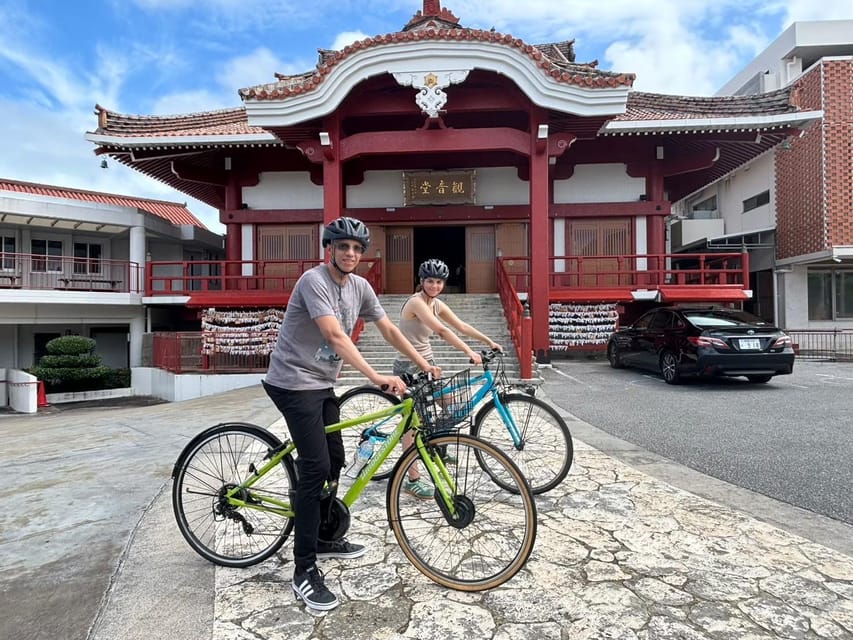
The tour begins with Shuri Kannondo (Shuri Kannon Temple), and it sets the tone immediately. This is a guardian temple from the Ryukyu Kingdom, and your guide points out details you might otherwise gloss over: the carved decorations, the temple’s visual style, and why this place mattered in its time.
It is also a color-first stop. You see the bright red temple feel, and then you are able to enjoy views of Shuri. That viewpoint moment is more than a photo break. It helps you get your bearings. From up high, you start to understand how the streets and temple compounds relate to each other, which pays off later when you see gates and courtyards down below.
Time here is not long, so do not plan to do a deep slow walk. Instead, focus on a few things:
- Look at one or two carving sections closely rather than trying to photograph everything.
- Take a breather after the viewpoint so your ride does not feel rushed.
The route then moves onward, and you will ride and also take short pedicab or rickshaw segments as part of the flow. Those short hops help the tour stay efficient while keeping the cycling manageable.
Ankoku-ji: a quick temple stop with the big gajumaru tree
Next up is Ankoku-ji Temple. This stop is shorter on the schedule, but it works because it is less about dramatic visuals and more about atmosphere. You get a traditional temple feel, and you can see an ancient gate and a large gajumaru tree.
The gajumaru tree is the kind of detail you remember later. Big old trees tend to anchor a place emotionally, and it is easier to understand a temple compound when you have a landmark like that. Even with limited time, you can still pause, look around, and get a sense of how locals experience the site, not just how tourists snap it.
If you are hoping for long quiet wandering, temper expectations. This is a guided route meant to connect several key religious sites in a single half-day window.
More Bike rides in Naha:
- Afternoon Adventure: Okinawa Local Cycling with Spectacular Views
★ 5.0 · 92 reviews - Okinawa: Afternoon Cycling Tour with Local Guide
★ 4.8 · 39 reviews - E-Bike Nature Tour in Shuri
★ 5.0 · 25 reviews - Shuri+Naha: Cycling Tour Explore Water Heritage with E-Bike
★ 4.9 · 22 reviews
Shureimon Gate: the Okinawa symbol photo with your bike
Then comes Shureimon Gate, one of Okinawa’s most recognizable symbols. This is the sort of stop where you can feel the significance instantly: the gate draws you in, and the color and structure give you an instant sense of place.
A key experience detail here is that the tour builds in time for a photo with your bike in front of the striking red gate. That makes the memory more than a backdrop. You are not just standing in front of something, you are capturing the moment that you arrived there as part of the route.
What I like about this stop is how it changes your view of the whole day. After seeing multiple temple compounds, a major gate gives you a wider lens on the historic Shuri theme. It also helps you connect the spiritual sites you have visited with the broader Okinawan identity tied to Shuri.
Daruma Temple: red dolls, torii gate, and prayer for health
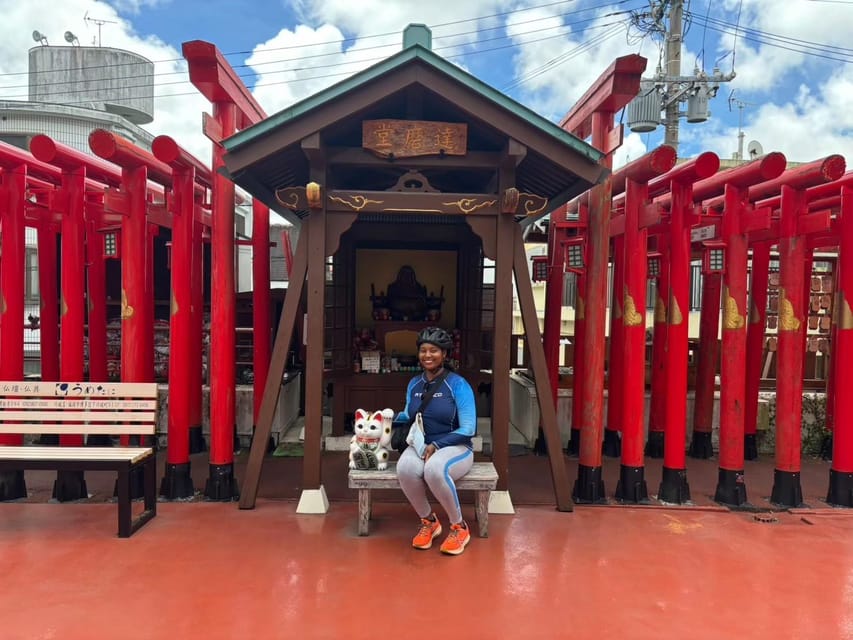
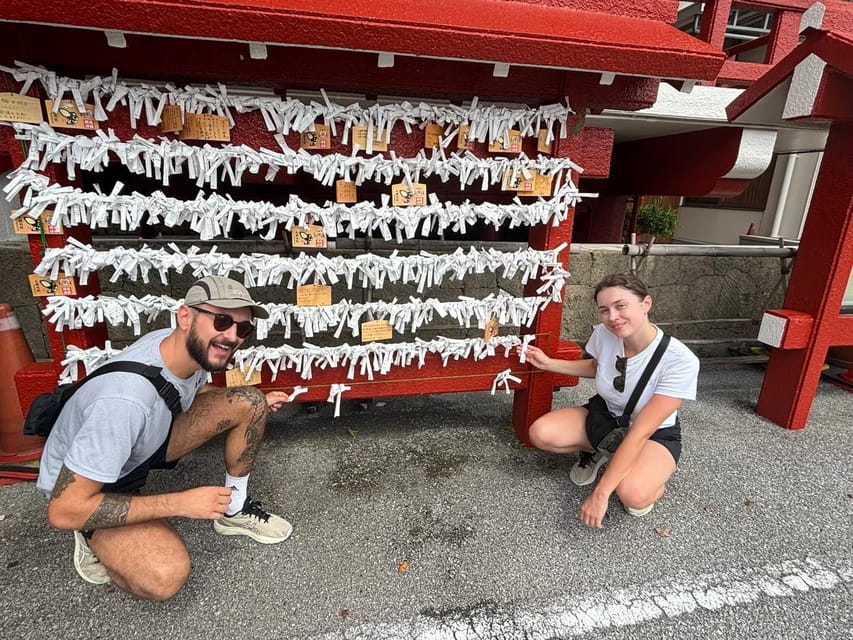
Daruma Temple follows, and it is a popular place for health and pregnancy prayers. This stop is visually memorable for a reason. You see striking red daruma dolls and a torii gate, which makes the site feel both playful and serious at the same time.
This is one of those places where you can slow down without needing a long time slot. The colors do the work. Look at the daruma displays, then shift your attention to how the prayer culture shapes what you notice around you.
A practical tip here is simple: do not get so focused on photos that you miss the chance to understand the prayer angle. Your guide’s explanation gives the context, so when you see people making requests, you know what you are seeing.
Time here is about 20 minutes, so you get just enough to experience the mood, then you move on to the calmer stretches.
Seikoji Temple: Jizo statues and the calm contrast
Next is Seikoji Temple, described as peaceful with a sacred atmosphere. This is a good counterbalance after the more visually intense Daruma stop. You see Jizo statues and also a more modern building aspect of the site.
I like Seikoji because it gives your eyes a different job. Instead of chasing one dramatic prop, you spend time looking at smaller, more personal spiritual elements like statues. Jizo statues tend to invite a slower gaze, even if your time is limited.
This stop is about 10 minutes, so aim for quality over quantity. Find one statue or arrangement to focus on, then take a moment to breathe. It makes the next stop feel less like a checklist and more like a sequence.
Saki Kasahigawa: the miracle spring where water carries meaning
Then you reach Saki Kasahigawa, a miracle spring flowing from the deep forest. The schedule includes time to stop and feel the presence of the water and the history behind it.
Water sites can be surprisingly powerful when you are not rushing past them. Even without a long lecture, a spring like this creates a sensory pause, and your guide helps translate why the flow matters. The goal is not to stare forever. The goal is to notice how water changes the space and why people treat it with respect.
This stop is about a 20-minute segment, giving you enough time to listen, look, and absorb the quiet rhythm.
Sogenji Temple: former royal mausoleum and park air
Finally, the tour ends at Sogenji Temple, a former royal mausoleum. This stop feels different from the others because it is tied to remembrance and legacy rather than just everyday prayer routines.
You get to see the gate and a gajumaru tree again, and you feel the “park air” tone of the area. The combination of open space and a memorial-type context makes the closing portion of the tour calmer. It also sets you up to return to the bike shop feeling like the day had an emotional arc.
After this last stop, you ride back to the shop at ダイショウビル to end the tour.
How the 12 zodiac theme stays coherent across all these stops
The route is built around the idea of 12 zodiac temples, and that matters because it turns a list into a story. Without a guide, you might enjoy each temple individually, but the overall sequence might not mean much. With narration, the order starts to feel intentional.
Your guide weaves the history of the Shuri area and connects the religious sites you see. Even riders who really love photography tend to walk away feeling like they learned something practical: what each site is for, why the site exists in this setting, and what you should notice while you are there.
One more reason the theme works: the stops are spaced in a way that keeps your brain from burning out. You alternate between more visual spots like Shureimon and Daruma, and quieter ones like Seikoji and Ankoku-ji. By the time you reach Saki Kasahigawa, you feel ready to notice the sensory detail of water.
Price and value: $95 for an e-bike temple route you can actually finish
$95 per person for about 3 hours sounds straightforward, but the real value is in what you do not have to pay for or plan yourself.
You get:
- Electric bicycle rental
- Guided tour with helmet intercom system
Meals and drinks are not included, and offering money for temples is not included either. You should plan to buy your own snacks or drinks separately if you need them, especially on a warm day.
Is it worth it? If you want temple highlights in Shuri without spending your time mapping side streets, it is a good deal. The e-bike reduces fatigue, and the guide reduces guesswork. Plus, the intercom makes it feel smoother and safer as a group.
Given that it is a small group of up to 5, you are paying for attention, not just transportation.
What the guide quality feels like in real life
The best proof here is consistency. Across the guide team, riders mention the same strengths: guides are kind, supportive, and eager to share history. Specific names that come up include Maki, Maria, Hiro, Reiji, Jojo, and Qwan, and the pattern is clear.
You get direction for riding in traffic, and you also get check-ins for comfort and hydration. Some riders even praised photo moments the guides helped capture. That matters because on a temple route, good timing is everything. If you miss a gate photo window, it is gone.
There is also a good sign for different riding levels. One review mentioned the tour accommodating different skill levels, and that is exactly what you want when a bike tour is the main transportation.
Tips to get the most out of the ride, not just the photos
A few things I recommend before you go:
- Wear comfortable shoes you can walk in, not just sneakers for riding.
- Bring water, and use the short breaks strategically so you start each stop refreshed.
- If it is hot, use sunscreen and a hat. The tour is short, but the sun in Okinawa does not care about your schedule.
- Skip flip-flops. The rules are clear, and you will also feel better with proper grip on temple paths.
If you care about temple paperwork or stamps, one rider mentioned collecting goshuin at temples during the tour. This is not guaranteed for everyone based on the info here, but if that is your thing, ask your guide on the spot about what is possible during your visit.
Who this Naha e-bike tour suits best
This tour is ideal if you:
- Want Okinawa culture beyond the main streets
- Like temples, gates, and meaningful symbols
- Enjoy cycling and can comfortably ride an e-bike for city distances
- Prefer a guided route that keeps you from getting lost in Shuri backstreets
It may not be the right fit if:
- You cannot ride a bike
- You want a slow walking pace where you can wander freely without a schedule
- You are traveling in sandals or do not have proper shoes
Should you book this Shuri e-bike tour of the 12 zodiac temples?
If you like structure but still want authentic, human-scale exploration, this is a strong choice. The mix of major sights like Shureimon Gate and quieter, calmer stops like Seikoji makes the 3-hour window feel full without turning into a sprint. Add in the e-bike assistance and the helmet intercom, and you get a tour that feels easy to manage in real life.
I would book it if:
- You want Okinawa’s Shuri temple story in one go
- You are comfortable riding and want to see backstreets
- You value a guide who explains details, not just points at sights
I would hesitate if:
- Bike riding feels stressful for you
- You dislike any cycling portion, even short rides and transitions
Overall, for the price, timing, and the quality signals from the guide team, this is one of those Naha experiences that turns learning into something you feel as you move through the city.
More E-Bikes in Naha
- Tokyo Top Highlights 3h Guided E-bike Tour
★ 5.0 · 714 reviews - 3h Tokyo E-Bike Tour: Hidden Gems, and Local Life with guide
★ 5.0 · 670 reviews - 5 Top Highlights of Kyoto Full Day Bike Tour (E-bike option)
★ 5.0 · 511 reviews - Tokyo: 3-Hour Bike or E-Bike City Highlights Tour
★ 4.8 · 435 reviews
More Cycling Tours in Naha
- Hidden Kyoto E-Biking tour
★ 5.0 · 1,843 reviews - Tokyo Guided Small-Group Biking Tour
★ 5.0 · 1,250 reviews - Bike Tour Exploring North Kyoto plus Lunch
★ 5.0 · 1,087 reviews - Tokyo Great Cycling Tour
★ 5.0 · 811 reviews
Newly listed around Naha
- Port Pick-Up: Naha Private Tour Licensed Guide& Vehicle★ 4.5 · 16 reviews
- Zodiac Shrines and Naha Backstreets Cycling Tour★ 5.0 · 29 reviews
- E-Bike Nature Tour in Shuri★ 5.0 · 25 reviews
- Naha 6hr Private Walking Tour with Government Licensed Guide★ 5.0 · 73 reviews
- Okinawa Sightseeing Bus Tour★ 3.5 · 9 reviews
- Sushi Making Experience Class in Naha Makishi Public Market★ 5.0 · 35 reviews
- Okinawa:Kerama Islands experience Diving/Snorkeling/WhaleWatching★ 4.5 · 16 reviews
- Naha Bar Hopping Tour in Okinawa★ 5.0 · 28 reviews
Shrine & Temple Visits, compared.

Fushimi Inari, Kinkakuji, Bamboo Grove 1 Day Bus Tour
Read our review →

Meiji Shrine, Asakusa, Skytree Bus Tour and Cruise
Read our review →
Fushimi Inari Hidden Hiking Tour (Private Option Available)
Read our review →
Osaka/Kyoto:Kinkakuji,Arashiyama,FushimiInariShrine,NaraPark
Read our review →
Asakusa Walking Tour with Sensoji Temple Visit
Read our review →
Nikko: Kegon Falls, Lake Chuzenji & Toshogu Temple
Read our review →
Kamakura & Enoshima Day Trip including Temple Tickets
Read our review →Browse the lists this tour appears in