
Review · LICENSED GUIDES & PRIVATE DRIVERS
Nara 8hr Private Tour – Kyoto DEP. with Licensed Guide
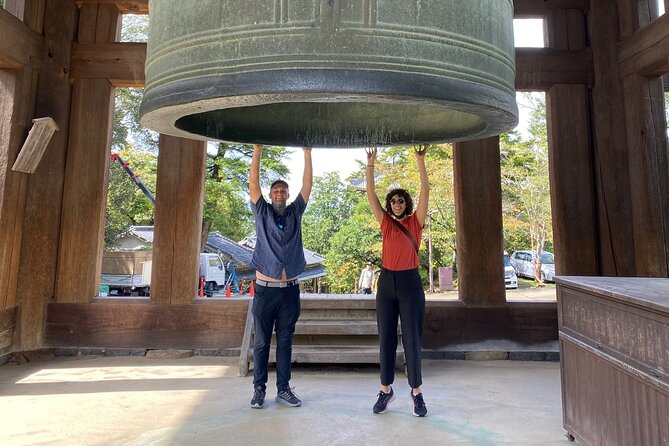
Deer, temples, and history, all in one day. I like how this private Nara day trip works as a choose-your-own path, with a licensed English-speaking guide who keeps the day moving and makes each stop click into place. I especially love the combination of Todai-ji and the moment the deer crowd the edge of Nara Park, because it feels like two sides of Japan at once, ancient and oddly charming.
One thing to plan for: it’s a walking tour, and not every famous site is free. Entrance fees, lunch, and getting to the start area add up, and the 3 to 4 stop limit means you will miss other great stuff unless you come back.
In This Review
- Key things I’d bet on
- Why Nara with a licensed guide beats a DIY shuffle
- The 8 hours, in plain terms: how the pacing really works
- Choosing your 3 to 4 stops: smart combinations for first-timers
- Todai-ji Temple: how to not just see it, but read it
- Nara Park and the deer: respectful, easy fun if you know the rules
- Kasuga Taisha Shrine: lantern paths and a calmer kind of awe
- Wakakusayama Hill: when views are worth the extra effort
- Older temples that change the mood: Horyu-ji, Kofuku-ji, Yakushiji, and more
- Naramachi: the Edo-era streets you can actually enjoy slowly
- Nara’s museums and palace sites: when you want context
- Japanese gardens: Isuien and Yoshikien when you want a slower hour
- Guide quality is the difference maker, and reviews back it up
- Price and value: what the cost covers, and what you still pay
- Who this Nara private tour suits best
- Should you book this Nara private tour?
- FAQ
- How long is the Nara private tour?
- Is this tour private?
- Can I choose which sites to visit in Nara?
- Does the tour include a licensed guide?
- Is pickup included, and how does it work in Kyoto?
- Is this tour a walking tour?
- Are temple entrance fees included?
- What is not included besides entrance fees?
- How will I receive my ticket?
- What is the cancellation window?
Key things I’d bet on
- You pick 3 to 4 sites, so you can prioritize what matters to you instead of racing between everything
- Todai-ji is a real anchor, and your guide can help you see the parts most people rush past, like the huge Buddha setting and notable details
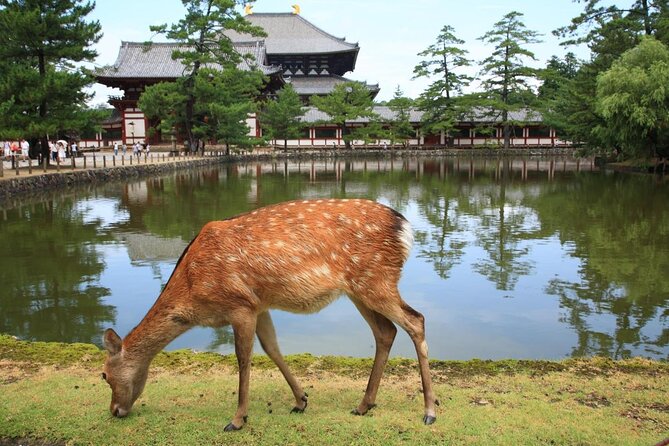
- Deer Park is the emotional payoff, with deer that feel calm and familiar once you know how to stay respectful
- Kasuga Taisha and the shrine path add a very different mood from the temple crowds
- Naramachi is easy to enjoy, because you get time to wander the preserved merchant-town lanes without getting lost
- Guides like Ken, Haru, Junichi, and Taku show up with strong organization and good explanations, including how to handle transport and timing
Why Nara with a licensed guide beats a DIY shuffle
Nara is close to Kyoto, but it is still a different world. You trade Kyoto’s grid of neighborhoods for a concentrated set of big sights, plus the gentle chaos of deer in the middle of it all. A good guide helps you understand why these places matter, not just where to stand for photos.
The biggest value is focus. Instead of you Googling bus options and temple hours while the day disappears, you get a planned flow built around what you want to see. In multiple reviews, guides like Ken, Haru, and Junichi are praised for organizing the day so the schedule actually works, even when timing is tight.
More Private Guides in Kyoto
- Kyoto Early Morning Tour with English-Speaking Guide
★ 5.0 · 1,427 reviews - Kyoto 6hr Private Tour with Government-Licensed Guide
★ 5.0 · 1,369 reviews - Kyoto: Early Morning Tour with English-Speaking Guide
★ 4.9 · 1,128 reviews
The 8 hours, in plain terms: how the pacing really works
This is an 8-hour private walking tour, and the guide meets you on foot in a designated area in Kyoto. That means you do not get a private vehicle, and you should expect real walking between stops. Also, the structure is designed around choosing 3 to 4 sites from a longer list, with roughly 30 minutes per stop.
That timing matters. If you only have one day, a “one-stop-per-hour” plan can feel frantic. With fewer stops, you get time to slow down inside temples, look up at architecture, and actually connect the stories. Reviews also highlight that a well-planned guide can save time getting to the right areas and help you navigate public transportation when needed.
Choosing your 3 to 4 stops: smart combinations for first-timers
Here’s a practical way to choose. Pick one heavyweight temple, one “nature meets culture” moment, and one local-feeling district or garden. Then add one older temple or museum if you still have energy.
A classic first-visit set looks like:
- Todai-ji (for the Great Buddha scale)
- Nara Park (for the deer and open-air atmosphere)
- Kasuga Taisha (for shrine calm and lantern-lined paths)
- Naramachi (for Edo-era merchant-town strolling)
If you want more depth on early Buddhism, you can swap in one or two of the older temples from the list, like Horyu-ji or Yakushiji. If you like gardens, add one of the quieter garden stops, such as Isuien or Yoshikien, where the design is part of the story.
Todai-ji Temple: how to not just see it, but read it
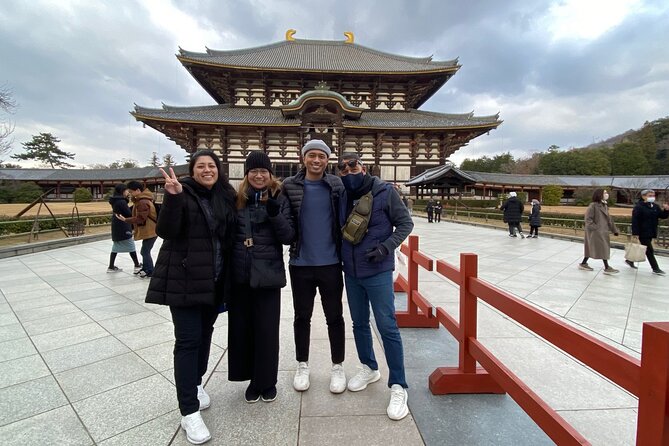
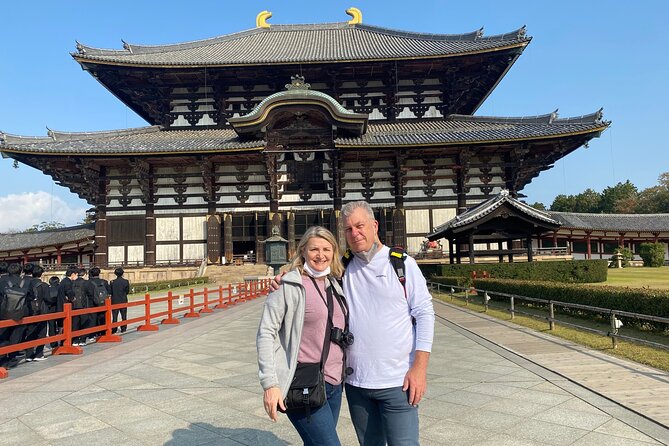
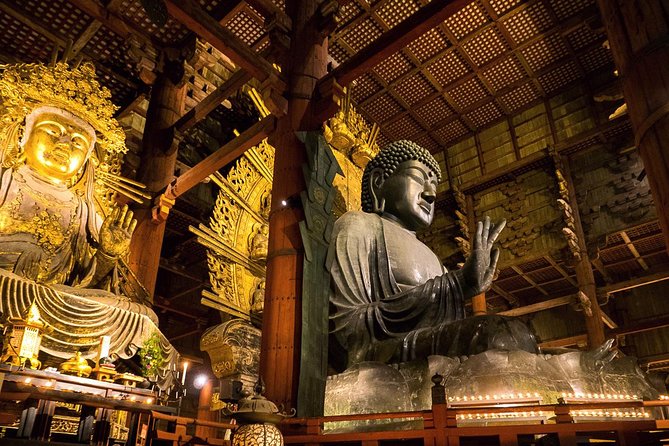
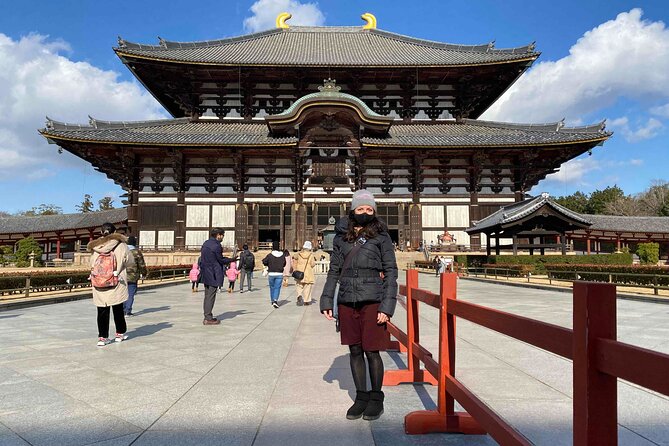
Todai-ji is the headline attraction for a reason. The huge scale of the Daibutsuden hall and the monumental bronze Buddha make it hard to “just pass through.” With a guide, you get context that changes the visit from sightseeing to understanding, especially the temple’s long historical role.
One detail that stood out in reviews is how crowds can make the visit feel rushed, including school groups. If you want to actually admire the Buddha and the hall interior without feeling swept along, your guide’s timing and pacing choices help a lot. Even the small moments, like noticing people crawling through the hole in a huge pillar for luck and school tradition, becomes more meaningful when you know what it represents.
Plan for the temple ticket cost separately, since admission is not included.
A different sort of day in Japan:
- PERFECT KYOTO 1-Day Bus Tour
★ 5.0 · 13,518 reviews - Kyoto: Fushimi Inari, Kinkakuji, Bamboo Grove 1 Day Bus Tour
★ 4.8 · 4,316 reviews - Kyoto: Tea Ceremony in a Traditional Tea House in Kiyomizu
★ 4.9 · 3,519 reviews - Kyoto Geisha Walking Tour: Gion District & Hidden Gems
★ 4.7 · 3,273 reviews
Nara Park and the deer: respectful, easy fun if you know the rules
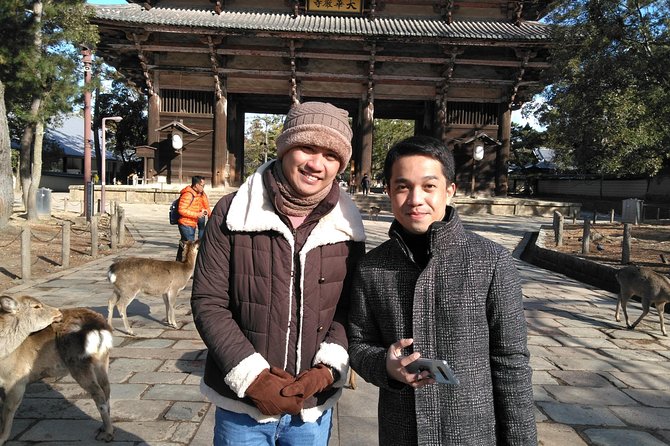
Nara Park is where the day stops feeling like a checklist. You are watching free-roaming deer graze, and the atmosphere is playful, not stiff. Reviews mention deer snacks and the way the deer approach people when they are comfortable with respectful behavior.
Your guide’s job here is practical. They help you manage crowd flow, so you do not stand in the wrong spot when a group forms. They also set expectations so you feel confident around the deer rather than nervous or overly cautious.
This stop is free, which is always a win for value.
Kasuga Taisha Shrine: lantern paths and a calmer kind of awe
Kasuga Taisha is Nara’s most celebrated shrine, and the experience is very different from the big-hall intensity of Todai-ji. The shrine setting feels more enclosed and atmospheric, with a path that people often describe as forest-like once you start walking in.
If you love spiritual architecture, Kasuga Taisha delivers. Your guide can explain the shrine’s role in protecting the city, so you see it as living tradition rather than a static stop.
Entrance here is also free, so you can spend your energy on the walk itself and on looking closely at details.
Wakakusayama Hill: when views are worth the extra effort
Wakakusayama Hill sits behind Nara Park and is around 350 meters tall. It is one of those “do it if you can” choices because it adds a stretch and a viewpoint, letting you see more of central Nara from above.
This stop is not free. If you are traveling in heat or rain, your guide may help you decide whether it is worth the time and energy compared with another temple or garden stop.
Older temples that change the mood: Horyu-ji, Kofuku-ji, Yakushiji, and more
One of the best reasons to book a private tour is that Nara has layers. You can go from the most famous big statements to older, quieter architecture that feels almost time-capsule-like.
From the list, consider:
- Horyu-ji Temple: one of the oldest in Japan, with strong historical weight and early Buddhism significance
- Kofuku-ji: tied to the powerful Fujiwara clan era and known for major temple structures
- Yakushiji and Shin-Yakushiji: symmetric layouts and medical-buddha devotion that add variety beyond the usual temple circuit
- Toshodai-ji: connected to Ganjin, a Chinese priest invited to Japan to train priests and improve Buddhist learning
These temple tickets are not included, so keep that budget in mind. In return, you get a day that feels more like a real historical story and less like photo time.
Naramachi: the Edo-era streets you can actually enjoy slowly
Naramachi is Nara’s old merchant district, and it works well as a late-day stop when your legs are tired. You get preserved residential buildings and warehouses open to the public, plus shops and cafes.
The best part is that it feels human-scale. Instead of rushing past everything, you can wander the lanes and buy something small if it catches your eye. Several guides are praised for adding local touches that make the day feel comfortable, which matters once you’re out in the streets.
This stop is free.
Nara’s museums and palace sites: when you want context
If you feel like you need “why this matters” after a few temples, the Nara National Museum can help. It focuses on Japanese Buddhist art, so it is a useful companion to the big temple halls.
For a different angle, the Heijō Palace Site Historical Park gives you a sense of where Japan’s capital once stood during the Nara period. Even if you do not have hours for a deep museum day, a guided stop here can add structure to everything else you saw.
Both are not free (admission not included), but they can make your one-day visit feel more complete.
Japanese gardens: Isuien and Yoshikien when you want a slower hour
Garden stops can be surprisingly satisfying in Nara. If you pick one, you break up the temple-heavy flow and get a reset.
Isuien is known for borrowing scenery, using views of the Todaiji gate and Mount Wakakusayama as part of the design. Yoshikien is another garden option, named after the nearby Yoshikigawa River.
These are not free, so they are best if you genuinely like gardens or you want a calmer break from crowds.
Guide quality is the difference maker, and reviews back it up
A private tour rises or falls on the guide, and this one has a strong record. Many reviews praise guides for being organized, proactive with communication, and excellent at explaining what you are seeing.
Names that come up often include:
- Ken for making history feel clear and for helping with cultural and religious context
- Haru for being prepared and sharing fun facts that go beyond basic explanations
- Junichi and Taku for planning that fits interests, plus friendly teaching that makes the day feel personal
- Yuka, for detailed architecture and for being flexible about which sites to include
Not every review is perfect. One low rating complained about English clarity and communication. The provider’s response points out that guides are certified interpreters, but accent and comfort can still vary. My practical advice: if language is a make-or-break issue for you, message your expectations ahead of time and ask for confirmation that your guide can meet your needs.
Price and value: what the cost covers, and what you still pay
At about $201.51 per person for an 8-hour private tour, you are paying for three things: a multilingual licensed guide, a personalized routing strategy (choosing 3 to 4 sites), and a smoother logistics experience than doing it yourself. You are also paying for the fact that it is private, so you do not get stuck with the “everyone moves at a different speed” problem.
What you do not pay for is important. Entrance fees, lunch, transportation fees, and other personal expenses are not included. Since some stops are free (like Nara Park, Kasuga Taisha, and Naramachi) and others are ticketed, your total day cost will depend on which sites you pick.
The best value happens when you plan smart. Choose fewer sites but higher impact ones, so you do not burn budget on entry after entry without time to enjoy them.
Who this Nara private tour suits best
This tour is a strong fit if:
- you want a guided day trip from Kyoto without worrying about getting lost
- you only have one day and want to see major Nara highlights plus one district or garden
- you like history and want explanations tied to what you are standing in front of
- you appreciate the calm of a private group pace
It may not be ideal if:
- you hate walking, because it is a walking format with pickup on foot
- you want to see everything in Nara in one go, since the 3 to 4 site limit will always leave something out
Should you book this Nara private tour?
If you are choosing between a DIY day and a guided day, I’d lean toward booking this private option. You are paying for time savings, better pacing, and a guide who turns Nara from a list into a story. And if you choose wisely, you get the deer magic, the big-hitter temples, plus the streets and gardens that make Nara feel like a real town, not just an attraction map.
If you book, do this: pick your 3 to 4 priorities early, message any preferences for history level or pacing, and budget for temple admissions and lunch. With that, you should end the day with that rare feeling in Japan, you saw a lot, and you actually understood it.
FAQ
How long is the Nara private tour?
It is listed at about 8 hours.
Is this tour private?
Yes. It is private, and only your group participates.
Can I choose which sites to visit in Nara?
Yes. You can choose between 3 to 4 sites from the provided options.
Does the tour include a licensed guide?
Yes. You get a government-licensed, English-speaking local guide.
Is pickup included, and how does it work in Kyoto?
Pickup is offered, and you meet the guide on foot within a designated area in Kyoto.
Is this tour a walking tour?
Yes. It is a walking tour with pickup on foot.
Are temple entrance fees included?
No. Entrance fees are not included, and some stops are ticketed while others are free.
What is not included besides entrance fees?
Transportation fees, lunch, and other personal expenses are not included. A private vehicle is also not included.
How will I receive my ticket?
The tour includes a mobile ticket.
What is the cancellation window?
Free cancellation is available up to 24 hours in advance for a full refund.
Newly listed around Kyoto
- Zen Meditation for Life in Kyoto★ 5.0 · 10 reviews
- Kyoto: Zen Meditation at a Private Temple with a Monk★ 5.0 · 25 reviews
- Kyoto Private Customizable Day Tour with Guide and Vehicle★ 5.0 · 52 reviews
- Private Wagyu Beef Tour with a Local Guide★ 5.0 · 6 reviews
- Kyoto: Gion Geisha District & Sake-in-Hand Walking Tour★ 5.0 · 37 reviews
- Your Private Vacation Photography Session In Kyoto★ 5.0 · 110 reviews
- Private Guided Traditional Buddhist Cooking in Japan★ 5.0 · 16 reviews
- Private Pewter Sake Cup Experience with a Kyoto Artisan★ 5.0 · 31 reviews
Licensed Guides & Private Drivers, compared.
Tokyo 6hr Private Tour with Government-Licensed Guide
Read our review →
Kyoto Early Morning Tour with English-Speaking Guide
Read our review →
Tokyo 4hr Private Tour with Government-Licensed Guide
Read our review →
Kyoto 6hr Private Tour with Government-Licensed Guide
Read our review →
Hiroshima / Miyajima Full-day Private Tour with Government Licensed Guide
Read our review →Early Morning Tour with English-Speaking Guide
Read our review →
Tokyo Private Sightseeing Tour by Car- English speaking chauffeur
Read our review →
Mt Fuji Private Tour with English Speaking Driver
Read our review →Browse the lists this tour appears in