
Review · WALKING TOURS
One-Day Walking Tour of Amazing 8th Century Capital Nara
Eight centuries of Nara in one long morning. This private day walk is a smart way to hit the city’s big hitters without spending your time figuring out routes. You get a professional guide who keeps things moving, plus a chance to see the freely roaming deer in Nara Park.
I especially like how the route strings together the city’s main layers, from old merchant lanes in Naramachi to the 8th-century roots of Kasuga Grand Shrine. And then you finish at Todai-ji, where the scale is the point, plus you learn why this UNESCO site mattered for ancient Japan.
One drawback to plan for: most entrance fees are not included and you’ll also pay local transport costs. Also, it’s about 8 hours of walking, so wear shoes you trust.
In This Review
- Key Things That Make This Nara Tour Worth Your Day
- A One-Day Nara Route That Lets You Stop Thinking About Directions
- Naramachi: Old Merchant Streets With an 8th-Century Origin Story
- Kasuga Grand Shrine: Fujiwara Power and a Shrine With Long Memory
- Todai-ji Temple: When the UNESCO Site Is the Main Event
- Nara Park Deer: A Silly Moment That Ends Up Being Memorable
- How the Private Guide Actually Improves Your Day
- Price and Value: What You’re Paying For (and What to Budget Extra)
- Timing, Meeting Point, and How to Plan Your Next Step
- Who This Nara Walking Tour Is Best For
- Should You Book This Nara Tour or DIY It?
- FAQ
- How long is the One-Day Walking Tour of Nara?
- What are the main stops during the tour?
- Are entrance fees included?
- Is public transportation fare included?
- Is this tour private?
- When does the tour start, and where does it end?
- Do I need to buy tickets in advance, or do I get a ticket on my phone?
- Are service animals allowed?
- What happens if the weather is poor?
- How far in advance do people usually book?
Key Things That Make This Nara Tour Worth Your Day
- A private guide to keep navigation stress-free so you can focus on what you’re actually seeing
- Naramachi’s old temple-town to merchant-town story with traditional latticed houses
- Kasuga Grand Shrine’s 8th-century Fujiwara connection and a long view of Japanese power
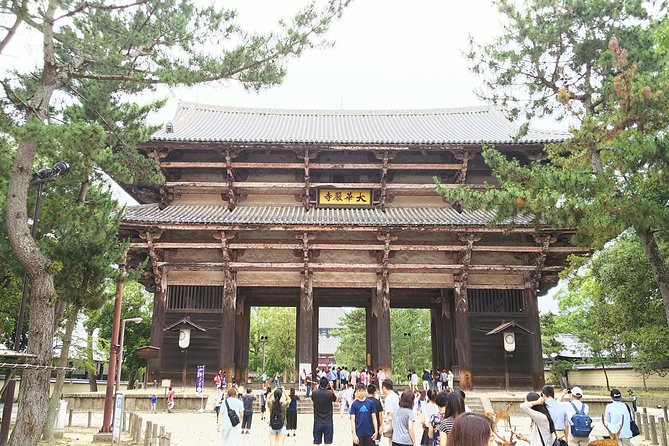
- Todai-ji’s UNESCO scale, including the world-famous giant Buddha you’ll hear about the moment you arrive
- Nara Park deer time where the experience can feel funny, fast, and very real
- Flexibility during the day, including help with plan changes (like a detour to Nara National Museum) and even dinner suggestions afterward
A One-Day Nara Route That Lets You Stop Thinking About Directions
Nara is one of those places that can feel overwhelming at first. Temples, shrines, historic neighborhoods, and then deer everywhere, sometimes like they have a calendar invite. This tour fixes the main problem by putting a guide in front of you, handling the routing so you do not lose time bouncing between landmarks.
I like the structure because it matches how most people want to experience Nara: start in an atmospheric historic neighborhood, move into shrine culture, then land at Todai-ji when your energy can still handle awe. And if you’re traveling with someone who has a physical limitation, the guide feedback includes real care, like taking slower pacing for a bad knee.
The other value is context. The guide does not just point at buildings. You get the why behind them, from Emperor Shomu’s role in Todai-ji to the Fujiwara clan’s early influence at Kasuga Grand Shrine.
More Walking Tours in Kyoto
- Kyoto Geisha Walking Tour: Gion District & Hidden Gems
★ 4.7 · 3,273 reviews - Kyoto: Gion Geisha District Walking Tour – Stories of Geisha
★ 4.7 · 2,187 reviews - Night Walk in Gion: Kyoto’s Geisha District
★ 4.5 · 2,003 reviews
Naramachi: Old Merchant Streets With an 8th-Century Origin Story
You kick off in the Naramachi area, where the neighborhood began as a temple town in the 8th century and later shifted into a merchant district. That change matters, because it explains why the streets feel lived-in rather than museum-like.
You’ll spend about 1 hour 30 minutes here, and the highlight is the traditional-style lattice houses, some over 100 years old. This is the part of Nara that often gives visitors the best “I get it now” moment. You’re seeing a neighborhood that grew around religion first, then around trade, and the architecture and street rhythm reflect that layered history.
Practical tip: Naramachi is the kind of place where you may want to pause for photos and snacks, but the tour is designed to keep a steady pace. If you tend to drift, I’d remind you to use the guide times as “anchors,” then ask for a short pause when you want one. The guides in the feedback were flexible, including helping people plan food after the tour, so don’t be shy about asking what to do next.
Kasuga Grand Shrine: Fujiwara Power and a Shrine With Long Memory
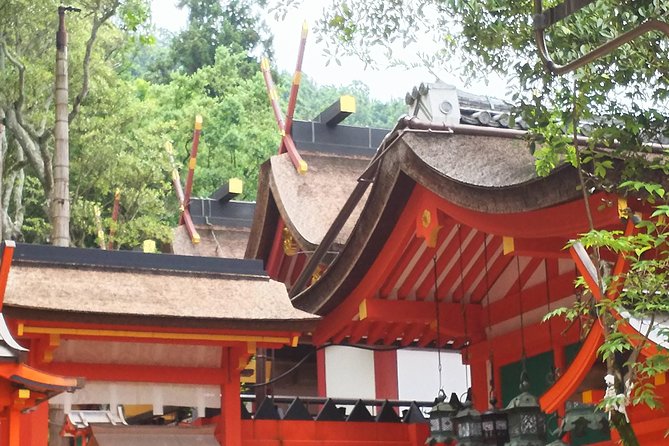
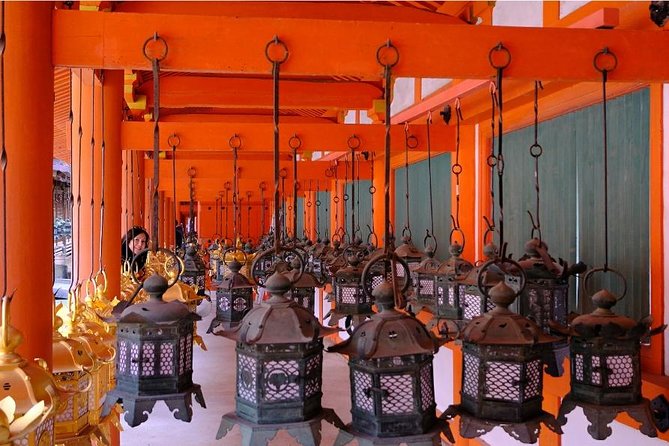
After Naramachi, the next stop is Kasuga Grand Shrine. It was founded in the 8th century by the Fujiwara clan, one of the most powerful aristocratic families in Japanese history. That single fact changes how you read the shrine. You’re not just looking at ritual architecture, you’re seeing a family’s political and cultural investment made visible.
You’ll have about 1 hour here. That’s enough time to understand the story and still walk around at an unhurried pace. Entrance fees are not included for Kasuga Taisha, so budget an added amount for shrine entry.
A small consideration: shrine environments can be emotionally calm, but they are also popular. If you’re sensitive to crowds, going early in the day helps. The tour starts at 8:30 am, which is a big advantage if you want a calmer first pass before the area fills.
Todai-ji Temple: When the UNESCO Site Is the Main Event
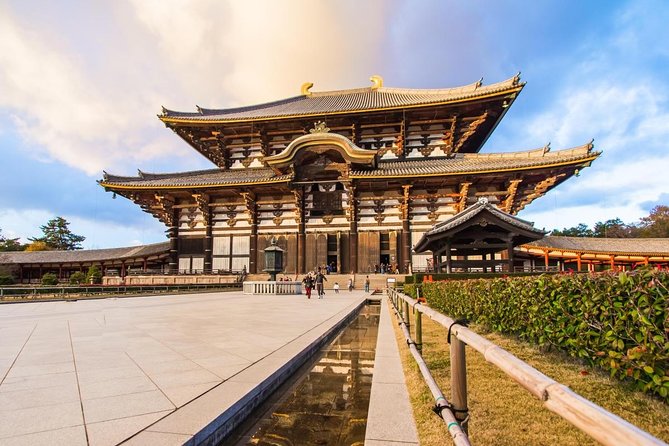
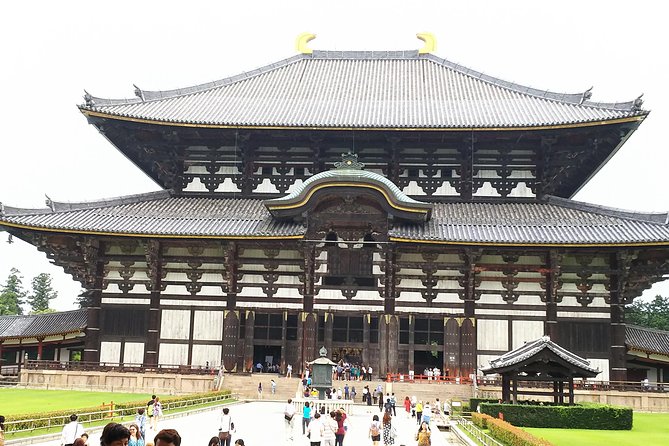
Todai-ji is the emotional and visual peak of this day. The temple is associated with Emperor Shomu and has stood for more than 1,300 years. It sits under Mt. Wakakusa in a huge precinct, which is part of what makes it hard to describe. You arrive expecting a big temple. Then you realize the scale is the whole point.
You’ll spend about 1 hour at Todai-ji, and this is where the guide’s interpretation really matters. In the feedback, people singled out the largest wooden structure and the enormous Buddha as favorites, and those are the kinds of details your guide can connect to the temple’s original purpose.
Also, Todai-ji is UNESCO World Cultural Heritage. That matters because it frames the site as more than a “pretty stop.” You learn how the temple fits into ancient state power, religious life, and the kind of architectural ambition that took serious resources.
Practical reality: Todai-ji involves walking on uneven surfaces within the precinct. If you or your companion has mobility limits, choose comfortable shoes and take your breaks when the guide suggests them. One of the guide reviews mentioned making accommodations for a bad knee, which tells me the guides pay attention to pace and comfort.
A few more Kyoto days to weigh up
- Kyoto Gion Geisha District Walking Tour – The Stories of Geisha
★ 5.0 · 1,441 reviews - Nishiki Market Brunch Walking Tour (7 Tastings + Brunch)
★ 5.0 · 1,355 reviews - Kyoto: Gion Magical Night Walking Tour with Geisha Insights
★ 4.9 · 1,286 reviews - Kyoto Arashiyama Walking Tour: Bamboo, Monkeys, Gardens & Secrets
★ 5.0 · 1,216 reviews
Nara Park Deer: A Silly Moment That Ends Up Being Memorable
Then there’s the deer, because you cannot really do Nara without meeting them. The tour includes time to see the wild deer of Nara Park, and in the feedback people called the deer experience unique, especially the moment of feeding.
Here’s my practical take: the deer can feel cute and chaotic at the same time. Treat them like you would a busy street crossing. Keep your hands and snacks under control, and listen to what your guide says about how to behave around them. You will have a way better time if you do not try to “outsmart” nature.
Timing matters too. A guide-led route helps you experience deer without spending half the day drifting around trying to find the best moments. You’ll likely notice that the guide keeps the day’s energy balanced, so the deer stop does not derail your temple time, and vice versa.
How the Private Guide Actually Improves Your Day
This is a private tour, meaning only your group participates. That is not a minor detail. In a place like Nara, where you walk a lot and landmarks are spread out, a guide saves your attention for the experience, not for logistics.
The biggest praise in the feedback is the combination of knowledge and flexibility. Examples include Satomi working around a spontaneous detour to the Nara National Museum while still helping with navigation and insights at the exhibits. Another guide, Emi, helped keep the day pleasant and relaxing, including taking care of logistics so people did not feel lost.
You’ll also hear names repeatedly in the feedback, including Tomoko, Fumiko, Noriko, and Fuji. That matters because it signals consistent service quality across different guides, not just one lucky star performer.
One more nuance: a private tour does not automatically mean totally custom. This day has set anchor stops, and the guide helps you move through them. If you want big changes, it may depend on timing and the guide’s ability to adjust the route. Still, the feedback shows guides can respond to real-life wants, from museum detours to finding a good dinner spot afterward.
Price and Value: What You’re Paying For (and What to Budget Extra)
The price is $137.17 per person for an 8-hour experience. That’s not cheap, but it’s also not trying to compete with group bus tours. You’re paying for time, routing, and a guide who explains the places instead of handing you a map and walking away.
To judge value, you have to account for the additional costs listed:
- Public transportation fare: ¥2,000 per person (not included)
- Entrance fees for Todai-ji and Kasuga Taisha: ¥1,500 per person (not included)
So your day is likely to cost a bit more than the headline price once you add transit and temple entry. But the tradeoff is you get a coherent, guided loop that would take you hours of self-planning to pull off well.
My advice: if you enjoy learning while you walk, and you want your time to feel efficient, this is good value. If you’re the type who likes slow wandering with no plan and you already know Nara well, you might choose a cheaper approach. But if you want structure and story, the guide time is the product.
Timing, Meeting Point, and How to Plan Your Next Step
The tour starts at 8:30 am, and the duration is about 8 hours. You’ll spend listed time at the main stops (Naramachi, Kasuga Grand Shrine, Todai-ji), plus walking and time in between. Plan on this being a full day, not a quick lunch-and-temple sprint.
One logistical detail: the experience ends in a different location. That means you should think ahead about how you’ll get back to your hotel or into the rest of your day. If you have a dinner reservation, build a buffer so you are not sprinting across town after the tour.
Also, the tour is described as near public transportation, and a mobile ticket is provided. That combination usually makes it easier to manage day-of arrival and rejoining plans.
Who This Nara Walking Tour Is Best For
I’d point this tour toward you if you want:
- A tight, efficient day that still covers the big landmarks
- A guide to translate the cultural “why,” especially around Todai-ji and Kasuga
- A private format where your group can ask questions without feeling rushed
- Time to see the deer in a managed, not chaotic, way
It’s also a strong choice for people who appreciate accommodations. The feedback includes help with mobility needs and patience in pacing. If that’s you, bring up concerns early so the guide can plan the walking rhythm.
If you’re traveling with kids, this tour can still work, because Nara Park deer and the giant Buddha have that wow factor. Just be ready for a long day and keep water and snacks in mind.
Should You Book This Nara Tour or DIY It?
Book it if you want to maximize your day in Nara with a guide who explains the story and keeps you moving. This is especially true if you care about understanding why Todai-ji and Kasuga matter, not just taking photos. The consistent praise for guides like Satomi, Tomoko, Fumiko, Noriko, and Fuji suggests you’re getting more than generic sightseeing.
DIY might be better if you already know your route, you hate structured timing, and you’re comfortable paying only for entry tickets and transit. You can absolutely see Nara on your own, but you’ll spend extra hours deciding where to go next and how to connect it all.
My bottom line: for a one-day Nara hit, this is a practical, value-focused way to see the core sights plus the deer, with enough guidance to keep the day enjoyable instead of stressful.
FAQ
How long is the One-Day Walking Tour of Nara?
It runs about 8 hours (approx.).
What are the main stops during the tour?
The day includes Naramachi, Kasuga Grand Shrine, and Todai-ji Temple, with time to see the deer in Nara Park.
Are entrance fees included?
No. Entrance fees to Todai-ji Temple and Kasuga Taisha Shrine are listed as ¥1,500 per person and are not included.
Is public transportation fare included?
No. Public transportation fare is listed as ¥2,000 per person and is not included.
Is this tour private?
Yes. It’s a private tour/activity, so only your group participates.
When does the tour start, and where does it end?
The start time is 8:30 am. The experience ends in a different location from where it starts.
Do I need to buy tickets in advance, or do I get a ticket on my phone?
A mobile ticket is included.
Are service animals allowed?
Yes, service animals are allowed.
What happens if the weather is poor?
This experience requires good weather. If it’s canceled due to poor weather, you’ll be offered a different date or a full refund.
How far in advance do people usually book?
On average, it’s booked 26 days in advance.
Newly listed around Kyoto
- Zen Meditation for Life in Kyoto★ 5.0 · 10 reviews
- Kyoto: Zen Meditation at a Private Temple with a Monk★ 5.0 · 25 reviews
- Kyoto Private Customizable Day Tour with Guide and Vehicle★ 5.0 · 52 reviews
- Private Wagyu Beef Tour with a Local Guide★ 5.0 · 6 reviews
- Kyoto: Gion Geisha District & Sake-in-Hand Walking Tour★ 5.0 · 37 reviews
- Your Private Vacation Photography Session In Kyoto★ 5.0 · 110 reviews
- Private Guided Traditional Buddhist Cooking in Japan★ 5.0 · 16 reviews
- Private Pewter Sake Cup Experience with a Kyoto Artisan★ 5.0 · 31 reviews
Walking Tours, compared.
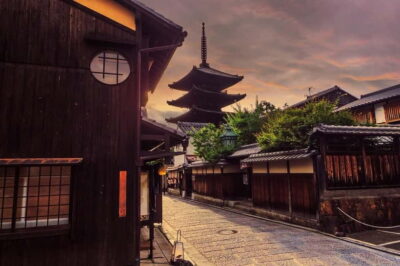
Kyoto Geisha Walking Tour: Gion District & Hidden Gems
Read our review →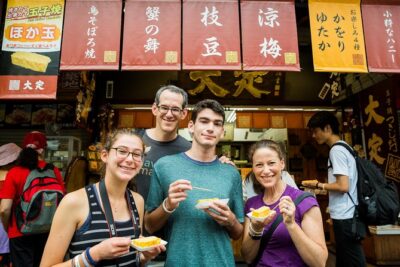
Tokyo Tsukiji Fish Market Food and Culture Walking Tour
Read our review →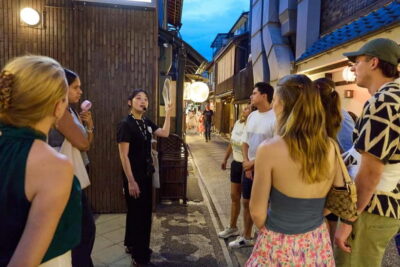
Gion Geisha District Walking Tour – Stories of Geisha
Read our review →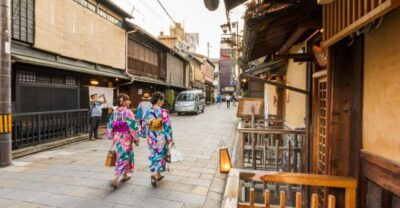
Shinjuku Local Bar and Izakaya Guided Walking Tour
Read our review →

Asakusa Walking Tour with Sensoji Temple Visit
Read our review →
Kyoto Gion Geisha District Walking Tour – The Stories of Geisha
Read our review →Browse the lists this tour appears in