
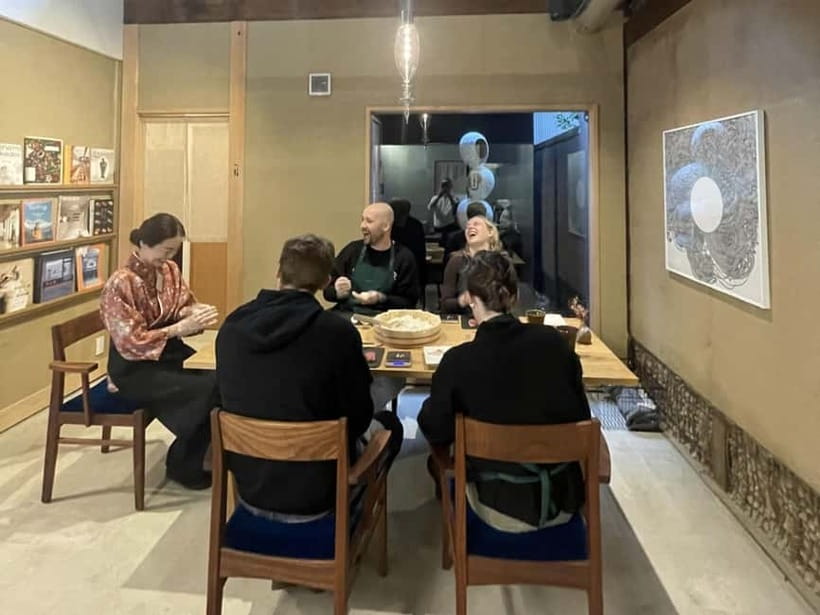
Review · SUSHI COOKING WORKSHOPS
Kyoto: Small-Group Authentic Sushi Making Workshop
Perfect sushi starts with your own hands. In Kyoto, this small-group workshop is a rare chance to learn sushi-making step-by-step in English, in a restored townhouse setting. I love the small-group attention and the fact you work with fresh local fish, not just pre-made samples. One consideration: it is not suitable for vegetarians.
After about 90 minutes, you will season sushi rice, shape nigiri and maki, and enjoy a lunch made by you. The atmosphere is relaxed, with plenty of time to ask questions, and the hosts (often Kana, plus assistants and her family team) keep the tone warm and practical.
In This Review
- Key highlights I’d circle for your Kyoto plan
- Inside the Kyoto Wand townhouse, why this class feels special
- Your 90-minute flow: rice first, then nigiri and maki
- Rice seasoning and fish quality, the two levers that decide everything
- Hands-on shaping, the small techniques that make sushi look right
- What you eat and what you take home (you’ll be full)
- Price and value: why $60 makes sense for a small-group Kyoto class
- Who this workshop is best for (and who should skip it)
- Quick logistics: finding the place and making the day work
- Should you book this Kyoto sushi class with atelier SUSHI?
- FAQ
- How long is the Kyoto sushi workshop?
- Is the workshop taught in English?
- How many people are in a group?
- What is included in the price, and is hotel pickup provided?
- Is it suitable for vegetarians or wheelchair users?
- Where is the meeting point in Kyoto?
Key highlights I’d circle for your Kyoto plan
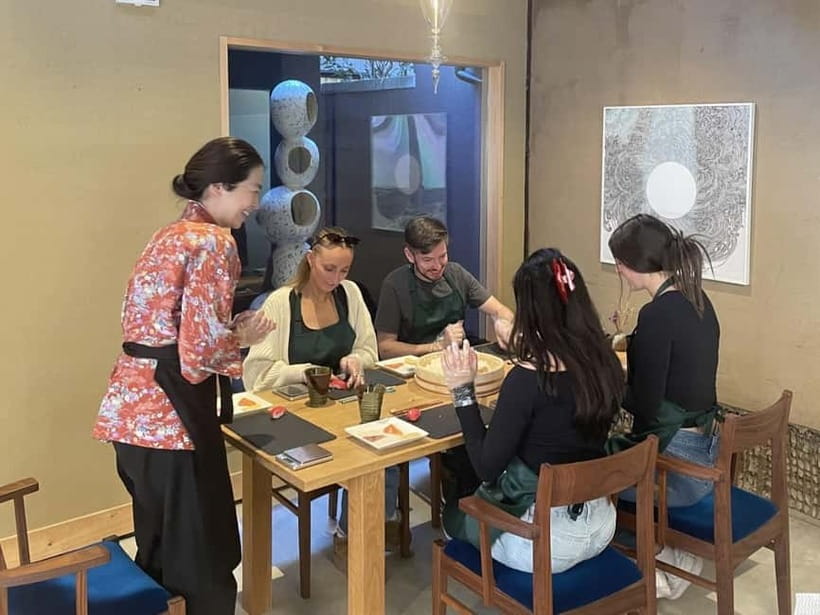
- Up to 8 people means you get hands-on coaching, not a lecture
- English instruction with patient, step-by-step technique guidance
- Fresh local fish paired with taught rice seasoning, so the flavors make sense
- Kyoto townhouse setting that feels calm even when you’re cooking
- You eat what you make, plus miso soup and a take-home gift bag
Inside the Kyoto Wand townhouse, why this class feels special
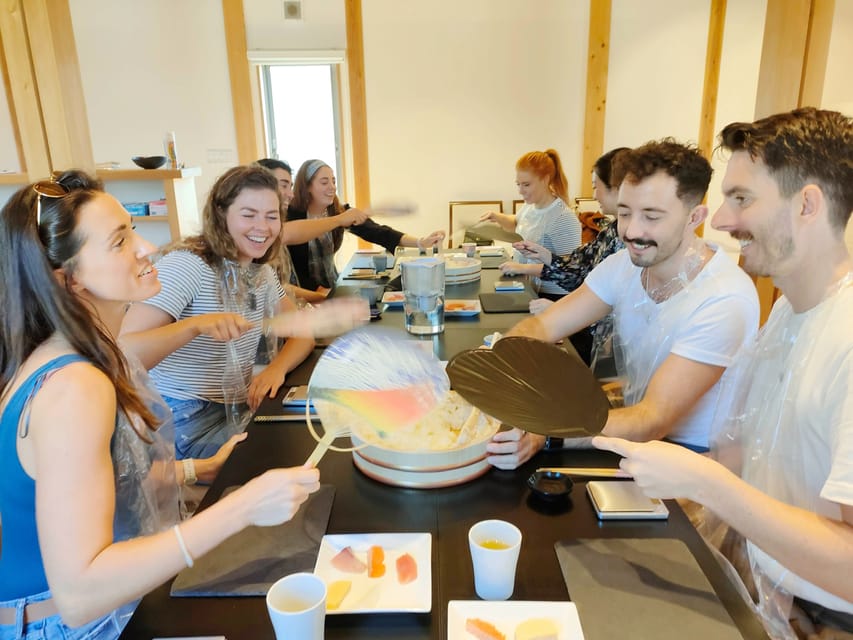
Kyoto sushi classes can range from fast demos to hands-on chaos. This one aims for the middle: small, calm, and very hands-on. You meet at the Kyoto Wand building, minutes on foot from Kiyomizu-Gojō Station (Keihan Main Line), and it’s also walkable from big-name districts like Kiyomizu-dera Temple and Gion.
The setting matters. A restored Kyoto townhouse gives you a quieter rhythm than a restaurant classroom, and that shows in how the class is paced. Several guests described the workshop as restful, with a warm vibe that feels more like learning at a friend’s home than getting processed.
What you’ll notice right away is how personal the instruction is. Even when the group is small, the hosts keep checking in, re-showing steps, and adjusting technique. That attention is exactly what turns sushi from intimidating to doable.
One more reason I like this type of class in Kyoto: it helps you understand the logic behind Japanese food, not just the final look. When the hosts (often Kana, and sometimes her husband or other family helpers) answer questions about Japan and culture, it gives the cooking real context.
More Sushi Workshops in Kyoto
- The Original Small-Group Sushi Making Class in Kyoto
★ 5.0 · 436 reviews - Sushi – Authentic Japanese Cooking Class – the best souvenir from Kyoto!
★ 5.0 · 93 reviews - Private Kyoto Sushi Cooking Class & Tea Ceremony with Emika
★ 5.0 · 66 reviews
Your 90-minute flow: rice first, then nigiri and maki
The workshop runs for about 90 minutes, which is long enough to learn technique and still short enough to fit around sightseeing days. The core sequence is always rice, then shaping.
First comes sushi rice. You’ll work on seasoning cooked rice properly, and that is the foundation for everything that follows. If you get the rice right, sushi tastes balanced even when you are still learning your hand movements.
Next you’ll make classic sushi types, including nigiri and maki rolls. Reviews from different dates mention hands-on guidance for shaping pieces and rolling, with the hosts staying close and helping you refine what you’re doing. Some participants also mentioned additional styles like gunkan, so depending on the session, you might see more than just the two headline categories.
The best part is that you are not standing back. You are building the pieces yourself. That means you learn what matters most in sushi technique, like how you handle the rice so it stays cohesive, and how you distribute filling and pressure so rolls hold together.
The pace is also a practical advantage. Multiple guests noted that it doesn’t feel rushed, and there’s time to ask questions and adjust. In a city where you will be walking all day, a calmer activity like this is a smart reset.
Rice seasoning and fish quality, the two levers that decide everything
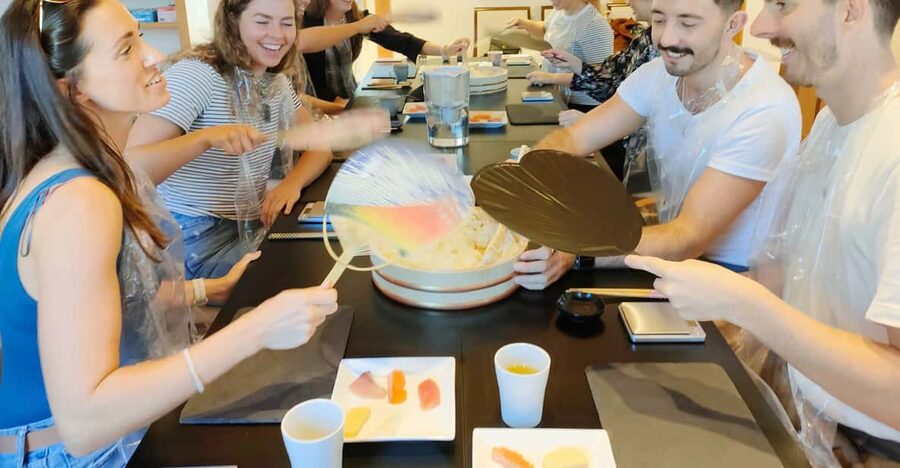
Sushi often gets described as raw fish and fancy plating. In real life, it’s rice first and balance always. That’s why this workshop’s focus on seasoning rice is so valuable for you.
When rice seasoning is off, everything else feels wrong. Too sour, too sweet, too salty, and your sushi tastes out of sync. By learning the steps for seasoning and handling rice, you’ll understand why sushi tastes clean and precise even when ingredients vary.
Then there’s the fish. The class uses fresh local fish sourced in Kyoto, and that quality shows in the flavor and texture. Guests repeatedly praised ingredient freshness, and some mentioned sourcing from Kyoto’s local markets. Even if you are not an adventurous eater, the fish quality helps you feel more comfortable.
What you’re really buying with this class is the chance to connect technique to taste. Once you understand how well-seasoned rice and fresh fish work together, you can judge sushi at restaurants more accurately later.
And because the class is small, you can ask questions as you go. If you wonder why a certain texture matters, or what makes one ingredient pair well with another, the hosts can explain it in everyday terms rather than as a food lecture.
Hands-on shaping, the small techniques that make sushi look right
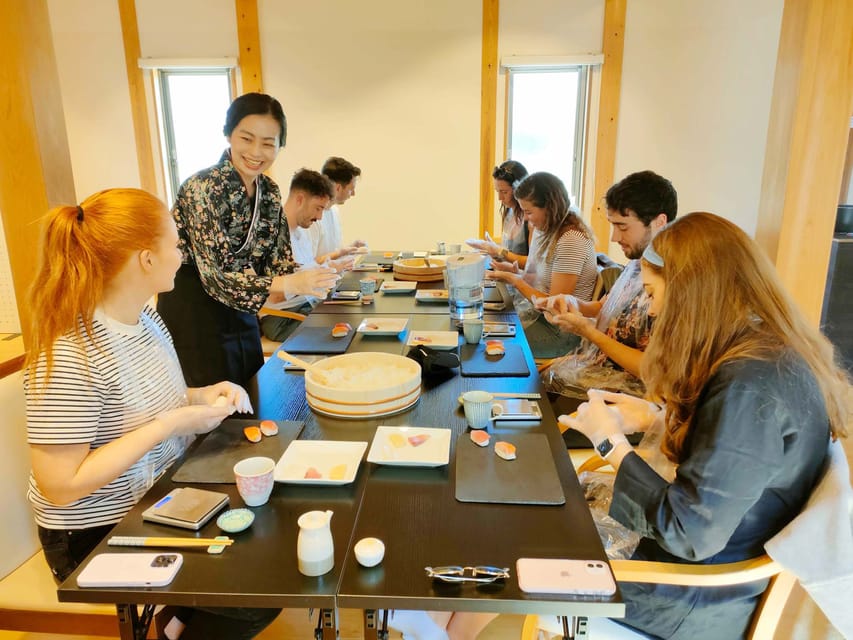
The hands-on coaching is where the class earns its strong ratings. You’re not just learning the steps, you’re learning the reason behind them.
For nigiri, the key lesson is forming pieces so they hold shape and taste cohesive. Several participants specifically praised instruction for proper technique, with Kana described as patient and hands-on. You also get guidance for timing and how to handle rice without compressing it into something dry or sticky.
For maki rolls, the teaching focuses on even rolling and managing filling so it distributes cleanly. Guests noted that the host walks you through the process step-by-step, and you keep working until your roll looks right and slices neatly. Rolling is one of those tasks that feels tricky at first, but with the right pressure and alignment, it clicks fast.
Finishing also matters. You’ll use soy sauce, wasabi, and ginger during the meal portion, which helps you taste your sushi the traditional way. Since you are shaping and assembling the pieces yourself, you can immediately connect what you did with how the final bite turned out.
You’ll also have the tools to stay clean. Disposable gloves and an apron are included, which is a small thing but it makes a big difference in comfort when you’re working with rice and fish.
A different sort of day in Japan:
- PERFECT KYOTO 1-Day Bus Tour
★ 5.0 · 13,518 reviews - Kyoto: Fushimi Inari, Kinkakuji, Bamboo Grove 1 Day Bus Tour
★ 4.8 · 4,316 reviews - Kyoto: Tea Ceremony in a Traditional Tea House in Kiyomizu
★ 4.9 · 3,519 reviews - Kyoto Geisha Walking Tour: Gion District & Hidden Gems
★ 4.7 · 3,273 reviews
What you eat and what you take home (you’ll be full)
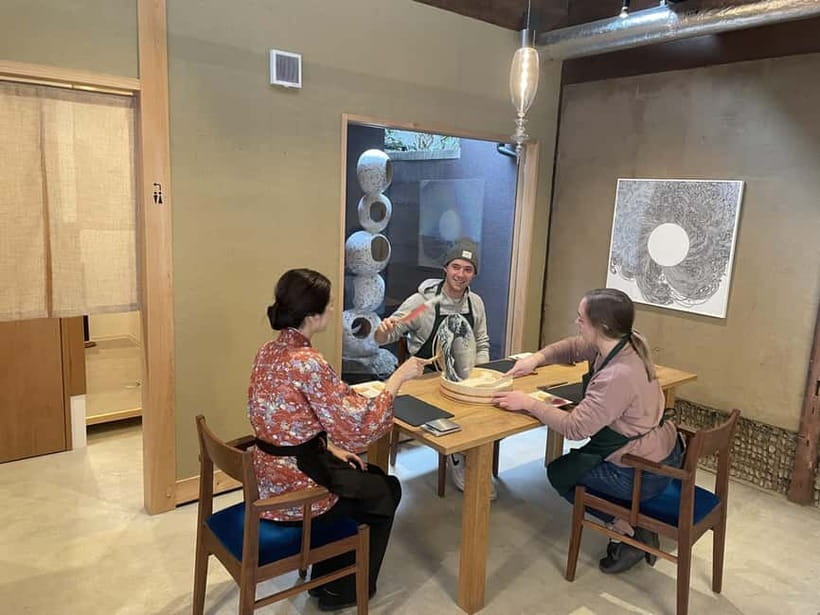
This class is not a tiny snack. You’ll eat the sushi you make for your lunch, plus miso soup. Multiple guests said the amount of sushi is more than enough, so do not plan to follow it with a big meal right after.
That fullness is part of the value. At $60 per person, you are paying for instruction plus ingredients plus the meal. In other words, you’re not just buying entertainment. You’re leaving fed, with skills, and with a repeatable process.
You also get a gift bag with useful take-home tools and materials. The included items are a sushi rolling mat, chopsticks, and a recipe card. Having the mat and a written reminder makes it more likely you will actually practice at home instead of forgetting the sequence the moment you’re back from Kyoto.
One practical mindset shift: go into the class with an empty stomach, or at least light appetite. Several people explicitly mentioned they got a lot to eat, and you will want room for the sushi you crafted and then tasting it with the provided condiments.
Price and value: why $60 makes sense for a small-group Kyoto class
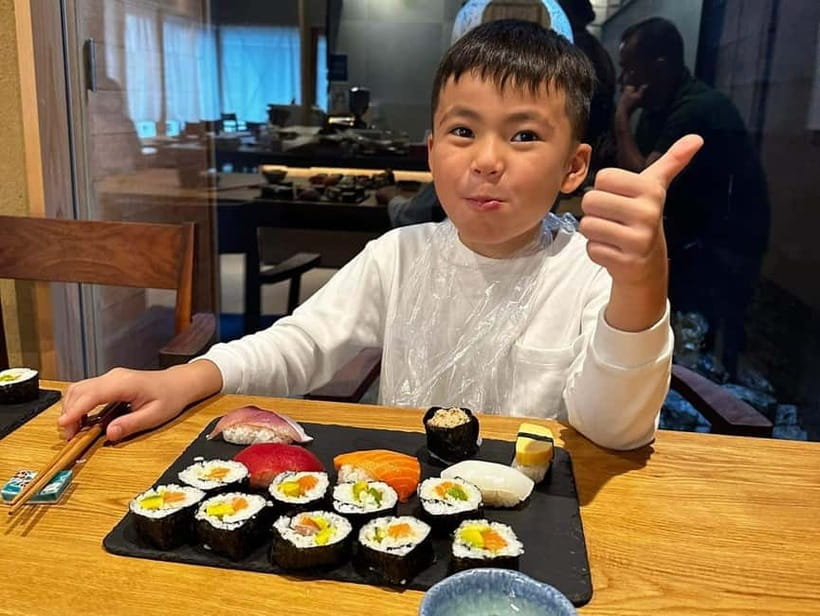
At $60 per person for 90 minutes, the question is not whether it’s cheap. It’s whether you get real value. Here, you do, because the price covers four things that add up quickly in Japan.
You get instruction in English with a small ceiling of 8 participants. That size keeps the teacher-to-student ratio high enough that you can correct mistakes while they’re happening.
You also get ingredients you can taste and assemble yourself, including fresh local fish and sushi rice that’s cooked and handled in the way taught during the class. You’re not just watching someone else use the good stuff.
Finally, you’re getting the meal you made, plus miso soup, and a take-home kit. That means the class is both an experience and something tangible you can use again.
If you compare this to paying for sushi at a restaurant only, the class often wins if you care about technique and want a practical souvenir. You might not eat Michelin-level omakase sushi for $60, but you will leave with skills and tools, and a better understanding of how sushi is built.
Who this workshop is best for (and who should skip it)
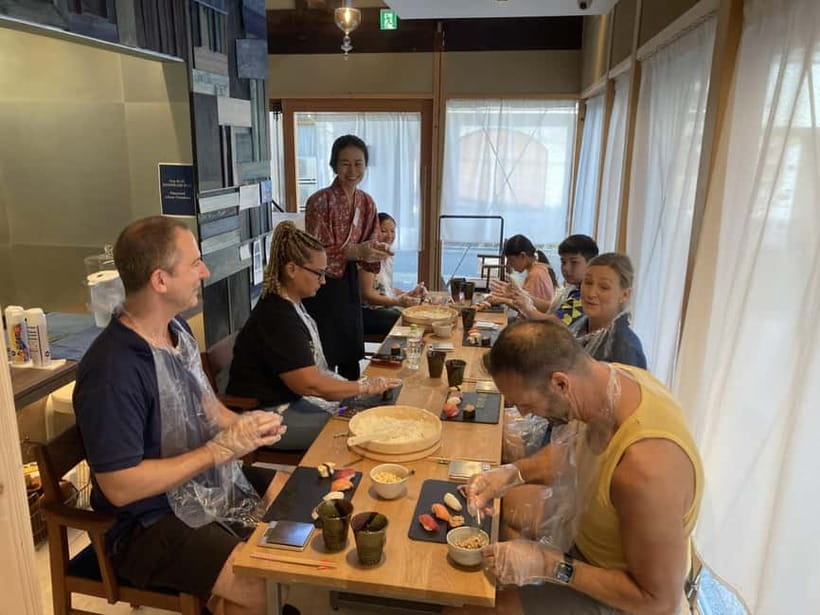
This sushi-making class is a great fit if you:
- Want beginner-friendly instruction that still respects technique
- Like smaller, calmer activities after busy days walking Kyoto
- Enjoy hands-on cooking and asking questions
- Plan to eat sushi anyway and want to understand what you are tasting
Families also seem to enjoy it. Guests mentioned experiences with kids and multi-generation groups, and the hands-on format helps different ages stay engaged.
It may not be the right pick if you:
- Are vegetarian, since the class uses fresh fish and is not suitable for vegetarians
- Use a wheelchair, because it is not suitable for wheelchair users
If you have dietary restrictions, you should advise them when booking. The activity is structured around fish and traditional sushi ingredients, so telling the team early is your best move.
Language-wise, you’re covered. Instruction is in English, which matters a lot in a technique-heavy class like sushi, where one word can mean the difference between correct rice seasoning and the wrong balance.
Quick logistics: finding the place and making the day work
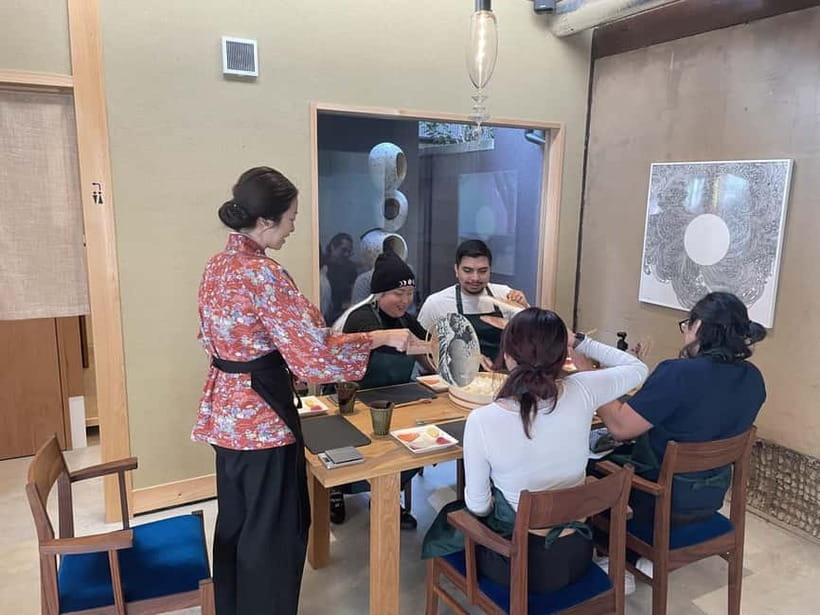
The good news is that the location is convenient. You are centrally located, within walking distance of major areas such as Kiyomizu-dera Temple and Gion. You’ll find the workshop at the Kyoto Wand building, near Kiyomizu-Gojō Station on the Keihan Main Line.
Hotel pickup is not included, so you’ll want to plan to arrive under your own steam. The upside is that it’s easy to fit into a Kyoto itinerary, especially if you’re already in the Higashiyama or Gion orbit that day.
If you’re planning your timing, treat the class as a calm reset in the middle of a sightseeing day. Kyoto can be active, and a seated hands-on class gives your feet a break without putting the trip on pause.
For directions, the Google Plus Code listed is XQVC+J7 Kyoto. If you rely on maps, save that code before you go.
Should you book this Kyoto sushi class with atelier SUSHI?
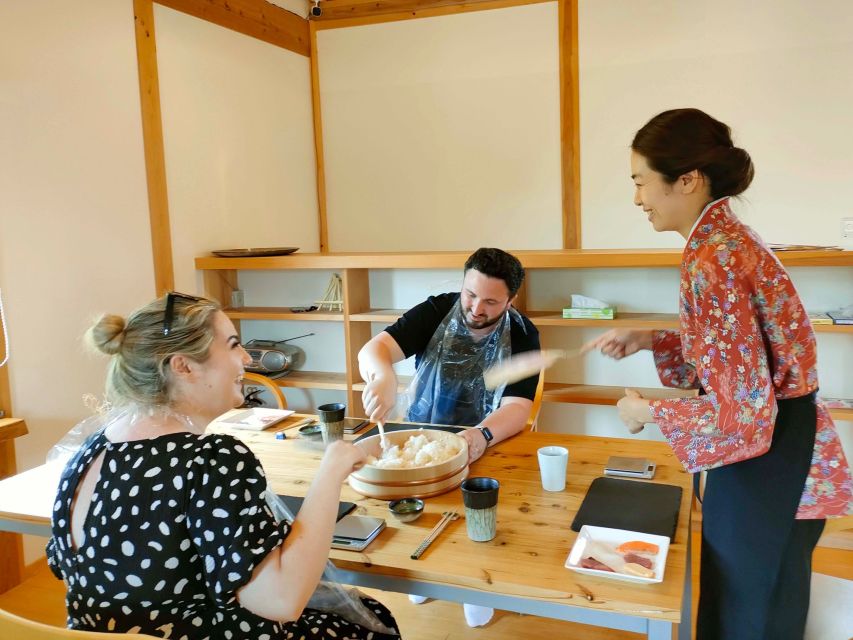
I think you should book it if you want a small-group sushi lesson that prioritizes technique, quality ingredients, and real conversation. The combination of English instruction, a max of 8 people, and learning how to season rice and shape nigiri and maki is exactly what makes sushi feel learnable.
Skip it if you are vegetarian or need wheelchair access. Also, if you just want to taste sushi and you are not interested in technique, this may feel like too much work for you, since you will be actively cooking and eating what you make.
For most visitors, though, this is one of those Kyoto experiences that pays off immediately. You’ll leave with sushi you made, a take-home tool kit, and a better eye for how great sushi is built.
FAQ
How long is the Kyoto sushi workshop?
The workshop duration is 90 minutes, and you can check starting times based on availability.
Is the workshop taught in English?
Yes. The class is led in English.
How many people are in a group?
The group is limited to 8 participants, which keeps the experience focused and hands-on.
What is included in the price, and is hotel pickup provided?
Included are the sushi-making workshop with an English-speaking host, the sushi you make for lunch, miso soup, and a gift bag (sushi rolling mat, chopsticks, and a recipe card). You also get disposable gloves and an apron. Hotel pickup and drop-off are not included.
Is it suitable for vegetarians or wheelchair users?
No. It is not suitable for vegetarians, and it is also not suitable for wheelchair users. If you have dietary restrictions, you should advise them when booking.
Where is the meeting point in Kyoto?
Meet at the Kyoto Wand building, a few minutes on foot from Kiyomizu-Gojō Station on the Keihan Main Line. The area is also within walking distance of places like Kiyomizu-dera Temple and Gion, and the Google Plus Code is XQVC+J7 Kyoto.
Newly listed around Kyoto
- Taste of Nishiki Market Walking Food Tour with Local guide★ 5.0 · 17 reviews
- Kyoto: Sushi Making Class with Sushi Chef★ 4.8 · 64 reviews
- Simple Plan with Maiko★ 4.4 · 10 reviews
- Shibori Furoshiki Course at Kyoto Shibori Museum★ 5.0 · 21 reviews
- Kyoto: City Secrets eBike Tour★ 4.9 · 196 reviews
- Sacred Pathways: Discover the Philosopher’s Path of Kyoto★ 4.9 · 20 reviews
- Private Tour to Monkey Park and Arashiyama Highlights★ 5.0 · 22 reviews
- Private Nara Tour from Osaka – Meet at Your Hotel★ 5.0 · 22 reviews
Sushi Cooking Workshops, compared.
Sushi Making Tokyo Roll and Authentic Japanese Sushi Class
Read our review →
Roll and Authentic Sushi Making Class in Asakusa
Read our review →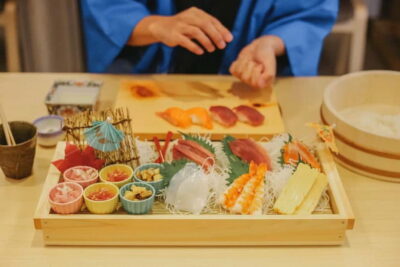
Sushi Making Class in a Happi Coat near a Famous Spot
Read our review →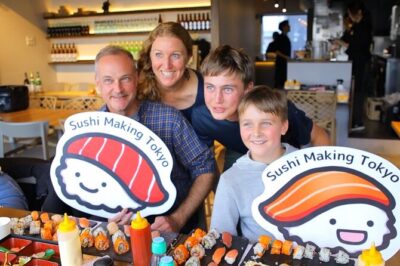
Sushi Making Tokyo! Popular Maki Sushi & Japanese Sushi(+Recipe!)
Read our review →
Tokyo Sushi Making Class in Tsukiji with Professional Chef
Read our review →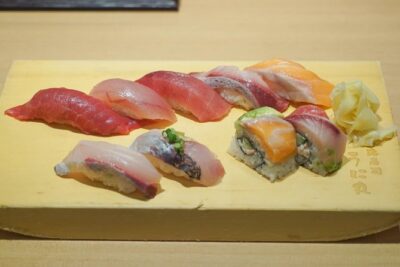
Tokyo Night Foodie Tour in Shinjuku – Seasonal Sushi, Wagyu Beef
Read our review →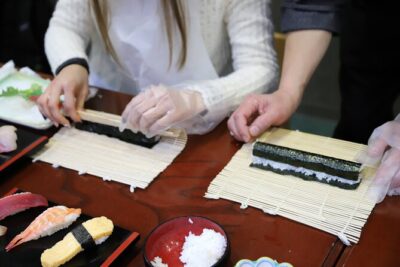
Tsukiji Fish Market Guided Tour and Sushi Making with Pro Chef
Read our review →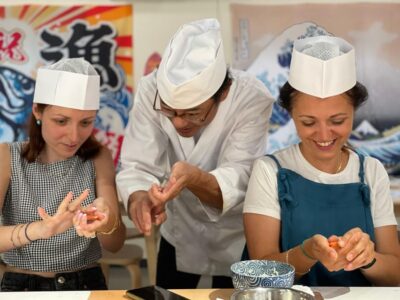
Tsukiji Fish Market Sushi Making Class with Pro Chef
Read our review →Browse the lists this tour appears in