Review · SUSHI COOKING WORKSHOPS
Sushi – Authentic Japanese Cooking Class – the best souvenir from Kyoto!
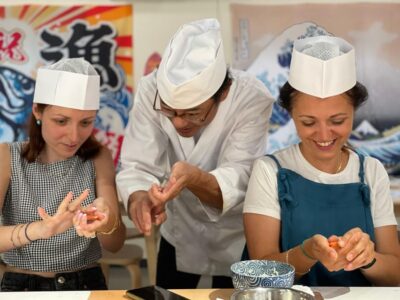
Sushi feels fancy until you try making it yourself. In this Kyoto class at Roujiya, you learn the steps, the etiquette, and the flavor logic behind Japanese sushi in a small home-kitchen setting. You also get practical recipes you can use later, which makes it a souvenir that keeps paying off.
I really like the focus on hands-on technique instead of watching from the sidelines. I also like how you get both sushi making and dining manners, so you understand what you are doing and how to do it politely.
The only real drawback to plan for is timing and location. The class starts at 11:30 am and it is in a specific residential address in Nakagyo Ward, so you will want to confirm the exact pin and arrive a few minutes early.
In This Review
- Key takeaways
- A Kyoto Cooking Class That Turns Sushi Into a Skill
- Kaori at Roujiya: Home-Kitchen Atmosphere and a Small Group
- Two Hours of Sushi Steps, Plus Dashi, Soup, and Pickled Ginger
- Sushi Rice, Soup, and Pickled Ginger: What You Actually Learn
- Sushi rice that behaves
- Dashi and soup that tastes like Japan
- Pickled ginger as a deliberate bite
- Table Manners in Japan, Without the Awkward Guesswork
- The Aperitif, Green Tea, and Your Own Sushi Meal
- Price and Value: Is $72.67 a Smart Spend?
- Practical Tips So Your Kyoto Morning Starts Smooth
- Who This Class Fits Best (and Who Might Want Another Option)
- Should You Book This Sushi Class in Kyoto?
- FAQ
- What is the duration of the sushi cooking class?
- Where does the class take place?
- What does the class include?
- What is not included?
- Is the class English-friendly?
- How many people are in the group?
- What can I learn besides sushi?
- Do I need to bring anything?
- When does the class start?
Key takeaways
- Small-group learning: limited class size means you can actually practice, not just observe.
- Kaori teaches the why: you learn the taste logic behind sushi, soup, and dashi, not only the steps.
- Sushi etiquette included: chopstick and table manners are part of the lesson, not an afterthought.
- You leave with a system: recipes for sushi rice, soup, and pickled ginger help you repeat results at home.
- Tea and an aperitif round it out: the meal feels like part of the experience, not just a snack.
A Kyoto Cooking Class That Turns Sushi Into a Skill
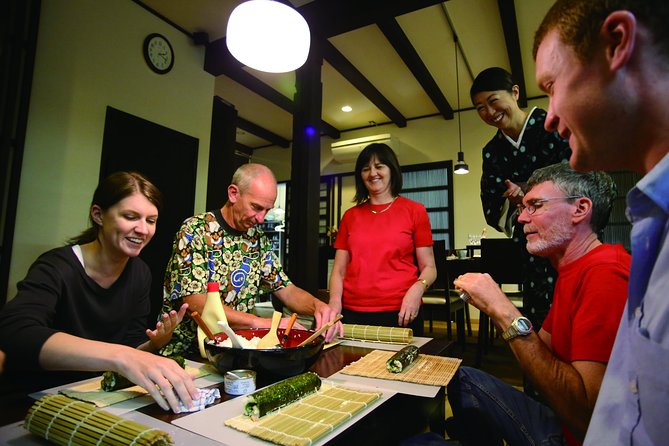
Kyoto has plenty of food tours, but this one is different because you are not just eating. You are making sushi, learning how Japanese cuisine thinks about taste, and picking up table manners that make eating sushi feel natural.
The class centers on real technique: sushi rice, Japanese soup, and pickled ginger. And it treats etiquette as part of cooking, which is exactly what trips most first-timers up when they order in Japan.
More Cooking Classes in Kyoto
- Ramen Cooking Class at Ramen Factory in Kyoto
★ 5.0 · 1,937 reviews - Kyoto: Ramen Cooking Class at a Ramen Factory with Souvenir
★ 4.9 · 532 reviews - Kyoto: Ramen, Gyoza, and Onigiri Cooking Class
★ 5.0 · 445 reviews
Kaori at Roujiya: Home-Kitchen Atmosphere and a Small Group
The class takes place at Roujiya in a residential kitchen setting. You meet at 22-58 Nishinokyō Ikenouchichō, Nakagyo Ward, Kyoto, 604-8375, and you can use the mobile ticket on arrival.
Kaori leads the session, and the vibe is welcoming. Multiple guests call out how clean and easy the setup is, and how the pace lets you keep up even if you have never touched sushi rice before.
One more detail I appreciate: the class keeps group size small. The description notes a cap of eight, and the booking info also lists a maximum of twelve travelers. Either way, you should expect a focused class where questions actually get answered.
Two Hours of Sushi Steps, Plus Dashi, Soup, and Pickled Ginger
This is a 2-hour session, and it moves. You start by learning what makes Japanese flavors work, then you shift into making components, then you build your sushi.
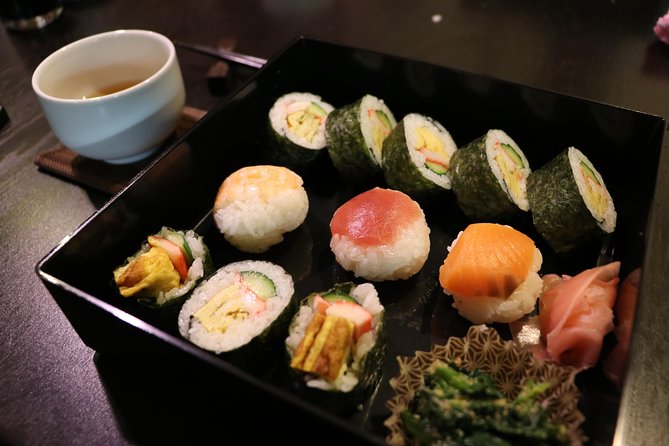
You will make several types of sushi, plus Japanese soup and pickled ginger. In the classroom, ingredients and guidance are provided, and you are also given recipes to take home.
A few specific lessons show up again and again. You learn about umami, and you practice a simple dashi broth using seaweed and bonito flakes. You also learn why sushi rice gets treated the way it does, including the practical step of fanning the rice to help with texture as it cools.
What this means for you is simple: you are not leaving with vague tips. You are leaving with a repeatable process, the kind you can recreate in a home kitchen without a full Japanese pantry.
Sushi Rice, Soup, and Pickled Ginger: What You Actually Learn
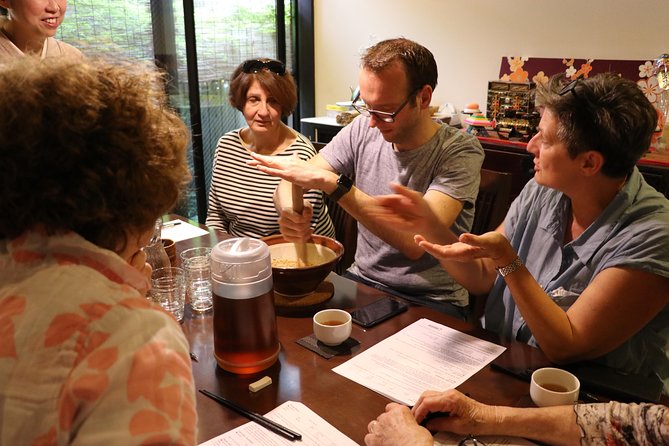
Most people think sushi is just rolling. In this class, sushi is a whole system, and that is the value.
More Cooking Workshops in Kyoto
- Kyoto: Japanese Washoku Bento Small Group Cooking Class
★ 5.0 · 380 reviews - Kyoto: Afternoon Japanese Izakaya Cooking Class
★ 4.9 · 241 reviews - Izakaya Style Cooking Class
★ 5.0 · 219 reviews - Kyoto: Morning Japanese Bento Cooking Class
★ 5.0 · 149 reviews
Sushi rice that behaves
Sushi rice is the foundation, and that is where technique matters. You learn how it is prepared and handled so it tastes right and sticks in the way sushi requires.
A standout detail from the lesson descriptions: the rice-fanning step. It sounds small, but it helps you avoid soggy rice and improves how the grains set.
Dashi and soup that tastes like Japan
Japanese soup often hinges on dashi, and that is why the class includes it. You learn the basics of dashi, plus how it fits into the broader flavor profile of Japanese cooking.
When you understand dashi, everything else makes more sense. Even if you never master sushi rolls perfectly, you can still make a soup that tastes deeply Japanese.
Pickled ginger as a deliberate bite
Pickled ginger is usually treated like a side garnish. Here, you learn it as part of how the meal works, including what it does on the palate and why it shows up alongside sushi.
And because all ingredients are included, you do not have to hunt down obscure items just to try the dishes once.
Table Manners in Japan, Without the Awkward Guesswork
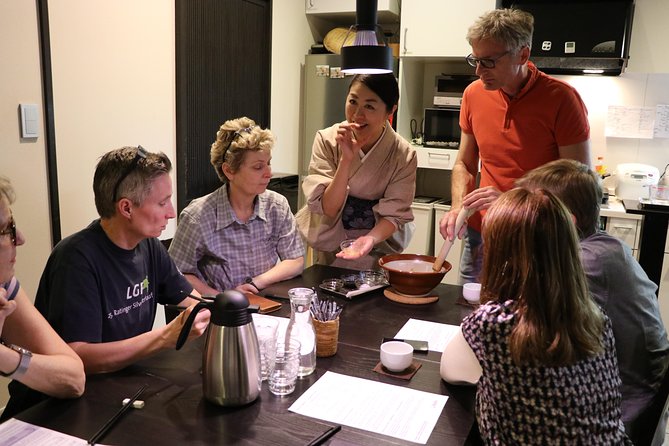
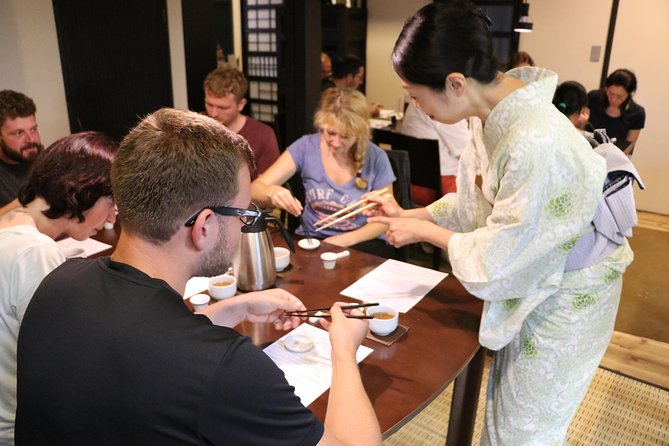
A big part of why this class feels useful is the etiquette training. You learn Japanese table manners tied to sushi dining, so you can avoid common mistakes without turning sushi into a stress test.
Some of the cultural specifics that come up include how Japanese food culture explains chopstick habits, such as why Japanese chopsticks are shorter than Chinese ones. That kind of detail is not trivia for its own sake. It helps you understand the logic behind what you are seeing at tables.
You also get guidance that makes the meal smoother while you are in the class. Instead of worrying what everyone expects, you follow along and practice a few rules as part of the experience.
If your goal is to enjoy Kyoto meals with more confidence, this instruction does real work.
The Aperitif, Green Tea, and Your Own Sushi Meal
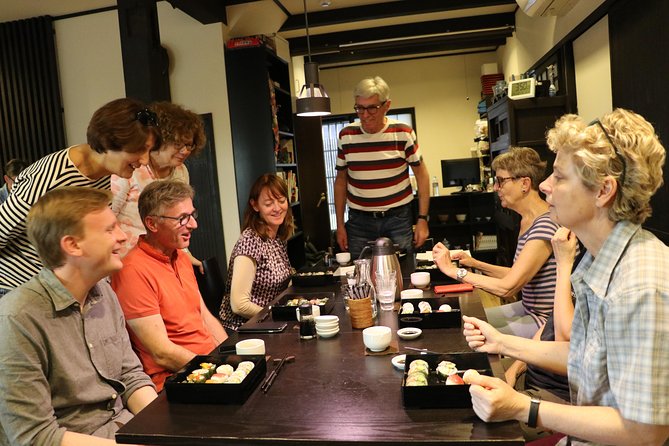
You do not just cook and leave. You cook, then you eat what you made, and that is where the class earns its name as a souvenir.
The experience includes an aperitif and Japanese green tea. That pairing helps you shift from kitchen mode to meal mode, and it also makes the whole session feel like a real lunch, not a workshop.
A few guests also mention that additional drinks may be offered after the sushi is prepared, such as sake or beer, as an add-on. The only safe takeaway for planning is that green tea and the aperitif are included, and you may see other options depending on the day.
Either way, the meal matters. It teaches you what success tastes like, so your take-home recipes are easier to follow because you remember the benchmark flavor.
Price and Value: Is $72.67 a Smart Spend?
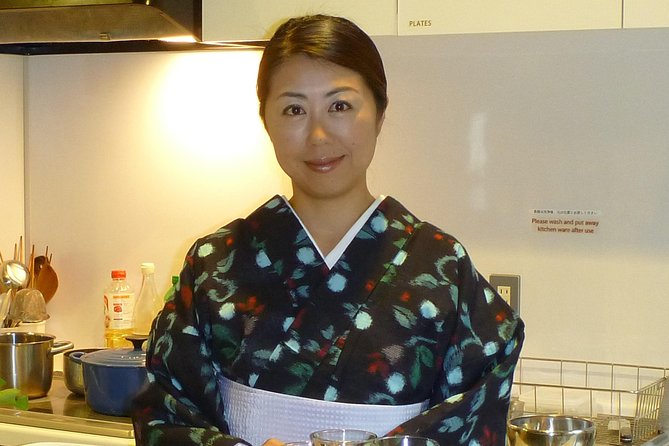
At $72.67 per person for about 2 hours, this class sits in the midrange for Kyoto cooking experiences. What makes it feel like good value is what you actually receive.
You get:
- The meal you make
- All ingredients for cooking
- An English-speaking instructor
- Recipes to take away
- The aperitif and Japanese green tea
Most sushi classes leave you with either a full meal but no technique, or a technique lesson but no lasting guide. Here, you get both, plus cultural context like umami and dashi so you understand the taste foundation.
Also, the small group size helps justify the price. When you can practice steps and get feedback, you learn faster. It is the difference between a memory and a skill.
Practical Tips So Your Kyoto Morning Starts Smooth
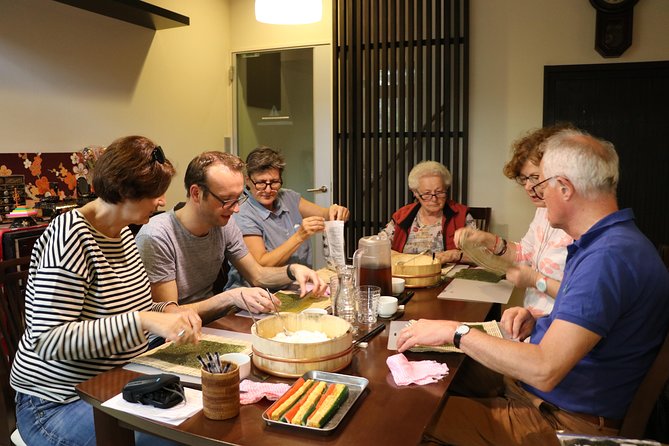
This class starts at 11:30 am, and it ends back at the meeting point. That matters because you should plan it as a dedicated stop, not a casual wander-in.
Here are the practical things I’d do if I were you:
- Arrive 10 to 15 minutes early, especially if you are using a taxi or rideshare.
- Double-check your meeting location using the pin or mapping link you receive for the post-booking info.
- If you have any dietary requirements, tell the operator at booking time.
One thing worth mentioning is that Kyoto addresses can be tricky for drivers. There is at least one unhappy experience tied to a rideshare not finding the address, and the kitchen team explained that a map pin is often provided in the confirmation info. In other words, rely on your confirmation details and arrive with buffer time.
Who This Class Fits Best (and Who Might Want Another Option)
This is a great pick if you want a hands-on Kyoto experience that goes beyond food photography. It is especially good if you:
- Plan to eat sushi in Japan and want to understand etiquette first
- Want a skill you can repeat at home
- Travel with a partner and want something interactive
- Prefer a smaller, calmer class over big groups
Guests also describe it as family-friendly, with groups that include kids. The lesson structure seems to work for mixed ages because you practice step by step and you get written recipes.
If you are the type who only wants to sample a wide variety of foods with zero cooking commitment, you might find this class more work than you want. But if you enjoy cooking even a little, this is the right kind of challenge.
Should You Book This Sushi Class in Kyoto?
I’d book it if you want a Kyoto souvenir that you can use after your trip. The combination of sushi rice technique, dashi and soup learning, pickled ginger, and etiquette makes it more than a one-time meal.
Also, the small-group format is not a minor perk. It is the whole point. You get to practice, ask questions, and actually connect the cultural lessons to the food you are making.
If you do book, plan for the location and timing. Give yourself margin to find Roujiya smoothly, and send dietary needs ahead of time. Do that, and you should leave with full stomachs and a very practical new skill.
FAQ
What is the duration of the sushi cooking class?
The class runs for about 2 hours.
Where does the class take place?
The meeting point is Roujiya at 22-58 Nishinokyō Ikenouchichō, Nakagyo Ward, Kyoto, 604-8375, Japan. The experience ends back at the meeting point.
What does the class include?
It includes the meal, all ingredients for cooking, an English-speaking cooking instructor, recipes, an aperitif, and Japanese green tea.
What is not included?
Hotel pickup and drop-off are not included.
Is the class English-friendly?
Yes. The cooking instructor is described as English-speaking, and the class includes learning in English.
How many people are in the group?
The booking info lists a maximum of 12 travelers per booking, and the description highlights a small class size with a cap of eight.
What can I learn besides sushi?
You learn Japanese table manners, sushi rice preparation, Japanese soup, pickled ginger, and Japanese culinary history and culture. You also learn about tastes like umami and how dashi broth fits into Japanese cooking.
Do I need to bring anything?
The class description indicates ingredients are provided, so you mainly need to show up and cook. If you have dietary requirements, advise them at booking.
When does the class start?
The start time is 11:30 am. Confirmation is received within 48 hours of booking, subject to availability.
More Sushi Workshops in Kyoto
- The Original Small-Group Sushi Making Class in Kyoto
★ 5.0 · 436 reviews - Kyoto: Small-Group Authentic Sushi Making Workshop
★ 5.0 · 137 reviews - Private Kyoto Sushi Cooking Class & Tea Ceremony with Emika
★ 5.0 · 66 reviews - Kyoto: Sushi Making Class with Sushi Chef
★ 4.8 · 64 reviews
Newly listed around Kyoto
- Taste of Nishiki Market Walking Food Tour with Local guide★ 5.0 · 17 reviews
- Kyoto: Sushi Making Class with Sushi Chef★ 4.8 · 64 reviews
- Simple Plan with Maiko★ 4.4 · 10 reviews
- Shibori Furoshiki Course at Kyoto Shibori Museum★ 5.0 · 21 reviews
- Kyoto: City Secrets eBike Tour★ 4.9 · 196 reviews
- Sacred Pathways: Discover the Philosopher’s Path of Kyoto★ 4.9 · 20 reviews
- Private Tour to Monkey Park and Arashiyama Highlights★ 5.0 · 22 reviews
- Private Nara Tour from Osaka – Meet at Your Hotel★ 5.0 · 22 reviews
Sushi Cooking Workshops, compared.
Sushi Making Tokyo Roll and Authentic Japanese Sushi Class
Read our review →
Roll and Authentic Sushi Making Class in Asakusa
Read our review →
Sushi Making Class in a Happi Coat near a Famous Spot
Read our review →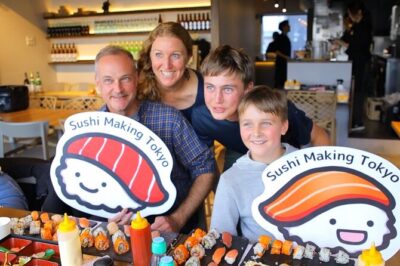
Sushi Making Tokyo! Popular Maki Sushi & Japanese Sushi(+Recipe!)
Read our review →
Tokyo Sushi Making Class in Tsukiji with Professional Chef
Read our review →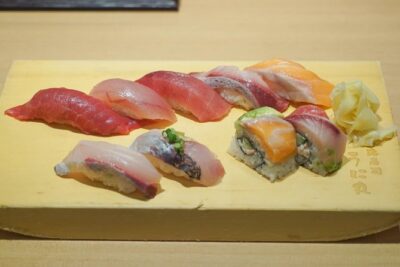
Tokyo Night Foodie Tour in Shinjuku – Seasonal Sushi, Wagyu Beef
Read our review →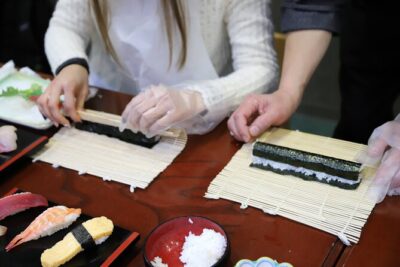
Tsukiji Fish Market Guided Tour and Sushi Making with Pro Chef
Read our review →