
Review · MATCHA & TEA CEREMONY SESSIONS
Tea Ceremony Experience in Osaka Doutonbori
Your matcha routine starts in the middle of Dotonbori.
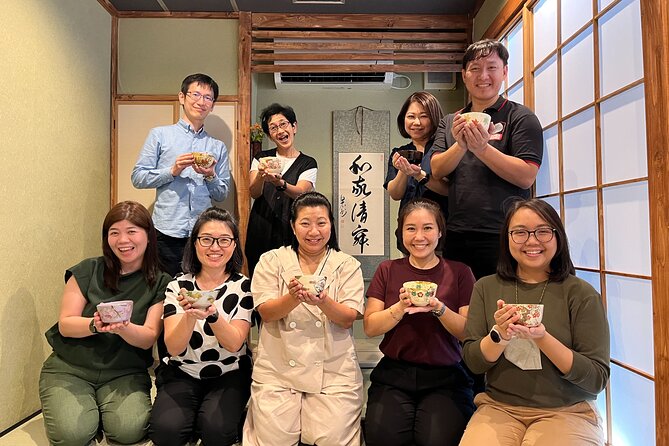
This Osaka tea ceremony experience brings quiet etiquette lessons to the heart of a loud area, and then you get to make and drink your own matcha. I love the small-group feel (up to 15 people), which makes it easier to ask questions and follow along, and I also like the family-friendly options, including caffeine-free matcha milk for kids. One possible drawback: it is short and intentionally calm, so if you want a long, sightseeing-style outing, this class runs on a tighter time frame.
Expect a guided flow that mixes culture and hands-on technique. The teacher explains the traditions and etiquette, shows you how the ceremony works, and then you participate. Hosts I’ve seen named in this experience include Kazu and Mai, and the vibe often turns playful without losing the respect of the ritual.
In This Review
- Key highlights that make this Osaka tea ceremony work
- Entering the calm part of Dotonbori, upstairs in a tea room
- Finding the meeting point without getting lost (the address trap)
- What you do during the class, step by step
- The matcha lesson: technique you can actually repeat
- The sweets break, with seasonal touches
- Family-friendly details, including caffeine-free matcha milk
- Small group size, and why it makes the teaching feel personal
- Price and value: is $20.69 per person fair?
- When to book in your Osaka plan
- Should you book this Osaka tea ceremony in Dotonbori?
Key highlights that make this Osaka tea ceremony work
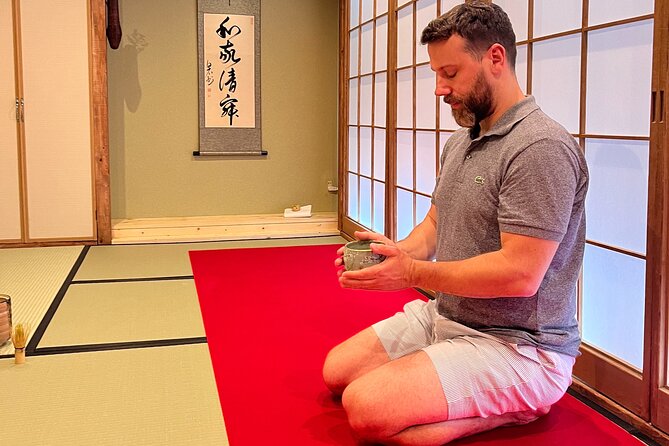
- 45-minute, hands-on format: you watch, learn, and then make your own cup of matcha.
- Small group cap (max 15): enough personal attention without feeling like a private lesson.
- Family-friendly with caffeine-free option: caffeine-free matcha milk for children is specifically mentioned.
- Dotonbori meets calm: the contrast is part of the magic, especially in a quiet tea room upstairs.
- Etiquette and technique, not just tasting: you learn serving and drinking basics, plus matcha preparation steps.
Entering the calm part of Dotonbori, upstairs in a tea room
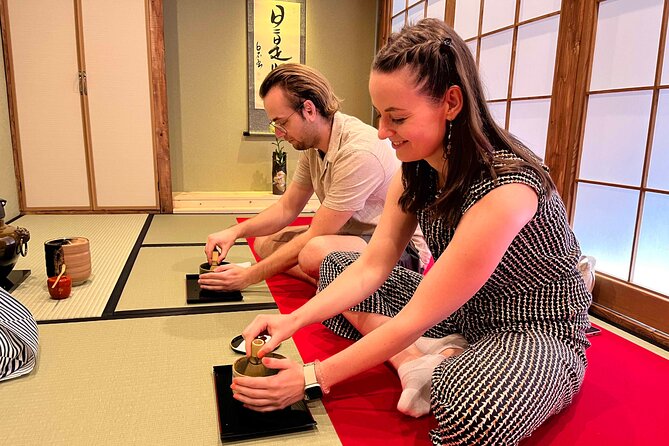
Osaka’s Dotonbori area can feel like nonstop motion, so it’s smart to plan an activity that forces your body to slow down. This tea ceremony class does that for you in a practical way: you start in the heart of the neighborhood, then go to a dedicated space where the focus is on quiet procedure and patient technique.
The experience is designed to be family-friendly, and that shows in how the lesson is taught. You’ll learn the cultural meaning and etiquette behind the ceremony, but the class is also interactive, so you are not stuck only watching. The result is a mix of calm and involvement, which is exactly what makes this kind of cultural activity feel memorable rather than performative.
Duration matters here. The class is listed at about 45 minutes, though the flow can feel close to an hour once you factor in introductions, the observing segment, and your own matcha preparation. Either way, it’s short enough to fit into a busy day, yet long enough to actually learn something you can repeat later.
More Tea Ceremonies in Osaka
- Osaka: Tea Ceremony Experience
★ 4.9 · 1,426 reviews - Matcha Making Class in Osaka with Authentic Japanese Sweets Set
★ 5.0 · 509 reviews - Osaka: Matcha Making Experience with Japanese Sweets
★ 5.0 · 146 reviews
Finding the meeting point without getting lost (the address trap)
This is one of those Osaka experiences where the details of the meeting point matter. You meet at Tea Ceremony Osaka The Osaka (茶道体験The Osaka), located in the Dōtonbori area at:
- 1-chōme 東526 道頓堀ビル 2F
- Osaka, Chuo Ward, Dōtonbori, 542-0077
What helps: use Google Maps and search for tea ceremony osaka the osaka. The directions note a common error with the address. The correct area includes “Higashi (東),” and the typical mistake people make is leaving that part out. So when you’re in Maps, double-check that you see Higashi (東) in the address line.
Also, it’s a mobile-ticket experience. That means you’ll show your ticket on your phone, so keep your phone battery happy before you head upstairs. And since the meeting point is near public transportation, you should be able to plug it into your existing day without a long detour.
What you do during the class, step by step
The core structure is simple and effective. You get instruction on tea ceremony traditions, you watch a demonstration, and then you take part. The teacher explains culture, traditions, and etiquette, and the class includes enjoying matcha green tea plus Japanese sweets.
Here’s the usual flow you should expect:
- You arrive and get guided into the ceremony space.
- You learn the basics: what’s happening, what it means, and how people should behave during key moments.
- You watch how the tea is prepared and served.
- You taste the matcha and sweets.
- You make matcha yourself and then drink it as part of the lesson.
This order is a big reason the experience feels complete. The observing part gives you context, and the hands-on part gives you the muscle memory. By the time you drink your own cup, you understand why the ritual matters, even if you are not dressed in traditional attire.
And yes, you’ll feel the etiquette side. One highlight in the feedback was playful guidance around movements, including a foot shuffle, plus some hosts using light sound effects to keep the energy friendly. That kind of approach helps people feel comfortable learning formal steps, especially if it’s your first tea ceremony.
The matcha lesson: technique you can actually repeat
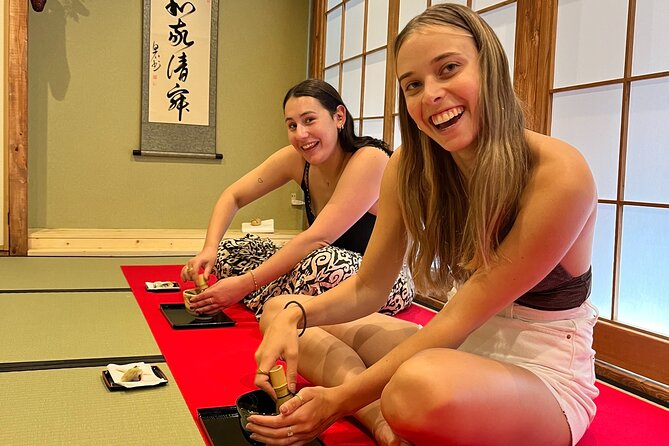
Matcha is not just flavored powder. It’s a texture and process. This class focuses on teaching you how to make it the proper way, with attention to tools and preparation.
From what’s described, you’ll learn:
- How matcha is prepared in the ceremony style
- How to handle the tools you need for the whisking step
- How the serving moment works, and what is expected of you during that part
- How to drink it correctly once your bowl is ready
This is where the “interactive” label turns into value. If you only taste, you might enjoy it but forget the process. If you only watch, you might still admire the ritual without knowing what to do. Here, you do the steps. That means when you later buy matcha in Japan or at home, you’ll know what “right consistency” actually feels like and how the ceremony approach differs from quick convenience matcha.
English support is part of the appeal too. Multiple hosts are described as speaking very good English, and that matters because small details, like timing and whisking technique, can be hard to guess. When the teacher can explain clearly, you spend your energy learning instead of translating in your head.
A different sort of day in Japan:
- Osaka Go Karting Tour with Funny Costume
★ 5.0 · 2,658 reviews - Osaka Castle: Museum and Tower Entry Ticket
★ 4.5 · 2,380 reviews - Osaka: Shinsekai Food Tour with 13-15 Dishes at 5 Eateries
★ 4.8 · 2,204 reviews - Osaka Food Tour: 13 Dishes at 5 Local Eateries
★ 5.0 · 2,149 reviews
The sweets break, with seasonal touches
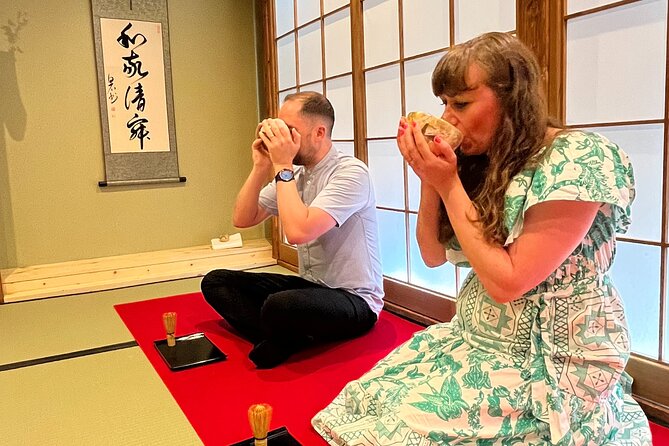
Tea ceremonies often pair matcha with a sweet, and this one does too. You’ll enjoy traditional Japanese sweets along with the matcha green tea.
What’s useful to know: the sweet is not always the same generic cookie. Feedback mentions seasonal sweets, and one group noted a mocha pastry being included as well. Even if your exact sweet changes depending on the day, the pattern is consistent: the snack supports the matcha tasting experience, balancing bitterness and helping you notice flavors better.
Sweets might sound like a small add-on, but in practice it helps the whole ceremony feel “done.” You’re not just drinking something green and moving on. You’re tasting a small part of Japanese seasonal palate, then moving into the hands-on prep.
Family-friendly details, including caffeine-free matcha milk
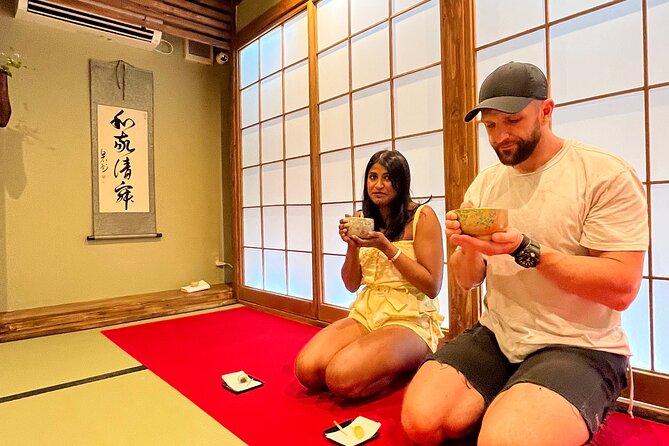
This class is explicitly family-friendly, and it also gets specific about caffeine. For children’s matcha, the experience mentions caffeine-free matcha milk.
That’s a big deal if you’re traveling with kids. Regular matcha can be a lot for younger people, so having a caffeine-free option means you’re not forced into the awkward compromise of letting one person enjoy and another sit out.
There is also a clear note about age. If you’re traveling with a child under 5, you should contact the provider in advance, since they cannot join the regular plan. And children under age 5 may not be allowed to enter even if an adult has a ticket. So if your group includes younger kids, plan early and verify the exact age rules before you commit.
For older kids, this kind of ceremony can be a calmer change of pace in an Osaka schedule full of neon and crowds. And the interactive parts, like making matcha, give them a role that feels more like an activity than a lecture.
Small group size, and why it makes the teaching feel personal
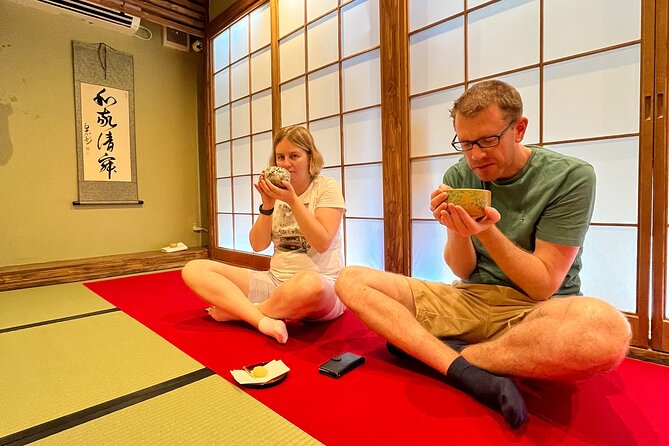
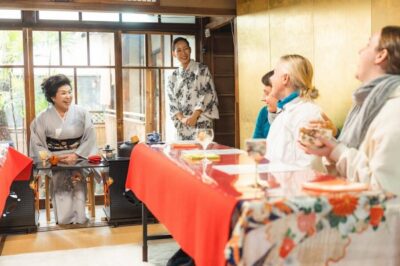
The experience has a maximum of 15 people. That’s the sweet spot for a short cultural class. It means you are not in a giant room trying to watch over shoulders, and it also means you usually get more back-and-forth than you would in a bigger tour setting.
In the feedback, many people emphasized the warm welcome and the engaged teaching style. Names that came up for hosts include Kazu and Mai, and one host named Soda was also mentioned. While you can’t count on a specific name for your day, you can count on a guided approach with clear explanations and a relaxed tone.
Another detail that comes up is responsiveness during the lesson. One story included a host helping handle a phone mix-up while waiting until it was returned. That kind of calm follow-through matters because it makes the experience feel organized and safe, even if something small goes wrong.
Price and value: is $20.69 per person fair?
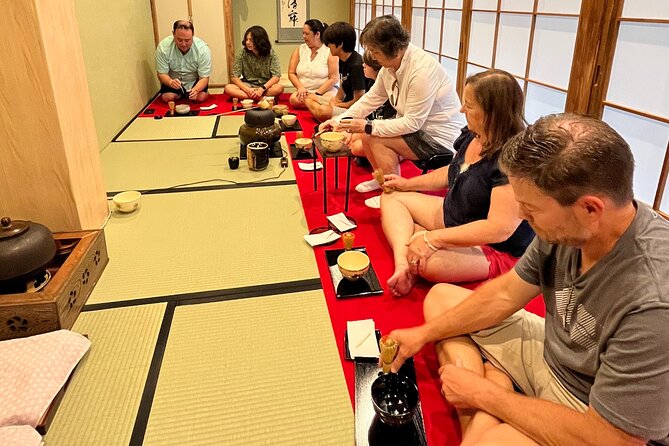
At $20.69 per person, this is not a “cheap” souvenir stop. But it is also not priced like a luxury, multi-hour workshop. For the cost, you’re paying for:
- An instructor with ceremony experience
- Matcha preparation instruction and hands-on time
- Tea tasting (your bowl)
- Japanese sweets
- A class-sized setting with group interaction
- A cultural etiquette lesson, not just matcha tasting
You should think of it less like buying a drink and more like buying time with a teacher plus the materials and training to do it yourself. The hands-on piece is what makes the value feel real. If it were only watch and taste, $20.69 might still be reasonable, but the learning payoff would be weaker.
Also, the group cap helps your money go further. If you prefer getting questions answered and staying oriented during formal steps, a smaller class for a fixed price is often better value than a larger group experience that spreads attention thin.
When to book in your Osaka plan
This class is ideal when you want contrast. Do Dotonbori during the day, then set up the tea ceremony to reset your brain. Because it’s short, you can also fit it:
- on a day you’re trying to balance food, shopping, and culture
- near your arrival or before your evening plans
- on a travel day when you still want one high-impact activity
If you are traveling with kids, plan it when they can handle calm for 45 minutes to an hour. If your schedule is already packed with sensory overload, starting with a tea ceremony can be a smart way to smooth the edges.
And if you care about learning proper etiquette, don’t treat it like a casual tasting. Show up on time, listen closely to the instructions, and follow the pace the teacher sets. That respect is part of the experience, and it’s usually what makes your own matcha taste better.
Should you book this Osaka tea ceremony in Dotonbori?
Book it if you want a hands-on matcha experience with a real etiquette lesson, all within a short, calm time block in a famously loud area. The small-group cap and interactive format make it a good fit if you like learning through doing, not just watching.
Skip it if you’re looking for a long, sightseeing-heavy program, or if your schedule does not allow you to slow down. Also be cautious if you’re traveling with a child under 5, since that age may not be allowed in the regular plan, even with an adult ticket, and advance contact is recommended.
If your goal is one meaningful cultural stop that you can actually recreate later, this Osaka matcha class is a strong choice.
Newly listed around Osaka
- (Ticket Included) Explore Osaka Castle & Museum of History★ 4.8 · 21 reviews
- Hidden Osaka – Yukaku Red Light Tour & Culinary Adventure★ 4.8 · 96 reviews
- Osaka: Walking Tour and Top Highlights★ 4.8 · 104 reviews
- Same Day OK! Osaka: Local Food, Izakaya & Local Bites Tour!★ 4.8 · 17 reviews
- Osaka: Private Ceramic Painting Workshop★ 5.0 · 13 reviews
- Eat Like a Local in Osaka – Private Custom Street Food Tour★ 4.3 · 33 reviews
- Pickleball in Osaka & Kyoto with Locals!★ 4.6 · 64 reviews
- Osaka:SUMO BEATS SHOWCASE: Taiko Drum and Wagyu burger!★ 4.2 · 37 reviews
Matcha & Tea Ceremony Sessions, compared.
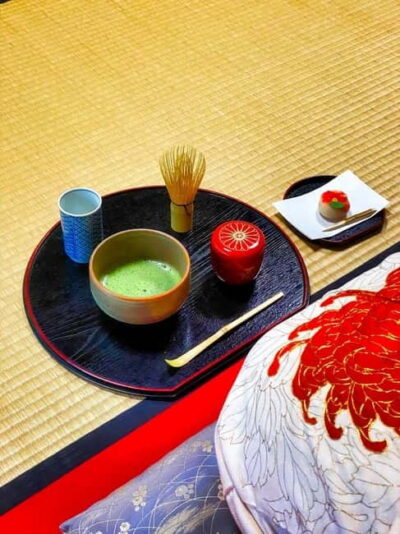
Tea Ceremony in a Traditional Tea House in Kiyomizu
Read our review →
World Heritage Kyoto & Nara Uji Authentic Matcha Experience
Read our review →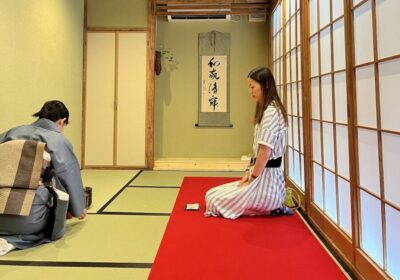
Browse the lists this tour appears in