
Review · MATCHA & TEA CEREMONY SESSIONS
Tea ceremony experience in Osaka with a small group
Slow down with matcha in Osaka, and you get a tea ceremony that feels personal instead of rushed. This is a Japanese tea master-led experience for a small group of up to four people, starting in a tatami room and building into a hands-on matcha moment.
What I like most is the structure. You get a clear start with how to enter the tatami room, then you move into the Ryurei table style tea ceremony and learn how to make matcha yourself. I also appreciate that the teacher and assistant are attentive, so you are not just watching, you are doing.
One possible drawback is logistics. The meeting point is about a 10 to 15 minute walk from Ibaraki-shi Station, so you will want to arrive on time and call if you get lost.
In This Review
- Key things to know before you go
- Why Osaka, and why this small-group format matters
- The flow: from tatami room entry to Ryurei table tea
- What you actually taste: matcha and Japanese sweets together
- How the teacher and assistant keep it calm and doable
- Tatami room details: why the setting feels different
- Ryurei table tea: a practical twist you can repeat
- Timing and meeting point: how to show up without stress
- Price and value: what $67.11 buys you
- Who should book this Osaka tea ceremony class
- Should you book this Osaka tea ceremony experience?
- FAQ
- How long does the tea ceremony experience take?
- Is this experience private?
- What is the price per person?
- What is included in the experience?
- What is not included?
- Where does the tour meet, and where does it end?
- What is the nearest train station?
- Do I need to know anything about tea ceremony in advance?
- How do I find the place on the day?
- What is the cancellation policy?
Key things to know before you go
- Up to four people, private-feeling class
- Tatami room etiquette first, then Ryurei table tea
- You make matcha yourself, with tools and materials provided
- Japanese sweets pair with your tea for the full rhythm of the session
- Easy Osaka or Kyoto day planning, since Ibaraki sits between them
Why Osaka, and why this small-group format matters
Osaka gets all kinds of visitors, but tea ceremony can still feel like a calm break from the usual pace. This experience is built for that, with a Japanese tea master guiding you through every step so it makes sense as you go.
The biggest value of the small group (private, up to four) is that your questions do not get lost. In a bigger group, the teacher has to keep things moving. Here, the format supports hands-on practice, including when you are learning the basics of matcha preparation.
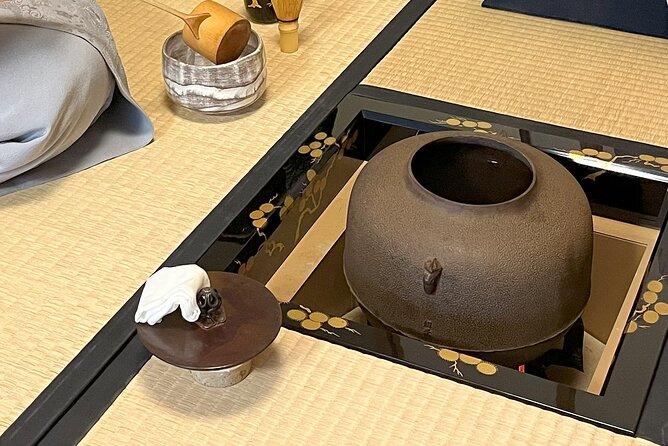
Another quiet plus is the setting. Starting in a tatami room gives you the full Japanese-style atmosphere right away, rather than treating the ceremony like a quick demo. That matters because tea ceremony is as much about how you move and pay attention as it is about the drink.
More Tea Ceremonies in Osaka
- Osaka: Tea Ceremony Experience
★ 4.9 · 1,426 reviews - Tea Ceremony Experience in Osaka Doutonbori
★ 5.0 · 754 reviews - Matcha Making Class in Osaka with Authentic Japanese Sweets Set
★ 5.0 · 509 reviews
The flow: from tatami room entry to Ryurei table tea
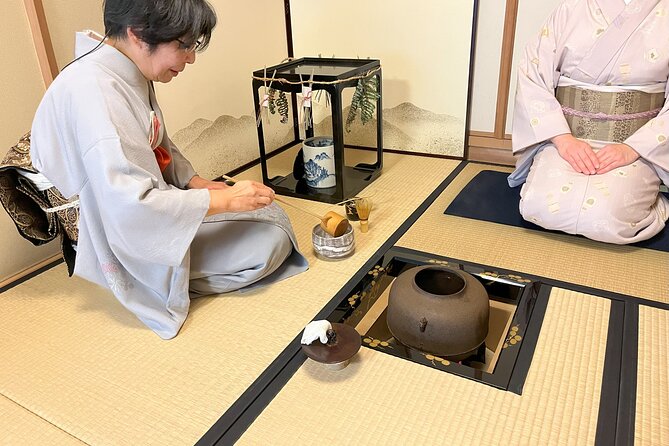
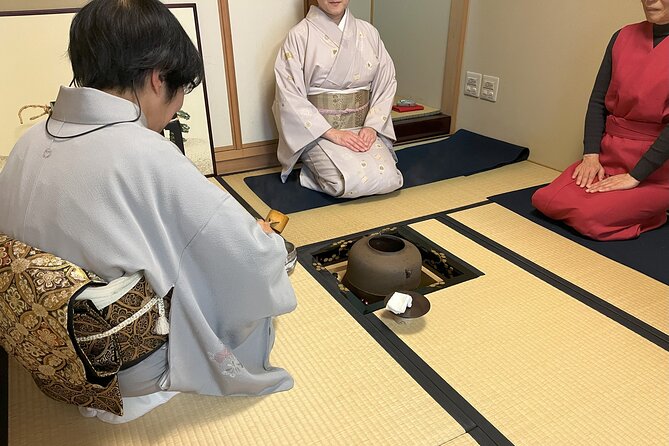
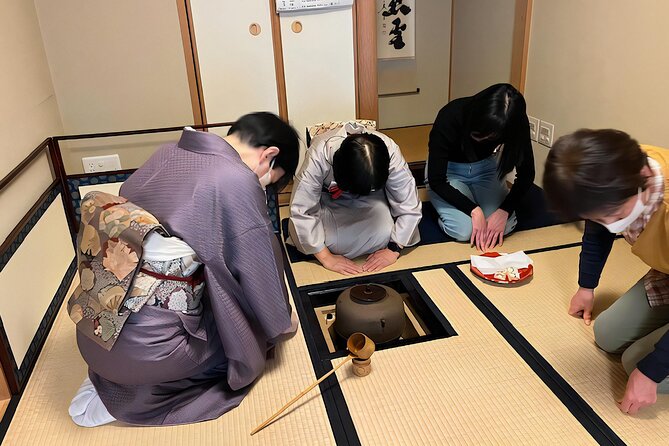
The session follows a straightforward arc, and I like how it lowers the intimidation factor if it is your first time. You start by learning how to enter the tatami room properly. Then the teacher demonstrates the tea ceremony with matcha and traditional Japanese sweets, so you can see the sequence before you copy it.
After that, you shift to the Ryurei style (table style tea ceremony). This is the part where you get your hands into the experience. You get an explanation of how to make matcha, and you can enjoy the matcha you make yourself alongside the sweets.
The whole session runs about 60 to 90 minutes, roughly 1 hour 30 minutes. That is long enough to slow down and learn without dragging into a half-day commitment, which helps if you are also planning to see Osaka or hop toward Kyoto.
A small practical tip: when you are shown a step, watch the full movement first. Then try it yourself. The pacing is designed for learning, but tea ceremony has a rhythm, and copying the whole sequence is easier than trying to guess one motion at a time.
What you actually taste: matcha and Japanese sweets together
Tea ceremony is not only about matcha. It is about the pairing, timing, and the way the flavors come in order. In this experience, you get matcha green tea and Japanese traditional sweets as part of the session.
I like that the sweets are part of the teaching moment, not an afterthought snack. The sweets help you settle into the experience and give you something familiar to anchor your senses while you learn the more unfamiliar parts of matcha preparation.
When you make your own matcha, you also get instant feedback. If the matcha is too foamy or not foamy enough, you notice right away. If you like it stronger or lighter, you learn what changes in the process might affect it next time.
If you have sensitive taste preferences, you will still enjoy it. You are not being asked to chase a perfect palate. You are learning the ceremony steps, tasting what you are making, and getting guidance along the way.
How the teacher and assistant keep it calm and doable
The best part of this class is how it turns a complicated-looking ritual into a set of teachable actions. The experience includes easy-to-understand but detailed explanation, which is exactly what you want if you do not know Japanese culture well or if you just want a relaxing activity.
The reviews highlight that the teacher and assistant are attentive, and that attention shows up in how you are supported while practicing. In practical terms, that means you are not left to struggle through the steps alone.
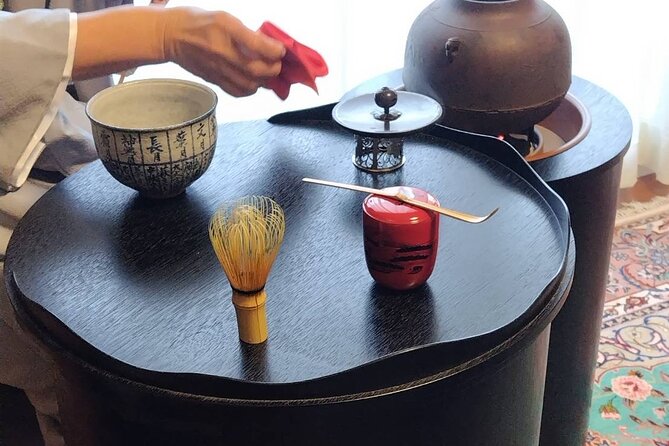
You should expect frequent check-ins during the learning portions, especially when you are making matcha. Matcha tools and materials are included, so you are not arriving with the wrong gear or guessing what something is supposed to do.
And because the session is private for your group, you can adjust your pace. If you need an extra moment to absorb what you just saw, this format is built to handle it.
A different sort of day in Japan:
- Osaka Go Karting Tour with Funny Costume
★ 5.0 · 2,658 reviews - Osaka Castle: Museum and Tower Entry Ticket
★ 4.5 · 2,380 reviews - Osaka: Shinsekai Food Tour with 13-15 Dishes at 5 Eateries
★ 4.8 · 2,204 reviews - Osaka Food Tour: 13 Dishes at 5 Local Eateries
★ 5.0 · 2,149 reviews
Tatami room details: why the setting feels different
Entering a tatami room is not just a photo op step. It is part of the ceremony’s etiquette, and it sets the tone for the whole lesson. Here, you will get an introduction to how to enter the tatami room before the demonstration begins.
That matters because tatami rooms encourage smaller movements and careful attention. Even if you have never done anything like this, the instruction gives you a simple script to follow so you do not feel awkward.
Also, tatami space changes the sound and feel of a room. You notice the quiet. You notice how the teacher’s actions look and sound. That atmosphere helps the matcha and sweets moment land the way it is meant to.
One consideration: tatami-style settings can feel low or close, and you may want to wear comfortable clothing. You do not need special attire listed here, but comfort helps when you are learning controlled movements.
Ryurei table tea: a practical twist you can repeat
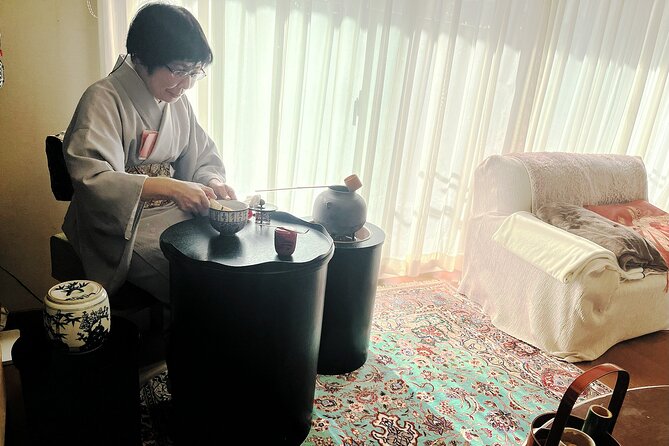
Ryurei is the table style tea ceremony segment of your session, and it gives you something useful. Instead of only learning one formal movement set, you learn how the ceremony looks and feels at a table.
That makes the experience feel repeatable. After you learn how the matcha is prepared, you will understand what you can carry home: the sequence, the pacing, and the idea that tea ceremony is a set of actions you can practice, not just a performance you observe once.
In the Ryurei section, you get instruction for making matcha yourself. Then you can enjoy the matcha you make, right there with the sweets. It is an efficient loop, learn, do, taste, and move on.
This structure is also a good confidence booster for first-timers. Watching can be confusing, and copying can be harder. Here, the lesson flow tries to remove both problems by letting you see the full demonstration and then practicing with guidance.
Timing and meeting point: how to show up without stress
Plan for a bit of buffer around arrival time. The nearest station is Ibaraki-shi Station on the Hankyu Kyoto Line, and it takes about 10 to 15 minutes on foot from there.
After you reserve, you will be contacted with the detailed address and a phone number for the day. On the day itself, you are asked to arrive on time, then contact the place by calling the phone number. They will come to see you.
That last part is helpful. Small meeting points can be tricky in unfamiliar neighborhoods, and having someone come find you reduces the risk of wasting your tea time trying to locate an exact door.
If you are late or you get turned around, the instructions are straightforward: call the provided phone number. Keep that number handy in your phone so you can act fast.
Also note that the activity ends back at the meeting point. That means it is easy to connect to your next plan, whether you are continuing around Osaka or heading toward Kyoto.
Price and value: what $67.11 buys you
At $67.11 per person, this is not the cheapest activity in Osaka, but it is also not a long, all-day tour price. What you are paying for is a guided, hands-on lesson with included tea and sweets, plus tools and materials.
You also get a small-group, private feel. With up to four people, the cost per person stays reasonable because the teacher time is focused on your group, not spread across a crowd.
The value gets even clearer when you consider what is actually included:
- matcha green tea
- Japanese sweets
- tools and materials you need for the session
What is not included is traveling expenses, so you will still handle transport on your own. Still, the session duration is about 60 to 90 minutes, so you are buying a concentrated cultural experience that fits into a normal sightseeing day.
One more value angle: the lesson is designed for people with little prior knowledge. If you are the kind of traveler who wants to do something beyond walking around and shopping, this gives you a real skill you can explain later.
If it is helpful for planning, this experience is commonly booked about 37 days in advance, which suggests it does fill up. If you have a specific date in mind, it is smart to reserve earlier rather than waiting for a last-minute decision.
Who should book this Osaka tea ceremony class
This experience is a strong fit if you want something cultural without the pressure of being an expert. If you do not know much about Japanese culture, you will still be able to follow along thanks to explanations designed to be easy to understand, and you will practice rather than just observe.
It is also ideal if you want a relaxing activity. The ceremony is structured, but it is not hectic. The small group and the calm pace help it feel like a break, not another checklist item.
If you travel in a small party, it is especially worth it. Up to four people means you can share the experience without being swallowed by a big tour group.
On the other hand, if you only want quick entertainment, you might prefer something shorter. This is a lesson, with learning steps like tatami entry and matcha preparation, so it takes your attention for about an hour.
Should you book this Osaka tea ceremony experience?
Yes, if you want a calm, hands-on cultural moment that does not require prior knowledge. This class is built around a clear flow, tatami room etiquette, Ryurei table tea, and the key part, making matcha yourself while enjoying Japanese sweets.
You should also book it if you appreciate attentive teaching. The experience is designed for small groups, and that supports the kind of help that makes beginners feel comfortable while they practice.
Skip it only if you are likely to miss timing or you dislike anything with a formal structure. Since the meeting point is a 10 to 15 minute walk from Ibaraki-shi Station and you should arrive on time, it is best when you can plan your transit calmly.
If you are going to Osaka and want one activity that feels genuinely Japanese beyond food stops, this tea ceremony is a solid choice.
FAQ
How long does the tea ceremony experience take?
It lasts about 1 hour 30 minutes (approximately). The session itself takes about 60 to 90 minutes.
Is this experience private?
Yes. It is private for your group, with a small group size up to four people.
What is the price per person?
The price is $67.11 per person.
What is included in the experience?
The experience includes the tools and materials needed for the activity, Japanese sweets, and matcha green tea.
What is not included?
Traveling expenses are not included.
Where does the tour meet, and where does it end?
It meets at Repark Ibaraki Oike 1-Chome 1-chōme-14-46 Ōike, Ibaraki, Osaka 567-0826, Japan, and it ends back at the same meeting point.
What is the nearest train station?
The nearest station is Ibaraki-shi Station (Hankyu Kyoto Line), and it is about a 10 to 15 minute walk.
Do I need to know anything about tea ceremony in advance?
No. Even if it is your first time, the explanation is easy to understand, but detailed, and you will get guided instruction.
How do I find the place on the day?
After you reserve, you will be contacted with the address and a phone number. On the day, you call the phone number to let them know you are there, and someone will come to see you.
What is the cancellation policy?
You can cancel for free up to 24 hours in advance for a full refund. If you cancel less than 24 hours before the start time, the amount paid is not refunded.
Newly listed around Osaka
- Private arrival transfer from Osaka Itami International airport to Kyoto City★ 5.0 · 26 reviews
- Nara 8hr Private Tour – Osaka DEP. with Licensed Guide★ 5.0 · 8 reviews
- Best Private Osaka Walking Tour With A Guide 100% Personalised★ 4.5 · 12 reviews
- Osaka : Private One-way Transfers to/from Kansai Airport(KIX)★ 5.0 · 16 reviews
- Kyoto private tour (Shore excursion available from Osaka or Kobe port)★ 5.0 · 39 reviews
- Private arrival Transfer from Osaka Itami Airport(ITM) to central Osaka city★ 4.5 · 14 reviews
- 3 Days Private Osaka Kyoto and Nara Tour With English Driver★ 5.0 · 8 reviews
- Osaka Private Tour with English-Speaking Driver★ 4.5 · 7 reviews
Matcha & Tea Ceremony Sessions, compared.
Tea Ceremony in a Traditional Tea House in Kiyomizu
Read our review →
World Heritage Kyoto & Nara Uji Authentic Matcha Experience
Read our review →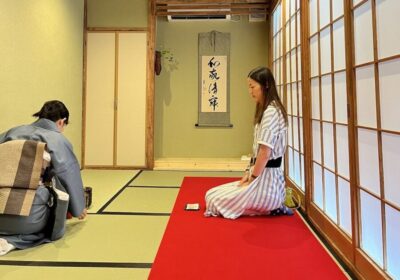
Browse the lists this tour appears in