
Review · MATCHA & TEA CEREMONY SESSIONS
Tea Ceremony Experience
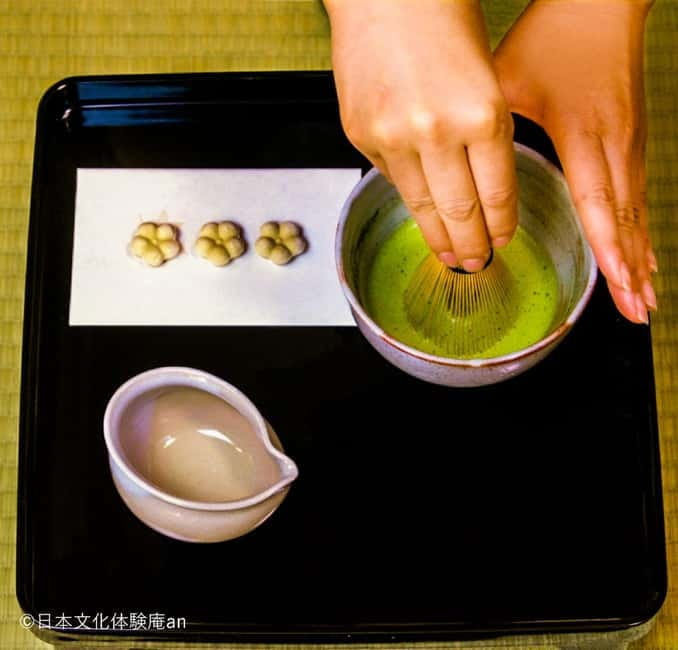
Tea ceremony sounds fancy, but this one feels friendly. You’ll grind matcha yourself and get a calm, clear lesson in English support, then finish with Japanese sweets called Ohigashi. My only caution is that this is a short 30-minute session, so the experience is more like a guided taste-and-learn break than a long, formal ceremony.
I like that the tea is single-origin and served in a casual way, so you can focus on what the flavors and steps actually mean. It’s also easy to fit into a Nagoya sightseeing day because the format is tight: learn the basics, do the grinding, drink, and you’re out.
Key Takeaways
- Single-origin matcha: you’re not just sipping generic green tea.
- You grind matcha during the session, not just watch.
- Ohigashi sweets come with your tea, so the taste is a full set.
- English support is provided as much as possible, and the pace is described as calm.
- Short and simple format: 30 minutes means quick learning, not a lengthy ritual.
- No elevator on the 3rd floor, so plan for stairs.
In This Review
- Nagoya Tea Break: What This Matcha Session Feels Like
- Finding the Meeting Point Near Nagoya With One Main Landmark
- The 30-Minute Flow: Grinding, Tea Steps, and When You Actually Drink
- Single-Origin Matcha and Ohigashi: Why This Pairing Works
- English Support From a Japanese Instructor: How to Get More Out of It
- Price and Value: What $7 Buys You (And What It Does Not)
- Room on the 3rd Floor: A Consideration If You Like a Perfect Atmosphere
- Who Should Book This Tea Ceremony in Nagoya?
- Should You Book This Tea Ceremony Experience?
- FAQ
- Where is the meeting point for the tea ceremony experience?
- How long is the tea ceremony experience?
- What is included in the price?
- Is there English help during the session?
- Are completion certificates included?
- Are children allowed, and are there any age-related rules?
Nagoya Tea Break: What This Matcha Session Feels Like
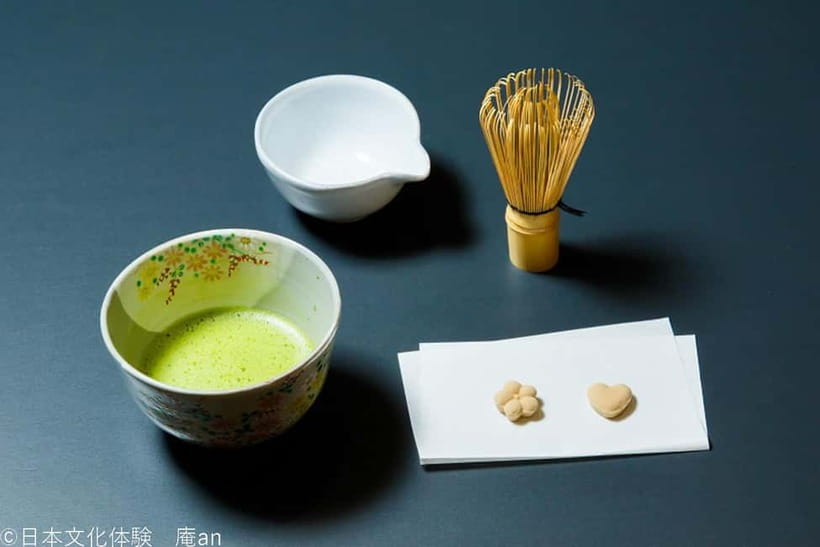
This is a tea ceremony experience built for real travel days. It is not an all-day, slow-motion ritual. Instead, you get a short guided introduction, a matcha grinding moment, and then you drink what you made.
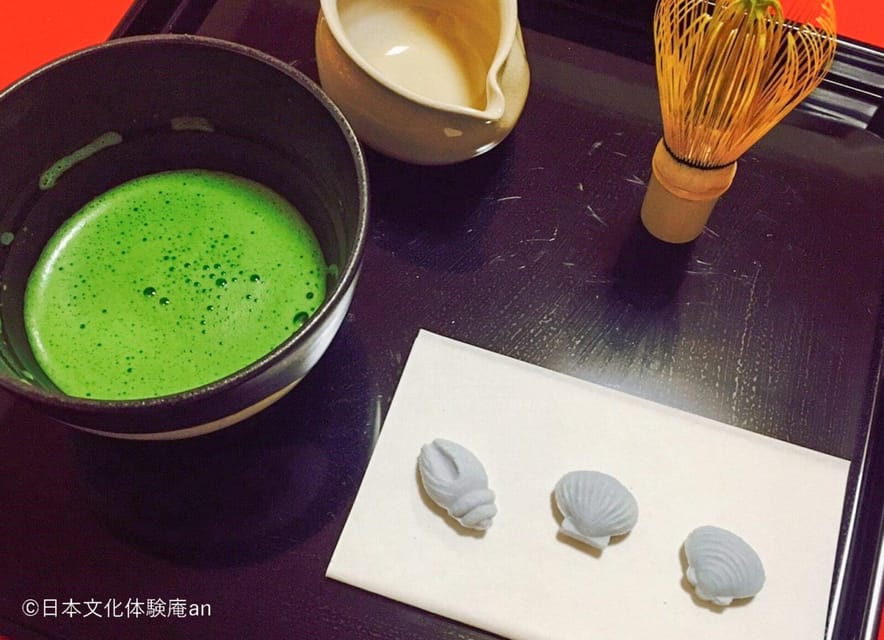
I like the tone because it stays casual. The goal is to help you understand what matcha is and how it is used, without making you worry you will mess up etiquette. You’ll get to experience the core action, grinding and whisking, and then settle into tasting with sweets (Ohigashi).
There is also a practical upside: the session is only 30 minutes, so you can treat it like a reset button during a Nagoya sightseeing loop. If your day includes rail hopping, shrine stops, or shopping, this kind of short pause is often the best kind of cultural break.
Finding the Meeting Point Near Nagoya With One Main Landmark
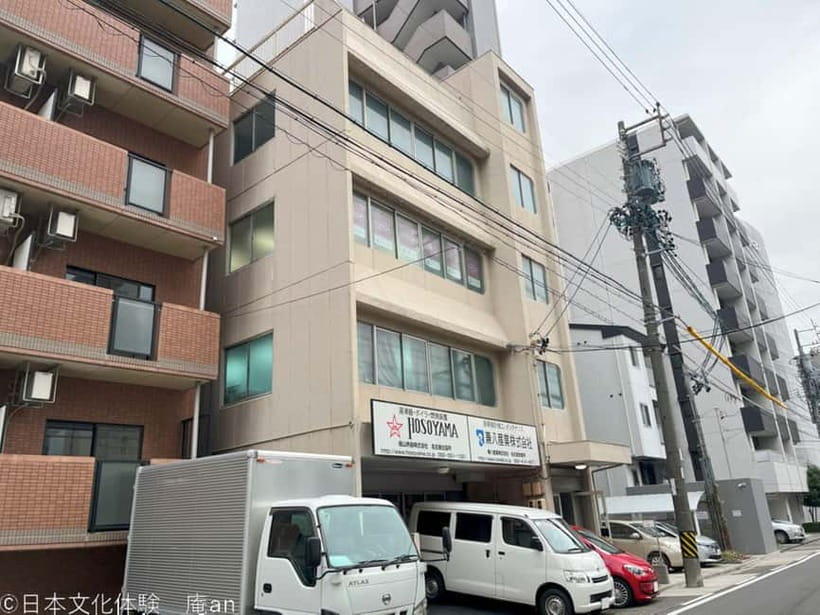
Your meeting point is very specific, which I always appreciate when I’m planning. You meet at a location that is about a 1-minute walk from Exit 3 of the Subway Sakura-dori Line station called Kokusai Center Station.
If you are coming from Nagoya Station, plan on a roughly 13-minute walk from the Sakura-dori side. The coordinates are 35.1715323, 136.891893, which is handy if you prefer mapping apps.
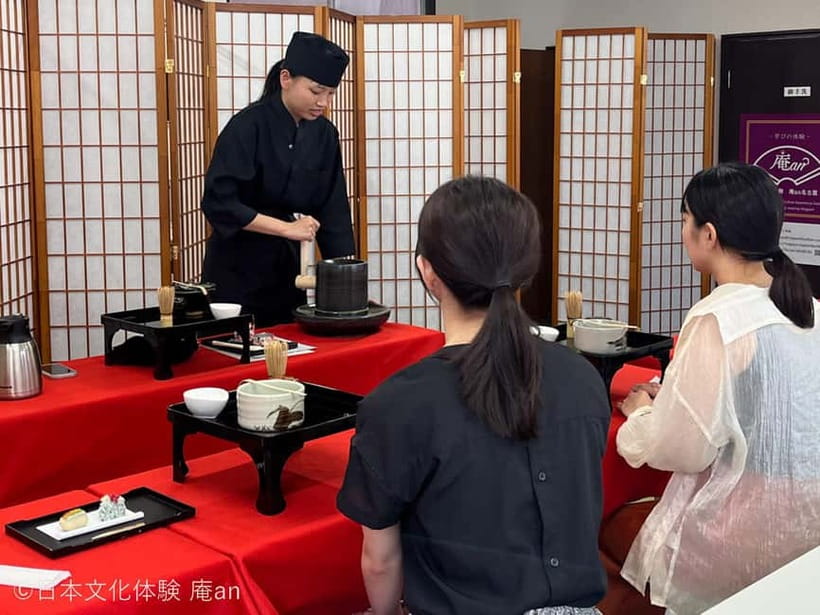
One real detail matters: the venue is on the 3rd floor, and there is no elevator. That means stairs. If you are carrying a bag from shopping, bring it in a way that you can manage a flight of stairs comfortably.
More Tea ceremonies in Nagoya:
- Nagoya: Japanese Traditional Sweets making and Tea Ceremony
★ 4.9 · 76 reviews - Kyoto: Tea Ceremony in a Traditional Tea House in Kiyomizu
★ 4.9 · 3,519 reviews - Kyoto: Tea Ceremony Ju-An at Jotokuji Temple
★ 4.9 · 3,207 reviews
The 30-Minute Flow: Grinding, Tea Steps, and When You Actually Drink
Here is how the timing works, in plain terms. The full experience is 30 minutes, with a structure that moves you through the basics and then into tasting.
At the start, you begin with:
- Tea explanation: a brief lecture to set the context.
- Matcha grinding demonstration: you learn how matcha becomes that whiskable tea texture.
Then you move into the part you will remember:
- Tea-ceremony experience: you participate, making and enjoying your matcha in the session format.
- Picture time: you get a moment for photos.
- Eating and drinking time: this is when the Ohigashi sweets and tea come together.
- You finish and leave the room.
Because the total time is short, the session is designed for clarity over ceremony length. If you want a deep, hour-long deep-dry run of tea etiquette, this may not match your expectations. But if you want a concentrated introduction that still includes the key hands-on step, it’s a good fit.
A practical tip: show up a few minutes early so you are not rushing upstairs. Delays can be an issue because they will not adjust the event for your late arrival.
Single-Origin Matcha and Ohigashi: Why This Pairing Works
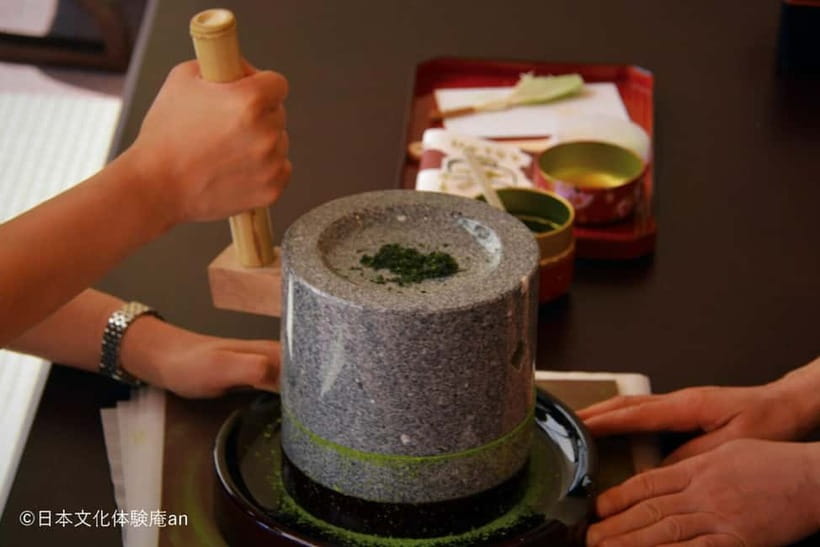
The highlight for me is the matcha quality. You are using single-origin special matcha, not just a generic green powder. Single-origin matters because it tends to feel more specific in flavor and character, rather than tasting flat or interchangeable.
Then there is the companion: Ohigashi, Japanese sweets served with your tea. These sweets are not an afterthought. In a tea-and-sweet pairing, the sweetness and texture help change the way you perceive the matcha. That is part of what makes tasting more interesting than simply sipping one flavor.
Also, the setup is designed for a casual experience. That matters because matcha can feel intimidating if you expect strict performance. Here, the point is to enjoy matcha and understand what you are tasting while you are doing it.
English Support From a Japanese Instructor: How to Get More Out of It
The instructor is Japanese. The experience also includes English translation as much as possible. In other words, you should be able to follow along even if your Japanese is limited.
From the feedback on this kind of session, the best sign is how well the guide explains matcha. Clear explanations help you notice things like:
- how the grinding affects texture,
- why whisking matters,
- what the sweets do to your taste experience.
If you want more help, you can request extra English translation by contacting the provider. That is useful if you have specific questions, like what to look for in matcha flavor or how to tell the difference between matcha styles.
One more practical point: the experience requires participation. If you don’t participate, you won’t be allowed to enter. So bring your curiosity and plan to take part in the steps.
A few more Nagoya days to weigh up
- From Nagoya: Gujo, Hida Takayama, and Shirakawa-go Day Tour
★ 4.4 · 398 reviews - Ghibli Park 1-Day Bus Tour from Nagoya
★ 4.5 · 277 reviews - From Nagoya: Hida Takayama & Shirakawa-go Tour w/Opt. Lunch
★ 4.5 · 256 reviews - Hiking the Historic Nakasendo Trail [1 Day Tour from Nagoya]
★ 5.0 · 104 reviews
Price and Value: What $7 Buys You (And What It Does Not)
At about $7 per person, this is priced like a cultural micro-class. You are paying for:
- a guided tea explanation,
- a matcha grinding demonstration (and you participate in the tea experience),
- and the included tasting with matcha plus Ohigashi sweets.
What you should not expect for this price is a long, fully formal, multi-course tea ritual. The timeline is short, and that shapes what you get. Think of it as a hands-on introduction and tasting, not a museum-style performance that takes half a day.
For me, the best value signal here is the combination of single-origin matcha plus the included sweets. Many cheap tea tastings let you sip something, but they do not always give you a hands-on moment. Grinding your own matcha changes the experience because you understand the effort behind that smooth cup.
If you want a small, affordable way to add Japanese culture to your Nagoya day, this fits the bill.
Room on the 3rd Floor: A Consideration If You Like a Perfect Atmosphere
This is the one drawback to keep in mind: the space may not feel like what you picture when you think of a classic tea room. Some people note that the room does not quite match the ceremony vibe, and the session can feel very quick, especially for very small groups.
That said, the lesson and tasting are still the point. If you are there for matcha basics, the hands-on grinding, and a calm introduction with English support, the atmosphere matters less.
To make it feel smoother for yourself, treat it like a practical cultural class. Come in knowing it is concise. If you’re the type who enjoys quick, focused experiences, you’ll probably like the pace.
Who Should Book This Tea Ceremony in Nagoya?
This works well if you:
- want a short cultural stop during a sightseeing day,
- enjoy hands-on experiences, especially grinding matcha,
- like the idea of learning the basics without needing advanced Japanese,
- want an affordable introduction to tea culture with sweets.
It may be less ideal if you:
- expect a long, highly formal ceremony with lots of waiting and ritual steps,
- want a very specific traditional room setting,
- plan to arrive late and hope they will hold the experience for you.
In general, I’d book it as a tea reset. It pairs nicely with a day spent around Nagoya Station or the Sakura-dori area, because you can plan a clean arrival and then move on.
Should You Book This Tea Ceremony Experience?
Book it if you want a fast, friendly matcha introduction in Nagoya. The value is strong for the price, the matcha is single-origin, and the session includes both making and tasting, with Ohigashi sweets. English support is also a big plus if you’re not fluent in Japanese.
Skip it or adjust expectations if you want a long formal ceremony or a highly traditional setting. This is short by design, and the experience centers on the basics and the cup you drink.
If you like the idea of grinding matcha, tasting it with sweets, and learning quickly with clear guidance, this is a smart use of time.
FAQ
Where is the meeting point for the tea ceremony experience?
The meeting point is a 1-minute walk from Exit 3 of the Subway Sakura-dori Line Kokusai Center Station. It is also about a 13-minute walk from the Sakura-dori side of Nagoya Station. Coordinates are 35.1715323, 136.891893.
How long is the tea ceremony experience?
The experience lasts 30 minutes total.
What is included in the price?
The tea ceremony experience includes the tea ceremony set, including the matcha grinding demonstration. It also includes tasting with matcha and Japanese sweets called Ohigashi.
Is there English help during the session?
English translation is provided as much as possible. The experience also uses a Japanese instructor. If you want to add English translation, you can contact the provider.
Are completion certificates included?
Completion certificates are not included. If you want one, it costs 300 JPY. If you want a nominative certificate, you should let them know your names in advance.
Are children allowed, and are there any age-related rules?
Children who sit on their parents’ laps are free of charge, for children under 2 years old only.
Newly listed around Nagoya
- Nagoya: Toyota Commemorative Museum Guided Tour★ 4.7 · 22 reviews
- Nagoya: Traditional Japanese Sweets-Making Workshop★ 4.6 · 14 reviews
- Nagoya: Full-Day Nagoya City Tour★ 5.0 · 8 reviews
- From Nagoya: Shirakawa-go UNESCO Village Day Trip w/ Pickup★ 4.0 · 8 reviews
- Nagoya Private Custom Tour with Local Guide★ 5.0 · 15 reviews
- Nagoya: Japanese Traditional Sweets making and Tea Ceremony★ 4.9 · 76 reviews
- Nagoya Highlight Tour guided by friendly locals★ 5.0 · 7 reviews
- Nagoya: Full-day Kisoji Nakaendo Trail Tour★ 5.0 · 6 reviews
Matcha & Tea Ceremony Sessions, compared.
Tea Ceremony in a Traditional Tea House in Kiyomizu
Read our review →
World Heritage Kyoto & Nara Uji Authentic Matcha Experience
Read our review →
Browse the lists this tour appears in