
Review · HISTORICAL TOURS
The history of Hiroshima “the event that shape the history”
Hiroshima deserves more than a quick visit. This 2-hour guided walk turns a hard subject into clear, human context, with storytelling that keeps you tracking cause and consequence, not just dates. I also love the pacing that fits both the Peace Memorial Museum and the key outdoor monuments without feeling rushed.
One consideration: the history here is emotionally intense, so it may feel like a heavy watch even when your guide keeps things calm and structured. The good news is that guides like Maria and Ali are known for answering questions and slowing down when you need it.
In This Review
- Key takeaways
- Hiroshima, Peace Memorial Park, and the Atomic Bomb Dome: what this tour really teaches
- Your starting point by the Peace Memorial Museum, and how the walk flows
- Gates of Peace to the Cenotaph: reading remembrance like a map
- Children’s Peace Memorial and the park rest house: why these stops hit hard
- Atomic Bomb Dome and Hypocenter: what you notice when someone tells you what to look for
- Inside the Hiroshima Peace Memorial Museum: turning outdoor scenes into context
- Why the Hiroshima story feels bigger than 1945
- Guides in practice: what the reviews suggest about tour quality
- Price and value: is $38 per person a good deal for this route?
- Who this Hiroshima tour is best for, and who should consider another option
- Should you book this Hiroshima Peace Memorial Park and Atomic Bomb Dome tour?
- FAQ
- How long is the Hiroshima history tour?
- What is the meeting point for the tour?
- What sites are included during the experience?
- Is the Peace Memorial Museum ticket included?
- Do I skip the ticket line for the museum?
- Is there a private guide?
- What languages are available?
- What is the price?
- Is there free cancellation, and how far in advance can I cancel?
- Can I reserve now and pay later?
Key takeaways
- Private guide for a tight 2-hour route: You cover major Peace Memorial Park sites plus the museum.
- Monuments explained, not just photographed: Each stop comes with context and meaning.
- Atomic Bomb Dome and Hypocenter focus: You learn what they represent before you see them.
- Peace Memorial Museum entry included: You avoid extra hassle and keep your visit focused.
- English, Hindi, and Urdu live guides: You can choose a language that feels comfortable.
- High review scores for clarity and patience: Guides are praised for being engaging and not rushing.
Hiroshima, Peace Memorial Park, and the Atomic Bomb Dome: what this tour really teaches
Hiroshima isn’t the kind of place you can understand from a postcard. This tour works because it builds your understanding step by step, starting with the park’s layout and moving into the big historical questions, like why Hiroshima was targeted and what happened immediately after August 6, 1945. The goal is not to overwhelm you with facts. It is to help you connect the dots between the prewar city, the bombing, and the long aftermath.
I like that the experience stays grounded in places you can actually stand in. You are not only hearing about loss, you are learning how Hiroshima chose to remember, where it chose to place names and reminders, and how the story has been passed on through education and memorial design. When I think about value, I also like that the route is compact. At 2 hours, you get an organized path through the most significant sites without losing the thread.
The outdoor stops matter because they show how remembrance is shaped in real space. The museum matters because it gives you a broader way to interpret what you saw outside. Together, they make the day feel coherent, not random.
More History Tours in Hiroshima
- Hiroshima Historical Walking Tour – Why A-Bomb was Dropped
★ 4.8 · 893 reviews - Hiroshima Peace (Heiwa) Walking Tour at World Heritage Sites
★ 5.0 · 872 reviews - Miyajima Half-day Trip Historical Walking Tour
★ 5.0 · 284 reviews
Your starting point by the Peace Memorial Museum, and how the walk flows
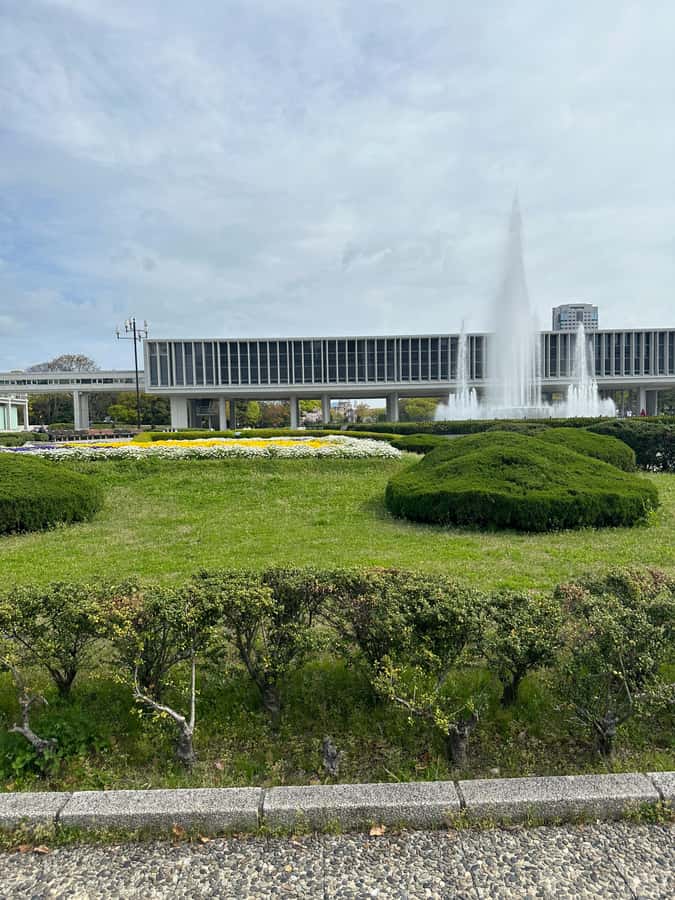
You meet near the taxi stand close to the Peace Memorial Museum (coordinates: 34.3915047, 132.4530738). From there, your guide takes you through Peace Memorial Park in a set sequence, with short photo stops and guided time at each site.
What makes this layout smart is that it is built to reduce decision fatigue. Instead of you guessing where to go next, the guide acts like a timing coach. Each stop gets enough time for you to read what you are seeing and understand why it is there, but not so much time that you feel stuck. Several guides are praised for not rushing, and that matters in a place where you may need a moment to absorb what you are hearing.
Also, the tour format is designed to include the museum visit without turning your schedule into a puzzle. Since museum entry is included and the route is planned, you can focus on the content rather than logistics.
Gates of Peace to the Cenotaph: reading remembrance like a map
The first major stop is the Gates of Peace, a photo stop followed by a guided look. This is more than an iconic entrance. Your guide helps you understand it as a threshold, a statement that peace is not just an idea, it is a responsibility, built into the way the city chooses to welcome visitors.
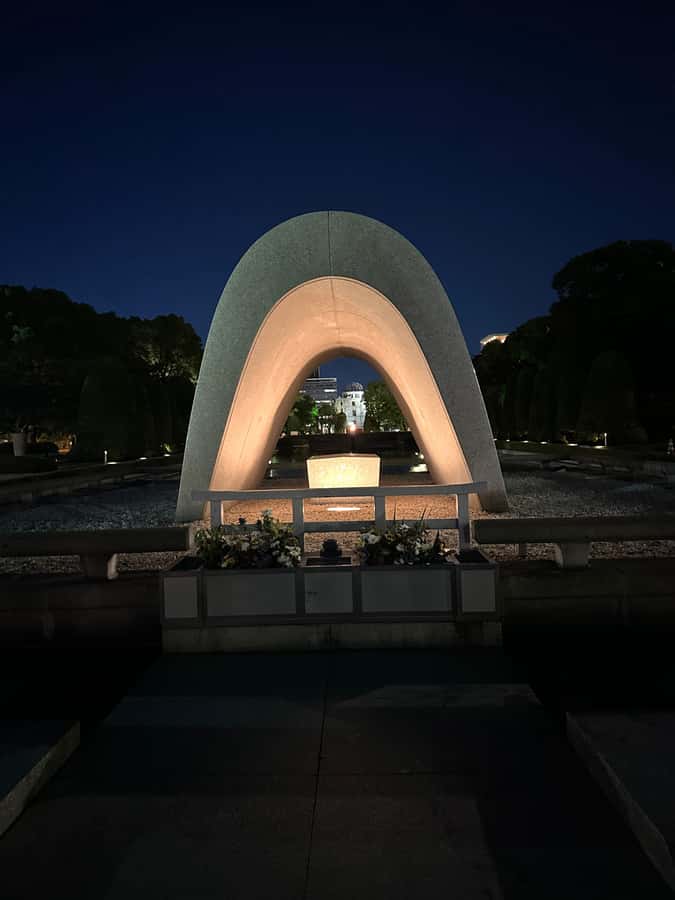
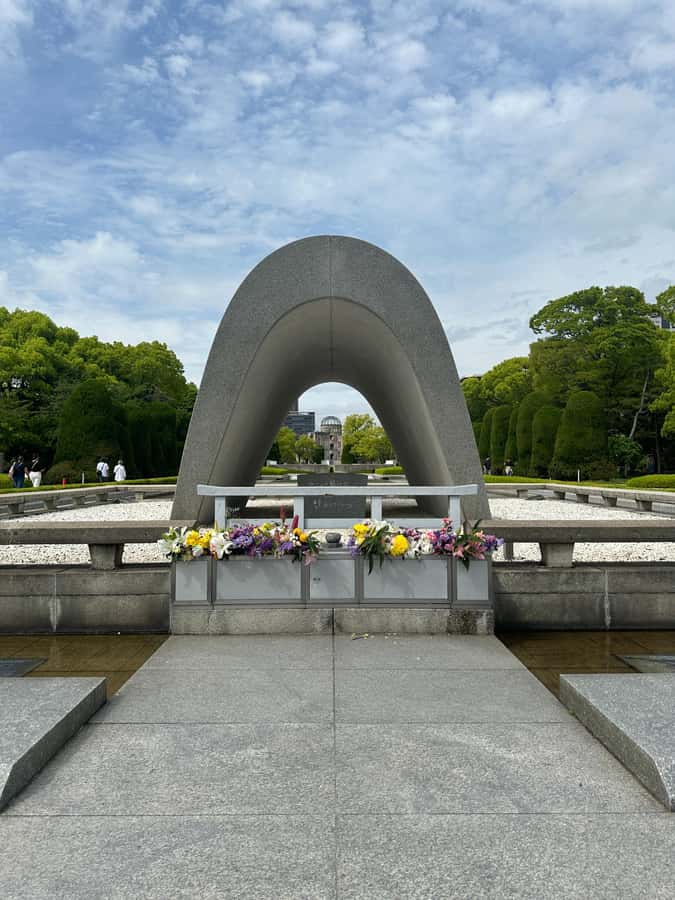
From there you move to the Hiroshima Victims Memorial Cenotaph. This is one of the park’s central reminders, and the value of having a guide here is simple: without context, it is easy to treat the cenotaph like a generic monument. With context, you start seeing it as a specific act of commemoration, designed to hold the weight of countless lives lost.
Next comes the Korean Atomic Bomb Victims Cenotaph. This stop expands the story beyond a single national frame. Your guide explains why this memorial matters and how it fits into the wider consequences of nuclear warfare. If you are trying to understand the bombing as part of a larger Pacific War reality, this is an important correction to a too-narrow mental picture.
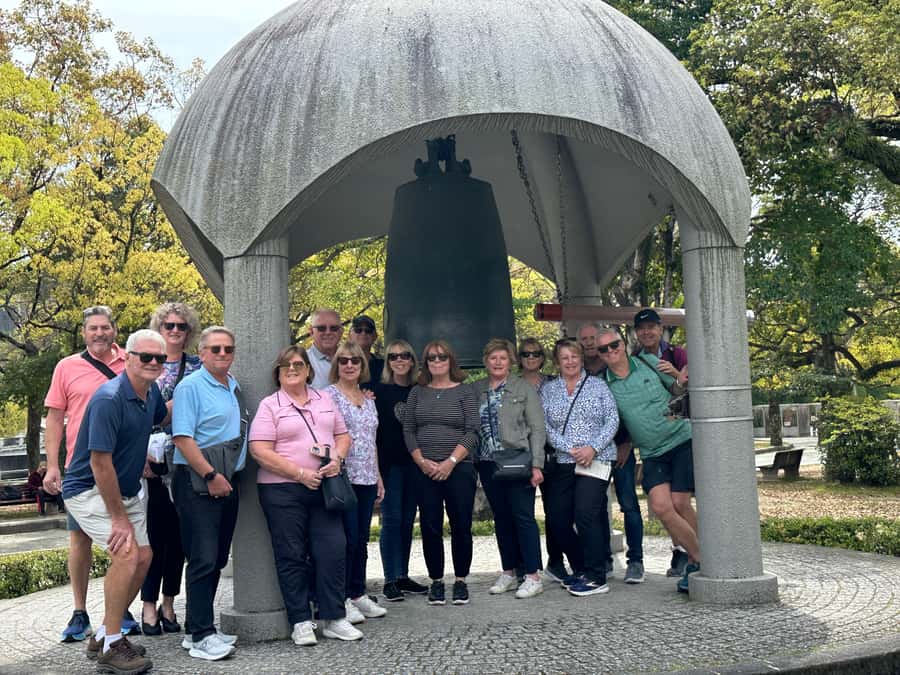
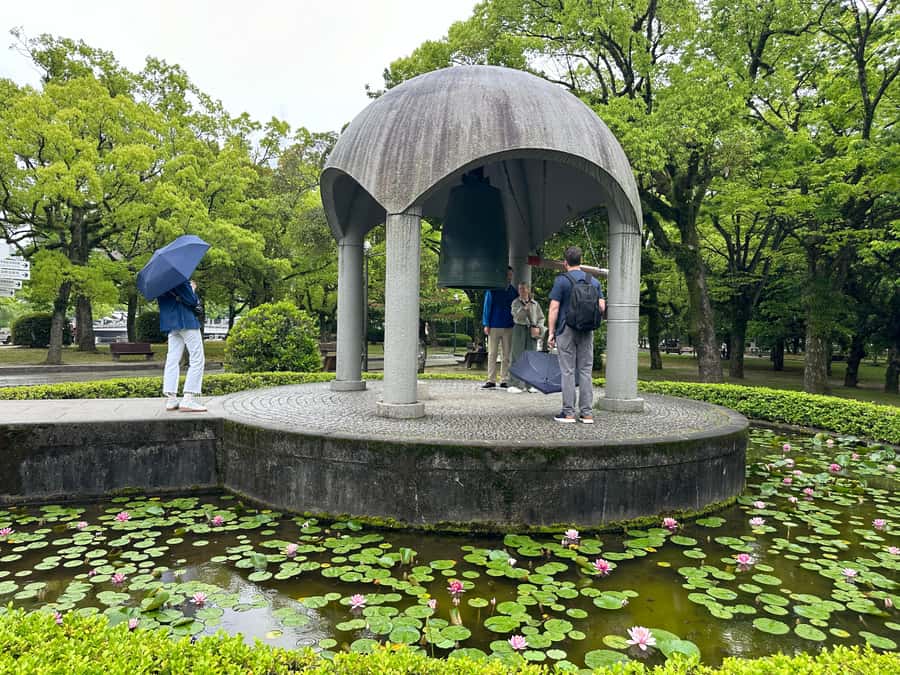
Then you will visit the Bell of Peace, Hiroshima. A guide helps you connect the bell to the message of prayer and remembrance, and to how public acts of mourning can become part of a city’s identity after catastrophe.
Children’s Peace Memorial and the park rest house: why these stops hit hard
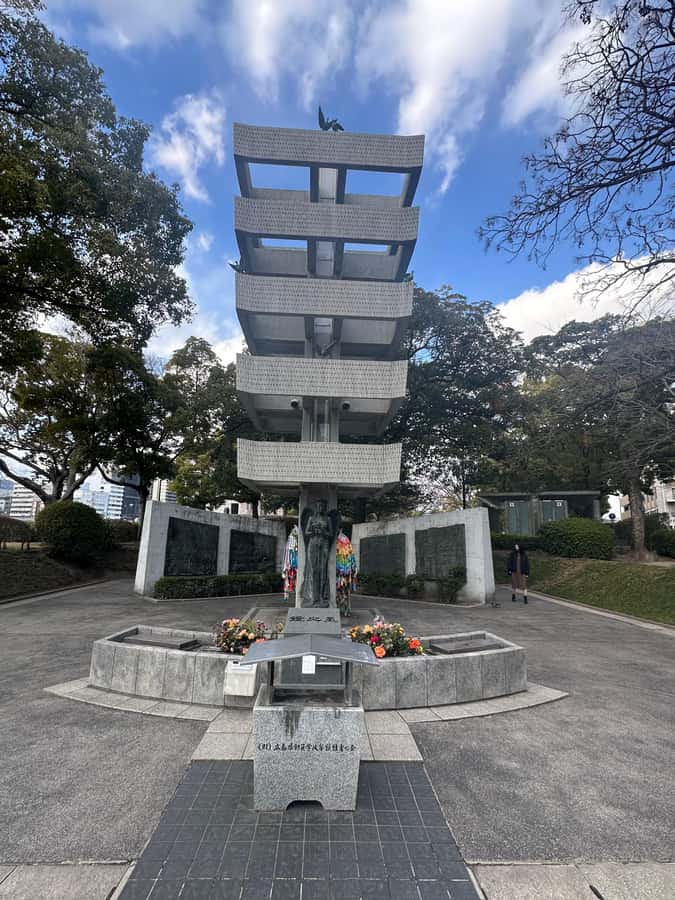
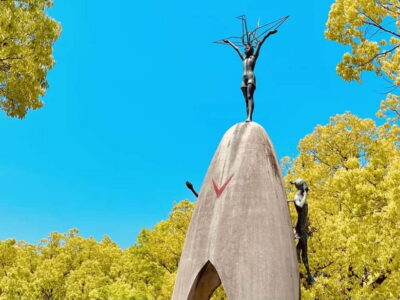
The Children’s Peace Monument is one of the most emotionally direct parts of the route. The story is not only about what happened in 1945, but about what the war did to lives that would otherwise have had decades ahead. Your guide also explains the symbolism of the monument, which makes the site feel less like a somber photo op and more like a message meant to last.
After that you pause at the Hiroshima Peace Park Rest House. This stop matters because it gives you a breather inside a place that can feel nonstop in emotional intensity. It also helps you reset so the next section stays meaningful rather than purely exhausting.
A key strength here is how the tour avoids turning heavy material into something either clinical or chaotic. Guides are praised for making the topic not too hard to stomach, which is a big deal when you are dealing with human suffering. If you want the kind of tour where you can ask questions and the guide adjusts, this is where it shows.
A few more Hiroshima days to weigh up
- Hiroshima: History of Hiroshima Group Walking Tour
★ 4.8 · 266 reviews - Hiroshima: Peace Walking Tour of World Heritage Sites
★ 4.9 · 190 reviews - Hiroshima: Miyajima Half-day Historical Walking Tour
★ 4.7 · 100 reviews - Hiroshima: History and Hidden Gems Tour
★ 4.9 · 81 reviews
Atomic Bomb Dome and Hypocenter: what you notice when someone tells you what to look for
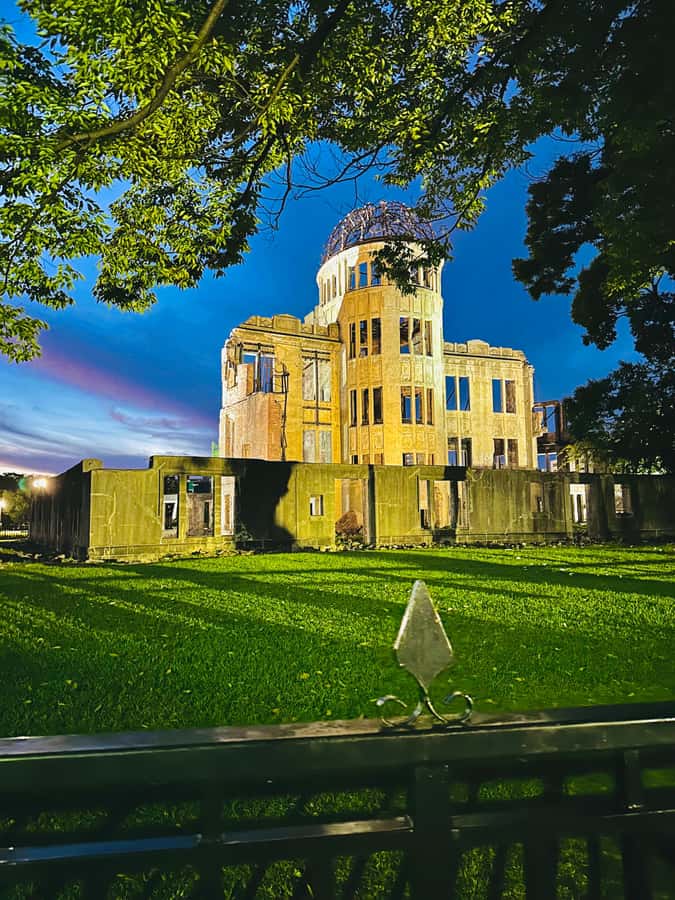
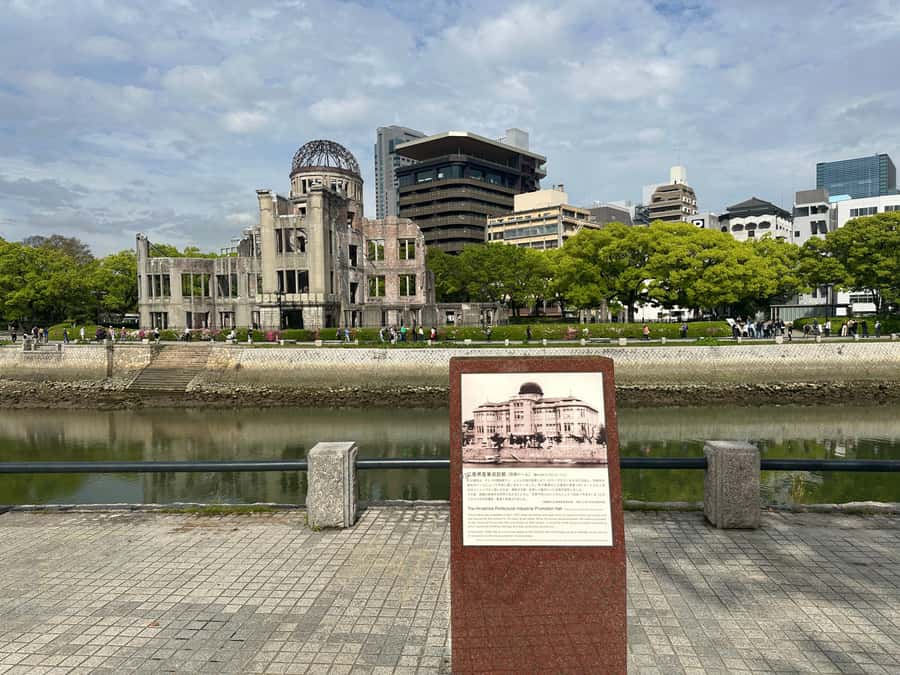
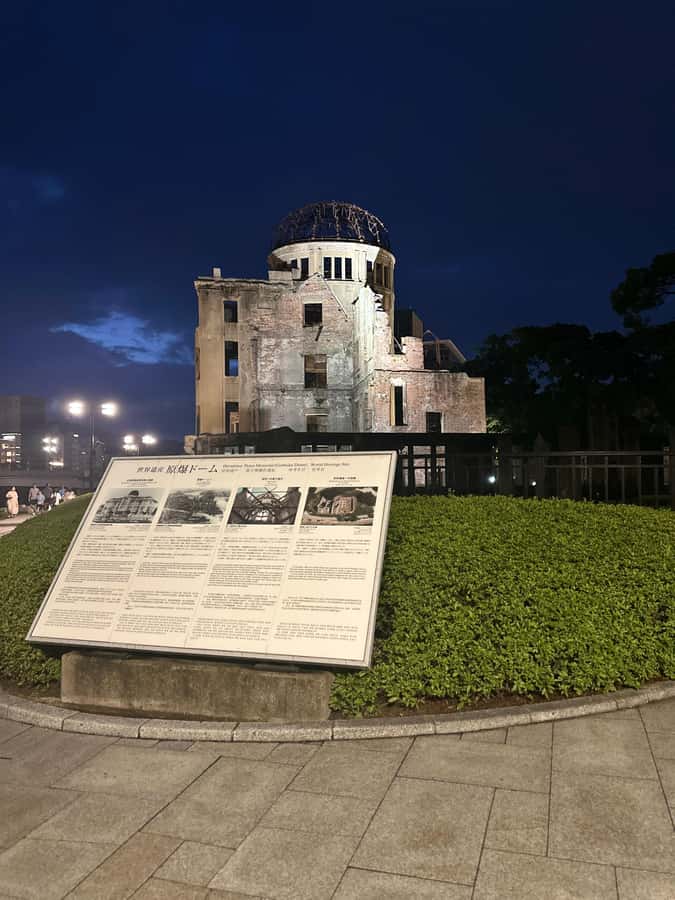
The route reaches one of Hiroshima’s most famous images: the Atomic Bomb Dome. You stop for photos and guided time. A lot of people know the Dome visually, but most people do not know what to look for when they arrive. With a guide, you get a clearer sense of what the structure represents and why preserving it became a central part of Hiroshima’s message to the world.
Then you visit the Hypocenter. This is where understanding becomes more precise. Your guide ties the location to the immediate consequences of the blast and to the long-term transformation that followed. The effect is that the visit feels like history anchored to geography, not history floating in a textbook.
If you are the type who likes to connect memorials to real-time mechanics, this section is built for you. It helps you understand why Hiroshima is not only a story of one day. It is a story of a whole city being reshaped, and of how people rebuilt their lives under the weight of what they survived.
Inside the Hiroshima Peace Memorial Museum: turning outdoor scenes into context
The Hiroshima Peace Memorial Museum visit is included, and you get museum entry as part of the tour. You will typically stop for a photo moment, then do more walking and guided attention inside.
This is where the tour earns its keep. Outdoor monuments can feel symbolic, but museums give you background and evidence that make the symbolism more grounded. Your guide helps you interpret what you are seeing, including the immediate and long-term consequences of nuclear warfare, and how Hiroshima rebuilt and transformed itself after the war.
One practical advantage is timing. Peace Memorial Museum can be crowded, and having your guide set up the order of your visit can make your experience smoother. If your schedule is tight, you will also appreciate that you are not paying separately for museum admission or figuring out where to line up.
Language access helps here too. The guide is live and you can choose English, Hindi, or Urdu, which can make a huge difference when the content is complex and emotional. The goal is not just translation, it is clarity.
Why the Hiroshima story feels bigger than 1945
What really sets this tour apart is the framing. It traces Hiroshima’s path from a thriving prewar city to August 6, 1945, then to the aftermath and the city’s postwar recovery. That arc is important. Without it, Hiroshima can become a single-day event frozen in memory.
You also hear personal stories from survivors and civilians, sometimes including children. The point is not to sensationalize suffering. The point is to make the human side unavoidable, so the war in the Pacific becomes less abstract. You start understanding how the bombing changed daily life, how memory is preserved, and how Hiroshima continues advocating for nuclear disarmament and peace education.
That is also why the tour’s title theme fits. This is the kind of experience that shows you how one event can shape policy, public memory, and the future in ways that last for generations.
Guides in practice: what the reviews suggest about tour quality
The standout theme from recent feedback is how guides handle questions and pacing. Maria comes up repeatedly as a guide who knows detailed context and tells stories in a way you cannot stop listening to. James is praised for adding depth, even for people who already know the basics. Ali is praised for taking time to get to know people and letting them explore without being rushed.
This matters because Hiroshima is not a “checklist” destination. You may want to ask about symbolism, about why certain names and memorials are included, or about how the city’s postwar message developed. The tour seems built for that kind of interaction, not for a lecture that barrels ahead.
Another quality is comfort with emotion. The topic is heavy, but guides are commended for keeping it understandable, so you do not feel steamrolled. That balance is the difference between a tour that feels respectful and one that just feels like a performance.
Price and value: is $38 per person a good deal for this route?
At $38 per person for a 2-hour experience, this pricing makes sense only if you value structure and guided interpretation. You are paying for a private guide, not just an audio script. That private guide aspect is important here because monuments and museum material only become meaningful when you know what to focus on.
You also get museum entry included and the tour is set up to skip the ticket line. That is not a tiny detail. It keeps your time inside the museum usable for learning instead of spent waiting. Since the route covers multiple major stops around Peace Memorial Park and includes the museum, the overall package feels efficient.
If you are traveling as a pair or small group, private-guided value usually improves, because you are not splitting costs across a mass group tour style. If you are traveling solo, it still feels fair because the guide experience is the main product here.
Who this Hiroshima tour is best for, and who should consider another option
This tour is a strong fit if you:
- Want the key sites in Peace Memorial Park explained with clear historical context
- Learn best from a guide who connects dates to place and meaning
- Prefer a short, structured route instead of wandering on your own
- Would like help interpreting the museum material without getting overwhelmed
You might think twice if you:
- Know you prefer lighter subject matter, because this is about war, survival, and nuclear consequences
- Want a strictly self-paced, silent visit style, since this is a guided experience with storytelling
- Are looking for a wider Hiroshima city tour beyond the Peace Memorial area, since the focus is intentionally concentrated
Should you book this Hiroshima Peace Memorial Park and Atomic Bomb Dome tour?
I think you should book it if you want Hiroshima to make sense as a story, not just as a set of famous landmarks. The combination of Peace Memorial Park monuments, the Atomic Bomb Dome, the Hypocenter, and the museum gives you both symbolism and context. Add a patient guide who can answer questions, and you get a visit that feels respectful and organized.
If you are worried about the emotional weight, that is normal. My advice is to treat this as a guided way to handle the heaviness, not as something you rush through. The best versions of this tour seem built for that, with guides who take time and keep the experience understandable.
If you are ready for a short but meaningful route at a fair price, this is one of the easier ways to get the most from Hiroshima’s most important memorial sites.
FAQ
How long is the Hiroshima history tour?
The tour lasts 2 hours.
What is the meeting point for the tour?
You meet at the taxi stand near the Peace Memorial Museum, with coordinates 34.3915047, 132.4530738.
What sites are included during the experience?
You visit key stops in Peace Memorial Park and the museum, including the Atomic Bomb Dome, the Hypocenter, the Hiroshima Peace Memorial Museum, and multiple memorials such as the Cenotaph for A-bomb Victims and the Children’s Peace Monument.
Is the Peace Memorial Museum ticket included?
Yes. Museum entrance is included in the tour.
Do I skip the ticket line for the museum?
Yes, the tour includes skipping the ticket line.
Is there a private guide?
Yes. The experience includes a private guide and a live tour guide.
What languages are available?
The live tour guide is available in English, Hindi, and Urdu.
What is the price?
The price is listed as $38 per person.
Is there free cancellation, and how far in advance can I cancel?
Free cancellation is available up to 24 hours in advance for a full refund.
Can I reserve now and pay later?
Yes. You can reserve now and pay later, keeping your plans flexible.
Newly listed around Hiroshima
- The Journey of Hiroshima from Tragedy to Peace★ 4.8 · 44 reviews
- The Peace Memorial and Beyond: A Half-Day around Hiroshima★ 4.9 · 12 reviews
- Tea Ceremony Experience near Atomic Bomb Dome★ 4.9 · 8 reviews
- Private Hiroshima and Miyajima Tour with Licensed Guide★ 5.0 · 6 reviews
- Peace Memorial Park, Hiroshima Castle, & Garden Private Tour★ 4.8 · 7 reviews
- Hiroshima: Miyajima Half-day Historical Walking Tour★ 4.7 · 100 reviews
- Kumano Brush Factory Tour and Brush-Making Experience★ 5.0 · 7 reviews
- Hiroshima/Miyajima Private Custom Tour with Local Guide★ 5.0 · 134 reviews
Historical Tours, compared.
World Heritage Shirakawa-go and Experience Tours from Kanazawa
Read our review →
World Heritage Kyoto & Nara Uji Authentic Matcha Experience
Read our review →
World Heritage Shirakawa-go Morning Guided Tour
Read our review →
Hiroshima Historical Walking Tour – Why A-Bomb was Dropped
Read our review →
Hiroshima Peace (Heiwa) Walking Tour at World Heritage Sites
Read our review →
Yanaka Walking Tour: Historic and Traditional District of Tokyo
Read our review →
Shinjuku Historical Walking Tour & Secret Backstreets
Read our review →Browse the lists this tour appears in