
Review · FISH MARKET WALKS
Tokyo: Guided Walking Tour of Tsukiji Market with Breakfast
Morning at Tsukiji tastes like a Tokyo postcard. I like how you start at Tsukiji Hongwanji Temple and then head into the Outer Market with a guide, so you are not just wandering in confusion. I also love that breakfast is built in: you get a set of seven tastings, from grilled skewers to tea and dashi.
One thing to plan for: you will eat a lot in a short window. It is a 150-minute tour, so come ready, and if English is a little hard to catch at moments, you can still follow along with food cues and the group pace.
In This Review
- Quick take
- Starting at Tsukiji Hongwanji Temple, then into Tsukiji Outer Market
- Walking Tsukiji like a guided food route, not a food maze
- The 7 breakfast tastings: what you will eat and how to manage it
- Why watching expert wholesalers changes how you understand Tsukiji
- Japanese culture and religion, explained through what’s on the menu
- Guides and translation, and why that matters more than you expect
- Price and value: $85 for 150 minutes and 7 tastings
- Logistics that keep the morning stress low
- Who should book this Tsukiji breakfast tour (and who might not)
- Should you book this Tsukiji guided walking tour with breakfast?
- FAQ
- Where is the meeting point?
- How long is the tour?
- What tastings are included?
- Is the guide language English?
- What is the group size?
- Is the tour wheelchair accessible?
- What should I bring?
- Is there a cancellation option and reserve payment flexibility?
Quick take
- Temple-first start at Tsukiji Hongwanji Temple: admire the ancient Buddhist-inspired, Indian-style exterior before you hit the market noise.
- Seven tastings included: grilled seafood or beef skewers, Japanese-style omelette, tuna sandwiches, fried fish paste skewers, plus a drink, Japanese tea, and dashi soup stock.
- Watch wholesalers at work: you get to see expert vendors and unusual products up close while you walk past shops and stalls.
- Food linked to culture and religion: the guide connects what you see in the temple area to what shows up on menus.
- Small group limit of 10: easier questions, better attention, and less time lost regrouping.
- Easy meetup: meet in front of the temple, about 50 meters from Tsukiji Station Hibiya Line Exit A1.
Starting at Tsukiji Hongwanji Temple, then into Tsukiji Outer Market
This tour starts where many food walks do not: at Tsukiji Hongwanji Temple. You meet at the main gate, and from there you get a look at the temple exterior up close. The style is described as ancient Buddhist-inspired, with an Indian-inspired exterior, which gives you a visual “why” before you get food.
I like that this first stop gives you context. The market can feel like pure motion, but a temple start sets the tone. You will also hear how Japanese culture and religion connect to cuisine, which makes the whole breakfast stop feel less random.
Practical note: you are walking right away. Wear comfortable shoes, because the market area is the kind of Tokyo where you will notice every step. Also, the tour runs 150 minutes total, so the temple time is not a long museum moment. It is enough to set your bearings, then you move on.
If you are coming from Tsukiji Station (Hibiya Line), take Exit A1 and turn left. The temple entrance is about 50 meters from the station, so you should be able to find it without a lot of detours.
More Market Tours in Tokyo
- Tokyo Tsukiji Fish Market Food and Culture Walking Tour
★ 5.0 · 3,184 reviews - Tokyo: Tsukiji Fish Market Food and Walking tour
★ 5.0 · 1,724 reviews - Tokyo: Tsukiji Fish Market Guided Walking Tour
★ 4.9 · 1,397 reviews
Walking Tsukiji like a guided food route, not a food maze
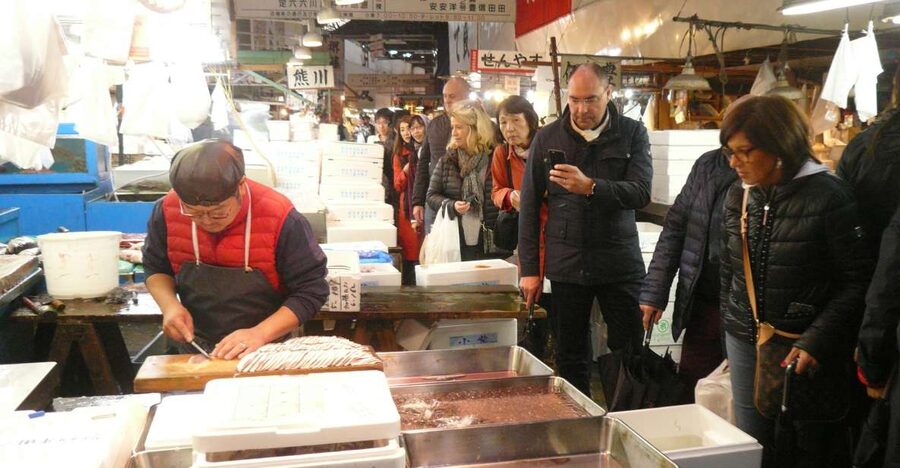
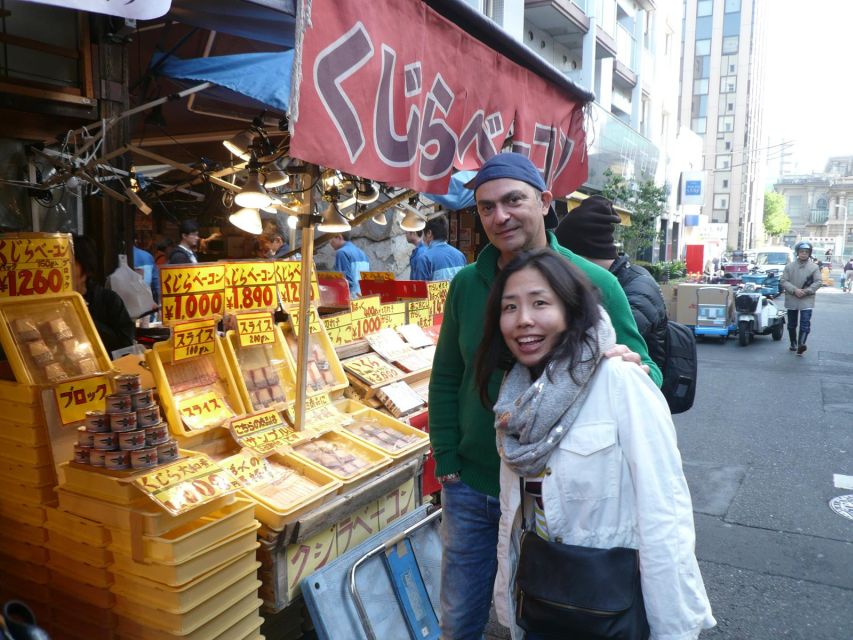
Once you leave the temple area, the pace shifts fast. Tsukiji Outer Market is one of the largest wholesale fish markets in the world, and it is a popular stop for food lovers. The guide leads you through the maze of stalls, shops, and restaurants, while you pass by the real center of the action: the wholesalers.
This is where the guided part matters. In a place like Tsukiji, you can see food, sure, but you might not understand what you are looking at. With a guide, you get a clearer picture of how the market works and why certain products show up where they do.
You also get the atmosphere in a useful way. The highlights call out “charismatic workers” and “unusual products.” Translation: you are going to see things you probably would not search for on your own, and the guide helps you interpret it while keeping the group moving.
The 7 breakfast tastings: what you will eat and how to manage it
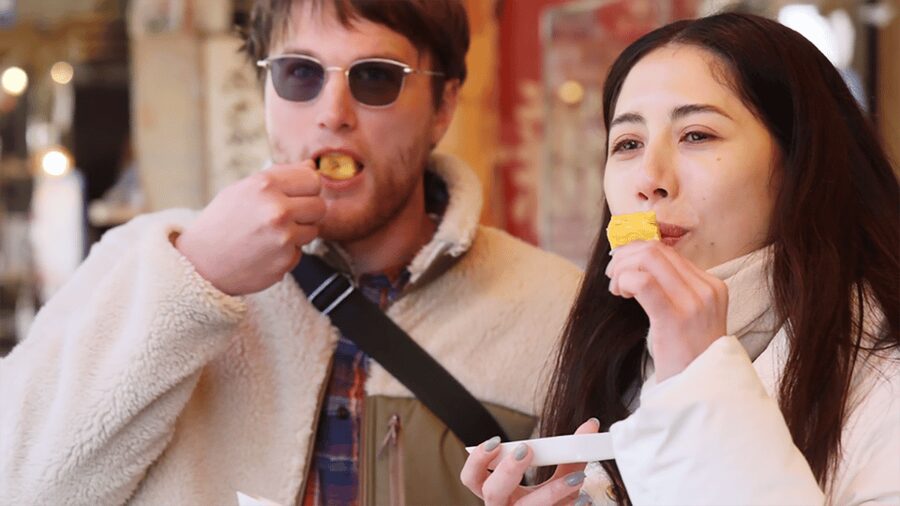
The headline here is simple. You get 7 tastings as you walk. The tour does not just hand you a single snack and move on. It’s a structured breakfast sampling that turns the market into a guided menu.
Here’s what is included in the tasting list:
- Grilled seafood or beef skewers
This is where that Tokyo-style street-food feel hits first. The highlights mention yakitori skewers and wagyu beef, and the included list frames it as grilled seafood or beef skewers. Expect a savory, smoky bite that sets the tone for the rest of the walk.
- Japanese-style omelette
This is a classic breakfast-friendly choice, and it helps balance the earlier skewers. It also tends to be easier to eat while walking, which matters because the tour is only 150 minutes.
- Tuna sandwiches
Tuna here is not just “a filling.” You are tasting it in a format designed for quick sampling in a market setting. It gives you that seafood flavor without needing a long sit-down.
- Fried fish paste skewers
This is one of those “you would not pick this first” items if you were trying to DIY. Since it is included, you get a chance to try it without second guessing.
- A drink
The tour includes a drink tasting. This is part of why the breakfast lineup feels complete, not just “food on food on food.”
- Sample of Japanese tea
Tea is the reset button for your palate. After seafood and savory bites, this helps you keep your appetite for the final elements.
- Sample of dashi soup stock
Dashi is the flavor backbone of lots of Japanese cooking, and here you get it as a tasting sample. Even if you have never cooked with it, you will start noticing why people treat it like a foundational ingredient.
A smart tip: eat at your own pace. The tour is built so you do not need to rush, but the 150-minute format does mean you will be in constant motion between tastings. If you prefer to skip something, the tour can adjust based on what you are okay trying, and the guide can steer you toward what fits your comfort level.
Why watching expert wholesalers changes how you understand Tsukiji
The best part of Tsukiji is not just the food. It is the work. This tour specifically includes time to observe expert wholesalers busy at work, while you pass restaurants, shops, and stalls.
That small shift makes a huge difference. If you only treat Tsukiji as a place to eat, you might miss what makes it Tsukiji. With the guided route, you notice patterns, like what gets prepared, how products get arranged, and what the market crowd focuses on.
You also get an “inside the flow” feel. The group moves as a unit, and the guide is the translator between you and the market. You are not just standing and staring, you are learning how the day moves, bite by bite, stall by stall.
More Market Walks in Tokyo
- Tokyo Sushi Making Class in Tsukiji with Professional Chef
★ 5.0 · 1,177 reviews - Tsukiji Fish Market Guided Tour and Sushi Making with Pro Chef
★ 5.0 · 775 reviews - Tokyo: Tsukiji Fish Market Food and Culture Walking Tour
★ 4.7 · 757 reviews - Tsukiji Fish Market: Street Food & Culture Walking Tour
★ 5.0 · 669 reviews
Japanese culture and religion, explained through what’s on the menu
One of the highlights calls out how Japanese culture and religion connect to cuisine. On paper, that can sound like a lecture. In practice, it works better when it is tied to real places, and you get that with the temple exterior at the start.
The temple stop is not random scenery. It frames the rest of your walk by giving you a cultural lens. Then, when you move into the market and eat, the guide links what you see to broader ideas about food and everyday life.
I like this approach because it avoids the “tour script” feeling. You are not just collecting bites. You are collecting meaning, and that makes Tsukiji feel more personal and less like a checklist.
Guides and translation, and why that matters more than you expect
You might think you only need a guide for the food ordering. In Tokyo, it is more than that. This tour is in English, and it is limited to a small group of up to 10 participants, which makes the guide-to-group ratio much more workable than in bigger tours.
What I see as the real value is the “in-between” support:
- The guide helps you navigate where to go next.
- You get guidance on what you are eating and why it fits the market context.
- The group can be supported if someone wants to adjust what they try.
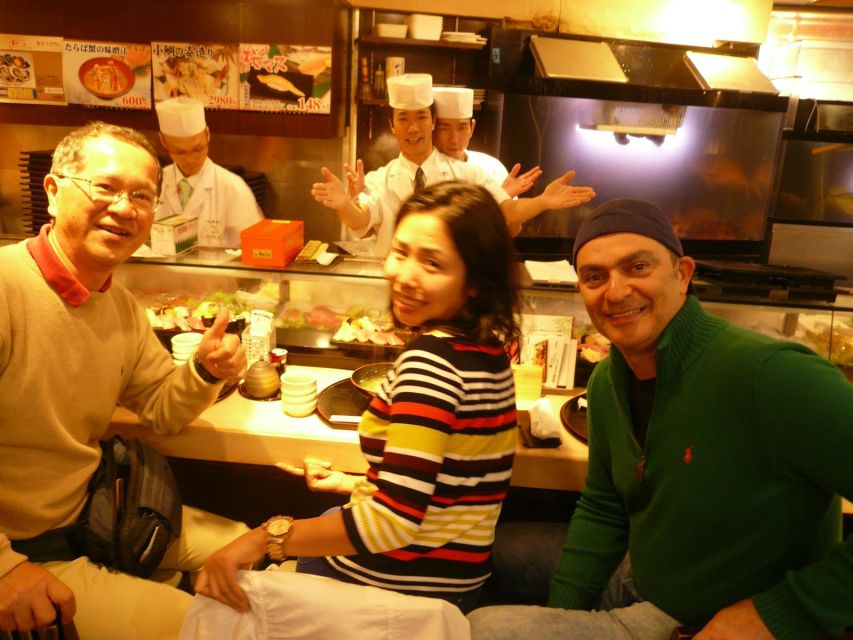
The reviews also highlight named guides such as Rico, Yumi, Minoko, and Nori. The consistent theme is that guides focus on making sure everyone in the group gets to taste what they want, while still keeping you on track through a crowded market.
That is part of why the experience costs $85. You are paying for time savings, interpretation, and a smoother route through places where you might otherwise feel lost.
Price and value: $85 for 150 minutes and 7 tastings
At $85 per person for a 150-minute guided walk, you are paying for two things: a guided route through a hard-to-navigate area and a set menu of tastings.
Let’s break down the value logic without overselling it:
- The tour includes seven tastings, which are not just tiny bites. You get multiple savory items (skewers, omelette, tuna sandwiches, fish paste skewers), plus drink, tea, and dashi.
- You also get a live English guide, and the group is kept small (10 participants max). That small group matters in markets where people naturally spread out.
- You spend your time effectively, starting at the temple and then moving through Tsukiji Outer Market with a plan.
Could you do Tsukiji on your own? Sure. But you would be paying with your time, and you might miss the context for what you are eating. Here, your money buys momentum and understanding, not just snacks.
Logistics that keep the morning stress low
This is a short, active breakfast tour. That is great if you like getting out early and moving. It can feel like a lot if you like slow sightseeing.
What helps:
- Comfortable shoes are the only item the tour calls out, and you will feel it by the end.
- The meeting point is very clear: in front of Tsukiji Hongwanji Temple.
- The route includes both temple viewing (from the exterior) and market walking, so it is not only food hunting.
- It is wheelchair accessible, and since it’s a walking tour, it is worth confirming with the operator if you need a slower pace or extra support.
For language: the guide is English-speaking. Some people note that understanding can take a moment depending on how the guide speaks, but the food structure and pacing help you keep up.
Who should book this Tsukiji breakfast tour (and who might not)
This tour fits you well if:
- You want a Tokyo food start that feels local, not like a random market stroll.
- You like learning why food shows up where it does, especially with the temple connection at the beginning.
- You want help ordering and interpreting in a busy market setting.
It might be less ideal if:
- You prefer to graze slowly with lots of free time and no planned tastings. This tour is structured, and you will eat multiple items in one go.
- You have a very strict eating routine and hate surprises. You can communicate what you are okay trying, and the tour can adjust, but it is still a tasting-based experience.
Should you book this Tsukiji guided walking tour with breakfast?
I’d book it if you want your Tsukiji morning to feel intentional, like you are being guided through the market’s real rhythm rather than just shopping for snacks. The temple start adds a layer most food tours skip, and the seven tastings mean you get a real sampling of the market in a compact 150 minutes.
If you hate crowds, want long pauses, or feel uneasy with lots of food close together, you might choose a different style of market visit. But for most first-time Tokyo food travelers, this is a strong, practical plan: temple context first, market work second, and breakfast that actually makes sense.
FAQ
Where is the meeting point?
Meet in front of Tsukiji Hongwanji Temple.
How long is the tour?
The tour lasts 150 minutes.
What tastings are included?
You get tastings of 7 local specialties, including grilled seafood or beef skewers, a Japanese-style omelette, tuna sandwiches, fried fish paste skewers, a drink, Japanese tea, and a sample of dashi soup stock.
Is the guide language English?
Yes, the live tour guide speaks English.
What is the group size?
This is a small group limited to 10 participants.
Is the tour wheelchair accessible?
Yes, the tour is wheelchair accessible.
What should I bring?
Bring comfortable shoes.
Is there a cancellation option and reserve payment flexibility?
Yes. You can cancel up to 24 hours in advance for a full refund, and you can reserve now and pay later.
More Walking Tours in Tokyo
- Tokyo: Shinjuku Local Bar and Izakaya Guided Walking Tour
★ 4.9 · 1,794 reviews - Tokyo: Asakusa Walking Tour with Sensoji Temple Visit
★ 4.8 · 1,583 reviews - Tokyo Castle & Imperial PalaceーShogun Walking Tour
★ 4.7 · 1,068 reviews - Tokyo: Imperial Palace Japanese History Walking Tour
★ 4.9 · 987 reviews
More Shopping Tours in Tokyo
- Tsukiji Fish Market Small-Group Food Walking Tour
★ 5.0 · 621 reviews - Tokyo: Tsukiji Fish Market Sushi Making Class with Pro Chef
★ 4.9 · 506 reviews - Tokyo Food Tour Taste Fresh Delights at Tsukiji Market
★ 5.0 · 429 reviews - Tokyo Tsukiji Fish Market Tour and Sushi Making Lesson
★ 5.0 · 390 reviews
Newly listed around Tokyo
- Tokyo private transfer for Yokohama Port★ 4.5 · 63 reviews
- Luxury Kimono Photoshoot at Ginza Tokyo★ 5.0 · 7 reviews
- Tokyo Allstar Food Tour★ 4.5 · 206 reviews
- Tokyo Art Aquarium Museum E-Ticket with optional Tokyo Metro Pass★ 5.0 · 17 reviews
- Tokyo: Best Ginza Food Tour at 3 Local Eateries★ 5.0 · 83 reviews
- Private One Day Nikko Tour with Bilingual driver★ 3.5 · 11 reviews
- Japanese Whisky Tasting Experience at Local Bar in Tokyo★ 5.0 · 59 reviews
- PRIVATE tour in 180SX to Daikoku+++++★ 5.0 · 6 reviews
Fish Market Walks, compared.
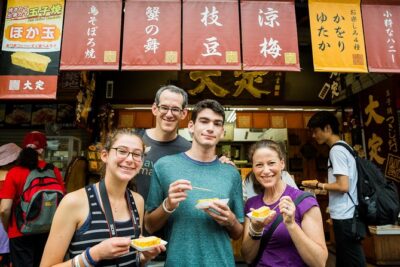
Tokyo Tsukiji Fish Market Food and Culture Walking Tour
Read our review →
Nishiki Market Brunch Walking Tour (7 Tastings + Brunch)
Read our review →
Tokyo Sushi Making Class in Tsukiji with Professional Chef
Read our review →
Tsukiji Fish Market Guided Tour and Sushi Making with Pro Chef
Read our review →