Review · KYOTO TOURS
Treasures of Kyoto: Geishas & Traditions Private Tour
Kyoto tells its geisha story on foot. This 2.5-hour private walk with a local host threads through Gion and nearby temples, so you can ask questions and move at a human pace. You focus on the culture behind the postcards, not just the postcard views.
I also love how tightly the stops are packed. You start with kabuki origins at the Statue of Izumo no Okuni, then head to Minamiza Theatre, and quickly land in Gion without burning time figuring out routes.
One consideration: it is mostly walking and you’ll want moderate physical fitness, plus there is no hotel pickup. You’ll need to get yourself to the meeting point in Higashiyama.
In This Review
- Key takeaways before you go
- A 2.5-Hour Private Stroll That Links Geisha Culture to Temples
- Price and What You Get for $135.45
- Start in Higashiyama: Izumo no Okuni and the Performance Roots
- Minamiza to Gion: Shinbashi, Preservation Areas, and What You Are Actually Seeing
- Chion-in and Maruyama Park: Religion in Real Space
- Yasaka Shrine Pagoda Views and the Kodaiji-area Wrap-Up
- Tips to Make the Walk Smooth (and Respectful in Gion)
- Who This Tour Suits Best
- Should You Book This Private Treasures of Kyoto Tour?
- FAQ
- How long is the Treasures of Kyoto: Geishas & Traditions Private Tour?
- Is this tour private, or is it part of a group?
- Where does the tour start and end?
- Is hotel pickup included?
- Do I need to pay admission at the stops?
- Are food and drinks included?
- What is the physical demand level?
- Does the tour include a local guide?
- Can I cancel for a full refund?
Key takeaways before you go
- Private, exclusively your party means you can slow down for questions and photos.
- Kabuki and geisha culture connect in a smart order, starting with Izumo no Okuni and moving toward Gion.
- Backstreet orientation in Gion helps you understand what you are seeing while you stroll.
- Shinto and Buddhism side-by-side at the shrines and temples keeps the religion stories clear and practical.
- Relaxed pacing is built into a short, 2.5-hour loop of major sights that are close together.
- All listed stops are free to enter, so your budget stays predictable.
A 2.5-Hour Private Stroll That Links Geisha Culture to Temples
This is a short tour with a clear mission: help you understand Kyoto’s Geisha world in the real places where it lives, not in a lecture hall. You spend your time in Higashiyama, working through Gion and adjacent historic areas where performance culture, religion, and everyday street life overlap.
What makes it work is the pacing and structure. You are not trying to cover Kyoto across an entire day. Instead, you get a focused route that builds context as you walk. That matters because Kyoto is easy to get lost in, even when you are close to famous sights. With a local host leading the way, you spend more time looking and less time cross-checking maps.
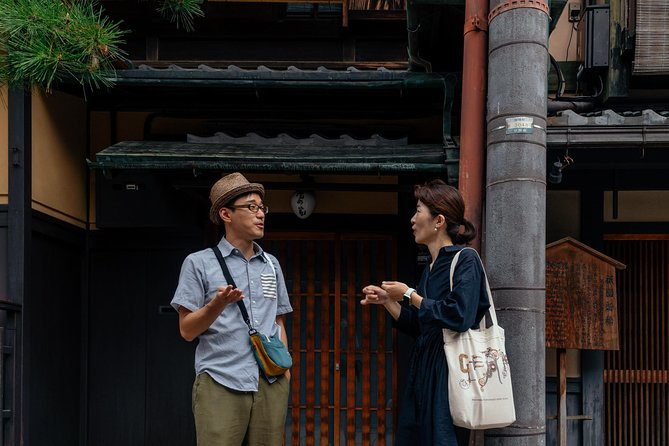
And the tone seems set from the start. Multiple guides named in customer feedback, including Ted, Ted-san, Ahmed, Shohei, Kako, and Maha, are praised for being respectful with the subject and for making the conversation feel natural. If you care about how traditions function day to day, that conversational style is a big part of the value.
A few more Kyoto days to weigh up
- PERFECT KYOTO 1-Day Bus Tour
★ 5.0 · 13,518 reviews - Kyoto: Fushimi Inari, Kinkakuji, Bamboo Grove 1 Day Bus Tour
★ 4.8 · 4,316 reviews - Kyoto: Tea Ceremony in a Traditional Tea House in Kiyomizu
★ 4.9 · 3,519 reviews
Price and What You Get for $135.45
At $135.45 per person for about 2 hours 30 minutes, this is not a cheap “wander and hope” option. You are paying for a private local host and a tight, guided route in a part of Kyoto where it is easy to feel like you are underqualified to interpret what you see.
Here is where the value shows up:
- Private access to interpretation. Instead of reading plaques for half the tour, you get explanations as you walk.
- Time efficiency. The stops are close enough that the tour stays short but still meaningful.
- No admission fees at the listed stops. The tour includes sights marked as free to enter, so you avoid surprise add-ons for each stop.
- Low-friction logistics. A mobile ticket is included, which tends to make check-in simpler.
Is it perfect value for everyone? If you already know Kyoto well and love self-guided wandering, you might feel like you are paying for direction you could replicate. But if you are time-tight, new to the area, or just want your questions answered while you are standing in the right spot, this pricing starts to make sense fast.
Start in Higashiyama: Izumo no Okuni and the Performance Roots
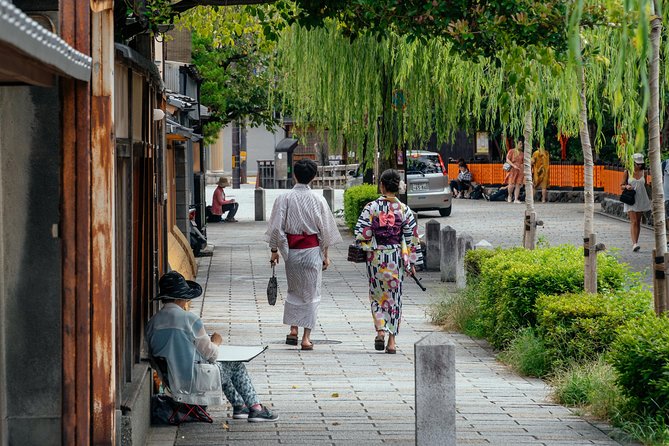
You begin in Higashiyama at Kawabatacho and walk into the cultural origin story first. The first stop is the Statue of Izumo no Okuni. This is a quick one, about 20 minutes, but it gives you a key piece of context: Okuni is credited as an originator of kabuki theater. That detail matters because it frames the entire neighborhood with performance culture in mind. Even if you do not care about theater history, understanding that this area has long ties to public performance makes the Gion conversation click.
From there you move to Minamiza Theatre, spending another 20 minutes. You get a connection to the early Edo period roots (1596 to 1615). If you have ever wondered why old Kyoto feels theatrical, this stop helps you see it as part of a longer tradition, not just costumes.
A practical note: both stops are short by design. You are learning enough to enjoy the rest of the walk without turning it into a museum day. If you prefer slow, deep stops, you may want a second day for temples or a theater visit on your own later.
Minamiza to Gion: Shinbashi, Preservation Areas, and What You Are Actually Seeing
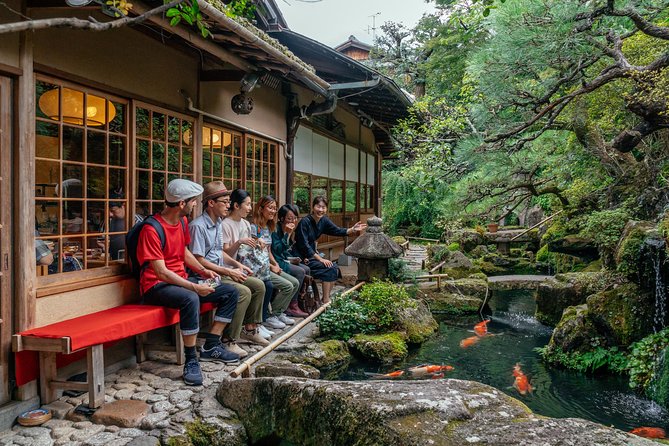
Next comes Gion, around 10 minutes. This is not just “the famous district.” The key detail you hear on this route is how different parts of Gion are protected. You learn about the traditional business preservation area near Gion Shinbashi and the historical scenery preservation area south of Shijo Street. That kind of zoning talk sounds technical, but it helps you understand why the streets look the way they do and why rules exist around buildings and streetscapes.
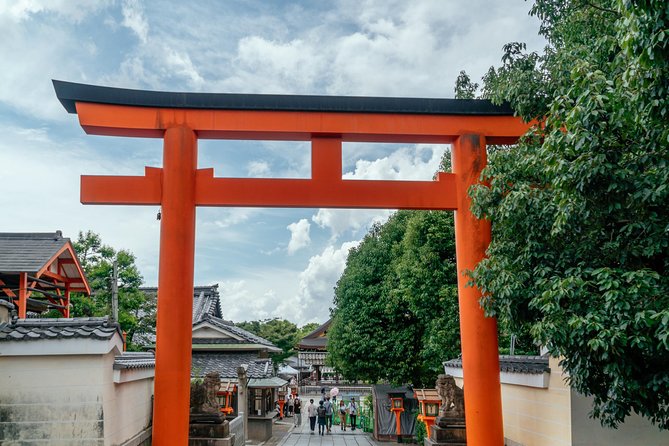
Then you reach Tatsumi Daimyojin Shrine for about 20 minutes. The tour frames it as a blend of Shinto and Buddhism, and that mix is a recurring theme across Kyoto. In practice, this helps you stop treating religion and culture as separate topics. Here, they intertwine with daily life.
You also get two short, high-impact street stops connected to the geisha world:
- Shinbashi Dori (about 10 minutes), where you stand outside traditional banquet buildings and hear how geisha would have entertained customers.
- Shijō Dori (about 10 minutes), where you walk on Shijō Street, literally tied to the old capital plan (Fourth Avenue of Heian-kyō).
These segments are where the tour turns from “sites” into “meaning.” Even if you are not chasing entertainment venues, you start to notice how streets, names, and building styles reflect social history.
The biggest drawback risk in Gion is crowd confusion. Withlocals guides in feedback are praised for steering people away from crowds, keeping the walk calm enough to actually talk. If you hate jostling, that guidance is a real plus.
A different sort of day in Japan:
- Kyoto Geisha Walking Tour: Gion District & Hidden Gems
★ 4.7 · 3,273 reviews - Kyoto: Tea Ceremony Ju-An at Jotokuji Temple
★ 4.9 · 3,207 reviews - Kyoto: 45-Minute Tea Ceremony Lesson Experience
★ 4.3 · 2,378 reviews - Kyoto: Gion Geisha District Walking Tour – Stories of Geisha
★ 4.7 · 2,187 reviews
Chion-in and Maruyama Park: Religion in Real Space
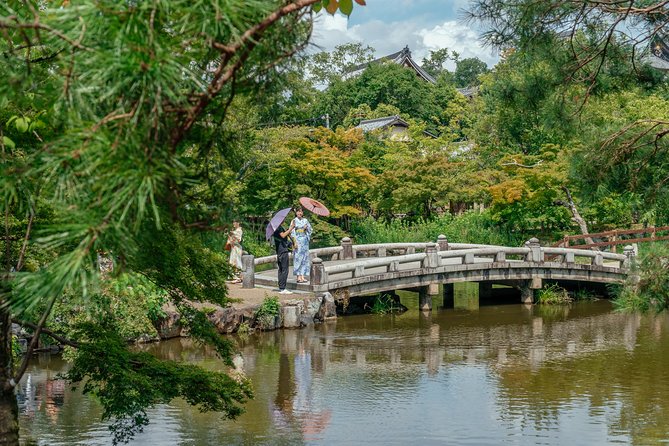
After the Gion-area context, you shift into temples and viewpoints.
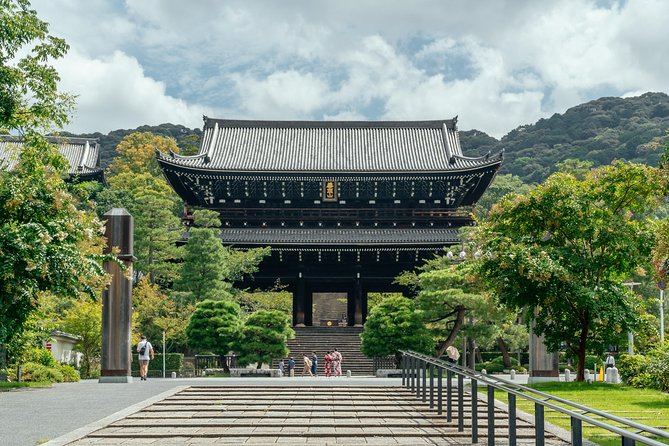
Chion-in Temple gets about 10 minutes. You walk up the steps for a better view and then look toward the garden area. This stop is short, but it gives you an important change of rhythm. You are moving from social history streets into a place designed for contemplation and long-standing religious practice.
Next is Maruyama Park for about 20 minutes. This is a breathing zone in the middle of the loop. Parks in Kyoto often feel like they are part of the temple ecosystem, and here it gives you a chance to reset your eyes before the final shrine-focused portion.
You then reach Yasaka Shrine for about 10 minutes. You hear a legend tying the shrine’s history back far earlier than the Heian era, connected to Emperor Seimei’s second year (in the 7th century, per the tour wording). Even if you do not remember dates afterward, this kind of story does something useful: it explains why locals keep returning to certain sites over centuries.
Yasaka Shrine Pagoda Views and the Kodaiji-area Wrap-Up
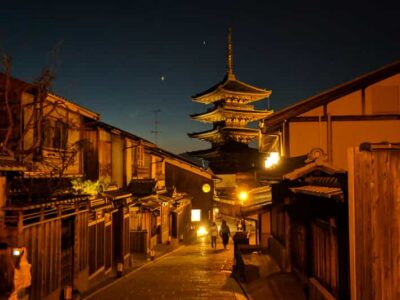
You spend more time around the Yasaka area, with another Yasaka Shrine segment described as including a picturesque 5-story Buddhist pagoda temple and the chance for sweeping views from the top. This is the capstone moment, because it gives you a visual payoff after all the cultural talk.
Finally, you walk along Nene-no-Michi, about 10 minutes. This street is tied to Kodaiji Temple, built in 1605 at the request of Nene. That helps connect the religious and historical narratives you heard earlier to specific people and specific timelines.
The tour ends near Yasaka Kamimachi (your finish point), and you also get a local cafe nearby to wrap things up. That ending matters more than it sounds. In a short, 2.5-hour tour, having an easy transition spot keeps you from sprinting off to find your next thing, especially in a neighborhood where streets can be maze-like.
Tips to Make the Walk Smooth (and Respectful in Gion)
This tour is designed for an easy-going pace, but you will still be walking and stopping often. Here are practical ways to get the most out of it:
- Wear shoes you can walk in for several short segments. The route crosses multiple neighborhood micro-areas.
- Bring a light layer. Kyoto can feel cooler near shaded temple grounds, and step-and-stand stops add up.
- Keep questions ready, not random. If you care about geisha traditions, ask how they were shaped over time, not just what you are seeing in the moment.
- For Gion, go slow around photo spots. Some streets are narrow, and crowd flow can change fast.
- If you are traveling with kids, this kind of guide-led conversation can work well. Customer feedback specifically mentions guides adapting to children and answering tons of questions without making it feel like a classroom.
Who This Tour Suits Best
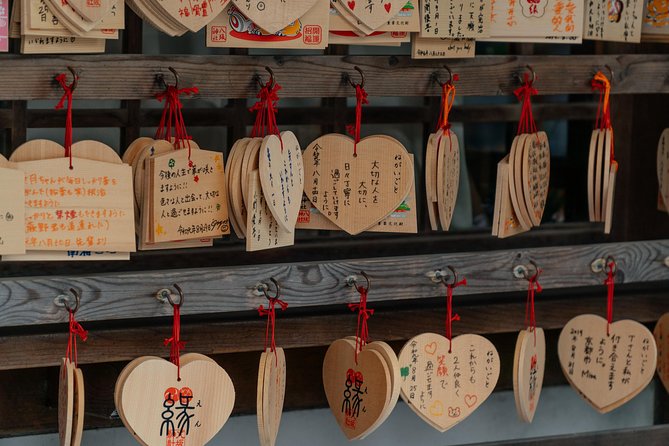
This tour fits you best if any of these are true:
- You are short on time but want more meaning than a checklist.
- You are new to Kyoto and want someone to keep you oriented in Higashiyama.
- You care about culture, not just scenery, especially the intersections of performance and tradition.
- You want private pacing. The tour is exclusively for your group, so it is not built around matching everyone else’s speed.
It is also a solid choice if you do not want long temple lines or long museum days. The route is compact, and the most important learning happens while you are actually in place.
If you already have a strong background in Kyoto history and you love deep, slow exploration, you might want to pair this with a longer, self-guided or specialist tour later.
Should You Book This Private Treasures of Kyoto Tour?
Book it if you want a fast but thoughtful introduction to Geisha culture and its supporting context in Gion and Higashiyama. The biggest reason is simple: you get an informed local host walking with you through tightly grouped stops, with plenty of time to pause and talk. At $135.45 per person for 2.5 hours, the price feels fair when you value interpretation over aimless wandering.
Skip it or reconsider if you strongly prefer self-guided travel with little conversation. This one is built for questions and storytelling as much as it is built for views. Also, because there is no hotel pickup, you should be comfortable starting from the meeting point on your own.
If you do book, plan on a calm afternoon mindset. This works best when you treat it like a guided neighborhood walk where you learn what the streets are for, who they served, and why these religious and performance traditions still shape the area.
FAQ
How long is the Treasures of Kyoto: Geishas & Traditions Private Tour?
It runs for about 2 hours 30 minutes.
Is this tour private, or is it part of a group?
It is a private tour, exclusively for your party.
Where does the tour start and end?
It starts at Kawabatacho, Higashiyama Ward, Kyoto, and ends at Yasaka Kamimachi, Higashiyama Ward, Kyoto.
Is hotel pickup included?
No. Hotel pickup and drop-off are not included.
Do I need to pay admission at the stops?
The listed stops are marked as free admission in the tour details.
Are food and drinks included?
Food and beverages are not listed as included.
What is the physical demand level?
The tour suggests a moderate physical fitness level.
Does the tour include a local guide?
Yes, a local guide is included.
Can I cancel for a full refund?
Yes, you can cancel for a full refund up to 24 hours in advance of the experience start time.
Newly listed around Kyoto
- Kyoto Full Course Tour: Explore 10 Must-See Sights & Hidden Gems★ 4.5 · 25 reviews
- Takashi’s local food adventure through Gion Kyoto tips of Ramen★ 4.5 · 8 reviews
- Kyoto night walk tour (Gion district)★ 5.0 · 91 reviews
- 2 Hour Night Walking Tour Throughout Gion with snack★ 4.0 · 13 reviews
- Guided Gion Tour: Explore Kyoto’s Historic Geisha District★ 4.5 · 16 reviews
- Kyoto Evening Gion Food Tour Including Kaiseki Dinner★ 5.0 · 62 reviews
- Gion and Fushimi Inari Shrine Kyoto Highlights with Government-Licensed Guide★ 4.5 · 21 reviews
- Kyoto 5-Star Geisha Night Walk: Small-Group Authentic Experience★ 5.0 · 162 reviews
Kyoto Tours, compared.
Fushimi Inari, Kinkakuji, Bamboo Grove 1 Day Bus Tour
Read our review →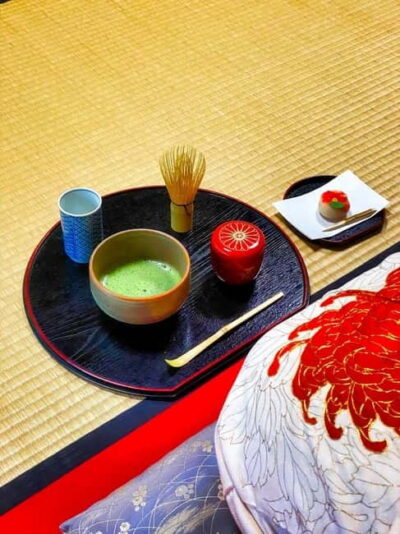
Tea Ceremony in a Traditional Tea House in Kiyomizu
Read our review →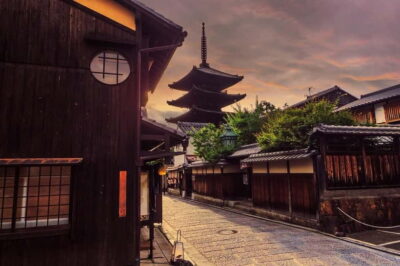
Kyoto Geisha Walking Tour: Gion District & Hidden Gems
Read our review →
Gion Geisha District Walking Tour – Stories of Geisha
Read our review →