
Review · GEISHA DISTRICT WALKS
Guided Gion Tour: Explore Kyoto’s Historic Geisha District
Gion hits different when the lanterns glow. This private 2-hour walk in Kyoto’s historic geisha district is built around photo-friendly stops like Yasaka Shrine, Maruyama Park, and Hanamikoji Street, with plenty of time to ask questions and steer the pace.
I like two big things right away. First, you get a tight route that hits the places tied to traditional Kyoto life, including Chion-in’s temple gate and the areas where you’re most likely to spot geisha or maiko. Second, the private format means your guide can adjust for what you care about, and the walk stays discussion-based, not just a “follow me” shuffle.
One thing to keep in mind: geisha or maiko sightings are never guaranteed, and on a very hot day, the pace can feel like a lot for some people. If you’re going in summer, plan for breaks and water.
In This Review
- Key points at a glance
- Gion in 2 Hours, and What You Can Expect
- Price and what you actually get for $350
- Private pickup, mobile ticket, and how to plan your start
- Your route: Gion, Chion-in, Yasaka Shrine, Maruyama Park, and Hanamikoji
- Stop 1: Gion area and Hanami Street photo chances
- Stop 2: Izumo no Okuni Statue, a quick cultural pivot
- Stop 3: Chion-in Temple gate, gate-first impact
- Stop 4: Yasaka Shrine, lantern-lit vibes and festival energy
- Stop 5: Maruyama Park for a breather
- Stop 6: Hanamikoji Street, the classic Gion postcard lane
- Guides who keep the conversation going, not just the walking
- Geisha and maiko sightings: best-effort, not a promise
- Timing matters: morning for calm, night for atmosphere
- Pacing, heat, and comfort tips that actually help
- Who should book this Gion guided walk
- Is it worth it? My take on value and realism
- Should you book this Gion tour?
- FAQ
- What is the duration of the Guided Gion Tour?
- How much does the tour cost, and what group size is it for?
- Is pickup available?
- What kind of ticket do I receive?
- Does the tour include entry fees?
- Are geisha or maiko sightings guaranteed?
- How many stops are included in the itinerary?
- When can I book the tour?
- What happens if weather is poor?
Key points at a glance
- Private tour for up to 8, so you can keep questions going without feeling rushed
- Free entry at the listed stops (Yasaka Shrine, Chion-in area, and more)
- Photo-focused route that connects key Gion streets and landmarks
- Guide-led sightings strategy, with best-effort chances on Hanami Street and nearby lanes
- Flexible tour timing options, including early morning for fewer crowds or night for streetlight mood
Gion in 2 Hours, and What You Can Expect
Kyoto’s Gion district is one of those places where you can’t “zoom through” and call it done. The streets have a rhythm, and the details matter. This tour is designed for that reality. In about 2 hours, you move through classic Gion scenery, hit major landmarks nearby, and get a guide to explain what you’re seeing while you walk.
Because it’s private, you’re not stuck with a slow group in front of you or people stopping every five seconds. Your guide can set a pace that fits your comfort level, and you can ask questions along the way. That changes the whole experience, especially in a district where customs and etiquette are part of the scenery.
More History Tours in Kyoto
- Kyoto Gion Historical Walking Tour
★ 5.0 · 188 reviews - Historical Kyoto E-Bike Tour
★ 5.0 · 181 reviews - Kyoto: Private 2.5 Hour Historical Walking Tour
★ 4.9 · 121 reviews
Price and what you actually get for $350
At $350 per group (up to 8 people), this isn’t the cheapest way to see Gion. It is, however, a very practical way to buy time with an expert guide who can point out what matters, rather than spending your limited hours wandering and hoping you’ll notice the right things.
Here’s the value logic I like for this kind of tour:
- You pay for the guided time, not admission.
- The tour includes free entry at the listed stops, so your money goes toward interpretation.
- Group size is capped, which keeps the experience personal.
If you’re traveling solo, the per-person cost can be high compared with a public tour. If you’re going with a small group, it can feel much more reasonable. Booking ahead is also smart. This tour is commonly reserved about 40 days in advance, which tells you demand is real.
Private pickup, mobile ticket, and how to plan your start
The tour offers pickup and uses a mobile ticket, which is useful if you like not hunting for paper confirmations. It’s also described as near public transportation, so you should have options even if your hotel pickup logistics are a little tight.
Practical tip: since you’ll be walking through older streets and shrine approaches, wear shoes you trust. Gion lanes can be uneven, and you’ll want stable footing when you’re stopping for photos.
Your route: Gion, Chion-in, Yasaka Shrine, Maruyama Park, and Hanamikoji
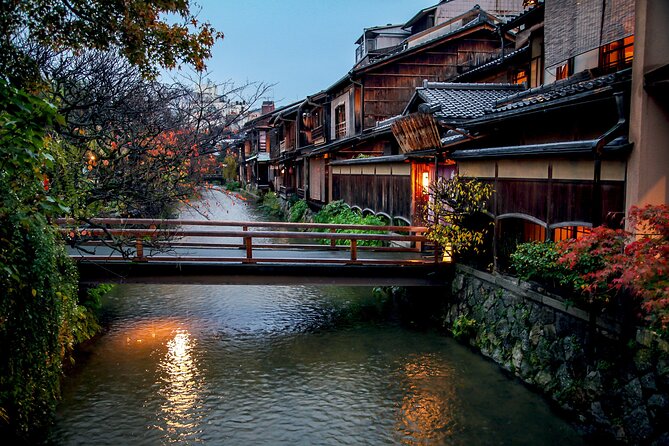
This is a compact itinerary, with each stop doing a specific job. The goal is to show you the “Gion picture” from several angles, so you understand the district instead of memorizing a checklist.
Compare these Geisha District walks in Kyoto:
- Kyoto Geisha Walking Tour: Gion District & Hidden Gems
★ 4.7 · 3,273 reviews - Kyoto: Gion Geisha District Walking Tour – Stories of Geisha
★ 4.7 · 2,187 reviews - Best of Kyoto: Gion, Geisha, Pagodas & Cobblestones
★ 4.9 · 2,058 reviews - Night Walk in Gion: Kyoto’s Geisha District
★ 4.5 · 2,003 reviews
Stop 1: Gion area and Hanami Street photo chances
The walk begins right in the heart of Gion. You’ll spend about 1 hour here, with a focus on historic streets and the kind of streets where you might spot geisha or maiko. Hanami Street is specifically mentioned as a place where you may be lucky.
Even if you don’t see anyone, this part still works because you’re learning how the district looks and why it’s set up the way it is. Gion is known for preserved traditional architecture, and a good guide will help you notice the details you’d otherwise miss, like the relationship between street layout and the atmosphere people expect.
Stop 2: Izumo no Okuni Statue, a quick cultural pivot
Next you visit the Statue of Izumo no Okuni, dedicated to the figure often credited with founding Kabuki theater. This is short, about 15 minutes, but it adds a useful layer: performance culture did not spring out of nowhere. It grew from people, places, and public life.
This stop is also a reminder that Kyoto’s tradition is not only “sightseeing.” It’s living cultural reference points.
Stop 3: Chion-in Temple gate, gate-first impact
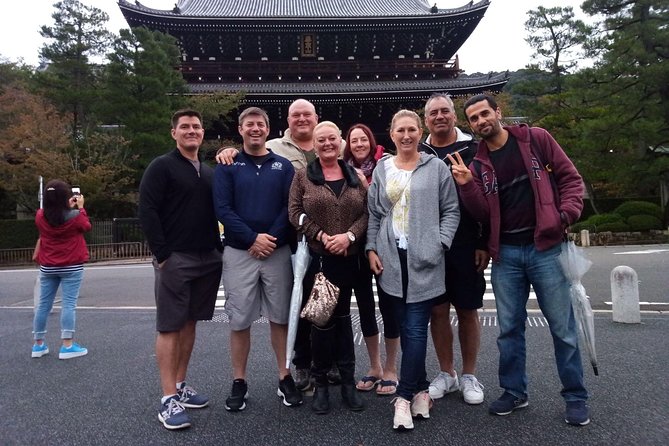
You’ll spend around 15 minutes at Chion-in Temple gate. The main draw is the gate itself, with its massive wooden structure and intricate carvings. Even on a short stop, this kind of architecture does something for your sense of place. It gives you scale, texture, and a strong visual anchor.
Also, entry at this stop is listed as free, so you can stay focused on the experience instead of budgeting for tickets.
Stop 4: Yasaka Shrine, lantern-lit vibes and festival energy
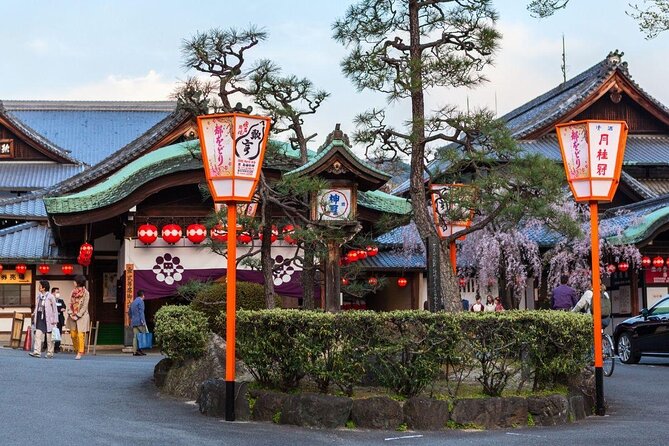
Yasaka Shrine is one of the biggest names on the route, with about 10 minutes here. The standout for visitors is how lively it can feel, with festivals in mind and lantern-lit pathways that create strong photo opportunities.
For me, the best use of this stop is to slow down. Take your photos, yes, but also pause for a moment and watch how people move through the shrine approach. Your guide can also point out what to pay attention to so your pictures turn into understanding, not just images.
Entry is listed as free, which helps keep this tour focused on guided storytelling.
Stop 5: Maruyama Park for a breather
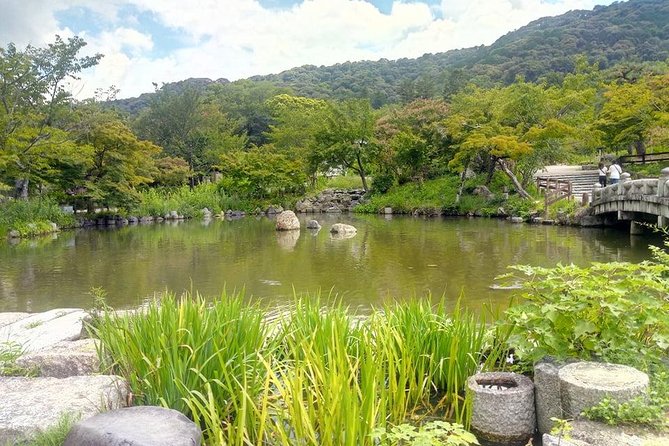
Then you shift from shrine architecture to green space at Maruyama Park, about 10 minutes. This break matters. It’s a chance to reset your body, cool down a little, and soak in a quieter pocket of Kyoto after the busier shrine area.
Maruyama Park is a great place for casual photos and gentle walking. If you’re visiting in a season with cherry blossoms, you might see seasonal scenery depending on timing, but even without that, it’s a nice reset point in the middle of the tour.
Stop 6: Hanamikoji Street, the classic Gion postcard lane
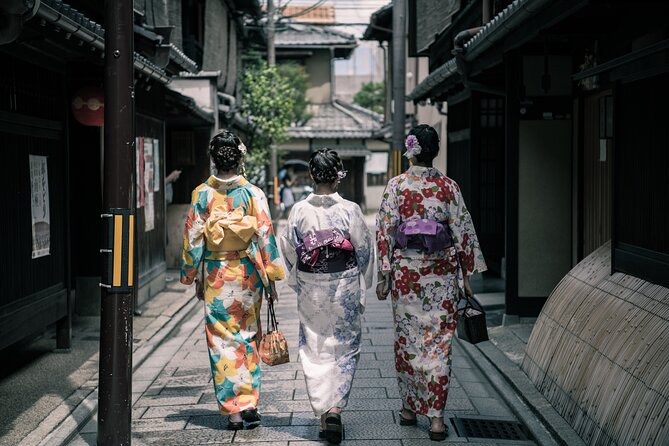
The final stop is Hanamikoji Street, around 10 minutes. This is described as the charming heart of Kyoto’s geisha district, lined with traditional teahouses and elegant machiya houses.
This is where you’ll feel the district’s “main character” energy. It’s also where your guide’s context helps the most, because the street can look pretty, but understanding why it’s famous makes your photos and memories stick longer.
Guides who keep the conversation going, not just the walking
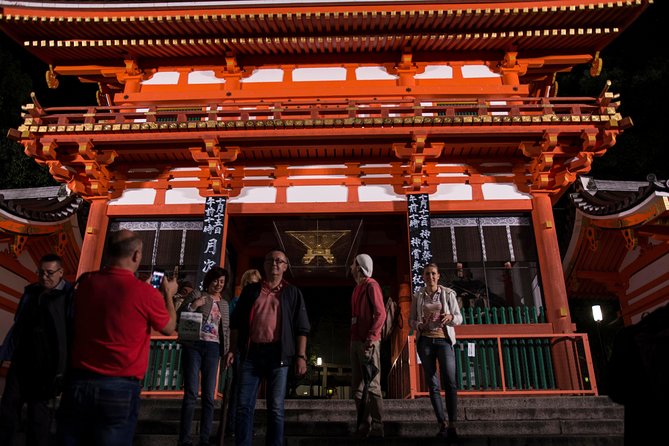
A lot of this tour’s value comes down to the guide. In the feedback for this experience, two names show up often: Ahmed and Mat. Both are praised for staying attentive, answering questions, and making the explanations feel like they connect to daily life and local customs.
That matches what I’d look for in a Gion guide. This district has rules, unspoken etiquette, and cultural cues that can be hard to figure out on your own. A guide who can translate those cues helps you enjoy the walk instead of worrying you might be missing something.
Geisha and maiko sightings: best-effort, not a promise
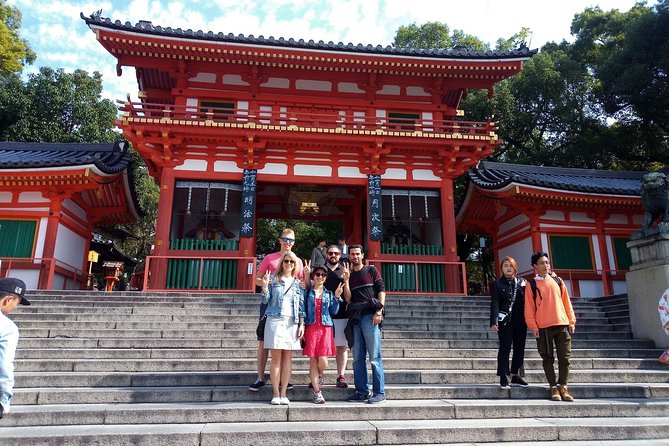
Here’s the honest part. The tour is designed to take you to spots where you’re most likely to see geisha or maiko. Hanami Street is specifically mentioned for that chance, and your guide may try to spot opportunities while you’re in the right area.
But the tour also makes it clear that time with geisha or maiko is not part of the package in any guaranteed way. That means you should treat sightings as a bonus.
If seeing geisha or maiko is your top goal, I’d plan your expectations around probability. Then make the tour work for you anyway by focusing on the cultural stops, architecture, and why Gion looks the way it does.
Timing matters: morning for calm, night for atmosphere
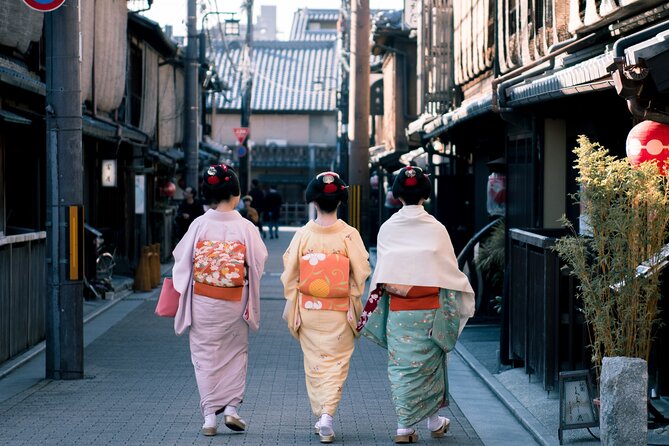
You have options. The tour notes that you can choose early morning to see Gion with less crowding, or go at night to see the district shift as streetlights come on.
My practical take:
- Morning can help you move slowly, take photos without fighting crowds, and enjoy the streets as streets.
- Night can add mood to your photos, but you’ll want good lighting habits with your camera and comfortable shoes.
If you’re the type who hates shoulder-to-shoulder walking, morning is usually the safer bet. If you love atmosphere and don’t mind that the walk feels more “scene-like,” night can be stunning.
Pacing, heat, and comfort tips that actually help
One review highlighted a very hot day and mentioned that the pace can feel tough for some people. That’s exactly the kind of real-world detail you should factor in.
If you’re visiting in summer or on a warm day:
- Bring water and take breaks if your guide allows it.
- Wear lightweight layers so you can keep moving.
- If you’re traveling with anyone who tires easily, tell the guide early so the pace can be adjusted.
Private tours can be flexible. But you still need to match your body to Kyoto’s weather.
Who should book this Gion guided walk
This is a great fit if:
- You want an organized route that connects Gion streets to nearby cultural landmarks.
- You care about understanding customs and context, not only taking pictures.
- You’re traveling with a small group and want a private guide for question time.
It’s especially useful if you like structure. If you prefer totally free wandering, you might feel constrained by a set route. In that case, you could still use the route as inspiration, but the guided explanations are the main reason this tour makes sense.
Is it worth it? My take on value and realism
For the price, what you’re buying is guided time plus free stops plus a private group experience. You’re not paying for expensive tickets. You’re paying for someone to help you see what matters in a short amount of time, and to point out chances for geisha or maiko without promising something nobody can control.
When I judge value, I look for three things: clarity, comfort, and expectation management. This tour scores well on clarity with a tight itinerary. Comfort is mostly up to weather and pacing, so plan ahead. Expectation management is straightforward about sightings.
If you want a simple, high-impact Gion introduction with real context, this tour is a solid choice.
Should you book this Gion tour?
Yes, if you want a private, explanation-driven walk through Gion with smart photo stops and a guide who will answer your questions. It’s a particularly good idea if you only have a limited window in Kyoto and you’d rather make your time count.
Skip or rethink it if your main goal is a guaranteed geisha or maiko encounter, because this experience is built around best-effort sightings, not guaranteed access. Also consider your comfort with heat and walking, since pacing can feel demanding on very hot days.
If you match your expectations and bring basic comfort gear, you’ll come away with photos and a much better sense of how Gion works.
FAQ
What is the duration of the Guided Gion Tour?
The tour lasts about 2 hours.
How much does the tour cost, and what group size is it for?
It costs $350.00 per group, and the group size is up to 8 people.
Is pickup available?
Yes, pickup is offered.
What kind of ticket do I receive?
You receive a mobile ticket.
Does the tour include entry fees?
The listed stops are marked as free, so admission for those stops is included as free.
Are geisha or maiko sightings guaranteed?
No. The tour is designed to visit spots where you may be lucky to see geisha or maiko, but it is not presented as a guaranteed encounter.
How many stops are included in the itinerary?
There are six stops: Gion, Izumo no Okuni Statue, Chion-in Temple, Yasaka Shrine, Maruyama Park, and Hanamikoji Street.
When can I book the tour?
Confirmation is received at the time of booking, and the tour is commonly booked about 40 days in advance.
What happens if weather is poor?
This experience requires good weather. If it is canceled due to poor weather, you will be offered a different date or a full refund.
More Historical Tours in Kyoto
- From Kyoto: Nara History Guided Half Day Bus Tour with Lunch
★ 4.8 · 114 reviews - Private car tour Let’s uncover secrets of majestic Kyoto history
★ 5.0 · 45 reviews - Kyoto: Historic Higashiyama Walking Tour
★ 5.0 · 31 reviews - Kyoto/Osaka: Kobe & Himeji Journey Through Culture & History
★ 3.7 · 18 reviews
Newly listed around Kyoto
- Kyoto Full Course Tour: Explore 10 Must-See Sights & Hidden Gems★ 4.5 · 25 reviews
- Takashi’s local food adventure through Gion Kyoto tips of Ramen★ 4.5 · 8 reviews
- Kyoto night walk tour (Gion district)★ 5.0 · 91 reviews
- 2 Hour Night Walking Tour Throughout Gion with snack★ 4.0 · 13 reviews
- Kyoto Evening Gion Food Tour Including Kaiseki Dinner★ 5.0 · 62 reviews
- Gion and Fushimi Inari Shrine Kyoto Highlights with Government-Licensed Guide★ 4.5 · 21 reviews
- Treasures of Kyoto: Geishas & Traditions Private Tour★ 5.0 · 36 reviews
- Kyoto 5-Star Geisha Night Walk: Small-Group Authentic Experience★ 5.0 · 162 reviews
Geisha District Walks, compared.

Kyoto Geisha Walking Tour: Gion District & Hidden Gems
Read our review →
Gion Geisha District Walking Tour – Stories of Geisha
Read our review →
Best of Kyoto: Gion, Geisha, Pagodas & Cobblestones
Read our review →

Kyoto Night Foodie Tour in Gion (9+ dishes + 6 Sake tastings)
Read our review →
Kyoto Gion Geisha District Walking Tour – The Stories of Geisha
Read our review →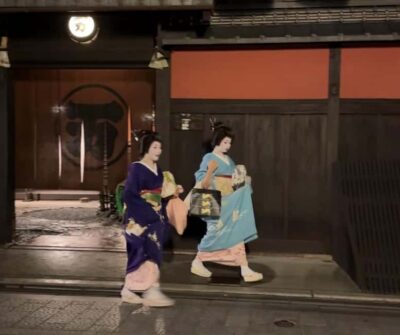
Gion Magical Night Walking Tour with Geisha Insights
Read our review →
Kyoto Gion Night Walk & Geisha District Guided Tour
Read our review →Browse the lists this tour appears in