
Review · GEISHA DISTRICT WALKS
Takashi’s local food adventure through Gion Kyoto tips of Ramen
Ramen in Gion feels like a secret, and this 3-hour night walk sends you through historic alleys with a guide who steers you to the right ramen stop. I like how guides like Natsuki and Takashi mix street-level stories with practical picks, and I like that you end up seated for dishes the guide selects, often including katsu or izakaya-style bites. One thing to consider is timing, this is not a nonstop multi-tasting crawl at every minute, so arriving late can shrink what shops and stalls are still open.
You meet at Gion-Shijo Station (7:30 pm start), then head into the Gion area where you might spot maiko or geisha and you’ll walk at an easy evening pace. It’s a private experience, so it’s just your group with personalized navigation, and you’ll use a mobile ticket. Expect lots of wandering through back streets, then a restaurant meal where the guide does the ordering work.
In This Review
- Key highlights you can plan around
- Why Gion night food works better than a daytime checklist
- Meet the guides: Takashi’s Kyoto brain and Natsuki’s feel-good hosting
- Gion after-dark: from Gion-Shijo Station into lantern alleys
- What to watch for
- Yasaka Shrine: the cultural anchor before you eat
- A drawback worth planning for
- Kawaramachi and the hidden-restaurant idea
- What you’ll likely eat, and how the guide handles ordering
- The ramen angle
- Price and value: what you pay for, and what you don’t
- Timing, pacing, and how to avoid the most common letdown
- Arrive early enough to catch open stalls
- Expect a restaurant-heavy evening
- Comfortable shoes are non-negotiable
- Who should book this and who should skip it
- Should you book this Takashi ramen-style Gion tour?
- FAQ
- FAQ
- What time does the tour start?
- Where do I meet the guide?
- How long is the tour?
- Is this tour private?
- Does the tour include admission fees?
- Is the food included in the price?
- What kinds of food might I try?
- Can I encounter maiko or geisha during the walk?
- What should I expect to physically do?
- Can I cancel for free?
Key highlights you can plan around
- A night-food route built around Gion’s back lanes instead of only the big photo streets
- Yasaka Shrine as a cultural stop tied to the entertainment history of Gion
- Guide-selected dishes, with options that can include ramen, katsu, and izakaya-style food
- Maiko and geisha possibilities while you move through the district
- Local restaurant logic, the place you’re sent to is meant to be the one locals actually go to
Why Gion night food works better than a daytime checklist
Gion looks gorgeous in daylight, but it’s the night that makes the eating part feel natural. At 7:30 pm, the streets have that slow, lived-in rhythm. You’re not fighting tour groups for space. You’re walking past old storefront vibes and canal-adjacent lanes with lanterns, then sitting down when you’re properly hungry.
This tour’s value is that it turns “Where should I eat?” into a simple plan. Your guide doesn’t just point at a restaurant, they take you through the district in the order that keeps you moving and gives you context while you stroll. That matters in Kyoto, where a single wrong turn can land you in the tourist version of what you came for.
The experience also leans into the food-and-stories combo. One of the best parts is the way the guide connects Gion’s entertainment legacy to what you’re seeing nearby, including the role of Yasaka Shrine and the performance culture associated with the area. It makes your ramen stop feel less random and more like you’re following the district’s logic.
More Food Tours in Kyoto
- Kyoto Night Foodie Tour in Gion (9+ dishes + 6 Sake tastings)
★ 5.0 · 1,762 reviews - 3-Hour Kyoto Insider Sake Brewery Tour with Tastings & Pairings
★ 5.0 · 917 reviews - Arashiyama Bamboo, Temple, Monkeys, or Secret Sake Brewery
★ 4.8 · 886 reviews
Meet the guides: Takashi’s Kyoto brain and Natsuki’s feel-good hosting
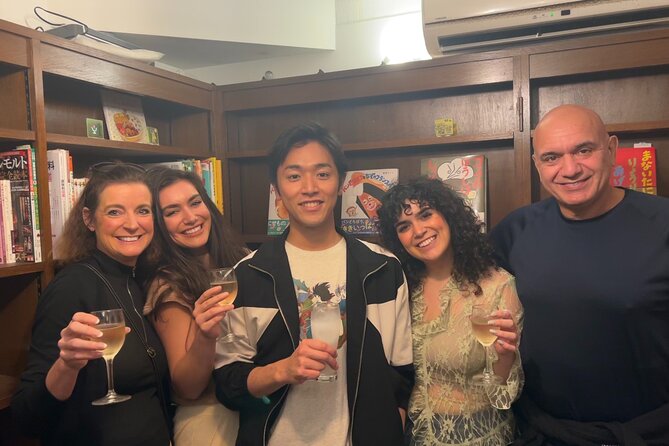
The two names you’ll hear in this operation are Takashi and Natsuki. Both are described as friendly and engaged, with a style that makes you feel like you can ask questions without worry.
Takashi gets called out as especially strong on big-picture Kyoto. If you want to understand how things connect, from geography to the kinds of stories people tell about pagodas and the entertainment world, he’s the guide to ask. And if ramen is your goal, the recommendations tied to his style are treated as must-check.
Natsuki is the name that comes up with a “made the evening worthwhile” vibe. That’s important because food tours can go sideways if the walk drags or the guide’s energy is flat. In the notes you provided, Natsuki is repeatedly described as delightful, welcoming, and willing to keep the evening fun while also explaining what you’re looking at.
The practical takeaway for you: if you’re the type who likes to talk, ask. This tour is built for questions, not silent head-down walking.
Gion after-dark: from Gion-Shijo Station into lantern alleys
You start at Gion-Shijo Station, then your guide leads you into the heart of Gion. Right away, you’re stepping into the area known for its long-running culture of entertainment and craftsmanship, a history that stretches back over 500 years. You’ll pass lively streets and shops, but the goal is not to stay on the busiest main strip.
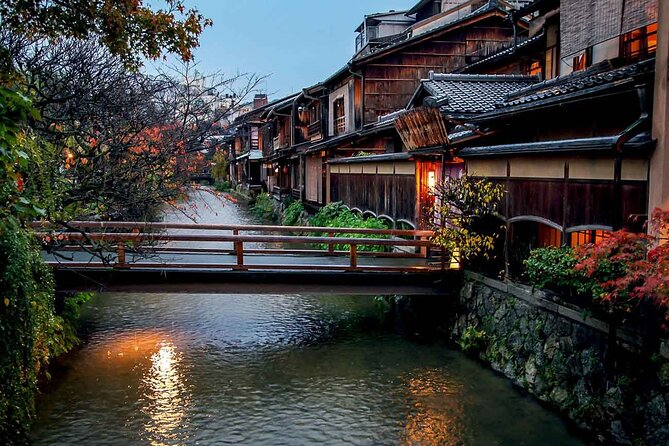
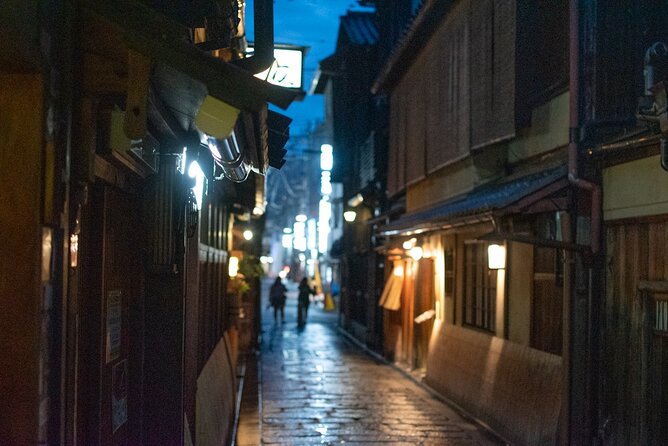
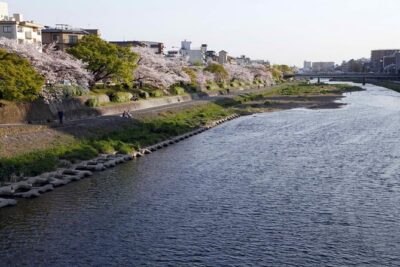
Instead, you get pulled into the smaller lanes. The itinerary includes a walk through narrow alleys along the canal area, where lanterns and small shops help you feel the neighborhood mood. This is where the tour earns its “local navigation” part. You don’t just see Gion, you learn how to move through it without getting stuck in the most obvious tourist routes.
You might also encounter maiko and geisha along the way. The wording to expect is “you may,” which is honest. You’re not promised a sighting at a specific moment. But walking through Gion in the evening is exactly when people do their rounds and when performers can be spotted heading to or from engagements.
What to watch for
Because you’re moving at night, comfort matters. The tour asks for moderate physical fitness, and you should expect uneven pavement and standing in small spaces near lantern-lit lanes. It’s not a long-distance hike, but it is a walk.
Also, if you want the full experience, arrive on time. One frustration described with this kind of tour is simple: shops and stalls close as the night wears on. Being late can shrink the number of stops you get before you sit down.
More Ramen Trips in Kyoto
- Ramen Cooking Class at Ramen Factory in Kyoto
★ 5.0 · 1,937 reviews - Kyoto: Ramen Cooking Class at a Ramen Factory with Souvenir
★ 4.9 · 532 reviews - Kyoto: Ramen, Gyoza, and Onigiri Cooking Class
★ 5.0 · 445 reviews - Home style Ramen and Homemade Gyoza in Kyoto
★ 5.0 · 152 reviews
Yasaka Shrine: the cultural anchor before you eat
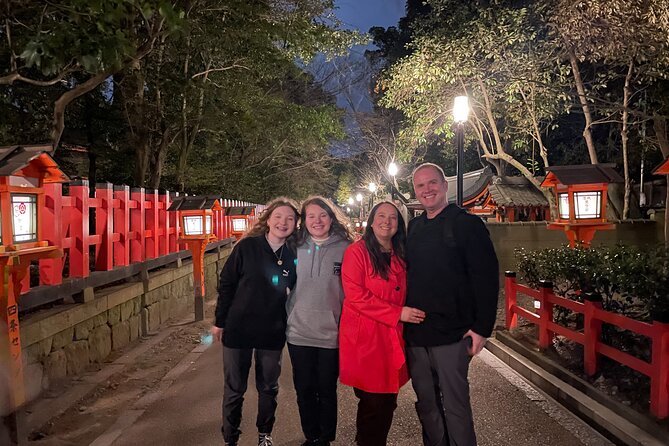
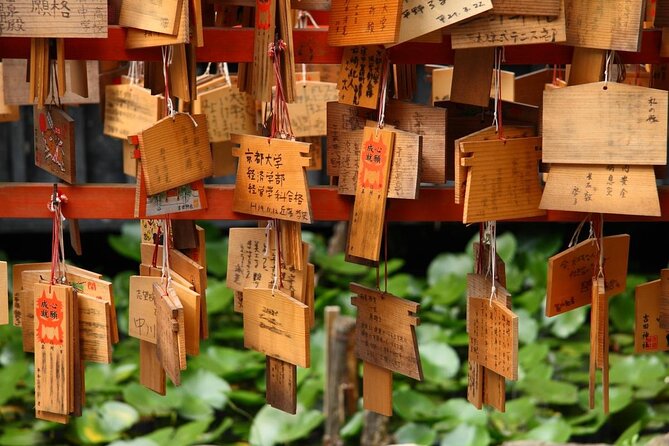
One of the scheduled stops is Yasaka Shrine, with an admission ticket free note and about 30 minutes there. This part isn’t just a postcard pause. The tour frames Yasaka Shrine as important in the way Gion’s entertainment culture formed around it, including links to performance arts like geisha-related culture and kabuki development in the district.
Even if you’re not the type to read every sign, the time is useful. You get a shared point of reference for what you’re seeing in Gion and why the streets around it have the feel they do. It’s also a reset moment before the eating phase, especially if your day was already packed with temples and long train rides.
You might also run into small snack moments in or around the shrine area, such as mochi or food stand-style stops. The idea is that you sample small local treats as you go, then transition into a proper meal once you’re in position to eat comfortably.
A drawback worth planning for
The shrine stop can be part of a longer evening rhythm, not a quick grab-and-go. If you’re expecting a strict “tasting every 15 minutes” setup, you might find the flow more guided and restaurant-centered than you imagine. That’s not bad, just a mismatch risk, especially if you’re the type who wants lots of different dishes in tiny portions.
Kawaramachi and the hidden-restaurant idea
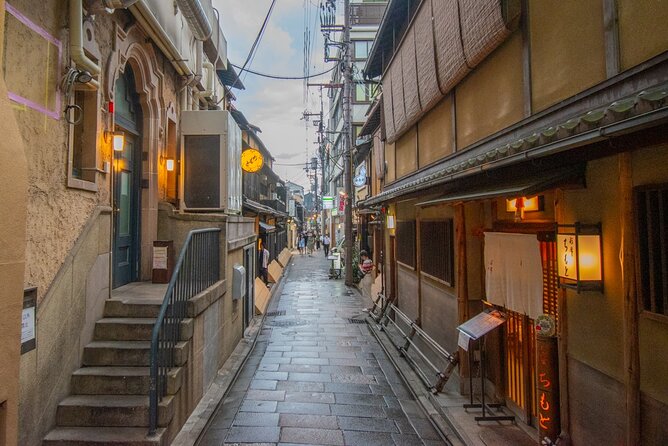
After the shrine and alley walking, the tour ends up at Kawara-machi, where the restaurant part begins. The way the experience is described, the goal is to avoid the “trapped in tourist areas” feeling. In other words, you’re aiming for local eating spots that are easy for locals to find and harder for foreigners to spot without help.
That matches what you’d expect from how Kyoto restaurants often operate. Some are tucked behind signage, down narrow corridors, or in lanes that don’t scream for attention. The guide selection standard is also specifically focused on local food, not tourist traps.
The key word here is “local.” You’re buying the meal, but your guide is doing the hard work of choosing a place that fits what you’re looking for. And because you choose different restaurants on different tours, you should think of this as a style of evening rather than a fixed menu at a fixed address.
What you’ll likely eat, and how the guide handles ordering
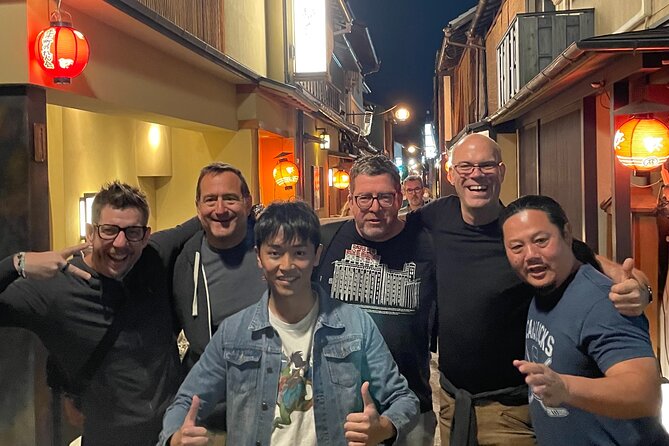
The tour explicitly mentions that you may try local favorites in styles like katsu, ramen, or izakaya. The guide also selects dishes for each stop, so you’re not stuck translating menus with a limited time window.
This matters for value. In Kyoto, eating well can be easy if you know what you’re ordering, and hard if you don’t. A guide who can steer you to the right dish reduces the odds of accidentally overpaying for something you could get anywhere.
That said, you should know the cost structure clearly:
- All food is bought by guests.
- The guide’s meals are handled separately, but you’re responsible for what you eat.
So the tour price is for the evening navigation and guidance, not the food bill. If you’re trying to compare total value to another food tour, estimate your meal cost separately and plan accordingly.
The ramen angle
Because this is framed as Takashi’s ramen-adventure style, you should expect a serious ramen moment. But exact dishes can vary by tour and by what the guide thinks you’ll enjoy most that night. The point is that ramen isn’t treated as a token add-on. It’s a core part of the direction.
Price and value: what you pay for, and what you don’t
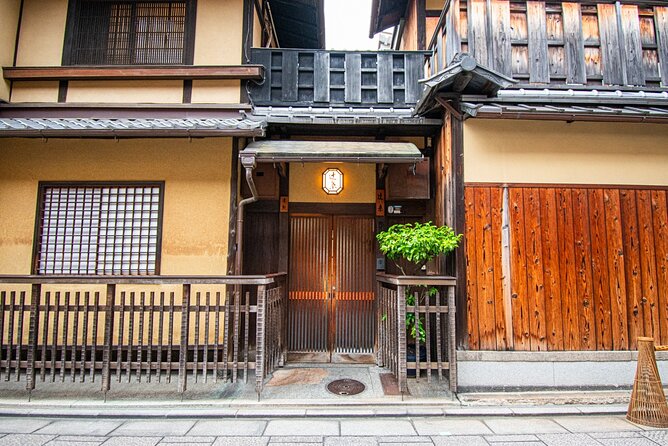
The listed price is $166.14 per person for about 3 hours. That’s not cheap, but it can be fair in Kyoto if you think about what you’re buying.
You’re paying for:
- Private navigation through Gion at night
- A guide who can explain what you’re seeing while you walk
- Restaurant strategy that helps you find places that are meant for locals
You are not paying for:
- The food itself (you buy it)
- Any shrine admission (Yasaka Shrine is listed as free)
If you want a money-math gut check, this tour tends to make sense if you’re going to eat more than a quick snack. If you only want one small bite, the guide-led structure might feel more expensive.
Timing, pacing, and how to avoid the most common letdown
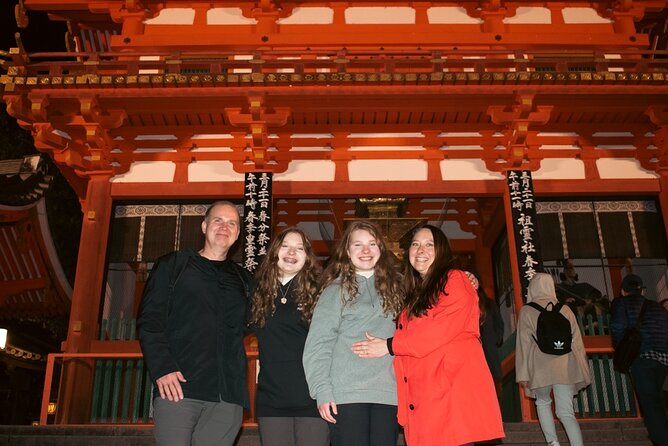
A key lesson from the feedback patterns you shared is that expectations and timing both matter.
Arrive early enough to catch open stalls
One mismatch described was arriving about 40 minutes late, which meant many shops were closed. This tour runs in the evening, and that’s exactly when closures happen. If you want the “extra stops” vibe, don’t gamble with lateness.
Expect a restaurant-heavy evening
Even though it’s a “food adventure,” it’s not necessarily structured as a tasting crawl with constant stops. It’s more like: walk, see key sights and lanes, then sit down for the main meal with guide-selected dishes.
If your dream is multiple tiny tastes at many different counters, ask the provider ahead of time how many food stops you should expect on your specific night. The safer bet is to treat it as a guided night out that includes ramen and a real meal.
Comfortable shoes are non-negotiable
You’re walking through Gion lanes and alleys. Kyoto pavement can be uneven, and evening walking means you’ll feel it more than you think. Go in with shoes you trust.
Who should book this and who should skip it
This tour fits best if you:
- Want a guided, local-food-focused night in Gion
- Are interested in the cultural context of Gion, not just eating
- Like talking to your guide and asking questions
- Plan to actually sit down for dinner, not just snack
You might want to skip or adjust expectations if you:
- Want only a light tasting menu with many micro-stops
- Have a tight schedule and can’t protect the 7:30 pm start
- Don’t want to pay for the full meal cost on top of the tour price
Also consider this if ramen is your priority. The tour’s direction strongly signals that ramen is the headline dish, not a side quest.
Should you book this Takashi ramen-style Gion tour?
I’d book it if you want an easy, street-level way to eat well in Gion without playing menu roulette. The biggest strengths are the guide’s energy, their ability to guide your choices, and the night-walk structure that makes the ramen stop feel like part of the district, not a random detour.
Before you go, do one thing that protects your experience: plan to arrive early at Gion-Shijo Station for the 7:30 pm start. If you show up on time, you’re much more likely to get the full rhythm, including any small shrine-area snack moments and the best restaurant timing.
FAQ
FAQ
What time does the tour start?
It starts at 7:30 pm.
Where do I meet the guide?
You meet at Gion-Shijo Station, 1 Chome Miyagawasuji, Higashiyama Ward, Kyoto 605-0801.
How long is the tour?
It’s about 3 hours.
Is this tour private?
Yes. Only your group participates.
Does the tour include admission fees?
Yasaka Shrine is listed as free, and the tour notes admission ticket is free for that stop.
Is the food included in the price?
No. All food is bought by guests. The guide will be able to pay for his or her own food.
What kinds of food might I try?
The experience mentions possible styles like katsu, ramen, or izakaya.
Can I encounter maiko or geisha during the walk?
You may encounter maiko and geisha in the Gion area, but it is not guaranteed.
What should I expect to physically do?
You should have moderate physical fitness, since it’s an evening walking route in the Gion district.
Can I cancel for free?
Yes. Free cancellation is available up to 24 hours in advance for a full refund.
More Food & Drink in Kyoto
- Kyoto: Insider Sake Brewery Tour with Sake and Food Pairing
★ 5.0 · 704 reviews - Kyoto Sake Brewery & Tasting Walking Tour
★ 5.0 · 623 reviews - Kyoto Nishiki Market Food and Culture Walking Tour
★ 5.0 · 412 reviews - 1.5-Hour Kyoto Insider Sake Experience with 7 Tastings & Pairings
★ 5.0 · 297 reviews
Popular Geisha District Walks in Kyoto
- Kyoto Geisha Walking Tour: Gion District & Hidden Gems
★ 4.7 · 3,273 reviews - Kyoto: Gion Geisha District Walking Tour – Stories of Geisha
★ 4.7 · 2,187 reviews - Best of Kyoto: Gion, Geisha, Pagodas & Cobblestones
★ 4.9 · 2,058 reviews - Night Walk in Gion: Kyoto’s Geisha District
★ 4.5 · 2,003 reviews
Newly listed around Kyoto
- Kyoto Full Course Tour: Explore 10 Must-See Sights & Hidden Gems★ 4.5 · 25 reviews
- Kyoto night walk tour (Gion district)★ 5.0 · 91 reviews
- 2 Hour Night Walking Tour Throughout Gion with snack★ 4.0 · 13 reviews
- Guided Gion Tour: Explore Kyoto’s Historic Geisha District★ 4.5 · 16 reviews
- Kyoto Evening Gion Food Tour Including Kaiseki Dinner★ 5.0 · 62 reviews
- Gion and Fushimi Inari Shrine Kyoto Highlights with Government-Licensed Guide★ 4.5 · 21 reviews
- Treasures of Kyoto: Geishas & Traditions Private Tour★ 5.0 · 36 reviews
- Kyoto 5-Star Geisha Night Walk: Small-Group Authentic Experience★ 5.0 · 162 reviews
Geisha District Walks, compared.
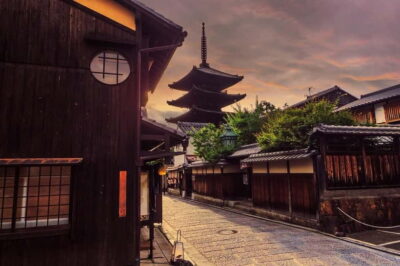
Kyoto Geisha Walking Tour: Gion District & Hidden Gems
Read our review →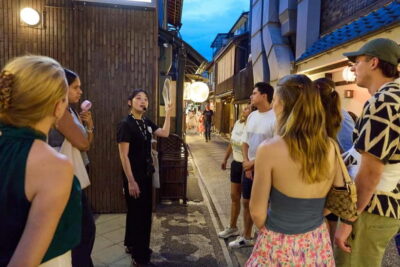
Gion Geisha District Walking Tour – Stories of Geisha
Read our review →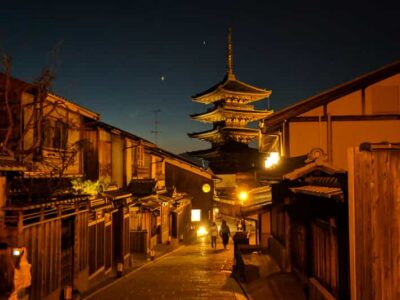
Best of Kyoto: Gion, Geisha, Pagodas & Cobblestones
Read our review →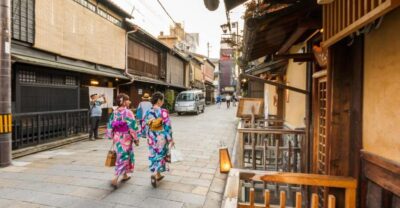
Kyoto Night Foodie Tour in Gion (9+ dishes + 6 Sake tastings)
Read our review →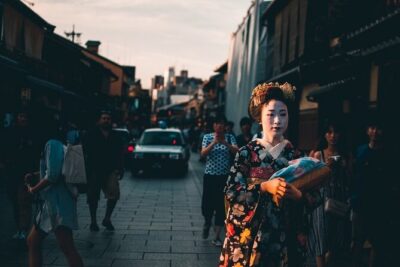
Kyoto Gion Geisha District Walking Tour – The Stories of Geisha
Read our review →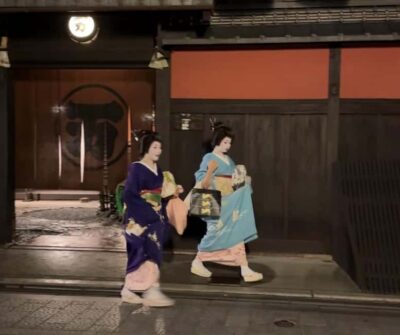
Gion Magical Night Walking Tour with Geisha Insights
Read our review →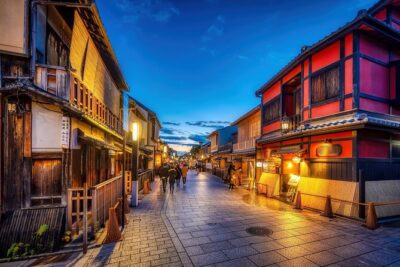
Kyoto Gion Night Walk & Geisha District Guided Tour
Read our review →Browse the lists this tour appears in