
Review · GEISHA DISTRICT WALKS
Gion and Fushimi Inari Shrine Kyoto Highlights with Government-Licensed Guide
Kyoto at night can feel maze-like, fast. This guided evening route strings together Fushimi Inari-taisha, Gion’s narrow streets, and quiet stops in Higashiyama, so you spend less time guessing and more time seeing. You also get a clear window into geisha-era culture and what you’re looking at as you move through the neighborhoods.
I especially like the small group size (max 10), which makes it easier to hear your licensed guide and keep up at walking pace. Second, I like how the tour focuses on Gion in a practical way, walking car-free lanes and explaining the geiko and maiko system so you can tell what you’re seeing as you go, instead of just snapping photos.
One thing to consider: it’s a 6-hour walking plan, and admission for some major stops is not included (notably Kiyomizu-dera and Kennin-ji). If you hate walking or want long temple time, build in extra patience and shoe time.
In This Review
- Key things I found most useful on this Kyoto walking route
- Why this Kyoto highlights walk feels easier than DIY in Gion
- Starting at Tatsumi-jinja Shrine and finishing back where you began
- Fushimi Inari-taisha: free torii gates, one hour with a real route
- Gion proper: Shijo Avenue to the Kamo River, plus ochaya lanes
- Shirakawa Canal scenes: willow trees, ochaya, and the quiet angle
- Yasaka Shrine and a side shrine detour in Gion
- When your guide explains geiko and maiko, Gion becomes clearer
- Kiyomizu-dera in about one hour: big temple setting, plan your priorities
- Kennin-ji Temple: quick orientation near Hanamikoji and Shijo
- Pacing, group size, and comfort tips for a 6-hour walking evening
- Price and value: what $154.37 buys you in Kyoto time
- Who this tour suits best, and who should skip it
- Should you book this Gion and Fushimi Inari guided experience?
- FAQ
- How long is the tour?
- What is the group size for this experience?
- Where does the tour start and end?
- Which sites are included, and are any admissions free?
- Is this tour fully guided and does it involve walking?
- Is free cancellation available?
Key things I found most useful on this Kyoto walking route
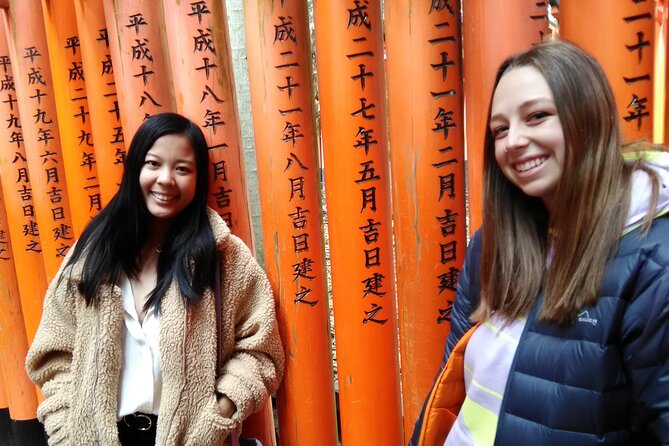
- Government-licensed English-speaking guide to keep you oriented in Gion’s tricky alleyways
- Gion plus Shirakawa Canal, with nearby lanes like Pontocho and Miyagawacho handled in one evening
- Fushimi Inari-taisha as a first anchor stop, with free shrine admission and lots to photograph
- Geiko and maiko context that helps you understand what you spot in Gion
- Kiyomizu-dera and Kennin-ji added to the same day so you do not need separate planning
Why this Kyoto highlights walk feels easier than DIY in Gion
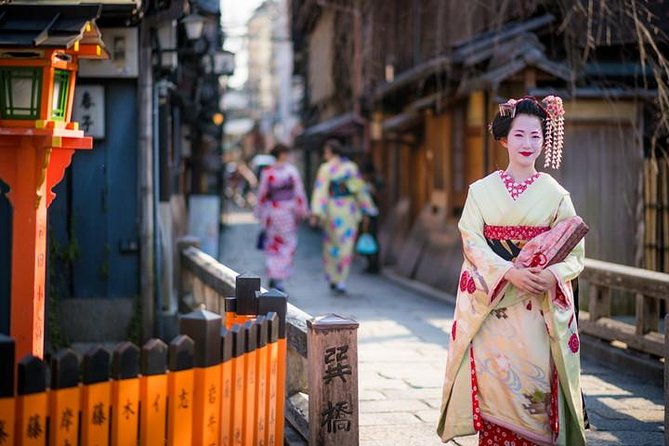
Gion looks simple on a map. In real life, it’s mostly small turns, tight streets, and frontage that changes block to block. This tour is built to reduce that stress with a guide leading the way while you stay on foot in the areas cars cannot access.
I also like that the tour does not treat Gion as only a photo stop. Your guide’s job is to help you read the place. That means you are not just staring at old buildings, you’re learning why certain shrines and street patterns matter, and what makes Gion’s culture distinct from the rest of Kyoto.
More Private Guides in Kyoto
- Kyoto Early Morning Tour with English-Speaking Guide
★ 5.0 · 1,427 reviews - Kyoto 6hr Private Tour with Government-Licensed Guide
★ 5.0 · 1,369 reviews - Kyoto: Early Morning Tour with English-Speaking Guide
★ 4.9 · 1,128 reviews
Starting at Tatsumi-jinja Shrine and finishing back where you began
The meeting point is Tatsumi-jinja Shrine (Tatsumi Dai-myojin) in Higashiyama Ward, and the tour ends back at the same meeting point. The operator notes that pick up and drop off are on foot, so you will want to arrive with enough buffer time to find the start area confidently.
Also pay attention to the “on foot” note in the description. That’s a walking tour, not a shuttle ride between distant neighborhoods. The upside is that you get street-level Kyoto, the downside is you should come prepared for sustained walking.
Fushimi Inari-taisha: free torii gates, one hour with a real route
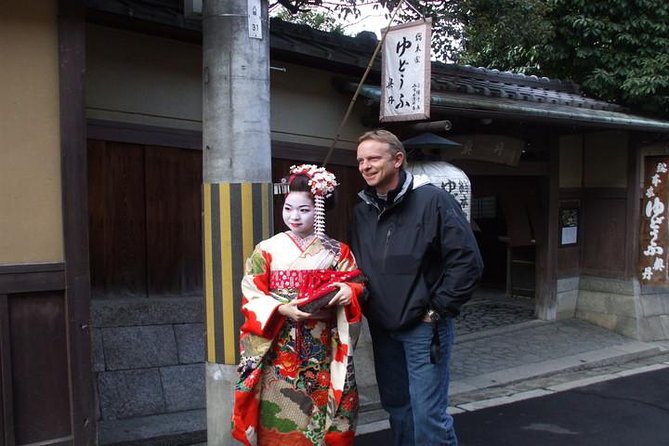
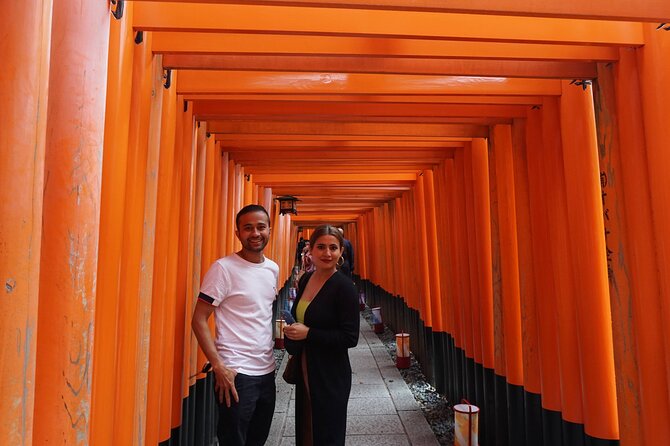
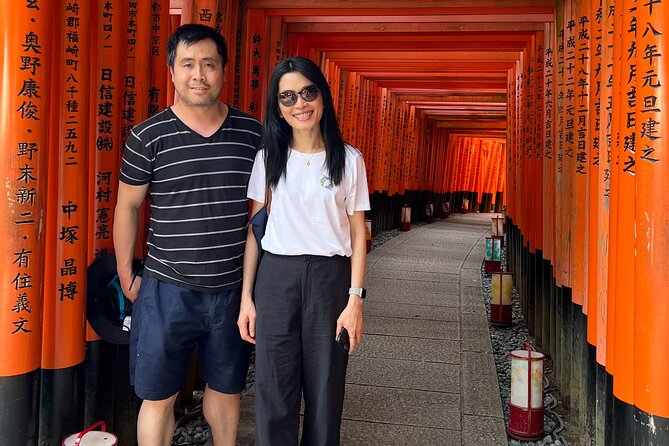
The evening itinerary’s first big moment is Fushimi Inari-taisha, famous for its thousands of vermilion torii gates. The shrine sits at the start of a trail system that climbs behind the main area, so it can be easy to drift without a plan.
Here’s what you gain from a guided start: you are more likely to follow the flow that makes sense for an evening schedule. You get about one hour at the shrine, and shrine admission is listed as free, which helps keep the cost feel “clean.”
Practical tip: if you want photos that show the torii rhythm, arrive ready to move and reposition. With a guided tour, you will be nudged to spend time where the route works best instead of circling the same section.
Gion proper: Shijo Avenue to the Kamo River, plus ochaya lanes
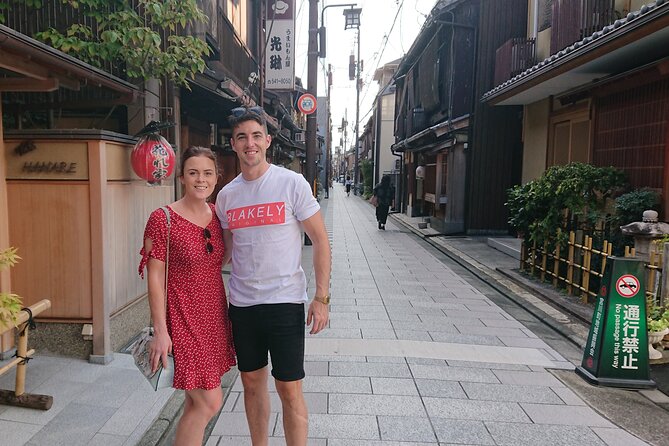
After the shrine stop, the tour turns into Gion. This is Kyoto’s most famous geisha district, centered around Shijo Avenue between Yasaka Shrine to the east and the Kamo River to the west. Expect shops, restaurants, and ochaya, the teahouses tied to traditional entertainment culture.
The way the tour is described suggests you are not just passing through one street. You are walking through the parts that make Gion feel like its own world, with side lanes that tourists often miss because they do not realize they are there.
What to look for as you go:
- How frontage and signage change as you move away from Shijo Avenue
- The narrowness of lanes where it is easy to lose your bearings
- Where the guide points out cultural details that make the architecture make sense
More Shrine & Temple Visits in Kyoto
- Kyoto: Fushimi Inari, Kinkakuji, Bamboo Grove 1 Day Bus Tour
★ 4.8 · 4,316 reviews - Kyoto: Tea Ceremony Ju-An at Jotokuji Temple
★ 4.9 · 3,207 reviews - Fushimi Inari Hidden Hiking Tour (Private Option Available)
★ 5.0 · 1,750 reviews - Osaka/Kyoto:Kinkakuji,Arashiyama,FushimiInariShrine,NaraPark
★ 4.1 · 1,596 reviews
Shirakawa Canal scenes: willow trees, ochaya, and the quiet angle
A standout component is the Shirakawa Area along the Shirakawa Canal, which runs parallel to Shijo Avenue. The canal is lined by willow trees and lined with high-class restaurants and ochaya, and the description notes there are rooms set over the canal.
Even if you are not chasing a specific photo, this stretch is visually different from the main shopping strip. The guide’s direction matters here, because the best viewing points come from knowing where to pause and where to keep moving without blocking the flow of pedestrians.
If you enjoy atmosphere more than checklists, this is likely your calm pocket during the evening.
Yasaka Shrine and a side shrine detour in Gion
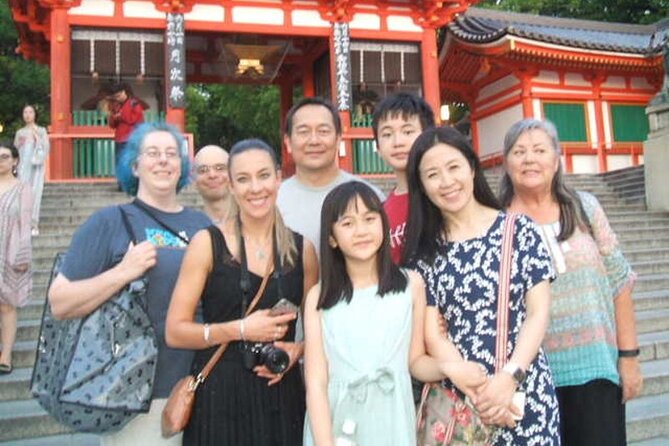
The tour includes Yasaka Shrine, also called Gion Shrine, with a free admission stop of about 10 minutes. The notes say it was founded over 1350 years ago, and that it sits between the popular Gion District and Higashiyama.
That short stop is not there to turn you into an expert. It’s there to give you a context anchor, so the culture around Gion clicks as you walk through the surrounding streets.
Next is Tatsumi Daimyojin Shrine, another free stop of around 10 minutes, near Shira-kawa, an area associated with ochaya and geisha activity. Even when time is brief, these shrine pauses add structure to the evening. Kyoto feels less like random wandering and more like a connected route.
When your guide explains geiko and maiko, Gion becomes clearer
One of the most praised parts of this tour is how your guide talks about geiko and maiko, and how to tell the difference. You’re not being asked to memorize rules. You’re being given a simple mental framework so the details you see on the street make sense.
A named highlight from the experience: Mari san is mentioned as an especially strong guide for clarifying the difference between maiko and geiko. That kind of explanation is exactly what turns a nice walk into a meaningful one.
A friendly reality check: Gion is not a guaranteed show. You might spot performers or you might see only glimpses of traditional life. Either way, the value here is understanding what you are looking at while you’re there, not chasing certainty.
Kiyomizu-dera in about one hour: big temple setting, plan your priorities
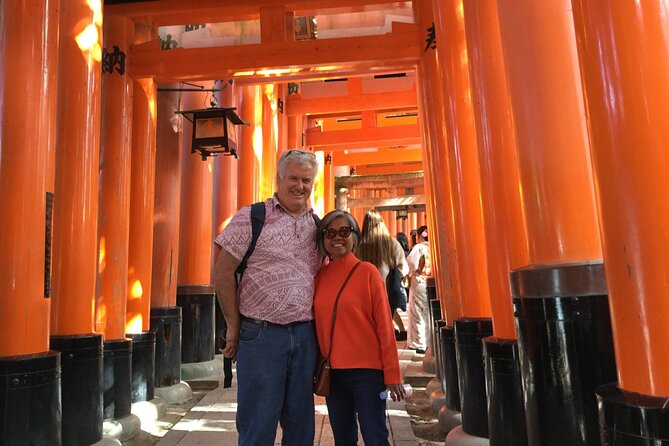
The tour then heads to Kiyomizu-dera, with about one hour scheduled. The notes say the temple foundation dates back over 1250 years, and it sits halfway up Mt. Otowa on one of Kyoto’s Higashiyama peaks.
Also note: the tour lists admission for Kiyomizu-dera as not included, so you should expect to pay that fee on your own.
How to make the most of limited time:
- Decide in advance what you want to prioritize, sweeping views, main structures, or quieter corners
- Wear shoes that handle slopes and steps comfortably
- Keep your camera handy but do not get stuck at one spot for too long
For many people, Kiyomizu-dera is the emotional centerpiece. Even with a shorter time block, having a guide can help you find the most logical viewing flow.
Kennin-ji Temple: quick orientation near Hanamikoji and Shijo
The final temple stop is Kennin-ji Temple. It’s described as very close to the bustle of Hanamikoji and Shijo streets, and the grounds are noted as expansive and pleasant to walk. The description also points out two karesansui dry landscape gardens.
However, the itinerary time shown for this stop is short (about 1 minute in the outline), and the admission is listed as not included. What that likely means in practice is a fast orientation and quick garden viewing window rather than a long, slow sit.
If you care deeply about temple gardens, you may want extra independent time after the tour. If you like a guided “taste” to help you decide what to explore further, this ending can work well.
Pacing, group size, and comfort tips for a 6-hour walking evening
This tour caps at 10 travelers, which is a big deal in crowded Kyoto. Smaller groups usually mean your guide can manage attention, you can hear explanations, and you can keep moving without turning into a traffic jam.
The duration is listed as about 6 hours, so treat this like a half day of walking energy, not a casual stroll. Wear comfortable shoes with grip, and bring layers if the evening turns cool.
A smart mindset: you are visiting several major places, so you are trading deep lounging for broad coverage. That trade is often exactly what helps first-time visitors get traction fast.
Also, you are using a mobile ticket, which keeps things simple if you do not want paper.
Price and value: what $154.37 buys you in Kyoto time
At $154.37 per person, this is not a budget bargain, but it also does not feel like a “luxury only” splurge. Here’s the value math that matters:
- You get a licensed local English-speaking guide for roughly 6 hours
- You cover a cluster of top Kyoto sights in one evening plan
- You save time by not figuring out the maze-like Gion streets on your own
- Shrine admission is free for Fushimi Inari, while other admissions are not included
In other words, you are paying for direction, context, and an efficient route. The “hidden cost” that this tour helps you avoid is wasted time. In Kyoto, wasted time is expensive because you are always walking anyway.
One more clue: the tour is often booked around 89 days in advance on average. That suggests demand for a guided, efficient evening route, especially for people who want to hit Fushimi Inari and Gion without building a plan from scratch.
Who this tour suits best, and who should skip it
This tour is a great fit if:
- You are a first-timer who wants Gion context and less stress
- You prefer walking the best-feeling streets rather than riding past them
- You want a guide’s help understanding geiko and maiko culture
- You want a one-evening plan that reaches beyond just one neighborhood
You may want to skip or adjust expectations if:
- You want long, slow time at each major temple
- You dislike walking for about 6 hours
- You want all entrances included in one price, since Kiyomizu-dera and Kennin-ji list admissions as not included
Should you book this Gion and Fushimi Inari guided experience?
Book it if you want a guided evening that makes Kyoto feel logical, not chaotic. The big win is the combination of torii gates, Gion lanes, Shirakawa Canal atmosphere, and two major temple anchors, handled by a licensed guide who knows how to explain what you are seeing.
Do not book it if your dream Kyoto evening is mostly sitting still or if you plan to do lots of self-directed temple wandering later. This is a moving plan, built for coverage plus context, not for long stays.
If you are choosing between doing Gion on your own and doing it with a guide, I would lean toward booking this kind of route when you arrive. It gives you bearings fast, and Kyoto rewards that.
FAQ
How long is the tour?
It runs for about 6 hours.
What is the group size for this experience?
The tour has a maximum group size of 10 travelers.
Where does the tour start and end?
The tour starts at Tatsumi-jinja Shrine (Tatsumi Dai-myojin) in Higashiyama Ward and ends back at the same meeting point.
Which sites are included, and are any admissions free?
Fushimi Inari-taisha is listed as free. Kiyomizu-dera and Kennin-ji are listed as admission not included. Yasaka Shrine and Tatsumi Daimyojin Shrine are listed as free.
Is this tour fully guided and does it involve walking?
Yes. It includes a licensed local English-speaking guide and it is a walking tour, with pick up and drop off on foot.
Is free cancellation available?
Yes. You can cancel for a full refund up to 24 hours in advance of the experience start time.
Popular Geisha District Walks in Kyoto
- Kyoto Geisha Walking Tour: Gion District & Hidden Gems
★ 4.7 · 3,273 reviews - Kyoto: Gion Geisha District Walking Tour – Stories of Geisha
★ 4.7 · 2,187 reviews - Best of Kyoto: Gion, Geisha, Pagodas & Cobblestones
★ 4.9 · 2,058 reviews - Night Walk in Gion: Kyoto’s Geisha District
★ 4.5 · 2,003 reviews
Newly listed around Kyoto
- Kyoto Full Course Tour: Explore 10 Must-See Sights & Hidden Gems★ 4.5 · 25 reviews
- 2 Hour Night Walking Tour Throughout Gion with snack★ 4.0 · 13 reviews
- Takashi’s local food adventure through Gion Kyoto tips of Ramen★ 4.5 · 8 reviews
- Kyoto night walk tour (Gion district)★ 5.0 · 91 reviews
- Guided Gion Tour: Explore Kyoto’s Historic Geisha District★ 4.5 · 16 reviews
- Kyoto Evening Gion Food Tour Including Kaiseki Dinner★ 5.0 · 62 reviews
- Treasures of Kyoto: Geishas & Traditions Private Tour★ 5.0 · 36 reviews
- Kyoto 5-Star Geisha Night Walk: Small-Group Authentic Experience★ 5.0 · 162 reviews
Geisha District Walks, compared.
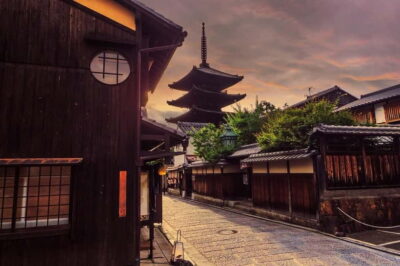
Kyoto Geisha Walking Tour: Gion District & Hidden Gems
Read our review →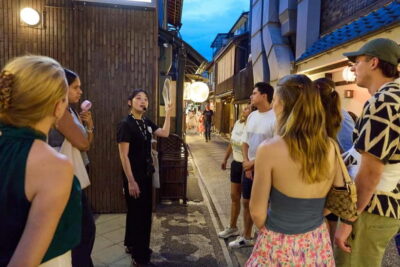
Gion Geisha District Walking Tour – Stories of Geisha
Read our review →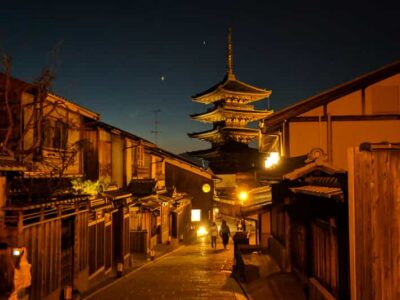
Best of Kyoto: Gion, Geisha, Pagodas & Cobblestones
Read our review →
Kyoto Night Foodie Tour in Gion (9+ dishes + 6 Sake tastings)
Read our review →
Kyoto Gion Geisha District Walking Tour – The Stories of Geisha
Read our review →
Gion Magical Night Walking Tour with Geisha Insights
Read our review →
Kyoto Gion Night Walk & Geisha District Guided Tour
Read our review →Browse the lists this tour appears in