
Review · CYCLING & E-BIKE RIDES
Kamakura Scenic Bike Tour
Kamakura on bikes feels like cheating, and a small-group ride keeps the pace relaxed. I love that you get to the temples and shrines that usually require extra planning, and I also love the gentle, flat route that lets you actually enjoy the stops instead of racing between them. The main consideration is weather, because if conditions turn bad the tour shifts to a walking format.
This is a 6-hour style outing that starts at Kamakura Station, then strings together big-name sights like the Great Buddha and bamboo groves with a few quieter, more local moments. You’ll pedal down the Yuigahama coastline, pause for temple photos, and make time for snacks and shopping that feel like you’re part of daily life, not just passing through.
In This Review
- Key things that make this Kamakura scenic bike tour worth it
- Why Kamakura is such a great place to cycle
- From Minamoto no Yoritomo’s grave to Egaraten Shrine’s manga twist
- Sugimotodera and Hokoku-ji, where the atmosphere does half the work
- Great Buddha at Kotoku-in, plus Hasedera’s Kannon statues and coastal views
- Goryo Shrine and the Enoshima Electric Railway torii gate photo moment
- Chikaramochiya, then Yuigahama beach, plus a farmers market worth planning around
- Price and value: what $134.38 gets you, and what it does not
- Getting the most out of the day (and avoiding common mistakes)
- Who should book this Kamakura scenic bike tour
- Should you book this tour or do it on your own?
- FAQ
- How long is the Kamakura Scenic Bike Tour?
- Where do I meet the guide?
- What time does the tour start?
- What is the minimum age for this tour?
- How many people are in a group?
- What is included in the tour price?
- Is food or drinks included?
- Are admission tickets included for the temples and shrines?
- What happens if the weather is bad?
- Can I cancel and get a refund?
Key things that make this Kamakura scenic bike tour worth it
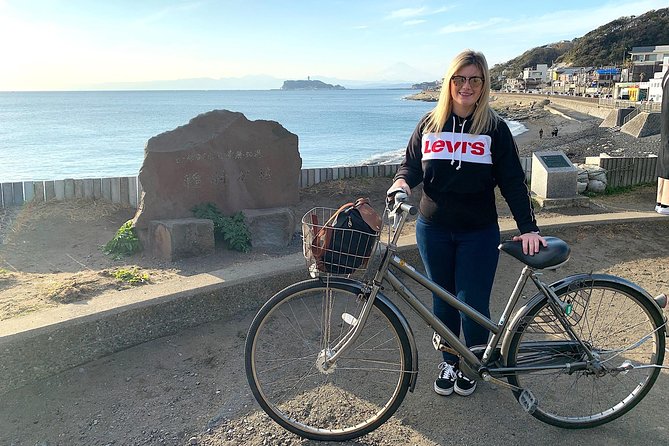
- Small group max of 5 means fewer crowds and more time to ask questions.
- Bike and professional guide included, so you’re not hunting equipment or trying to translate signs at every stop.
- Flat, gentle cycling makes it realistic for a wide range of fitness levels (ages 10 to 70).
- A Great Buddha smartphone photo stop plus classic temple viewpoints with ocean scenery.
- The torii gate plus the Enoshima Electric Railway moment, timed for the train that passes about every five minutes.
- Local market time for prepared foods and homemade bread you can bring back to your hotel.
Why Kamakura is such a great place to cycle
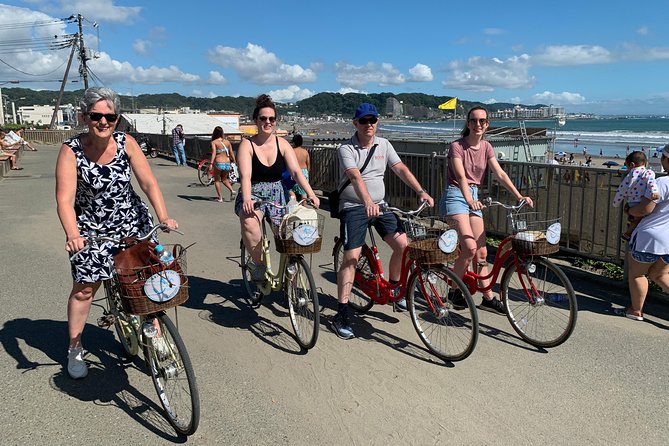
Kamakura is a city built for strolling, but that can also be the problem. You walk, you stop, you walk again, and suddenly your legs are doing most of the sightseeing. On a bike, the rhythm changes. You glide between areas and arrive at each temple with time to look closely, take photos, and listen to your guide without feeling like you’re on a tight schedule.
This tour is designed with comfort in mind. It’s described as a gentle, flat cycle, so you are not dealing with steep climbs or long stretches of stress. That matters because Kamakura’s highlights are spread out enough that a walking tour can turn into a grind. Here, you get the best of both worlds: you ride to cover ground, then you slow down for the best parts.
One more practical win is how easy it is to start. You meet your guide at Kamakura Station, so you don’t need hotel pickup or extra transfers. And because the group stays small, the guide can keep the ride smooth and adjust as needed.
More Bike rides in Kamakura:
- Bike Tour Exploring North Kyoto plus Lunch
★ 5.0 · 1,087 reviews - Tokyo Great Cycling Tour
★ 5.0 · 811 reviews - Tokyo Top Highlights 3h Guided E-bike Tour
★ 5.0 · 714 reviews
From Minamoto no Yoritomo’s grave to Egaraten Shrine’s manga twist
The tour begins with a quick transition into history. The first stop is the Grave of Minamoto Yoritomo, a 12th-century general credited with founding the Kamakura shogunate. Even if you only know the basics of Japanese feudal eras, this is a strong anchor point. Kamakura’s identity comes through in a way that feels more grounded than just seeing temples as scenery.
The timing also makes the route feel special. Along the way, you may catch seasonal cherry blossoms, which is the kind of detail that changes the whole mood of a ride. The stop itself is brief, but it gives you context for what you’re about to see.
Next comes Egaraten Shrine. This is dedicated to Michizane Sugawarano, described as the god of learning. If you like shrines that feel like they have a point beyond decoration, this one delivers. Then there’s the detail that turns it from a normal shrine stop into something you’ll remember: a picture brush painted mound with Kappas drawn by 154 manga artists around the grounds. If you are a manga fan, you’ll likely spend extra time here, because it’s unusual, playful, and very Kamakura.
A small caution: because this is a short stop pattern, you’ll want to be ready to move on. If you stop taking photos too late at one site, it can compress the rest of the day. The small group helps, but it still follows a plan.
Sugimotodera and Hokoku-ji, where the atmosphere does half the work
After the learning shrine, you head to Sugimotodera, described as the oldest temple in Kamakura. You get that classic temple feel right away with moss-covered stairs leading up to the precinct. It’s the kind of place where you can almost feel your pace slow down, even if your legs are fresh from biking.
What I like here for practical reasons is the photo potential without the chaos. You can frame shots with the mossy steps and the temple approach, and you don’t need to hunt for a perfect angle like you do at some busier landmarks. Your guide’s explanations also help you connect what you’re seeing to why it matters.
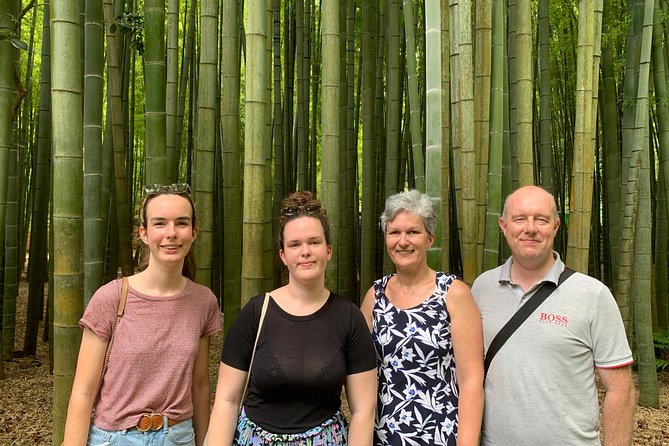
Then you reach Hokoku-ji, known for its bamboo forest. This is one of those locations where the environment shifts the vibe instantly. You step into the bamboo groves, and the air feels quieter, cooler, and more focused. It’s easy to see why it’s one of Kamakura’s most popular temple choices.
The tour gives you about 40 minutes here, which is a sweet spot. You can walk slowly, take a few photos, and still have time to step back and just look. For many people, this becomes the emotional highlight of the day, not because it’s famous, but because it’s built for calm.
Great Buddha at Kotoku-in, plus Hasedera’s Kannon statues and coastal views
Kotoku-in is where the famous Kamakura Daibutsu lives. Yes, it’s towering. Yes, it’s photogenic. But the real value is how this stop ties the day together. After moving through shrines and temple grounds, you finally hit a visual centerpiece so big it changes your sense of scale.
This is also a smartphone-friendly stop. Your guide keeps you moving at a respectful pace, but you still get time for a proper shot. For best results, try different angles rather than one quick snap from the first position.
Next is Hasedera Temple. This stop has two strong draws. First, you see the Eleven statues of Kannon. Second, you get observation-deck views that include the scenery over Yuigahama. That means your break from temple interiors comes with ocean air and a wider horizon, which is a good mid-tour reset.
If you travel in June, the hydrangeas can add another layer to the experience. Even if you’re not there during hydrangea season, the viewpoint element still makes the stop feel complete.
A few more Kamakura days to weigh up
- Kamakura Heritage Bike or Walk Tour with ex-Rickshaw guide
★ 5.0 · 11 reviews - Hidden Kyoto E-Biking tour
★ 5.0 · 1,843 reviews - Tokyo Guided Small-Group Biking Tour
★ 5.0 · 1,250 reviews - 3h Tokyo E-Bike Tour: Hidden Gems, and Local Life with guide
★ 5.0 · 670 reviews
Goryo Shrine and the Enoshima Electric Railway torii gate photo moment
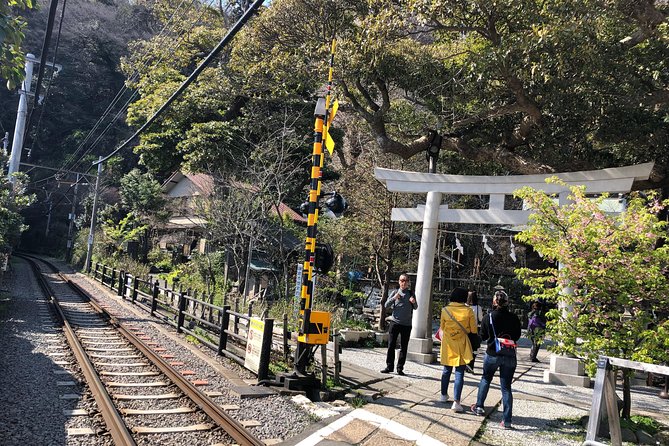
Here’s a detail that makes this tour feel intentionally planned: Goryo Shrine sits where the Enoshima Electric Railway tracks pass in front of the torii gate. The train passes about once every five minutes, and you are encouraged to pause and capture the moment when the train crosses behind the gate.
This is the kind of sight you can miss if you’re not timing your visit, or if you don’t know where to stand. The guide helps you understand what to look for and when to look, so you’re not just waiting blindly.
Practical note: if you’re traveling with a camera, keep it ready. This stop is only around 15 minutes, so you’re not going to get multiple long observation windows. One well-timed photo opportunity is the goal.
Chikaramochiya, then Yuigahama beach, plus a farmers market worth planning around
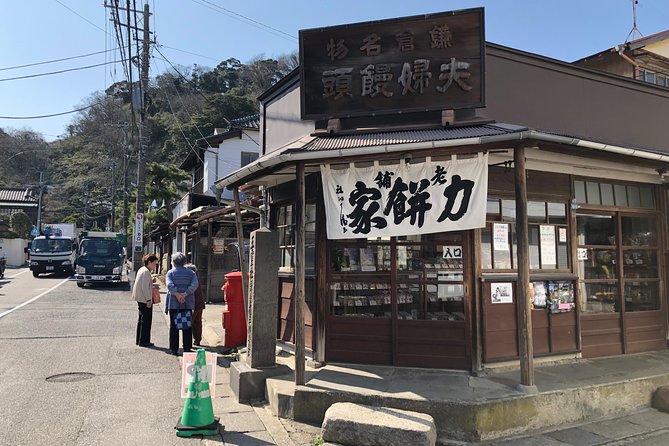
After so many religious sites, the tour wisely switches to food and sea views. At Chikaramochiya, you enjoy local food while looking out toward the Pacific Ocean and the sandy beaches. The food itself is not listed as included, so treat this as a chance to buy something on-site if you want. Either way, the pairing of snacks and ocean scenery is a smart way to keep your energy up for the final stretch.
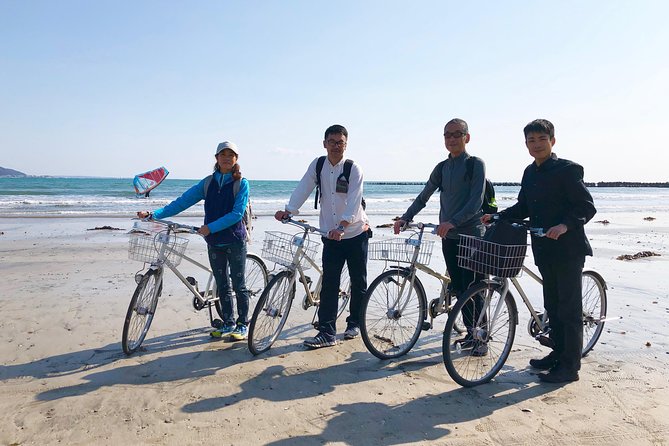
Then you ride along the Yuigahama coastline. This is the part where the bike tour pays off again. You get movement and variety, not just waiting at viewpoints. You can enjoy Pacific ocean views while staying in the flow of the day.
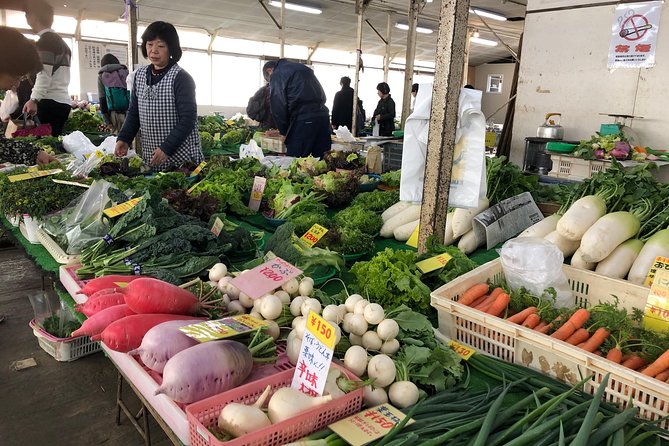
The last major stop is the Kamakura City Farmers’ Market. This is for people who like practical souvenirs you can actually eat later. You can buy prepared foods and homemade bread to enjoy back at your hotel. It’s a low-pressure way to take something local home, without needing to pack anything fragile or complicated.
If you’re watching your budget, this is also a chance to decide where to spend. Food and drinks are not included on the tour, so your meal costs are up to you. The market stop makes that easy, because you can choose what feels good in the moment.
Price and value: what $134.38 gets you, and what it does not
At $134.38 per person for an approximately 6-hour tour, the value is strongest when you look at what’s included. You get a professional guide and a bike. You also get a structured day of multiple major stops, with a mix of admissions that are free at some locations and included at others. That means you’re not separately planning ticket purchases for every single stop.
Where the price is less generous is exactly where many people would expect it: food and drinks are not included, and there’s no hotel pickup or drop-off. You’ll need to arrive at Kamakura Station on your own and decide what to eat during the market and food stop.
For me, the value equation here is the small group size. A max of 5 travelers is a big deal when you want questions answered and pacing kept comfortable. In a larger group, you’d spend more time waiting and less time actually enjoying each place. Here, you can move with confidence that the day won’t turn into a queue.
Also, the tour includes a mobile ticket. That tends to reduce last-minute friction, especially if your travel day is already packed.
Getting the most out of the day (and avoiding common mistakes)
This tour is for many fitness levels, but it’s still biking. The best move is to wear shoes that are easy to walk in. You’ll be going up temple steps, stopping for photos, and moving on quickly between points. If you choose uncomfortable shoes, you’ll feel it for the rest of the day.
Bring sun protection too. Even in spring or mild weather, you’re out on open routes near the coastline at least some of the time. Water helps, but since drinks aren’t included, plan to carry your own if you think you’ll need it.
If you care about photos, think in terms of timing, not volume. The torii gate with the Enoshima Electric Railway is one example where waiting for the right moment matters more than taking 30 near-duplicate images. The same goes for bamboo forest light. Step back. Look. Then shoot.
If it rains or weather turns bad, the plan shifts to a walking tour. That means you should still expect a fair amount of foot time. Pack accordingly, because changing to walking does not erase the need for comfortable shoes.
Finally, one sweet detail from a past experience: Kazu-san is known for being patient and fun. That matters, because a good guide doesn’t just recite facts. Kazu-san’s style helps you connect the dots, and it makes off-the-beaten path spots feel worth the extra effort. In this kind of day, attitude counts as much as attractions.
Who should book this Kamakura scenic bike tour
This is a strong fit if you want to see classic Kamakura highlights while keeping your effort reasonable. You’ll like it if you:
- want an alternative to walking tours without abandoning the temple experience
- enjoy small-group attention and smoother pacing
- like coastal views and want them folded into a day of sightseeing
- care about manga culture details, especially the Kappa art note at Egaraten Shrine
It may not be your best choice if you:
- expect a leisurely, no-rush day with plenty of extra time at every single site
- hate being on a schedule, even a flexible one
- want food fully included, because you’ll be paying for meals and drinks on your own
Should you book this tour or do it on your own?
If your priority is a well-paced day that covers a lot without turning into a marathon, I’d book this. The small group size, the bike support, and the guide explanations all help you spend time where it counts, rather than figuring out routes and timing yourself.
If you are the kind of traveler who loves independent roaming, you can absolutely DIY Kamakura. But you’d likely spend more time planning, and you might miss the best photo timing at the torii gate with the train.
My call: book it if you want Kamakura to feel smooth. Pass if you want total freedom with zero structure. In the right frame of mind, this bike tour hits a very practical sweet spot.
FAQ
How long is the Kamakura Scenic Bike Tour?
The tour runs for about 6 hours.
Where do I meet the guide?
Meet at Kamakura Station, specifically 1-chōme-1-15 Onarimachi, Kamakura, Kanagawa 248-0012, Japan.
What time does the tour start?
The start time is 9:00 am.
What is the minimum age for this tour?
The minimum age is 10 years old.
How many people are in a group?
This activity has a maximum of 5 travelers.
What is included in the tour price?
Included are a professional guide and a bike.
Is food or drinks included?
No. Food and drinks are not included.
Are admission tickets included for the temples and shrines?
Admission is free for some stops, and included for others, depending on the location.
What happens if the weather is bad?
If conditions are bad, the tour operates as a walking tour instead.
Can I cancel and get a refund?
Yes. You can cancel for a full refund up to 24 hours in advance of the experience start time.
Newly listed around Kamakura
- Introducing all the Famous Spots in Kamakura and Enoshima!★ 5.0 · 7 reviews
- First time in Kamakura? Enjoy a Tour of All Must-sees!★ 5.0 · 15 reviews
- Kamakura 4hr Private Trip with Government-Licensed Guide★ 5.0 · 58 reviews
- Your Own HANKO Name Seal Activity in Kamakura.★ 5.0 · 24 reviews
- Kamakura Heritage Bike or Walk Tour with ex-Rickshaw guide★ 5.0 · 11 reviews
- Exciting Kamakura – One Day Tour from Tokyo★ 5.0 · 40 reviews
- Kamakura Walking Tour – The City of Shogun★ 5.0 · 100 reviews
- Kamakura Bamboo Forest and Great Buddha Private Tour★ 5.0 · 12 reviews
Cycling & E-Bike Rides, compared.
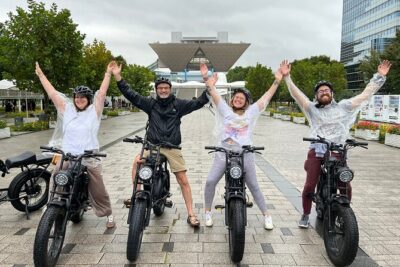

3h Tokyo E-Bike Tour: Hidden Gems, and Local Life with guide
Read our review →
Arashiyama Bamboo Forest & Hidden Gems Bike Tour (Early Bird)
Read our review →
5 Top Highlights of Kyoto Full Day Bike Tour (E-bike option)
Read our review →

Hiroshima 2hr Peace Cycling Tour with Local Guide
Read our review →Browse the lists this tour appears in