
Review · CITY TOURS
Discovering Kyoto A Tailored Private Tour of the City’s Treasures
Kyoto feels big, fast. This private tour lets you shape the route with a customizable plan and a local guide.
You’ll get a smart mix of famous sights and quieter corners, starting in Gion and moving through shrines, streets, and temples. The goal is to help you understand what you’re seeing, not just walk past it.
I especially like the casual walking pace and the way the guide turns a few short stops into real context. I also like the built-in food and culture break at Izutsu Yatsuhashi Honpo Gion store, plus the chance to stroll areas like Gion Shirakawa at a human speed.
One drawback to consider: at about 3 hours, you have to pick priorities. If you’re chasing full-on, all-day Kyoto highlights like a long Arashiyama bamboo time slot, this tour may feel short, and it also depends on good weather.
In This Review
- Key highlights at a glance
- Why this 3-hour private route in Kyoto makes sense
- Price and what $95 per person really buys you
- Meeting point and the morning rhythm from Kyoto Station
- Gion first, so you understand Kyoto’s tone right away
- Customization note you should plan around
- Izutsu Yatsuhashi Honpo Gion store, a Kyoto snack with a story
- Gion Shirakawa, for atmosphere and slower street viewing
- Shrines in the mix: Tatsumi Daimyojin and Yasui-Konpiragu
- Tatsumi Daimyojin Shrine
- Yasui-Konpiragu
- Yasakanoto pagoda, a strong visual anchor in Gion
- Kabuki origins at the Izumo no Okuni statue
- Kiyomizu-dera, your main temple stop for the viewing and Otowa Spring
- A practical tip for this specific stop
- Customization is the real “private tour” advantage
- The guide quality, and why English clarity can make the route feel smoother
- A fair heads-up: cancellations and the tightness of a morning schedule
- Should you book this Kyoto private tour?
- FAQ
- How long is the Kyoto private tour?
- How much does the tour cost?
- Is pickup available, and where do I meet?
- Is this tour private?
- What kinds of stops are included?
- Are admission tickets included?
- What is the Kiyomizu-dera highlight in this tour?
- Does the tour include transportation and a guide?
- Is free cancellation available?
- What should I know about timing and weather?
Key highlights at a glance
- A private, only-your-group tour that feels more relaxed than joining big crowds
- Fully customizable routing so you can steer toward Gion streets, shrines, temples, and markets
- Foodstop credibility with Izutsu Yatsuhashi Honpo Gion store as part of the flow
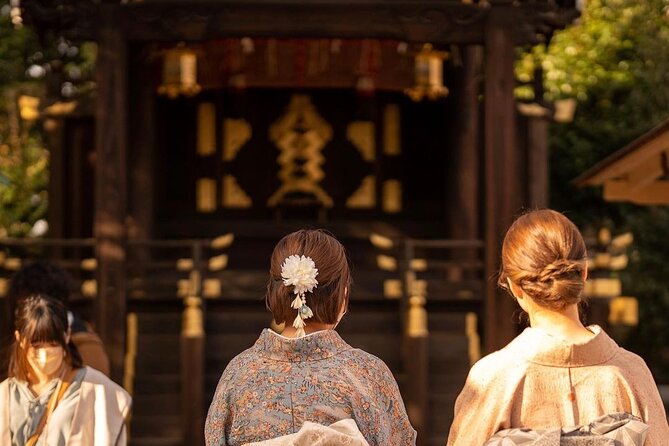
- Spiritual Kyoto in compact form with stops like Yasui-Konpiragu and Kiyomizu-dera
- Transport included, so you’re not spending your whole half-day on transfers
- Morning timing (9:00 AM to 11:30 AM) which helps you beat some peak-day crush
Why this 3-hour private route in Kyoto makes sense
Kyoto can overwhelm you fast. Streets look similar, temples blur together, and the lines for the famous stuff can eat half your day. This tour is designed to keep the focus tight: a short morning window, a private guide, and a route you can shape around what you care about.
The biggest win is that the guide is there to point out what matters. Instead of you guessing which gate is important or why one shrine has specific stone features, you get meaning delivered while you’re standing right there. That’s the kind of efficiency that actually feels like travel, not like checking boxes.
Another plus is the pacing. The schedule is made for walking, quick “look and learn” stops, and then a longer temple stretch. Even if your legs aren’t in championship shape, you should be able to keep up.
A few more Kyoto days to weigh up
- PERFECT KYOTO 1-Day Bus Tour
★ 5.0 · 13,518 reviews - Kyoto: Fushimi Inari, Kinkakuji, Bamboo Grove 1 Day Bus Tour
★ 4.8 · 4,316 reviews - Kyoto: Tea Ceremony in a Traditional Tea House in Kiyomizu
★ 4.9 · 3,519 reviews
Price and what $95 per person really buys you
At $95 per person for a private, guided 3-hour experience, the value comes from three things: guide time, transport, and admission coverage at key stops.
Admission is not uniformly included for every stop, but several of the highlighted sites do include tickets. You also get transport to the attractions, which matters because Kyoto distances and transfers can quietly drain time and energy. If you’re trying to see multiple areas in one morning, paying for transport and a guide usually beats the “figure it out yourself” approach.
Where the math changes is your group size. Since it’s private, the bigger your group, the better the value tends to feel, because you’re sharing the guide and transport portion across multiple people. If you’re solo or two people, you’re still paying for convenience, but it can feel pricey if your main goal is only one single must-see.
Meeting point and the morning rhythm from Kyoto Station
You start at Kyoto Station, specifically Kyoto Station Higashishiokoji Kamadonocho in Shimogyo Ward. The good news here is practical: it’s a major hub with easy transit access, so you’re not hunting down a remote pickup.
The tour also ends back at the meeting point, which is underrated. In Kyoto, “ends somewhere else” can turn into a bonus transit headache. Here, you keep control of the rest of your day.
The morning schedule runs Monday through Sunday from 9:00 AM to 11:30 AM, and it’s designed to fit into that early sightseeing window. That timing helps because you often get calmer streets and a better chance to photograph without constant human traffic in every direction.
Gion first, so you understand Kyoto’s tone right away
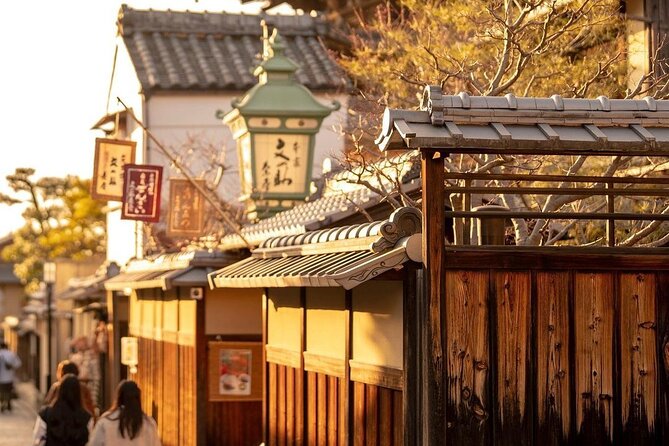
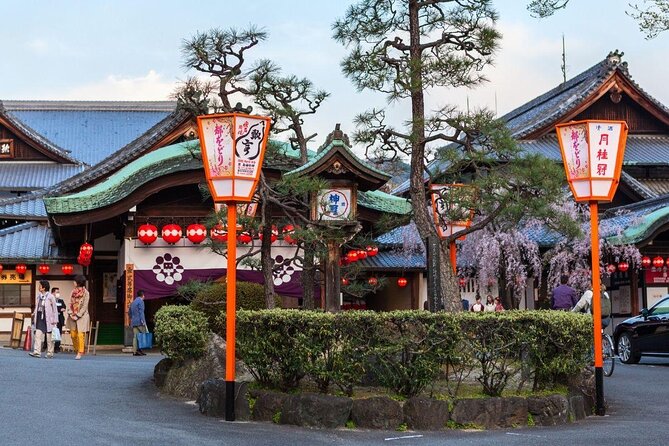
Starting in Gion is smart. Gion isn’t just a pretty neighborhood, it’s a whole vibe, with traditions you can feel in the streets, the storefronts, and the pace. The tour is built to show you the “most important and unique aspects” of the city while still staying flexible.
You’ll get guided time in Gion and the surrounding streets, with room for the type of details that make Kyoto click. One memorable element from past guests is the way the guide leads you along streets and side streets where restaurant life feels tucked away and calmer, not exposed to every camera-click.
A good guide also helps you spot what tourists usually miss, including smaller shrines and local market streets that add texture. That’s how your Gion walk stops being just walking and becomes understanding.
A different sort of day in Japan:
- Kyoto Geisha Walking Tour: Gion District & Hidden Gems
★ 4.7 · 3,273 reviews - Kyoto: Tea Ceremony Ju-An at Jotokuji Temple
★ 4.9 · 3,207 reviews - Kyoto: 45-Minute Tea Ceremony Lesson Experience
★ 4.3 · 2,378 reviews - Kyoto: Gion Geisha District Walking Tour – Stories of Geisha
★ 4.7 · 2,187 reviews
Customization note you should plan around
This tour is described as customizable, so your route can shift based on your interests. You may also have the chance to pair the Gion focus with iconic Kyoto stops like Fushimi Inari Shrine, Kiyomizu-dera, and even the Arashiyama Bamboo Grove, depending on timing and what you choose. If you want those icons, tell your guide early so they can steer the route efficiently.
Izutsu Yatsuhashi Honpo Gion store, a Kyoto snack with a story
Kyoto food moments are better when they’re explained, and this tour includes a stop at Izutsu Yatsuhashi Honpo Gion store, listed under Izutsu Yatsuhashi Store Kyogoku Ichibangai.
If you’ve never had yatsuhashi, this is an easy, low-stress way to try a Kyoto classic. And since it’s built into the route, you’re not hunting for a shop while the clock ticks down. The time allocation is short, about 20 minutes, but it’s enough to buy and taste without turning the morning into a detour marathon.
Even better, it’s not only a “snack and go.” The guide frames it as tradition, which turns a bite into something you remember. For foodies, this kind of food stop is one of the most efficient cultural exchanges you’ll make all trip.
Gion Shirakawa, for atmosphere and slower street viewing
After the yatsuhashi stop, the tour includes Gion Shirakawa. This is one of those places where Kyoto’s quieter beauty shows up. The tour time is about 20 minutes, which is perfect for a gentle stroll, photo breaks, and letting the street details register.
The value here is the guide’s pacing. Without a plan, you can rush through Shirakawa, take a couple pictures, and move on. With guided time, you’re more likely to look at the rhythm of the street, the feel of the neighborhood, and the way Kyoto’s traditions sit alongside everyday life.
Shrines in the mix: Tatsumi Daimyojin and Yasui-Konpiragu
Kyoto’s best travel moments often happen at shrines. They’re not only pretty, they’re living places where ritual and symbols are part of the daily scene. This tour includes two shrine stops that fit well into a compact morning.
Tatsumi Daimyojin Shrine
You’ll have time at Tatsumi Jinja, described as having a history dating back over a thousand years. That detail matters because it tells you this is not just a quick photo stop. Even in a short visit, you can feel how older sites carry continuity through generations.
The tour keeps this portion to about 20 minutes, so it’s ideal if you want spiritual context without turning your schedule into a full shrine-hopping day.
Yasui-Konpiragu
Then you get to Yasui-Konpiragu, a shrine associated with good fortune, known for unique stone monuments and rituals. The listed time is about 10 minutes, which might sound brief, but it’s the right length for a short ritual and a guided explanation.
This is also one of the stops where admissions are included. So you’re not only walking through, you’re participating in the experience that the site itself is offering.
Yasakanoto pagoda, a strong visual anchor in Gion
Next up is Yasakanoto, a towering pagoda in Kyoto’s Gion district with a history described as centuries old. The time here is about 10 minutes.
When a tour includes a pagoda in the middle of a street sequence, it works as a visual “reset.” Your eyes get a big architectural reference point again, and the guide can connect how this kind of structure relates to the neighborhood’s longer timeline.
If you tend to remember images more than words, this stop is one of the best. It gives your morning a landmark you can point to in your mind later.
Kabuki origins at the Izumo no Okuni statue
One quirky, fun stop included in this tour is the Statue of Izumo no Okuni. This is where you learn about the origins of Kabuki theater, with the statue paying homage to Izumo-no-Okuni.
This is the kind of Kyoto stop that adds variety. You’re not only seeing temples and shrines, you’re seeing how performance culture connects to place and memory. The time allotted is about 20 minutes, so it fits naturally without eating your temple time.
If you like culture that spills beyond the obvious, you’ll appreciate this detour. It’s also an easy way to break up the spiritual tone of the morning with something creative.
Kiyomizu-dera, your main temple stop for the viewing and Otowa Spring
Kiyomizu-dera is the big temple moment on this tour, with about 1 hour on site. Admissions are included here, which helps keep your costs under control.
This is one of Kyoto’s most iconic Buddhist temples, and the description highlights why it’s worth that full hour: the impressive viewing platform, the three-storey Koyasu pagoda, and the medicinal pure waters of the Otowa Spring.
Here’s what that means for you in real terms. The viewing platform is a place where your effort feels rewarded. You can pause, look out, and suddenly Kyoto’s geography makes more sense. The pagoda gives you a strong vertical focus, a classic way to appreciate Japanese temple architecture. And the Otowa Spring is a sensory stop, the kind of thing that makes the temple feel alive instead of just historical.
A practical tip for this specific stop
Because Kiyomizu-dera is the anchor, keep your expectations flexible. If you’re the type who wants to do every photo and every side shrine, you might feel time pinch. If you’re more interested in the main features and you’re okay with a guided pace, you’ll likely feel comfortable with the hour.
Customization is the real “private tour” advantage
A group tour follows a script. A private tour can match your script.
This experience is described as fully customizable, so you can choose destinations and activities that suit your interests. That matters most in Kyoto because the city’s icons are close enough to pair but far enough that choices can affect your entire morning.
If you’re a first-timer, you might prioritize the classic Kyoto hits like Fushimi Inari Shrine and Kiyomizu-dera, then add Gion for atmosphere and a quick Arashiyama Bamboo Grove chance if the timing works. If you’re more into everyday Kyoto, you might prioritize market streets and smaller shrines, using the famous landmarks as punctuation instead of the whole meal.
I also like that the tour plans room for lesser-known gems, including hidden shrines and quaint neighborhoods that are often overlooked. Those are often the places you remember months later because they felt like you found Kyoto, not just visited it.
The guide quality, and why English clarity can make the route feel smoother
The tour includes a local guide, and past guests have highlighted guides who are friendly, well spoken in English, and able to connect the history and customs to what you’re seeing right now.
One name you may come across in the experience feedback is Diego, praised for knowing the history and customs and for making the temple time feel interesting. Whether or not you get the same guide, the important point is that this tour is designed around explanation, not just directions.
A good guide does two things for you. First, they keep the walking manageable by pointing you where to go next. Second, they help you understand what you’re looking at so the route feels coherent.
When that clicks, a short 3-hour tour can feel like a full reset for your Kyoto understanding.
A fair heads-up: cancellations and the tightness of a morning schedule
One potential downside to consider is operational reliability. There is at least one account of the tour being canceled one day before the scheduled date due to lack of staff. That’s not the norm you want, but it is part of the real-world equation for any popular tour.
Also remember the time limit. Three hours goes quickly, and because the route includes multiple distinct areas, you cannot treat it like an open-ended day trip.
Finally, good weather matters. The experience is described as requiring good weather, so if rain is likely on your dates, it’s smart to have a backup plan or be ready to reschedule if offered.
Should you book this Kyoto private tour?
If you want a private, guided morning that mixes Gion charm with major spiritual stops, this tour is a strong fit. It’s especially good for first-time visitors who want to avoid decision fatigue and for anyone who likes the idea of customization but still wants a clear structure.
Book it if:
- You want Gion plus temples and shrines in a short window
- You like having a guide explain what you see, including culture and customs
- You appreciate included transport and admissions at key moments
- You want a food stop that fits naturally into the route, not a random detour
Skip it or rethink if:
- You need all-day time for big districts like Arashiyama, not just a chance at the highlights
- You’re traveling with very specific must-dos that require more than a tight morning schedule
- You have a fragile travel day with no flexibility if weather or availability shifts
FAQ
How long is the Kyoto private tour?
It runs for about 3 hours.
How much does the tour cost?
The price is $95.00 per person.
Is pickup available, and where do I meet?
Pickup is offered, and the start point is Kyoto Station Higashishiokoji Kamadonocho, Shimogyo Ward, Kyoto, 600-8216, Japan. The tour ends back at the meeting point.
Is this tour private?
Yes. It is a private tour/activity, and only your group participates.
What kinds of stops are included?
Stops include Gion, Izutsu Yatsuhashi Honpo Gion store (Kyogoku Ichibangai), Gion Shirakawa, Tatsumi Daimyojin Shrine (Tatsumi Jinja), Yasui-Konpiragu, Yasakanoto, the Statue of Izumo no Okuni, and Kiyomizu-dera Temple.
Are admission tickets included?
Some admissions are included and some are free depending on the stop. Kiyomizu-dera and Yasui-Konpiragu are listed as admission ticket included, while other listed stops show admission ticket free.
What is the Kiyomizu-dera highlight in this tour?
Kiyomizu-dera is described as having an impressive viewing platform, a three-storey Koyasu pagoda, and medicinal pure waters from the Otowa Spring.
Does the tour include transportation and a guide?
Yes. It includes a local guide and transportation to attractions.
Is free cancellation available?
Yes. You can cancel up to 24 hours in advance for a full refund.
What should I know about timing and weather?
The tour has an opening window of 9:00 AM to 11:30 AM (Monday through Sunday). It also requires good weather.
Newly listed around Kyoto
- Zen Meditation for Life in Kyoto★ 5.0 · 10 reviews
- Kyoto: Zen Meditation at a Private Temple with a Monk★ 5.0 · 25 reviews
- Kyoto Private Customizable Day Tour with Guide and Vehicle★ 5.0 · 52 reviews
- Private Wagyu Beef Tour with a Local Guide★ 5.0 · 6 reviews
- Kyoto: Gion Geisha District & Sake-in-Hand Walking Tour★ 5.0 · 37 reviews
- Your Private Vacation Photography Session In Kyoto★ 5.0 · 110 reviews
- Private Pewter Sake Cup Experience with a Kyoto Artisan★ 5.0 · 31 reviews
- Private Guided Traditional Buddhist Cooking in Japan★ 5.0 · 16 reviews
City Tours, compared.
Private City Highlights Tour with Local Guide
Read our review →
Asakusa, Skytree & Akhihabara Go-Kart City Experience
Read our review →
Hiroshima City 4hr Private Walking Tour with Licensed Guide
Read our review →


Private Haneda Airport (HND) to Central Tokyo City Transfer
Read our review →
3-hour Guided E-Bike Tour of the City’s Hidden Gems
Read our review →
Shibuya City: Daikoku PA GT-R R35, R34, R33 or R32 Tour
Read our review →Browse the lists this tour appears in