Review · KYOTO TOURS
Early Half Day to Kyoto Highlights
Kyoto in five hours, done right. This early walk-and-transit loop takes you to the big-name sights with less crowd pressure and more time to enjoy Kyoto after. It also adds the why behind each place, from Shinto at Fushimi Inari to Buddhism at Kinkakuji.
What I really liked is how the group stays small, up to 8 people, which keeps questions flowing. The guide, Indra, comes across as organized and upbeat, with a plan that protects the schedule without feeling rushed.
One consideration: you should budget extra cash for Kinkakuji and the public transportation portion. The tour price is a great start, but those add-ons matter.
In This Review
- Key highlights you should care about
- Why an 8:00 am start changes everything in Kyoto
- Where you meet, and how the morning stays organized
- Fushimi Inari-taisha: torii gates, Shinto, and better timing
- Arashiyama Bamboo Forest: seeing nature while learning the context
- Kinkakuji Golden Pavilion: what to expect and what to budget
- Kyoto Station building stop: easy wrap-up, good momentum
- Price and value check: what you pay, what you add, and what you get
- Who this tour suits best, and who should skip it
- Should you book this early Kyoto highlights tour?
- FAQ
- What is the duration of this tour?
- What time does the tour start?
- Where do I meet the group?
- Where does the tour end?
- How many people are in the group?
- What is included in the price?
- Is the Kinkakuji entrance fee included?
- How much is public transportation for this tour?
- Is the tour cancellable, and what is the policy?
- Does the tour run in all weather?
Key highlights you should care about
- Small group size (up to 8), which makes it feel close to a private outing
- 8:00 am start to hit Kyoto’s top sights before the day gets crowded
- Fushimi Inari-taisha with cultural context, especially Shinto and the torii gates
- Arashiyama Bamboo Forest timing for calmer viewing and better photos
- Kinkakuji focus on meaning, plus you pay the entrance fee separately
- Efficient public transport routing from the Kyoto Station area
Why an 8:00 am start changes everything in Kyoto
If you’ve done Kyoto even once, you know the truth. The big sights get busy fast. This tour leans into that reality by going early, which means you spend more of your morning looking, and less of your morning inching forward with everyone else.
Also, half-day timing is underrated. You still get those signature places, but you keep your afternoon for browsing neighborhoods, grabbing a treat, or going somewhere less famous. Kyoto is built for second plans. This style of tour helps you make one.
And because this is a walk-and-public-transport experience, you get a practical feel for moving around. You are not just sightseeing in a bubble. You are using the same system locals use. It is a small thing, but it adds up.
You’ll also appreciate the structure: the tour is about 5 hours total, and it ends back where you started near Kyoto Station. That means fewer logistics headaches, which is a big deal when you are trying to get the most from one short trip.
A few more Kyoto days to weigh up
- PERFECT KYOTO 1-Day Bus Tour
★ 5.0 · 13,518 reviews - Kyoto: Fushimi Inari, Kinkakuji, Bamboo Grove 1 Day Bus Tour
★ 4.8 · 4,316 reviews - Kyoto: Tea Ceremony in a Traditional Tea House in Kiyomizu
★ 4.9 · 3,519 reviews
Where you meet, and how the morning stays organized
You start at Starbucks Coffee, Kyoto Tower Sando, right in front of Kyoto Station. The meeting point is specific and easy to find once you are there, and you’ll get clear confirmation at booking time. Expect a straightforward meetup, then you move as a group using public transport.
The group limit to 8 people matters more than you might think. In a crowded city, a small group changes the vibe. It is easier to hear explanations, easier to ask questions, and easier to keep the pace realistic. Several people highlighted that it felt like a private tour, and I get that feeling from the format.
The guide you’ll be with is English-speaking and local, and the best part is how the story supports the sights. You are not just standing in front of famous structures and taking pictures. You’re learning enough background to make the scenes make sense.
Practical tip for your own sanity: wear comfortable walking shoes and keep your day bag light. With multiple stops, your feet do the work. The goal is to enjoy the views, not wrestle your gear.
Fushimi Inari-taisha: torii gates, Shinto, and better timing
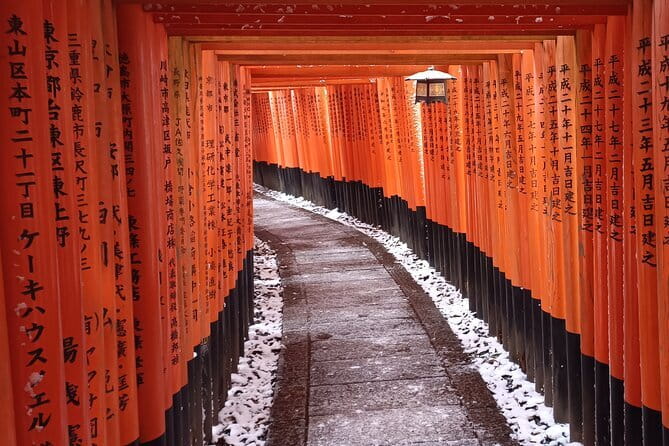
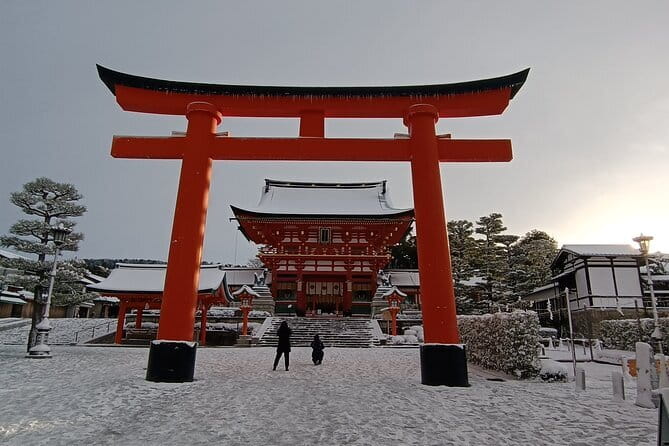
Fushimi Inari-taisha is the Kyoto stop almost everyone dreams about. You arrive to the torii gates, the famous red path, and a setting that is visually dramatic even when you are trying to look beyond the photos.
What makes this visit especially worthwhile is the cultural framing. You learn the basics of Shintoism and why this shrine matters in Japanese society. Once you understand what you are looking at, the torii gates stop being just scenery. They become part of a belief landscape you can actually read.
The time you’re given, about 1.5 hours, is long enough to wander and experience the rhythm of the place without feeling like you have to sprint. And because the tour is early, you get a version of the shrine that is far more manageable. You still see it at full power, just without the wall of people that often shows up later.
There is also a practical upside to going early: you can pause, look back, and appreciate the views between arches. Later, you spend more time thinking about where to stand. Here, you can think about what you’re seeing.
If you want photos, this is one of your best bets. Go for a few slow minutes instead of racing for the most obvious shot. The torii corridor rewards patience.
Arashiyama Bamboo Forest: seeing nature while learning the context
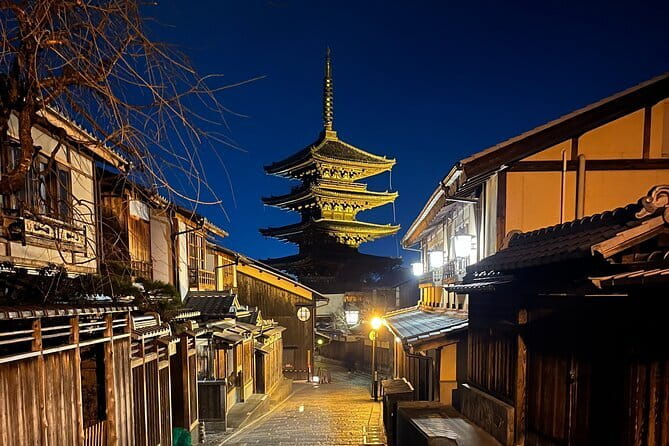
From Fushimi Inari’s shrine world, you move to Arashiyama and the Bamboo Forest. This is one of those places that can feel like a movie set, but it still hits in person because of how the light and stems create a moving grid overhead.
The tour gives you about 1.5 hours here, which is the right length for a walk, a breather, and actually noticing details instead of only taking one pass. You get time to enjoy the natural setting, and you also get an explanation tied to Japanese society.
The social angle matters. Bamboo isn’t just scenery. It is part of how people think about nature, everyday life, and aesthetics. The guide helps you connect the visuals to meaning, so the experience feels more grounded than a simple checklist stop.
One small drawback to know about any bamboo stop: it can be busy even in the morning, depending on your day. The early schedule helps, but it doesn’t turn the place into empty countryside. What it does do is give you space to experience it without constant bumping.
My advice: slow down your pace once you’re inside. You’ll notice the forest changes as you move. Look up briefly, then look sideways. The feel is different from every angle.
A different sort of day in Japan:
- Kyoto Geisha Walking Tour: Gion District & Hidden Gems
★ 4.7 · 3,273 reviews - Kyoto: Tea Ceremony Ju-An at Jotokuji Temple
★ 4.9 · 3,207 reviews - Kyoto: 45-Minute Tea Ceremony Lesson Experience
★ 4.3 · 2,378 reviews - Kyoto: Gion Geisha District Walking Tour – Stories of Geisha
★ 4.7 · 2,187 reviews
Kinkakuji Golden Pavilion: what to expect and what to budget
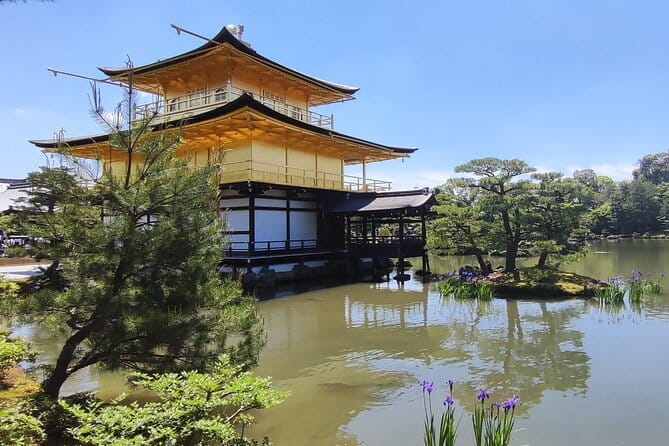
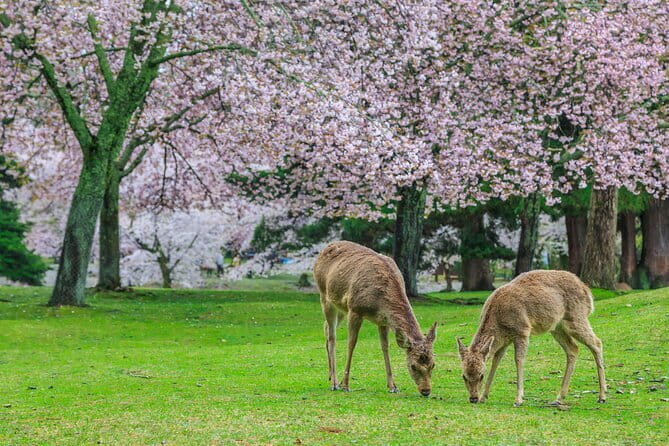
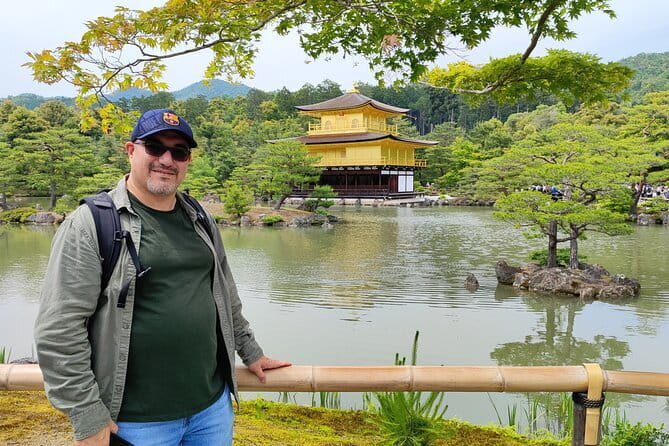
Kinkakuji, the Golden Pavilion, is arguably the Kyoto sight people feel obligated to see. It’s also a great final morning anchor because it teaches you something new even if you’ve already seen photos online.
This stop includes the historical and religious context, with a focus on Buddhism in Japan. That matters, because the temple isn’t just a shiny object. It is a cultural statement, tied to the way power, faith, and art intersected in Japanese history.
Here’s the practical part: Kinkakuji entrance is not included. You pay the entrance fee directly, listed at ¥500 per person. Plan for it so it doesn’t surprise you mid-morning. The good news is that, compared to the overall cost of the tour, this fee is modest, and it buys you full access to the temple grounds.
You’ll get about 1.5 hours at Kinkakuji. That’s enough time to take in the pavilion views, understand the background, and walk the pathways without treating the place like an obstacle course.
If you care about photos, you’ll want to arrive ready to pause. The pavilion and its surroundings offer different angles, and your best shots often come from waiting a few moments for the light and crowd movement to align.
Kyoto Station building stop: easy wrap-up, good momentum
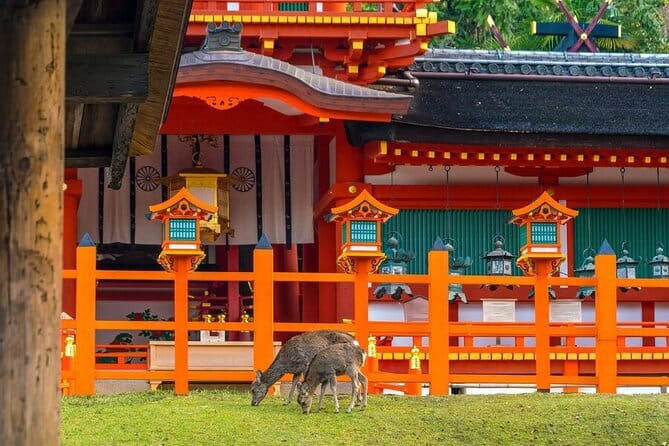
After the temple and bamboo, you end back at the Kyoto Station area, with a brief stop at the Kyoto Station building. This wrap-up works because it keeps your bearings. By the time you’re done, you’re back in the transportation hub zone, which makes your afternoon plans much easier.
The tour portion ends back at the meeting point, so you avoid the common stress of trying to find your way from a remote end point. For a half-day experience, that convenience is a real value.
Also, Kyoto Station is not just a transit node. It’s a good place to grab a snack, review what you’ve seen, and choose what to do next. Even if you don’t linger long, being back near transit gives you options.
This is the moment to think like a local: do one more thing nearby, or switch to a different vibe across the city while your energy is still high.
Price and value check: what you pay, what you add, and what you get
The tour price is $94.71 per person, and it includes an experienced local guide and the structure that gets you through three major sights plus a shrine and bamboo stop in about 5 hours.
Here’s the value math that matters. Kinkakuji entrance is extra at ¥500. Public transport is listed at ¥1,300 per person. So, expect your total out-of-pocket to be higher than the headline price once you add those two items.
Is it still good value? In my opinion, yes, because you are buying more than access. You are buying:
- a route that saves time through smart timing
- English explanations tied to what you’re seeing
- a small group format that keeps the day from becoming noisy and chaotic
- efficient navigation around famous sites that are easy to get overwhelmed by on your own
If you’re the type who hates getting lost, loves having context, and wants to see top Kyoto highlights without spending your whole morning stuck in crowd flow, this is priced like a convenience.
If you’re traveling super budget-first and you are comfortable planning everything yourself with transit and tickets, you might choose to go on your own. But this tour reduces the mental load while keeping the experience focused.
Who this tour suits best, and who should skip it
This tour is a strong match for you if:
- you want Kyoto’s top highlights in one half day
- you like early starts to beat crowds
- you prefer a small group and a guide-led pace
- you want cultural explanations, not just photo stops
It might be less ideal if:
- you dislike early mornings, since it starts at 8:00 am
- you are hoping the tour price covers everything, since Kinkakuji and transport are extra
Also, with a max of 8 people, this is a good pick for couples, small families, and solo travelers who still want a guided structure without the feeling of being swallowed by a big bus group.
Should you book this early Kyoto highlights tour?
I think it’s a smart booking if your priorities are time, context, and a manageable morning. The biggest win is the early schedule paired with a small group, plus the fact that the guide like Indra helps you understand what each stop represents.
Add the extra fees into your planning, and you’ll feel prepared instead of surprised. If you want Kyoto highlights with less stress and more meaning, this tour does the job.
If you’re mainly hunting for a slow, unplanned wander day, then you may want a different style. But if you want your morning to count, book it and plan your afternoon right after.
FAQ
What is the duration of this tour?
The tour lasts about 5 hours.
What time does the tour start?
It starts at 8:00 am.
Where do I meet the group?
You meet at Starbucks Coffee – Kyoto Tower Sando, in front of Kyoto Station (Kyoto Tower Sando address is provided in the booking details).
Where does the tour end?
It ends back at the same meeting point near Kyoto Station.
How many people are in the group?
The tour has a maximum of 8 travelers.
What is included in the price?
An experienced local guide with good English is included, and the tour uses public transport. Free admission is listed for the tour stops other than Kinkakuji.
Is the Kinkakuji entrance fee included?
No. The Kinkakuji Golden Pavilion entrance fee is ¥500 per person.
How much is public transportation for this tour?
Public transportation is listed at ¥1,300 per person.
Is the tour cancellable, and what is the policy?
Free cancellation is available. You can cancel up to 24 hours in advance for a full refund, and cancellations less than 24 hours before the start time are not refunded.
Does the tour run in all weather?
This experience requires good weather. If it’s canceled due to poor weather, you’ll be offered a different date or a full refund.
Newly listed around Kyoto
- Zen Meditation for Life in Kyoto★ 5.0 · 10 reviews
- Kyoto: Zen Meditation at a Private Temple with a Monk★ 5.0 · 25 reviews
- Kyoto Private Customizable Day Tour with Guide and Vehicle★ 5.0 · 52 reviews
- Kyoto: Gion Geisha District & Sake-in-Hand Walking Tour★ 5.0 · 37 reviews
- Your Private Vacation Photography Session In Kyoto★ 5.0 · 110 reviews
- Private Wagyu Beef Tour with a Local Guide★ 5.0 · 6 reviews
- Private Guided Traditional Buddhist Cooking in Japan★ 5.0 · 16 reviews
- Private Pewter Sake Cup Experience with a Kyoto Artisan★ 5.0 · 31 reviews
Kyoto Tours, compared.
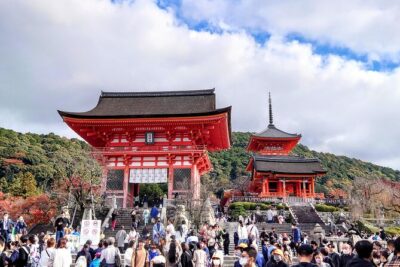

Fushimi Inari, Kinkakuji, Bamboo Grove 1 Day Bus Tour
Read our review →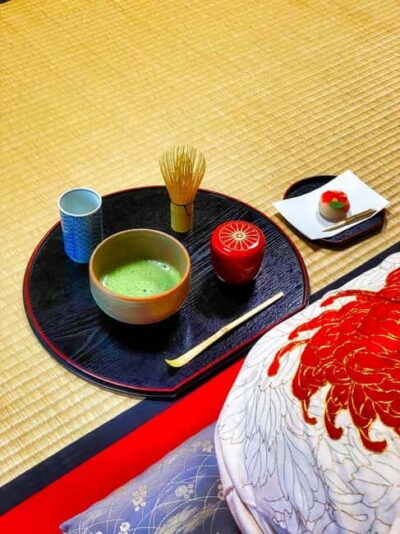
Tea Ceremony in a Traditional Tea House in Kiyomizu
Read our review →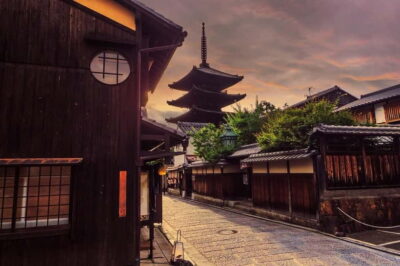
Kyoto Geisha Walking Tour: Gion District & Hidden Gems
Read our review →
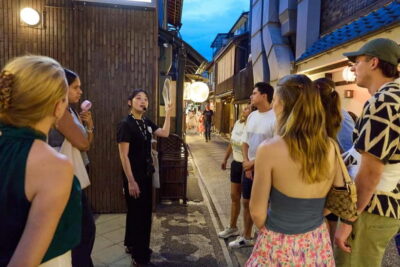
Gion Geisha District Walking Tour – Stories of Geisha
Read our review →