
Review · HISTORICAL TOURS
From Kyoto: Nara History Guided Half Day Bus Tour with lunch
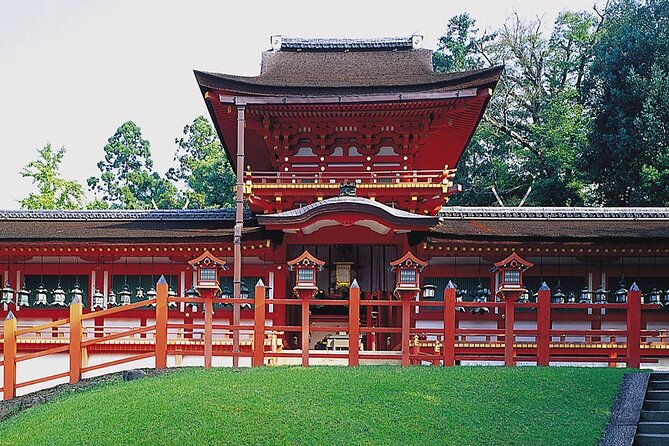
One morning in Nara, then back to Kyoto. This guided half-day route strings together Kasuga Taisha, Todaiji Temple, and Nara Park so you get the real landmarks without wrestling with transit all day. It also includes Japanese-style lunch, plus a bit of shopping time afterward.
I especially like two things about this tour. First, you travel with an English-speaking guide only, and guides like Tammie, Mana, and Shelley show up in praise for clear explanations that keep the stops making sense. Second, lunch is built in, served at a local restaurant that also sells souvenirs, so you can eat and browse without adding extra planning.
The main thing to keep in mind is pacing. It is a group tour, and on crowded days, the schedule can feel a bit tight, with less wiggle room if traffic or construction slows things down.
In This Review
- Key highlights
- Why This Kyoto to Nara Tour Works on a Time Budget
- Getting There: Kyoto Station Hachijo Departure and How the Day Flows
- Stop 1, Kasuga Taisha Shrine: Free Entry and a Quiet Sense of Place
- Todaiji Temple and the 15-Meter Great Buddha: The Main Event
- Nara Park Deer Time and Lunch at a Local Restaurant
- Group Size, Comfort, and What to Pack
- Price and Value: Is About $79 a Good Deal?
- Who This Tour Suits Best (and Who Might Prefer DIY)
- Final Call: Should You Book This Half-Day Nara Tour?
- FAQ
- How long is the Kyoto to Nara history tour?
- Who leads the tour and what language is used?
- Where do I meet the group in Kyoto, and when does it start?
- Is lunch included, and what kind of lunch is it?
- What temple or shrine admissions are included?
- Can I bring large luggage on the tour?
- What happens if the tour is canceled due to weather or a natural disaster?
Key highlights
- English-speaking guide only to help you understand what you are seeing
- Todaiji Temple included with admission and plenty of time for the Great Buddha
- Kasuga Taisha main sanctuary for general worship, with free admission
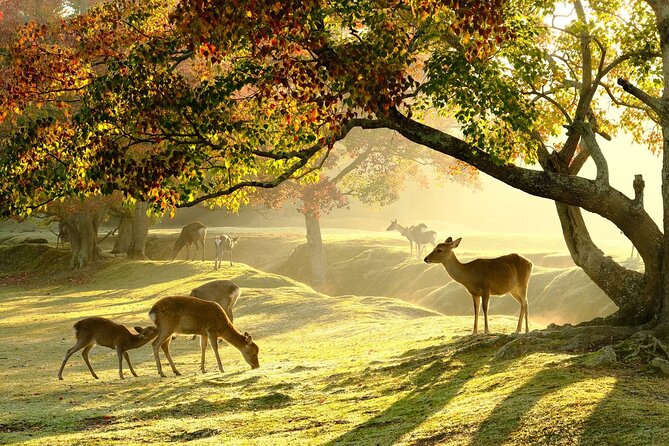
- Nara Park deer time as a fun break between major shrines
- Japanese-style lunch plus a shop at the restaurant for easy souvenirs
- Maximum 40 travelers keeps the group manageable but still not private
Why This Kyoto to Nara Tour Works on a Time Budget
Nara is one of those places where you can spend a full day and still feel like you rushed. This tour takes a smarter approach if your Kyoto days are already packed. You leave Kyoto early, hit the major sights in a focused loop, and you get back before your evening plans start calling.
What makes this route work is the mix of big-ticket culture and “small moment” nature. You get the ceremony feel at Kasuga Taisha, the sheer scale at Todaiji Temple, and then you get a break in Nara Park where deer are the headline. That rhythm matters because it keeps you from feeling like you are only ticking boxes.
It is also practical that the tour uses a mobile ticket and runs as a timed group schedule. You are not building your own timeline from scratch, which is especially helpful if you are juggling jet lag or trying to keep things simple between train rides.
If you dislike rushed logistics, pay attention to the timing notes. The bus departs on schedule and will not wait for late arrivals, and the itinerary can shorten stop times if there is traffic. That is manageable, just know what you are signing up for: a guided plan, not a slow wander.
More History Tours in Kyoto
- Kyoto Gion Historical Walking Tour
★ 5.0 · 188 reviews - Historical Kyoto E-Bike Tour
★ 5.0 · 181 reviews - Kyoto: Private 2.5 Hour Historical Walking Tour
★ 4.9 · 121 reviews
Getting There: Kyoto Station Hachijo Departure and How the Day Flows
You start at Kyoto Station, Hachijo Entrance Square Sunken Garden. The listed start time is 7:45 am, and you are expected to arrive about 15 minutes early. That matters because the group has to check in and get moving, and late arrivals do not get a second chance.
Once you are on board, expect a mix of transportation. The tour may use bus, train, or a combination, depending on conditions. Either way, the benefit is you are not switching directions while carrying your own plan. You follow the guide, you follow the flow, and you spend your attention on the sights.
The total duration is about 5 hours 30 minutes, so yes, it is a true half-day. Stop times are designed to keep you moving: around 45 minutes for Kasuga Taisha, about 1 hour 15 minutes for Todaiji Temple, and about 45 minutes for lunch. There is additional time for travel and for Nara Park walking, so the day feels fuller than the stop durations alone.
Two practical notes help you enjoy it more. First, large luggage is not allowed, so travel light. Second, some buildings and Buddha statues may look different or be partially obscured due to construction, which is common in active temple zones. If you know that up front, you will adapt instead of feeling disappointed.
Stop 1, Kasuga Taisha Shrine: Free Entry and a Quiet Sense of Place
Kasuga Taisha is the tour’s first major stop, and you get about 45 minutes there. The good news is admission is free, so you are not paying extra just to access the core experience.
The focus at this shrine is the main sanctuary for general worship. That is the key distinction. Special worship of the main sanctuary is not included, and the Kasugataisha Museum and the Botanical Garden are also not included. In other words, you are there to experience the spiritual center and the shrine setting, not to do a full museum day.
What you should expect in that time window is enough to orient yourself, see the main sanctuary area, and understand what you are looking at through the guide’s explanations. The time is tight, so you will want to decide early what you want most, photos, incense atmosphere, or reading the guide notes as you walk.
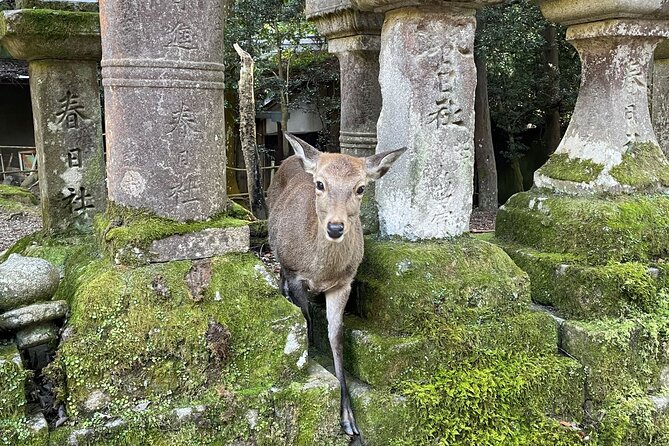
Kasuga Taisha is also a good “temperature check” stop. Before the scale of Todaiji hits you, this is where the day slows down and your eyes adjust to shrine rhythms: paths, sacred space, and the mood shift from Kyoto city pace to Nara’s shrine landscape.
If you are traveling with kids or you get tired of constant walking, this is a comparatively lighter cultural stop. Still, plan for some walking and stair steps. Wear shoes that you trust.
Todaiji Temple and the 15-Meter Great Buddha: The Main Event
Todaiji Temple is the centerpiece of the day. You get about 1 hour 15 minutes, and admission is included. This is one of those places where the famous thing is famous for a reason.
The Great Buddha you are seeing is around 15 meters tall, and the temple is also known for being home to what is described as the world’s largest wooden structure. Even if you have seen photos, the real scale hits differently in person. It is hard to grasp size until you are standing in the space and comparing it to your own height.
Here is how to make the most of the time. Do not rush the first look. Spend a few minutes taking in the whole hall, then listen to what the guide points out, then go back for a closer look. That “cycle” keeps you from feeling like you only got a highlight photo.
Crowds can change your experience. If there is a festival happening, the temple area can feel busy and you may feel the schedule compress a bit. It is still worth it, but it helps to go in with the mindset that you are navigating people as well as architecture.
Also, construction can affect what you can see. Some buildings or statues may look different, or parts of the complex may not be fully visible. That can make your first impression slightly different than you expected from online pictures. Having a guide helps you still understand what matters most.
A few more Kyoto days to weigh up
- From Kyoto: Nara History Guided Half Day Bus Tour with Lunch
★ 4.8 · 114 reviews - Private car tour Let’s uncover secrets of majestic Kyoto history
★ 5.0 · 45 reviews - Kyoto: Historic Higashiyama Walking Tour
★ 5.0 · 31 reviews - Private Guided Historical Sightseeing Tour in Kyoto
★ 3.5 · 24 reviews
Nara Park Deer Time and Lunch at a Local Restaurant
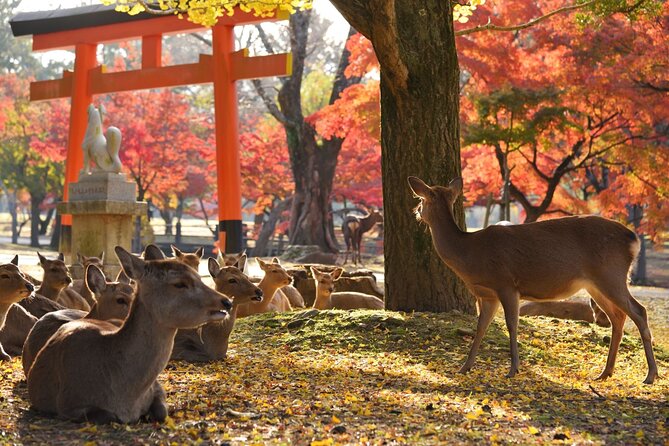
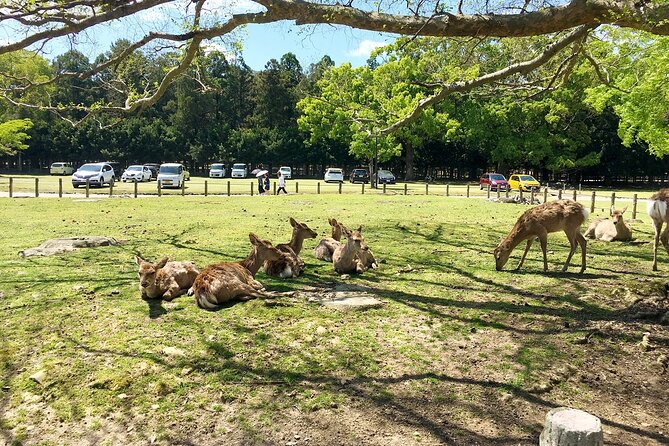
After Todaiji, the day flows into Nara Park. The tour description highlights deer as a main attraction, and the experience is built around letting you enjoy them rather than sprinting past.
This is one of the best parts for a lot of people because it is visual, playful, and instantly different from shrine interiors. You get to slow down, look around, and enjoy that odd, charming Nara feeling where the park is alive with animals.
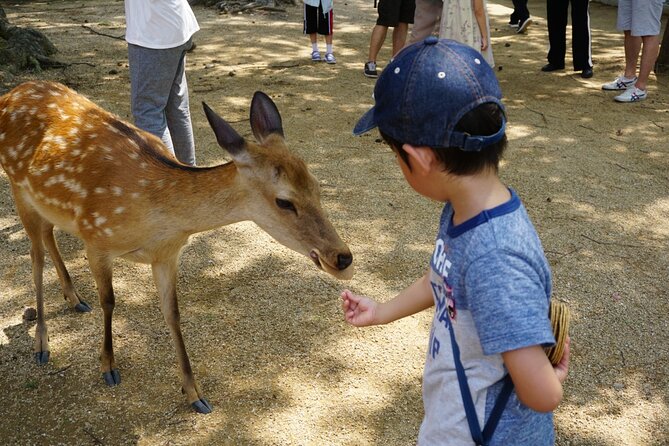
You also have fun feeding the deer as part of the experience. That is exactly the kind of moment that makes a guided half-day feel worth it, because you are getting an activity you might not organize on your own during a short visit.
Then comes lunch. You have about 45 minutes for a Japanese-style meal at a local restaurant. This is not just food, it is built into the day so you can refuel without hunting down a place near each temple.
Important detail: you should share any allergies or dietary restrictions when you book. The tour notes that menu changes on the day of the tour are not accommodated. So the safer move is to get your needs in early, then relax once you are seated.
After lunch, you get a bit of shopping time. The restaurant also has a shop where you can buy local souvenirs. That combination is practical. You get your meal and your shopping without transferring locations, and it tends to reduce stress on a day with a fixed schedule.
Group Size, Comfort, and What to Pack

This tour runs with a group cap of 40 travelers. That size is usually large enough to feel like a real group tour but not so huge that you lose sight of the guide constantly. Still, you should expect crowded moments at popular sites, especially around the biggest temple spaces.
You are also not on a private tour. The experience is shared, and individual requests for itinerary changes are not supported. So if you want special stops, plan that separately.
Comfort wise, one word sums it up: walking. Even with guided time blocks, there is walking between areas and you may be on your feet at the temple and in the park. Wear comfortable shoes and bring a light layer, since morning to mid-day temperatures can shift.
Packing rule is clear: large luggage is not allowed. If you have big suitcases from earlier in your trip, consider leaving them at your hotel or using a luggage service before the tour day.
Finally, keep your expectations grounded about timing. The tour schedule can change without notice due to traffic, and visit times may shorten if the day runs late. This is not a sign of failure, it is how day trips in Japan work. You will enjoy it more if you treat it like a guided highlight reel rather than a meticulous plan.
Price and Value: Is About $79 a Good Deal?
At $78.83 per person, you are paying for more than transportation. You are paying for a structured route, an English-speaking guide, included admission at Todaiji, and lunch.
Here is the value math that matters in real life. Admission at Todaiji is included, while Kasuga Taisha admission is free, so you are mostly absorbing the cost of guided interpretation plus the meal and the logistics that get you from Kyoto to Nara smoothly. The tour also saves your time, especially if you would otherwise spend the morning figuring out which trains to take and how to sequence stops.
Does it feel expensive? Not if you value convenience. If you like to travel independently, you might be able to assemble something similar for less money. But you would also be taking on route planning, timing, and finding places to eat near each stop.
This tour is especially good value when you want a single, pre-set plan. You can show up, follow the guide, and not worry about when to eat or how to move between key sites.
The tradeoff is, you cannot slow down or customize on the fly. The schedule is designed, and you are part of a group system. If you hate group pacing, this price will not compensate for that feeling.
Who This Tour Suits Best (and Who Might Prefer DIY)
I think this tour is a great match if you want a straightforward Nara hit during a Kyoto stay. It is also a smart fit if you are traveling with limited time, like a morning window before dinner plans, or if you are tired of bouncing between bus and train connections.
It is also good for first-timers who want help reading what they see. Todaiji and Kasuga Taisha are not just pretty buildings. With an English guide walking you through the meaning and the big points, you get more satisfaction from each stop.
You might want a different approach if you:
- Want a long, slow day with plenty of downtime in Nara Park
- Prefer private control over pacing and where you stop for photos
- Have strict dietary needs that are hard to communicate in advance (the tour asks for allergy and restriction info when booking, and does not support same-day menu changes)
If you are a family, the deer and the guided flow are usually a win. Just remember it is still a walking day.
Final Call: Should You Book This Half-Day Nara Tour?
If you are trying to choose between DIY Nara day plans and a guided half-day, I would lean toward this tour when your priority is simplicity plus the must-see sights. The guide-driven explanations, the included Todaiji admission, and the built-in lunch and shopping make it feel like one organized package instead of three separate tasks.
Book it if you want:
- A clear order of sights in Nara
- English guidance that keeps temple stops understandable
- A fun deer-focused break in the middle of the culture stops
- A lunch plan that reduces decision fatigue
I would think twice if you hate crowds, dislike fixed schedules, or want a lot of extra time at just one place. In those cases, you might prefer a more flexible DIY approach where you can linger.
FAQ
How long is the Kyoto to Nara history tour?
The tour duration is approximately 5 hours 30 minutes.
Who leads the tour and what language is used?
The tour is conducted by an English-speaking guide only.
Where do I meet the group in Kyoto, and when does it start?
You meet at Kyoto Station Hachijo Entrance Square Sunken Garden. The start time is listed as 7:45 am.
Is lunch included, and what kind of lunch is it?
Yes. Lunch is included, and it is described as a Japanese-style lunch at a local restaurant.
What temple or shrine admissions are included?
Todaiji Temple admission is included. Kasuga Taisha Shrine admission is listed as free. Other items like the Kasugataisha Museum and the Botanical Garden are not included.
Can I bring large luggage on the tour?
No. Bringing large luggage is not allowed.
What happens if the tour is canceled due to weather or a natural disaster?
The tour requires good weather, and if it is canceled due to poor weather, you will be offered a different date or a full refund. In the event of a natural disaster such as a typhoon, the tour will be canceled and a full refund will be issued.
Newly listed around Kyoto
- SHIRAKAWA Japanese Culture Experiences with private English staff★ 5.0 · 16 reviews
- A Privately Guided Photoshoot in Beautiful Kyoto by a Pro★ 5.0 · 18 reviews
- Roketsu dyeing experience: M course Roketsu Dyeing Experience★ 5.0 · 163 reviews
- Scenic Green Tea Fields of Hidden Kyoto & Local Tea Exp (Private)★ 5.0 · 32 reviews
- Pedal Adventure Kyoto’s iconic landmarks on an e-bike tour★ 5.0 · 189 reviews
- Kyoto: Geisha Dinner & Gion Cultural Walk★ 5.0 · 14 reviews
- Kyoto tour with English Speaking Chauffeur★ 5.0 · 29 reviews
- Kyoto&Nara Private Highlights Tour with English driver Pickup★ 4.0 · 6 reviews
Historical Tours, compared.
World Heritage Shirakawa-go and Experience Tours from Kanazawa
Read our review →
World Heritage Kyoto & Nara Uji Authentic Matcha Experience
Read our review →
World Heritage Shirakawa-go Morning Guided Tour
Read our review →
Hiroshima Historical Walking Tour – Why A-Bomb was Dropped
Read our review →
Hiroshima Peace (Heiwa) Walking Tour at World Heritage Sites
Read our review →
Yanaka Walking Tour: Historic and Traditional District of Tokyo
Read our review →
Shinjuku Historical Walking Tour & Secret Backstreets
Read our review →Browse the lists this tour appears in