
Review · HISTORICAL TOURS
Kyoto: Historic Higashiyama Walking Tour
Kyoto’s lanes feel cinematic for hours. I love the small-group pace and the way you stitch together East Mountain highlights like Fushimi Inari, serene Kodaiji Temple, and the big stage viewpoint at Kiyomizu-dera, all with a guide to connect the dots. The one real catch is that you will do some uphill walking, so comfy shoes matter.
The route starts at the shrine complex that climbs by vermilion torii gates, then shifts into Gion’s story-heavy streets, and finishes at Kiyomizu-dera where the waterfall ritual and skyline views are part of the draw. If you want a fast, well-organized way to understand Higashiyama without getting lost, this is a strong match.
In This Review
- Key Things I Like About This Higashiyama Walking Tour
- A 4-Hour Higashiyama Route That Actually Makes Sense
- Getting Started at JR Inari Station, then Riding to Gion
- Fushimi Inari Taisha: What You See Changes as You Climb
- Senbon-torii Photos, Side Lanes, and Off-Path Details
- Gion: 30 Minutes That Turns a District Into a Story
- Kodaiji Temple: Serenity, Gardens, and Bamboo Grove Time
- Sannenzaka Backstreets: Snacks, Souvenirs, and the Pre-Kiyomizu Climb
- Kiyomizu-dera: Otowa Waterfall and the Wish Ritual
- Price and Value: What You Get for About $106
- Walking Pace, Luggage Rules, and What to Bring
- Language Options: Choose the Guide Style That Fits You
- Who Should Book This Higashiyama Walk
- Should You Book This Kyoto Historic Higashiyama Walking Tour?
- FAQ
- Where is the meeting point for the tour?
- How long is the Kyoto Higashiyama walking tour?
- Which attractions are included on the route?
- Are admission fees included for the temples?
- Is the train ride included?
- Is food included in the price?
- Is this tour suitable for people with mobility impairments?
Key Things I Like About This Higashiyama Walking Tour
- Fushimi Inari plus the Senbon-torii climb route, guided so you know what you are looking at
- Kodaiji Temple admission included, with time for gardens and the bamboo grove
- Gion storytelling for about 30 minutes, including what makes the district tick in daily life
- Sannenzaka backstreets, with time to browse snacks and small souvenirs along the way
- Kiyomizu-dera admission included, including the Otowa Waterfall and its 3-stream wish ritual
- Small group limited to 10, which makes the walk feel personal and easier to move through
A 4-Hour Higashiyama Route That Actually Makes Sense
Higashiyama means East Mountain, and this walking tour takes place along the foothills of the mountain range that frames the eastern side of central Kyoto. That geography matters because it naturally links the big sights you hear about, while also putting you in the lanes where the atmosphere feels old even when you are surrounded by modern Japan.
You get a structured route across the day’s core highlights rather than bouncing between disconnected neighborhoods. The “flow” is the value: shrine arrival, then cultural district, then temple serenity, then the famous viewpoint finish. It feels like you are reading Kyoto in chapters.
More History Tours in Kyoto
- Kyoto Gion Historical Walking Tour
★ 5.0 · 188 reviews - Historical Kyoto E-Bike Tour
★ 5.0 · 181 reviews - Kyoto: Private 2.5 Hour Historical Walking Tour
★ 4.9 · 121 reviews
Getting Started at JR Inari Station, then Riding to Gion
Meeting is just outside the fare gates of JR Inari Station. Depending on where you’re coming from, the Keihan train line can be handy, since it’s only a short walk to JR.
The first big move is a train ride from Fushimi Inari to Gion, which saves energy and keeps the tour on a clean timeline. That included ticket is one less decision you have to make, and it also prevents the common mistake of trying to walk between areas that are better connected by transit.
One practical note from real-world tour dynamics: when guides like Hugo are in the lead, they are known for adapting to small delays and adjusting the plan to match the group’s energy. So if your train is running late, you are not walking into a rigid situation.
Fushimi Inari Taisha: What You See Changes as You Climb
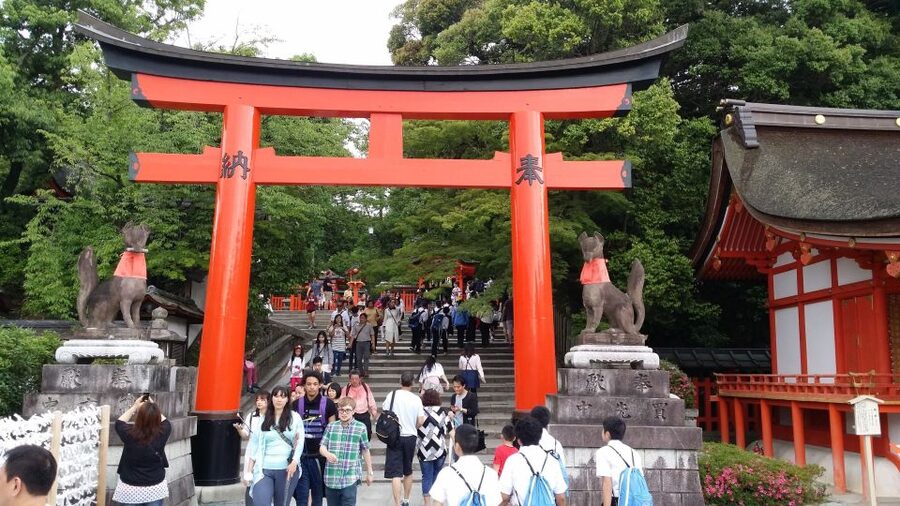
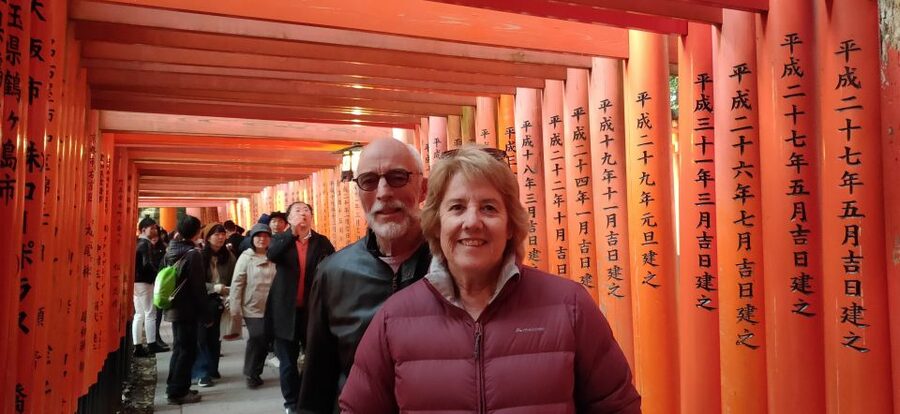
Fushimi Inari Taisha is the southern starting point for Higashiyama’s shrine corridor, and the signature experience is the vermilion torii gates that snake up the mountainside. You will spend about an hour here, including a guided walk through the Senbon-torii area.
What makes Fushimi Inari special is that it is not just a photo stop. It is a living Shinto site with culture, symbols, and history layered into everyday details. With a guide at your side, the gates stop being random and start becoming a map you can read.
This is also where the “value of context” shows. Guides like Damian are noted for Japanese history and custom-focused storytelling, which is exactly what you want at a place like this. Instead of only taking in the color, you’ll understand why Inari matters and what the site communicates through its design.
Senbon-torii Photos, Side Lanes, and Off-Path Details
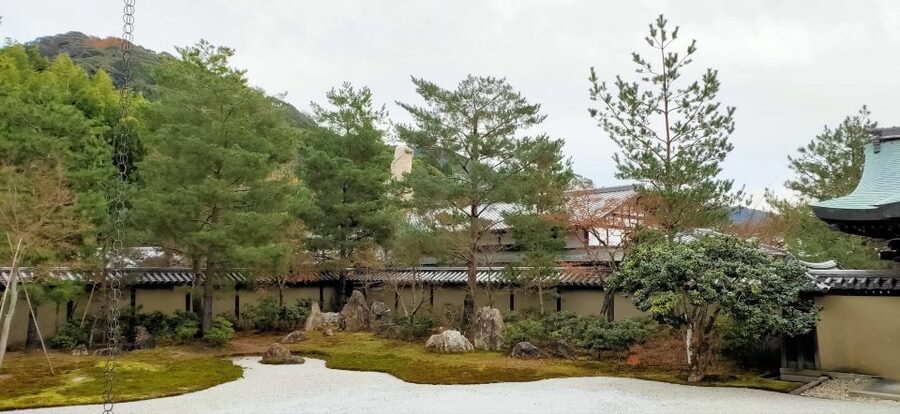
After the main shrine area, the walk emphasizes the climbing experience and the feeling of moving through a corridor of gates. This is prime time for photos, but it also helps to have someone who knows where to look beyond the obvious.
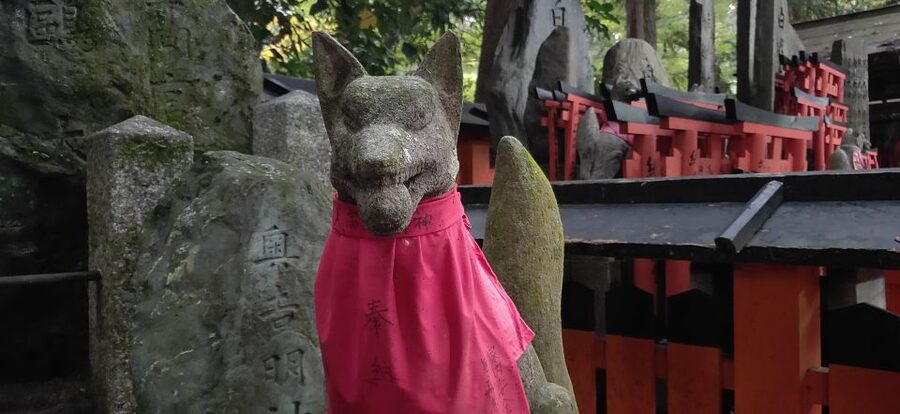
Some tours in this style are known for adding small shrine stops in lanes that are less “main crowd” and more local feeling. With a good guide, you might get a few of these side moments rather than only doing the broad, straight-line route.
The payoff is that your photos look more varied, and your brain feels less on rails. You also get better at spotting details in Japanese religious space, like smaller offerings and boundary cues, which you might otherwise miss.
More Walking Tours in Kyoto
- Kyoto Geisha Walking Tour: Gion District & Hidden Gems
★ 4.7 · 3,273 reviews - Kyoto: Gion Geisha District Walking Tour – Stories of Geisha
★ 4.7 · 2,187 reviews - Night Walk in Gion: Kyoto’s Geisha District
★ 4.5 · 2,003 reviews - Kyoto Gion Geisha District Walking Tour – The Stories of Geisha
★ 5.0 · 1,441 reviews
Gion: 30 Minutes That Turns a District Into a Story
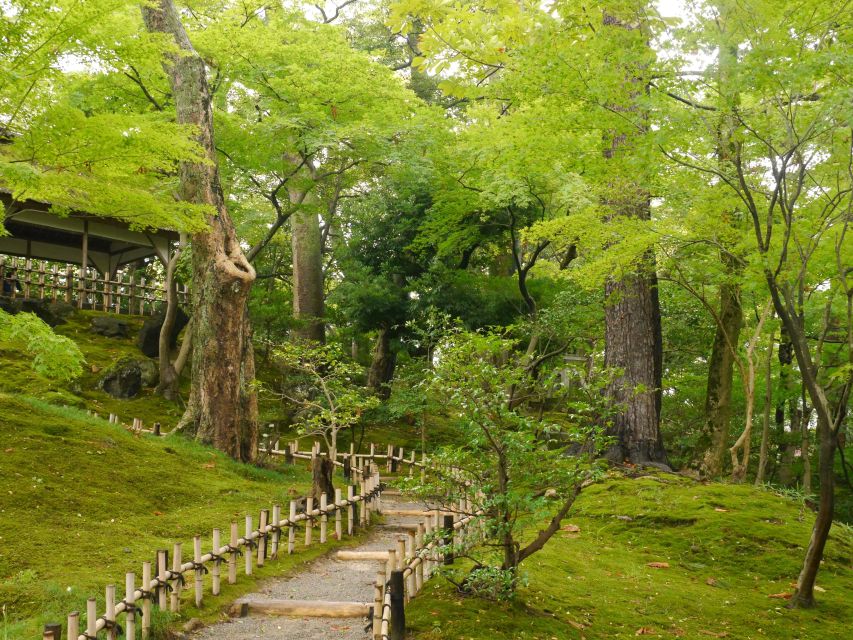
Next comes a shift to Gion, with about 30 minutes of guided walking. Gion is famous for its historical entertainment culture, but the best thing about visiting with a guide is that it is not treated like a museum. It’s described as an active part of modern-day life, which keeps you from viewing the neighborhood as purely theatrical.
You will also get stories that connect the district to wider Kyoto culture. Even brief time in Gion can feel productive if you know what you’re looking for, like why certain streets and practices gained their roles, and how that tradition shows up in daily rhythm.
If you want a more family-friendly feel, guides such as Lito are known for engaging kids through rituals, wishes, and luck-based storytelling. That matters even if you are traveling without children, because it keeps the tone light and helps everyone stay attentive on a walking tour.
Kodaiji Temple: Serenity, Gardens, and Bamboo Grove Time
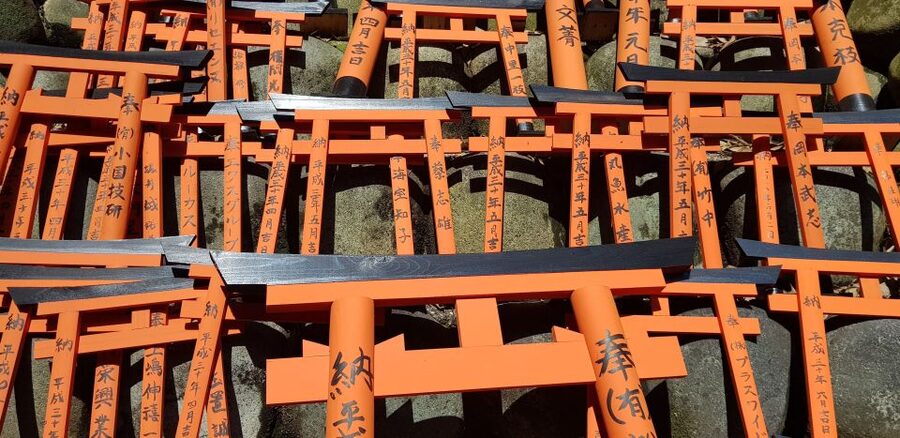
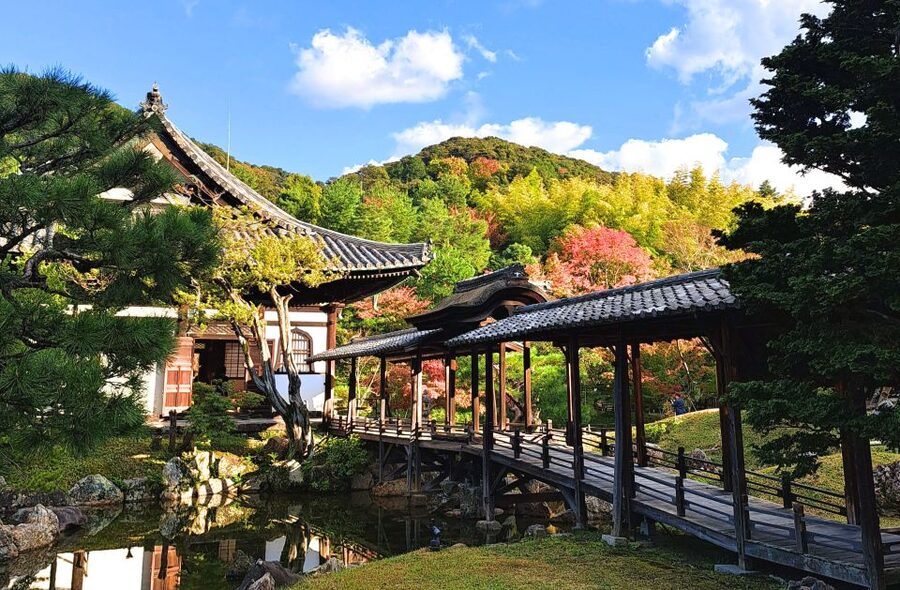
Kodaiji Temple is one of those places where the change in pace is the point. You get about 40 minutes here, and the big win is that admission is included.
The tour specifically sets aside time for the gardens and the bamboo grove. That is a different kind of Kyoto moment than the torii gates. Instead of “look up and walk up,” you shift into “slow down and notice.” The bamboo grove gives you that quiet, cool sensory contrast that makes the whole afternoon feel balanced.
You may also appreciate that the tour gives enough time for the temple complex, rather than turning it into a rushed checkmark. When a guide can explain what you are seeing in plain language, it keeps the site from feeling like a maze.
Sannenzaka Backstreets: Snacks, Souvenirs, and the Pre-Kiyomizu Climb
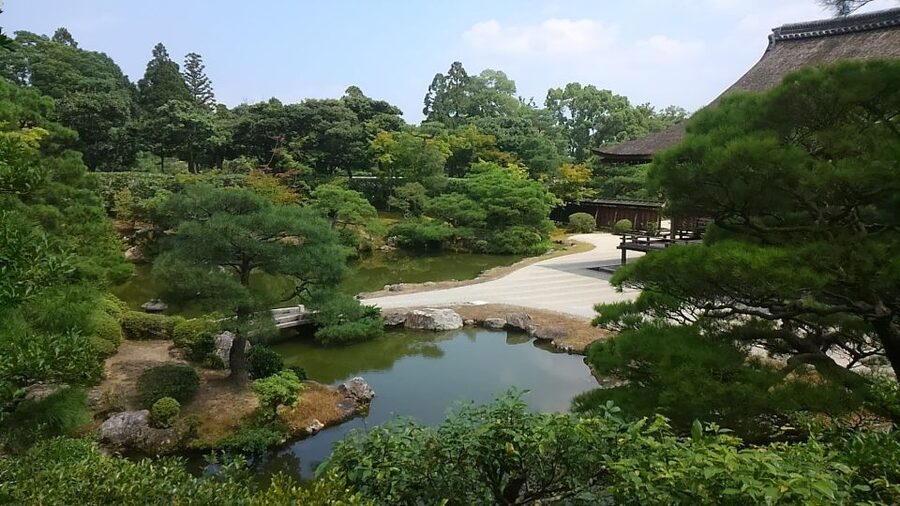
Between Kodaiji and the final big stop, the route includes Sannenzaka and other backstreets in Higashiyama. This is where the streets start to feel like Kyoto rather than just a list of famous buildings.
You’ll have time to stop for snacks or souvenirs along the way. Food and drinks are not included, so plan for water and something small to keep your energy steady. If you are sensitive to heat and hills, bring a light snack you can eat without slowing your group too much.
Sannenzaka is also a useful “breather” before Kiyomizu-dera. It is part shopping street, part historic lanes, and part warm-up for the climb that leads to the temple viewpoints.
Kiyomizu-dera: Otowa Waterfall and the Wish Ritual
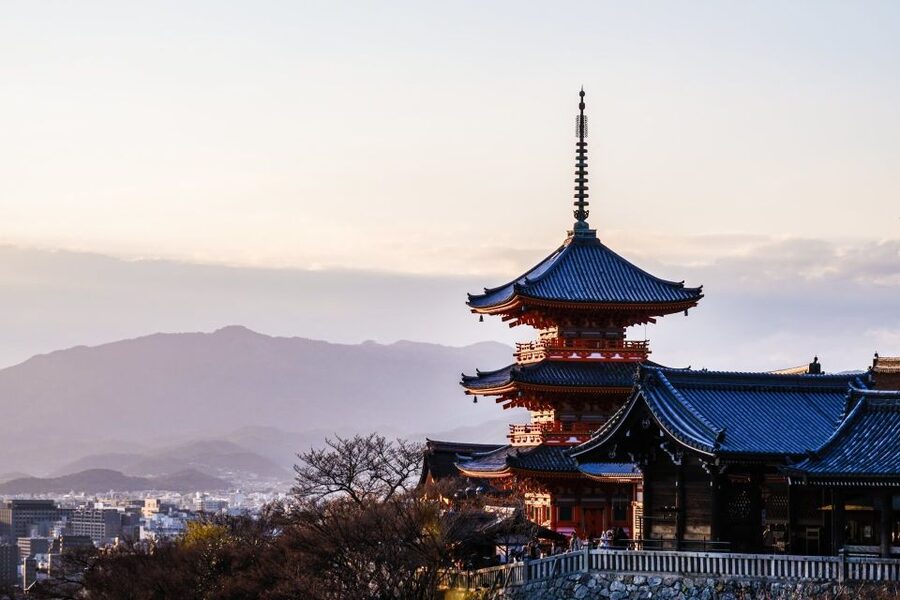
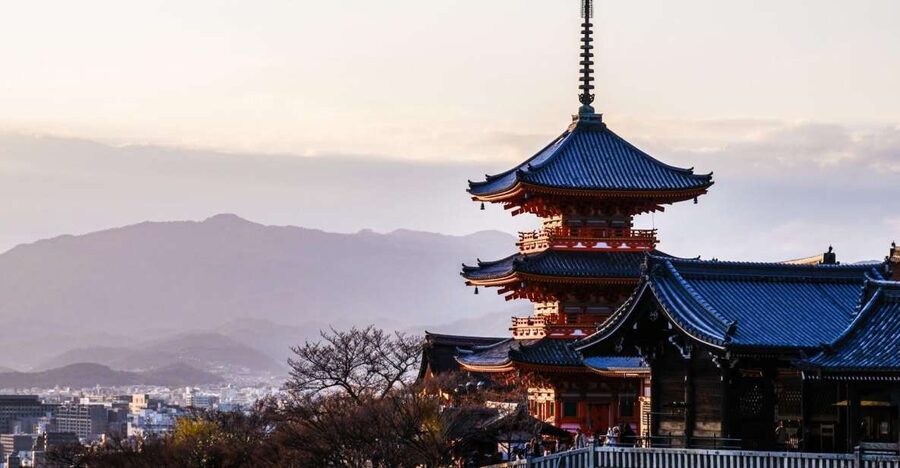
The tour ends with Kiyomizu-dera, with about 30 minutes of guided time and admission included. This is the Kyoto attraction people talk about for a reason: the temple’s setting and viewpoint are hard to beat.
The feature you should plan around is the Otowa Waterfall area. Kiyomizu-dera is known for clear water flowing from the mountains into the waterfall. The ritual you can follow is the tradition of tasting from three divided streams, with the belief that each stream represents health, wealth, or happiness.
There’s also a moral edge to the story: if you are greedy and try to take too much, the wishes are said not to come true. It’s a small ritual detail, but it gives you something to do with your attention besides taking photos.
Since the tour ends after Kiyomizu-dera together, you are free to spend more time afterward at your own pace. That freedom matters here because people linger differently depending on how they feel about crowds, stairs, and viewpoints.
Price and Value: What You Get for About $106
At $106 per person for a 4-hour small-group tour, the value comes from the combination of things you would otherwise pay for separately or figure out on your own:
- Entry fees included for Kodaiji and Kiyomizu-dera
- Train ticket included from Fushimi Inari to Gion
- A live guide (English, French, Hebrew, Spanish) to connect the dots across four major areas
- A group size capped at 10, which helps the pace feel manageable
If you are traveling solo, a guided walk can also be cheaper than the “pay admission twice plus transport plus a guide you hire for only one stop” strategy. If you are with a partner or friends, the small group size tends to make the experience feel more personal, which many people value in Kyoto where you want context, not just movement.
The tour is rated 5 out of 5 based on 31 reviews, which lines up with the themes you’d hope for: helpful guides, smooth adaptation, and a route that covers a lot without feeling chaotic.
Walking Pace, Luggage Rules, and What to Bring
This tour includes some uphill walking but nothing described as exceptionally steep or demanding. That still means you should plan for real steps. If you are the type who gets tired quickly on hills, wear shoes you trust.
What to bring:
- Comfortable shoes
What is not allowed:
- Luggage or large bags
Food and drinks are not included, so build in your own snack plan. I also suggest bringing water, a small umbrella if rain is in the forecast, and a light layer if mornings are cool.
Language Options: Choose the Guide Style That Fits You
The tour guide is available in French, Hebrew, Spanish, and English. That matters because the storytelling is part of what makes the route work. When the guide can answer questions clearly, the temples and shrine symbols stop being mysterious and start being understandable.
Guides highlighted in the experience are described as dynamic and responsive, with Damian tied to Japanese history and Ferdinand noted for answering lots of questions. Ferdinand and Damian are also mentioned as lively, which can be a big factor on a 4-hour walking tour.
Who Should Book This Higashiyama Walk
This tour fits best if you want:
- A structured Higashiyama sampler in one half day
- Cultural and religious context at Fushimi Inari, Kodaiji, and Kiyomizu-dera
- A manageable route that includes a bit of walking, a train transfer, and built-in time at the key sites
It is not suitable for people with mobility impairments, since the route involves uphill walking and requires getting around temple grounds and slopes.
If you are traveling with kids, the format can work well because the guide-led storytelling can keep younger people interested. Just be ready for walking time and stairs around temple areas.
Should You Book This Kyoto Historic Higashiyama Walking Tour?
Book it if you want a focused Higashiyama day with the best-known sights, but you also care about understanding what you’re seeing. The combination of Kodaiji and Kiyomizu-dera admission included, the Fushimi Inari guided context, and the Gion stories is exactly the kind of planning that saves time and prevents you from treating Kyoto like a checklist.
Skip it or consider a lighter plan if you cannot handle uphill walking or if you need more flexibility for breaks beyond what fits inside the 4-hour schedule.
If you want your Kyoto memories to feel guided, not random, this is a strong way to put the pieces together. You’ll finish with the torii-gate wonder behind you and the Otowa Waterfall ritual waiting at the end, which is a satisfying arc for a half day.
FAQ
Where is the meeting point for the tour?
You meet just outside the fare gates of JR Inari Station at the Inari Station area.
How long is the Kyoto Higashiyama walking tour?
The tour duration is 4 hours.
Which attractions are included on the route?
The tour covers Fushimi Inari Taisha, Gion, Kōdaiji Temple, and Kiyomizu-dera.
Are admission fees included for the temples?
Yes. Admission fees are included for Kōdaiji Temple and Kiyomizu-dera.
Is the train ride included?
Yes. A train ticket is included for the ride from Fushimi Inari to Gion.
Is food included in the price?
No. Food and drinks are not included.
Is this tour suitable for people with mobility impairments?
No. The tour is not suitable for people with mobility impairments. It includes some uphill walking.
More Historical Tours in Kyoto
- From Kyoto: Nara History Guided Half Day Bus Tour with Lunch
★ 4.8 · 114 reviews - Kyoto/Osaka: Kobe & Himeji Journey Through Culture & History
★ 3.7 · 18 reviews - 4.5-hr Kyoto Historical Highlights Bike Tour with UNESCO
★ 4.7 · 13 reviews - Kyoto/Osaka: Kyoto and Nara World Heritage Day Tour
★ 4.5 · 12 reviews
Newly listed around Kyoto
- Half Day Matcha Tour in Uji, home of culture, with a local★ 4.8 · 14 reviews
- Making Fresh To-fu from soybeans in Kyoto★ 5.0 · 8 reviews
- Let’s make only one original onigawara in the world!!★ 4.9 · 21 reviews
- Kyoto:Private Tour/Luxury Vehicle with Guide & photographer★ 4.8 · 35 reviews
- Kyoto/Osaka: Kyoto Coast, Amanohashidate & Ine Bay Day Trip★ 4.4 · 7 reviews
- Kyoto/Osaka: Kyoto and Nara World Heritage Day Tour★ 4.5 · 12 reviews
- Kyoto/Osaka: Kobe & Himeji Journey Through Culture & History★ 3.7 · 18 reviews
- Kyoto: Kimono/Yukata Rental 5 Minute from Kiyomizu-dera★ 4.7 · 89 reviews
Historical Tours, compared.
World Heritage Shirakawa-go and Experience Tours from Kanazawa
Read our review →
World Heritage Kyoto & Nara Uji Authentic Matcha Experience
Read our review →
World Heritage Shirakawa-go Morning Guided Tour
Read our review →

Hiroshima Historical Walking Tour – Why A-Bomb was Dropped
Read our review →
Hiroshima Peace (Heiwa) Walking Tour at World Heritage Sites
Read our review →
Yanaka Walking Tour: Historic and Traditional District of Tokyo
Read our review →
Shinjuku Historical Walking Tour & Secret Backstreets
Read our review →Browse the lists this tour appears in