
Review · HISTORICAL TOURS
Kyoto: Private 2.5 Hour Historical Walking Tour
Kyoto can feel overwhelming, fast. This private walk ties shrines, Zen gardens, and standout views into a story you can actually follow. I especially like how the route starts with practical shrine context at Yasaka Shrine and then hands you the tools to read what you are seeing at Entokuin and Kiyomizu-dera. Another win is the way the guide supports the walk with a visual folder of drawings and notes, so facts stick instead of bouncing off.
One thing to consider: the tour includes stairs and walking around busy temple streets, so you will want comfortable shoes and a little patience if crowds swell near Kiyomizu-dera.
In This Review
- Key highlights worth circling
- Meeting At Yasaka Shrine Nishiromon Gate, Red Gate
- How The Guide Turns Temples Into A Clear Timeline
- Yasaka Shrine Worship, Then Maruyama Park and Nene-no-michi
- Entokuin Zen Temple: Dry Gardens and Sliding-Door Art
- The Yasaka Koshindo Stop and the Five-Storied Pagoda View
- Final Approach to Kiyomizu-dera: Stage Views and Pure Water
- The Pure Water Details, Plus the Iron Stick Challenge
- Jishu Shrine Matchmaking Primer Before You Finish
- Timing and Walking Reality For a Private 2 Hour Tour
- Where to Meet, and How to Get There Without Stress
- Price and Value: What $80 Gets You as a Private Group
- Who Should Book This Tour (And Who Might Want Something Else)
- Should You Book This Private Historical Walk?
- FAQ
- Where is the meeting point for the tour?
- What is the tour duration?
- Is this tour private?
- What is the group size limit?
- Is a guide included?
- Are temple admission fees included?
- What should I bring?
- What language is the tour guide?
- How do I get to the meeting point by train?
- Can I pay later and cancel?
Key highlights worth circling
- Start at Yasaka Shrine’s red gate, so you learn shrine basics before you wander
- Entokuin’s quiet Zen setting, with dry rock-and-sand gardens and traditional rooms
- Nene-no-michi and Nene’s story, linking the street to Toyotomi Hideyoshi’s circle
- A five-storied pagoda view (Yasaka-no-to) near Koshindo, plus a classic photo stop
- Kiyomizu-dera from the wooden stage area, with a powerful view toward the Koyasu Pagoda
- Pure water rituals, including the stream that never dries up and the famous iron props
Meeting At Yasaka Shrine Nishiromon Gate, Red Gate
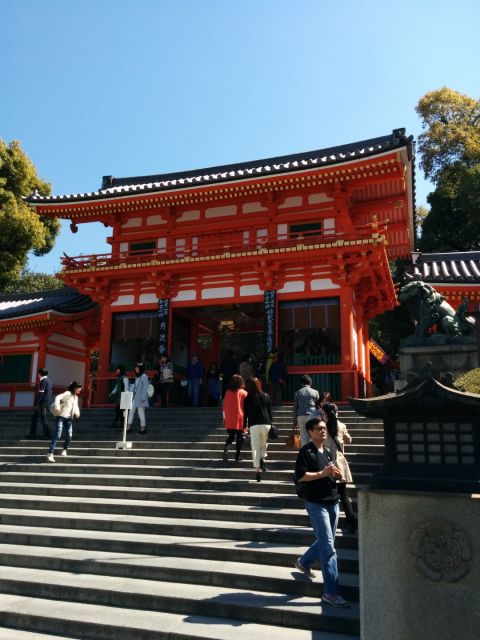
Your tour kicks off at the west gate of Yasaka Shrine, the Nishiromon gate, the one with the red gate. This matters more than it sounds. If you start here, you get the rules of the place before you start photographing everything like a scattershot tourist.
The guide begins with a map of Kyoto and a quick orientation to the city’s historical backdrop, then narrows in on what Yasaka Shrine is and why worship here looks the way it does. You are not just ticking off a shrine. You learn how shrine etiquette works, so you understand the gestures and offerings instead of guessing.
You’ll also get a chance to reset your expectations. Yasaka Shrine is famous for atmosphere, but without context you might only notice crowds, incense, and lanterns. With the basics explained, you start noticing patterns, symbols, and the logic behind the layout.
More History Tours in Kyoto
- Kyoto Gion Historical Walking Tour
★ 5.0 · 188 reviews - Historical Kyoto E-Bike Tour
★ 5.0 · 181 reviews - From Kyoto: Nara History Guided Half Day Bus Tour with Lunch
★ 4.8 · 114 reviews
How The Guide Turns Temples Into A Clear Timeline
A big reason this tour earns such high marks is the style of teaching. Guides have come equipped with prepared materials, often including hand-drawn illustrations and a folder that organizes key points you can glance at while you walk. That approach does two helpful things for you.
First, it slows your brain down. Instead of trying to memorize a flood of names, you can connect each stop to a theme: Shinto worship, Zen practice, and how Buddhism shows up through statuary and architecture.
Second, it gives you visual anchors. Several past participants have mentioned that the guide’s own drawings and clear notes made the sites easier to remember later. I like this method for one simple reason: Kyoto is visual, and your memory needs something visual to grab onto.
Also, you are not stuck in one-way talking. The guides (for example Hisako-san, Hiroshita, and Hiroko have been mentioned in prior departures) have handled questions patiently and adjusted pacing so you can look around and take photos without feeling rushed.
Yasaka Shrine Worship, Then Maruyama Park and Nene-no-michi
After the shrine intro, you move on through the area beside Maruyama Park. This section transitions you from the formal shrine world into the everyday street world that surrounds it.
Next comes Nene-no-michi, a busy street named for Nene, the wife of Toyotomi Hideyoshi from the late 1500s. Even if Japanese history is new to you, the tour frames it in a way you can hold. You connect a street name to a person, then you connect that person to a temple nearby.
This is one of those quiet tour tricks that pays off later. Once you start seeing how Kyoto’s place names preserve old power and relationships, you stop walking like you are passing random landmarks. You start walking like you are reading a map written in old ink.
Entokuin Zen Temple: Dry Gardens and Sliding-Door Art
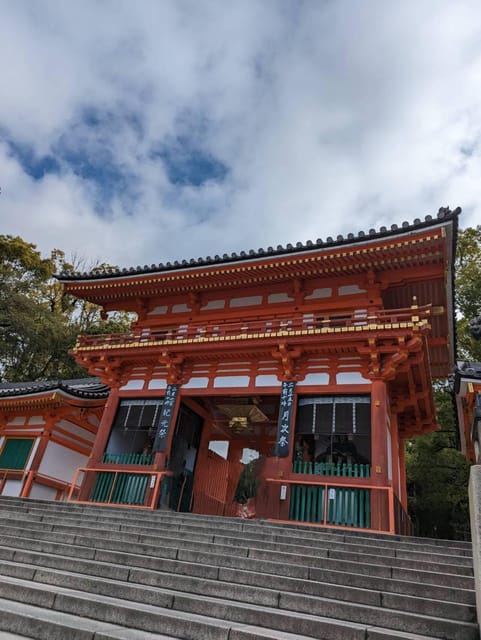
Your main Zen stop is Entokuin, with about 40 minutes on site. This is where the tour earns its calm reputation. After the more public energy near Yasaka, Entokuin feels like someone lowered the volume on the city.
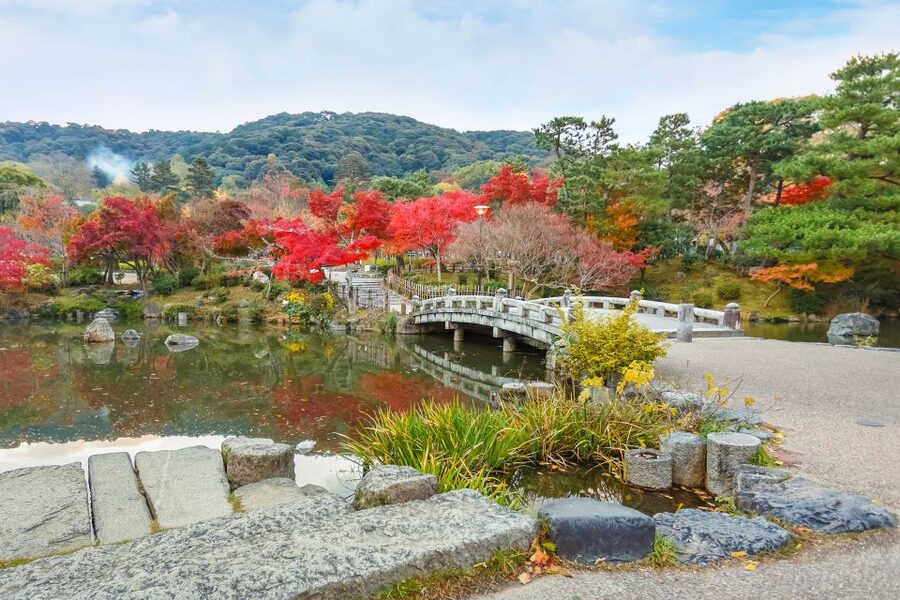
Entokuin is a Zen temple associated with Nene. Here you can take in dry rock-and-sand gardens and the serene atmosphere that Zen spaces aim for. You also see traditional Japanese rooms. The tour highlights something very specific and easy to miss if you are walking on your own: the room details, including pictures depicted on sliding doors.
That sliding-door artwork is not just decoration. It helps you understand what the space is trying to communicate, and it turns the visit into something more than a quick look at a courtyard. You’re not only seeing a garden. You are seeing how the temple’s design supports observation and reflection.
Practical tip: this is the stop where you want to slow down. If you rush it, you lose the main point of a Zen temple visit. Give yourself time to stand still, look across the garden, and notice how the rooms frame what you see.
More Walking Tours in Kyoto
- Kyoto Geisha Walking Tour: Gion District & Hidden Gems
★ 4.7 · 3,273 reviews - Kyoto: Gion Geisha District Walking Tour – Stories of Geisha
★ 4.7 · 2,187 reviews - Night Walk in Gion: Kyoto’s Geisha District
★ 4.5 · 2,003 reviews - Kyoto Gion Geisha District Walking Tour – The Stories of Geisha
★ 5.0 · 1,441 reviews
The Yasaka Koshindo Stop and the Five-Storied Pagoda View
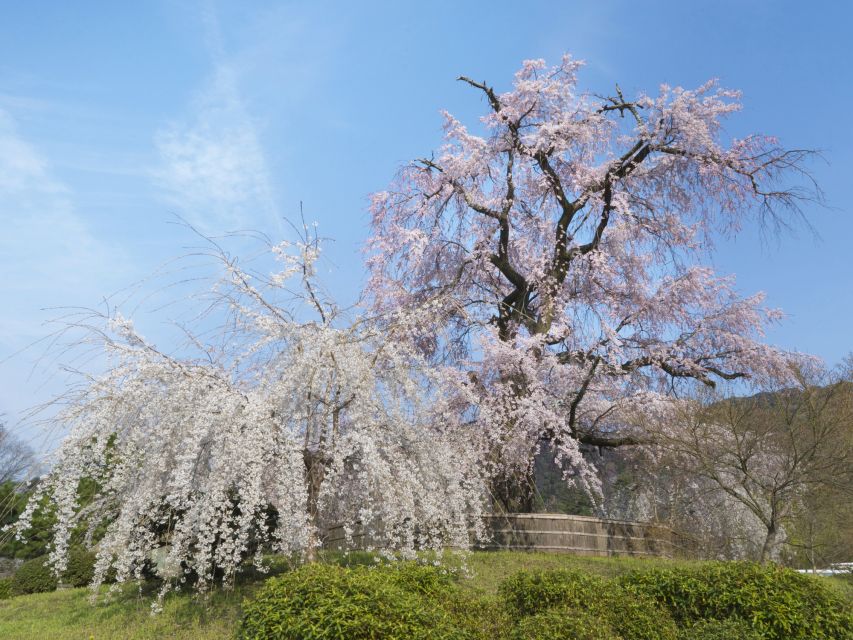
Next you head to Yasaka Kōshin-dō, a smaller but meaningful temple stop. The tour time here is shorter, around 15 minutes, and it works as a hinge between the quiet Zen moment and the big finale at Kiyomizu-dera.
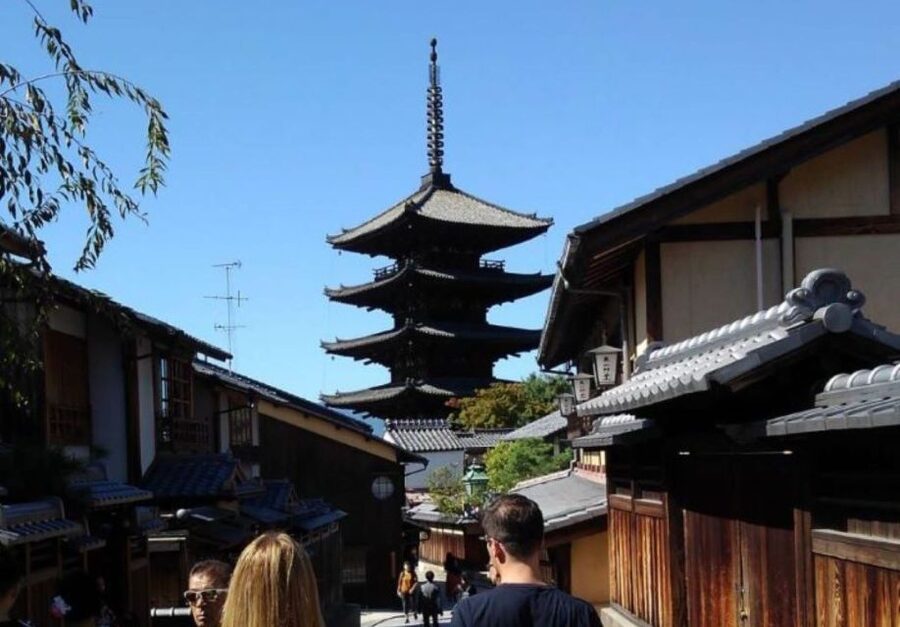
From this area, you get an outdoor view of a five-storied pagoda, commonly called Yasaka-no-to. The pagoda sits close to Koshindo, and the tour points you toward a famous photo spot on the street nearby.
Even if you are already aware of pagodas from other countries, this is worth seeing in Kyoto context. Pagodas here are not just skyline props. They are signals of Buddhist presence and power, and the tour’s explanation helps you understand why this view exists where it does.
One small consideration: outdoor pagoda views depend on angles, weather, and crowd flow. If you care about photos, plan to arrive ready to adjust your position. This is not a fenced-in viewpoint where you can stay still and get the shot.
Final Approach to Kiyomizu-dera: Stage Views and Pure Water
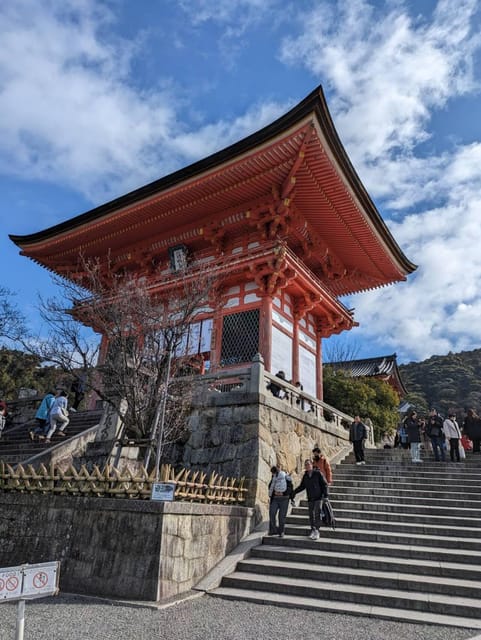
Then you make your way to Kiyomizu-dera, the big finale with about 35 minutes at the temple. This is one of Kyoto’s most visited sites for good reason, but I appreciate how this tour prepares you to look beyond the obvious.
First, the main worship focus includes Kannon Bodhisattva. You can see Buddhist statues, including Kannon. You also learn about the temple’s long timeline, including that it was originally built in the 8th century.
Now for the moment that often steals the show: the wooden stage attached to the main hall. The tour emphasizes something very tactile and memorable, the stage structure is built as a wooden structure without nails. That detail is more than trivia. It helps you imagine the engineering and craftsmanship behind the view.
From the stage, you get a magnificent panorama, including a look toward a three-storied pagoda called Koyasu Pagoda, described as a pagoda for easy birth. The tour notes that women visit and pray here for easy birth, which gives the pagoda a living purpose rather than treating it like a photo background.
The Pure Water Details, Plus the Iron Stick Challenge
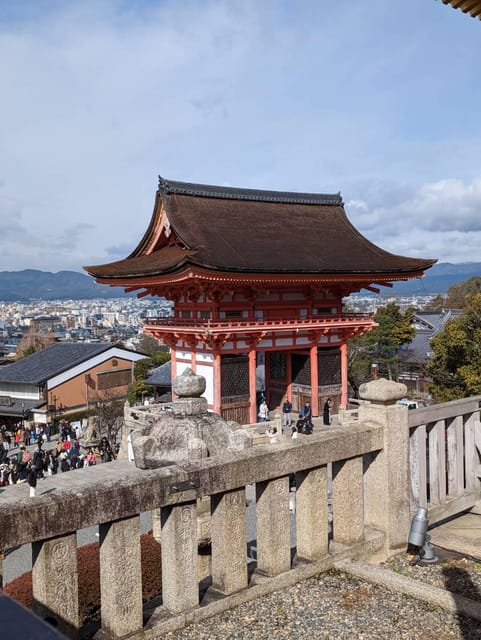
Kiyomizu-dera also earns attention for its water. The name Kiyomizu literally connects to pure water, and the tour points out the stream running down from the mountain behind the temple has never been dried up. You will see people in line to drink the water.
If you like meaningful rituals, this is where you can slow down again. Drinking the water is simple, but it is a cultural action with a real reputation in the temple setting. Do it quickly if lines are long, or pause to watch the flow before you step forward.
Another practical, slightly funny part: the tour tells you about iron props in the precincts, including an iron stick and iron clogs that are donated items to the temple. The iron stick is described as very heavy, and the tour invites you to try lifting it.
If you try it, be honest with your body. This is not a strength challenge you need to win. But even a partial try makes the story feel real, because weight matters.
Jishu Shrine Matchmaking Primer Before You Finish
After you step out of the main hall area, the tour ends, but not before the guide shares quick context about Jishu Shrine, described as a shrine for match making.
You are not sent away cold. You get a meaningful last thread so your Kiyomizu-dera experience does not end at architecture and incense. You leave with a sense of why people come here, and how that pull connects to other nearby shrines.
Timing and Walking Reality For a Private 2 Hour Tour
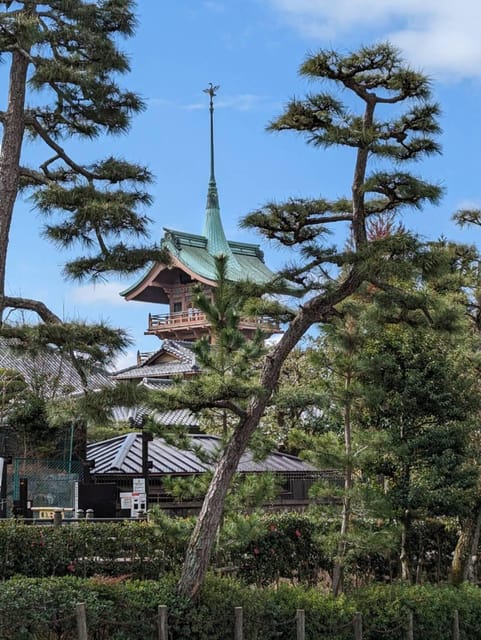
This is planned as a private walk for about 2 hours. The pacing is built around short, focused stops, then longer enough time where you need to actually absorb something, especially Entokuin and Kiyomizu-dera.
Here is what that means for you on the ground:
- Expect stairs and uneven footpaths around shrine approaches.
- At Kiyomizu-dera, crowds can affect how long you can linger at the stage area and how easily you can move for photos.
- You will likely have just enough time to enjoy the main worship spaces and the standout views without feeling like you are rushing the entire way.
One more thing: transportation is not included. If your day includes other Kyoto areas, map out your next stop before you finish. Your guide will give you context during the walk, but you still need a plan to get yourself to the rest of Kyoto.
Where to Meet, and How to Get There Without Stress
Meet at Yasaka Shrine Nishiromon Gate, the west gate with the red gate.
If you are using the train, the tour suggests getting off at either:
- Gion Shijo Station on the Keihan Line, then walking along Shijo Street to the end and going up stone steps, or
- Kawaramachi Station on the Hankyu Line, then using the same idea of walking toward the end and up stone steps.
If you are using a bus, get off at the bus stop called Gion, then you will find stone steps before the red gate.
I like this level of specificity because it reduces your biggest pain point in Kyoto, late starts caused by wrong exits and missing the steps.
Price and Value: What $80 Gets You as a Private Group
The price is $80 per group, up to 5 people. Admission fees to temples are not included, but a trained guide and a tightly organized route are.
Here is how I think about value for this kind of tour:
- If you are traveling as a couple, the cost is not tiny, but you are paying to convert famous sights into something you understand.
- If you are a small group of 3 to 5, it becomes easier to justify. You split the guide cost while still getting a private pace, plus you get the benefit of questions being answered in real time.
- You also save mental energy. Kyoto rewards curiosity, but it punishes confusion. A good guide reduces that confusion, especially at religious sites where signs are limited or translation is awkward.
The best part is not the price alone. It is what the guide adds: context for worship, meaning for place names like Nene-no-michi, and details like the nail-free wooden stage construction at Kiyomizu-dera.
Who Should Book This Tour (And Who Might Want Something Else)
This tour fits you if:
- You want a strong introduction to Kyoto’s Shinto and Buddhist overlap.
- You like explanations you can look at while standing in front of the building.
- You want fewer generic photos and more understanding of what the space is doing and why people treat it with respect.
It may feel less ideal if:
- You only want the quickest possible highlights and you hate walking between multiple stops.
- You are expecting long time inside every temple structure. This is a focused walk, not a slow immersion day.
Should You Book This Private Historical Walk?
If you are in Kyoto for the first time and you want your day to make sense, I would book it. The route makes smart choices: start at Yasaka Shrine, take a calmer reset at Entokuin, get the pagoda view by Kōshin-dō, then end at the major must-see, Kiyomizu-dera.
Book it especially if you care about details like how shrine worship works, why Koyasu Pagoda is linked to easy birth, or what Kiyomizu means in plain terms. This tour is less about checking boxes and more about turning the boxes into a story you can remember when you go back to your hotel.
FAQ
Where is the meeting point for the tour?
You meet at the west gate (red gate) of Yasaka Shrine.
What is the tour duration?
The tour duration is listed as 2 hours.
Is this tour private?
Yes, it is a private group tour.
What is the group size limit?
The price is per group up to 5 people.
Is a guide included?
Yes, the guide is included.
Are temple admission fees included?
No. Admission fees to the temples are not included.
What should I bring?
Comfortable shoes are recommended because the tour involves walking.
What language is the tour guide?
The tour is offered in English.
How do I get to the meeting point by train?
The tour suggests getting off at Gion Shijo Station on the Keihan Line or Kawaramachi Station on the Hankyu Line, then walking along Shijo Street and going up stone steps to reach Yasaka Shrine.
Can I pay later and cancel?
The tour offers reserve now & pay later. It also states free cancellation up to 24 hours in advance for a full refund.
More Historical Tours in Kyoto
- Kyoto: Historic Higashiyama Walking Tour
★ 5.0 · 31 reviews - Kyoto/Osaka: Kobe & Himeji Journey Through Culture & History
★ 3.7 · 18 reviews - 4.5-hr Kyoto Historical Highlights Bike Tour with UNESCO
★ 4.7 · 13 reviews - Kyoto/Osaka: Kyoto and Nara World Heritage Day Tour
★ 4.5 · 12 reviews
Newly listed around Kyoto
- Taste of Nishiki Market Walking Food Tour with Local guide★ 5.0 · 17 reviews
- Kyoto: Sushi Making Class with Sushi Chef★ 4.8 · 64 reviews
- Simple Plan with Maiko★ 4.4 · 10 reviews
- Shibori Furoshiki Course at Kyoto Shibori Museum★ 5.0 · 21 reviews
- Kyoto: City Secrets eBike Tour★ 4.9 · 196 reviews
- Sacred Pathways: Discover the Philosopher’s Path of Kyoto★ 4.9 · 20 reviews
- Private Tour to Monkey Park and Arashiyama Highlights★ 5.0 · 22 reviews
- Private Nara Tour from Osaka – Meet at Your Hotel★ 5.0 · 22 reviews
Historical Tours, compared.
World Heritage Shirakawa-go and Experience Tours from Kanazawa
Read our review →
World Heritage Kyoto & Nara Uji Authentic Matcha Experience
Read our review →
World Heritage Shirakawa-go Morning Guided Tour
Read our review →
Hiroshima Historical Walking Tour – Why A-Bomb was Dropped
Read our review →
Hiroshima Peace (Heiwa) Walking Tour at World Heritage Sites
Read our review →
Yanaka Walking Tour: Historic and Traditional District of Tokyo
Read our review →
Shinjuku Historical Walking Tour & Secret Backstreets
Read our review →Browse the lists this tour appears in