
Review · CYCLING & E-BIKE RIDES
Historical Kyoto E-Bike Tour
Cycling Kyoto sounds like cheating. You trade steep hills and slow walking pace for e-bike touring that helps you hit major sights like Kinkaku-ji plus quieter streets sooner than the foot-traffic crowd. I especially like the small groups of up to 8, and how the plan includes admission tickets and even a bottle of water so you are not scrambling. One thing to consider: you will still do real walking at the temples, and bike routes can feel shared with pedestrians and traffic, so pay attention to the safety guidance.
You also get structure without feeling locked in. There are two morning start options, and the guides (from the names I saw shared like George, Pohan, Diego, Benjamin, Jody, Jorge, and Posan) focus on practical bike rules and local context, not a rehearsed script.
If you want a low-stress day in Kyoto that covers a lot, this hits a sweet spot. If you hate mixing bikes with busy sidewalks and street crossings, you might prefer a full walking tour.
5-6 hours, but it feels like more: the schedule balances riding time with meaningful on-site visits (30 to 45 minutes each stop).
Small-group vibe (max 8): you get clearer directions, easier photo stops, and more time for questions.
Major Kyoto icons plus quieter streets: you cover big names like Kinkaku-ji and Arashiyama bamboo without feeling trapped in crowds.
Admission tickets and water are built in: you start the day already handled.
Guides teach safety and local rules: expect street-crossing tips and bike etiquette before you roll.
Plan for cash at lunch: some lunch spots run cash-only, so bring some yen.
In This Review
- Why Kyoto Works So Well by E-Bike
- Price and Value: What $99.49 Buys You in a Half-Day
- Meeting Point Reality Check at Memory Kyoto Bike Tour
- Morning Start Options: When to Roll and How It Changes Your Day
- Stop 1: Kitano Tenmangu Shrine and the Learning Tradition
- Stop 2: Kinkaku-ji Temple and the Gold-Leaf Pond Moment
- Stop 3: Arashiyama Bamboo Forest Trail and the Photo Worthy Stillness
- Stop 4: Tenryu-ji Temple Garden on UNESCO Ground
- What the Bike Riding Feels Like on Kyoto Streets
- Safety, Pace, and How the Guides Keep You Together
- Lunch Time on the Schedule: Ramen, River Views, and Cash
- Photo Opportunities: When Kyoto Becomes a Timeline
- Best Time to Go: Plums, Cherry Blossoms, and Snow at Kinkaku-ji
- Who Should Book This Kyoto E-Bike Tour
- Should You Book This Kyoto E-Bike Tour or Not?
- FAQ
- How long is the Kyoto e-bike tour?
- How much does the tour cost?
- What is included in the tour price?
- Is lunch included?
- How big is the group?
- Where does the tour start?
- Are there different morning options?
- Can I cancel for a full refund?
- FAQ
- How hard is the riding compared to walking?
- Is it near public transportation?
Why Kyoto Works So Well by E-Bike
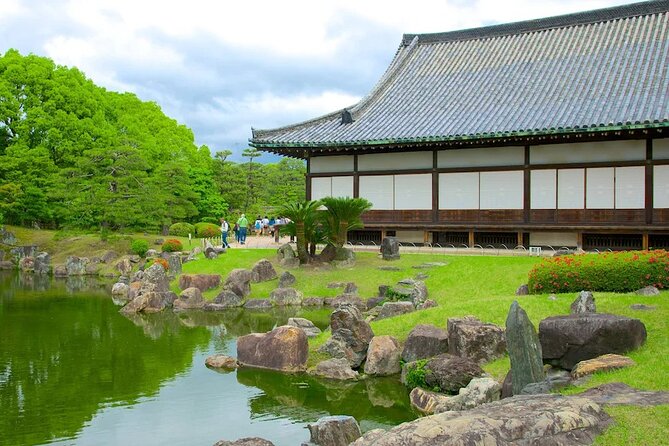
Kyoto can be a lot on foot. Distances add up, hills appear right when you are least ready, and the biggest sites pull in waves of people at the same time. An e-bike changes the math, letting you move between temples without turning the whole day into a leg workout.
What I like most is that the ride feels like part of the experience, not just transportation. You get to see neighborhoods and street scenes along the way, which helps the temples and shrines land with more context once you arrive. Guides also tend to explain how crossings work and what bike behavior looks like in Kyoto, which makes the day less nerve-racking.
The tradeoff is that Kyoto still has street complexity. Even with an e-bike, you share space with pedestrians, cars, buses, mopeds, and other cyclists. If you are easily stressed on busy roads, listen closely at the start and stay calm.
Price and Value: What $99.49 Buys You in a Half-Day
At $99.49 per person, this is one of the more cost-effective ways to pack Kyoto’s top stops into a guided format. You are not just paying for a guide, you are also paying for practical inclusions: the bike and helmet, a bottle of water, and admission tickets at the scheduled sights.
Here is what that usually means for you in real life. You spend less time standing in lines to buy tickets, and more time actually being there when the scenery is at its best. And with a max group size of 8, the day stays organized instead of turning into a moving crowd.
The day runs about 5 to 6 hours. That time includes biking between locations and the lunch stop, so you are getting a full arc rather than a short sample.
More Bike Rides in Kyoto
- Bike Tour Exploring North Kyoto plus Lunch
★ 5.0 · 1,087 reviews - Arashiyama Bamboo Forest & Hidden Gems Bike Tour (Early Bird)
★ 5.0 · 613 reviews - 5 Top Highlights of Kyoto Full Day Bike Tour (E-bike option)
★ 5.0 · 511 reviews
Meeting Point Reality Check at Memory Kyoto Bike Tour
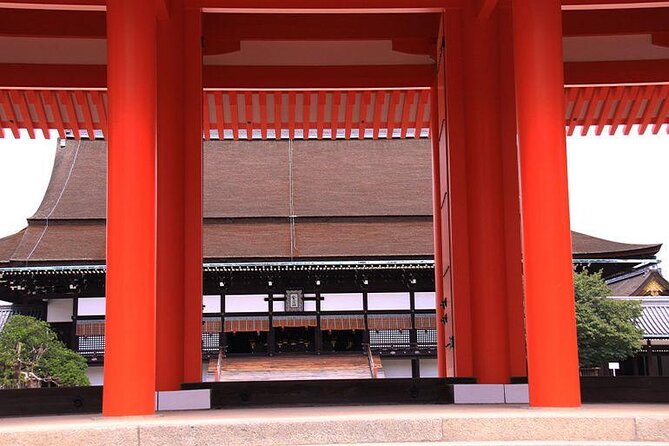
This starts at Memory Kyoto bike tour, address: 8-6 Umaryo-cho, Nishinokyo Nakagyo-ku, Kyoto, 604-8492 (Nakagyo Ward). It ends back at the same place, which is handy if you want to get back to your hotel area after.
The activity is near public transportation, which matters because Kyoto can be awkward to reach if you are relying only on taxis. Also, you get a mobile ticket, so you are not hunting for paper confirmations.
One practical warning from real-world experience patterns: this kind of bike tour can be a little tricky to locate if signage is limited. Give yourself a little extra time the first time you visit the meet area, and use your map app with the full address.
And if you are the type who likes to arrive 2 minutes before departure, this is your nudge to be early.
Morning Start Options: When to Roll and How It Changes Your Day
You can choose between two morning tour options, which is great if your Kyoto schedule is tight. Morning timing also helps because the biggest sites and the bamboo area get crowded, fast.
Earlier starts usually make photos easier and crossings less frantic. Later starts can be fine too, but you may feel more foot traffic at the temples, especially around the bamboo grove and the famous pond views at Kinkaku-ji.
For planning, think about the rest of your day after the tour. Since you are back at the meet point, you can pair this with evening plans in central Kyoto, or continue exploring on your own with a clearer sense of where everything sits.
Stop 1: Kitano Tenmangu Shrine and the Learning Tradition
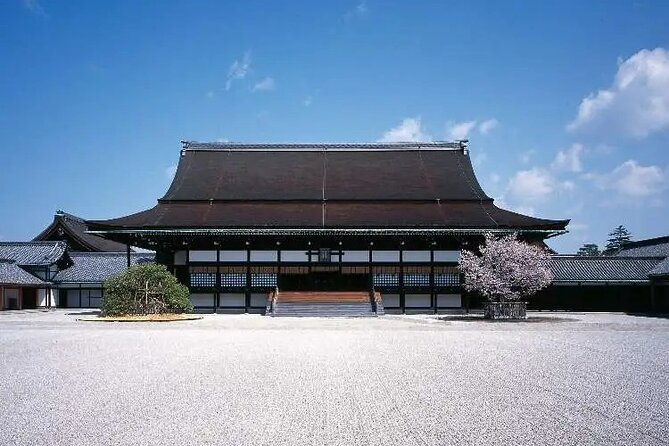
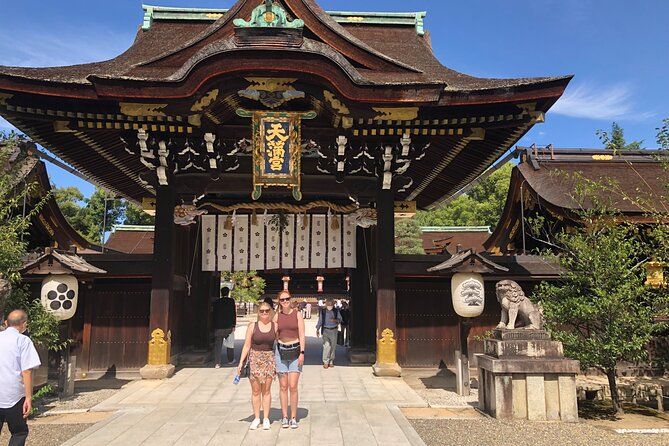
Your first stop is Kitano Tenmangu Shrine, scheduled for about 30 minutes with an admission ticket included. This shrine is tied to Sugawara no Michizane, revered here as the deity of learning. That matters because it is not just a pretty place to wander, it is a shrine with a strong purpose people still visit for.
If you are in early spring, you are in luck. The area is known for about 1,000 plum trees, with blossoms that turn the grounds into a scene you will want to slow down for. Even outside peak bloom, the shrine setting works well for photos because it has layered paths and seasonal details.
On a bike tour day, this is a smart first stop. You start with a calmer environment, then build toward the high-demand sights as the morning goes on.
More Bike Tours in Kyoto
- Hidden Kyoto E-Biking tour
★ 5.0 · 1,843 reviews - Full Day Biking Tour Exploring the Best of Kyoto
★ 5.0 · 498 reviews - Kyoto: Memory Kyoto E-Bike Tour
★ 4.8 · 297 reviews - E-Bike Tours of the highlights of Kyoto!!!
★ 5.0 · 291 reviews
Stop 2: Kinkaku-ji Temple and the Gold-Leaf Pond Moment
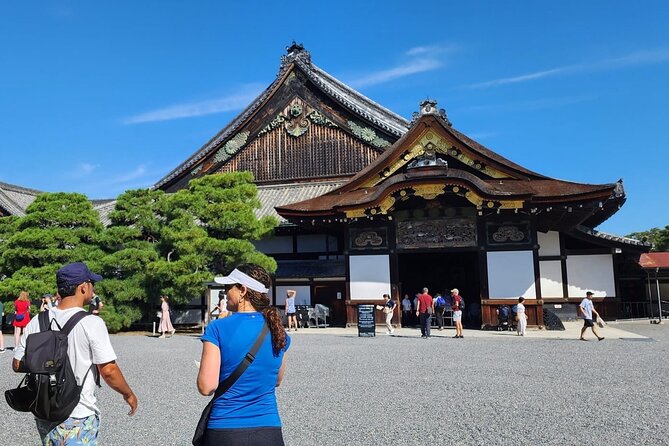
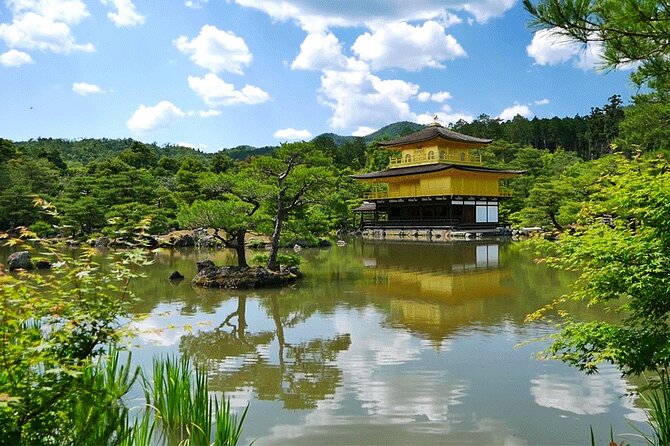
Next up is Kinkaku-ji (the Temple of the Golden Pavilion) for about 45 minutes, again with an admission ticket included. The headline here is the gold leaf facade, which catches light beautifully and reflects over the surrounding pond.
This is one of those Kyoto sights where timing can change your mood. In good winter weather, the building can look magical under snow. The contrast is part of why the site gets so much attention.
One more reason this stop works on an e-bike route: you spend enough time to actually see the view and not just snap a photo and run. Still, remember you are on a clock for the rest of the itinerary, so if you want extra time for the pond photos, keep your pace steady.
Stop 3: Arashiyama Bamboo Forest Trail and the Photo Worthy Stillness
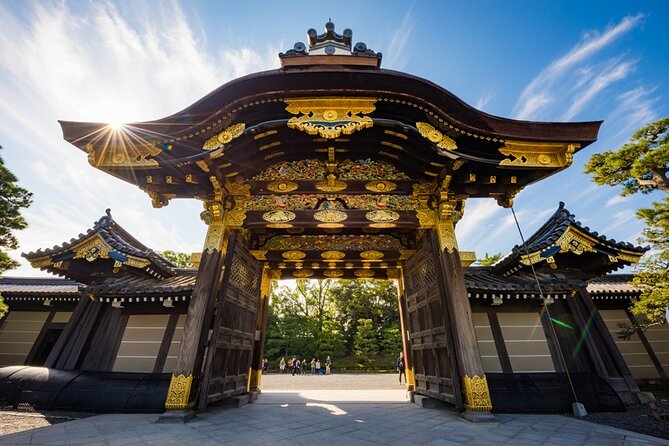
Then you roll into the Bamboo Forest Trail, also about 45 minutes with admission included. The Arashiyama Bamboo Grove is iconic for a reason. Walking among the tall stalks can feel like stepping into a different world, with sound and light changing as you go deeper.
This is usually the stop where people slow down the most, because it is easy to forget time while you are taking photos and looking upward. In a bike tour setting, that is perfect. You get a focused window that is long enough for a real walk without the day turning into a long wait in a huge line.
Do expect crowd flow. Even with guidance, bamboo paths can get busy because everyone wants the same angles. Your best move is to accept the crowd and focus on moving at your pace within it.
Stop 4: Tenryu-ji Temple Garden on UNESCO Ground
Your final major temple stop is Tenryu-ji Temple, again about 45 minutes with admission ticket included. Tenryu-ji is a UNESCO World Heritage Site (since 1994), and the highlight is the temple garden.
Garden time is different from shrine time. Here you are looking more than walking, reading the layout with your eyes. You might find yourself stopping for longer than planned, because gardens reward slower attention, not rushing.
On a bike tour day, it is a strong closer. The earlier stops are sharp and dramatic, while the garden gives you a calmer finish before you head back to the meeting point.
What the Bike Riding Feels Like on Kyoto Streets
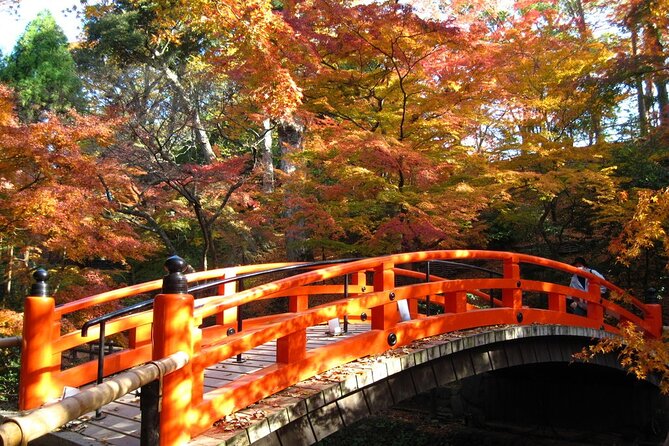
The core promise is easy: everyone can use an e-bike for less physical effort. That is especially useful if you are traveling with family or you want to cover distance without arriving drenched.
But let’s be honest. You are still cycling in a city. Expect to stop for intersections, share narrow stretches, and deal with unpredictable pedestrian movement. One practical detail that comes up in guide behavior: they explain the streets you are crossing and the bike rules for Kyoto, so you know what to expect before you hit the busy parts.
Some groups also noted the day includes plenty of walking time. With multiple temple stops, you should expect off-bike time to take over more than you might think from a bike tour name.
If you want the most comfortable match, I would recommend this for teens and adults who can handle city sidewalks and crosswalks. It can work well for families, and I saw guidance described as patient with groups, but your comfort level on shared paths matters.
Safety, Pace, and How the Guides Keep You Together
A major strength here is the way guides manage the group. Several experiences highlighted guides like George, Pohan, Diego, Benjamin, and Jody keeping riders safe and answering questions, including rules for biking in Kyoto.
You may ride with a structure like one guide at the front and one at the back, especially for families. That kind of setup helps the slower riders keep their rhythm and it prevents the group from stretching out too far.
You might also notice guides adapt when weather turns. One winter outing involved heavy snow, and the guide adjusted parts of the schedule to keep the group comfortable. That flexibility is real value. Kyoto weather can shift quickly, and having someone who can handle it matters.
Lunch Time on the Schedule: Ramen, River Views, and Cash
Lunch is part of the plan, built into the remaining time between cycling and temple stops. The vibe depends on the day, but there are clear patterns from what people experienced.
Common themes include ramen lunch spots and a local Japanese restaurant with many options. In one case, lunch was described as street food style at a food court, and in another it was a ramen place by the river.
Here is the practical note you should not ignore: some lunch stops can be cash-only. One group specifically said to bring yen for lunch purchases, and another pointed out the cash-only ramen setup. I strongly recommend you carry some low-value coins and bills, just in case.
Also, if you are someone who needs dietary accommodation, bring up your needs to the guide at the start. Some groups reported the guide handled dietary requests with attention.
Photo Opportunities: When Kyoto Becomes a Timeline
A good Kyoto day is not just about seeing sites, it is about seeing them in the right order and in the right light. This tour naturally creates photo opportunities because each stop is different: shrine structures, gold-leaf reflections, bamboo stalks, and garden compositions.
You will also have a moving framework between stops. Cycling through neighborhoods can give you angles and street scenes that you would probably miss if you were bouncing between buses and walking in straight lines.
My simple advice: set your photo expectations before you go. For bamboo, you will be taking a lot of images. For Kinkaku-ji and the pond views, you will want to pause longer. For gardens, plan fewer photos and more looking.
Best Time to Go: Plums, Cherry Blossoms, and Snow at Kinkaku-ji
This route fits multiple seasons because the highlights shift with the weather. In early spring, the plum blossoms at Kitano Tenmangu can be the star. In warmer months, the bamboo grove still delivers that tall-stalk calm.
Cherry blossom timing can also add a special layer. One outing described biking along a river lined with cherry blossoms, and that is exactly the kind of bonus Kyoto fans talk about because it changes the feel of the streets.
In winter, you get another payoff: seeing Kinkaku-ji under snow. Even if you cannot predict weather, you can at least plan for it. If you are visiting during colder months, dress for surprise conditions and keep your gloves and layers ready.
Who Should Book This Kyoto E-Bike Tour
This tour fits best if you want to do a lot without exhausting yourself. It is ideal for people with limited time who still want major Kyoto highlights, plus a guided explanation that helps the sites make sense.
It is also a good match for groups that enjoy movement and city exploration. The max group size of 8 keeps it from feeling like a giant bus tour, and the guide approach seems built around safety and questions.
On the other hand, it might not be the best choice if you are very inexperienced with bikes or if you freeze up in mixed traffic. You do cycle in a city, and even with e-bike assistance, you need a steady level of comfort with sidewalks, crossings, and shared routes.
Should You Book This Kyoto E-Bike Tour or Not?
I think you should book it if your priority is a high-sight, guided Kyoto day where the e-bike reduces effort and the schedule hits major sites plus the Arashiyama bamboo grove. The included admission tickets and the small group size make it feel like a thoughtful way to spend half a day.
I would skip it if your main goal is slow, quiet, purely off-bike temple wandering, or if you do not want to deal with street riding at all. Also, if you plan to be inflexible about walking, remember the itinerary includes multiple 30 to 45 minute temple or shrine visits.
If you want an efficient route that still feels personal, this is one of the easier ways to get there.
FAQ
How long is the Kyoto e-bike tour?
It runs about 5 to 6 hours.
How much does the tour cost?
The price is $99.49 per person.
What is included in the tour price?
You get a bike and helmet, a bottle of water, and admission tickets for the scheduled stops. It also uses a mobile ticket.
Is lunch included?
Lunch time is part of the schedule. Some lunch stops may require cash, so bring yen just in case.
How big is the group?
The tour has a maximum of 8 travelers.
Where does the tour start?
The meeting point is Memory Kyoto bike tour, 8-6 Umaryo-cho, Nishinokyo Nakagyo-ku, Kyoto, 604-8492.
Are there different morning options?
Yes, there are two morning tour options for flexibility.
Can I cancel for a full refund?
Yes. You can cancel up to 24 hours in advance for a full refund. If you cancel less than 24 hours before the start time, you will not receive a refund.
FAQ
How hard is the riding compared to walking?
It is designed so you can ride an e-bike with less physical exertion. You still do significant walking during the shrine and temple visits.
Is it near public transportation?
Yes, the meeting point is near public transportation.
More Historical Tours in Kyoto
- Kyoto/Osaka: Kobe & Himeji Journey Through Culture & History
★ 3.7 · 18 reviews - 4.5-hr Kyoto Historical Highlights Bike Tour with UNESCO
★ 4.7 · 13 reviews - Kyoto/Osaka: Kyoto and Nara World Heritage Day Tour
★ 4.5 · 12 reviews - Cycling Tour at Uji’s Matcha Green Tea Fields and Heritage
★ 5.0 · 10 reviews
More History Tours in Kyoto
- Kyoto Gion Historical Walking Tour
★ 5.0 · 188 reviews - Kyoto: Private 2.5 Hour Historical Walking Tour
★ 4.9 · 121 reviews - From Kyoto: Nara History Guided Half Day Bus Tour with Lunch
★ 4.8 · 114 reviews - Kyoto: Historic Higashiyama Walking Tour
★ 5.0 · 31 reviews
Newly listed around Kyoto
- Taste of Nishiki Market Walking Food Tour with Local guide★ 5.0 · 17 reviews
- Kyoto: Sushi Making Class with Sushi Chef★ 4.8 · 64 reviews
- Simple Plan with Maiko★ 4.4 · 10 reviews
- Shibori Furoshiki Course at Kyoto Shibori Museum★ 5.0 · 21 reviews
- Kyoto: City Secrets eBike Tour★ 4.9 · 196 reviews
- Sacred Pathways: Discover the Philosopher’s Path of Kyoto★ 4.9 · 20 reviews
- Private Tour to Monkey Park and Arashiyama Highlights★ 5.0 · 22 reviews
- Private Nara Tour from Osaka – Meet at Your Hotel★ 5.0 · 22 reviews
Cycling & E-Bike Rides, compared.

3h Tokyo E-Bike Tour: Hidden Gems, and Local Life with guide
Read our review →
Arashiyama Bamboo Forest & Hidden Gems Bike Tour (Early Bird)
Read our review →
5 Top Highlights of Kyoto Full Day Bike Tour (E-bike option)
Read our review →

Hiroshima 2hr Peace Cycling Tour with Local Guide
Read our review →Browse the lists this tour appears in