Review · KYOTO TOURS
Ikebana Traditional Japanese Art of Flower Arranging
Kyoto, but make it meditative and hands-on. In 90 minutes you learn Ikebana from an English-speaking expert, using seasonal flowers to explore that Japanese sense of quiet balance. The whole experience is built around treating cut stems as living things, not just decoration.
I especially like the small group feel, with a maximum of 6 people, because it means you actually get time to correct your technique. You also get hands-on practice with two beginner-friendly styles, Nageire and Moribana, after seeing demonstrations.
The main drawback is the class is short, so you get the essentials of philosophy and technique, not a deep survey of every ikebana school. If you want a full crash course in history and lineages, you’ll probably want to add reading on your own after.
In This Review
- Key highlights worth knowing
- A One-and-a-Half-Hour Ikebana Reset in Kyoto’s Kamigyo Ward
- Finding the Meeting Point at Tanbayacho (Symphony Kitano Higashi)
- Ikebana Means Living Flowers: The Wabi-Sabi Idea of Balance
- Meeting Mana and Learning Two Styles: Nageire and Moribana
- Seasonal Stems, Short Lessons, and Mindful Timing
- Keeping Your Cut Flowers Fresh for Up to Two Weeks
- Why the Small Group Size Changes Everything
- Price and Value: What $72.26 Buys in Kyoto
- Who Should Book This Ikebana Class (and Who Might Not)
- Should You Book This Ikebana Class in Kyoto?
- FAQ
- How long is the Ikebana Traditional Japanese Art of Flower Arranging experience?
- How much does the Ikebana class cost?
- Is the class taught in English?
- What is the group size?
- What styles of ikebana will I learn?
- Where is the meeting point in Kyoto?
- Will I receive a mobile ticket?
- Is it suitable for beginners?
- Is free cancellation available?
Key highlights worth knowing
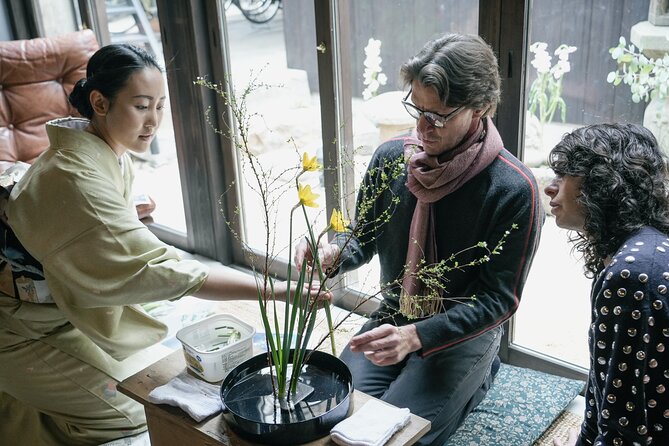
- Small class, more hands-on time: Maximum of 6 travelers means the instructor can watch what you’re doing.
- Two core styles in one session: You practice both Nageire and Moribana during the 1.5-hour class.
- Seasonal flowers for real learning: You work with what’s in season, which changes the arrangement and the experience.
- Mindfulness built into the technique: You’ll slow down and think about structure, balance, and the stems’ natural characteristics.
- Practical freshness tips: You learn how to maintain fresh flowers so they can last up to two weeks.
- Kyoto location near public transit: The meeting point is in Kamigyo Ward, and the activity starts and ends there.
A One-and-a-Half-Hour Ikebana Reset in Kyoto’s Kamigyo Ward
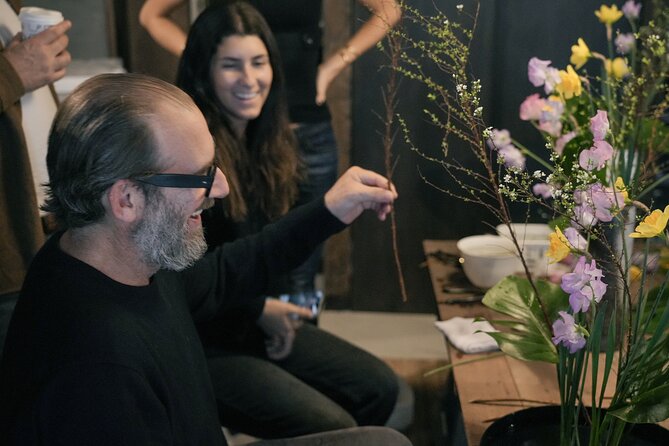
This class is designed to feel like a pause in your Kyoto day. You are not walking around looking at art, you are making it, step by careful step, with an instructor guiding you in a traditional approach. It’s quiet work, but not passive. Your hands do the thinking.
Ikebana is often explained as living flowers, and that idea shapes everything. Instead of forcing stems into a generic shape, you pay attention to what each stem already wants to be, then you arrange around those natural features. That mindset is where the mindfulness comes from.
The experience also connects nicely to Japanese wabi-sabi aesthetics, the taste for simplicity and imperfect natural form. Even if you know very little about Japan’s art traditions, the class is built for beginners who want a genuine skill, not just a souvenir.
A few more Kyoto days to weigh up
- PERFECT KYOTO 1-Day Bus Tour
★ 5.0 · 13,518 reviews - Kyoto: Fushimi Inari, Kinkakuji, Bamboo Grove 1 Day Bus Tour
★ 4.8 · 4,316 reviews - Kyoto: Tea Ceremony in a Traditional Tea House in Kiyomizu
★ 4.9 · 3,519 reviews
Finding the Meeting Point at Tanbayacho (Symphony Kitano Higashi)
You’ll meet in Kyoto’s Kamigyo Ward at Tanbayacho, 3481, Symphony Kitano Higashi (the address listed is Japan, 602-8287 Kyoto, Kamigyo Ward, Tanbayachō, 3481 シンフォニー北野東). It’s a fixed start point, and the activity ends back there.
This matters more than it sounds. Ikebana classes can start on time, and the session is only about 1 hour 30 minutes. So if you plan a late arrival, you risk losing the early instruction that makes the rest easier.
The good news: it’s described as near public transportation. That’s helpful if you’re bouncing between sites and don’t want to guess your way through a complicated route. I’d still aim to arrive a little early, just to get settled and focused before the lesson begins.
Ikebana Means Living Flowers: The Wabi-Sabi Idea of Balance
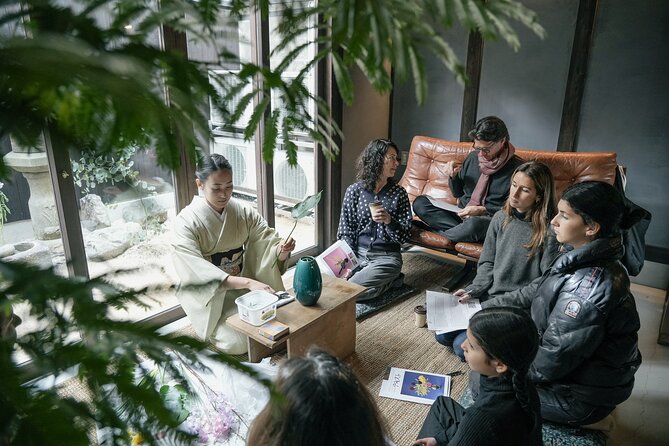
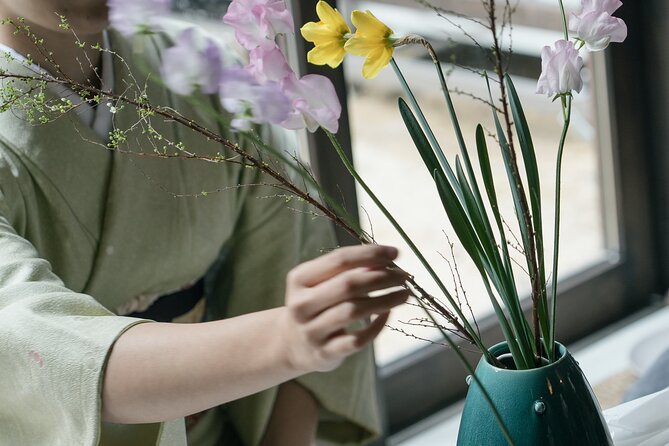
In Ikebana, harmony is not random. The basic principle is to give life to the flowers by using their natural characteristics, then building balance with other stems. That simple description turns into practical decisions as you work.
You’ll also hear it described through the lens of philosophy. Flowers are living beings, and the class encourages you to slow down and consider how each stem “responds” when you pay attention. That sounds poetic, but in practice it becomes a working method: look first, then cut, then place with intention.
Another concept that gets emphasized is the idea of minimal, restrained form. You are not aiming for maximum bloom coverage. You are building a structure that feels calm and purposeful, using negative space as part of the arrangement.
This is where the class is worth your time even if you’re not planning to become an ikebana artist. You learn how Japanese aesthetics translate into action, not just theory.
Meeting Mana and Learning Two Styles: Nageire and Moribana
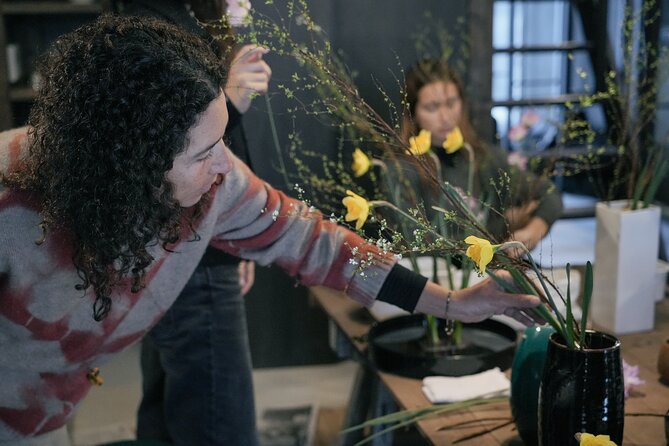
A lot of the value here is how the instruction is paced. In a short slot, you still get a clear path: overview first, then demonstration, then guided practice. Many people come away praising the clarity and thoroughness of the English explanation and the step-by-step modeling before they start making their own arrangement.
One instructor name that comes up frequently is Mana. She’s described as helpful and thorough, with demonstrations that are easy to follow. That’s exactly what you want for a hands-on art where small adjustments matter.
You’ll work with two styles:
- Nageire: often associated with a more flowing, natural-feeling placement.
- Moribana: typically more structured in a way that emphasizes form and balance.
Learning both in one class gives you options right away. Even if you only keep one style for future practice, you understand the range of what ikebana can look like.
A different sort of day in Japan:
- Kyoto Geisha Walking Tour: Gion District & Hidden Gems
★ 4.7 · 3,273 reviews - Kyoto: Tea Ceremony Ju-An at Jotokuji Temple
★ 4.9 · 3,207 reviews - Kyoto: 45-Minute Tea Ceremony Lesson Experience
★ 4.3 · 2,378 reviews - Kyoto: Gion Geisha District Walking Tour – Stories of Geisha
★ 4.7 · 2,187 reviews
Seasonal Stems, Short Lessons, and Mindful Timing
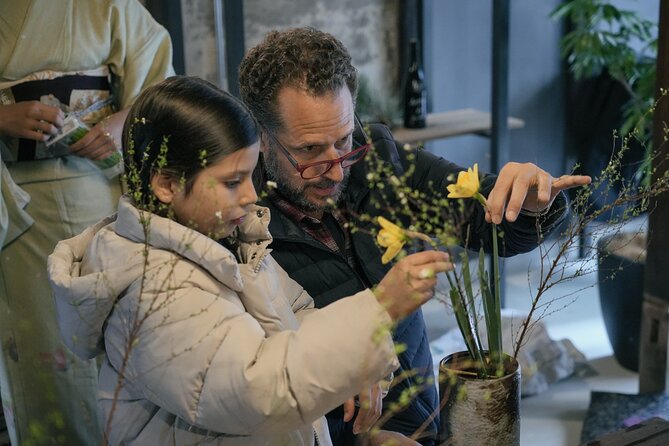
You’re working with seasonal flowers, which keeps the class from feeling generic. The stems you get will influence your choices, and that’s part of the lesson. If you arrange the same way every time, you miss the point. Here, your job is to react to what you’ve been given.
The class also asks you to think while you build. Instead of doing everything by habit, you pause to assess balance, height, and how the arrangement reads from different angles. That’s where mindfulness shows up: not as a separate activity, but as the mental rhythm of constructing.
Because the session is only about 90 minutes, the pace is focused. If you like structure and want to leave with a usable skill, this is ideal. If you want a long, meandering conversation about every philosophical branch of ikebana, you may wish the instructor had time for more history and different school background. The good part is you still get the essentials, plus practical technique.
Keeping Your Cut Flowers Fresh for Up to Two Weeks
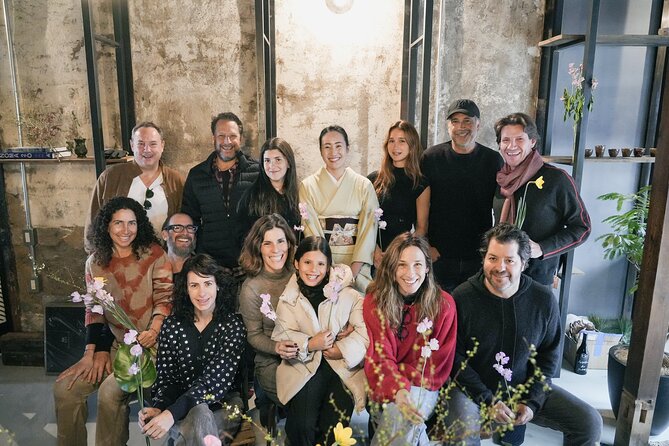
One of the most practical takeaways is flower maintenance. You’ll learn tips to help keep the flowers fresh so they can last up to two weeks. That’s a big deal if you’ve ever brought home a bouquet that looked great for two days and then collapsed.
In your real-life setup, those tips can change the entire experience of having flowers at home. Ikebana is about valuing stems while they are alive, so learning how to extend their life matches the art’s philosophy. Even if your arrangement style is imperfect, longer-lasting stems give you more time to enjoy your work.
Because the class teaches techniques tied to freshness, you’re not only learning how to arrange. You’re also learning how to care for what you arranged, which makes this feel like a complete skill, not just a one-time craft.
Why the Small Group Size Changes Everything

Maximum 6 travelers means you’re not disappearing into the background. You can ask questions and get corrections while you’re actually building your arrangement. For arts like this, feedback matters. One small angle change can affect how the entire balance feels.
It also changes the vibe. The group stays intimate, which helps you stay calm during a hands-on art that can feel fiddly at first. Many people find they relax once they understand the method, especially after the instructor demonstrates two different approaches.
If you’re the type who learns better by doing, this setup is great. You’ll be working, not just watching.
Price and Value: What $72.26 Buys in Kyoto

At $72.26 per person for about 1 hour 30 minutes, this isn’t a budget class, but it also isn’t priced like a half-day workshop with lots of sightseeing. The value comes from instruction quality, class size, and the fact that you learn two styles plus practical freshness techniques.
Here’s how I’d think about whether it’s worth it for you:
- You’re paying for a structured English lesson from an ikebana expert.
- You’re paying for time with a small group instead of watching from the sidelines.
- You’re learning two techniques (Nageire and Moribana), which gives you more usable knowledge.
- You get freshness maintenance tips that can help your stems last up to two weeks.
If you like crafts but hate wasting time in classes that only provide a loose demo, this is the kind of class that tends to feel productive. If you’re hoping for a long lecture about different ikebana schools and deep historical context, you may want to manage expectations since the session is short.
Who Should Book This Ikebana Class (and Who Might Not)
This works especially well if you want something authentic and hands-on in Kyoto that isn’t just another photo stop. It’s a good match if you like minimalist art, seasonal themes, or mindfulness-as-practice.
It’s also a solid choice if you’re comfortable being a beginner. The class notes that most travelers can participate, which usually means the lesson is planned for first-timers. You’ll still be challenged, but it should be doable without prior training.
You might not love it as much if you’re the kind of traveler who wants hours of lecture, museum-level background, or a broad survey of every historical branch of ikebana. The session is focused. You’ll get the essentials and technique you can use immediately.
One more practical thought: because the meeting point is specific, show up on time. In a short class, being late is the easiest way to feel frustrated.
Should You Book This Ikebana Class in Kyoto?
Yes, if you want a compact, high-quality arts lesson that actually teaches you something you can use at home. I like that you learn both Nageire and Moribana, then walk away with practical know-how for keeping cut flowers fresh for up to two weeks. That combination turns the class into more than a scenic activity.
I’d skip it or pair it with other learning only if you need deep history of multiple ikebana schools in one sitting. This is technique plus mindset, delivered efficiently.
If your Kyoto plan includes a lot of temples and streets, this gives you a quiet counterbalance. You leave with a new way to look at nature, and a method for making beauty with what the season already provides.
FAQ
How long is the Ikebana Traditional Japanese Art of Flower Arranging experience?
It lasts about 1 hour 30 minutes.
How much does the Ikebana class cost?
The price is $72.26 per person.
Is the class taught in English?
Yes. It is guided by an English-speaking ikebana expert.
What is the group size?
The experience has a maximum of 6 travelers.
What styles of ikebana will I learn?
You will learn two traditional beginner styles, Nageire and Moribana.
Where is the meeting point in Kyoto?
The meeting point is listed as Japan, 602-8287 Kyoto, Kamigyo Ward, Tanbayachō, 3481 シンフォニー北野東.
Will I receive a mobile ticket?
Yes, the experience includes a mobile ticket.
Is it suitable for beginners?
Most travelers can participate, so you do not need prior ikebana experience.
Is free cancellation available?
Yes. You can cancel up to 24 hours in advance for a full refund.
Newly listed around Kyoto
- Zen Meditation for Life in Kyoto★ 5.0 · 10 reviews
- Kyoto: Zen Meditation at a Private Temple with a Monk★ 5.0 · 25 reviews
- Kyoto Private Customizable Day Tour with Guide and Vehicle★ 5.0 · 52 reviews
- Private Wagyu Beef Tour with a Local Guide★ 5.0 · 6 reviews
- Kyoto: Gion Geisha District & Sake-in-Hand Walking Tour★ 5.0 · 37 reviews
- Your Private Vacation Photography Session In Kyoto★ 5.0 · 110 reviews
- Private Guided Traditional Buddhist Cooking in Japan★ 5.0 · 16 reviews
- Private Pewter Sake Cup Experience with a Kyoto Artisan★ 5.0 · 31 reviews
Kyoto Tours, compared.
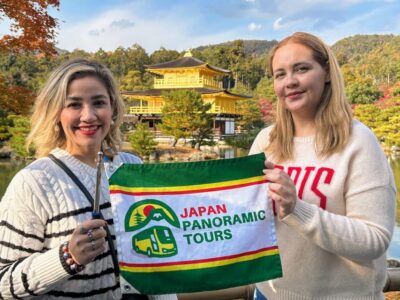
Fushimi Inari, Kinkakuji, Bamboo Grove 1 Day Bus Tour
Read our review →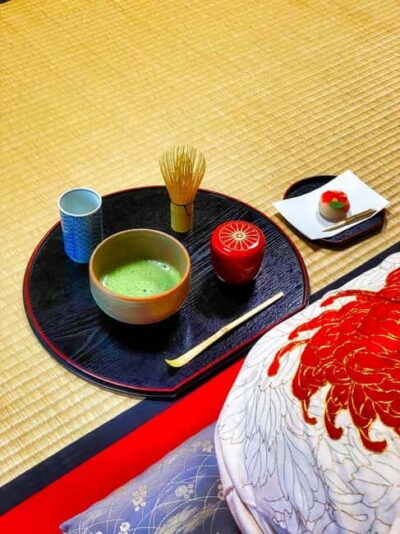
Tea Ceremony in a Traditional Tea House in Kiyomizu
Read our review →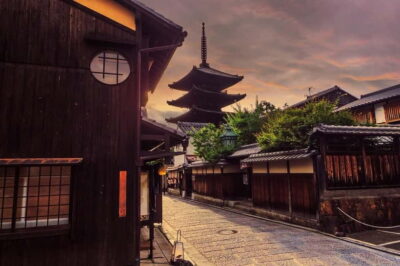
Kyoto Geisha Walking Tour: Gion District & Hidden Gems
Read our review →
Gion Geisha District Walking Tour – Stories of Geisha
Read our review →