Review · KYOTO TOURS
KIYOTO’s Kyoto Private Tour: Highlights & Hidden Gems
Kyoto is big, but this private route keeps it human. I like that you get a real guide to help you move between landmarks without losing time, and you still get time to stop, look, and ask questions. Guides like Yuhey, Akiyo, and Paren come through with a friendly tone and lots of practical context, plus strong photo help, including videos in at least one case.
What I like most is the pacing choices. You’ll see the obvious hits like Fushimi Inari-taisha and Kinkaku-ji, then you’ll get moments that feel local, like drifting through Pontocho and the river views near Gion and Tatsumi Bridge. One consideration: a private walking day still adds up, and ticketed sites like Kiyomizu-dera, Kinkakuji, and Tenryuji are not included in the price.
In This Review
- KIYOTO private tour highlights you’ll feel in the moment
- Why this private Kyoto route works better than a checklist
- Price and what is actually included (and what you should budget for)
- Meeting point at Kyoto Station, and how pickup and transport affect your day
- Stop 1: Pontocho District along the Kamo River, a calm start before the crowds
- Stop 2: Fushimi Inari-taisha and the Senbon Torii gate tunnel
- Stops 3 to 4: Kiyomizu-dera, then Sannenzaka and Ninenzaka old streets
- Stop 5: A machiya Starbucks at Nineizaka, quick break, then back out
- Stops 6 and 7: Hokan-ji’s Yasaka Pagoda and Hanamikoji in Gion
- Stop 8: Tatsumi Bridge on the Shirakawa River, a real pause in the middle
- Stop 9: Nishiki Market, where your tour turns into food planning
- Stop 10: Kinkakuji, Golden Pavilion, the big-ticket wow moment
- Stops 11 to 12: Tenryuji and the Arashiyama Bamboo Forest, Zen then wonder
- Stop 13: Arashiyama Kimono Forest, an art stop you might not expect
- Stop 14: Togetsukyo Bridge and Oi River views, then you’re done
- What kind of traveler should book this tour
- Should you book KIYOTO’s Kyoto Private Tour?
- FAQ
- How long is KIYOTO’s Kyoto Private Tour?
- Is this a private tour or a group tour?
- What is included in the price?
- Are admission tickets included for all stops?
- Is pickup available, and do I need transportation?
- Where do we meet, and does the tour end the same place?
- Does the tour provide tickets on a phone?
- How far in advance should I book?
- Is there free cancellation, and how late can I cancel?
- Are service animals allowed?
KIYOTO private tour highlights you’ll feel in the moment
- Private guide, full attention: You can ask questions and shift the order if your group wants more time somewhere.
- Photo-first mindset: The guides are known for snapping great pictures, and they take video too.
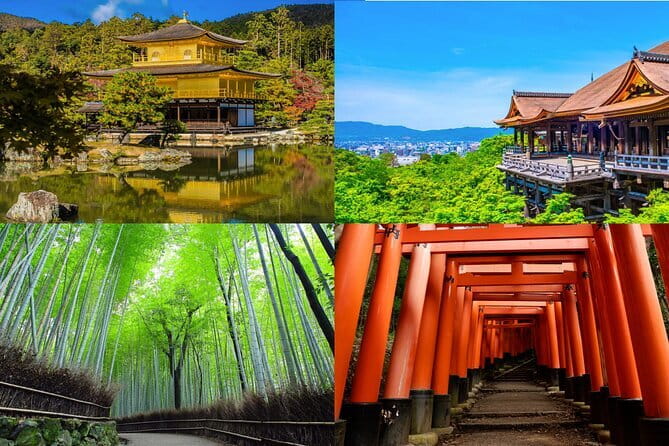
- Iconic Kyoto plus lesser-known corners: Pontocho, Hanamikoji, Tatsumi Bridge, and a machiya-style Starbucks break up the big-name temples.
- Arashiyama as a second mood: Bamboo, Zen temple grounds, and Togetsukyo Bridge give you a totally different feel than eastern Kyoto.
- Most stops are free to enter: Many listed stops include admission free, but a few major temples require separate fees.
- You start and end at Kyoto Station: The meeting point at Kyo-NaviJapan makes it easier to plug into your day plan.
Why this private Kyoto route works better than a checklist
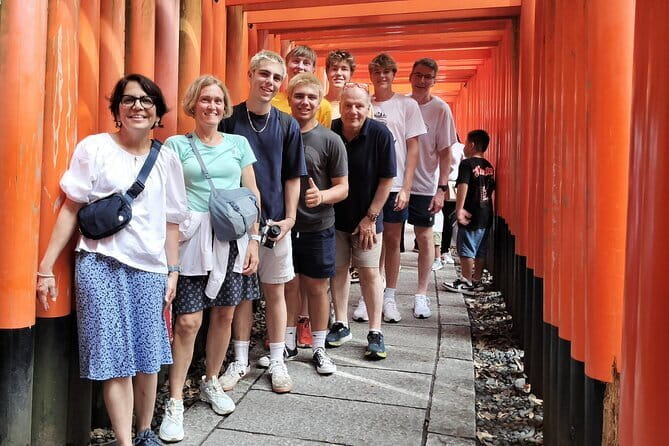
If you try to do Kyoto on your own, you spend half your energy figuring out directions, timing, and crowd flow. This tour is built to reduce that mental load. You walk between top sights with an expert who can explain what you’re looking at and help you decide where to slow down.
I also like that it’s not only temples. You get river districts, old-street vibes, and food stop time at Nishiki Market. That mix matters because Kyoto isn’t just stone and gold. It’s also daily life, crafts, and neighborhoods that look the same for centuries.
Finally, private guiding is where your day becomes yours. If your group wants extra photo stops, or a slower walk through old alleys, you can usually shape the time. In one experience shared by a past guide team, flexibility even led to a pottery master meet-up, which hints at how customizable the day can feel when the guide has room in the schedule.
A few more Kyoto days to weigh up
- PERFECT KYOTO 1-Day Bus Tour
★ 5.0 · 13,518 reviews - Kyoto: Fushimi Inari, Kinkakuji, Bamboo Grove 1 Day Bus Tour
★ 4.8 · 4,316 reviews - Kyoto: Tea Ceremony in a Traditional Tea House in Kiyomizu
★ 4.9 · 3,519 reviews
Price and what is actually included (and what you should budget for)
The price is $177.90 per person for a private experience that runs about 4 to 8 hours. That range is important. Your guide has enough flexibility to spend time where your group cares most, but you also need stamina for a multi-area day.
What’s included:
- A guide who focuses on photo help and a fun, welcoming approach
- A kind, hospitality-forward style often described as omotenashi
What’s not included:
- Food and drinks
- Tickets to attractions that require admission
- Transportation costs
- You cover costs for both you and the guide for items above
Here’s the useful way to think about value: many stops on this route list admission free, so you’re not paying for every single step. But three big names do require separate admission (Kiyomizu-dera, Kinkakuji, and Tenryuji). If you’re budgeting, plan for those fees up front so the day stays smooth.
Also note this is primarily a walking experience. If you’re not used to long walks, or you have knee issues, you might end up relying on breaks more than you expected. The tour still can work, but pick your pace and communicate it early.
Meeting point at Kyoto Station, and how pickup and transport affect your day
This tour starts at Kyoto Tourist Information Center Kyo-NaviJapan, inside the Kyoto Station building on the second floor. It’s a smart choice because you can reach it easily no matter where you’re staying, especially if Kyoto Station is part of your transit plan.
Pickup is offered, but transportation is not included. That can sound contradictory until you picture it: you’ll mostly walk, and if your guide uses public transport to connect between far-apart areas, you may pay an extra cost. The good news is that most of the listed stops are in areas that visitors naturally string together in a day.
My practical tip: if your hotel pickup is available, it can reduce stress at the start of the day. But if you’re already near Kyoto Station, you might prefer the simplicity of meeting on site.
Stop 1: Pontocho District along the Kamo River, a calm start before the crowds
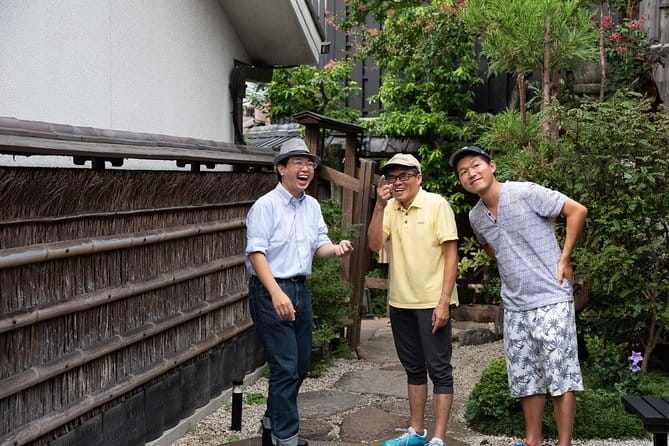
Your first listed stop is Pontocho District, a narrow alley stretching along the Kamo River between Sanjo and Shijo streets. This is one of Kyoto’s five geisha districts, so you get traditional atmosphere right away, even if you’re only passing through for a short time.
This is a great opening because it sets the vibe. Before you tackle the mega-famous shrines, you see how Kyoto looks when it’s not trying to be a theme park. You’ll also get photo chances of narrow lanes and river reflections, without feeling like you need to sprint.
Drawback to consider: Pontocho can be busy in the evening hours. If your timing is flexible, earlier is often easier for photos and walking.
A different sort of day in Japan:
- Kyoto Geisha Walking Tour: Gion District & Hidden Gems
★ 4.7 · 3,273 reviews - Kyoto: Tea Ceremony Ju-An at Jotokuji Temple
★ 4.9 · 3,207 reviews - Kyoto: 45-Minute Tea Ceremony Lesson Experience
★ 4.3 · 2,378 reviews - Kyoto: Gion Geisha District Walking Tour – Stories of Geisha
★ 4.7 · 2,187 reviews
Stop 2: Fushimi Inari-taisha and the Senbon Torii gate tunnel
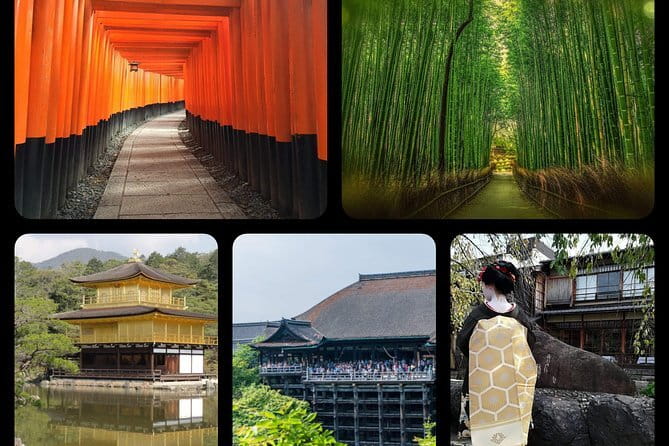
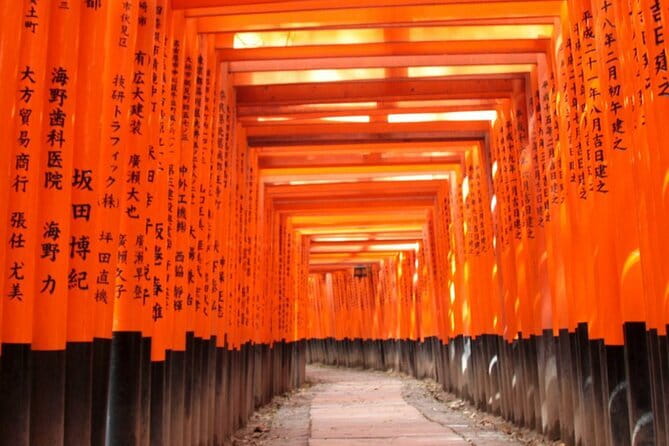
Then comes the star of many Kyoto itineraries: Fushimi Inari-taisha and the Senbon Torii, the Thousand Torii Gates. Expect about one hour here, and it’s admission free.
What makes this stop work with a guide is not just the wow factor. A good guide helps you understand why the gates are there, how people use the space, and where the best viewing angles tend to be depending on foot traffic.
Practical tip: the most photographed stretches are also the most crowded. If you want quieter time, ask your guide to adjust your exact path and pace so you’re not fighting shoulder-to-shoulder for every photo.
Stops 3 to 4: Kiyomizu-dera, then Sannenzaka and Ninenzaka old streets
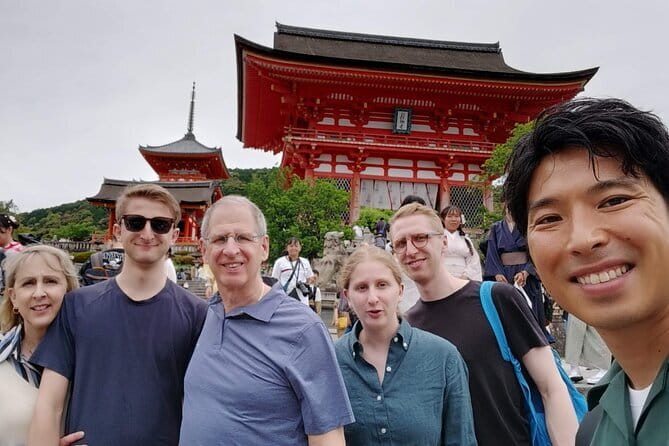
Kiyomizu-dera Temple is next, with about one hour allotted. Admission is not included for this stop, so you’ll want to budget for entry. The temple sits on the slopes of Mount Otowa, and it’s one of Kyoto’s most famous viewpoints for both architecture and scenery.
Right after, you walk into Sannenzaka and Ninenzaka, stone-paved slopes that feel like a time machine. These are admission free and usually a favorite for people who want Kyoto’s street life in addition to its temples.
Why this pairing works: Kiyomizu-dera gives you height and big views, then the old streets bring you back to human scale. You get to see what everyday walking through historic Kyoto feels like.
Possible drawback: the slopes can be slippery when wet. If your day includes rain, wear grippy shoes and plan for slower steps.
Stop 5: A machiya Starbucks at Nineizaka, quick break, then back out
The tour includes a short stop inside the machiya Starbucks at Kyoto Nineizaka Yasaka Chaya. The time is listed as about 5 minutes, and admission is free. You’re exploring inside a traditional townhouse-style setting, and you can choose to leave if you’d rather keep moving.
This is a clever pause. It gives you a warm or cool break without derailing the itinerary. It also helps you experience Kyoto’s blend of old and new, because the space is the point here, not the coffee run.
If you don’t care about Starbucks at all, treat it as a rest stop, then get back outside quickly. This part is short by design.
Stops 6 and 7: Hokan-ji’s Yasaka Pagoda and Hanamikoji in Gion
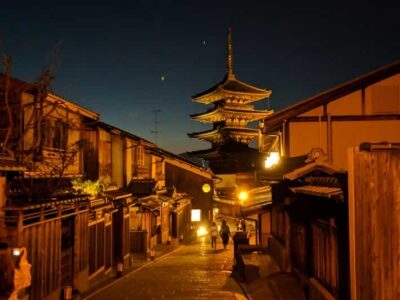
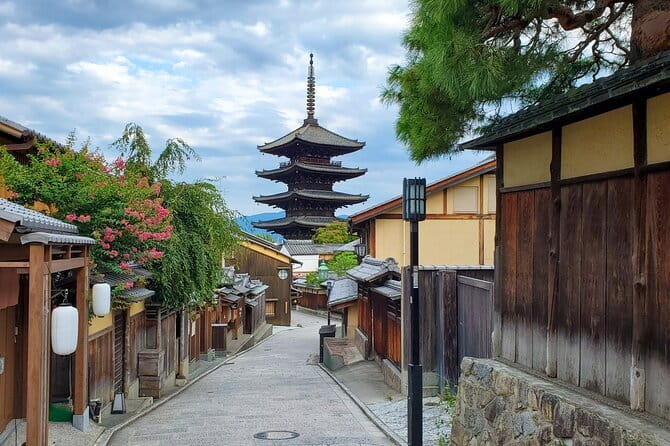
Next you’ll see Yasaka Pagoda (Gojunoto) and Hōkan-ji Temple. It’s listed at about 5 minutes with admission free. The focus is on the visual postcard feel against the historic Higashiyama district backdrop.
Then comes Hanamikoji Street, the narrow stone-paved lane in Gion. It’s also listed as about 5 minutes, and admission is free.
Here’s how I’d use this time: treat it like a photography and atmosphere stop, not a long museum-like visit. You want clear sight lines, brief calm walking, and time to notice details like old facades, narrow street proportions, and the way the district changes as you move.
Consideration: even during the day, Gion areas can get crowded because they’re concentrated and walkable. If your group hates crowds, ask your guide for a slightly off-center route or for a momentary pause when foot traffic eases.
Stop 8: Tatsumi Bridge on the Shirakawa River, a real pause in the middle
Then you hit Tatsumi Bridge on the Shirakawa River. It’s listed at about 10 minutes, admission free.
This is the kind of stop that matters because it breaks up the temple-heavy flow. Wooden bridge views by the river can be surprisingly soothing, and it gives your legs a chance to shift from uphill stairs and shrine steps to flat walking and gentle scenery.
Practical tip: bring your camera even if you think you’ve already gotten enough bridge photos. The lighting and angle tend to change fast near rivers, so you might end up with one you love more than you expected.
Stop 9: Nishiki Market, where your tour turns into food planning
Nishiki Market is next, about one hour, admission free. It’s often called Kyoto’s kitchen, and the point is simple: it’s a dense strip of food stalls where you can snack, browse, and get a feel for what people actually buy when they’re shopping.
Why a private guide helps here: they can suggest what to try based on your tastes, and they can keep you from wasting time waiting in lines that are not worth it for your preferences.
Drawback to consider: Nishiki Market is busy. If your group prefers quiet spaces, you may want to plan your browsing time early in the hour, then step out if it becomes too crowded.
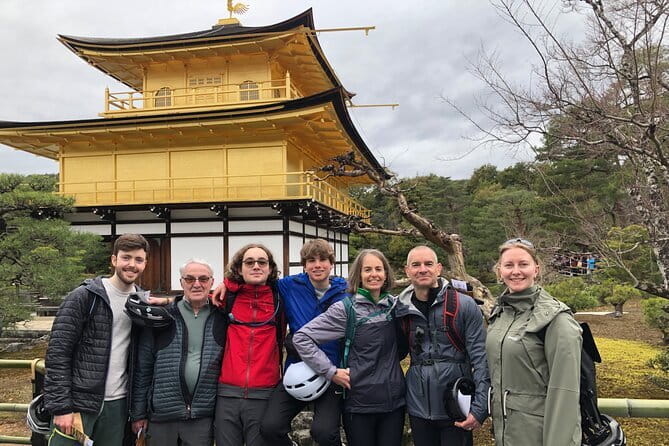
Stop 10: Kinkakuji, Golden Pavilion, the big-ticket wow moment
Next is Kinkakuji Temple (Golden Pavilion). You get about one hour, and admission is not included for this stop.
This is the one where Kyoto turns into a shiny highlight reel. The pavilion is three stories and covered in gold leaf style coverings, and it’s designed for viewing from multiple angles around the temple grounds.
The guide value here is timing and sightline planning. If you move at the right pace, you can see the pavilion without spending your entire visit stuck in the densest viewing area.
Budget note: because admission is not included, make sure you plan for that fee so you do not end up making last-minute decisions on-site.
Stops 11 to 12: Tenryuji and the Arashiyama Bamboo Forest, Zen then wonder
You then transition into Arashiyama.
First is Tenryuji Temple, about 30 minutes with admission not included. Tenryuji is a historic Zen temple founded in 1339 by Ashikaga Takauji, built on the site of a former imperial villa to honor Emperor Go-Daigo. That’s a lot of name-heavy history, but the point is what you can see on the grounds: temple design choices that tie to Zen thinking and the landscape.
Right after comes the Arashiyama Bamboo Forest, about 30 minutes, admission free. The bamboo path is about 400 meters long.
This pairing is great because it switches your brain mode. Tenryuji asks you to slow down and observe temple space. Bamboo asks you to look up and move forward slowly, one step at a time, because the feeling is in the rhythm of the path.
Possible drawback: the bamboo forest is iconic and photo-driven, so you will likely encounter crowds. If you care most about photos, tell your guide and they can help you time your walk through the busiest patches.
Stop 13: Arashiyama Kimono Forest, an art stop you might not expect
Next is the Arashiyama Kimono Forest, listed at about 10 minutes and admission free. It’s an art installation near Randen Arashiyama Station made up of about 600 cylindrical pillars around 2 meters tall.
This one is a good reminder that Kyoto days can be more than temples. It adds color and modern texture to a route that otherwise leans classic.
Consideration: art installations are personal. If your group wants only traditional sights, treat this as a brief visual break and spend more time where you personally care.
Stop 14: Togetsukyo Bridge and Oi River views, then you’re done
The final stop is Togetsukyo Bridge, the Moon-Crossing Bridge, about 10 minutes. It spans 155 meters across the Oi River and offers sweeping views of the surrounding Arashiyama area.
This ending is satisfying because it gives you a wide-angle finale after a lot of close-up temple and alley walking. You can take photos, relax for a moment, and then head back to the meeting point at Kyoto Station.
What kind of traveler should book this tour
This tour is a strong fit if:
- You want a private guide and hate the stress of route planning
- You want both major icons and a few neighborhood-feeling stops like Pontocho and Hanamikoji
- You care about photos and want someone to help you get the shots right
- You like walking, or at least can handle a full half-day to full day on foot
It may be less ideal if:
- Your group has limited mobility or you need very frequent stops
- You prefer to linger for long hours at fewer sights instead of covering many areas
- You only want admissions included, because ticketed stops are not covered
Also, plan on booking ahead. This tour is commonly booked about 31 days in advance, which is a sign it stays in demand, especially during peak seasons.
Should you book KIYOTO’s Kyoto Private Tour?
I think it’s worth booking if you want Kyoto without the planning tax. The biggest reason is the guide-centered experience: undivided attention, strong photo support, and the ability to ask questions as you move between places like Fushimi Inari, Kiyomizu-dera, and Arashiyama.
If you book, do it with two things in mind: budget for the temple admissions that are not included, and wear shoes made for walking. Once you handle those two realities, the rest of the day feels like a guided best-of with room for your group’s tempo.
If your group is sensitive to crowds, tell your guide early. A good guide can shift pacing, which can make famous sights feel more manageable.
FAQ
How long is KIYOTO’s Kyoto Private Tour?
The tour runs about 4 to 8 hours, depending on the pace of your group and how your guide structures the time across stops.
Is this a private tour or a group tour?
It is a private tour/activity. Only your group will participate.
What is included in the price?
You get a private guide experience. Food, drinks, and attraction tickets are not included, and transportation costs are not included.
Are admission tickets included for all stops?
No. Many stops list admission free, but Kiyomizu-dera Temple, Kinkakuji Temple, and Tenryuji Temple list admission as not included.
Is pickup available, and do I need transportation?
Pickup is offered. The tour is primarily a walking experience, and public transport may be used at an additional cost.
Where do we meet, and does the tour end the same place?
You meet at Kyoto Tourist Information Center Kyo-NaviJapan, inside Kyoto Station building on the second floor. The tour ends back at the meeting point.
Does the tour provide tickets on a phone?
Yes. It includes a mobile ticket.
How far in advance should I book?
On average, this experience is booked about 31 days in advance.
Is there free cancellation, and how late can I cancel?
Free cancellation is available up to 24 hours in advance for a full refund.
Are service animals allowed?
Yes, service animals are allowed.
Newly listed around Kyoto
- Zen Meditation for Life in Kyoto★ 5.0 · 10 reviews
- Kyoto: Zen Meditation at a Private Temple with a Monk★ 5.0 · 25 reviews
- Kyoto Private Customizable Day Tour with Guide and Vehicle★ 5.0 · 52 reviews
- Private Wagyu Beef Tour with a Local Guide★ 5.0 · 6 reviews
- Kyoto: Gion Geisha District & Sake-in-Hand Walking Tour★ 5.0 · 37 reviews
- Your Private Vacation Photography Session In Kyoto★ 5.0 · 110 reviews
- Private Pewter Sake Cup Experience with a Kyoto Artisan★ 5.0 · 31 reviews
- Private Guided Traditional Buddhist Cooking in Japan★ 5.0 · 16 reviews
Kyoto Tours, compared.
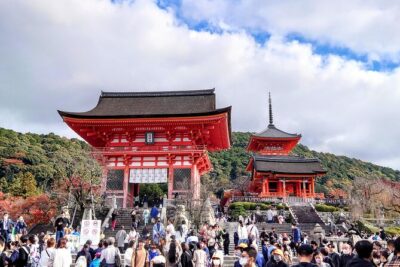
Fushimi Inari, Kinkakuji, Bamboo Grove 1 Day Bus Tour
Read our review →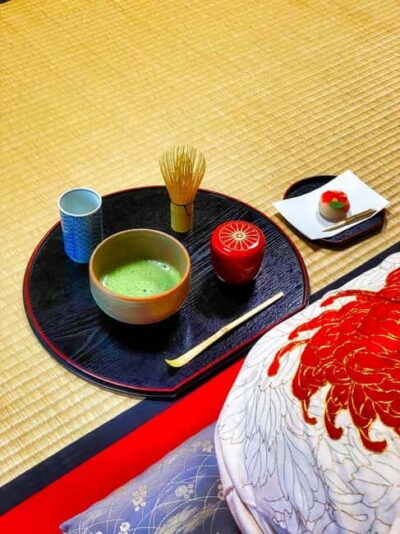
Tea Ceremony in a Traditional Tea House in Kiyomizu
Read our review →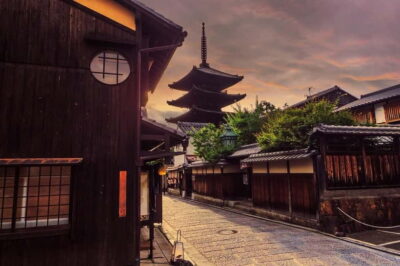
Kyoto Geisha Walking Tour: Gion District & Hidden Gems
Read our review →
Gion Geisha District Walking Tour – Stories of Geisha
Read our review →