
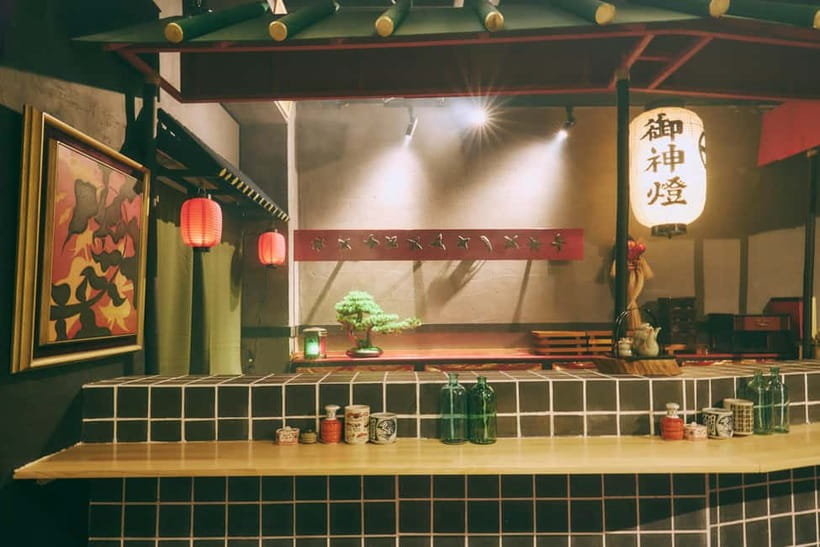
Review · SAMURAI SWORD & NINJA TRAINING
Kyoto: Forge Your Own Ninja Weapon with Japanese Tin Casting
Kyoto can be calm and quiet, then suddenly hot and hands-on. In this workshop near Demachiyanagi Station, I love that you make a real tin ninja weapon step-by-step, not a souvenir you pre-buy. You choose your design, form the mold, cast the metal, and finish it so it actually looks like it belongs in a Japanese craft shop.
My two favorite parts are the fully hands-on casting process and the way the instructors guide you through each stage with clear, patient help, including English support from Daiki and his colleague. You also end up with something you can hold, photograph, and keep, with a dedicated box that makes it feel like a true keepsake.
One thing to think about: you are working with molten metal and power tools in a controlled setting, so you should arrive ready to follow safety directions and stick to the no-fire and no-food rules. Also, the weapon size is limited to 8 to 10 cm, so it is “ninja collectible” size, not life-size.
In This Review
- Why Tin Casting Makes This Kyoto Ninja Workshop Feel Real
- Choosing Your Ninja Piece, Shuriken, Kunai, or Oni Mask
- Step By Step: Mold Making and Casting Your Tin Weapon
- Shaping, Hammering, Filing, and Polishing Like a Pro
- Rust Protection and Oil Finish, The Part You Will Be Thankful For
- Timing and What Fits Best in Your Kyoto Day
- Practical Details: What’s Included, Tools Provided, and What to Bring
- Photos, Souvenirs, and Why This Makes a Strong Kyoto Memory
- Who Should Book This Tin Ninja Workshop in Kyoto
- Price and Value: Is $103 Worth It?
- Should You Forge Your Ninja Weapon in Kyoto?
- FAQ
- What ninja items can I make in this Kyoto workshop?
- How long does the experience take?
- Where is the studio located?
- What is included in the price?
- What should I bring?
- Are there age limits?
- What languages are offered?
Why Tin Casting Makes This Kyoto Ninja Workshop Feel Real
This is one of those Kyoto activities where the theme sounds fun, but the craftsmanship is what keeps it memorable. Tin melts at about 230 degrees Celsius, and the workshop turns that into a beginner-friendly craft experience with staff supervision from start to finish.
The result is a piece you actually make yourself, whether you go classic with a shuriken, choose a kunai upgrade, or go dramatic with an oni-inspired metal mask. And because everything is shaped and finished by hand, your final weapon has your fingerprints on it, literally and visually.
Most importantly, this is practical fun. You are not watching someone else work for two hours, then leaving with a similar-looking item as everyone else.
Choosing Your Ninja Piece, Shuriken, Kunai, or Oni Mask
You start by picking what you want to forge. The base choices are:
- Shuriken
- Kunai (ninja knife)
- Oni mask
From there, the workshop gives optional upgrade paths. If you choose Kunai, you get that extra detail level for a more knife-like shape and finish. If you choose Oni Mask, you add extra steps that make it feel more like wearable or display-ready art, including gold leaf for a dramatic accent and cord options.
Size matters here. Your finished item is typically 8 to 10 cm, so you can carry it home easily, and it still looks great in photos. If you are hoping for something huge to hang on a wall, this is more like a crafted desk companion or shelf centerpiece.
More Samurai & Ninja Sessions in Kyoto
- Kyoto Samurai Experience
★ 5.0 · 1,294 reviews - Kyoto: Kendo and Samurai Experience with Uniform and Gear
★ 4.9 · 815 reviews - Kyoto: Samurai Sword Class by Experts in Traditional Arts
★ 4.9 · 657 reviews
Step By Step: Mold Making and Casting Your Tin Weapon
Here is where the workshop becomes genuinely satisfying. You begin by creating the mold using special casting sand. This step is more important than it sounds, because the mold defines the final shape. You do not just pick a ninja design and hope for the best, you actively build the outline that the metal will follow.
Next comes the moment most people remember: melting and pouring the tin. Solid tin gets transformed into molten metal and is poured into your mold under staff supervision. Tin is described as easy to work with because of its melting temperature, but do not treat this like a gimmick. You still need to focus and follow directions carefully.
After casting, you cool the metal in water so it solidifies quickly. That fast cooling is part of why your workshop finishes in a manageable block of time, and it helps you move on to shaping while everything is still fresh in your mind.
If you like tactile experiences, you are going to enjoy how each stage has a different feel, sand packing, metal cooling, then hands-on finishing.
Shaping, Hammering, Filing, and Polishing Like a Pro
Once the metal has set, you shape and refine it. The included process includes hammering for shaping, then using files and grinders to smooth the surface and refine details.
This is the phase where you can see your choice of design become real. A shuriken can start to look crisp and symmetrical. A kunai begins to resemble a functional blade shape in miniature. An oni mask begins to show facial energy through the edges and contours.
You also get the practical value of doing it yourself. If you have ever bought a metal souvenir and thought, I wonder how they did that, this answers the question. You learn how much the finishing stage affects the final look.
When you are done, the piece is not just cast, it is cleaned and refined.
Rust Protection and Oil Finish, The Part You Will Be Thankful For
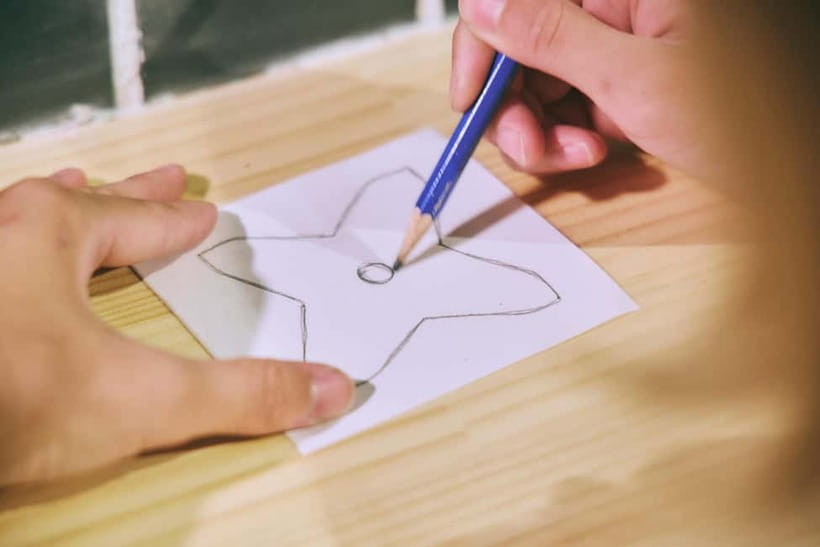
Metal crafts can look amazing on day one and dull quickly if they are not treated well. That is why this workshop includes a step that many souvenir workshops skip.
Your weapon is soaked in a rust-preventive solution, then coated with a special oil. That protection helps keep the finish looking better after the trip, especially if you are moving between different climates while traveling around Japan.
It also makes the piece feel complete. You are not leaving with raw metal texture. You are leaving with a finished object that is ready for display, photos, and long-term keeping in its dedicated box.
More Samurai and Ninja sessions in Kyoto:
- Skip the lines Basic Ticket at SAMURAI NINJA MUSEUM KYOTO
★ 4.5 · 632 reviews - Ninja 1-hour Hands-on Lesson by Japanese master in Kyoto -Entry
★ 5.0 · 489 reviews - Kyoto: Ninja Weapon Forging Experience
★ 4.8 · 478 reviews - Kyoto: Samurai Kenbu Traditional Sword Dancing Show
★ 4.5 · 426 reviews
Timing and What Fits Best in Your Kyoto Day
The workshop runs about 2 hours to 150 minutes for shuriken and kunai. If you choose the oni mask, plan closer to 2.5 hours. Completion times can vary, so give yourself a little flexibility when you book it.
Because it is just a 3-minute walk from Demachiyanagi Station, it plays well with a lot of Kyoto itineraries. You can fit it between temple visits, before or after transit, or as a change of pace from shrine crowds.
One more practical note: you might feel “tool time” physically, even though it is beginner-friendly. You will be standing and using your hands for a while, so bring comfortable clothes and consider arriving with energy, not rushed.
Practical Details: What’s Included, Tools Provided, and What to Bring
You get the full craft package. Included items cover:
- Design your chosen weapon or mask
- Mold creation
- Tin casting
- Shaping by hammering
- Smoothing with a file
- Rust-preventive soak
- Protective oil coating
- Apron rental and equipment rental
- Materials for one weapon
What you should bring is simple: drinks. That is it, and it matters more than it sounds. Even if you feel fine, you will be glad you planned ahead.
The workshop also supports different comfort levels. It is suitable for beginners and children with staff assistance. But there are age constraints: children under 15 must be accompanied by a guardian, and the experience is not suitable for children under 5, babies under 1, or people over 95.
Languages are English and Japanese, which is a big deal if you want to understand what you are doing while you are doing it.
Photos, Souvenirs, and Why This Makes a Strong Kyoto Memory
A lot of Kyoto experiences end with a photo. This one ends with something you can bring home that you personally shaped.
Your piece comes with a dedicated box, which is perfect for packing and carrying. It is also ideal for post-workshop photos at a nearby café or back at your hotel, because you already know your object looks good from every angle.
The workshop space also helps. People consistently highlight that you get chances to capture the process with photos and videos, and that the environment is made for watching and working at the same time. I like these workshops because they do not steal your attention. You can be present in the craft, then still take home proof you did it.
And yes, a homemade ninja weapon beats most store-bought souvenirs, not because it is more dramatic, but because it is more meaningful.
Who Should Book This Tin Ninja Workshop in Kyoto
This is a strong fit if you want:
- A hands-on Kyoto activity with real metalwork steps
- A unique souvenir that is not just a branded keychain
- A fun option for couples and friends who like learning by doing
- A family-friendly craft experience with staff support
In the reviews, adults and kids both treat it like a highlight, especially when instructors keep the process clear and encouraging. If you are traveling with children around school age, this can be a great way to swap screen time for a creative project, and it gives them something to show off that lasts past the souvenir stand.
If you are the type who usually avoids workshops, this one can still work because the steps are straightforward: mold, pour, cool, shape, finish. You are not signing up for an art-history exam. You are making a thing.
Price and Value: Is $103 Worth It?
At $103 per person, the price is not “cheap,” but it also does not feel inflated for what you get. You are paying for real materials, tool use, protective steps like rust prevention and oil coating, plus staff time guiding molten metal and finishing.
What makes the value feel right is the end product. You take home a handcrafted tin ninja weapon or mask that is built around your choice and your effort, and you get it in a dedicated box. That is a big difference from paying for a pre-made souvenir with a short decorating component.
Duration also helps justify it. Even the shorter option is about 2 hours, and you are doing multiple distinct work stages. With the oni mask option, you add about half an hour for the extra finishing steps like gold leaf and cord.
If you want one memorable “craft” stop that is not a generic shopping detour, this price can make sense.
Should You Forge Your Ninja Weapon in Kyoto?
Book it if you want a hands-on Kyoto moment that is creative, photo-friendly, and truly take-home worthy. This workshop is especially worth it if you like the idea of learning a traditional technique you can explain later, without needing any special background.
Skip it if you are uncomfortable with safety-focused rules around molten metal and tool use, or if you are hunting for a low-effort, sit-and-watch activity. Also, if you want a large souvenir, remember the finished size is about 8 to 10 cm.
FAQ
What ninja items can I make in this Kyoto workshop?
You can create a shuriken, a kunai, or an oni-inspired metal mask. You can also choose optional upgrades for the kunai or the oni mask.
How long does the experience take?
Shuriken and kunai take about 2 hours. The oni mask option takes about 2.5 hours. Completion times may vary.
Where is the studio located?
The studio is about a 3-minute walk from Demachiyanagi Station in Kyoto.
What is included in the price?
The included steps are designing your item, making the mold, melting and casting tin, shaping with hammering, smoothing with a file, rust-preventive soaking, and finishing with special oil. It also includes apron and equipment rental, and materials for one weapon.
What should I bring?
Bring drinks.
Are there age limits?
The experience is not suitable for children under 5, babies under 1, or people over 95. Children under 15 must be accompanied by a guardian.
What languages are offered?
Instruction is available in English and Japanese.
Newly listed around Kyoto
- Taste of Nishiki Market Walking Food Tour with Local guide★ 5.0 · 17 reviews
- Kyoto: Sushi Making Class with Sushi Chef★ 4.8 · 64 reviews
- Simple Plan with Maiko★ 4.4 · 10 reviews
- Shibori Furoshiki Course at Kyoto Shibori Museum★ 5.0 · 21 reviews
- Kyoto: City Secrets eBike Tour★ 4.9 · 196 reviews
- Sacred Pathways: Discover the Philosopher’s Path of Kyoto★ 4.9 · 20 reviews
- Private Tour to Monkey Park and Arashiyama Highlights★ 5.0 · 22 reviews
- Private Nara Tour from Osaka – Meet at Your Hotel★ 5.0 · 22 reviews
Samurai Sword & Ninja Training, compared.

Samurai Ninja Museum Guided tour and Experience
Read our review →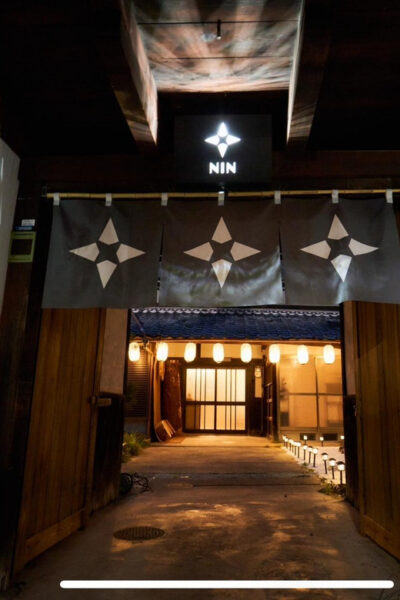
Kendo and Samurai Experience with Uniform and Gear
Read our review →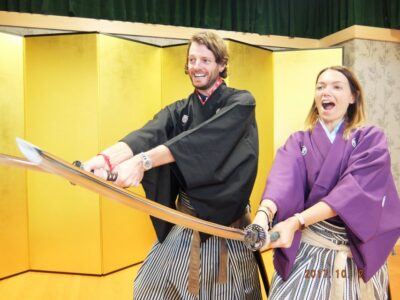
Samurai Sword Class by Experts in Traditional Arts
Read our review →
Skip the lines Basic Ticket at SAMURAI NINJA MUSEUM KYOTO
Read our review →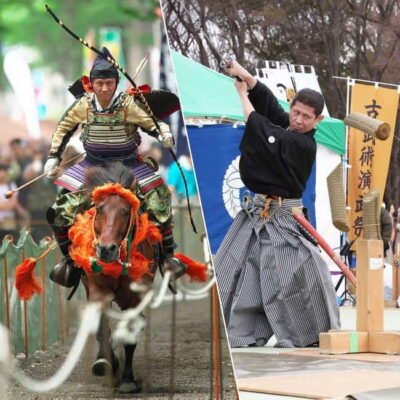
Samurai Sword & Archery Class from Samurai Descendant
Read our review →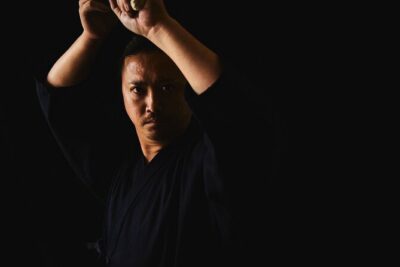
Browse the lists this tour appears in