
Review · SAMURAI SWORD & NINJA TRAINING
Kyoto: Samurai Kenbu Traditional Sword Dancing Show
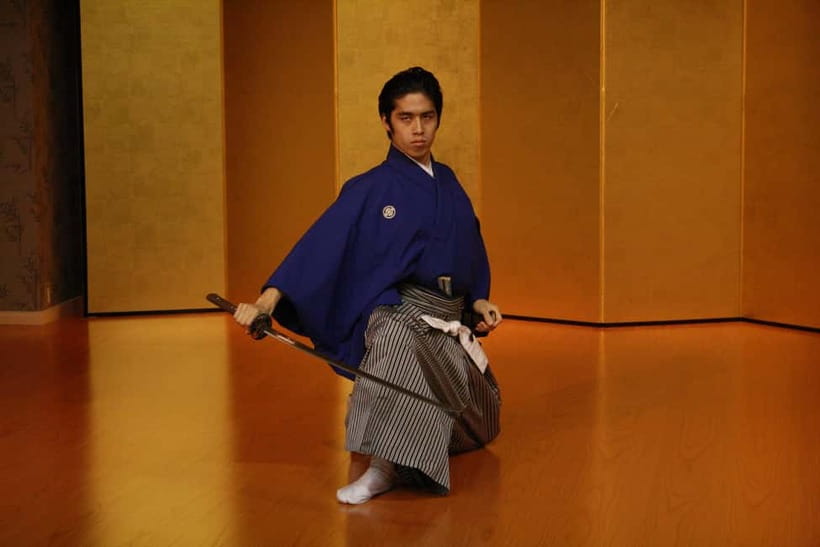
Samurai life comes alive in a single hour. This Kyoto Kenbu show is part theater, part history lesson, and part hands-on sword training, all set at the Samurai Kembu Theater. I like how the performers explain what you are seeing, and I especially like the end, where you get real time to hold and draw a katana.
The main drawback to plan for is also the most common rule: you cannot record during the performance, and the sword lesson is short, so you will not leave feeling like a samurai expert.
In This Review
- Quick Takeaways
- Samurai Kenbu at the Theater: What You Actually See
- Etiquette First: Shoes Off, No Recording, Limited Waiting
- Getting There in Kyoto: Near Sanjo Keihan and Sanjo Station
- The Performance Core: Kenbu Movements With Samurai Context
- Traditional Tales on Stage, With Humor and Drama
- Fan Techniques: A Samurai Tool You Might Not Expect
- The Big Finale: The Short Sword Lesson You Can Do Yourself
- Fan Lesson Time: Sometimes Included, If There Is Enough Moment
- Photos After the Show: The Best Time to Capture Your Memories
- Price and Value: Is $32 Worth It in Kyoto?
- Who This Fits Best: History Fans, Families, and Curious Beginners
- Small Practical Tips That Save You Time
- Should You Book Samurai Kenbu in Kyoto?
- FAQ
- How long is the Kyoto Samurai Kenbu show?
- How much does it cost?
- What is included in the ticket price?
- Where do I meet, and how early should I arrive?
- Do I have to take my shoes off?
- Are photos or videos allowed during the show?
- What do I do during the short sword lesson?
- Is there a fan lesson too?
- What languages are used during the show and instruction?
- Can I cancel, and do I have a reserve now pay later option?
Quick Takeaways
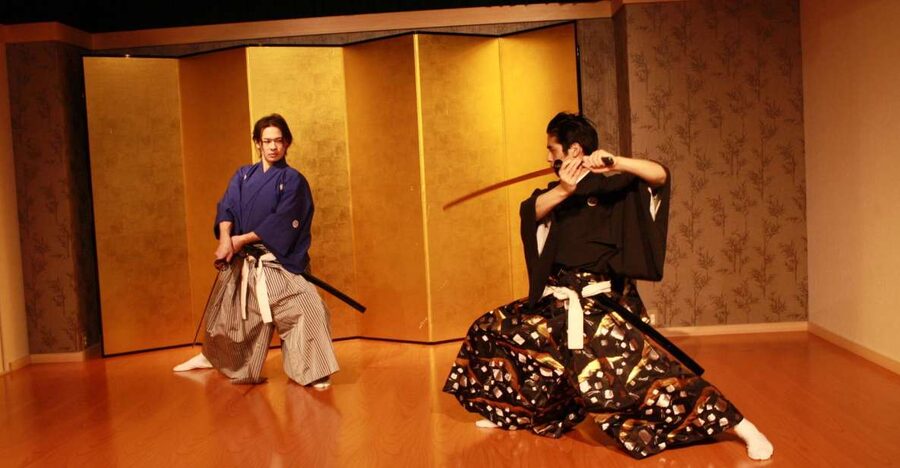
- Kenbu as story theater: dances that follow samurai tales, with English narration so you are not just watching motion
- Shoes off, phones away: clear etiquette that makes the room feel focused and respectful
- Sword and fan techniques: you see how both props fit into samurai performance traditions
- Hands-on katana mini lesson: you can grasp the blade and swing it at instructor command
- Photo time after: you get a window to capture the moment after the show ends
Samurai Kenbu at the Theater: What You Actually See
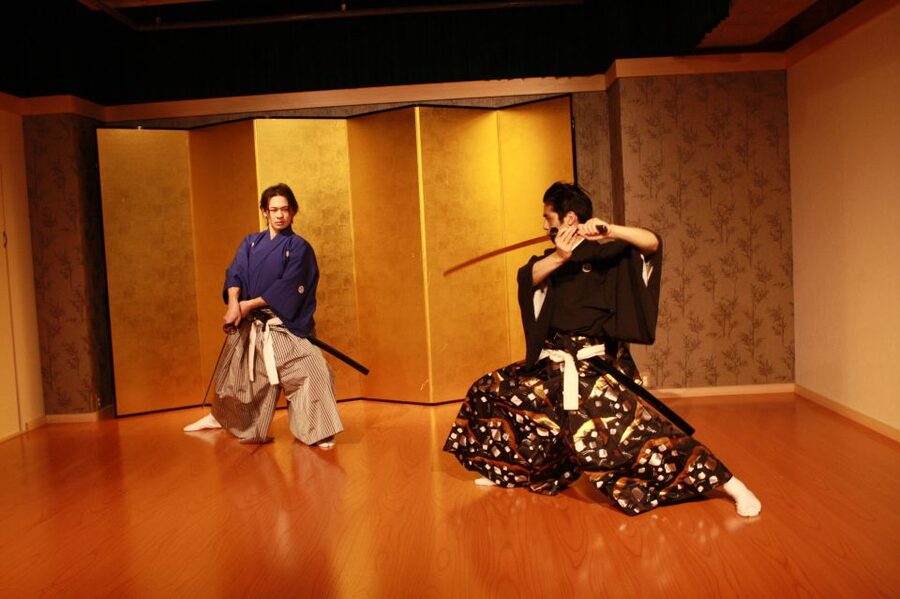
Kenbu is traditional sword dancing, and this Kyoto show treats it like a set of stage stories. Expect several demonstrations, each one tied to a bit of samurai-era context and technique, including how movements connect to poetry recited before battle. The tone is dramatic, but it is not about chaotic sword swinging. It is controlled, patterned, and built around grace plus power.
What I like most is that you get an explanation as the show unfolds. The performer narration is in English and Japanese, so you can follow the meaning behind the poses, not just the shapes. The second thing I love is the pacing. You get multiple short segments instead of one long lecture, so it stays easy to pay attention even when you are tired from walking Kyoto all day.
More Samurai & Ninja Sessions in Kyoto
- Kyoto Samurai Experience
★ 5.0 · 1,294 reviews - Kyoto: Kendo and Samurai Experience with Uniform and Gear
★ 4.9 · 815 reviews - Kyoto: Samurai Sword Class by Experts in Traditional Arts
★ 4.9 · 657 reviews
Etiquette First: Shoes Off, No Recording, Limited Waiting
This is one of those activities where the room rules matter. Before you sit down, you take off your shoes, following the local tradition. You will also want your phone put away. The show asks that you refrain from taking photos or videos during the performance.
You should also plan around the space limits. There is no waiting room, and large luggage or travel bags are not accommodated. In practice, that means you should arrive on time and travel light. If you show up late, you might not be able to hang around comfortably while waiting to be admitted.
Getting There in Kyoto: Near Sanjo Keihan and Sanjo Station
The meeting point is the Samurai Kembu Theater in Kyoto. It is an easy walk if you are already around the Sanjo area: about 4 minutes on foot from Subway Sanjo Keihan Station, and about 5 minutes from Sanjo Station on the Keihan Main Line.
When you arrive, give yourself 5 to 15 minutes so you can settle in before the show begins. One hour goes fast, and the start is timed tightly, so arriving early keeps you from feeling rushed in a shoe-off setting.
The Performance Core: Kenbu Movements With Samurai Context
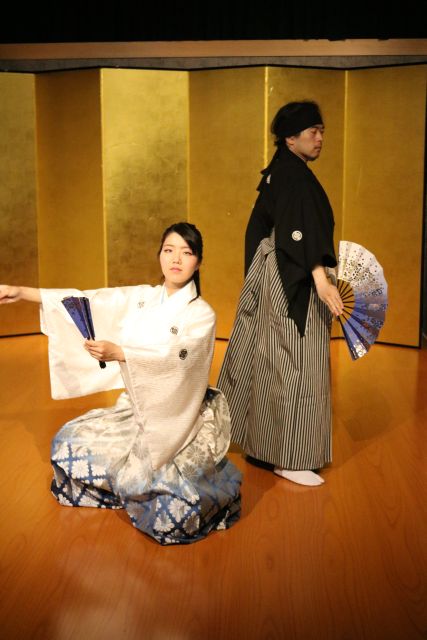
The show is structured like a sequence of performances, not just one continuous routine. Each demonstration comes with a short history lesson about samurai culture across a long stretch of time, roughly from the 12th to the 19th centuries. That range helps you understand that samurai identity was not one simple snapshot. It changed with society, warfare, and values over hundreds of years.
Onstage, you watch complex sword movements designed to look both elegant and strong. The choreography is built around transitions, stances, and timing. The narration and context aim to connect those movements to the mindset and responsibilities of samurai life, including the weight of carrying a sword and what it symbolized beyond fighting.
More Samurai and Ninja sessions in Kyoto:
- Skip the lines Basic Ticket at SAMURAI NINJA MUSEUM KYOTO
★ 4.5 · 632 reviews - Ninja 1-hour Hands-on Lesson by Japanese master in Kyoto -Entry
★ 5.0 · 489 reviews - Kyoto: Ninja Weapon Forging Experience
★ 4.8 · 478 reviews - Samurai Training with Modern day Musashi in Kyoto
★ 5.0 · 256 reviews
Traditional Tales on Stage, With Humor and Drama
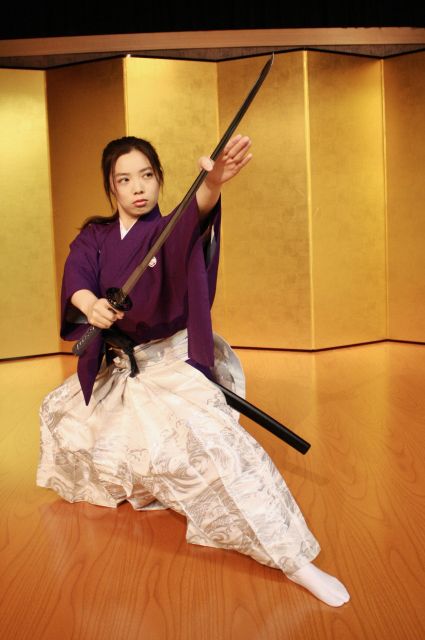
One reason people leave smiling is that the stories are staged, not just recited. You will see traditional tales played out with stage action, and the show includes English narration to keep the plot and symbolism clear.
A recurring theme in the reviews is that the performers know how to keep the room engaged. Some stories include light humor, even when the topic is intense. That matters because it turns Kenbu from something you might only admire from a distance into something you actually enjoy following in real time.
Fan Techniques: A Samurai Tool You Might Not Expect
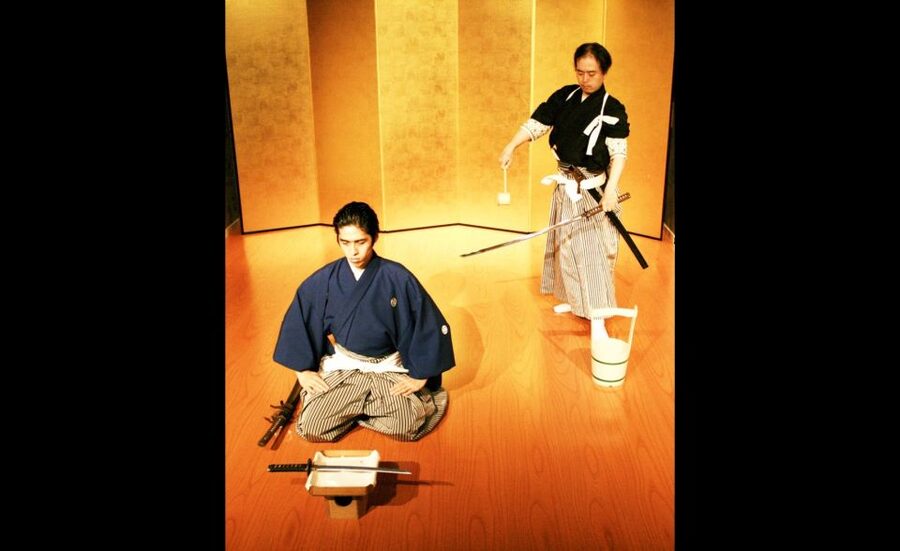
You do not just see the katana. The show also includes techniques using a folding fan, which is a nice surprise if your mental picture of samurai culture is only swords and armor. The fan is part of the performance language here, and it helps broaden what Kenbu can represent onstage.
You might find this especially valuable if you are the type who likes small details. The show signals that samurai identity was expressed through more than weapons alone. That gives you a fuller picture of cultural performance in Japan, where style, discipline, and symbolism live side by side.
The Big Finale: The Short Sword Lesson You Can Do Yourself
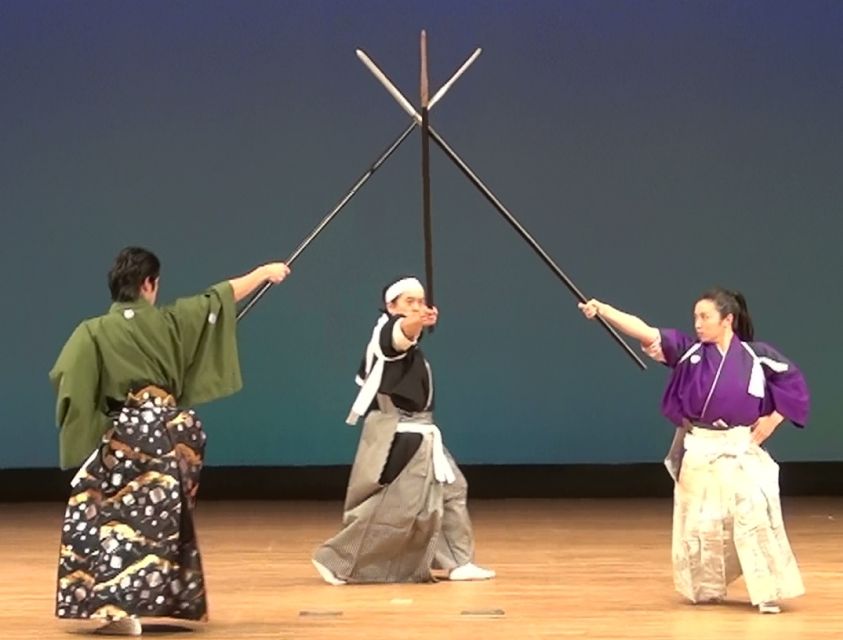
After the demonstrations, the energy shifts from watching to doing. The mini-experience begins when the performers return and you get a chance to handle a sword in a controlled lesson format. This is the part that makes it feel like good value, because you are not only paying to sit in the dark.
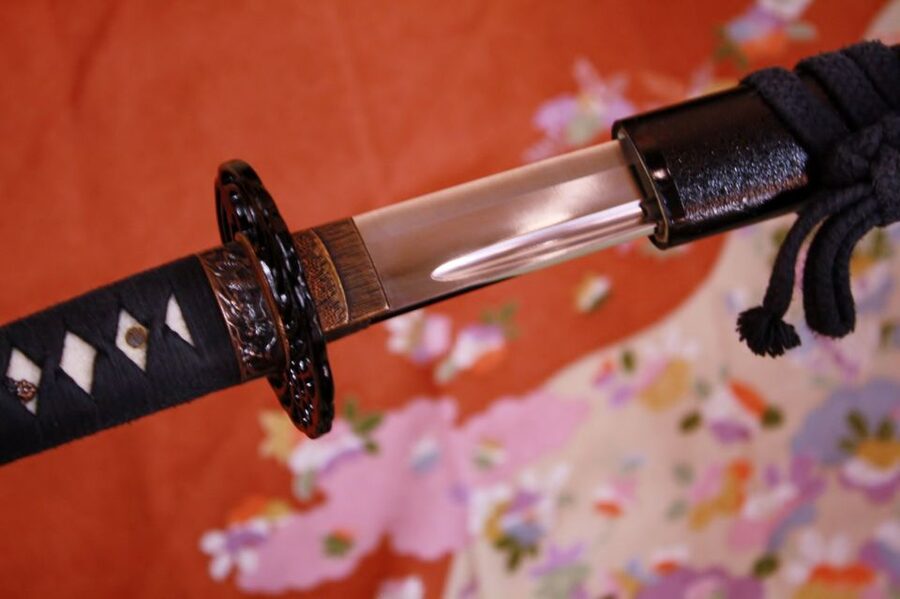
The steps are straightforward. You pick up a sword, slowly pull out the scabbard, and grasp the blade. Then, at the instructor’s command, you swing gently at first and gradually increase force as guided. If you have ever held a real katana-inspired prop before, you know the balance matters, and if you have not, this is a great reality check. The motion is harder than it looks onstage, and that is a big part of why people remember it.
Fan Lesson Time: Sometimes Included, If There Is Enough Moment
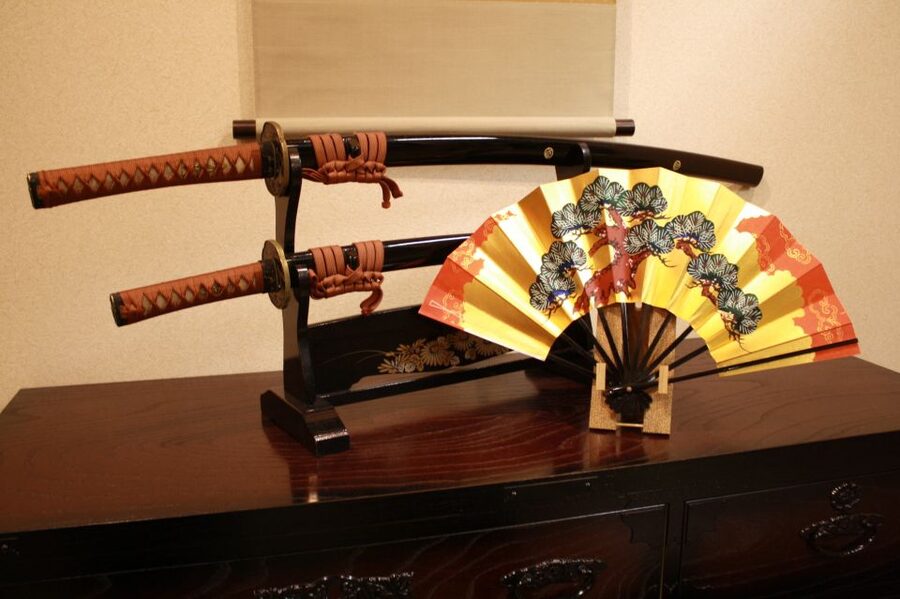
The show notes that there is an additional opportunity to learn using a fan too, if time allows. So, do not count on it as guaranteed. Still, if it happens during your session, it is a fun bonus because you get to compare the fan movements to the sword stances you saw moments earlier.
Photos After the Show: The Best Time to Capture Your Memories
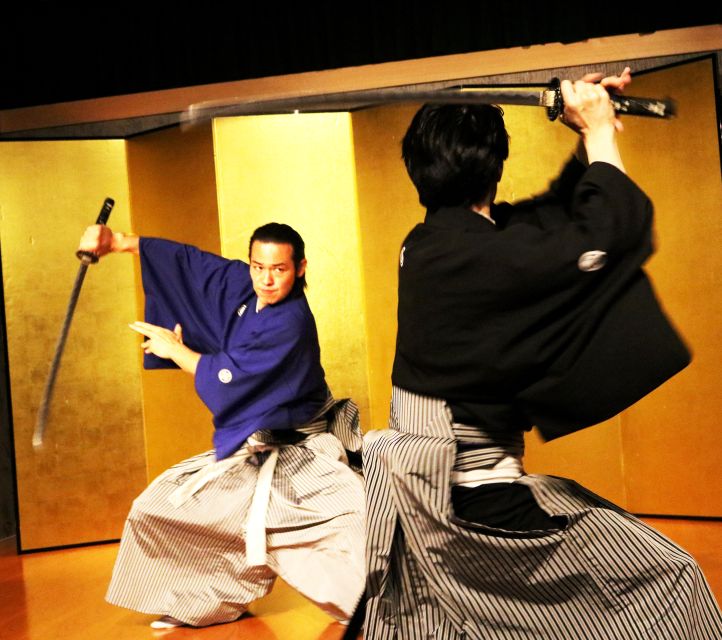
Since recording is not allowed during the performance, the show builds in a different moment for photos. After the show, when the performers come out, you can take photos during the post-show period. Some sessions also include friendly help while you capture the shot.
If photography matters to you, this timing is a win. You are not trying to sneak a camera during the most important part. You focus fully on the choreography, then you capture the experience while it is appropriate.
Price and Value: Is $32 Worth It in Kyoto?
At $32 per person for a duration of about 1 hour, this sits in the sweet spot for a Kyoto evening plan. You get three things bundled together: entry to the Samurai Kenbu Theater, the Kenbu show itself, and a short sword lesson. Food and drinks are not included, so plan on handling that separately. Hotel pickup and drop-off also are not included, so you will want to make your own way to the theater.
Here is the value angle I see. A lot of Kyoto cultural shows are “watch-only.” This one is “watch plus do, even if it is brief.” The end segment is what turns it from a nice performance into something you can talk about later, because you can say what it felt like to draw the scabbard, hold the blade, and swing with guidance. Reviews repeatedly point to that hands-on time as a highlight, not an afterthought.
Who This Fits Best: History Fans, Families, and Curious Beginners
This show works for a few different types of travelers.
If you love Japanese history or samurai culture, you get stories, context, and technique tied to a long timeline. If you are more of a casual tourist, the show is easy to follow because the narration is in English and Japanese and the storytelling is visual.
It also can be a family-friendly option. One review specifically called out that they saw the experience with a 3-year-old, which suggests it is presented in a way that does not require advanced background knowledge. For families, the key is that it is only one hour, not a long nighttime commitment.
Small Practical Tips That Save You Time
- Arrive 5 to 15 minutes early so you can settle in before the show starts.
- Bring minimal luggage, because there is no room for large bags.
- Expect a shoe-off environment. Wear easy slip-on footwear for comfort on the way back out.
- Know that photos or video are not allowed during the show, but you will have time afterward.
- If you care about the narration details, it helps to focus early. Some reviews note that English narration can be a bit hard to catch at times, but the performance itself stays readable through the structure and explanations.
Should You Book Samurai Kenbu in Kyoto?
If you want a Kyoto cultural stop that mixes stage artistry, samurai context, and a real hands-on katana moment, I think this is an easy yes. The show is built to be understandable, even if you are not a history specialist. You learn enough to make the dances meaningful, then you do enough to remember it.
Skip it only if you are expecting a big sword-fighting action demo or a long training session. Kenbu here is about disciplined flow and storytelling, not a chaotic combat show. Also, if you hate photo rules and need to record everything, plan around the no-recording policy during the performance.
FAQ
How long is the Kyoto Samurai Kenbu show?
The experience lasts 1 hour, including the show and the short sword lesson.
How much does it cost?
The price is $32 per person.
What is included in the ticket price?
You get the Samurai Kenbu Theater entry fee, the Kenbu show, and a short sword lesson. Food and drinks are not included.
Where do I meet, and how early should I arrive?
Meet at the Samurai Kembu Theater in Kyoto. It is about a 4-minute walk from Subway Sanjo Keihan Station and about a 5-minute walk from Sanjo Station on the Keihan Main Line. Arrive 5 to 15 minutes before the activity starts.
Do I have to take my shoes off?
Yes. You take off your shoes according to local tradition.
Are photos or videos allowed during the show?
No. You are asked to refrain from taking photos or videos during the performance. You will have time for photos after the show.
What do I do during the short sword lesson?
You pick up a sword, slowly pull out the scabbard, and grasp the blade. At the instructor’s command, you swing gently at first, then more forcefully with guidance.
Is there a fan lesson too?
You may have the opportunity to learn fan techniques if there is time during the mini-experience.
What languages are used during the show and instruction?
The instructor and narration are offered in English and Japanese.
Can I cancel, and do I have a reserve now pay later option?
There is free cancellation up to 24 hours in advance for a full refund. The experience also offers a reserve now & pay later option, where you can book a spot and pay nothing today.
More Show in Kyoto
- Kyoto Gion Cultural Walk & Geisha Show with Dining Options
★ 5.0 · 483 reviews - 1 Hour Geisha Show in Kyoto
★ 5.0 · 452 reviews - Kyoto: Gion Cultural Walk with Geisha Show
★ 5.0 · 315 reviews - Kyoto: Meet-and-Greet, Maiko Show and Experience
★ 4.8 · 286 reviews
Newly listed around Kyoto
- Taste of Nishiki Market Walking Food Tour with Local guide★ 5.0 · 17 reviews
- Kyoto: Sushi Making Class with Sushi Chef★ 4.8 · 64 reviews
- Simple Plan with Maiko★ 4.4 · 10 reviews
- Shibori Furoshiki Course at Kyoto Shibori Museum★ 5.0 · 21 reviews
- Kyoto: City Secrets eBike Tour★ 4.9 · 196 reviews
- Sacred Pathways: Discover the Philosopher’s Path of Kyoto★ 4.9 · 20 reviews
- Private Tour to Monkey Park and Arashiyama Highlights★ 5.0 · 22 reviews
- Private Nara Tour from Osaka – Meet at Your Hotel★ 5.0 · 22 reviews
Samurai Sword & Ninja Training, compared.
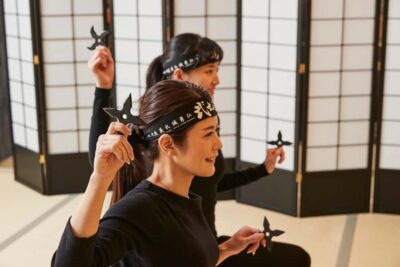
Samurai Ninja Museum Guided tour and Experience
Read our review →
Kendo and Samurai Experience with Uniform and Gear
Read our review →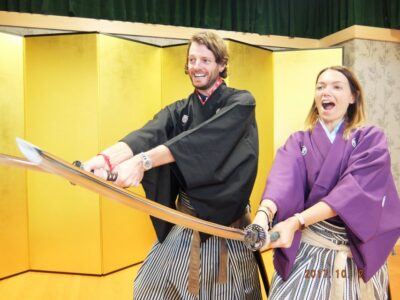
Samurai Sword Class by Experts in Traditional Arts
Read our review →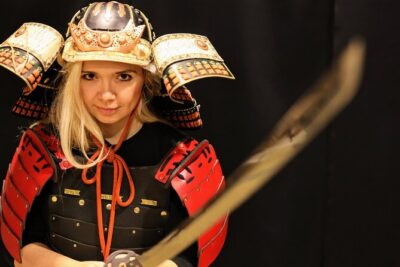
Skip the lines Basic Ticket at SAMURAI NINJA MUSEUM KYOTO
Read our review →
Samurai Sword & Archery Class from Samurai Descendant
Read our review →
Browse the lists this tour appears in