Review · KYOTO TOURS
Kyoto, Nara and Osaka private up to 9 pax picked up from Kyoto
Three cities. One private day plan.
This Kyoto, Nara and Osaka route is interesting because it mixes headline sights with calmer, lesser-known temples, all handled as a private tour up to 9 pax. With hotel pickup in Kyoto, you start close to where you’re sleeping, then the guide routes you between neighborhoods and viewpoints so you spend less time guessing what to do next.
What I like most is the way the day gives you both big wow moments and quieter pauses. You get major Kyoto icons like Fushimi Inari-taisha plus temple stops that focus on atmosphere, like moss gardens and rock gardens. I also like that there’s a built-in break for Kyoto-style sweets rather than forcing you to hunt for snacks between temples.
One consideration: it is a full day with multiple stops. If you get tired easily, plan for walking time, some stairs, and a pace that feels more like a highlight tour than a slow cultural stroll, especially if you choose the longer sample route.
In This Review
- Key highlights to look for
- A Kyoto, Nara and Osaka day that actually fits together
- How pickup and dropoff change your experience
- Kyoto first, starting with Fushimi Inari’s tri-gates
- Rengeji, Myomanji, Koryu-ji, and the “secret Kyoto” vibe
- Kinkakuji and Koetsuji: famous gold, then slower arts and tea
- Nakamuraken dessert stop and Matsuo Shrine koi pond
- The Nara leg: Todai-ji, deer crackers, and matcha calm
- Osaka: Dotonbori street food and Abeno Harukas high views
- Price, group size, and what feels like value
- What this tour feels like on the ground
- Who should book this (and who should skip it)
- Should you book this 3-city private tour?
- FAQ
- How long is the Kyoto, Nara and Osaka private tour?
- Is pickup included, and where does it start?
- Is this a private tour?
- How many people can go on this private tour?
- What stops are included in Kyoto?
- Are there admission fees for the temple and shrine stops?
- Can I choose where the tour ends?
- What is the cancellation policy?
- Do I get a mobile ticket?
Key highlights to look for
- Private pickup in Kyoto, so you start the day without transit stress
- Secret temple stops that are less visited and more about calm than crowds
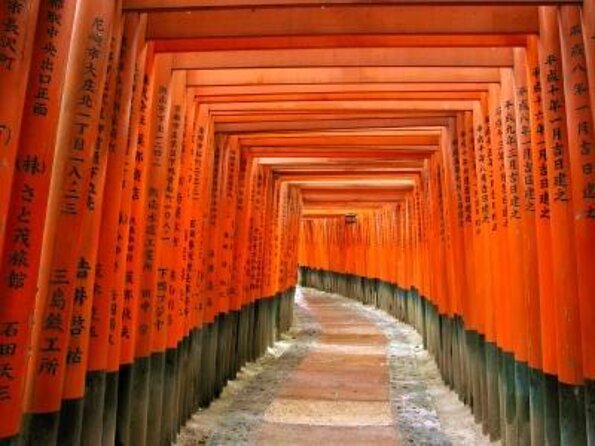
- Fushimi Inari’s tri-gates plus bamboo paths inside the shrine grounds
- A planned sweet break at Nakamuraken with Kyoto-style options
- Big-picture Osaka ending, including Dotonbori and the Abeno Harukas observatory
A Kyoto, Nara and Osaka day that actually fits together
This is the kind of tour you book when you want variety, not just more of the same. In one day you can hit Kyoto’s famous shrines and temples, then move on to Nara for the Buddha hall and deer park, and finish in Osaka for street energy and a high view.
The private format matters. With a group that stays with your guide, you can keep your rhythm and avoid the stop-and-go confusion that often comes with joining a bus tour. It also makes it easier to adjust dropoff so you can go straight to dinner afterward, which is handy in a city like Osaka where your best food plans often depend on where you end up.
The listing shows 7 hours approx, but the example “3 cities” plan described runs about 12 hours. So read the option you’re choosing and match it to your energy level. If you’re traveling with family, the private pace can still work well, but you’ll want to be realistic about the long day.
A few more Kyoto days to weigh up
- PERFECT KYOTO 1-Day Bus Tour
★ 5.0 · 13,518 reviews - Kyoto: Fushimi Inari, Kinkakuji, Bamboo Grove 1 Day Bus Tour
★ 4.8 · 4,316 reviews - Kyoto: Tea Ceremony in a Traditional Tea House in Kiyomizu
★ 4.9 · 3,519 reviews
How pickup and dropoff change your experience
Pickup is offered when you stay in Kyoto, and you’re taken to sites directly. That sounds simple, but it’s a major quality-of-life upgrade. Kyoto traffic and station layouts can eat time, especially when you’re moving between different temple zones.
Dropoff flexibility is another plus. The plan notes that you can choose your dropoff location, and then head to good restaurants after the tour. In practice, this means you can end closer to where you want to eat or where you’ll stay overnight, rather than being dumped at the far edge of town.
Also note the tour is listed as near public transportation. That’s useful if you decide you want to extend the day on your own afterward, because getting around from key points is generally easier.
Kyoto first, starting with Fushimi Inari’s tri-gates
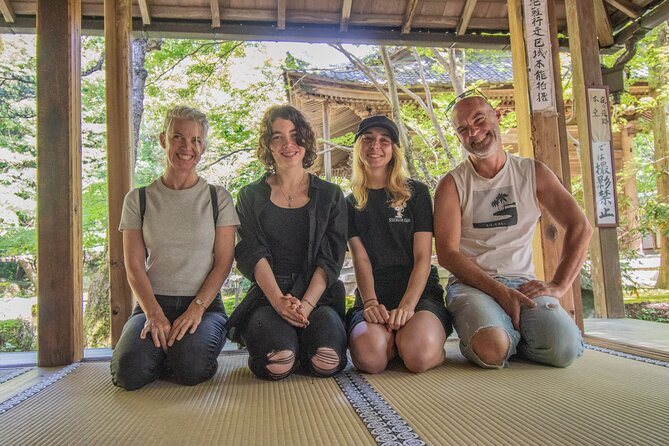
Stop 1 is Fushimi Inari-taisha Shrine, famous for its thousands of torii gates. The special detail here is that the shrine grounds include a whole stretch up a mountain, with walking paths through bamboo forest areas and quiet bird sounds.
Why this is a smart opener: Fushimi Inari is visually dramatic early in the day. It sets the tone for the route, and it’s also a place where the experience builds as you walk deeper into the grounds. Even if you only move partway, you still get the effect of the gates stacking behind you.
A practical consideration: wear shoes you trust. The torii paths can mean uneven ground and lots of steps. If your group wants photos, this stop gives you angles, texture, and repetition, which is exactly what makes Inari a favorite.
Rengeji, Myomanji, Koryu-ji, and the “secret Kyoto” vibe

After Inari, the route shifts into temples that focus on calm and visual detail, including stops that are described as more distant and less visited.
Stop 2 is Rengeji Temple, known for an especially gorgeous moss garden. The key point from the description is that it is not visited by many people because it can be far and inconvenient to reach. That is what makes it feel different from Kyoto’s most famous temple clusters. You’re not just ticking off a name, you’re getting a quieter, more personal feeling for what the garden was designed to be like.
Stop 3 is Myomanji Temple, described as one of the largest temples in northern Kyoto. The standout detail is the organization of millions of tiny rocks into a larger temple garden. That kind of garden design rewards slow viewing, because you notice structure more than decoration.
Stop 4 is Koryu-ji Temple, with a story tied to people called the Hatashi, described as a Korean-rooted ethnic tribe, dating to the 5th or 6th century. The temple was affected by a burning event in the 8th century, but it never vanished. Even if you only catch the core outline, it gives you a sense that Kyoto’s temple world has older layers than the postcard version.
What I like about this trio: it spreads the day across different kinds of beauty. Moss, rock arrangements, and historical context give you variety without forcing you to sprint from one “must-see” to another.
A different sort of day in Japan:
- Kyoto Geisha Walking Tour: Gion District & Hidden Gems
★ 4.7 · 3,273 reviews - Kyoto: Tea Ceremony Ju-An at Jotokuji Temple
★ 4.9 · 3,207 reviews - Kyoto: 45-Minute Tea Ceremony Lesson Experience
★ 4.3 · 2,378 reviews - Kyoto: Gion Geisha District Walking Tour – Stories of Geisha
★ 4.7 · 2,187 reviews
Kinkakuji and Koetsuji: famous gold, then slower arts and tea
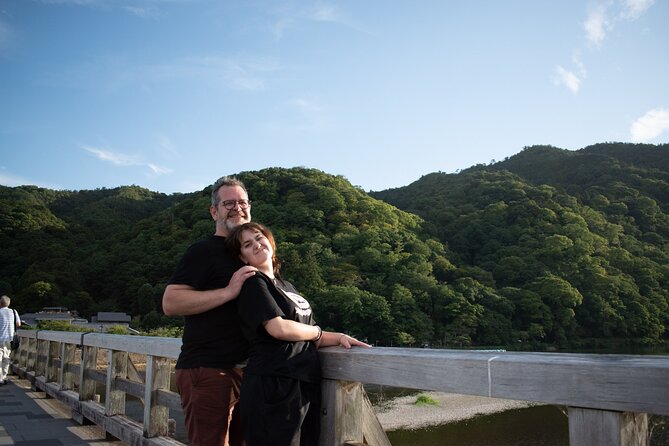
Stop 5 is Kinkakuji, the Golden Pavilion. The description is very specific: it was the villa of Shogun Yoshimitsu Ashikaga (1358 to 1408), and after his death it became a temple. The top floors are covered with gold leaf, which is what gives the building its signature look.
Stop 6 is Koetsuji Temple, tied to an art master involved with tea ceremony and calligraphy. The description notes a garden and even tea ceremony items, which changes the vibe from photography-first to atmosphere-first. This is a nice pairing after Kinkakuji. You go from the famous reflective gold look to something more hands-on in spirit, centered on the arts.
Practical note: Kinkakuji is famous, so expect more people than at the “secret” stops. If your group wants photos, this is where you’ll want to stay patient and work with the flow rather than fighting it.
Nakamuraken dessert stop and Matsuo Shrine koi pond
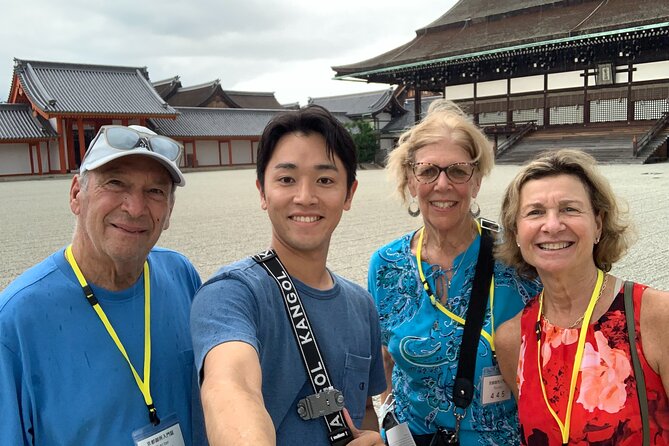
Stop 7 is a local dessert break at Nakamuraken. This is one of those small inclusions that makes a long day feel human. The shop offers Kyoto-styled sweets, including Mochifu with different textures than standard mochi, shaved ice flavored with yuzu or match, and matcha-related options.
Why it matters: temple days can turn into “only water, then regret.” A planned stop means you can take calories and cool down a bit without spending energy searching.
Stop 8 is Matsuo Shrine, described as the biggest shrine erected by the Hatashi noble family, and beloved by the surrounding neighborhood households. The description also highlights a large koi fish pond where visitors can feed the fish.
That koi pond detail is a great last piece of Kyoto because it’s interactive and relaxing. It also gives your group a chance to slow down, not just watch and walk.
The Nara leg: Todai-ji, deer crackers, and matcha calm
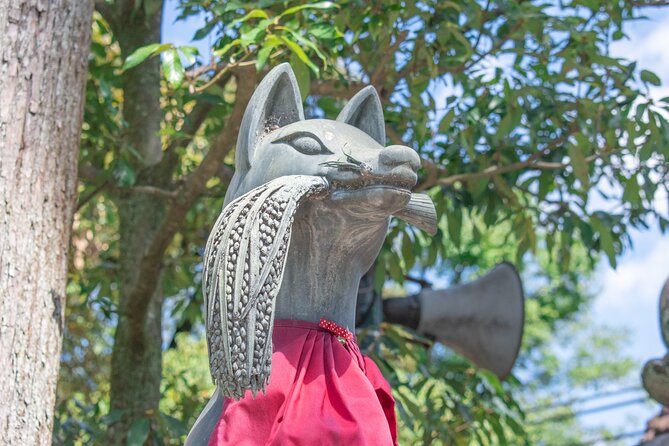
The sample “3 cities” plan continues to Nara with three defined moments.
First is Todai-ji, especially the great Buddha hall. The description frames it as a massive statue. This is your “scale” stop, the kind that makes you look up and take in how large the hall and artwork are.
Next comes Nara park, with the classic experience of feeding deer using crackers. If you like traditional Nara, this is the part that makes Nara feel like Nara.
Then there’s the “secret temple” component again, described as a matcha tasting in a serene place. That combination is a smart contrast to the deer park. You get movement and energy, then you get quiet and a slow sip.
Because the Nara segment is described more broadly than the Kyoto stops, you may want to confirm which exact locations are included in your option. Still, the themes are clear: massive Buddha, iconic deer, and a calm matcha finish.
Osaka: Dotonbori street food and Abeno Harukas high views
Osaka is where the day turns into street-level fun.
The plan calls for Dotonbori for walking and eating local dishes on the streets. This is the part that lets you sample real Osaka flavor in the open-air, neon-and-people atmosphere style. It’s also a good section for groups because it’s easy to split responsibilities: one person handles photos, another scouts the next snack, and the group regroups as needed.
Then the route ends with Abeno Harukas, described as the highest skycraper with an observatory. This is a great finishing move because it gives you a perspective shot over the city after a day of close-up temple details.
If you’re deciding what to prioritize, I’d treat the Abeno Harukas observatory as your “memory anchor.” Dotonbori is fun in the moment, but the high view helps it all make sense when you look back on the day.
Price, group size, and what feels like value
The price is listed at $329.02 per person, and the average booking is 113 days in advance, which usually means demand is steady for this kind of multi-city routing.
So is it worth it? Here’s how I think about value for a private day like this:
- You’re paying for a private vehicle and a guide to connect Kyoto, Nara, and Osaka efficiently. That saves you time and decision fatigue.
- The itinerary includes multiple structured stops, plus a dessert break and matcha moment, rather than leaving food planning to chance.
- Admission is listed as free for the stops shown in the itinerary section. Even when other costs exist, having free entry points reduces the “surprise math” of the day.
The private up-to-9 pax setup is also key. If you can travel as a small family or with a few friends, the per-person cost can feel more reasonable compared to paying for multiple independent taxis or trying to coordinate multiple transit routes across cities.
What this tour feels like on the ground
This is not a “lie down and read plaques” kind of day. It’s a curated route with enough variety to keep attention, from shrine gates and moss gardens to gold architecture, dessert, deer park, and Osaka skyline views.
The best match is a group that wants:
- big Kyoto icons without missing the calmer “secret” type temples
- a one-day taste of Nara and Osaka, even with a long schedule
- private guidance in English with smooth communication, as shown by praise for the guide’s English and photo help
One more detail from the feedback: the guide Takashi was praised for English and communication, plus photography support. There was also mention of enjoying pickle samples and buying items from a local stand. That kind of small cultural add-on is exactly what turns a drive-between-sights day into a memorable day.
Who should book this (and who should skip it)
You should book if you:
- want Kyoto, Nara, and Osaka in one day without doing all the logistics yourself
- prefer a private group format for family schedules or photo time
- like temple gardens and shrines but also want the Osaka street experience
You might skip or choose a shorter option if you:
- get worn out by long days and multiple stops
- only want one city and would rather go slow
- are traveling with mobility limits. The description does not list accessibility details, so you’d want to ask before committing.
Also, there’s a minimum age of 18 for alcohol consumption. If alcohol is part of any meals or stops on your specific day, plan accordingly.
Should you book this 3-city private tour?
If your goal is maximum variety with a guided flow, this tour makes a strong case. The Kyoto portion balances famous sights like Fushimi Inari and Kinkakuji with quieter temple experiences such as Rengeji’s moss garden and Myomanji’s rock garden. Then it carries that momentum into Nara and Osaka with clear anchors: Todai-ji, deer feeding, Dotonbori street food, and the Abeno Harukas observatory.
If you’re the type who hates tight schedules, you might regret a long route. But if you’re good with a full day and you want Kyoto plus its best neighbors without planning in circles, this is a practical, high-ROI way to do it.
FAQ
How long is the Kyoto, Nara and Osaka private tour?
The tour is listed as about 7 hours. The example for the 3 cities route is described as a 12 hour day, so the exact duration depends on the option you choose.
Is pickup included, and where does it start?
Hotel pickup is available if you are staying in Kyoto. The tour then takes you directly to the sites.
Is this a private tour?
Yes. It is a private tour/activity, and only your group participates.
How many people can go on this private tour?
The private option is up to 9 pax.
What stops are included in Kyoto?
The provided itinerary includes Fushimi Inari-taisha, Rengeji Temple, Myomanji Temple, Koryu-ji Temple, Kinkakuji Temple, Koetsuji Temple, Nakamuraken dessert shop, and Matsuo Shrine.
Are there admission fees for the temple and shrine stops?
The itinerary shows admission ticket free for the listed Kyoto stops.
Can I choose where the tour ends?
Yes. You can choose any dropoff location, and it notes that you can then go to restaurants after the tour.
What is the cancellation policy?
Free cancellation is offered up to 24 hours in advance for a full refund. If you cancel less than 24 hours before the start time, you do not get a refund.
Do I get a mobile ticket?
Yes. The tour lists mobile ticket as a feature.
Newly listed around Kyoto
- Let’s make Japanese accessories with Mizuhiki★ 5.0 · 11 reviews
- Let’s make only one original onigawara in the world★ 5.0 · 52 reviews
- GEMS of WEST KYOTO on a BIKE!★ 5.0 · 6 reviews
- Kyoto Hidden Treasures: Special Temple & Garden Access Tour★ 4.5 · 25 reviews
- Kendo and samurai experience in Kyoto★ 4.5 · 47 reviews
- Kyoto welcome tour★ 5.0 · 34 reviews
- Kyoto Early Bird English Tour: Fushimi Inari & Gion(Private opt)★ 5.0 · 139 reviews
- Kyoto Private Car Tour – Full Day with Local Guide & Nara Option★ 5.0 · 169 reviews
Kyoto Tours, compared.
Fushimi Inari, Kinkakuji, Bamboo Grove 1 Day Bus Tour
Read our review →
Tea Ceremony in a Traditional Tea House in Kiyomizu
Read our review →
Kyoto Geisha Walking Tour: Gion District & Hidden Gems
Read our review →
Gion Geisha District Walking Tour – Stories of Geisha
Read our review →