
Review · GEISHA DISTRICT WALKS
Kyoto Nighttime All-Inclusive Eats and Streets, Gion and Beyond
Kyoto gets louder after dark. This all-inclusive evening tour turns Gion and the streets around the Kamogawa River into a guided food night, with real context about geiko and modern nightlife. You get stories while you walk, then you eat and drink at locally run spots you’d likely miss on your own.
I especially liked the way the guide framed Kyoto’s nighttime economy, from how the city talks about geiko instead of geisha, to how today’s hostess clubs fit into the bigger picture. When guides like Hugo or Laura walk you through it, the city feels clearer, not just prettier, and you finish with actual food memories, not random photos.
One thing to consider: it is a night walk with some distance, and some restaurant spaces can be tight. Also, smoking can still happen in Japan, and while it’s not constant, it may occur at certain stops, so plan like you’re going to izakaya.
In This Review
- Key highlights at a glance
- Night in Kyoto, explained while you walk
- Why Gion at night is more than a photo stop
- Your dinner hour: standing-bar energy, real Kyoto flavors
- Portion size and pacing that won’t wreck your night
- After 8:15pm: Kamogawa River streets and the contrast of old and new
- A shrine, Buddhism vs Shinto, and other context moments
- The 9:00pm stop: another vetted spot and another included drink
- Smoke, noise, and what to do with it
- Ending at Kyoto-Kawaramachi: your night ends near the action
- Price and value: what $119 really buys you
- Who this tour suits best, and who may want something else
- Should you book this Kyoto Nighttime All-Inclusive Eats and Streets tour?
- FAQ
- What does the tour include?
- How long is the tour, and what time does it end?
- Where do you meet, and where do you finish?
- Can vegetarians participate?
- What are the age rules for this tour?
- What if the weather is bad?
Key highlights at a glance
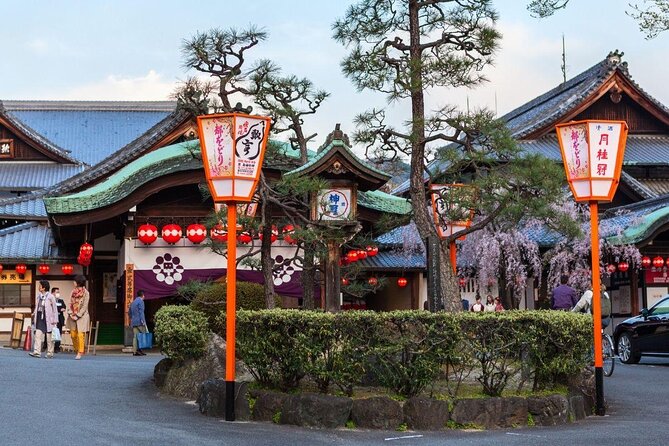
- Gion orientation with geiko, maiko, and what Kyoto calls it all for the right local context
- Two included beverages (one at each restaurant), plus optional beer, shochu, or sake choices
- Dinner through multiple locally owned stops, with tastes that fit different comfort levels
- Pontocho, Kiyamachi, and Kawaramachi after dark, comparing old narrow lanes with newer nightlife streets
- Small group pacing with a max of 6 travelers, plus flexibility for groups up to 8 with the same reservation
Night in Kyoto, explained while you walk
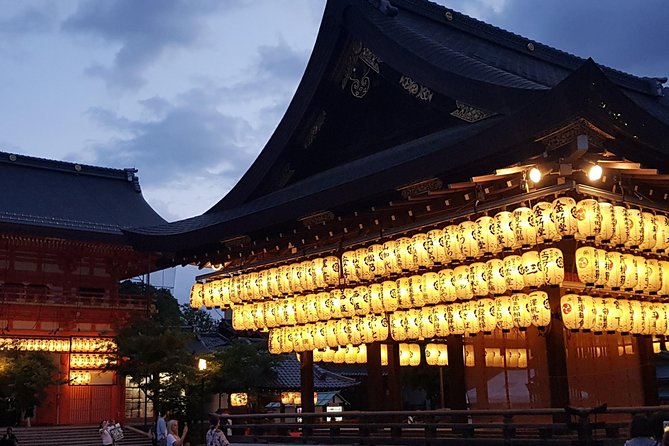
This tour is built for your first night in Kyoto, or for when daytime temples and gardens start blending together. At 6:30pm, you meet at Minamiza Theatre in Higashiyama Ward near the Shijo Bridge area, then head into Gion, Kyoto’s east-side entertainment district by the Kamogawa River.
The guide does more than point at buildings. You get the local terminology, like why Kyoto prefers the word geiko (instead of geisha), and you learn how the roles and performance culture became part of the city’s evening identity. I also liked the way guides often tie in related entertainment, so you might hear about maiko and Kabuki along the way, depending on your guide and the day’s flow.
You’ll also get a practical kind of cultural literacy: what to look for as you walk, how the atmosphere changes as it gets later, and why the same streets can feel both formal and quietly everyday. If you care about understanding a place rather than just collecting sights, this part is the engine of the whole night.
Compare these Geisha District walks in Kyoto:
- Kyoto Geisha Walking Tour: Gion District & Hidden Gems
★ 4.7 · 3,273 reviews - Kyoto: Gion Geisha District Walking Tour – Stories of Geisha
★ 4.7 · 2,187 reviews - Best of Kyoto: Gion, Geisha, Pagodas & Cobblestones
★ 4.9 · 2,058 reviews
Why Gion at night is more than a photo stop
Gion is famous in daylight, but at night it has a different rhythm. The tour uses the transition as a teaching moment, especially in the lead-in to the food stops. Even if you never see a geiko up close, the stories help you connect what you’re seeing with the social structure behind it.
And yes, it is still Gion, so it can feel crowded in pockets. One review noted the meeting area can be busy with other groups. My advice: arrive a few minutes early, have your phone ticket ready, and look for your guide at the meeting point before the rush of other tours makes it confusing.
Your dinner hour: standing-bar energy, real Kyoto flavors
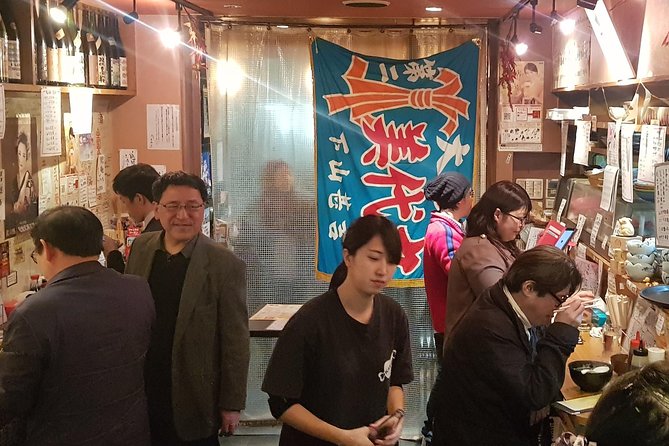
Around 7:30pm, the walk gives way to food. You’ll get about an hour for your first meal at a well-vetted, locally run bar or restaurant. The style matters here. These places tend to be compact and lively, often with standing-bar seating where the energy is part of the experience.
What you’re actually getting is a tasting-style dinner, not a single plate and done. You try a few regionally representative dishes, and you’ll also have a drink, with a beer as an easy option. If you prefer something else, the format allows you to swap to sake or shochu instead.
The guides also handle dietary needs without making it feel like an extra chore. Vegetarians are happily accommodated, and people have reported help with specific requirements like gluten-free. The tour doesn’t promise every specialty item for every diet, but the goal is to keep you included in the meal flow rather than just offering something bland on the side.
Portion size and pacing that won’t wreck your night
One of the most reassuring parts is that the meal pacing is designed so you leave satisfied but not stuffed. Several people praised the portion balance, saying it was enough to enjoy without feeling overly full before the later stroll. That matters on a walking tour. If you start too heavy, Kyoto after dark gets harder.
There is one small tradeoff. Because these are popular small venues, group conversation can be affected by where you’re seated. One person mentioned being placed at a bar setup where it was harder for the group to talk. It’s not a deal-breaker, but it’s good to know if you’re traveling with friends who like to chat face-to-face the whole time.
A few more Kyoto days to weigh up
- PERFECT KYOTO 1-Day Bus Tour
★ 5.0 · 13,518 reviews - Kyoto: Fushimi Inari, Kinkakuji, Bamboo Grove 1 Day Bus Tour
★ 4.8 · 4,316 reviews - Kyoto: Tea Ceremony in a Traditional Tea House in Kiyomizu
★ 4.9 · 3,519 reviews - Kyoto: Tea Ceremony Ju-An at Jotokuji Temple
★ 4.9 · 3,207 reviews
After 8:15pm: Kamogawa River streets and the contrast of old and new
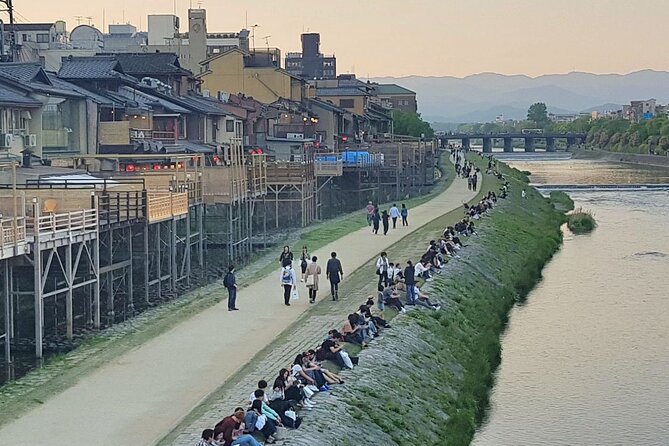
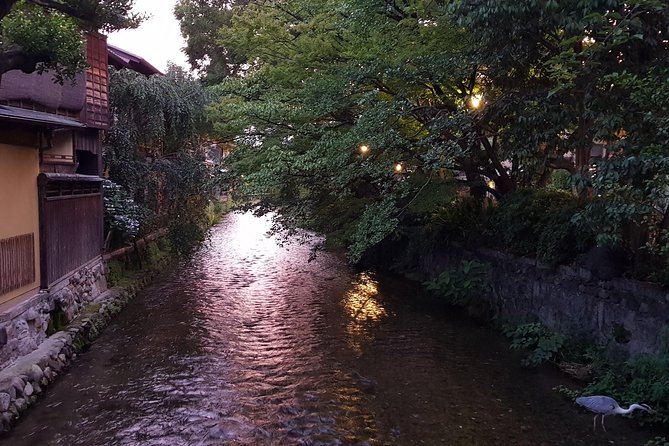
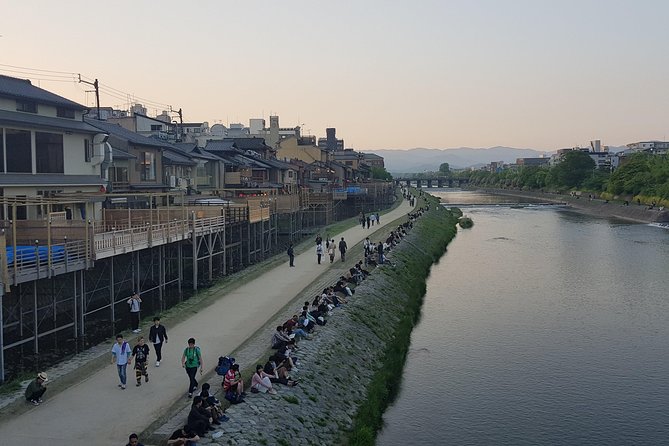
At 8:15pm, you shift to the west side of the Kamogawa River. This is where the tour earns its title, because it moves beyond Gion into neighboring nightlife streets, including Pontocho, Kiyamachi, and the Kawaramachi area.
Here’s the practical payoff: you learn to read street layout and building style as cultural signals. In Pontocho, those narrow lanes feel protected and intentional. A couple blocks away, the vibe changes, and you can feel how Kyoto balances preservation with modern nightlife.
You also get a sense of how people actually move through the evening. It’s not just scenery. It’s about social behavior, lighting, foot traffic, and the way eateries cluster around the river. Your guide will explain what you’re seeing and why Kyoto locals treat certain areas differently, even when the streets look similar from a distance.
A shrine, Buddhism vs Shinto, and other context moments
Some evenings include a stop that helps you understand the religious landscape of Kyoto, such as a shrine visit. When it happens, the guide often explains the difference between Shinto and Buddhism in a simple, grounded way. Even if your specific route varies, this kind of cultural threading is common, because it helps tie geiko talk and nightlife talk back to Kyoto’s identity as a city where tradition still matters.
One tip: bring a layer. This is an evening walk. Even in mild weather, your body cools down on streets near the river.
The 9:00pm stop: another vetted spot and another included drink
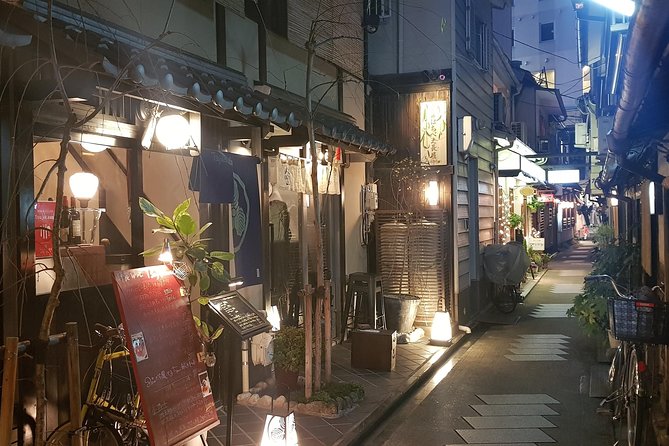
No night in Kyoto ends neatly with only one restaurant. At 9:00pm, you go to a second thoroughly vetted place, and you’ll get more food plus another drink, which is included as part of the tour.
This second stop is usually where you learn why the tour calls itself all-inclusive eats rather than just a sightseeing stroll. The first meal gives you a set of dishes and a certain kind of atmosphere. The second stop often shifts the style or emphasis, so your dinner experience feels like a curated evening plan rather than one repeat of the same items.
People consistently described the food as delicious, and the overall amount as right for a three-hour outing. That’s not guaranteed every night, because restaurant choices can vary, but the structure stays the same: different dishes across two local venues, and drinks included at each.
Smoke, noise, and what to do with it
Because these are Japanese izakaya and bar-style venues, the environment can be loud and intimate. One less positive review mentioned that one restaurant allowed smoking and was smokier than expected. It sounded like a rare case, but it’s still worth planning for.
If you’re sensitive to smoke, I’d wear a mask you’re comfortable using, and I’d keep your expectations realistic. Even when your meal is great, the room may not be perfectly air-conditioned and quiet.
Ending at Kyoto-Kawaramachi: your night ends near the action
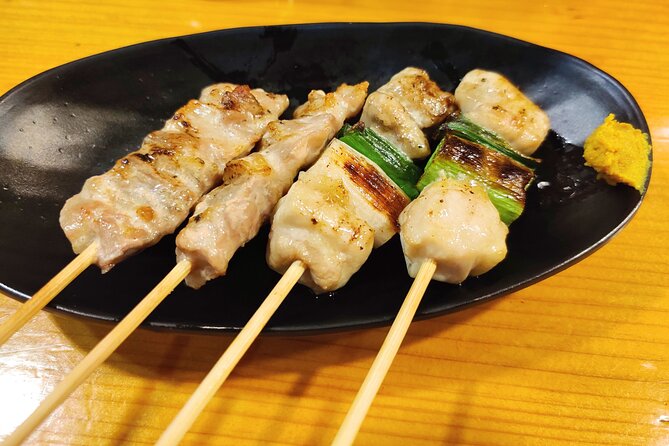
The tour wraps around 9:30pm, and you finish at Kyoto-Kawaramachi Station on the Shimogyo Ward side of the river. Ending here is smart. You’re close to more nightlife, more convenience stores, and easy connections for getting back to your hotel.
This timing also gives you a choice. If you’re still full of energy, you can continue exploring on your own. If you’re done, you still have an easy exit point. Either way, your guide’s work is mostly done when you hit the station, so you’re not stuck trying to interpret Kyoto’s street maze while hungry.
Price and value: what $119 really buys you
At $119 per person for about 3 hours, you’re paying for a few things at once.
First, you’re paying for guided interpretation, not just food. A lot of the tour value is that the guide helps you understand what you’re looking at, from geiko wording to how hostess culture fits into the city’s night economy. That turns Kyoto from a series of streets into a story you can follow.
Second, you’re paying for the meal plan. Dinner is included, and you get two included beverages, one in each restaurant. You might choose beer, sake, or shochu depending on your preferences, and your diet needs are generally accommodated.
Third, you’re paying for small-group logistics. The tour caps at 6 travelers. That helps with pacing and with getting questions answered while you’re moving between stops. It also reduces the feeling of being one face in a large crowd.
One more value point: the format saves you time. In Kyoto, it can take real effort to find bars that fit your vibe and dietary needs, especially if you don’t read much Japanese. This tour does that work for you, and then it adds the cultural context to make the choices meaningful.
Who this tour suits best, and who may want something else
This is a strong fit if you want:
- A first-night orientation to Kyoto after temples and rest time
- A food-forward evening with local bar energy
- A guide who talks culture in a practical, human way, and who can explain geiko and nightlife terms clearly
- A plan that includes drinks without making you manage the whole day’s logistics
It may not be your best match if:
- You dislike walking at night, because people noted there’s a good amount of walking
- You’re very photo-driven and want perfect dark shots, since night lighting is tricky and the tour is focused on moving, not stopping for endless photo time
- You’re extremely sensitive to smoke, because small bars in Japan can allow smoking and the tour can include such venues sometimes
If you’re traveling with teens, note the tour is 13+. The minimum drinking age in Japan is 20, so you can still join and enjoy the tour, just without alcohol if you’re under that limit.
Should you book this Kyoto Nighttime All-Inclusive Eats and Streets tour?
I’d book it if you want a guided evening that makes Kyoto’s nighttime culture make sense, while also feeding you well at two real, locally run places. The combination of a Gion walk, a structured food window around 7:30pm, and the second meal with an included drink at 9:00pm is a solid use of time. It’s also a nice way to get recommendations for the rest of your trip, because your guide is likely to share what else to do nearby after you finish.
Skip it if you’re the type who wants a low-footprint evening with minimal walking, or if you strongly prefer quiet, non-smoking dining spaces. In that case, you might be happier with a daytime-focused tour plus a separate, flexible meal plan.
If you’re unsure, I’d still lean toward booking, but go in prepared: bring comfortable shoes, a warm layer, and a realistic expectation that izakaya life is social, close, and occasionally smoky.
FAQ
What does the tour include?
Dinner is included, plus two alcoholic or non-alcoholic beverages, one at each restaurant. Additional drinks can be purchased at the restaurants if you want.
How long is the tour, and what time does it end?
It runs for about 3 hours. The schedule starts at 6:30pm and ends around 9:30pm.
Where do you meet, and where do you finish?
You meet near Minamiza Theatre in Higashiyama Ward and finish at Kyoto-Kawaramachi Station.
Can vegetarians participate?
Yes. Vegetarians happily accommodated, and the tour aims to handle various dietary restrictions and preferences.
What are the age rules for this tour?
The tour is for ages 13+. The minimum drinking age in Japan is 20, so alcohol consumption depends on age.
What if the weather is bad?
This experience requires good weather. If it’s canceled due to poor weather, you’ll be offered a different date or a full refund.
Newly listed around Kyoto
- Taste of Nishiki Market Walking Food Tour with Local guide★ 5.0 · 17 reviews
- Kyoto: Sushi Making Class with Sushi Chef★ 4.8 · 64 reviews
- Simple Plan with Maiko★ 4.4 · 10 reviews
- Shibori Furoshiki Course at Kyoto Shibori Museum★ 5.0 · 21 reviews
- Kyoto: City Secrets eBike Tour★ 4.9 · 196 reviews
- Sacred Pathways: Discover the Philosopher’s Path of Kyoto★ 4.9 · 20 reviews
- Private Tour to Monkey Park and Arashiyama Highlights★ 5.0 · 22 reviews
- Private Nara Tour from Osaka – Meet at Your Hotel★ 5.0 · 22 reviews
Geisha District Walks, compared.
Kyoto Geisha Walking Tour: Gion District & Hidden Gems
Read our review →
Gion Geisha District Walking Tour – Stories of Geisha
Read our review →
Best of Kyoto: Gion, Geisha, Pagodas & Cobblestones
Read our review →
Kyoto Night Foodie Tour in Gion (9+ dishes + 6 Sake tastings)
Read our review →
Kyoto Gion Geisha District Walking Tour – The Stories of Geisha
Read our review →
Gion Magical Night Walking Tour with Geisha Insights
Read our review →
Kyoto Gion Night Walk & Geisha District Guided Tour
Read our review →Browse the lists this tour appears in