
Review · SAMURAI SWORD & NINJA TRAINING
Samurai Training with Modern day Musashi in Kyoto
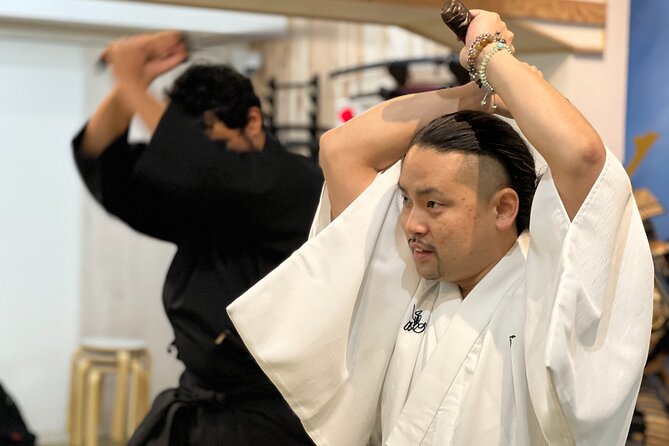
Kyoto trades temple photos for sword discipline. This hands-on session pairs real dojo etiquette with practical katana forms, led by master-level instruction and capped with a rare two-katana display.
I really like that you get small-group attention and clear safety coaching, not a rushed show. I also like that the class focuses on fundamentals like drawing, sheathing, and wielding, then builds into a katana kata you can repeat later.
One thing to consider: mat cutting with a real katana isn’t currently offered, so if you’re coming mainly for that, adjust your expectations and plan to focus on technique, history, and demonstrations instead.
In This Review
- Key points to know before you go
- From Matsugaechō to a Real Samurai Dojo
- Dressing the Part: Dōgi, Obi, and Hakama
- The Instructors Who Make It Feel Real: Seto Yushin, Jordan, and John
- Sword Safety That Actually Teaches Something
- Learning an Actual Katana Kata (Form)
- Watching the Master: Two-Katana Performance and Sword Details
- What the Setting Teaches: Etiquette and Real Dojo Energy
- Price and Value: $132.65 for Hands-On, Master-Led Training
- Who Should Book This Samurai Training, and Who Might Skip It
- Quick FAQ for Your Kyoto Planning
- Should You Book This Samurai Training With Modern Day Musashi in Kyoto?
- FAQ
- How long is the Samurai Training session?
- How many people are in each class?
- Where does the class meet?
- What ages can participate?
- Is mat cutting with a real katana included?
- What gear do I wear during the training?
- What do you actually learn during the class?
- When will I get confirmation after booking?
- What is the cancellation policy?
Key points to know before you go
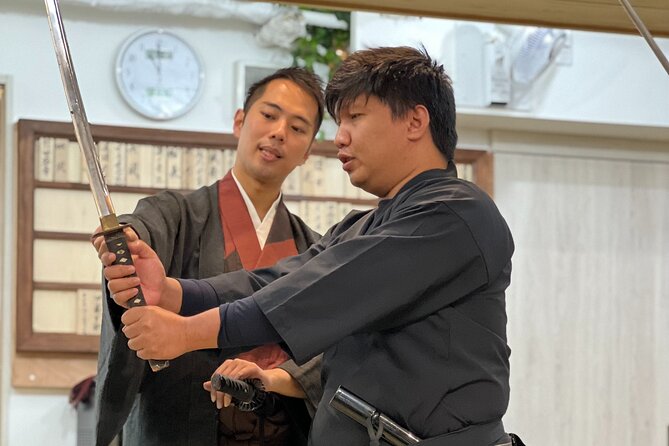
- Real dojo training in central Kyoto, with traditional gear and practice routines
- Small groups (typically 6, with a stated maximum of 9 participants)
- Safety-first practice using iaito while still getting authentic dojo instruction
- Hands-on lessons: drawing, sheathing, and wielding a katana, then a kata form
- Two-katana performance by the master, plus explanation of sword parts and samurai culture
- You can typically take photos and video during the kata practice time
From Matsugaechō to a Real Samurai Dojo
If you want the samurai experience that feels like you stepped into training, start with location. The class meets at 452-4 Matsugaechō, Nakagyo Ward, Kyoto (604-8034), and it’s described as near public transportation, so you can plan it without a long transit scramble.
One practical heads-up: the setting is a dojo in a training complex. A previous class note described it as being on a basement level with a Shinto shrine. That’s not a dealbreaker, but it does mean you should wear shoes you can trust on stairs or uneven flooring and keep your bag tidy.
You’ll also get this on a straightforward setup: mobile ticket access and confirmation within 48 hours of booking, depending on availability. For Kyoto, that matters. Schedules can shift, and last-minute planning gets harder the more you wait.
More Samurai & Ninja Sessions in Kyoto
- Kyoto Samurai Experience
★ 5.0 · 1,294 reviews - Kyoto: Kendo and Samurai Experience with Uniform and Gear
★ 4.9 · 815 reviews - Kyoto: Samurai Sword Class by Experts in Traditional Arts
★ 4.9 · 657 reviews
Dressing the Part: Dōgi, Obi, and Hakama
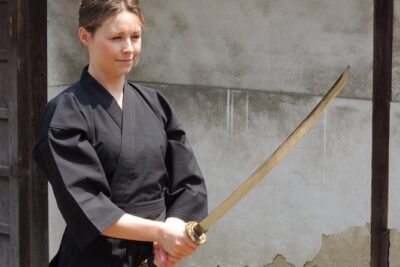
Right away, the experience commits to tradition. You’ll get dressed in samurai training gear, including a dōgi, an obi, and a hakama. It’s not just costume dressing. Expect a quick fitting and help getting things positioned so you can move safely during kata practice.
Why I like this part for your trip: the gear changes how you move. Your posture and footwork start to feel more natural because the clothing is designed for martial training. Several participants highlighted how fun it is to dress properly, including families with kids and teens who were excited just by the look of it.
Also, it sets the tone. You’re not in an entertainment hall. You’re in a practice space with etiquette. Think less costume party, more training morning, even if it happens in Kyoto and even if your swords skills are still at “how do I hold this without panicking.”
The Instructors Who Make It Feel Real: Seto Yushin, Jordan, and John
The class centers on a master instructor, identified in the provider details as Seto Yushin (株式会社勇進舘). In reviews and descriptions, you’ll also see him referred to as Yushin sensei, with Jordan and John supporting instruction and explanations.
This is one of those tours where the staffing shows up in the details. Reviews praise instructors who are warm and interactive, quick to correct forms, and willing to answer questions without turning it into a lecture marathon.
It also matters that the instruction is described as happening in English with Japanese, so you’re not stuck figuring out what to do by guessing. If you’ve ever tried learning something technical through pantomime, you’ll appreciate this.
Sword Safety That Actually Teaches Something
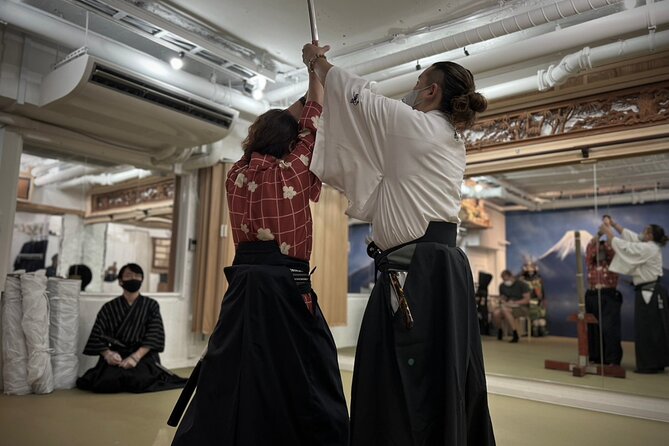
The experience includes katana sword lessons, but it’s clear about the approach: safety comes first. You’ll train on iaito for practice, which lets you handle katana technique in a safer way while still feeling like you’re doing real dojo work.
You’ll cover the practical trio:
- How to draw the katana
- How to sheath it correctly
- How to wield it with proper control
This is the kind of instruction that pays off even after you leave Kyoto. If you’ve ever seen flashy sword clips and wondered how anyone stays safe, this gives you a structured way to understand movement and attention. Several reviews specifically mention learning safety and correct handling as a standout part of the class.
There’s also a note that mat cutting with a real katana is not currently offered. So if you came hoping to go straight from dressing up to swinging for the cameras, shift your mindset. Your win here is technique, form, and how a dojo thinks.
More Samurai and Ninja sessions in Kyoto:
- Skip the lines Basic Ticket at SAMURAI NINJA MUSEUM KYOTO
★ 4.5 · 632 reviews - Ninja 1-hour Hands-on Lesson by Japanese master in Kyoto -Entry
★ 5.0 · 489 reviews - Kyoto: Ninja Weapon Forging Experience
★ 4.8 · 478 reviews - Kyoto: Samurai Kenbu Traditional Sword Dancing Show
★ 4.5 · 426 reviews
Learning an Actual Katana Kata (Form)
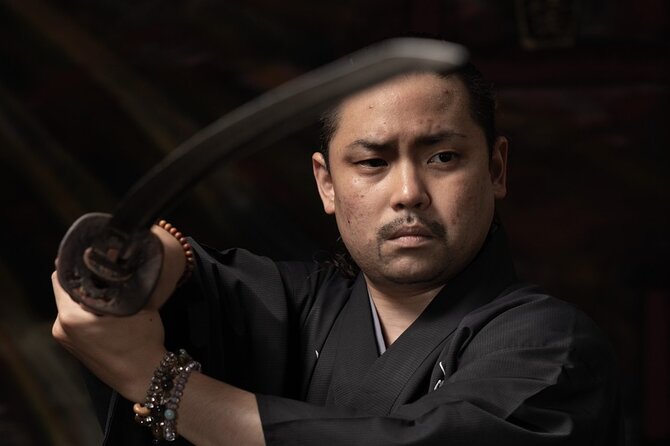
After the basics, you move into learning an actual katana kata, meaning a set form you practice as a sequence. Reviews emphasize that the teaching is attention to detail, with instructors taking time to correct your forms and keep things from feeling rushed.
Kata can sound like a lot of memorization, but here’s why it matters for you: kata is how traditional training turns into repeatable skill. Instead of random swinging, you learn a pattern that connects:
- posture
- timing
- foot movement
- controlled draw and blade handling
- finishing posture and readiness
You’ll likely spend most of your class time practicing and refining. The session is listed around 1 hour 45 minutes (about 1.5 to 2 hours, depending on group size). That’s long enough to learn, make mistakes, get corrections, and actually improve your feel for the routine.
And yes, you’ll also be in an environment where you’re allowed to video or take photos during practice time, which is great because you can review your form later. Just don’t let filming turn you into a spectator. The best experience comes from doing the moves, even if your first version is awkward.
Watching the Master: Two-Katana Performance and Sword Details
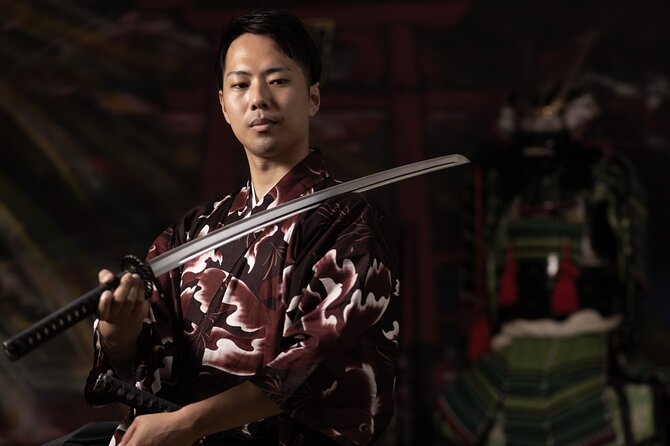
The class includes viewing moments, and this is where the experience gets more special than the usual “try a sword, take a photo” routine.
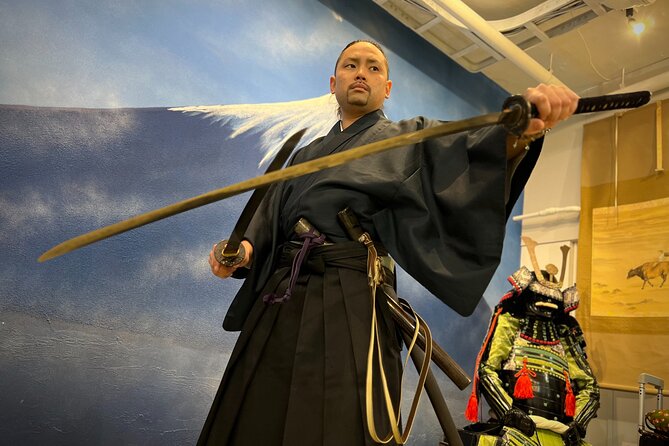
You’ll watch the master’s katana performance, and one of the standout claims is a powerful two-katana performance that you may not see elsewhere. That matters because it’s not random theatrics. It’s connected to the training atmosphere and the way the dojo demonstrates skill.
You may also get explanations beyond movements. Reviews mention instruction on:
- samurai culture and what the warrior role meant
- the honor code style of thinking
- what the sword is used for in the past
- how sword components are made and what different parts are called
One review also notes that after the lesson, the instructor demonstrated three different cuts and showed a real samurai sword, pointing out parts and construction. That kind of explanation turns your class from physical practice into real context. You walk away understanding the why, not just the what.
What the Setting Teaches: Etiquette and Real Dojo Energy
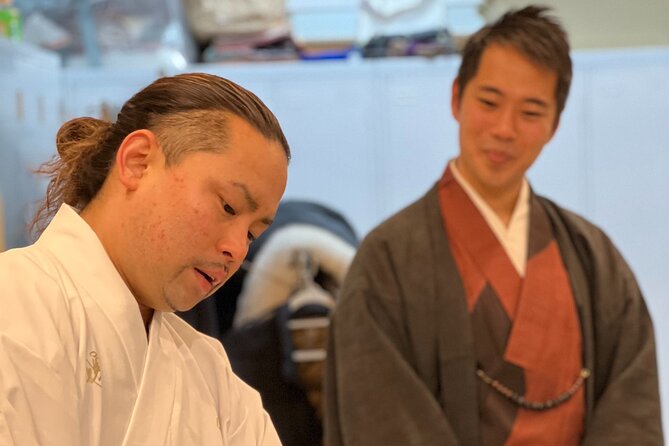
A big part of the appeal is the “you are training here” feeling. The dojo is described as genuine, with visible student markers and a space that reflects ongoing practice, not just a one-off tourism stop.
That authenticity shows up in small things:
- instructors correct you directly
- the class feels interactive
- the focus stays on form and safety
- you ask questions and get straight answers
For your trip planning, that means you should treat the class as a real activity, not a casual sidestep. Be ready to concentrate for the full 1.5 to 2 hours.
Also, because you must be 12 years or older, and because the class is built to handle families, you can expect a mix of ages. Reviews include kids and teenagers, including families with multiple children. One key theme: instruction is careful enough for younger participants while still valuable for adults.
Price and Value: $132.65 for Hands-On, Master-Led Training
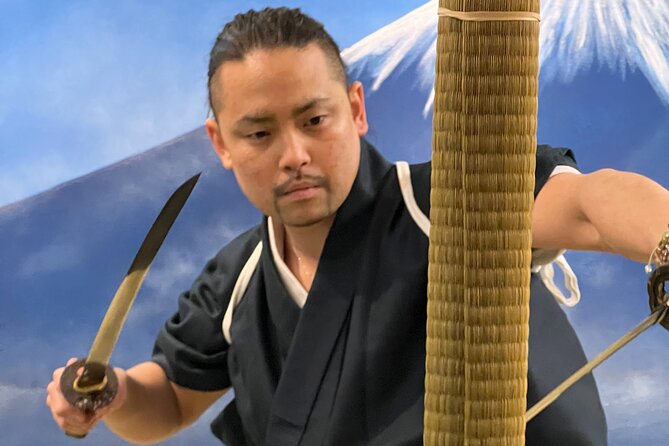
At $132.65 per person, this is not the cheapest thing you can do in Kyoto. But it’s also not priced like a generic souvenir workshop.
Here’s what drives value:
- Master instruction from Seto Yushin, with supporting instructors like Jordan and John
- A meaningful chunk of time, about 1.5 to 2 hours
- Small-group size (maximum 9, typically 6)
- Included training gear and structured teaching
- A class that mixes practice with demonstrations, including the rare two-katana performance
- Real dojo atmosphere, which you can feel in the way it’s run
If you’re the type who likes learning a craft by doing it, this price starts to make sense quickly. If you’re purely hunting for the most cinematic sword demo possible, you might feel the difference because mat cutting with a real katana isn’t currently offered.
Who Should Book This Samurai Training, and Who Might Skip It
This experience is a strong match if you want:
- a hands-on introduction to katana form and dojo etiquette
- structured learning you can repeat later
- a class designed for a variety of ages (12+)
- direct instruction in a calm, practice-based environment
It’s also a solid rainy-day option in Kyoto. The whole thing is inside, and it’s framed more like training than sightseeing.
You might consider skipping if:
- your only goal is cutting mats with a real katana right now
- you’re not comfortable with a moderate physical fitness level requirement (you’ll be moving, handling a practice weapon, and participating in kata sequences)
If you have any doubts about mobility, think about your ability to stand, kneel, and move with controlled arm positions. The class isn’t described as extreme, but it does require enough movement to train safely.
Quick FAQ for Your Kyoto Planning
One more practical note: the tour ends back at the meeting point. So you’re not signing up for a long walking loop across the city. It’s more like a purposeful appointment in central Kyoto.
And when you arrive, keep the energy respectful. A dojo works best when you follow directions quickly and calmly. You do not need martial arts experience. You just need to listen and try.
Should You Book This Samurai Training With Modern Day Musashi in Kyoto?
Yes, if you want the kind of Kyoto activity that feels like training, not tourism theater. The strongest reasons are the small-group instruction, the safety-first iaito practice, the chance to learn a real katana kata, and the genuinely rare two-katana performance.
I’d only hesitate if mat cutting is the main reason you booked, because real katana mat cutting isn’t currently offered. If you come for technique, etiquette, and demonstrations with context, you’re in the right place.
FAQ
How long is the Samurai Training session?
The session runs about 1 hour 45 minutes, with a note that total time is typically 1.5 to 2 hours depending on the number of participants.
How many people are in each class?
The experience has a small-group setup with only 6 participants per class stated, and a maximum of 9 travelers. If there are only a small number of parties, there may be more than 6 participants.
Where does the class meet?
It meets at 452-4 Matsugaechō, Nakagyo Ward, Kyoto, 604-8034, Japan and ends back at the meeting point.
What ages can participate?
You must be 12 years or older to participate.
Is mat cutting with a real katana included?
No. The information provided says that mat cutting with a real katana is not currently offered.
What gear do I wear during the training?
You’ll be dressed in samurai training gear, including dōgi, obi, and hakama.
What do you actually learn during the class?
You’ll practice drawing, sheathing, and wielding a katana, learn an actual katana kata form, and watch the master’s katana performances.
When will I get confirmation after booking?
Confirmation is received within 48 hours of booking, subject to availability.
What is the cancellation policy?
Free cancellation is allowed up to 24 hours in advance for a full refund. If you cancel less than 24 hours before the experience start time, the amount paid is not refunded.
Newly listed around Kyoto
- Taste of Nishiki Market Walking Food Tour with Local guide★ 5.0 · 17 reviews
- Kyoto: Sushi Making Class with Sushi Chef★ 4.8 · 64 reviews
- Simple Plan with Maiko★ 4.4 · 10 reviews
- Shibori Furoshiki Course at Kyoto Shibori Museum★ 5.0 · 21 reviews
- Kyoto: City Secrets eBike Tour★ 4.9 · 196 reviews
- Sacred Pathways: Discover the Philosopher’s Path of Kyoto★ 4.9 · 20 reviews
- Private Tour to Monkey Park and Arashiyama Highlights★ 5.0 · 22 reviews
- Private Nara Tour from Osaka – Meet at Your Hotel★ 5.0 · 22 reviews
Samurai Sword & Ninja Training, compared.

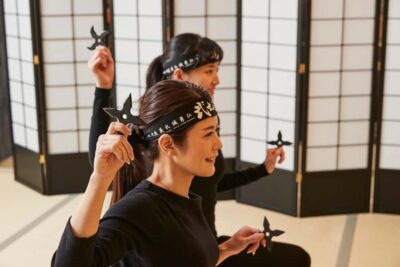
Samurai Ninja Museum Guided tour and Experience
Read our review →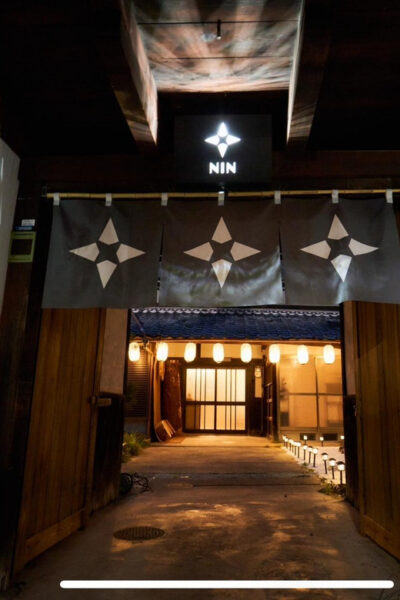
Kendo and Samurai Experience with Uniform and Gear
Read our review →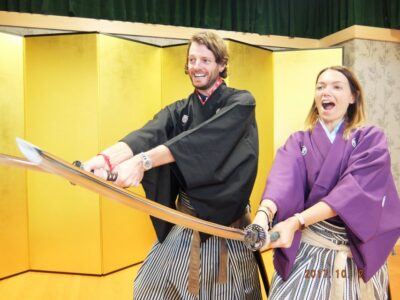
Samurai Sword Class by Experts in Traditional Arts
Read our review →
Skip the lines Basic Ticket at SAMURAI NINJA MUSEUM KYOTO
Read our review →
Samurai Sword & Archery Class from Samurai Descendant
Read our review →
Browse the lists this tour appears in