
Review · KIMONO & YUKATA RENTALS
Kyoto: Traditional Kimono Fabric Handicrafts Workshop
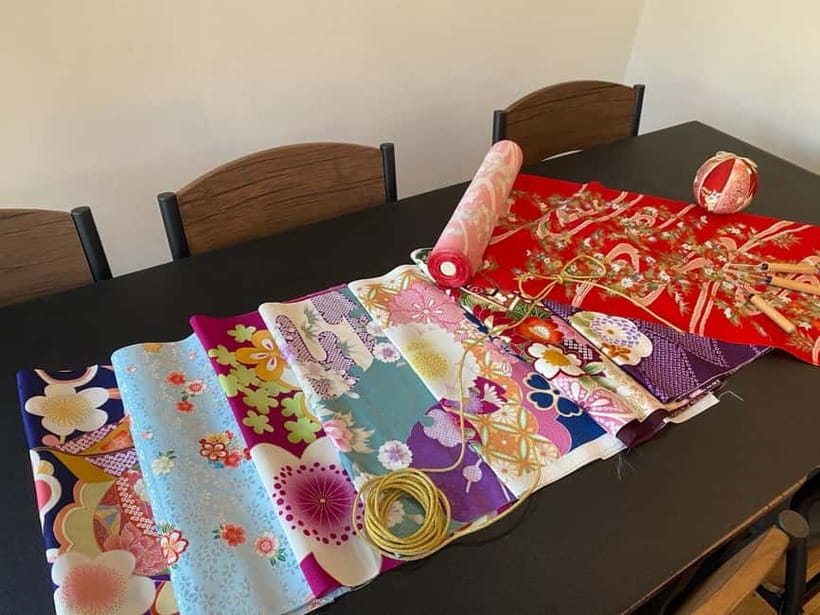
Temari is the kind of craft that feels instantly personal. In Kyoto, you make a traditional temari using kimono fabric in a small-group class inside a renovated antique-style shop, with a complimentary drink and traditional confection included. It’s a great change of pace when your legs are tired and you want something you can actually take home.
I especially like the hands-on format: you pick the fabrics yourself and learn a process that works even if you have zero craft experience. I also like the warmth and clarity from the instructor, May, who’s praised for easy English and patient step-by-step guidance, plus the food side of the break (tea and a sweet you can choose).
The main drawback to consider is focus. This is a 2-hour craft workshop, not a long guided temple tour, so if you want hours of sightseeing structure, you’ll likely use this as a creative pause, then add nearby shrines on your own.
In This Review
- Key highlights worth planning for
- A Kyoto craft break that feels meaningful
- Inside the antique-style shop, with a small group pace
- Choosing kimono fabrics, and why that’s half the fun
- How the temari process works in 2 hours (no experience needed)
- Tea, Japanese sweets, and the cultural context you actually want
- Turning your temari class into a Kyoto mini itinerary
- Price and value: what $25 really covers
- Who should book this temari workshop
- Practical tips to make the session smoother
- Should you book the Kyoto kimono fabric temari workshop?
- FAQ
- How much does the Kyoto Kimono Fabric Handicrafts Workshop cost?
- How long is the Temari workshop?
- Is prior experience or sewing skill required?
- What is the meeting point?
- What do you make during the class?
- What is included in the price?
- Are extra meals or drinks included?
- How big is the group?
- Is the workshop wheelchair accessible?
- Can I cancel if my plans change?
Key highlights worth planning for
- Kimono fabric choice first: You select from different patterns and colors, so your finished temari looks like you, not like a factory sample.
- Beginner-friendly craft time: No prior skills are needed, and the process is relaxed enough for kids too.
- Small group up to 4: More attention, less waiting, and a calmer pace inside the shop.
- Included tea and traditional sweets: Your break is built into the class, not tacked on afterward.
- A take-home souvenir you made: You leave with a real object from Kyoto, not just photos.
- Temple area by default: The workshop sits in a part of Kyoto where adding nearby shrines and walks is easy.
A Kyoto craft break that feels meaningful
Kyoto can overload you with history, steps, and camera angles. This workshop gives you a different kind of connection to place: you slow down, handle beautiful fabric, and make a small decoration with a long tradition behind it.
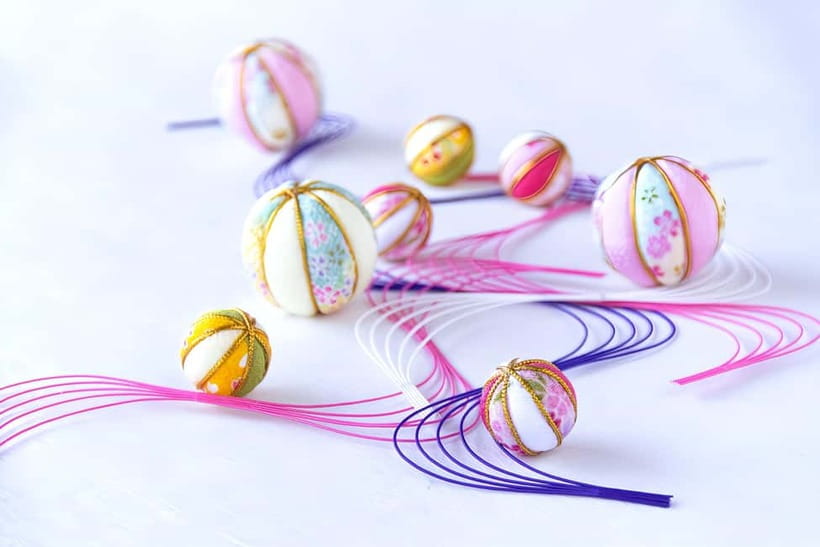
You’re working with kimono textiles, then turning them into temari, which are used as interior ornaments and for celebrations around Japan. The best part is that it’s not precious or intimidating. Your temari ends up looking cohesive because the instructor helps you build it in a straightforward way.
And yes, you also get a proper rest break during the class. A complimentary drink and a traditional Japanese confection of your choice makes the session feel like an actual experience, not just “craft time plus a snack.”
More Kimono Rentals in Kyoto
- Kimono Tea Ceremony at Kyoto Maikoya, NISHIKI
★ 5.0 · 911 reviews - Kyoto: Kimono Rental with Hairstyling and Accessories
★ 4.8 · 653 reviews - KYOTO Tea Ceremony with kimono near by Imamiya Jinjya Shrine
★ 5.0 · 343 reviews
Inside the antique-style shop, with a small group pace
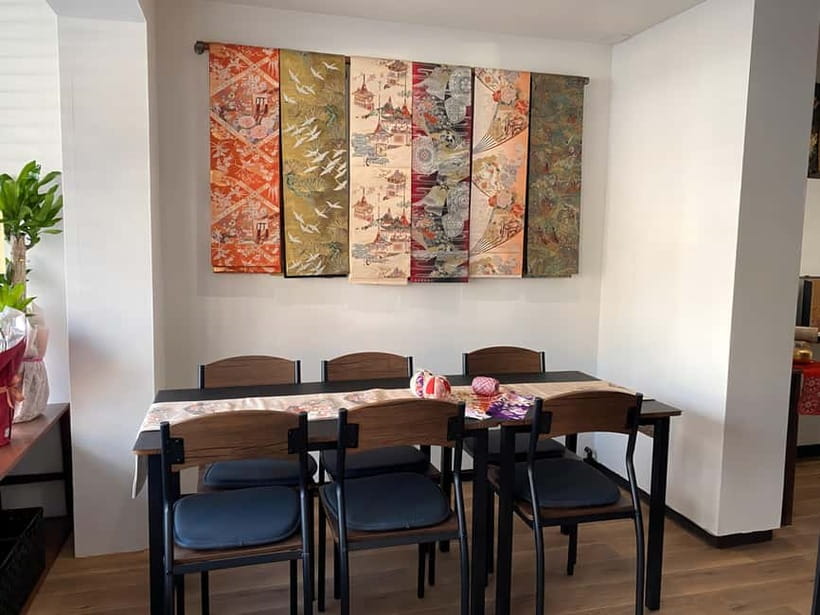
The class takes place in a newly renovated traditional Japanese antique boutique store. That matters more than it sounds. You’re not in a sterile studio. The setting makes the whole session feel like you’re stepping into someone’s workspace and shop, where you can focus and browse without feeling rushed.
This is also a small group, limited to 4 participants. In practice, that means you can ask questions and get help as you go, instead of waiting for the instructor to circle the room. Many people also mention that conversations happen naturally, which turns the class into a calm hour-and-a-bit rather than a lecture.
Wheelchair accessibility is included, so the format is designed to be usable for more visitors. If you’re traveling with mobility needs, this is a rare kind of Kyoto activity that doesn’t automatically assume you’ll only do stairs and long walks.
Choosing kimono fabrics, and why that’s half the fun
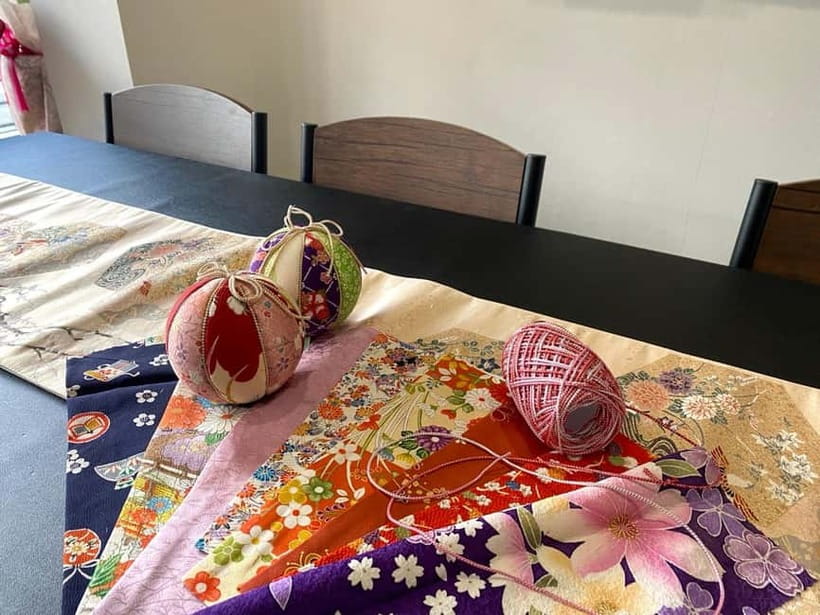
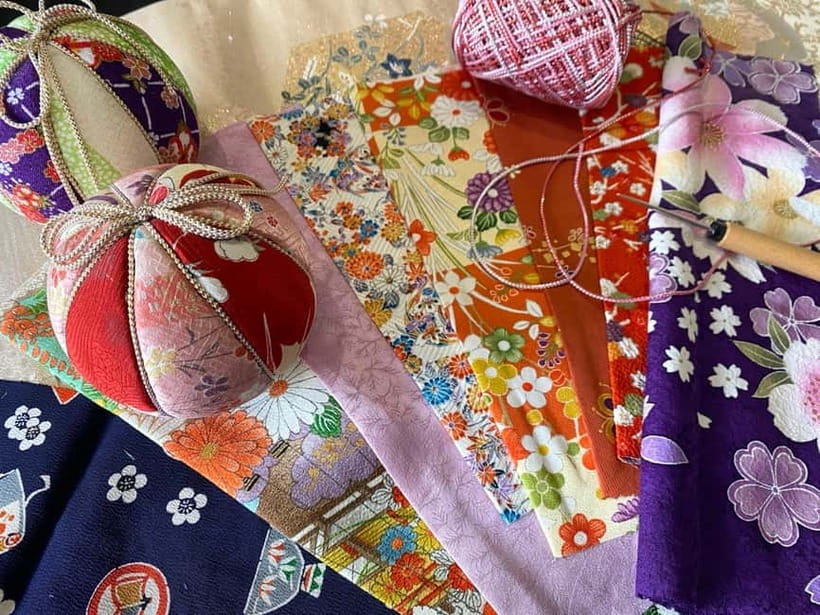
Your temari starts with the fabric selection. You’ll use kimono fabric pieces to make one temari in your own color combination. In reviews, people consistently talk about loving the variety, and how hard it is to pick favorites.
If you’re a fabric person, this is the moment you’ll remember. Different patterns, colors, and textures come together, and you get a say in the final look. That’s why the finished souvenir feels personal, even though you’re not doing complex tailoring or advanced sewing.
You’ll also see that the shop has crafts and bags made from old kimono materials for sale. That can be a bonus if you want to shop a little. Just keep your decision-making hat on, because fabric lovers can end up spending extra time browsing next to the workshop space.
How the temari process works in 2 hours (no experience needed)
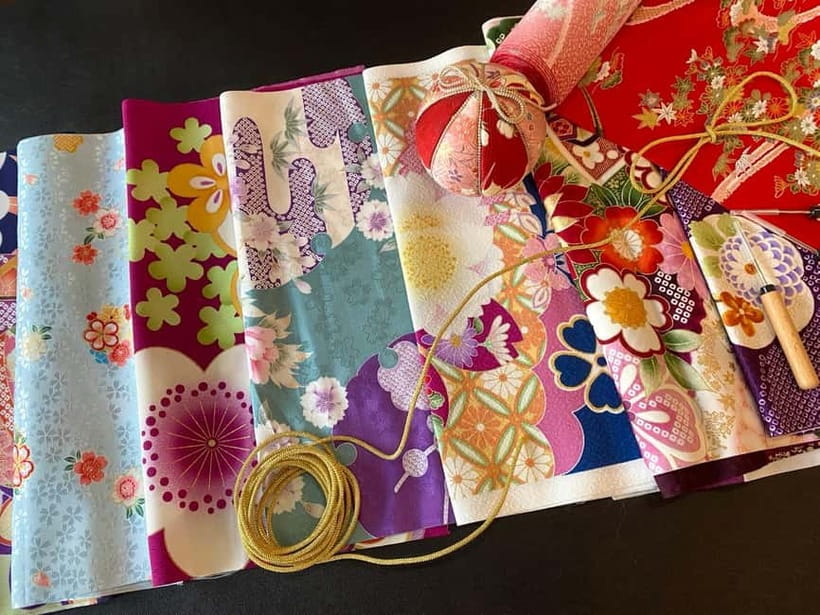
The workshop is designed for people with no prior skills. That’s not just marketing language. The craft is taught in a way that keeps it approachable, and multiple reviews mention that the process feels easy and not overly complicated.
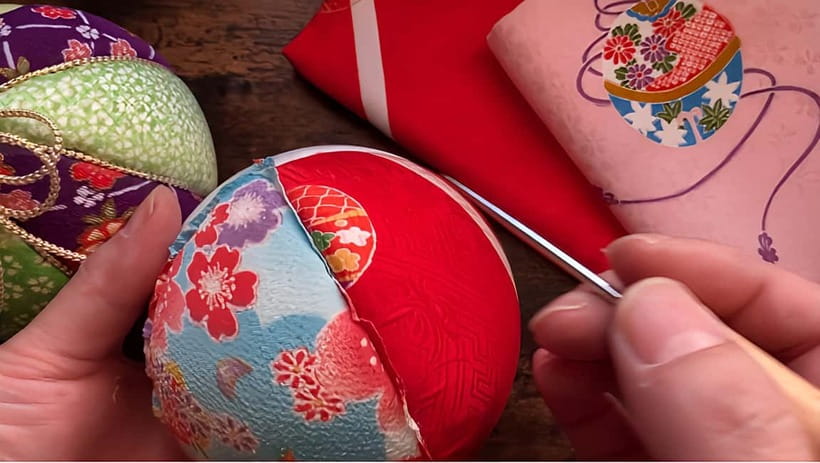
You’re making a traditional handcrafted temari, and the instructor guides you through each step so you can follow along confidently. Most of the session is hands-on, with you working from start to finish on your own piece. Materials are provided, so you don’t have to worry about tools, extra supplies, or not knowing what to do with Japanese craft vocabulary.
A few details that show up repeatedly in feedback:
- The instructions are clear, and the instructor’s English gets called out as excellent.
- The crafting style is relaxed, which helps both kids and adults stay calm and focused.
- The temari turns out beautiful even for beginners, which is the real test for a craft class.
In other words, you’re not just assembling a kit. You’re learning enough of the method to feel proud when your temari is finished and ready to take home.
A different sort of day in Japan:
- PERFECT KYOTO 1-Day Bus Tour
★ 5.0 · 13,518 reviews - Kyoto: Fushimi Inari, Kinkakuji, Bamboo Grove 1 Day Bus Tour
★ 4.8 · 4,316 reviews - Kyoto: Tea Ceremony in a Traditional Tea House in Kiyomizu
★ 4.9 · 3,519 reviews - Kyoto Geisha Walking Tour: Gion District & Hidden Gems
★ 4.7 · 3,273 reviews
Tea, Japanese sweets, and the cultural context you actually want
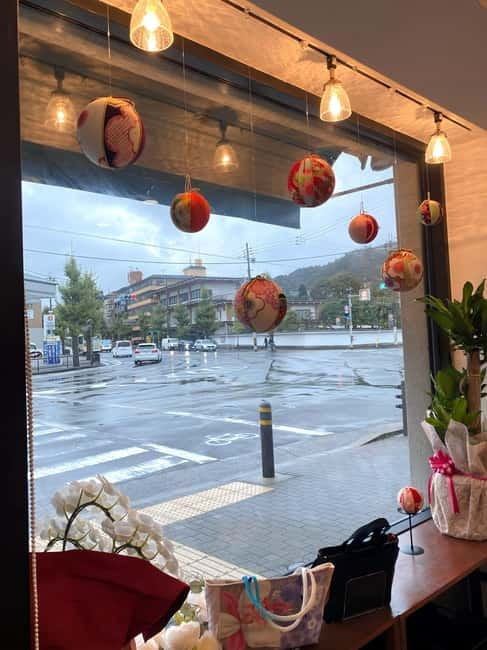
Included in the price is a complimentary drink plus traditional Japanese confectionery of your choice. That matters for value, but it also changes the feel of the class. You’re not forced to leave to find a café mid-session. The break is built in.
People also praise the quality of the drink, with some calling out matcha latte as a highlight. Since your drink type isn’t listed in detail, don’t assume it will match exactly what someone else got. But based on feedback, it’s definitely worth looking forward to.
You’ll also hear some temari history during the workshop. Reviews mention learning about where temari come from and why they’re used in celebrations and as ornaments. This is the kind of cultural context that makes your souvenir feel smarter, not just prettier.
Turning your temari class into a Kyoto mini itinerary
This workshop sits in an area where temples and shrines are part of the scenery, so you can easily pair it with a walk. The activity itself is the craft session, but the location gives you options before or after.
One review mentions Philosophers Path as a nearby place to explore afterward, along with lots of cafés in the area. Even if you don’t plan a specific route, the practical advantage is that you’re not stuck in a remote corner far from Kyoto’s famous sights. You can keep your day simple: do the workshop, then switch from sitting to strolling.
Tip for planning: if you’re doing this as part of a day with major Kyoto landmarks, treat the temari class like a reset button. You’ll get a mental break from crowds and walking, and you’ll still end the day with a tangible result.
Price and value: what $25 really covers
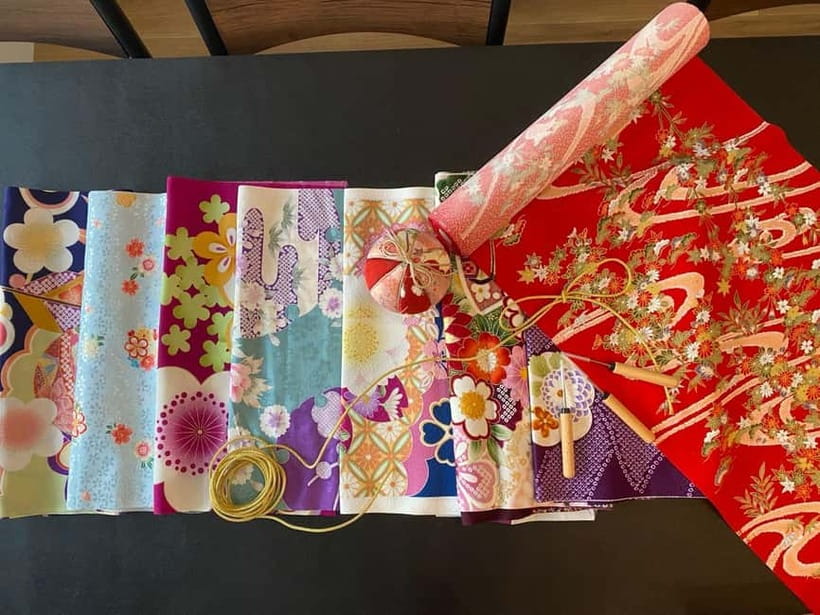
At $25 per person for a 2-hour experience, the value comes from what’s included. You’re getting:
- The workshop itself
- A local crafts master and instruction
- All necessary materials
- A complimentary drink
- Traditional Japanese confectionery
That’s a strong deal compared to typical “make a small souvenir” activities, because you’re not paying extra for tools, fabric, or the final take-home item. The class also includes the part that’s hard to price: guidance that helps you avoid mistakes and finish with something you like.
When you add up the included materials and the fact that you leave with a completed handmade temari, the price feels fair. The best way to think about it is this: you’re buying a calm, structured creative session plus a custom souvenir that you chose fabric for yourself.
Who should book this temari workshop
I think you’ll love it if any of these apply:
- You want a Kyoto experience that’s not another walking-only day.
- You enjoy crafts, especially fabric, patterns, and color.
- You want a souvenir that feels like it has a story (because you made it).
- You’re traveling with kids or teens who can handle a relaxed activity for about two hours.
- You want something romantic or memorable, including for honeymoons and couples. (More than one review calls out that it worked perfectly as a special keepsake.)
It’s also a great fit if you’re the type who likes talking to locals and learning something small but real. The instructor’s friendliness and patient approach are repeatedly mentioned, including for people who were nervous about being beginners.
And if you’re not a craft person? You still have a reason to try, because the class is beginner-friendly, and the end result is visible right away. You won’t leave feeling like you failed a skill test.
Practical tips to make the session smoother
Here are a few ways to get the best outcome with less stress:
- Decide your fabric priorities before you get overwhelmed. If you love one color or one pattern most, anchor your choice there.
- Plan for “slow browsing.” The shop sells other crafts made from kimono materials, and people mention it can be tempting.
- If you’re sensitive to loud rooms or fast-paced activities, lean into this one. Reviews describe it as calm and easygoing.
Also, wear comfortable clothes for sitting and handling fabric. You don’t need anything formal. The goal is to feel relaxed enough to focus on the craft.
Should you book the Kyoto kimono fabric temari workshop?
I’d book it if you want a Kyoto souvenir with meaning, and you like the idea of learning something by doing it, not just watching it. The combination of small group size, beginner-friendly guidance from May, and the included drink and sweets makes it feel like a well-paced experience rather than a rushed activity.
Skip it if you’re looking for a full-day sightseeing program or a temple circuit led by a guide. This is not that. This is a focused craft class, and that’s exactly why it works so well as a break.
One more decision rule: if you enjoy fabric, patterns, or color matching, this is one of the best ways to use time in Kyoto beyond another photo stop. You’ll leave with something you made with your own choices, and it will still make sense months later when you see it at home.
FAQ
How much does the Kyoto Kimono Fabric Handicrafts Workshop cost?
It costs $25 per person.
How long is the Temari workshop?
The workshop lasts 2 hours.
Is prior experience or sewing skill required?
No. No prior experience or skills are required, and it’s suitable for all ages.
What is the meeting point?
Please enter the workshop upon your arrival. Your host will be waiting to greet you.
What do you make during the class?
You make a traditional Japanese temari using kimono fabric.
What is included in the price?
The price includes a complimentary drink, traditional Japanese confectionery, all necessary materials, the temari workshop, and instruction from a local crafts master.
Are extra meals or drinks included?
Additional drinks and food are not included.
How big is the group?
The group is small, limited to 4 participants.
Is the workshop wheelchair accessible?
Yes, it is wheelchair accessible.
Can I cancel if my plans change?
Yes. Free cancellation is available up to 24 hours in advance for a full refund. You can also reserve now and pay later, paying nothing today.
Newly listed around Kyoto
- Taste of Nishiki Market Walking Food Tour with Local guide★ 5.0 · 17 reviews
- Kyoto: Sushi Making Class with Sushi Chef★ 4.8 · 64 reviews
- Simple Plan with Maiko★ 4.4 · 10 reviews
- Shibori Furoshiki Course at Kyoto Shibori Museum★ 5.0 · 21 reviews
- Kyoto: City Secrets eBike Tour★ 4.9 · 196 reviews
- Sacred Pathways: Discover the Philosopher’s Path of Kyoto★ 4.9 · 20 reviews
- Private Tour to Monkey Park and Arashiyama Highlights★ 5.0 · 22 reviews
- Private Sake Tasting in Central Kyoto — 1 Group Only★ 5.0 · 11 reviews
Kimono & Yukata Rentals, compared.


Sumo Show & Experience w/ Optional Kimono & Hot Pot
Read our review →
Kimono Dressing, Walking, and Photography Session
Read our review →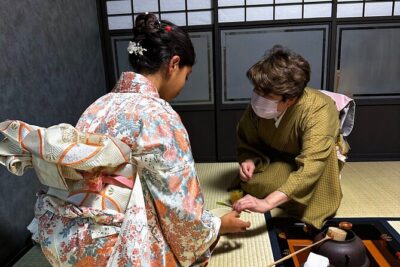
KYOTO Tea Ceremony with kimono near by Imamiya Jinjya Shrine
Read our review →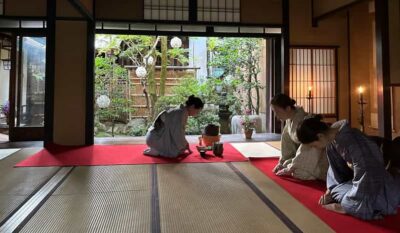
Kimono and Tea Ceremony Experience at Cultural Asset
Read our review →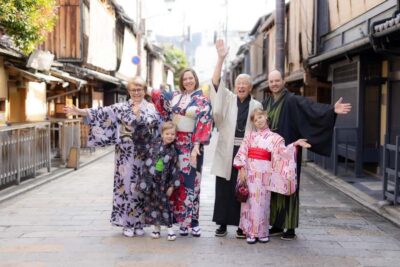
Browse the lists this tour appears in