Review · KYOTO TOURS
Kyoto: Traditional Yuzen Dyeing Experience
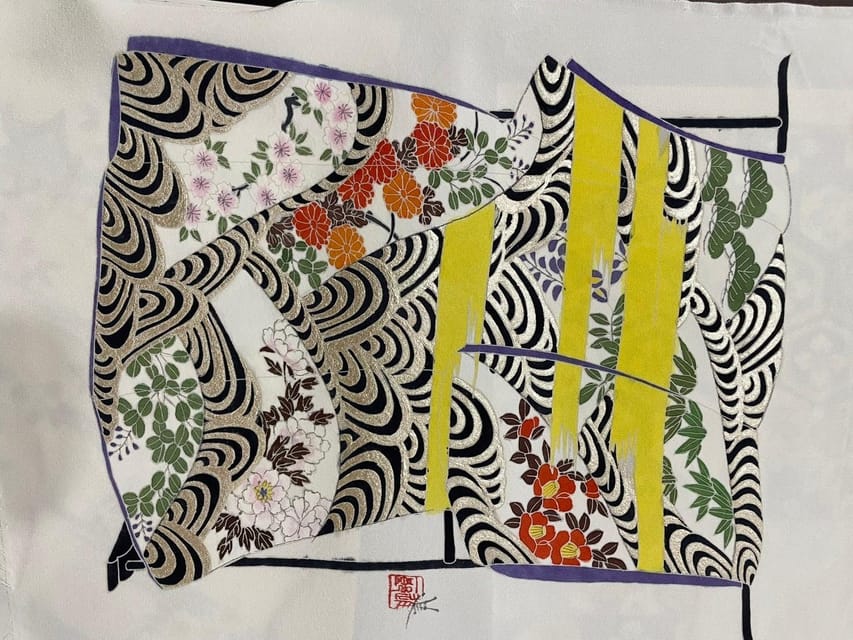
A dye class in a real Kyoto home. This Kyoto Yuzen dyeing experience puts you inside a traditional machiya in Nishijin, where you learn the craft and leave with your own silk artwork. You choose colors, the artisan supports the rest of the palette, and the whole session feels calm and precise.
Two things I especially like: the hands-on instruction from the artisan is specific and patient, and you get real guidance on getting harmonious tones on silk. I also like the setting, a quiet machiya workshop in a small group, so the time feels personal even with a translator like Ha working alongside you.
One consideration before you go is that you should be comfortable with the working setup for the full 2 hours, since you’ll be focused on painting rather than doing a quick look-and-leave style activity.
In This Review
- Key highlights you should know
- Kyoto Yuzen in a Nishijin machiya townhouse: why this feels different
- Meet your teachers: Master Shin’Ichiro and interpreter Ha
- Your design choice and color palette: picking quickly but wisely
- How Yuzen dyeing works on silk, step by step
- The workshop pace: calm, meditative, and very hands-on
- The art showcase component: seeing Kyoto Yuzen works first
- Taking your Yuzen silk home: what the finished souvenir really means
- Price and value: is $161 worth it for a Kyoto artisan class?
- Who should book this Kyoto Yuzen dyeing experience, and who should skip it
- Should you book this Kyoto Yuzen dyeing experience?
- FAQ
- How long is the Kyoto Yuzen dyeing experience?
- Where does the class take place?
- How much does it cost?
- What is included in the price, and what is not included?
- Do I need to speak Japanese, and how big is the group?
- Is the experience wheelchair accessible?
- Is it suitable for children?
- Can I cancel if plans change?
Key highlights you should know
- A Nishijin machiya setting: you’re in an artisan’s townhouse, not a generic studio.
- Color harmony help: you pick one or two colors, and the artisan builds the remaining palette to balance everything.
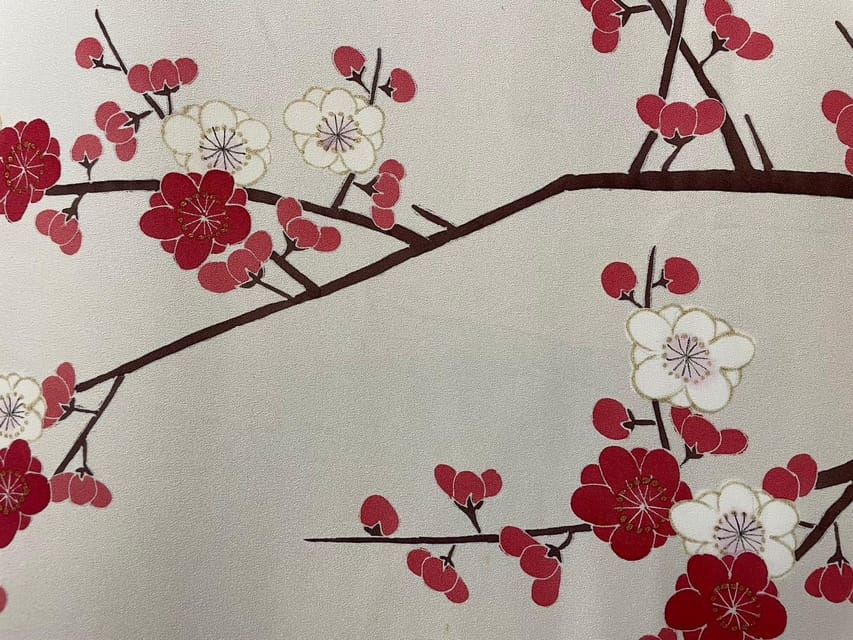
- Master-led painting on silk: designs arrive as outlines or stamped elements, and you paint within the work area.
- Guided by names you’ll hear: Master Shin’Ichiro teaches the process, with interpreter Ha translating.
- Small group format (up to 6): more time for questions and slower pacing.
- A finished souvenir: you take home your own Yuzen-dyed silk piece after finishing steps.
Kyoto Yuzen in a Nishijin machiya townhouse: why this feels different
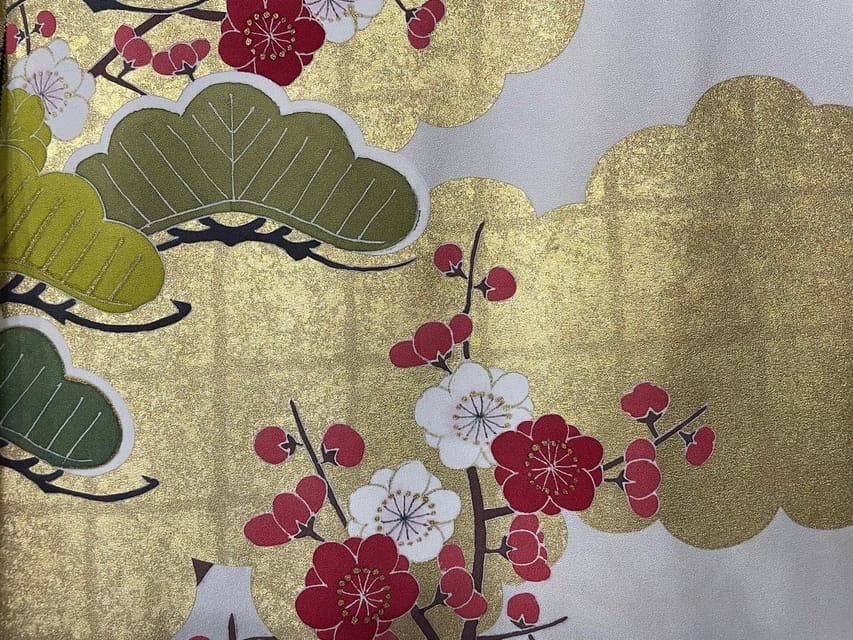
Kyoto Yuzen dyeing is one of those Japanese crafts that looks delicate because it is. The technique is built around control, especially how colors sit on silk and how the final pattern reads once everything has dried and been treated. In Nishijin, that craft tradition is still practiced in lived-in spaces, and that is exactly what makes this experience more than a “paint and go” workshop.
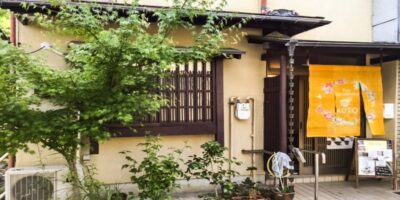
The class happens in the heart of Kyoto’s historic district inside a machiya townhouse. You’re not standing under fluorescent lights like it’s a school project. Instead, you’re in a real artisan environment where you can watch how the work is handled and where the atmosphere stays quiet and focused.
Small group size matters here. With up to 6 participants, you get attention without feeling rushed, and it’s easier to ask practical questions as you paint. Even if you’re not an art person, you’ll feel like you have a coach.
A few more Kyoto days to weigh up
- PERFECT KYOTO 1-Day Bus Tour
★ 5.0 · 13,518 reviews - Kyoto: Fushimi Inari, Kinkakuji, Bamboo Grove 1 Day Bus Tour
★ 4.8 · 4,316 reviews - Kyoto: Tea Ceremony in a Traditional Tea House in Kiyomizu
★ 4.9 · 3,519 reviews
Meet your teachers: Master Shin’Ichiro and interpreter Ha
The heart of the experience is the artisan instruction. Master Shin’Ichiro guides you through the process, and he also supports your design choices by steering you toward colors that will work well together on silk. The best part is that the help is practical, not vague.
Interpreter Ha helps you communicate clearly throughout. That makes a big difference in craft classes because dyeing is full of tiny details, from tool handling to paint mixture strength. When Ha translates the guidance, you can actually follow the process step by step instead of guessing what you’re supposed to do next.
If you’re worried that your Japanese is not good enough, this is one of those activities where you don’t have to play catch-up. You can focus on painting and learning, and you’ll still understand the “why” behind the steps.
Your design choice and color palette: picking quickly but wisely
You start by choosing a design and then narrowing down your colors. The experience uses guided selection, so you’re not stuck staring at options for an hour. In practice, you’ll pick one or two colors that appeal to you, and the artisan helps complete the rest of the palette so it feels harmonious.
The designs are prepped for you. You’ll work with a silk piece that already has your chosen design marked out, with outlines that help you stay within the right areas. Some sessions use stamped elements, and others give you a printed guide on the fabric. Either way, the goal is the same: you paint the work where it belongs, with dye that follows the intended shape.
You should be ready to decide. One participant noted that the set of design choices can be limited, so if you want a specific style, don’t wait until the last moment. If you do like phoenixes, cranes, or fan-like motifs, you’ll likely find something that fits your taste fast, then you can put your energy into the painting itself.
How Yuzen dyeing works on silk, step by step
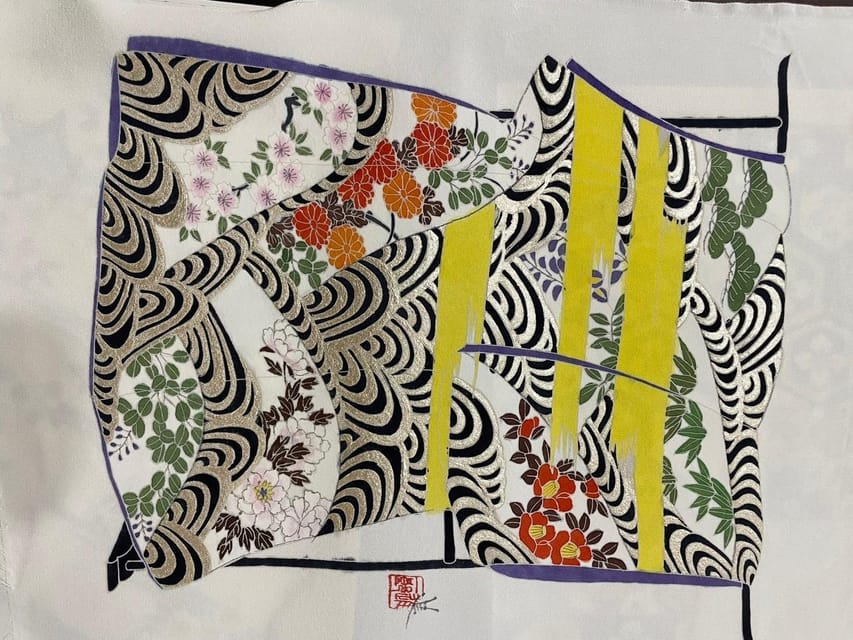
Yuzen dyeing can look like artwork, but it’s also chemistry and technique. The class teaches you how to build a design using dye on silk, with careful control over how the colors spread and settle. You’ll watch the colors come alive as you work, and you’ll learn why different tones behave differently on fabric.
Here’s what the painting process tends to feel like. You mix and apply dye in the areas your design calls for, often within marked outlines. The artisan shows the right consistency and concentration for each tone, then you paint alongside that guidance. You’re not trying to freestyle the entire pattern from scratch, which makes the class much easier to enjoy.
One tip worth taking seriously: don’t overload your brush. If you add too much dye, it can bleed beyond the lines. Keeping a light touch helps you maintain crisp edges and cleaner color boundaries.
You’ll also learn the pacing. Some sessions run slightly past the scheduled finish time, usually because the experience stays unhurried once everyone is in the flow. Still, you should pay attention to time as you work, especially if you’re the type who wants a perfect result and tends to over-focus on small details.
A different sort of day in Japan:
- Kyoto Geisha Walking Tour: Gion District & Hidden Gems
★ 4.7 · 3,273 reviews - Kyoto: Tea Ceremony Ju-An at Jotokuji Temple
★ 4.9 · 3,207 reviews - Kyoto: 45-Minute Tea Ceremony Lesson Experience
★ 4.3 · 2,378 reviews - Kyoto: Gion Geisha District Walking Tour – Stories of Geisha
★ 4.7 · 2,187 reviews
The workshop pace: calm, meditative, and very hands-on
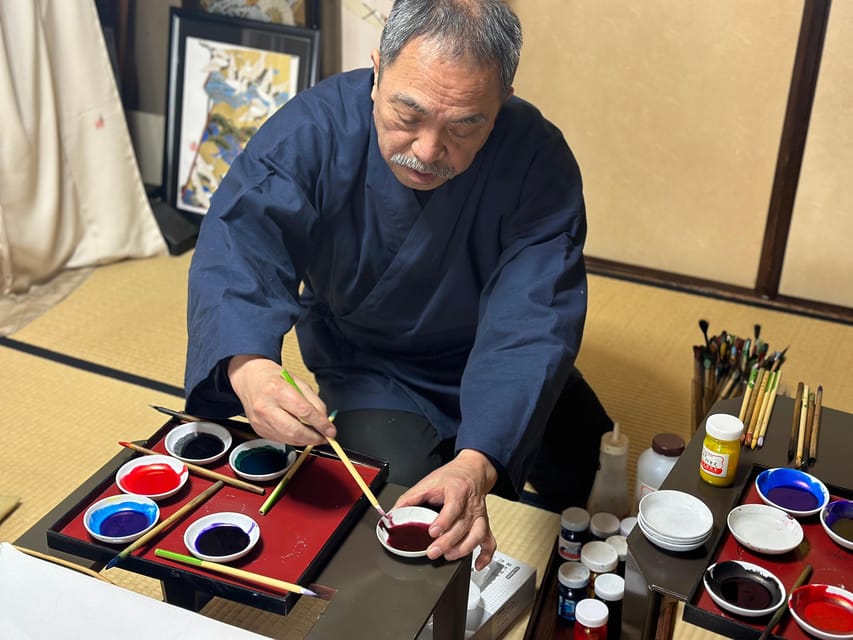
This is not a noisy, high-energy activity. The machiya setting supports a quieter rhythm, and the class is structured so you can concentrate on small actions with steady attention. Many people describe it as relaxing, and I get why.
Because the work is precise, it also encourages “in the moment” focus. You’re learning a craft, not rushing through it, and the artisan makes suggestions as needed. If you want to talk art and process, you can. If you prefer quiet concentration, you can do that too, since the painting itself drives the session.
There are a few practical rules that keep the workshop running smoothly. No alcohol or drugs, and you should expect you might use chemicals as part of the dye process. If you have allergies or sensitivities, tell the organizer in advance so the artisan can adjust appropriately.
Wear clothes you don’t mind getting dye on. Even careful painting can lead to a small stain, because this is real dye on fabric. Comfortable clothes matter more than looking polished. You’ll want to move easily, and you’ll want to focus on your brush control.
The art showcase component: seeing Kyoto Yuzen works first
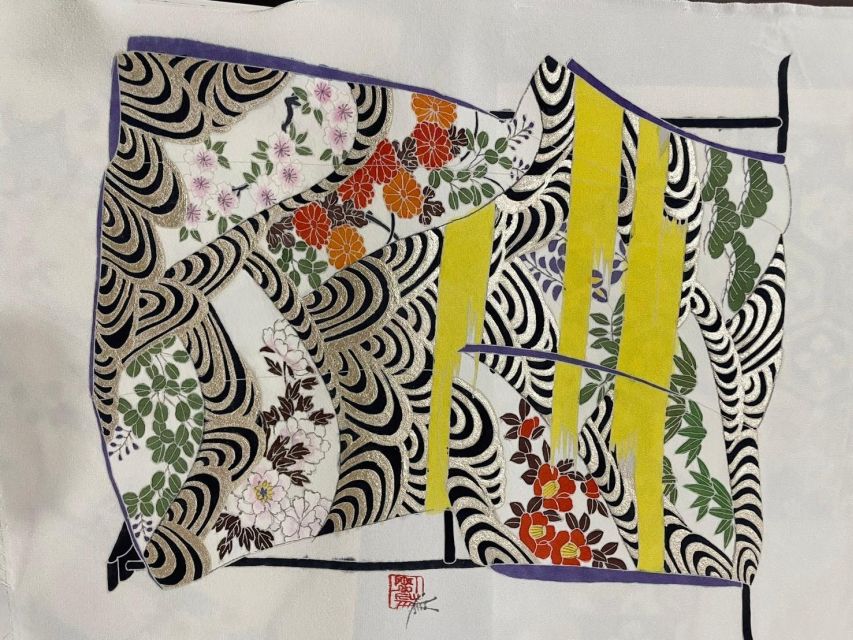
Before you paint, you’ll see examples of Kyoto Yuzen work. This display helps you understand what you’re trying to create, not just how to do the motions. It’s also the moment where you can connect the craft to Japanese cultural tradition, because Yuzen isn’t random color splashing.
Seeing finished pieces gives you useful visual reference: how the motifs balance, how the tones separate, and how the overall design reads from a distance. Even if you choose a simple palette, you can still aim for the same design logic you see in the examples.
This pre-work viewing time also helps you pick colors with intention. Instead of choosing based on mood alone, you can choose based on how colors usually sit together in Yuzen patterns.
Taking your Yuzen silk home: what the finished souvenir really means
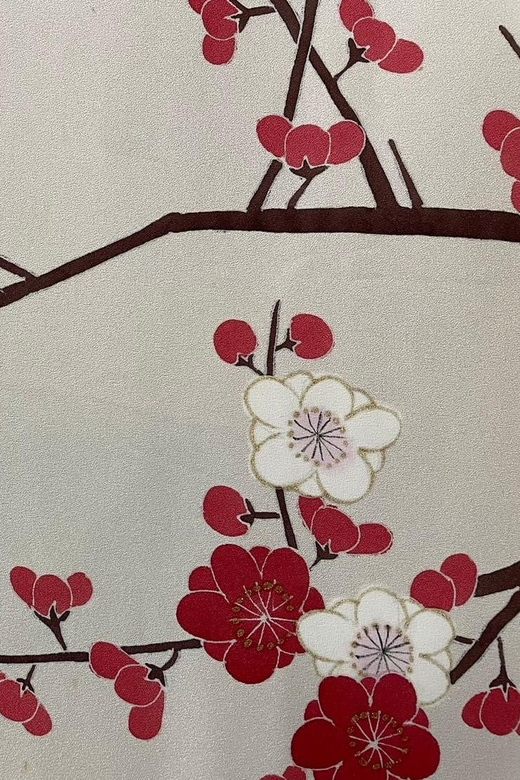
The payoff is taking home your own Yuzen-dyed silk piece. That’s the part you’ll actually feel on day one, because you’ll be able to see your choices in the final work. Even better, the finished piece reflects collaboration: you pick colors and paint the design, while the artisan helps with harmony and technical correctness.
After painting, there are finishing steps so your piece is ready to keep. One participant mentioned that the piece is ironed to help ensure it is dry. That matters because you’re not bringing home a fragile work-in-progress. You’re taking home something that can be treated like a real artwork you made during your Kyoto stay.
This is also a souvenir with stories built in. You can explain what you chose, what the artisan recommended, and what the dye felt like as it developed on silk. It’s not just decorative. It’s personal craft memory.
Price and value: is $161 worth it for a Kyoto artisan class?
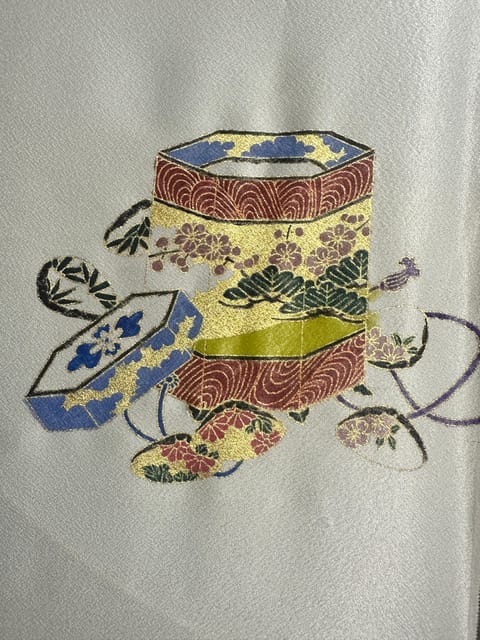
At $161 per person for a 2-hour experience, the value depends on what you want from your time in Kyoto. If you’re chasing a quick stamp-and-shop souvenir, this will feel steep. If you want a genuinely hands-on craft with real instruction, it starts to make sense fast.
Here’s why it can be fair value:
- You get instruction directly from the artisan, not only a staff member.
- You have interpreter support, so you can follow and ask questions.
- The group is small, limited to 6, which supports individualized coaching.
- Your price includes the experience and the viewing display of Kyoto Yuzen works.
- You take home your finished silk piece.
What’s not included is also important. Transportation to and from the meeting point is on you, and additional purchases made by cash from the artisan are extra if you want more works. But the core class cost already covers the main value driver: time with the craft and the finished result.
Compared to many Kyoto art classes that feel generic, the artisan-led nature and the machiya setting push this toward “worth it” territory.
Who should book this Kyoto Yuzen dyeing experience, and who should skip it
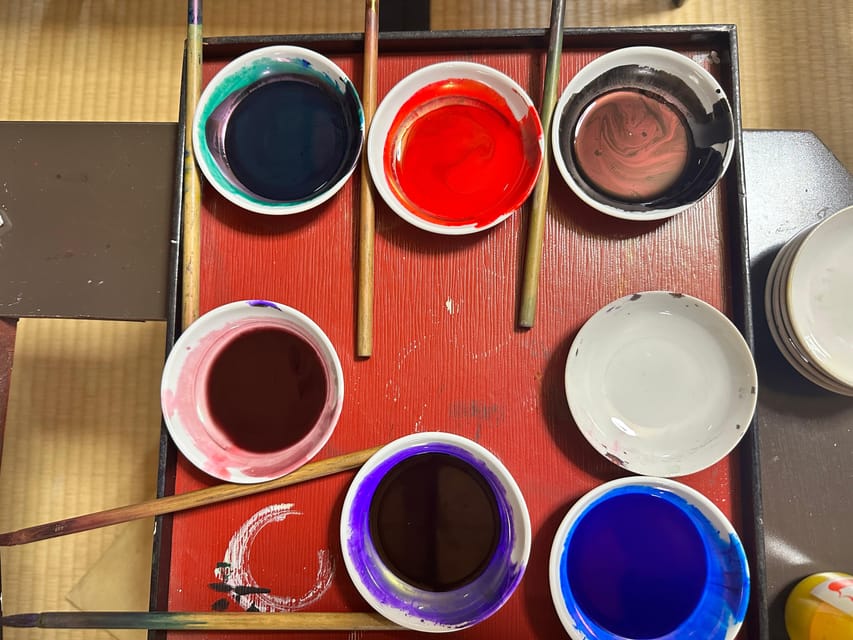
This experience fits best if you like craft, art, or learning by doing. It’s also ideal if you want a meaningful Kyoto souvenir that isn’t mass-produced. The small group size helps if you’re traveling with a partner or a friend and want a shared activity with calm focus.
It can also work well for beginners. You don’t need prior art skill because the design guide and the artisan’s support reduce the hardest part, deciding what to paint where. People have described the class as easy to follow, and they also appreciated the patience.
It’s not a great match if you cannot handle the working setup for the session. One participant specifically cautioned that it’s not recommended for those who can’t sit on the floor for two hours.
And it has clear age limits: it is not suitable for children under 10, and babies under 1.
If you use a wheelchair, accessibility is listed as available. That’s a big plus. Still, because the activity is craft-focused, it’s smart to contact the provider ahead of time if you have any special needs related to positioning.
Should you book this Kyoto Yuzen dyeing experience?
Book it if you want a true Kyoto craft moment with Master Shin’Ichiro teaching and interpreter Ha translating, plus a calm machiya setting where you paint your own silk piece. This is one of those activities where the main value is not watching, it’s making, with real feedback on color and technique.
Skip it or choose something else if you’re looking for a fast, easy souvenir without time at a hands-on workshop, or if you know you cannot comfortably handle the working setup for the 2 hours.
If you’re even mildly curious about Japanese dye arts, this is exactly the kind of experience that turns Kyoto from a sightseeing list into a memory you can hold.
FAQ
How long is the Kyoto Yuzen dyeing experience?
The experience lasts 2 hours.
Where does the class take place?
It is held in a traditional machiya townhouse in Kyoto’s Nishijin district.
How much does it cost?
The price is $161 per person.
What is included in the price, and what is not included?
Included are the Yuzen dyeing experience, instruction directly from the artisan, an interpreter, and a view display of Kyoto Yuzen works. Not included are transportation to and from the meeting point, and any additional costs if you choose to purchase works from the artisan by cash.
Do I need to speak Japanese, and how big is the group?
You don’t need Japanese. The live tour guide is available in English and Chinese. The group is small, limited to 6 participants.
Is the experience wheelchair accessible?
Yes, the experience is wheelchair accessible.
Is it suitable for children?
It is not suitable for children under 10 years old, and babies under 1 year.
Can I cancel if plans change?
Yes, there is free cancellation up to 3 days in advance for a full refund.
Newly listed around Kyoto
- Taste of Nishiki Market Walking Food Tour with Local guide★ 5.0 · 17 reviews
- Kyoto: Sushi Making Class with Sushi Chef★ 4.8 · 64 reviews
- Simple Plan with Maiko★ 4.4 · 10 reviews
- Shibori Furoshiki Course at Kyoto Shibori Museum★ 5.0 · 21 reviews
- Kyoto: City Secrets eBike Tour★ 4.9 · 196 reviews
- Sacred Pathways: Discover the Philosopher’s Path of Kyoto★ 4.9 · 20 reviews
- Private Tour to Monkey Park and Arashiyama Highlights★ 5.0 · 22 reviews
- Private Nara Tour from Osaka – Meet at Your Hotel★ 5.0 · 22 reviews
Kyoto Tours, compared.


Fushimi Inari, Kinkakuji, Bamboo Grove 1 Day Bus Tour
Read our review →
Tea Ceremony in a Traditional Tea House in Kiyomizu
Read our review →
Kyoto Geisha Walking Tour: Gion District & Hidden Gems
Read our review →
Gion Geisha District Walking Tour – Stories of Geisha
Read our review →