
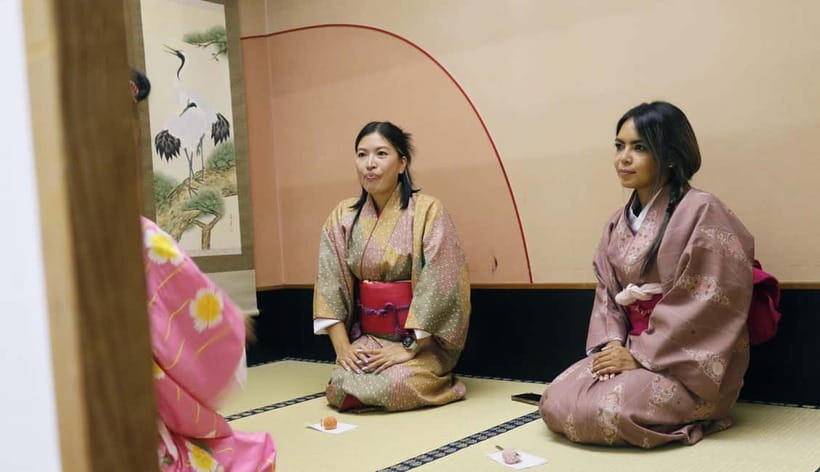
Review · MATCHA & TEA CEREMONY SESSIONS
Learn Zen in a class of making Matcha tea near Osaka Castle
Osaka Castle area turns calm fast. In this kimono-and-matcha class, you learn etiquette, make tea, and understand why it matters. You’ll feel the ritual’s equality as you step into the nijiriguchi doorway, and you’ll leave with hand-shaped wagashi knowledge tied to the seasons. One catch: there is no pickup, and you need to arrive 30 minutes early to change clothes and get set up.
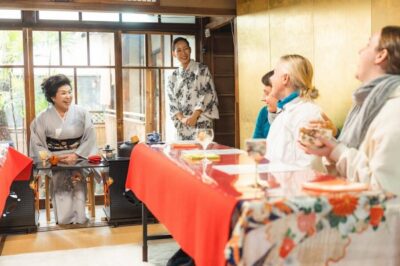
I like the way the ceremony is taught as a two-way conversation, not a show. The hostess and the tea master guide you through manners, while the small group size helps everyone get hands-on time. A realistic consideration, though, is comfort and timing. You’ll wear traditional outfits and follow rules for sitting, bowing, and serving, and the whole experience is only 1 hour.
In This Review
- Key Things I’d Mark on Your Osaka Castle Day
- Samurai Honor by Osaka Castle: the kimono-to-samurai transformation
- The nijiriguchi moment: why everyone feels equal inside
- Wagashi, wabi-sabi, and the four seasons you can actually see
- Matcha basics and etiquette practice in a 1-hour format
- Who you’ll meet, what the guide does, and how the small group helps
- Photo shooting included: how to get the most out of your kimono photos
- Price and value: is $40 worth 1 hour in Osaka?
- What to bring, what not to do, and practical etiquette expectations
- Who this experience is best for (and who should skip it)
- Should you book this matcha class near Osaka Castle?
- FAQ
- How long is the matcha tea class?
- What is included in the $40 per person price?
- Do I need to bring anything?
- Is pickup or drop-off provided?
- What languages are available?
- Are photos included, and how do I get them?
- Who is the experience not suitable for?
Key Things I’d Mark on Your Osaka Castle Day
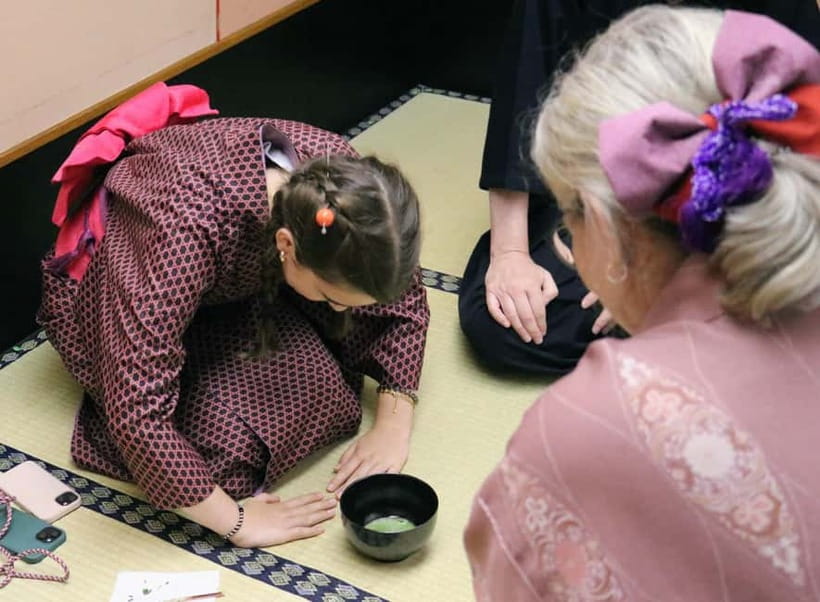
- Kimono plus samurai-style transformation for men (hakama and dogi) and women (kimono, Yamato Nadeshiko)
- Nijiriguchi equality moment, where status and background drop away
- Wagashi lessons through wabi-sabi and the four seasons (handmade sweets, tied to Japanese aesthetics)
- Matcha etiquette practice, including posture, gestures, and serving manners
- Small group of 6, with instructor attention and time for everyone
- Photo shooting included, with your edited data sent to your email address
Samurai Honor by Osaka Castle: the kimono-to-samurai transformation
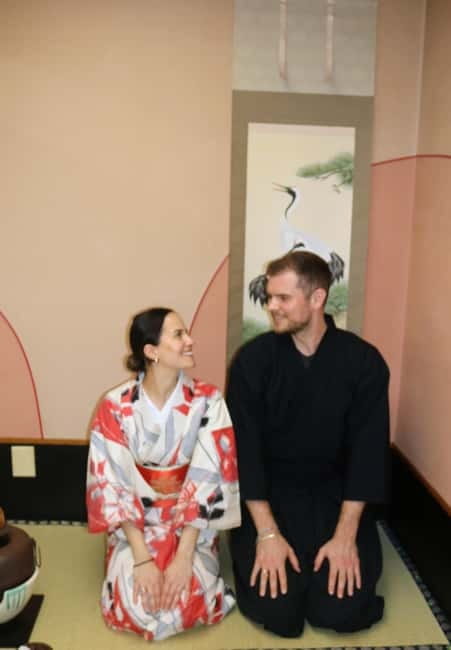
This experience runs at Bushi no Homare, also named Samurai Honor. The address is Excellence Takayama 1F, 2-3-19 Shiginonishi, Joto-ku, Osaka-shi, Osaka 536-0014, and the directions note that Apple Maps can be wrong. Use Google Maps and look for the meeting point landmark: a wooden sign that reads Honor of the Samurai, plus pamphlets and kimonos or hakama hanging nearby.
Plan your timing like a pro. You should arrive 30 minutes before your reserved start time. That buffer matters because you’ll do the clothing change before anything ceremonial begins. You’re also asked to bring a T-shirt. It’s not a full “bring your own everything” situation, but you’ll want something easy to manage under your outfit.
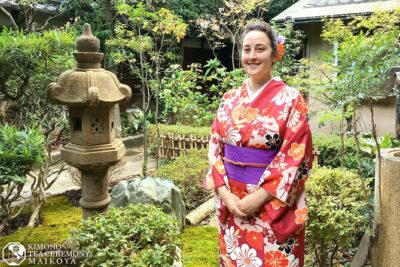
Once you step into the room, the class immediately signals what kind of day this is: not just watching tea being made, but becoming part of the ceremony’s order. Men are dressed in hakama (traditional male trousers style) and dogi (traditional robe). Women are dressed in kimono and styled as Yamato Nadeshiko, a term associated with an ideal of poised, traditionally feminine elegance.
That part is more than costume. It changes how you move. You’ll likely slow down. You’ll pay attention to gestures. You’ll stop treating the ceremony like a performance and start treating it like a set of deliberate actions with meaning behind them.
More Castle Visits in Osaka
- Osaka Castle: Museum and Tower Entry Ticket
★ 4.5 · 2,380 reviews - Ultimate Osaka Walking Tour: Castle, Dotonbori & Hidden Gems
★ 5.0 · 862 reviews - From Osaka: Himeji Castle, Arima Onsen & Mt. Rokko Day Tour
★ 4.6 · 339 reviews
The nijiriguchi moment: why everyone feels equal inside
One of the most memorable concepts here is the entry through the nijiriguchi, the small entrance into the tea room. The idea is simple and striking: once you pass through, everyone is treated equally. Nationality, age, gender, and status do not matter in that space.
If you’ve ever visited places where rules feel strict but vague, this is the opposite. You’re not just told to be polite. You’re placed into a space where politeness becomes instinct. You also learn that etiquette is not about superiority. It is about care.
This helps you understand the ceremony faster, especially if your Japanese is limited. Even with an interpreter, tea etiquette can feel confusing if it’s only described. Here, the structure is physical. You enter the room a certain way. You sit in a certain way. You bow and serve in a certain way. The rules teach you how to read the moment.
It’s also a nice cultural reset for families. The highlights specifically mention sharing experiences and memories with your children. In practice, the equality message gives kids and adults the same “role.” Everyone can participate, not just watch.
Wagashi, wabi-sabi, and the four seasons you can actually see
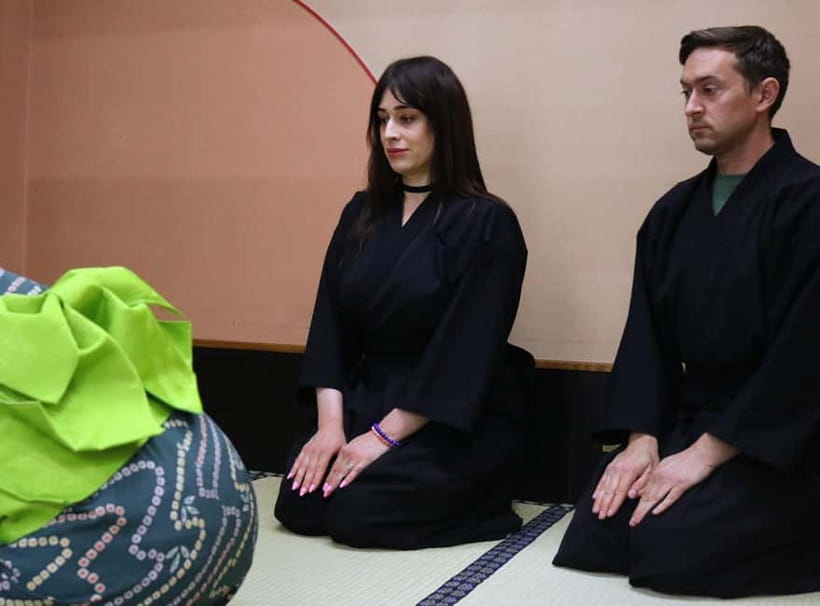
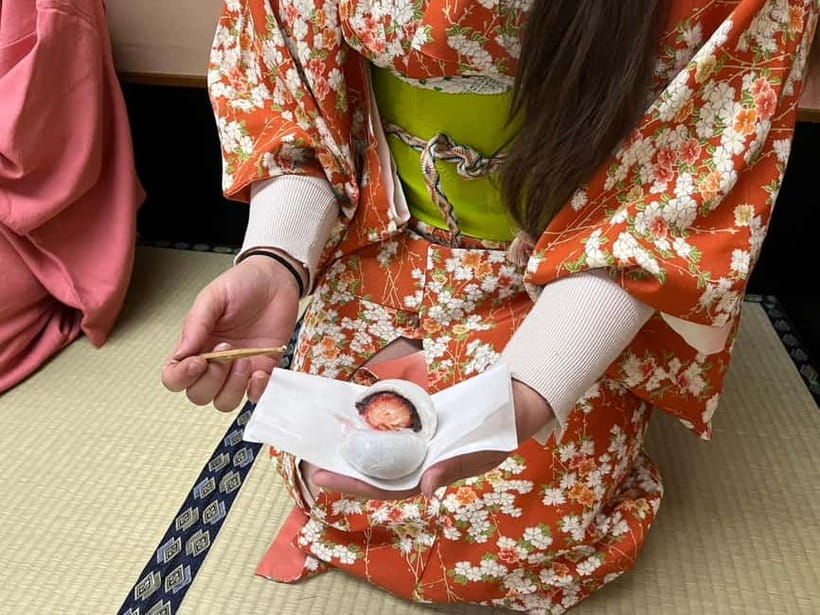
Wagashi are not just snacks here. They’re the lesson. You’ll learn through wagashi how Japanese taste and beauty connect to concepts like wabi and sabi, and how the four seasons shape design and flavor.
Wagashi are handmade sweets created by craftspeople, one by one. When you see them, the first impression is visual. The whole point is that they are beautiful to look at and designed to suggest a season or mood. The class frames wagashi as a kind of seasonal storytelling that you eat slowly.
There’s also a cultural time anchor. Wagashi developed along with the tea ceremony in the Kamakura period. That matters because it explains why the ceremony doesn’t feel random. It feels like a living tradition with deep roots in how people thought about aesthetics and everyday life.
Here’s what you should pay attention to during the wagashi part. Don’t rush the tasting. The beauty is part of the ritual, not extra decoration. If you take one minute to notice texture, color, and shape, you’ll understand the wabi-sabi angle better. Wabi-sabi is often described in words, but it makes more sense when you’re looking at something imperfect on purpose, or delicate in a way that feels human, not factory-made.
Wagashi also connects to Japanese food culture in a way that doesn’t require you to be a foodie expert. If matcha is the main event, wagashi is the context. It gives you a visual and taste bridge into the rest of the etiquette lessons.
Matcha basics and etiquette practice in a 1-hour format
The experience includes matcha, and a certified professional instructor runs the class. Before serving, the hostess sets the tone through traditional manners. Then the tea master serves matcha to the guests.
The teaching focus is etiquette, not speed. You learn how to serve tea, how to sit, how to bow, how to stand, and how to walk. You practice those rules. That is what turns matcha from a drink into a ritual with structure.
What I like about the way it’s framed is the “attitude” concept. In chanoyu, the idea is that hospitality is not one-way. The master entertains, and the guests respond. Your role is part of the atmosphere. That means you’re not there to be a passive consumer. You’re there to help create the calm.
You also get the practical benefit of a guided flow. In a typical tea ceremony setting, you might wonder when to move, when to bow, and when to simply hold your hands still. Here, you’re instructed step by step, so the ceremony becomes doable. You’re also encouraged to learn the spirit behind the gestures, not just memorize the sequence.
One more helpful note: there’s a photo component tied to this flow. That changes behavior too. You’ll be shown where to sit and how to hold yourself so you can both participate and look photogenic without feeling rushed.
More Tea Ceremonies in Osaka
- Osaka: Tea Ceremony Experience
★ 4.9 · 1,426 reviews - Tea Ceremony Experience in Osaka Doutonbori
★ 5.0 · 754 reviews - Matcha Making Class in Osaka with Authentic Japanese Sweets Set
★ 5.0 · 509 reviews - Osaka: Tea Ceremony, Calligraphy, and Kimono Experience
★ 4.9 · 130 reviews
Who you’ll meet, what the guide does, and how the small group helps
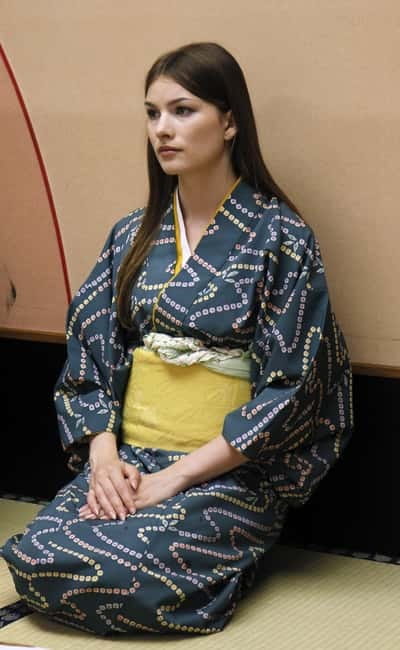
This is a small group experience limited to 6 participants. That size is a big deal. In a tea ceremony, every person affects the pace. If the group is too large, the ceremony becomes a waiting game. Here, it stays interactive.
The class includes an English interpreter guide staff. English is the default language. If you need a different language, you must inquire about staff schedules before reserving, since availability for languages beyond English may be limited.
From the experience structure, you can expect the instructors to:
- guide clothing and hair setup
- explain historical and cultural context tied to the ceremony
- teach etiquette and gestures
- support hands-on matcha preparation
The “warm welcome” and clear explanation show up in the feedback pattern, especially around pacing and making sure each person gets a fair chance to try. That’s exactly what you want if you’re going with kids or with someone who feels nervous about doing formal movements.
Photo shooting included: how to get the most out of your kimono photos
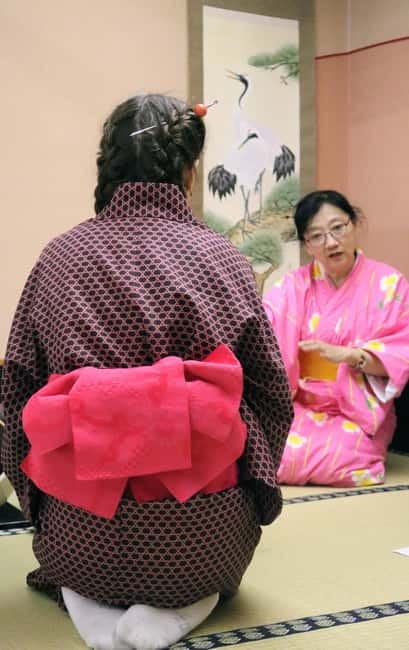
Photo shooting is included, with your photo data sent to a designated email address. The goal is that you can focus on the ceremony while someone handles the camera work. One booking specifically noted that photos were emailed the same day, so you might get them quickly.
There’s also a paid upgrade for movie shooting and paid options for outdoor photo shoots, plus a special “wagami” collected hair set with kanzashi for both genders. Female and male outfit add-ons are also listed as paid, including detailed footwear like obi pairing with tabi and zori for women, and obi with tabi and geta for men. Outdoor photo shooting is also listed as paid.
Here’s how to plan smartly for photos:
- Arrive early, so you are not rushed in hair and dressing.
- Wear your T-shirt carefully on arrival, since you’ll change.
- Be ready to sit and pose briefly between steps while still practicing etiquette properly.
If you care about photos, this is one of the reasons the value is strong. Many culture activities cost more once you factor in dress rentals and private photographers. Here, the ceremony includes the photo work as part of the package.
Price and value: is $40 worth 1 hour in Osaka?
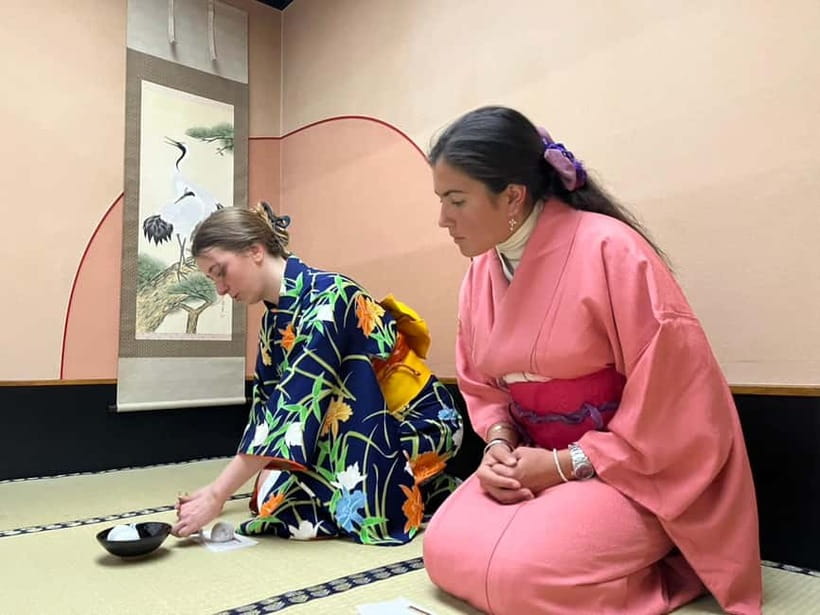
At about $40 per person, this is not a deep, multi-hour masterclass. It’s a focused introduction with hands-on elements: kimono or hakama styling, wagashi, matcha, etiquette instruction, and included photo shooting.
For value, look at what’s bundled:
- Traditional clothing included (kimono for women, hakama and dogi for men)
- Matcha and wagashi
- English interpreter guide staff
- Certified professional instructor
- Photo shooting with delivered photo data
What’s not bundled is what you’d normally spend money on separately: transportation to the location, pickup or drop-off, and paid costume or photo upgrades like wagami, movie shooting, or outdoor photo shoots.
The biggest “cost” isn’t just money. It’s time. You need to show up 30 minutes early, and the whole experience is 1 hour. If you’re on a strict Osaka Castle loop with train timing, you’ll want to schedule this with breathing room so changing clothes doesn’t become a scramble.
What to bring, what not to do, and practical etiquette expectations
The basics are clear:
- Bring a T-shirt.
- Pets are not allowed.
- Alcohol and drugs are not allowed.
- Nudity is not allowed.
For clothing comfort, remember you are wearing traditional outfits. Even if you’re not used to formal wear, the class is designed to be teachable. You’re not expected to already know how to bow, sit, or serve matcha. The instructors guide you.
If you have mobility concerns, the core restriction to keep in mind is not listed as a medical accessibility detail, but the activity does involve posture and sitting inside a traditional room. It’s smart to think about your comfort levels before you book.
Who this experience is best for (and who should skip it)
This is especially well matched for:
- Families who want a shared, memorable cultural activity with children
- People who like structure and guided learning
- Visitors who want authentic costume styling plus an explanation of the meaning behind it
- Anyone who wants an easy entry point into tea culture without needing prior knowledge
It may not be right for:
- Children under 10 years
- People with altitude sickness
- People over 95 years
That age guidance tells you the class likely expects adult-like stamina and the ability to follow ceremony movements. If someone in your group is very young or has health concerns, it’s worth choosing a different cultural activity.
Should you book this matcha class near Osaka Castle?
If your goal is a short, high-value cultural experience with photos and clear instruction, I think this is a strong pick. The best reasons are practical: kimono or hakama styling is included, the class teaches etiquette as something you do, and wagashi gives you a visual explanation of wabi-sabi and the four seasons.
I’d say don’t book only if you are looking for something long and scholarly. This is 1 hour. You’ll learn enough to understand the ritual, but you won’t become a tea ceremony expert. Also, if you need hotel pickup or station drop-off, you’ll need to handle getting to Samurai Honor yourself.
If you’re already planning time around Osaka Castle, I’d build this in as a “one perfect hour” stop. You’ll come away with matcha skills you can reuse, plus a deeper appreciation for why the ceremony treats gestures, hospitality, and seasonal beauty as a whole way of living.
FAQ
How long is the matcha tea class?
The experience lasts 1 hour.
What is included in the $40 per person price?
It includes kimono clothing, an English interpreter guide staff, matcha, wagashi, a certified professional instructor, tax, tips, and photo shooting with your data sent to an email address.
Do I need to bring anything?
Bring a T-shirt. That’s the only item listed under what to bring.
Is pickup or drop-off provided?
No. Pick up and drop off at the train station or hotel is not included.
What languages are available?
The default language for the interpreter guide staff is English. Japanese is also available. Other languages may depend on staff schedule, so you need to inquire before booking.
Are photos included, and how do I get them?
Yes. Photo shooting is included, and the photo data is sent to a designated email address.
Who is the experience not suitable for?
It is not suitable for children under 10 years, people with altitude sickness, and people over 95 years.
Newly listed around Osaka
- Matcha Tea Bowl Experience in Osaka★ 5.0 · 11 reviews
- Master Washoku: 5 Core Techniques for Authentic Cooking★ 4.7 · 7 reviews
- Learning Shodo with a kimono and Trying Samurai Calligraphy★ 4.2 · 7 reviews
- Kyoto: Immersive Arashiyama & Fushimi Inari by Private Car★ 5.0 · 35 reviews
- Katsu Curry OR Bento Making Cooking Class & Local Shop Tour★ 4.9 · 11 reviews
- JAPAN 7Days Unlimited 4G SIM (OSAKA Pick-up)★ 4.6 · 9 reviews
- Himeji: Private Guide Tour of the Castle from Osaka or Kyoto★ 4.5 · 7 reviews
- Get to know Minoo from Osaka. Katsuoji Temple, Ryuanji Waterfall and Ryuanji Temple★ 5.0 · 16 reviews
Matcha & Tea Ceremony Sessions, compared.
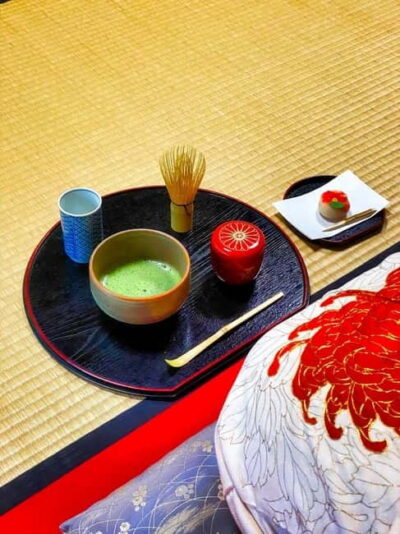
Tea Ceremony in a Traditional Tea House in Kiyomizu
Read our review →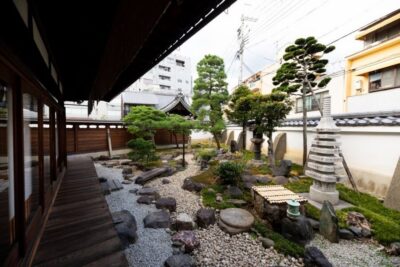
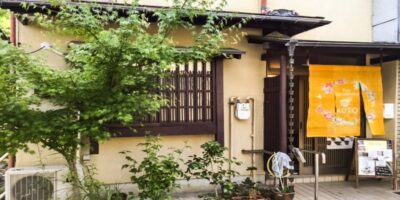
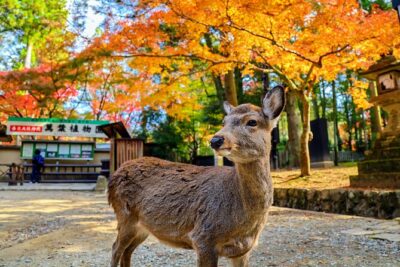
World Heritage Kyoto & Nara Uji Authentic Matcha Experience
Read our review →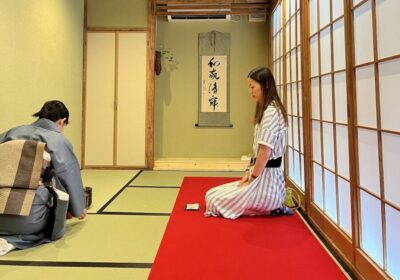
Browse the lists this tour appears in