Review · KYOTO TOURS
Let’s make only one original onigawara in the world!!
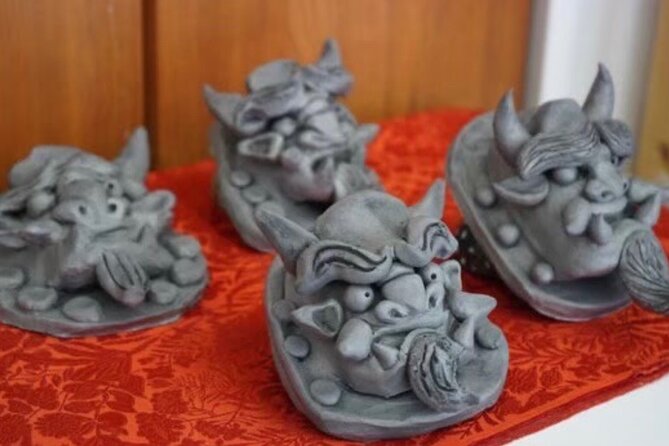
Clay turns into a roof guardian.
This hands-on Onigawara workshop at Kawarakoubouyouya lets you shape a small demon-face tile the way it was done long ago, tied to the 1400-year story of ridge roof tiles that ward off evil and help with rainwater. I especially like the step-by-step craft work and the fact you end up making your own little monster. One catch: the finished tile is not ready the same day, and shipping is an extra cost paid separately on the day you visit.
You’ll sit with clay, build the face tile in a small group of up to 5, and get patient guidance from Yuya in English or Japanese. The process takes a couple of hours, and you’ll leave with a carefully made piece that will need drying and kiln firing done by the workshop.
At $90 per person for a 2-hour class plus firing, it’s a strong value for a real craft souvenir, not a quick photo stop. Just plan for clothes that may get dirty, because this experience uses soil.
In This Review
- Key things to know before you go
- Onigawara tiles and why they matter on Japanese roofs
- Your 2-hour experience at Kawarakoubouyouya (meeting point and vibe)
- Sculpting a demon-face Onigawara tile by hand
- Drying, kiln-firing, and why you wait 1-2 months
- Price and value: what $90 really includes (and what it doesn’t)
- Who should book this Onigawara workshop, and who might skip it
- Small practical tips that make the day smoother
- Should you book this Onigawara workshop?
- FAQ
- How long is the Onigawara workshop?
- What does the $90 per person price cover, and is shipping included?
- Where do we meet for the workshop?
- What languages are used during the class?
- Is the group large?
- Is the workshop wheelchair accessible?
Key things to know before you go
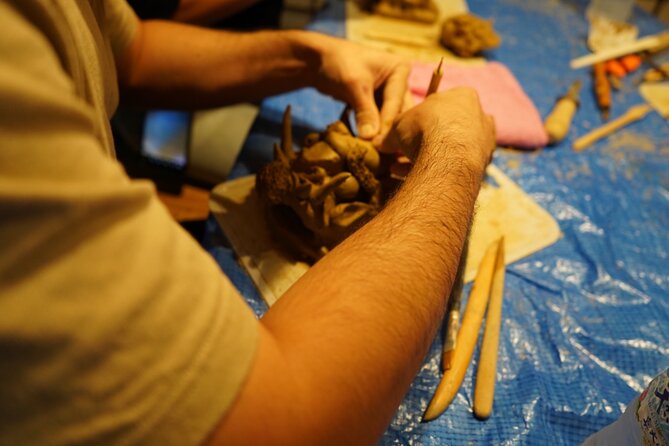
- Make by hand: you shape a small Onigawara tile with a demon face design.
- Small group format: limited to 5 participants, which makes it easier to get help.
- Firing happens later: Yuya fires the piece in a kiln after it dries.
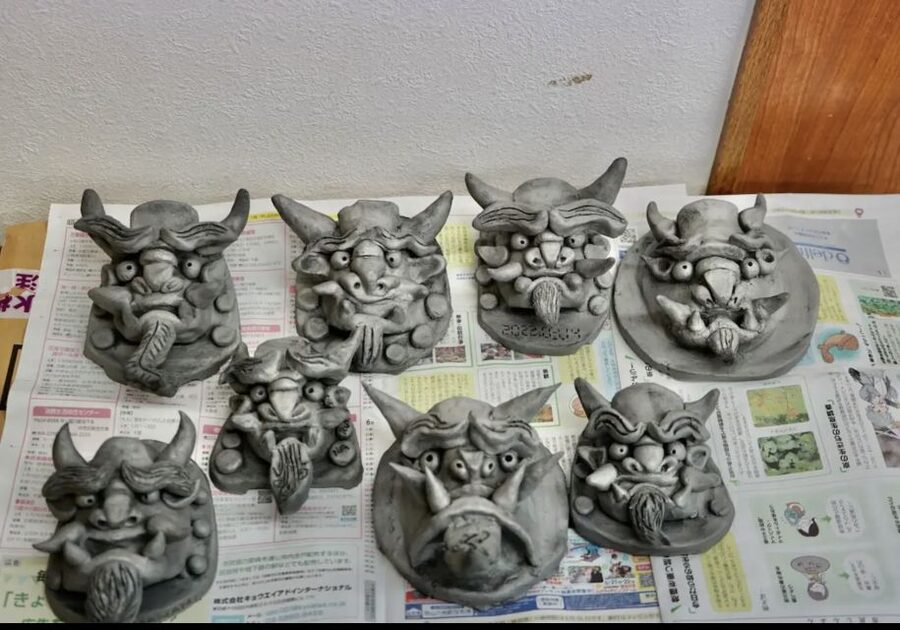
- 1-2 months to arrival: the tile changes to the traditional silver color and is shipped to your home.
- Soil means messy clothes: wear something you do not mind getting dirty.
- Shipping is extra: only the workshop cost is set, the shipping fee is handled separately on the day.
Onigawara tiles and why they matter on Japanese roofs
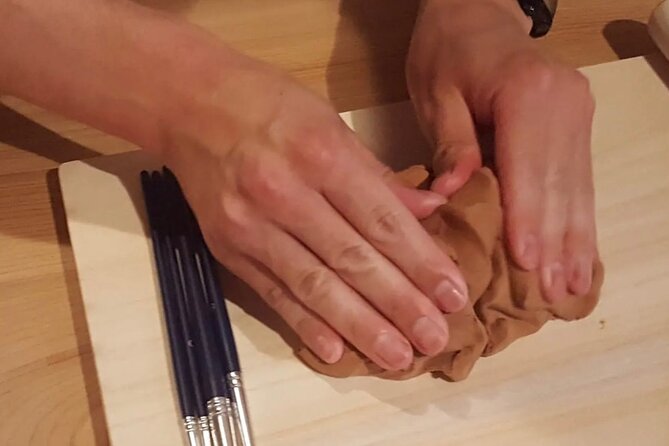
Onigawara are roof-end tiles found along the main ridge of traditional Japanese buildings. The designs often use fearless demon faces, ogres, or gargoyle-like features, carved and shaped so the roof has protection, not just function.
The meaning is practical and symbolic at once. The demon imagery is part of the tradition of warding off evil, and the ridge placement ties it to rain protection too. When you make one of these tiles yourself, you are not just copying a pattern. You’re participating in a craft line that has been handed down for a very long time, with many versions and local styles.
The workshop framing is clear about the emotional side of the process too. You start with a lump of soil, and the tile takes form through careful steps. The idea is that a kind of protection comes from the making itself, and by the end, you’re holding something that feels like a guardian object.
A few more Kyoto days to weigh up
- PERFECT KYOTO 1-Day Bus Tour
★ 5.0 · 13,518 reviews - Kyoto: Fushimi Inari, Kinkakuji, Bamboo Grove 1 Day Bus Tour
★ 4.8 · 4,316 reviews - Kyoto: Tea Ceremony in a Traditional Tea House in Kiyomizu
★ 4.9 · 3,519 reviews
Your 2-hour experience at Kawarakoubouyouya (meeting point and vibe)
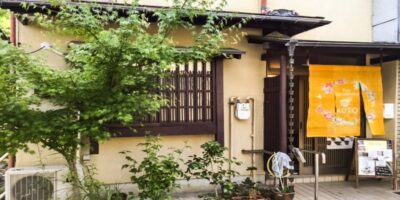
You’ll meet at KAWARAKOUBOUYOUYA, listed as the shop, and you can find it by searching on Google Maps. One useful heads-up: the Google map pin can be off, and you may need to go about 40 meters east to reach the correct spot.
The vibe inside is workshop-simple. You’ll see a station set up for each participant with clay and the basic components you need. Because it’s limited to 5 people, it doesn’t feel like you’re squeezed into a conveyor belt. It feels more like working alongside a maker, with Yuya showing the steps and then guiding you as you copy the process.
Languages are English and Japanese, so you’re not forced to guess. And because the class is structured to work even for beginners, it’s a good choice if you’re not confident with sculpting.
Sculpting a demon-face Onigawara tile by hand
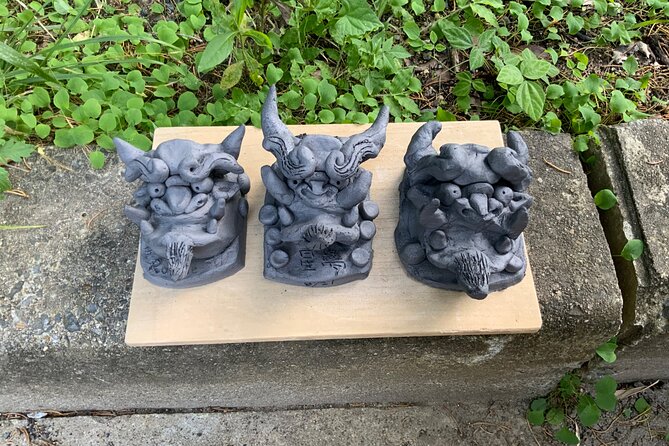
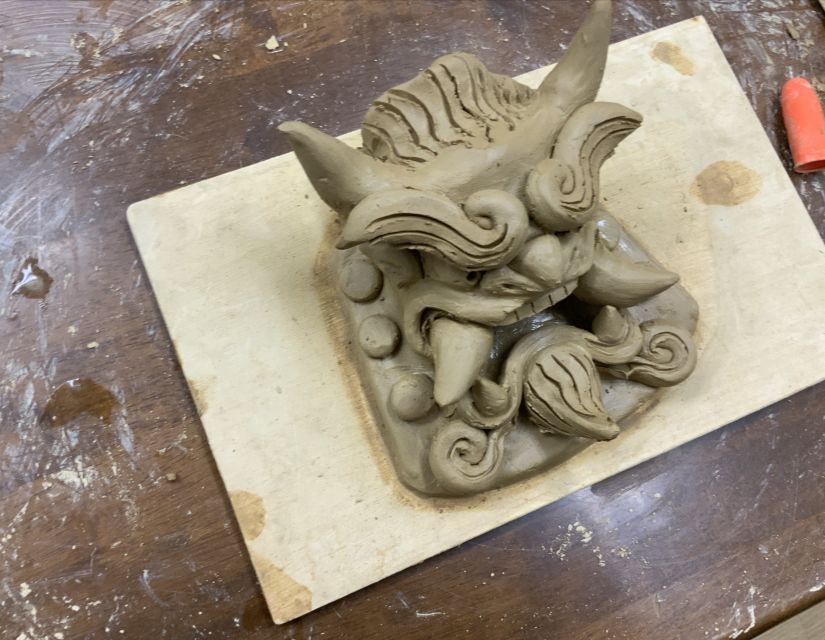
This is the heart of the experience: learning how to make a small, simple Onigawara tile with a demon face. The tile design is not random. The whole point is to connect your finished object to the tradition of roof ridge guardians.
Yuya’s approach is step-by-step and intentionally beginner-friendly. The workshop notes that Onigawara can be difficult in the traditional sense, but the procedure has been developed so that kids and people with clumsy hands can still succeed. That matters, because making anything with clay rewards patience more than talent.
In practice, you’ll build the tile in stages. You’ll shape the base and then form the demon-face details in pieces, putting them together step by step. The goal is consistency and clean joining, not speed. You’ll be handling the clay quite a bit, so you’ll quickly understand how the form comes together through repeated small actions.
The most memorable part tends to be the moment you realize the figure is starting to look like the tradition you came for. There is a real satisfaction when the face reads clearly, because that’s the signature of Onigawara. When it clicks, the tile stops being just clay and becomes a recognizable roof guardian.
Drying, kiln-firing, and why you wait 1-2 months
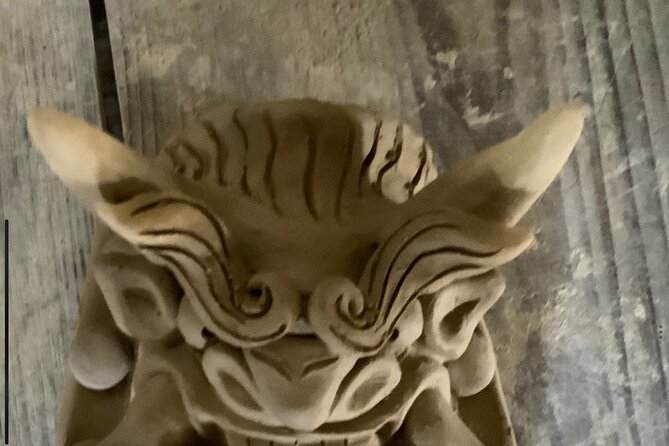
Once you finish shaping your tile, it doesn’t turn into a finished keepsake right away. After it dries, Yuya will fire it in a kiln at the factory. So the class you attend is hands-on shaping, plus a handoff to the firing process.
The timing is part of the magic. You’ll need to wait about 1-2 months for the tile to complete the transformation and arrive at your home. The finished piece changes to the traditional silver color by the time it is ready.
Shipping is handled after firing. The workshop states that the tile will be sent to your home, but shipping is not included in the base workshop price. You’ll pay the shipping fee separately on the day. So it’s worth budgeting a little extra even if you’re focused on the craft time.
This delay can be a downside if you want the souvenir immediately in your hands. But if you can handle waiting, it’s also a neat experience design choice. You do the making in Japan with direct guidance, then you get the finished fired result later, like your own guardian arriving from the kiln.
A different sort of day in Japan:
- Kyoto Geisha Walking Tour: Gion District & Hidden Gems
★ 4.7 · 3,273 reviews - Kyoto: Tea Ceremony Ju-An at Jotokuji Temple
★ 4.9 · 3,207 reviews - Kyoto: 45-Minute Tea Ceremony Lesson Experience
★ 4.3 · 2,378 reviews - Kyoto: Gion Geisha District Walking Tour – Stories of Geisha
★ 4.7 · 2,187 reviews
Price and value: what $90 really includes (and what it doesn’t)
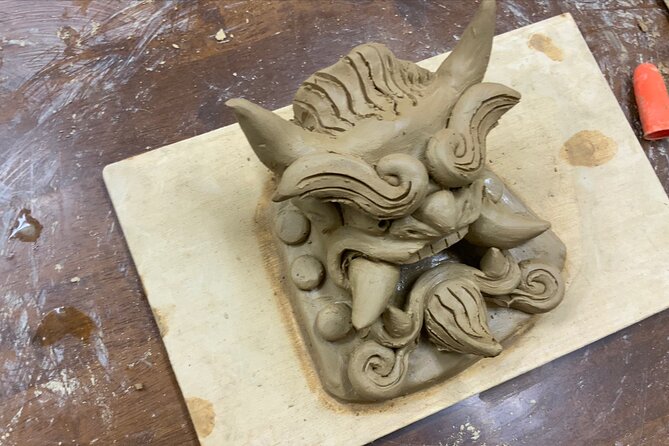
The price is $90 per person for the 2-hour Onigawara class. Based on what’s included, that covers your guided making time and the workshop’s kiln firing process.
What is not included is shipping. The shipping fee is charged separately on the day, and after firing they send the tile to your home. That keeps the base price simpler, but it does mean you should treat the final cost as workshop price plus shipping.
Why this can still feel like good value: you’re paying for more than a craft kit. You get a guided process, a chance to make a culturally specific roof tile with demon-face design, and kiln firing that transforms the clay into a durable finished piece. For many visitors, that combination is hard to replicate on your own, especially when the result needs correct firing.
For decision-making, I’d compare it to buying a ready-made Onigawara tile. Store-bought tiles can be beautiful, but you don’t get the hands-on tradition, and you don’t get the story that comes from making your own guardian from soil to fired tile.
Who should book this Onigawara workshop, and who might skip it
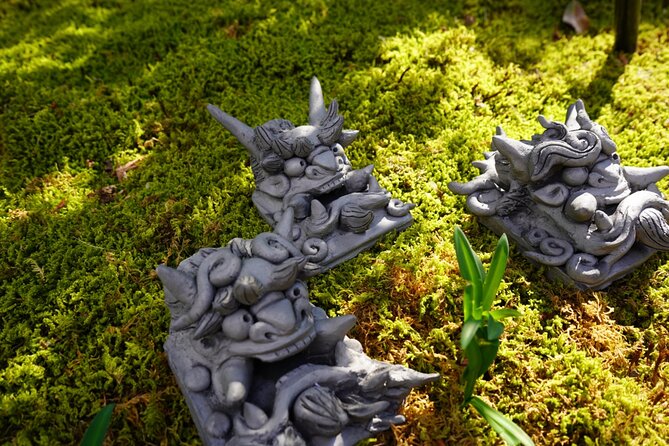
This is a strong fit if you want something different from a typical Kyoto-style sightseeing day. You’re making a real object tied to Japanese roof culture, with a clear explanation of why it exists: protection against evil and rainwater at the ridge.
It’s also great for mixed groups. The class is described as working for children and for people who feel unsure with their hands. In other words, you are not expected to be a sculptor.
If you need an immediate souvenir in the next hour, this might not be your best choice. The finished tile arrives later after kiln firing, and you wait for about 1-2 months. If you’re the type who wants instant results, plan for the waiting part up front.
Also, because it uses soil, you should be ready for some mess. The workshop asks you to wear clothes that may get dirty. That’s normal for clay work, but it can matter if you are trying to dress up for dinner right after.
Small practical tips that make the day smoother
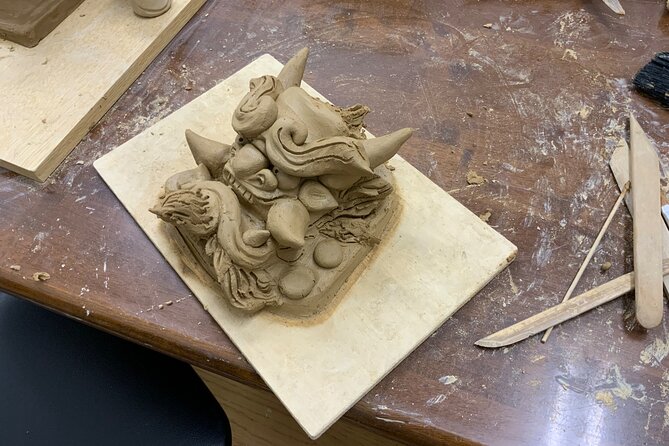
First, wear clothes that can take a hit. Soil work means you’ll be touching clay, and some splashes or dust are just part of it.
Second, plan for the meeting point pin. The Google Maps location can be off by around 40 meters east, so it’s smart to arrive with a little extra time to find the right door.
Third, lean into the small-group setting. With only up to 5 people, you can ask questions and get adjustments. That helps a lot when you’re building the demon-face details and trying to make the pieces look right.
Lastly, treat it as a craft session, not a fast demo. The experience is structured, but you still need attention while shaping, joining, and getting the form to read properly.
Should you book this Onigawara workshop?
Book it if you want a hands-on cultural craft with a meaningful end product, and you’re okay with a delayed arrival. The combination of guided clay work, kiln firing, and the traditional silver color result makes the waiting feel worthwhile rather than frustrating.
Skip or reconsider if you need the finished tile the same day, or if you don’t want any extra costs after the workshop price. Shipping is extra and paid separately on the day, and the finished piece takes 1-2 months to arrive.
If you’re visiting Japan and want one souvenir that feels personal and grounded in everyday tradition, this is a rare type of activity. It turns roof guardian symbolism into something you can literally hold, even if the final fired version reaches you later.
FAQ
How long is the Onigawara workshop?
The experience lasts 2 hours.
What does the $90 per person price cover, and is shipping included?
The workshop price is $90 per person. Shipping is not included, and you will pay the shipping fee separately on the day. After firing, the workshop will send the tile to your home.
Where do we meet for the workshop?
You meet at KAWARAKOUBOUYOUYA (the shop). Search on Google Maps to find the meeting point.
What languages are used during the class?
The host or greeter speaks English and Japanese.
Is the group large?
The group is small, limited to 5 participants.
Is the workshop wheelchair accessible?
Yes, the experience is wheelchair accessible.
Newly listed around Kyoto
- Half Day Matcha Tour in Uji, home of culture, with a local★ 4.8 · 14 reviews
- Making Fresh To-fu from soybeans in Kyoto★ 5.0 · 8 reviews
- Kyoto:Private Tour/Luxury Vehicle with Guide & photographer★ 4.8 · 35 reviews
- Kyoto/Osaka: Kyoto Coast, Amanohashidate & Ine Bay Day Trip★ 4.4 · 7 reviews
- Kyoto/Osaka: Kyoto and Nara World Heritage Day Tour★ 4.5 · 12 reviews
- Kyoto/Osaka: Kobe & Himeji Journey Through Culture & History★ 3.7 · 18 reviews
- Kyoto: Kimono/Yukata Rental 5 Minute from Kiyomizu-dera★ 4.7 · 89 reviews
- kyoto:Experience creating one-of-a-kind special fragrances★ 4.8 · 8 reviews
Kyoto Tours, compared.


Fushimi Inari, Kinkakuji, Bamboo Grove 1 Day Bus Tour
Read our review →
Tea Ceremony in a Traditional Tea House in Kiyomizu
Read our review →
Kyoto Geisha Walking Tour: Gion District & Hidden Gems
Read our review →

Gion Geisha District Walking Tour – Stories of Geisha
Read our review →